The end point of AI is not a chatbox—this company wants to make the real world the prompt for AI
TechFlow Selected TechFlow Selected
The end point of AI is not a chatbox—this company wants to make the real world the prompt for AI
The world's first multimodal AI hardware, Looki L1, has been released, pioneering the interactive future envisioned by OpenAI.
 Navigating Web3 tides with focused insights
Author | Su Zihua
Editor | Zheng Xuan
Over the past two years, most people's impression of AI has largely been confined to a chatbox:
Ask a question, type a few words, and it gives you an answer. It's useful, yes—but also feels somewhat monotonous. Can AI only be trapped inside a chatbox?
I've always believed true AI shouldn't just be a "teacher who memorizes encyclopedias," but rather something that walks with me through life, understanding what I'm experiencing in real time.
The Looki L1, officially launched last night, might just be the first device to truly bring AI out into the real world.
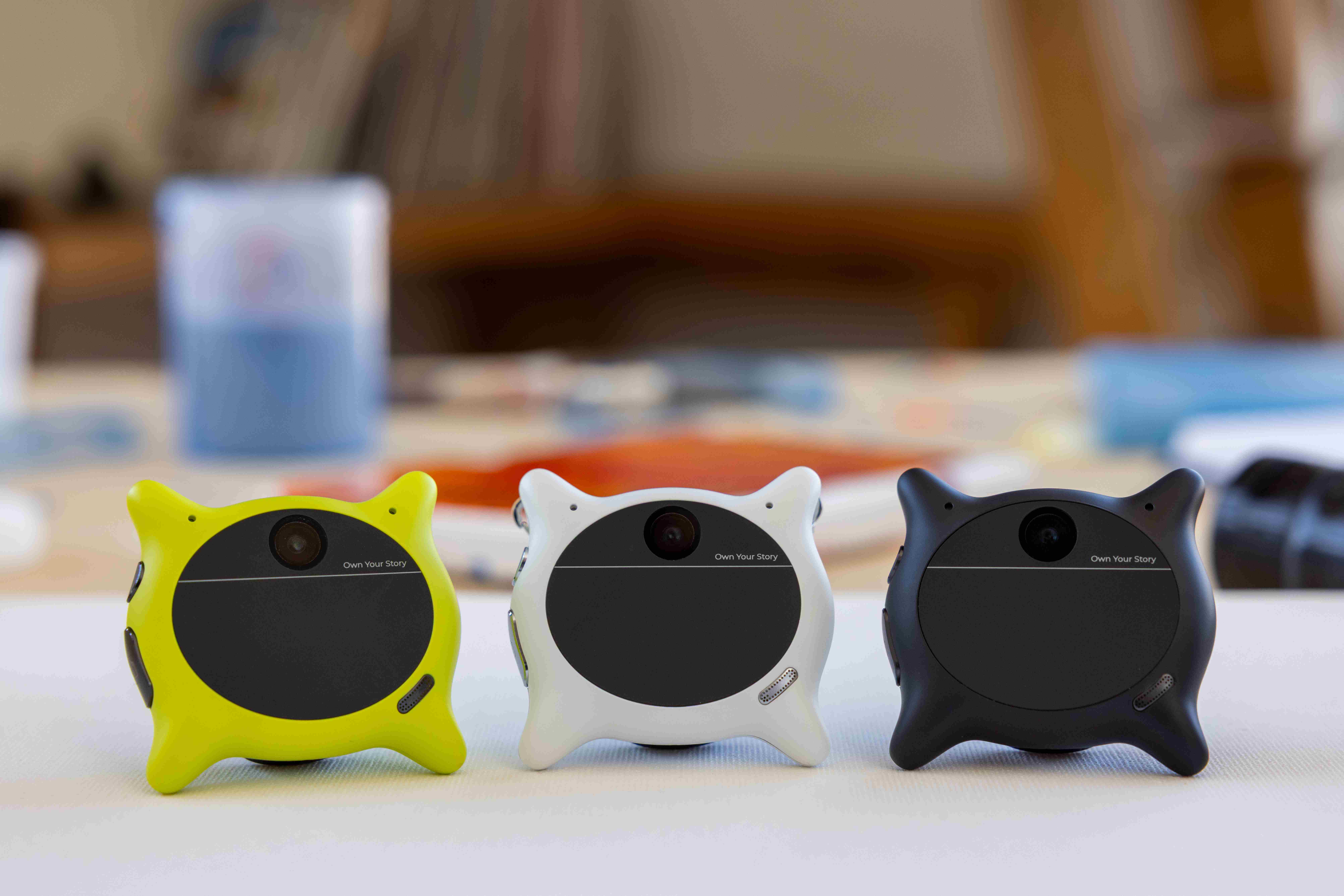
This is the Looki L1, available in three colors|Image Credit: Looki
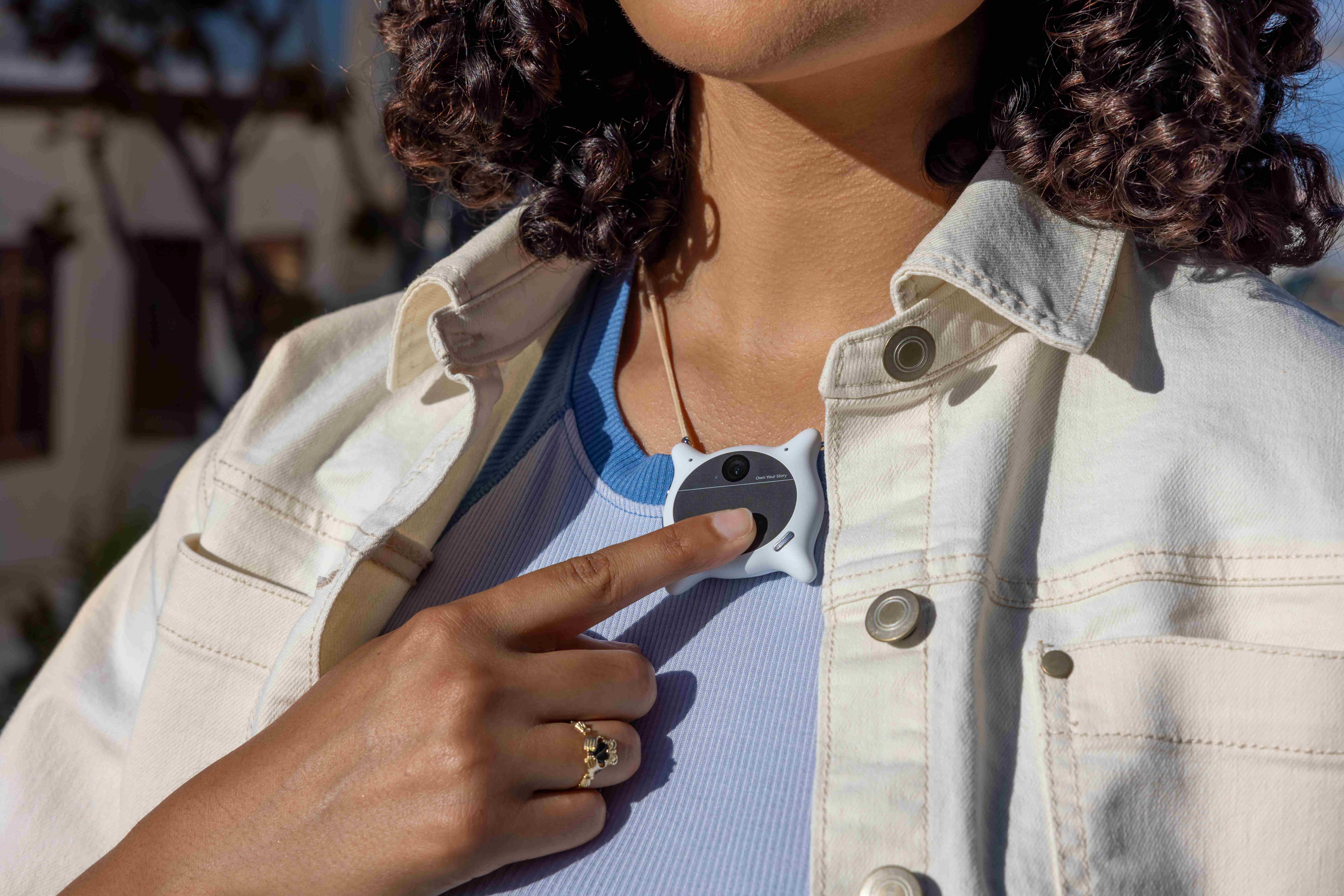
A fortnight ago, I started testing the Looki L1. When I first held it, I almost mistook it for a pendant-style camera. But soon I realized it's neither a sports camera nor simply a GPT-powered wearable.
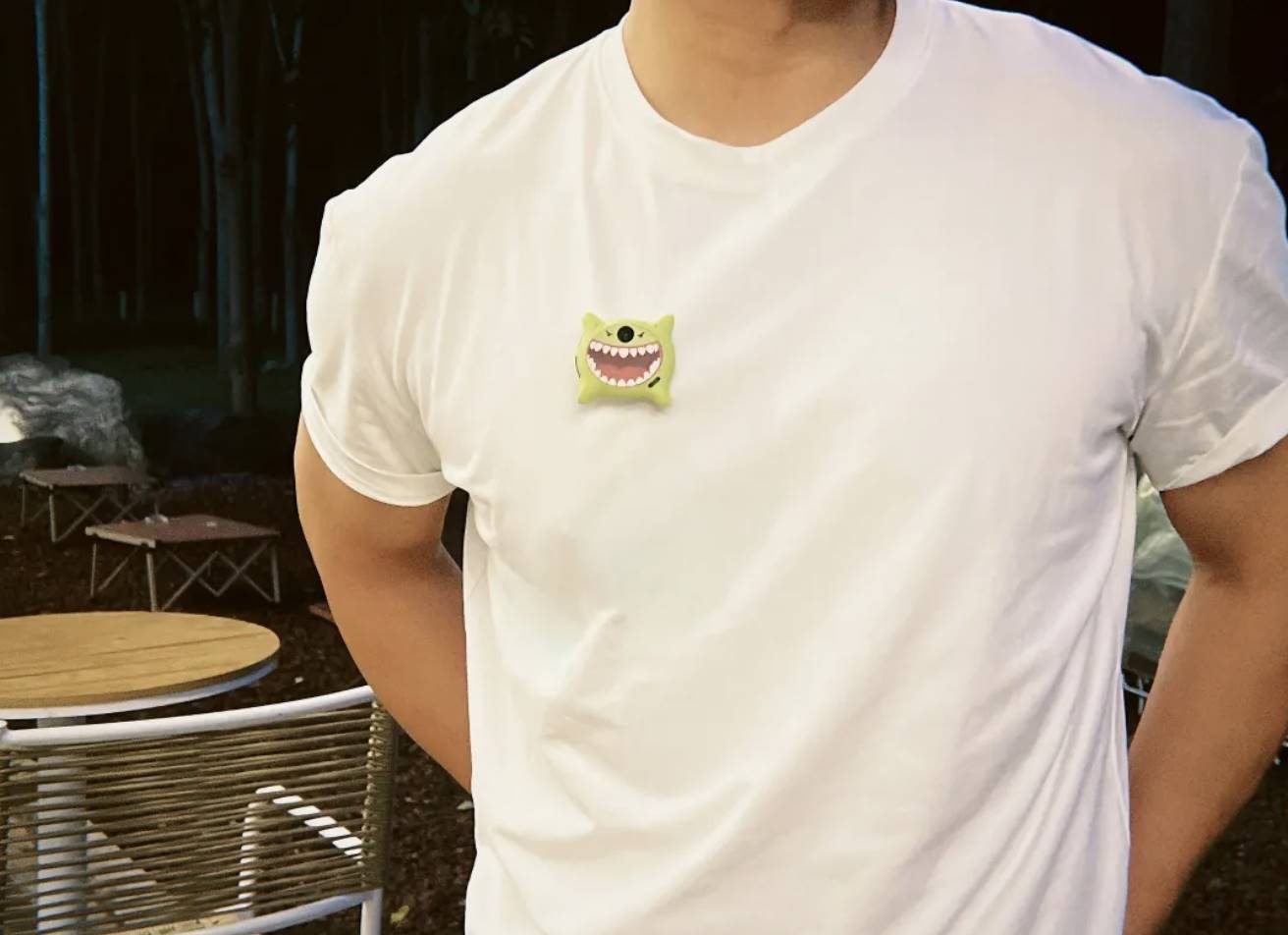
I usually magnetically attach the Looki L1 to my chest. Looki provides various body stickers—mine has a funny face pattern|Image Credit: Geek Park
When I turn on its Story Mode, it automatically captures video and audio, then hands them over to AI to interpret my current context. At that moment, everything around me—streets, friends' laughter, my expressions—becomes prompts for the AI.
Living with it feels special: whatever I experience, it experiences too. It’s no longer just a tool for answering questions, but an AI companion sharing my daily life.
In recent years, most AI products have emphasized "efficiency" and "productivity." But AI that truly integrates into everyday personal life remains nearly nonexistent.
Looki aims precisely at this gap. Founded just a year ago, the team secured three rounds of financing (angel, angel+, Pre-A) within six months, totaling over ten million USD. This latest round was led by Zhongding Capital, with existing investors BAI, Alpha Club, and Tongge Venture capital oversubscribing. Officially defined as an AI lifelogging camera, it's the world’s first AI hardware device to achieve true multimodal interaction.
During my time using it, I’ve lost count of how many times I’ve said “Wow.” Looking back, it’s not just a “memory bank” for life—it’s helped me better understand myself and changed some of my habits. It’s also expanded my imagination about the future of “AI interaction.”
When AI Enters My Life
Compared to any traditional camera, Looki’s design and operation are extremely simple—even minimalistic, one might say.
The Looki L1 has no screen and only two physical buttons. By pressing them short or long, you can activate Story Mode (interval shooting), take photos, record video, or audio. The touchpad on the front enables AI conversations, functioning much like sending voice messages on WeChat.
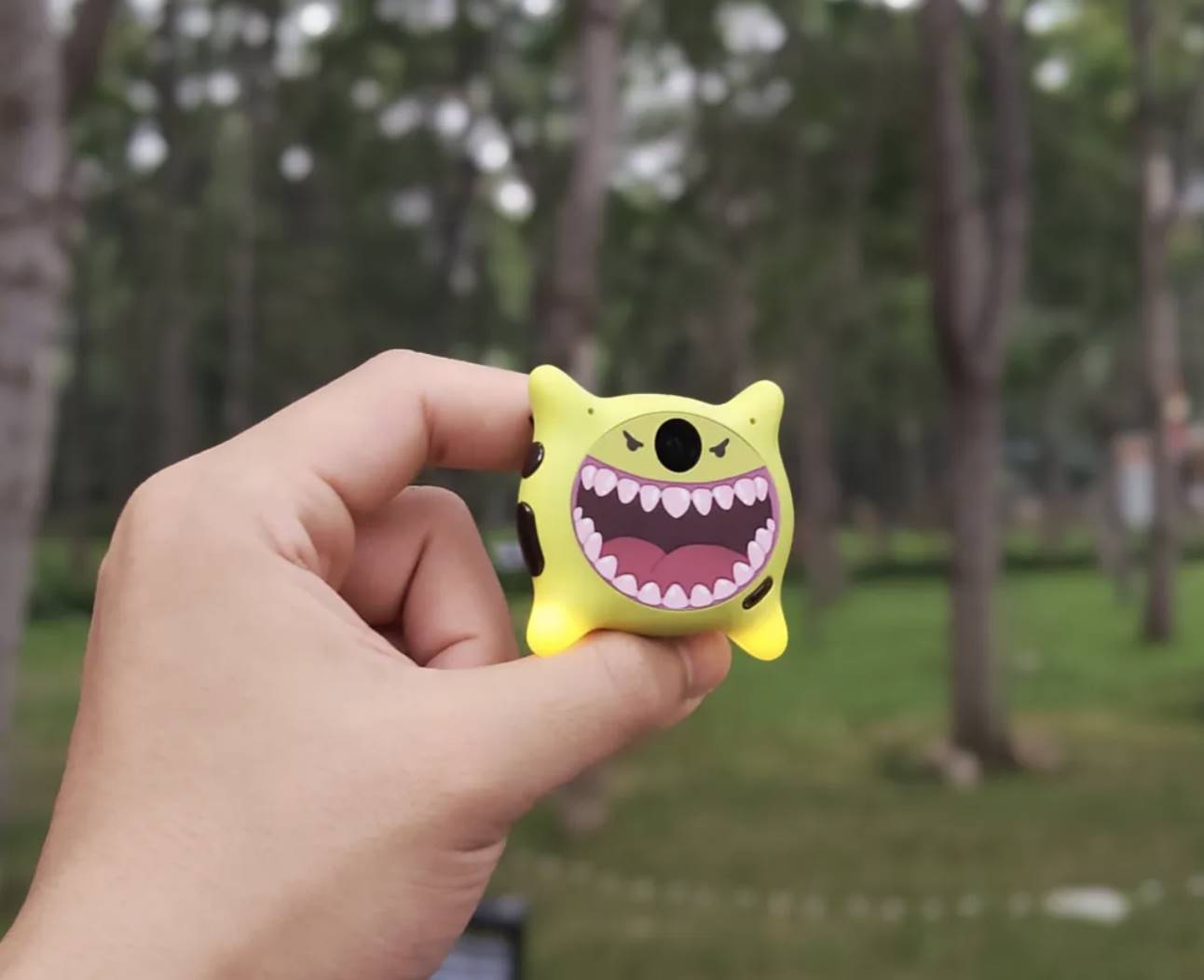
Two function keys on the side, and a touchpad on the front for tapping|Image Credit: Geek Park
Weighing only 30 grams, it's so light you barely notice it on your body. It feels like the team’s goal is to minimize user interaction—so you can forget the camera even exists.
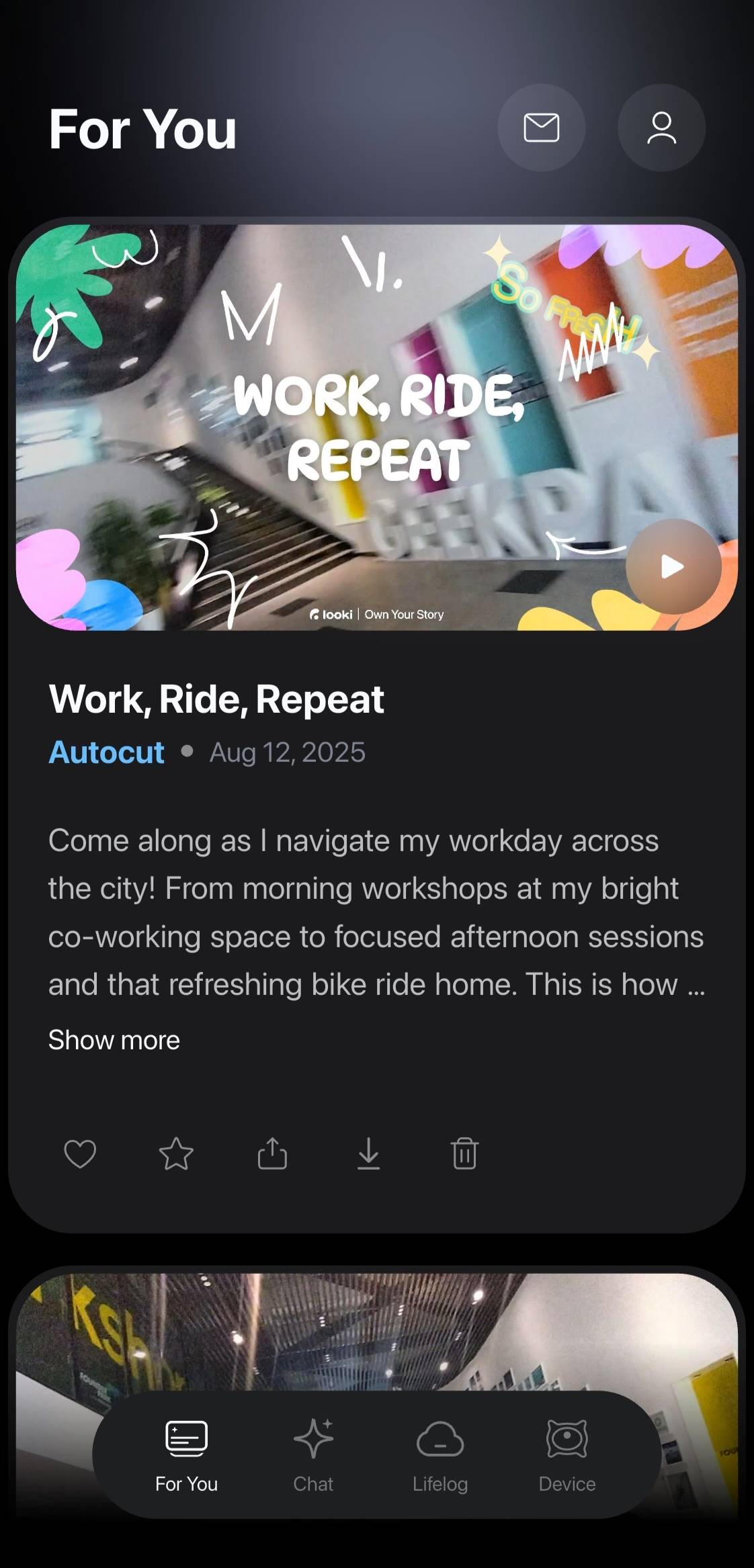
Looki’s App interface|Image Credit: Geek Park
Looki’s app follows the same minimalist philosophy, as shown above:
-
For You: A daily AI-curated “life feed,” like a private Instagram feed meant only for you;
-
Chat: Chat with an AI that remembers your entire life—a truly personal AI that knows you deeply;
-
Lifelog: AI-organized life archives, turning raw material into themed Moments;
-
Device: For checking device status and basic settings.
Using Looki to record daily life, the biggest feeling is being “present in the moment.”
My most-used feature is Story Mode—automatic interval shooting. Once turned on, I don’t need to think about when to press the shutter. I can just focus on enjoying the moment.
If I suddenly want to capture a scene, I don’t need to pull out my phone, unlock it, and open the camera. I just press the photo or video button on the Looki L1.
Do you feel this way too? Actually, regardless of the device, capturing isn’t the hardest part. The real challenge lies in organizing the footage afterward. And this, I believe, is where Looki truly differentiates itself from other cameras.
In the past, we might have taken countless photos and videos, but most of them just sit dormant on hard drives, unsorted and forgotten.
Looki’s “Moments” feature uses multimodal AI to understand people, scenes, and emotions in videos. It automatically organizes massive amounts of content into themed events, extracts highlight clips, and weaves fragmented moments into meaningful narratives—all without human input, saving tremendous time.
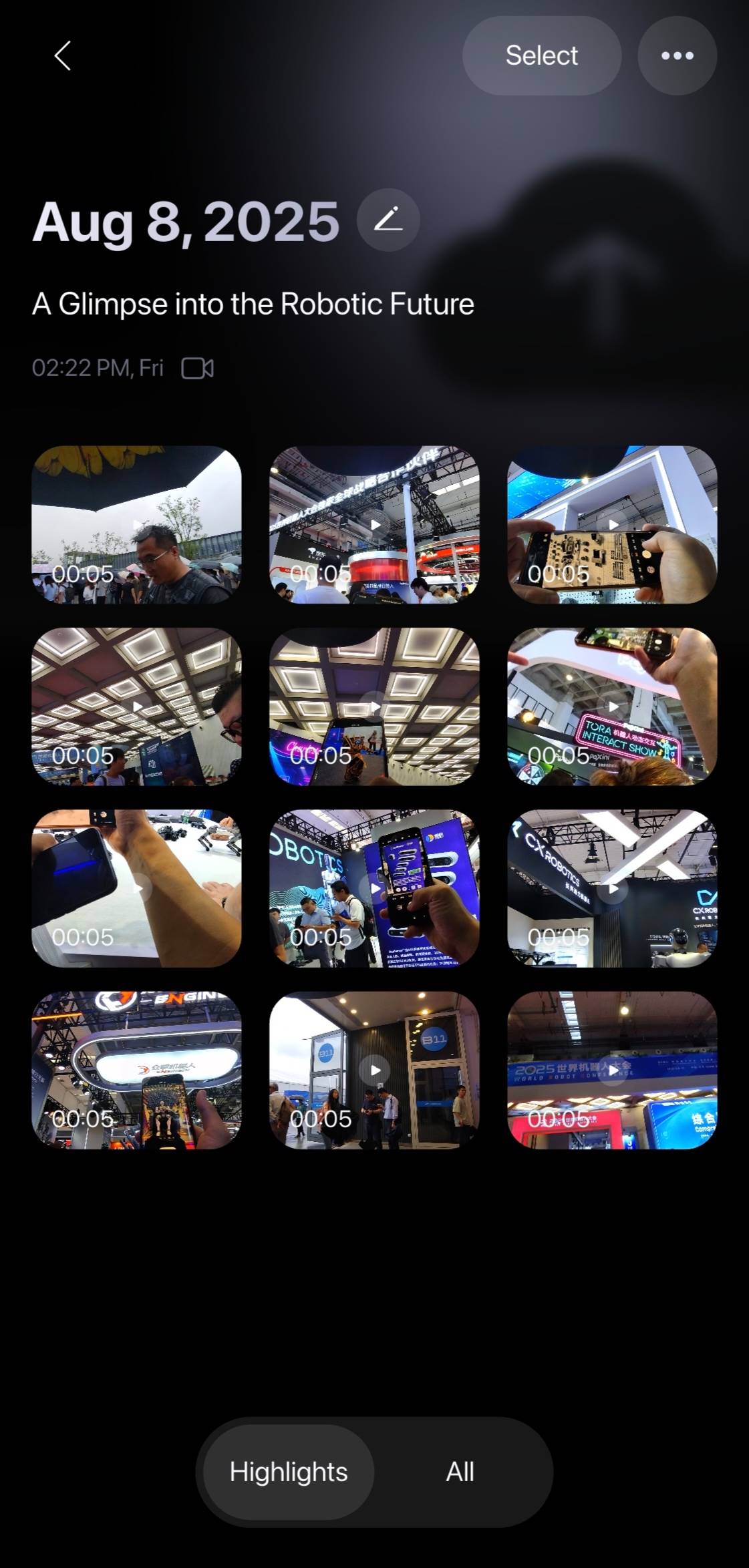
On the “moments” page, you can view highlights and all media clips|Image Credit: Geek Park
By the end of each day, flipping through the “Moments” feels like reading my own biography.
Besides, after observing these days, I find the vlogs generated by Looki are quite thoughtful. It naturally forms a storyline, identifies a theme, selects fitting background music, and adds captions or keywords to different scenes. The overall quality resembles that of Western documentaries.
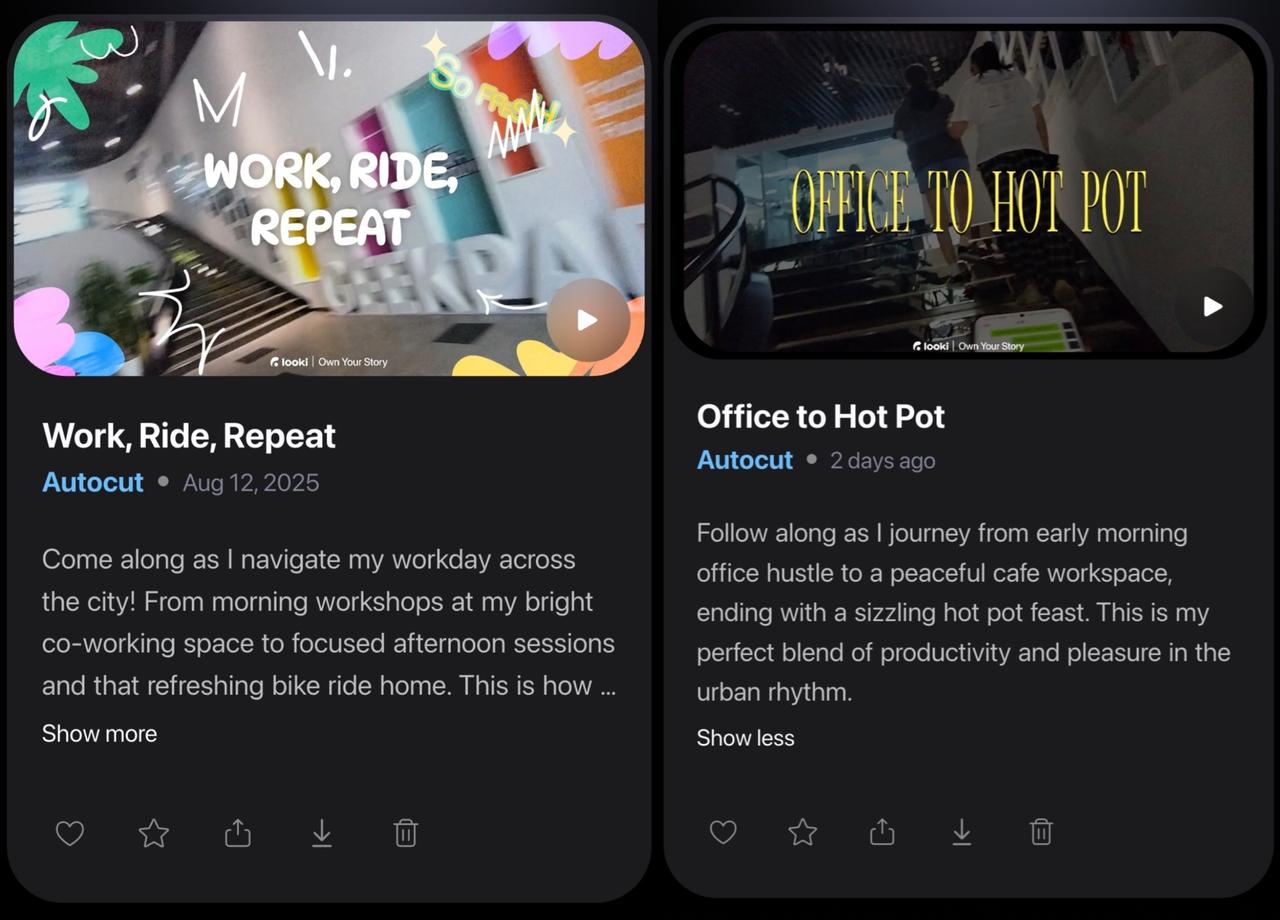
I captured two covers of vlogs generated by Looki—this gives a sense of the style|Image Credit: Geek Park
I once tried making vlogs myself, but gave up after two weeks—partly because I’d often forget to take out my phone or camera, and partly because editing hours of footage every night was exhausting. So for someone lazy like me, this is currently the best solution I’ve found.
Product Design Philosophy: AI Inward-Focused, Helping Me See More of Myself
The biggest change this product brought me is encouraging me to look inward more.
This credit likely goes to Looki’s content generation capability. I now eagerly anticipate its daily Moments and vlogs, curious to see how AI interprets me and my life.
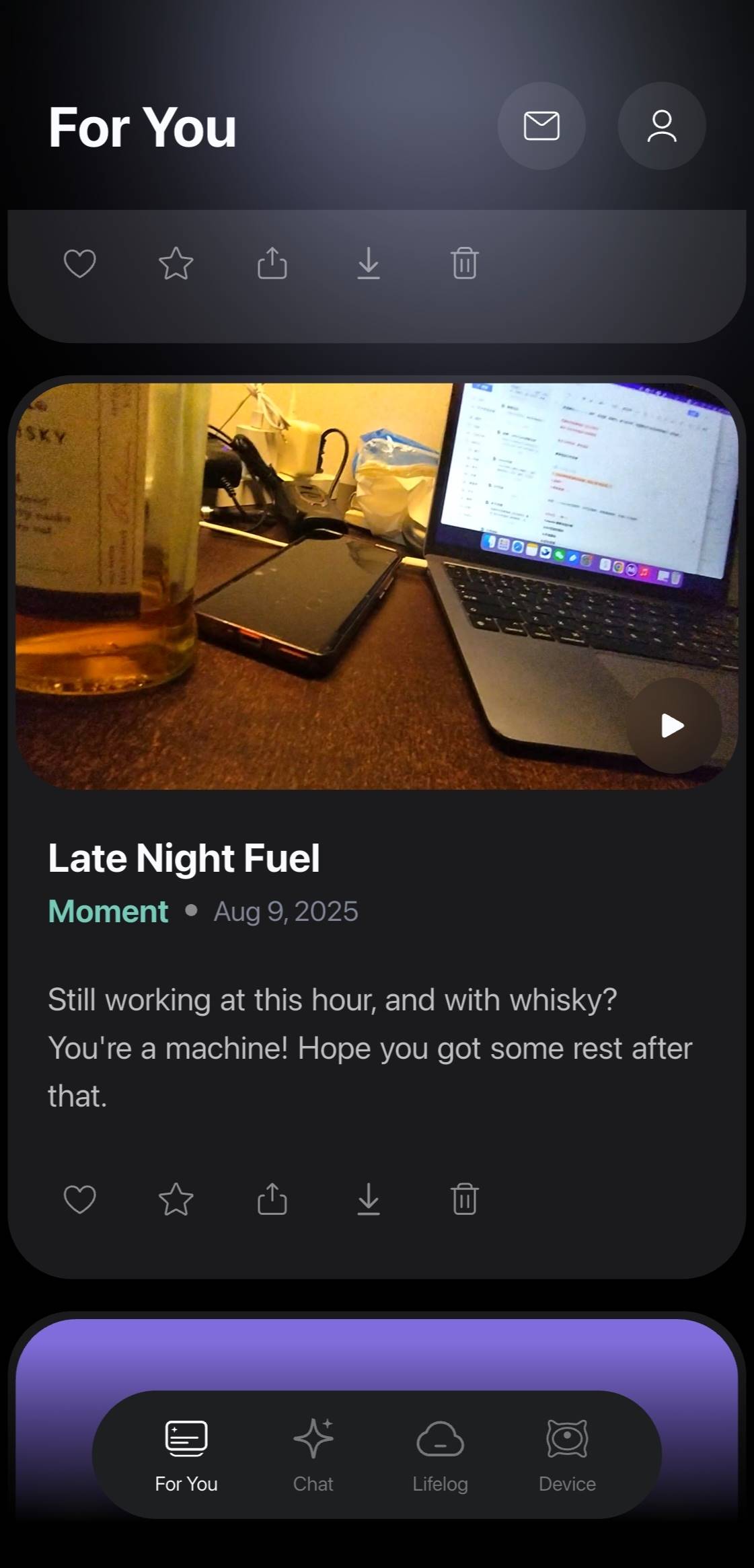
A Moment Looki pushed to me—reading its captions and interpretations is fun|Image Credit: Geek Park
After my first delightful experience, I didn’t just keep it magnetically attached to my chest during the day. When I sat down, I’d place it on the table, pointing the lens at myself. That way, I began appearing in the video frames. And thanks to contextual clues from audio and video, Looki AI quickly recognized me as the protagonist and remembered my identity.
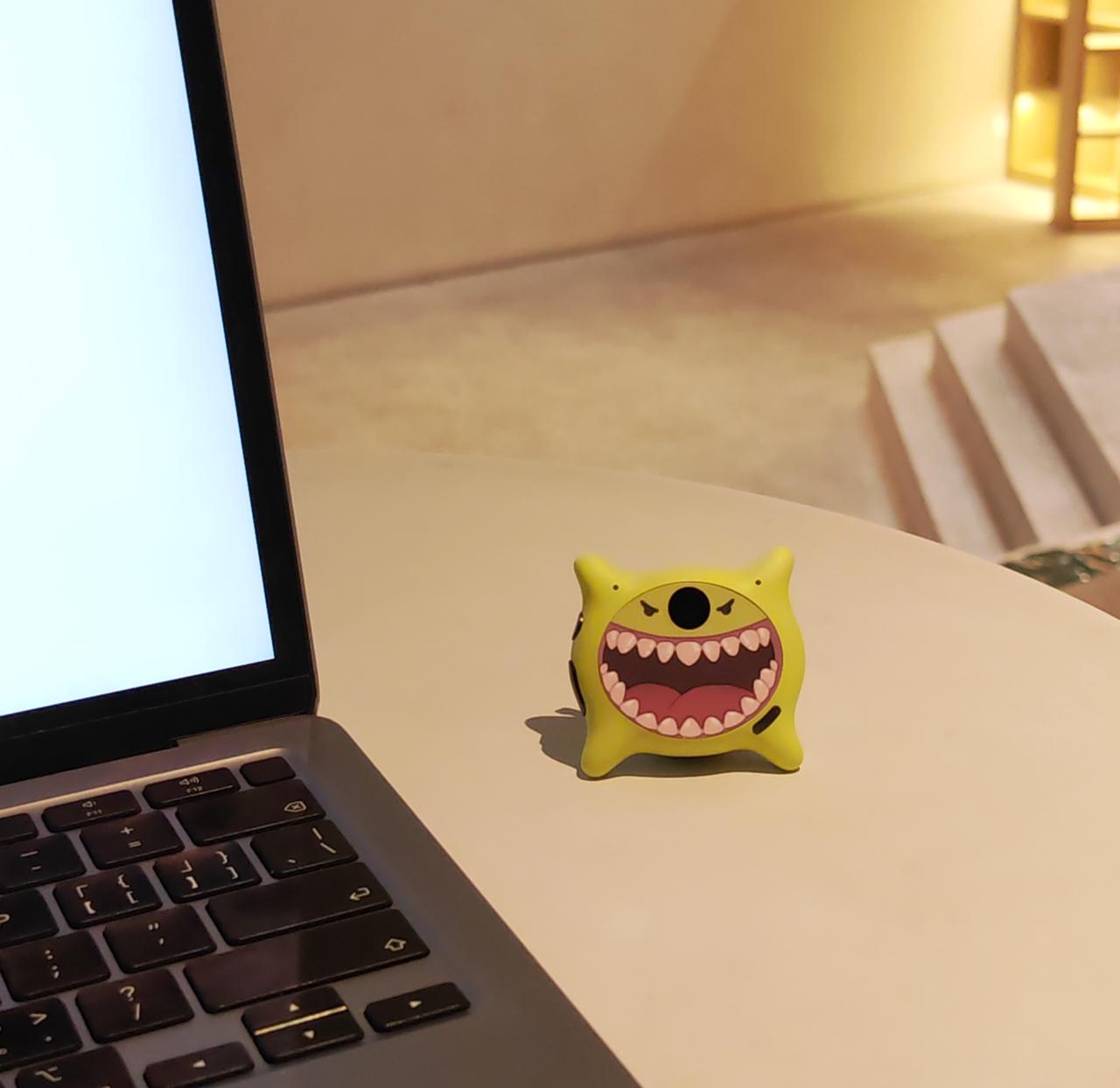
Thanks to the magnetic base, Looki L1 can stand upright on a table|Image Credit: Geek Park
It often picks up subtle, emotionally rich fragments I overlooked, then adds insightful commentary. Seeing them, I often think: “Oh, so that’s how I experienced that moment,” or “I was actually so happy then.” Without Looki’s “replay,” I would’ve dismissed those moments as mundane, boring fragments of daily life.
When I revisit them, I feel like I’m seeing more of myself—rediscovering lost time.
Still, the Looki L1 doesn’t replace traditional cameras.
Traditional cameras prioritize image quality and capturing peak moments. Drones from DJI or GoPro’s action cameras revolve around “perfect visuals.” Looki takes the opposite path: it doesn’t aim for 4K, instead using the Sony IMX681 CMOS sensor (same as Meta Ray-Ban), offering 1080p resolution but gaining 12-hour battery life and ultra-light 30g weight.
Social media has trained us to showcase “highlight moments.” In contrast, Looki isn’t designed for performative sharing on platforms like Xiaohongshu or Instagram. It’s built to capture life’s continuity and everyday details.
After all, our lives aren’t made up of perfect snapshots. It’s the imperfect, messy, authentic “non-highlight” moments that define “who I am.”
Today, we’re drowning in content, easily pulled toward grand narratives or gossip. From this perspective, Looki carries a counter-cultural spirit—it gently guides people to focus on their own lives, finding wonder in their daily routines and inner selves.
Looki Shows Me the Potential of Multimodal AI Hardware
In fact, the idea of “recording one’s entire life” isn’t new.
In the 1990s, computing pioneer Gordon Bell attempted to wear a camera 24/7 to document his life—but failed. The reason was simple: without AI assistance, vast amounts of footage couldn’t be transformed into meaningful stories.
Looki’s breakthrough lies in multimodal AI. It understands vision, sound, and semantics, turning fragmented data into usable “memories.”
For example, when I ask Looki what coffee I drank yesterday, it quickly analyzes video footage, tells me which cafes I visited, what flavors I had, describes the atmosphere, and displays relevant photos.

My chat interface with Looki AI|Image Credit: Geek Park
Several entrepreneurs have shared a similar view with me: for large models to truly deliver value, they must perceive the physical world—and that requires hardware. This may explain why “wearable AI devices” have become a hot topic in venture capital circles.
Looki’s innovation lies in being the first to unleash multimodal AI through clever hardware design, letting people experience what “multimodal AI” can actually do in real life—bringing the future into clear sight.
In the past, AI for personal use was hard to build, primarily due to lack of context.
The Looki team told me they integrate large models like ChatGPT and Gemini. Yet in practice, Looki AI outperforms the web versions I’ve used. It understands me better and engages in conversations rooted in my life.
I think the core reason is that Looki’s hardware captures information about my physical environment, providing richer context for AI. Without personalized context, AI responses tend to be correct but useless.
In essence, what Looki generates depends entirely on what it captures. The more places I go with it, the richer and deeper its output becomes. Here, photos and videos aren’t endpoints—they’re prompts. With Looki L1, the entire world becomes my AI prompt.
The Looki L1 looks a bit alien. Every time I wear it outside, it feels like bringing an extraterrestrial friend into society. It records the places we go, the people we meet, the events we experience. It’s like a friend who shares my journey, always present. As it accumulates more experiences, it grows alongside me, developing sensory resonance.
Remember earlier this year when OpenAI acquired former Apple design chief Jony Ive’s company, aiming to redefine human-AI interaction and planning to launch AI hardware by 2026? The leaked concept images bear a striking resemblance to the Looki L1.
Perhaps the Looki L1 we see today marks the beginning of personal AI hardware.
Join TechFlow official community to stay tuned
Telegram:https://t.me/TechFlowDaily
X (Twitter):https://x.com/TechFlowPost
X (Twitter) EN:https://x.com/BlockFlow_News
 极客公园
极客公园