After 12 years of scavenging in landfills, this man chose to walk away from $920 million
TechFlow Selected TechFlow Selected
After 12 years of scavenging in landfills, this man chose to walk away from $920 million
Cryptocurrency might win, but Howells' coin launch probably won't.
 Navigating Web3 tides with focused insights
Author: Azuma, Odaily Planet Daily
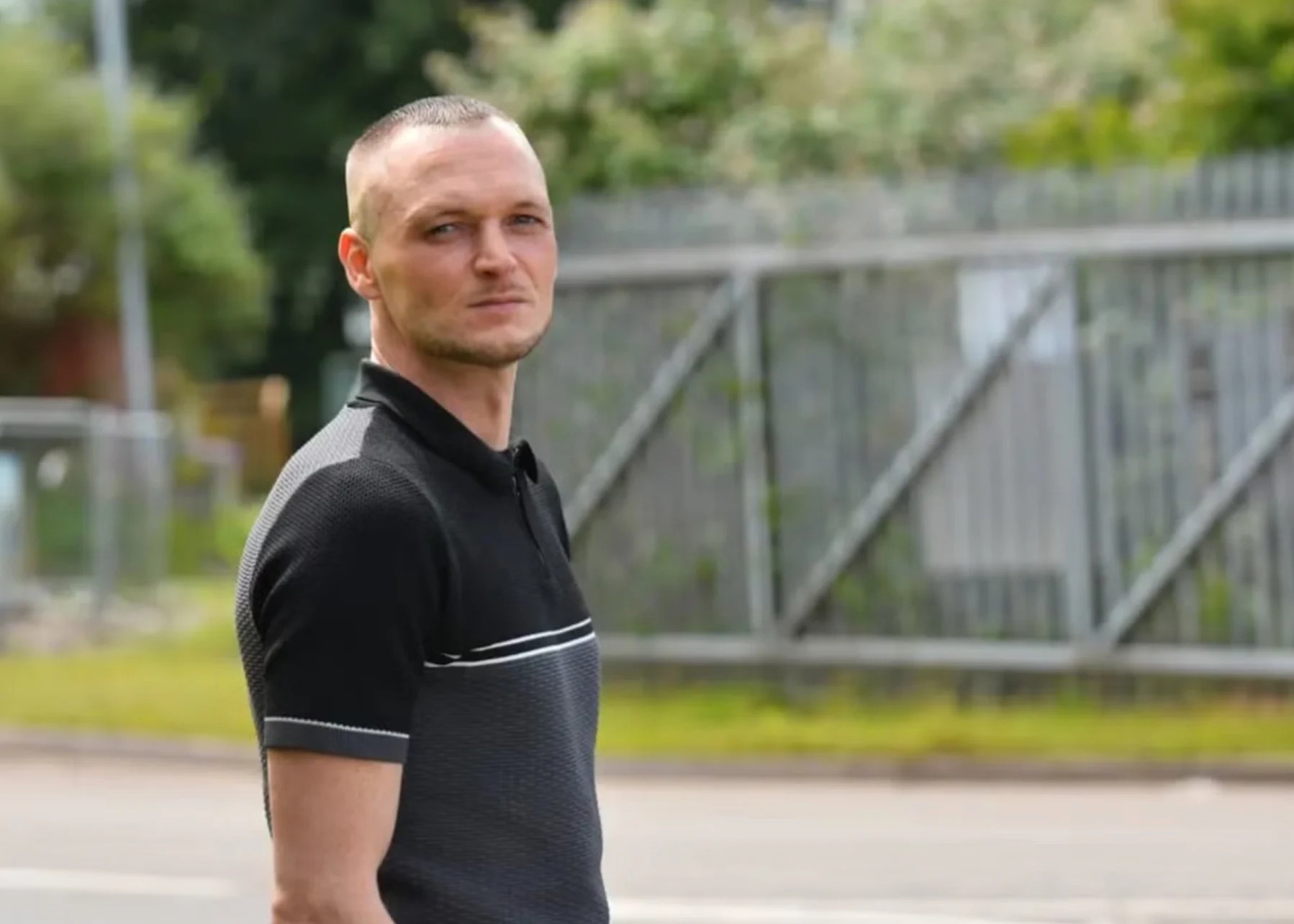
After 12 years of relentless searching, British man James Howells has decided to abandon his efforts to recover a hard drive containing 8,000 BTC—worth approximately $920 million at a price of $115,000 per BTC.
Odaily Planet Daily note: While early UK media reports cited 7,500 BTC as the lost amount, later coverage and Howells' own accounts consistently state 8,000 BTC. This article uses the latter figure.
Accidental Loss of 8,000 BTC
James Howells was born in Newport, Wales, in the 1980s. Influenced by his mother, who worked in microchip manufacturing, Howells developed an early interest in computer technology. He became an avid internet user during adolescence, began building computers at age 13, and eventually became a computer engineer.
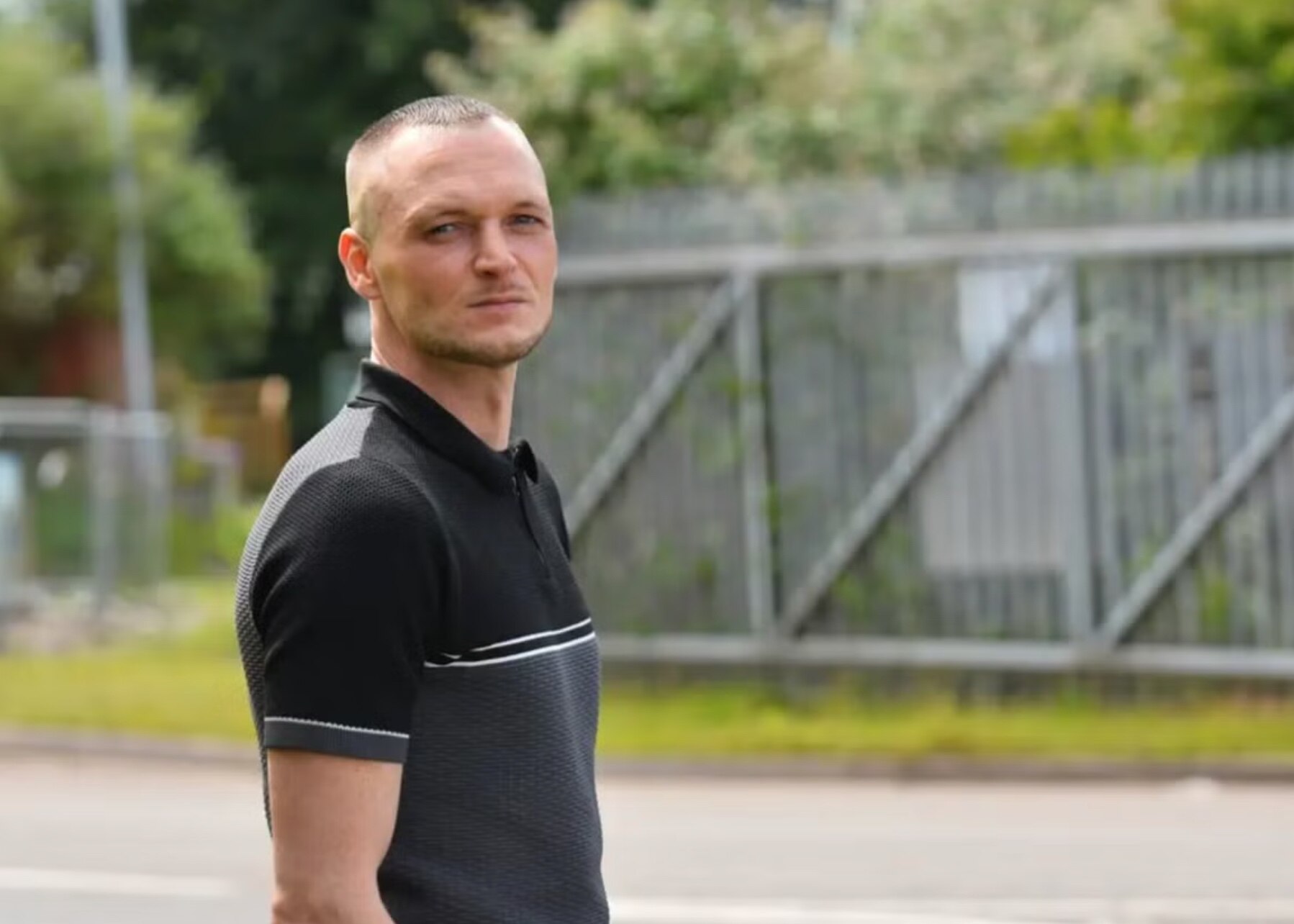
As early as late 2008, Howells learned about Bitcoin. On February 15, 2009, he started mining Bitcoin using a Dell XPS laptop—the Daily Telegraph identified him as one of the earliest miners on the Bitcoin network, while The New Yorker noted that only five miners were active globally at the time.
However, Howells' mining activities did not last long. His girlfriend frequently complained about the noise and heat generated by the laptop during mining. In 2010, he accidentally spilled lemonade on the device, damaging it beyond repair. He dismantled the machine, selling or discarding most parts, while leaving the hard drive containing private keys for 8,000 BTC stored in a drawer.
Between June 20 and August 10, 2013, Howells mistakenly discarded the hard drive as trash. Howells later claimed that his former girlfriend, Hafina Eddy-Evans, transported the garbage containing the hard drive to the landfill. However, Eddy-Evans stated that Howells had asked her to help dispose of the items and denied any fault, while Howells said he "subconsciously" held her responsible.
Recalling the incident, Howells said: "I wasn't paying much attention to Bitcoin back then because I got distracted. Then I had kids and started renovating my house—I completely forgot about Bitcoin until it reappeared in the news."
In November 2013, The Guardian reported that the hard drive was likely buried about 0.9–1.5 meters underground at the Newport Docksway landfill site. During that interview, Howells admitted the BTC might be lost forever.
Subsequent assessments from Newport City Council indicated the hard drive could be buried under 25,000 cubic meters (approximately 110,000–200,000 tons) of waste. A former landfill manager confirmed it lies within Cell-2, a 15,000-ton landfill section used between August and November 2013, part of a total 1.4 million-ton disposal site.
Rising Prices, Repeated Obstacles
As BTC prices surged, Howells repeatedly attempted to retrieve the hard drive but was repeatedly denied access by local authorities.
In December 2017, Newport City Council rejected Howells’ application to search the landfill, citing costs, environmental impact, equipment corrosion risks, and potential illegal "gold rush" behavior. In January 2021, Howells proposed donating 25% of these bitcoins (then worth £52.5 million) to Newport’s 316,000 residents (£175 each), but the council again refused, citing violations of licensing regulations.
A Newport City Council spokesperson told CNN: "The council has been contacted multiple times since 2013 regarding assistance in recovering a hard drive believed to contain Bitcoin. We haven’t rejected the idea outright—we simply aren’t permitted to excavate the site. The council has told Mr. Howells numerous times that excavation is impossible under our permit rules and would cause massive environmental disruption. The cost of digging up, storing, and processing waste could reach millions of pounds, with no guarantee of finding the drive—or that it would still function."
Nevertheless, Howells insisted the hard drive could still work, protected by its casing and the corrosion-resistant cobalt layer on the glass platters. With the value of these BTC skyrocketing, such a fortune was impossible to let go easily.
To secure council permission, Howells developed multiple detailed plans addressing their concerns. At one point, a hedge fund offered to finance the operation (splitting profits 50/50), planning to use municipal waste records to locate the drive and employing professional data recovery teams. Howells budgeted £5 million for a 9- to 12-month excavation. By August 2022, with support from several venture capital firms (taking 30% of proceeds), Howells upgraded his plan to include AI-powered robotic arms for scanning waste, drones and Boston Dynamics robot dogs for security, and an environmental team, increasing the budget to £10–11 million.
To gain community support and thereby win council approval, Howells also proposed developing a community-owned mining facility on the landfill site powered by solar or wind energy.
On September 6, 2023, after prolonged rejection, Howells instructed his legal team to send an open letter to Newport City Council, announcing intent to sue. The letter demanded the city halt construction at the landfill, sought £446 million in damages, and requested judicial review of the council’s refusal to grant access. Two months later, his legal team sent another letter urging access before proceeding to court.
By October 2024, the Bitcoin on the lost hard drive was valued at $750 million. Howells ultimately filed a lawsuit seeking £495 million in compensation, but the council argued that under waste disposal laws, ownership of the hard drive had already transferred to the municipality.
On January 9, 2025, the judge dismissed Howells’ case, ruling it “lacked reasonable grounds” and had “no prospect of success.” Howells expressed “extreme disappointment” to the media but revealed new plans—to launch a cryptocurrency backed by the unrecoverable Bitcoin.
No Recovery, But a New Path
Unable to obtain access permission from the council, Howells has now abandoned the physical search—but is pursuing an alternative path.
As early as May this year, Howells hinted on his personal X account his intention to tokenize 21% of these 8,000 BTC, aiming to launch during TOKEN 2049 Singapore on October 1, with a fundraising target of $75 million... However, in the following months, he made no further mentions on social media, suggesting the plan likely collapsed—after all, with near-zero chance of recovering the BTC, attempting to raise $75 million appears highly questionable.
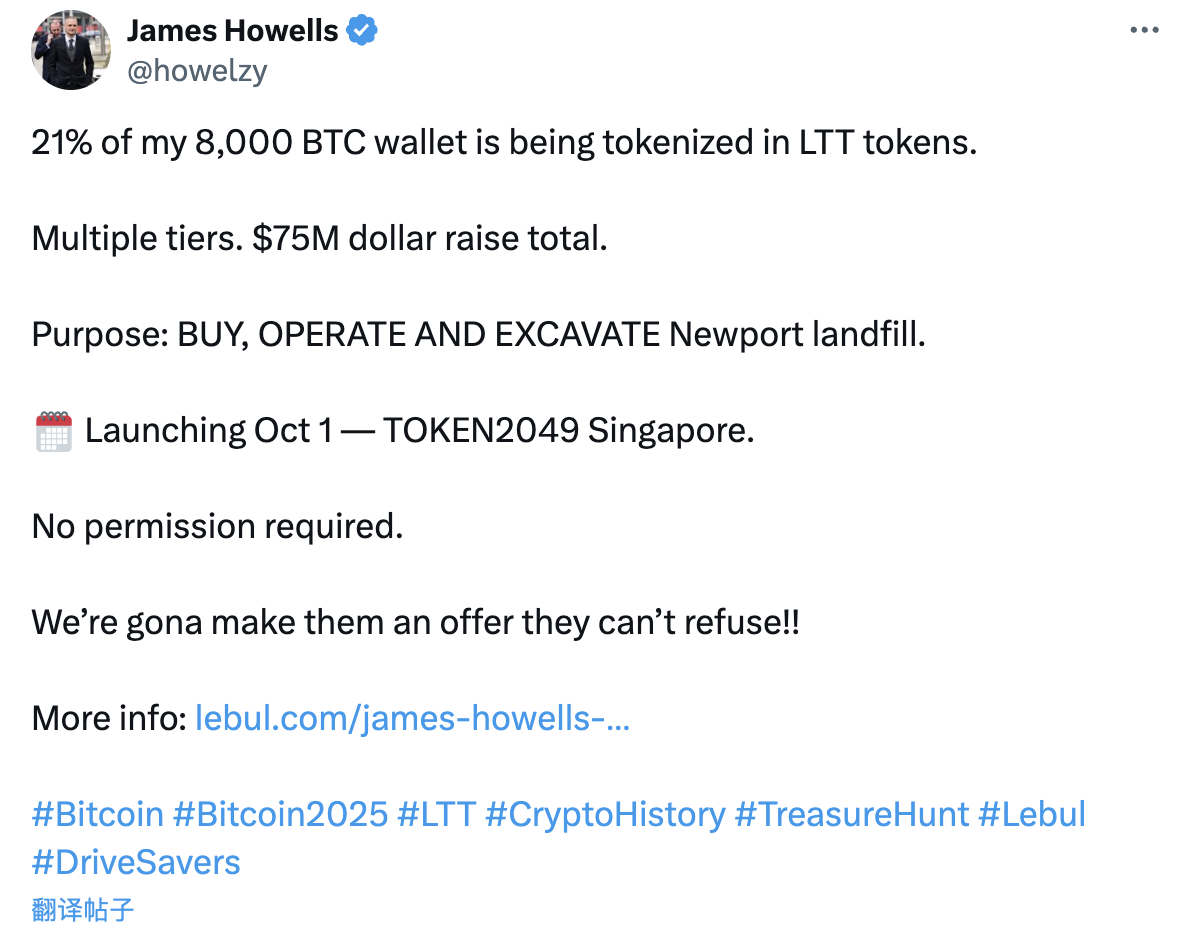
This morning, Howells unveiled a revised tokenization plan: issuing 800 billion Ceiniog Coins (INI). The token is expected to launch by year-end, built on the Bitcoin network, supported by OP_RETURN, and integrated with Stacks, Runes, and Ordinals. Each INI will be pegged to the value of one satoshi within the lost BTC stash...
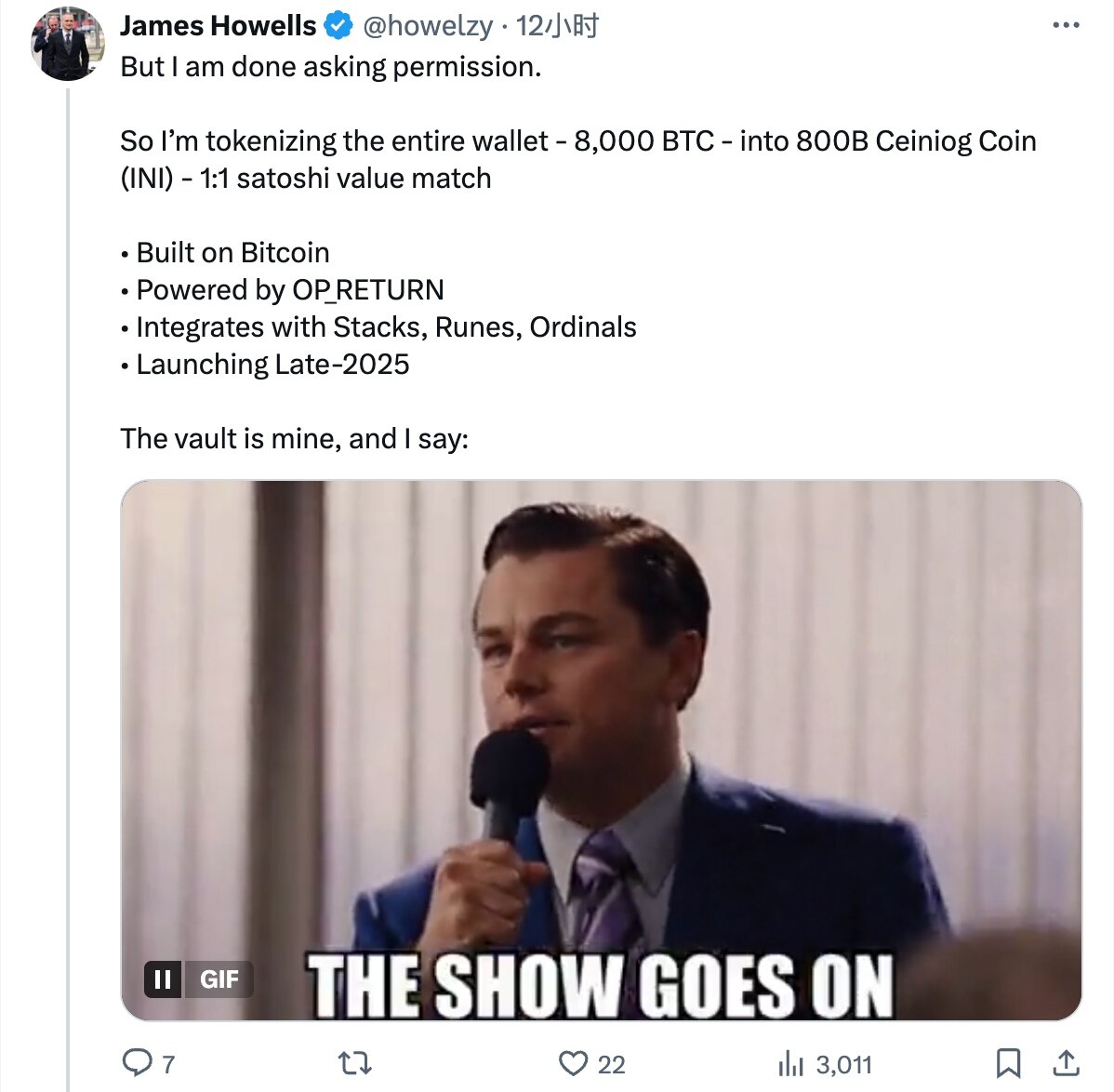
Howells ended with an impassioned statement: "To all the senior, distinguished gatekeepers who’ve blocked me for over a decade: You can lock the gates! You can control the courts! But you cannot stop the blockchain! Cryptocurrency has won!"
Yet, given the hard drive remains unrecovered, regardless of how compelling Howells’ vision may sound, INI lacks actual asset backing, and the future of this project remains uncertain.
Cryptocurrency may win—but Howells’ coin launch likely won’t.
Join TechFlow official community to stay tuned
Telegram:https://t.me/TechFlowDaily
X (Twitter):https://x.com/TechFlowPost
X (Twitter) EN:https://x.com/BlockFlow_News
 Odaily