From cryptocurrency trading tools to the continuation of U.S. monetary policy, how far is the crypto industry from mainstream financial markets?
TechFlow Selected TechFlow Selected
From cryptocurrency trading tools to the continuation of U.S. monetary policy, how far is the crypto industry from mainstream financial markets?
Once merely a tool for crypto traders to store profits, it has now become the transaction layer for emerging economies, a settlement instrument in fintech stacks, and a strategic monetary extension of U.S. monetary policy.
 Navigating Web3 tides with focused insights
Author: Castle Labs
Translation: AididiaoJP, Foresight News
Over the past 12 months, stablecoins have moved from the periphery of crypto into broader financial markets. The data speaks for itself: stablecoin supply has more than doubled, and usage by traditional payment networks and institutional participants has surged, reflecting growing market interest in these assets. But beneath this lies a structural shift—once tools used by crypto traders to park profits, stablecoins are now emerging as transaction layers for developing economies, settlement instruments within fintech stacks, and strategic monetary extensions of U.S. monetary policy.
This report compares stablecoin usage between mid-2024 and mid-2025, tracking adoption growth, regional shifts, and the current standing of stablecoins as both products and concepts.
Global Trends: From Liquidity Tools to Functional Infrastructure
Market Cap and Usage Growth
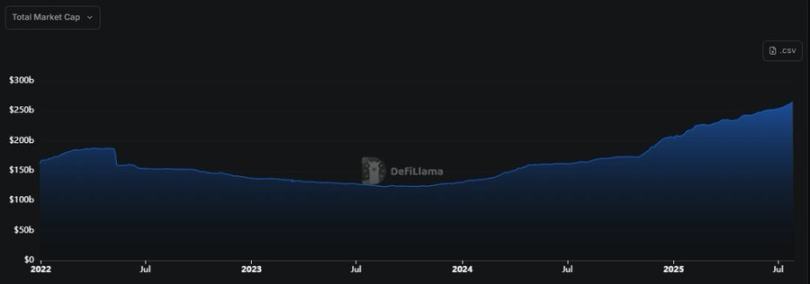
Stablecoin market cap rebounded from around $160 billion in mid-2024 to over $260 billion by July 2025—an increase of more than 60%—surpassing 2022 highs in circulating supply and setting new records in liquidity.
On-chain transaction volume tells an even clearer story. In 2024, stablecoin settlements exceeded the combined total of Visa and Mastercard at $27.6 trillion. Monthly volumes doubled year-over-year, rising from $1.9 trillion in February 2024 to $4.1 trillion in February 2025. A peak of $5.1 trillion was reached in December 2024, indicating that these funds are no longer confined to crypto-native ecosystems—stablecoins accounted for over half of transaction value in certain ecosystems.
User Base Expansion
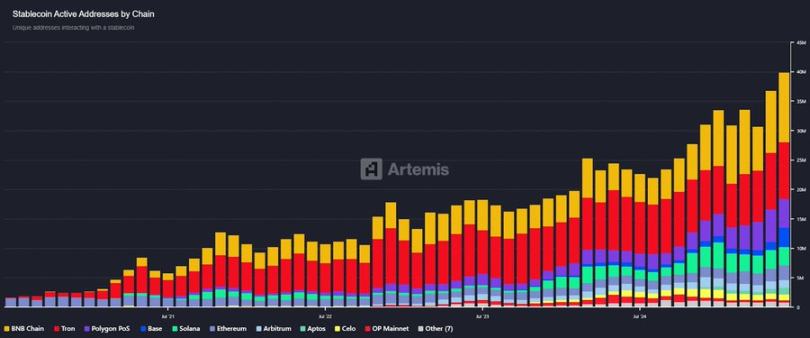
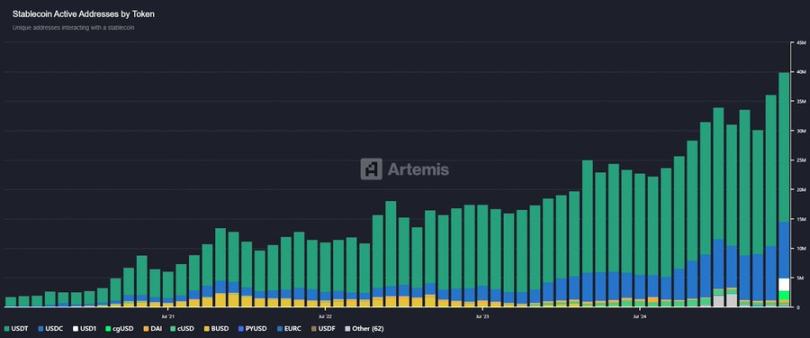
The number of active wallets grew from approximately 20 million in mid-2024 to about 40 million by mid-2025. The total number of addresses holding stablecoin balances has surpassed 120 million. This growth is not just quantitative but also reflects increased diversity. More small businesses, freelancers, and remittance users are transferring funds via stablecoins, often without direct participation in broader crypto markets.
Institutional Integration
In 2024, stablecoins evolved beyond being mere financial tools for crypto firms, gaining adoption among fintech companies, asset managers, and even some enterprises. The reason is simple: they offer a fast, programmable, USD-denominated asset that can be transferred across platforms instantly, without reliance on traditional banking channels. For companies operating across borders or time zones, this enables improved liquidity management, faster internal transfers, and reduced settlement delays.
With interest rates remaining high through much of 2024, parking idle cash in stablecoins like USDC became increasingly attractive. Many stablecoins are backed by short-term Treasuries; while users do not directly earn yield, their reserve structures instill confidence that underlying assets are high-quality and income-generating. For corporations seeking a reliable digital dollar alternative, stablecoins emerged as a viable option.
This year saw deeper integration into fintech architecture. Visa expanded USDC settlements to Ethereum and Solana. Stripe and PayPal introduced stablecoin payments into consumer pipelines. Even banks began testing native stablecoins—such as Standard Chartered’s HKD coin—to explore faster cross-border settlements.
Tether generated $13 billion in profit in 2024—more than double BlackRock’s earnings—highlighting the financial significance of the reserve model. This not only demonstrates that stablecoin issuers support critical infrastructure but also reveals they operate highly profitable businesses. This profitability translates into sustainability, strengthens user trust, and accelerates adoption across finance.
Evolution of Stablecoin Types
Fiat-Backed Stablecoins Dominate
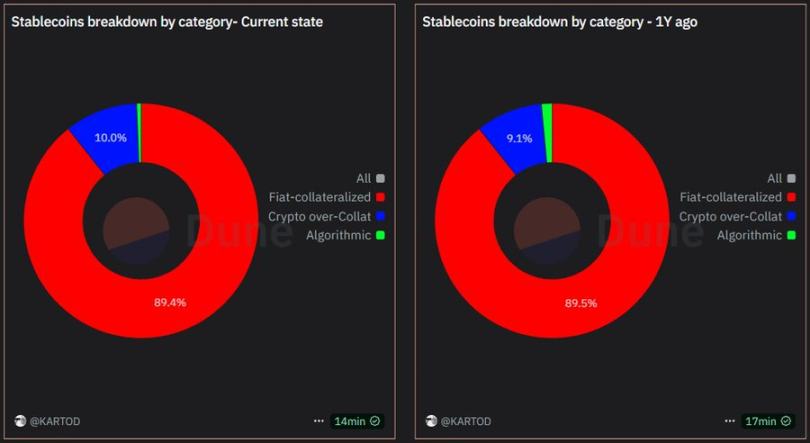
Fiat-backed stablecoins (fully supported by cash or short-term Treasury reserves) increased their market share from around 85% in 2024 to over 90% today. Tether (USDT) supply grew from about $83 billion to approximately $150 billion. USDC recovered from its 2023 lows (~$59 billion), regaining institutional favor.
Adoption of stablecoins like PayPal's PYUSD and Paxos' USDP has been modest, with real growth concentrated among top-tier products. User preference for fully backed and transparently reserved stablecoins has become the norm, although this comes with trade-offs regarding centralized custody and regulatory risk.
Decline of Crypto-Collateralized and Algorithmic Stablecoins
Crypto-collateralized stablecoins (e.g., DAI) saw slight absolute growth (about $5 billion) but declined in market share. Protocols like Aave (GHO) and Curve Finance (crvUSD) added hundreds of millions in circulation, yet crypto-backed stablecoins failed to break through—and did not collapse either.
Algorithmic models, on the other hand, have nearly vanished. After the Terra collapse, undercollateralized designs lost credibility, and many projects—including Frax Finance—shifted to fully fiat-backed models by 2023. Since then, no new algorithmic stablecoin has gained significant traction.
Today, fiat-backed stablecoins dominate in utility and consensus. Crypto-backed variants occupy a small but practical niche. Once seen as mainstream contenders, algorithmic approaches have largely exited the market.
Rise of Yield-Bearing Stablecoins
A notable emerging category in 2025 is yield-bearing stablecoins—assets designed not just to preserve value but to grow it. Unlike traditional fiat-backed or overcollateralized models, these tokens explicitly integrate real-world or on-chain yield strategies into their design. Two prominent examples are Ethena’s USDe and Resolv’s USR.
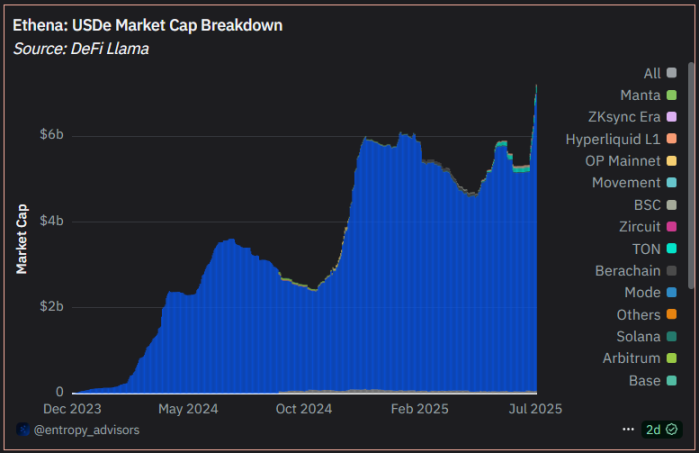
Ethena Labs’ USDe employs a delta-neutral strategy, pairing staked ETH collateral with perpetual short positions to maintain its peg while generating synthetic yield. This yield is distributed to holders via an additional token, sUSDe. The model attracted early attention due to its composability, transparent yield mechanism, and ability to generate revenue without relying on centralized reserves. As of mid-2025, USDe’s supply remains far below major stablecoins, but it is one of the few post-Terra experiments to achieve meaningful adoption while maintaining stability.
In contrast, Resolv Labs links yield to income-generating real-world assets, creating a structure closer to tokenized Treasuries but delivered in stablecoin form. USR aims to maintain its peg while providing steady returns through partnerships with off-chain credit and structured products. This is a more institutionally oriented approach, with adoption primarily seen in DeFi protocols and early lending platforms.
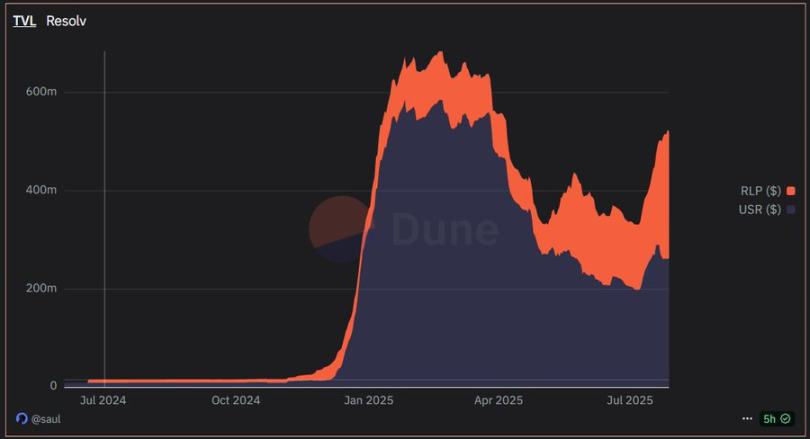
These models remain experimental and are adopted at levels far below fiat-backed stablecoins. Yet they represent a clear trend: users want not just stability, but passive yield. Challenges remain in maintaining transparency, peg stability, and regulatory clarity. If any of these erode, confidence could quickly dissipate.
For now, yield-bearing stablecoins have carved out a space. They do not replace USDT or USDC but expand the design frontier, offering capital-efficient options for users with different risk appetites. Whether they can scale without inheriting the fragility of earlier algorithmic stablecoins remains to be seen. But for now, they command more credibility than any attempt since UST’s collapse.
Regional Shifts in Behavior
Emerging Markets: Latin America, Africa
Motivation: Stability and Access to Dollar Exposure
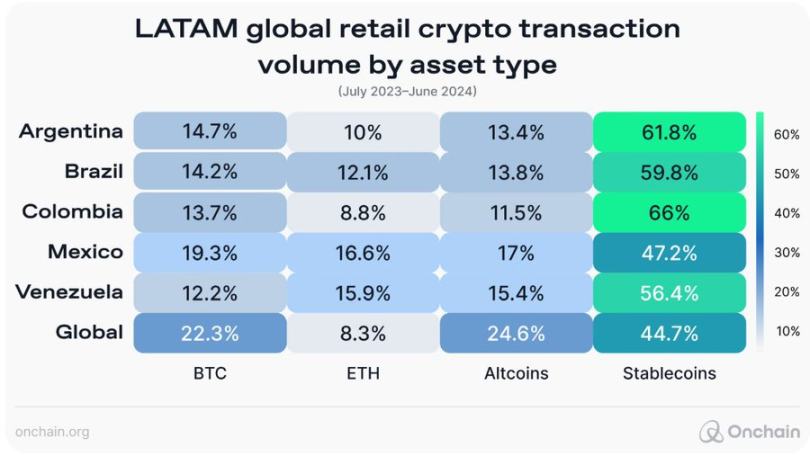
In countries facing inflation and currency volatility, stablecoins are increasingly serving as digital dollar alternatives. Examples include Argentina, Venezuela, and Nigeria. Demand for USDT spiked during local currency devaluations in 2024. By 2025, holding digital dollars had become standard practice for individuals and merchants alike.
In Africa, foreign exchange shortages affect over 70% of countries, and stablecoins now serve as bridges connecting local economies to global capital. Nigerian exchanges often quote prices in USDT. When banks cannot provide USD, businesses use stablecoins to pay overseas suppliers.
Remittances and Payments
The shift toward stablecoins in remittance corridors is significant. In 2024, crypto-based cross-border transfers in Latin America grew over 40%. By 2025, apps like Binance P2P and Airtm had become primary remittance tools across entire communities.
The average cost of sending $200 via stablecoins in sub-Saharan Africa is about 60% lower than through traditional remittance channels. This is not marginal improvement—it’s transformative impact and strong product-market fit.
Preferred Platforms and Tokens
Tron dominates as the leading blockchain for stablecoin activity in emerging markets due to its low fees, with most niche and P2P markets using USDT on Tron. BSC and Solana have gained some share, but in many regions, Tron remains the default choice.
USDC is gradually penetrating traditional financial payment channels, especially where regulatory scrutiny or institutional relationships matter. But for everyday users, USDT still holds overwhelming dominance.
Regulatory Stance
Governments remain cautious. Brazil introduced digital asset regulation and is exploring a central bank digital currency (CBDC). South Africa is drafting guidelines specific to stablecoins. Most other emerging markets remain观望. While recognizing their utility, authorities worry about dollarization and capital flight. For now, basic usage is tolerated—especially where alternatives are lacking.
Asia: Clear Regional Divergence
Southeast and South Asia
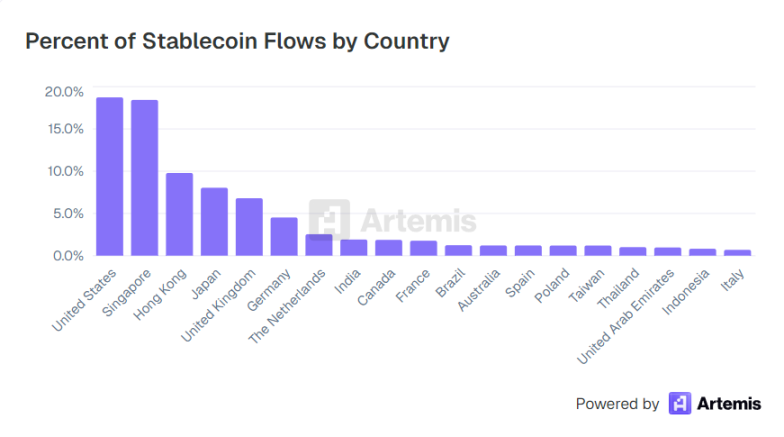
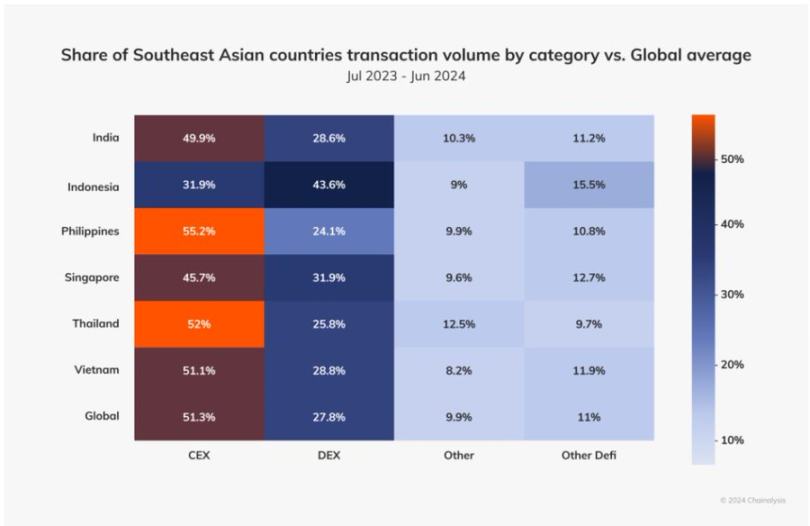
In Southeast Asia, stablecoin usage is driven more by access than inflation. In countries like the Philippines and Vietnam, remittances are the main driver. Overseas workers send USDT or USDC home via apps like Coins.ph or BloomX. In India, traders and freelancers use stablecoins to move funds between platforms and reduce slippage.
Vietnam stands out in retail crypto adoption. Singapore takes a more institutional path, issuing licenses for stablecoins and encouraging regulated issuance.
East Asia and Financial Hubs
Hong Kong and Singapore position themselves as regulated stablecoin financial centers. The Monetary Authority of Singapore (MAS) implemented clear guidelines by end-2024 (reserve backing, redemption terms). By 2025, USDC and regional stablecoin issuers were applying for Singapore licenses.
Japan allows banks to issue stablecoins under a legal framework established in 2023. Several yen-pegged stablecoins exist but remain niche. In South Korea, strict regulations confine stablecoin use mainly to trading.
Mainland China officially bans crypto-related activities, yet USDT sees widespread use through OTC channels. Reports indicate large-scale capital outflows and trade conducted via Tether on Tron. This is an ongoing but unofficial norm.
Developed Markets: Integration Rather Than Replacement
Usage Patterns
In the U.S. and Europe, stablecoins are rarely used for daily spending but are increasingly embedded in the backends of fintech stacks, corporate finance, and cross-border settlements.
Companies use stablecoins to transfer funds between subsidiaries. Freelancers accept USDC as payment for international work. After the 2023 bank failures, crypto firms now rely on stablecoins—not ACH or SWIFT—for fiat transactions.
Franklin Templeton’s on-chain money market fund settles in USDC. Mastercard and MoneyGram have launched stablecoin-based services. These integrations show stablecoins expanding as complementary tools within fintech, not outright replacements.
Regulatory Developments
The EU’s MiCA framework took effect in mid-2024. By mid-2025, non-euro stablecoins face daily transaction caps, and issuers must obtain licenses. The UK passed legislation recognizing stablecoins as digital settlement assets.
In the U.S., the GENIUS Act recently passed, though its impact is not yet visible. Prior enforcement actions (like BUSD’s decline) and market behavior (concentration in USDC/USDT) suggest regulators have indirectly shaped the space—but that is changing. Stablecoins now account for over 1% of M2 money supply, and Federal Reserve officials have begun publicly acknowledging this.
Conclusion: From Parallel Asset to Embedded Layer
Between July 2024 and July 2025, stablecoins transformed from primarily crypto-native tools into independent parallel financial systems. In emerging markets, they provide solutions to bypass currency collapse and costly banking services; in developed markets, they are integrated into regulated, compliant workflows.
Market structure reflects this evolution. Fiat-backed stablecoins dominate with over 90% market share. Algorithmic and unbacked models once considered core to “decentralization” have mostly disappeared. Today, stablecoin usage is driven more by utility and trust than ideology.
Regulatory frameworks have not fully caught up, but progress is underway. Institutions, banks, fintech firms, and payment giants are gradually adopting them. The question is no longer whether stablecoins will be regulated, but how existing institutions will regulate and integrate them—and how much value they will hold and where it will flow.
Stablecoins are unlikely to fully replace fiat currencies, but in areas where traditional money fails—off-hours, cross-border scenarios, or economies with weak infrastructure—they are already filling the gap.
Future development will depend on sustained utility, clear rules, and the ability to scale yield without compromising stability or transparency. But looking back over the past year, the trend is unmistakable. Stablecoins have found their role—and it is more significant than most anticipated.
Join TechFlow official community to stay tuned
Telegram:https://t.me/TechFlowDaily
X (Twitter):https://x.com/TechFlowPost
X (Twitter) EN:https://x.com/BlockFlow_News
 @castle_labs