
Ethereum's 10th Birthday: Wall Street Takes Over in Its Inaugural Year
TechFlow Selected TechFlow Selected
Ethereum's 10th Birthday: Wall Street Takes Over in Its Inaugural Year
It's time to look back on the journey we've taken with Ethereum.
 Navigating Web3 tides with focused insights
Written by: Jaleel Jialiu, BlockBeats
As if aligning with this significant 10th anniversary, ETH is once again challenging the $4,000 mark.
From its mainnet launch on July 30, 2015, to today in 2025, over ten years it has not only witnessed the rise and fall of the entire blockchain industry but also built an unprecedented "world computer" through repeated upgrades and consensus. Once-overlooked smart contracts have now become the most widely used operating system in the Web3 world. ETH has grown from a few cents during its crowdfunding phase to a major asset exceeding a $300 billion market cap.
Meanwhile, the Ethereum Foundation has undergone a critical internal reshuffle. Changes are happening both within and outside. Over the past year, a series of companies with traditional finance backgrounds have successively purchased ETH, with institutions like SharpLink, BTCS, and BMNR announcing ETH as part of their strategic asset reserves.
All these changes occur during this special year: 2025, marking exactly ten years since Ethereum's mainnet launch.
These ten years represent one of the most pivotal chapters in blockchain history—from a whitepaper to a global ecosystem worth hundreds of billions; from the "Eight Princes" founding team to surviving isolation amid attacks from "Ethereum killers"; from PoW to PoS, from a technical lab to public infrastructure—Ethereum has completed its first full cycle.
But its real story may just be beginning.
The Prequel of Ethereum
This period focuses on the split and ideological conflicts among Ethereum’s founding team between 2014 and 2015. Vitalik Buterin, the brilliant programmer always eager to discuss technology, when asked about his biggest regret in the Ethereum journey, consistently answers “the matter of the eight co-founders.” Clearly, those eight long-departed founders remain a personal burden.
When Vitalik had nothing more than an idea, he welcomed the first ten developers who responded wanting to join, selecting five of them for leadership—these became Ethereum’s original five co-founders: Vitalik Buterin, Anthony Di Iorio, Charles Hoskinson, Mihai Alisie, and Amir Chetrit.
“That was clearly a serious mistake. They seemed like good people and wanted to help, so I thought, why not let them lead?” Vitalik later reflected on that decision.
The topic of Ethereum co-founders remains controversial, with many conflicting versions online—even Wikipedia entries frequently edited. After Vitalik personally confirmed eight co-founders, the widely accepted version emerged: following the initial five, three additional developers joined as co-founders in 2014: Joseph Lubin, Gavin Wood, and Jeffrey Wilcke.
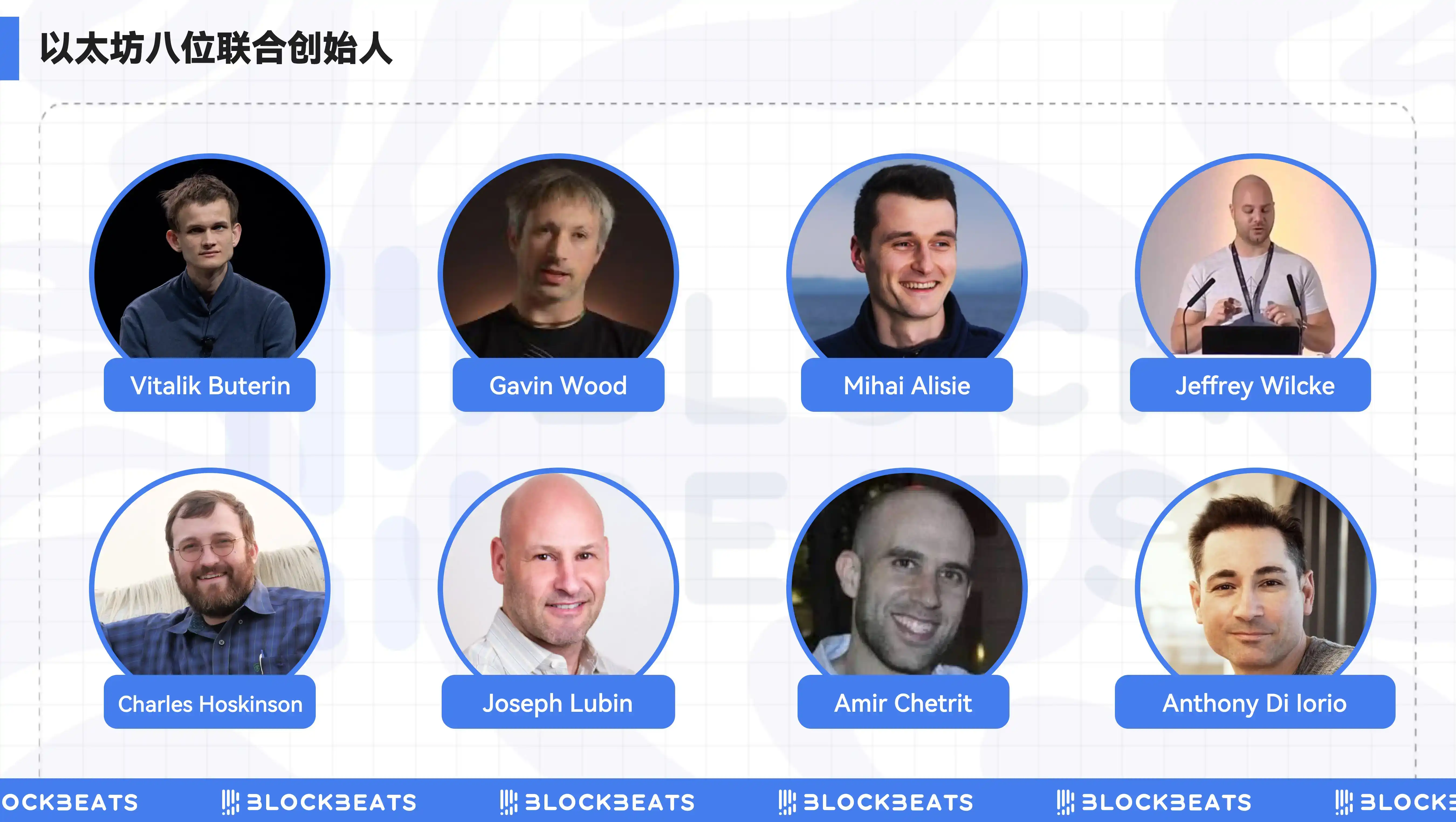
Thus, Ethereum completed its early core team of eight—a structure reminiscent of the Qing and Yuan dynasties’ “Eight Princes Deliberating,” designed to prevent autocratic rule.
Pilgrimage to Berlin
In last year’s released documentary *Vitalik: An Ethereum Story*, Vitalik recalled starting his digital nomad life around mid-2013.
This was Ethereum’s prehistoric era, when Bitcoin traded at just $204, over a year after Vitalik and Mihai Alisie founded Bitcoin Magazine. While building Ethereum and invited by global communities, he traveled extensively. In 2013 and 2014, Ethereum established headquarters in Switzerland and Berlin, released its whitepaper, and Vitalik visited China to crowdfund Ethereum and meet miners.
Berlin was where he stayed the longest.
“Pilgrimage”—that’s how Vitalik described his time in Berlin’s Bitcoin Kiez district. Cryptocurrency payments were common there. Within a few hundred meters, over a dozen shops accepted BTC. The community hub “Room 77” bar attracted diverse crowds—tech developers, political activists, and more.

Room 77 bar, photographed by Vitalik Buterin in 2013, now closed
Nearby, Ethereum rented an office just 1.5 km from Room 77—less than a 20-minute walk for Vitalik. Searching “Waldemarstraße 37A, 10999 Berlin” on Google Maps today still shows the address labeled “Ethereum Network Launch (30/07/2015)” along with photos of early core members.
In early 2014, most core Ethereum members were gathered around Vitalik, forming a highly cohesive team.
At the January Miami Bitcoin Conference, Vitalik and his co-founders presented their project together for the first time—to great effect, officially introducing Ethereum to the public. But it was also the eve of separation.
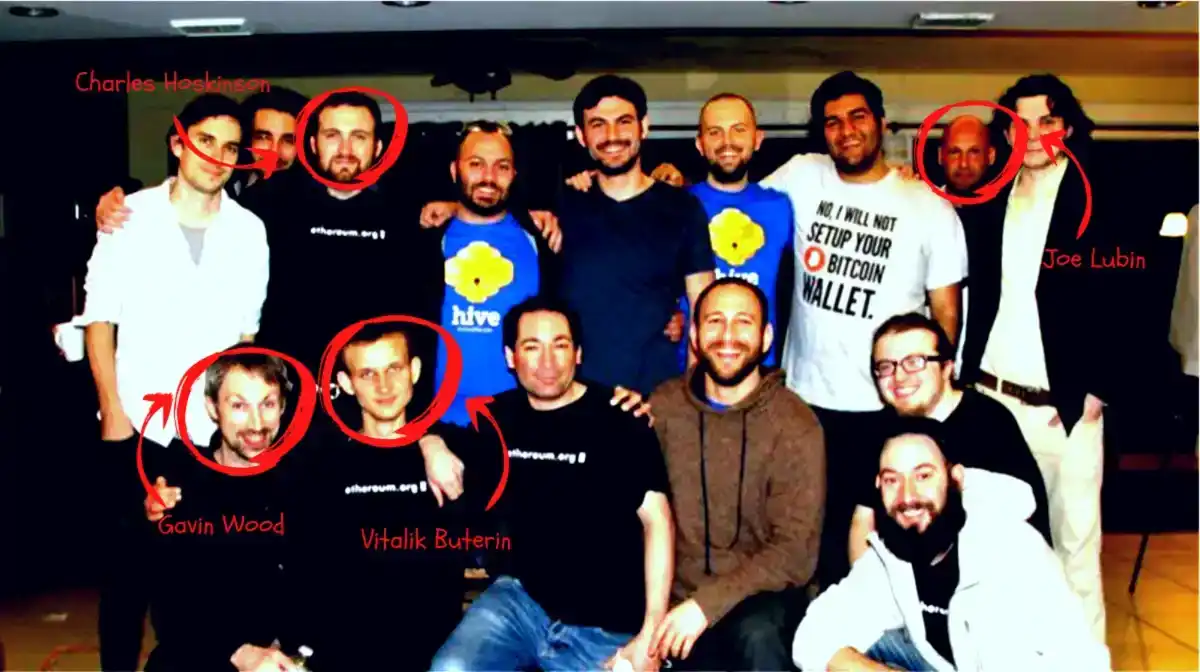
First Ethereum meetup in Miami, January 2014, image source: network
The Swiss Split
2014 was far from ordinary for the crypto world. Mt. Gox’s bankruptcy and hack caused Bitcoin’s price to plummet from a high of $951.39 to $309.87—a 67% drop. That same year, CZ sold his Shanghai apartment to buy Bitcoin at $600 and became CTO of OK. Fresh MIT graduate SBF was applying for jobs on Wall Street.
For Ethereum, 2014 was even more pivotal—an event akin to the “Traitorous Eight” leaving Shockley Semiconductor played out in crypto, determining Ethereum’s future path.
On June 7, 2014, all Ethereum leadership convened in Switzerland for an internal meeting focused on Ethereum’s future direction. The venue was Spaceship House in Switzerland—ETH’s birthplace and Ethereum’s first headquarters.

Spaceship House, photo credit: Mihai Alisie
In fact, this debate had raged internally long before the meeting, already forming factions. Internal tensions rose: “Should we take venture capital funding or crowdsource from ordinary people? Should we pursue profitability like Google of crypto, or remain purely non-profit?” became recurring arguments.
Vitalik recalled: “I was briefly convinced toward a more corporate route. But it never felt right—it even felt dirty.”
The meeting, reportedly lasting a full day, ended with Vitalik choosing decentralization and non-profit. “I kept trying to dodge responsibility because I truly didn’t want it—but eventually I had to remove some people.”
This decision marked Ethereum’s first turning point, triggering the team’s first major split.
Charles Hoskinson was the most vocal opponent, insisting Ethereum should become a commercial company funded by venture capital and grow into a profitable tech giant. “A horizontal power structure where janitors and executives stand equal? That’s insane.”
After leaving Ethereum, Charles founded IOHK (later restructured into a venture studio), launching Cardano, a PoS public chain. A long-standing altcoin leader known as the “Japanese Ethereum” due to early focus on Japan, it became one of the first “Ethereum killers” and remained a top-ten cryptocurrency by market cap.
Shortly after Charles, Joseph Lubin stepped back from core development to found ConsenSys, an incubator that raised $450 million in a Series D round in 2022 at a $7 billion valuation from top-tier investors including ParaFi Capital, Temasek, SoftBank Vision Fund II, and Microsoft. Over the years, ConsenSys has incubated numerous blockchain startups and enriched Ethereum’s ecosystem, most notably MetaMask—the most widely used Ethereum wallet, generating nearly $300 million in revenue with weekly earnings reaching $300,000.
Like Joseph Lubin, Anthony Di Iorio came from wealth and joined Ethereum primarily to make money. After Ethereum adopted a non-profit model, Anthony gradually retreated, creating Decentral and developing the Jaxx digital wallet (officially leaving Ethereum work in December 2015). Forbes estimated his net worth at $750 million to $1 billion in 2018, ranking him among the top 20 wealthiest in crypto. However, in 2021, citing personal safety concerns, he announced he had liquidated all holdings and exited the space, shifting focus to charity and other ventures.
Amir Chetrit left after being criticized at the Swiss meeting for lack of commitment to Ethereum. He later pursued other industries, maintaining strong privacy, resulting in scarce public information about him.
By the end of 2014, only four of the original eight co-founders remained: Vitalik Buterin, Gavin Wood, Mihai Alisie, and Jeffrey Wilcke.
Vitalik later reflected on his hasty team selection, failing to foresee deep divisions. Ideological clashes and interest conflicts proved far more complex than expected. “I realized then that not everyone in crypto is driven by ideals like me—many just want to get rich. Human relationships are a real issue.”
Work continued. Fortunately for Vitalik, the foundation was taking on more responsibilities, and his key technical partner Gavin Wood remained by his side.
The Rocky Road of the Foundation
July 30, 2015, marked Ethereum’s historic mainnet launch.
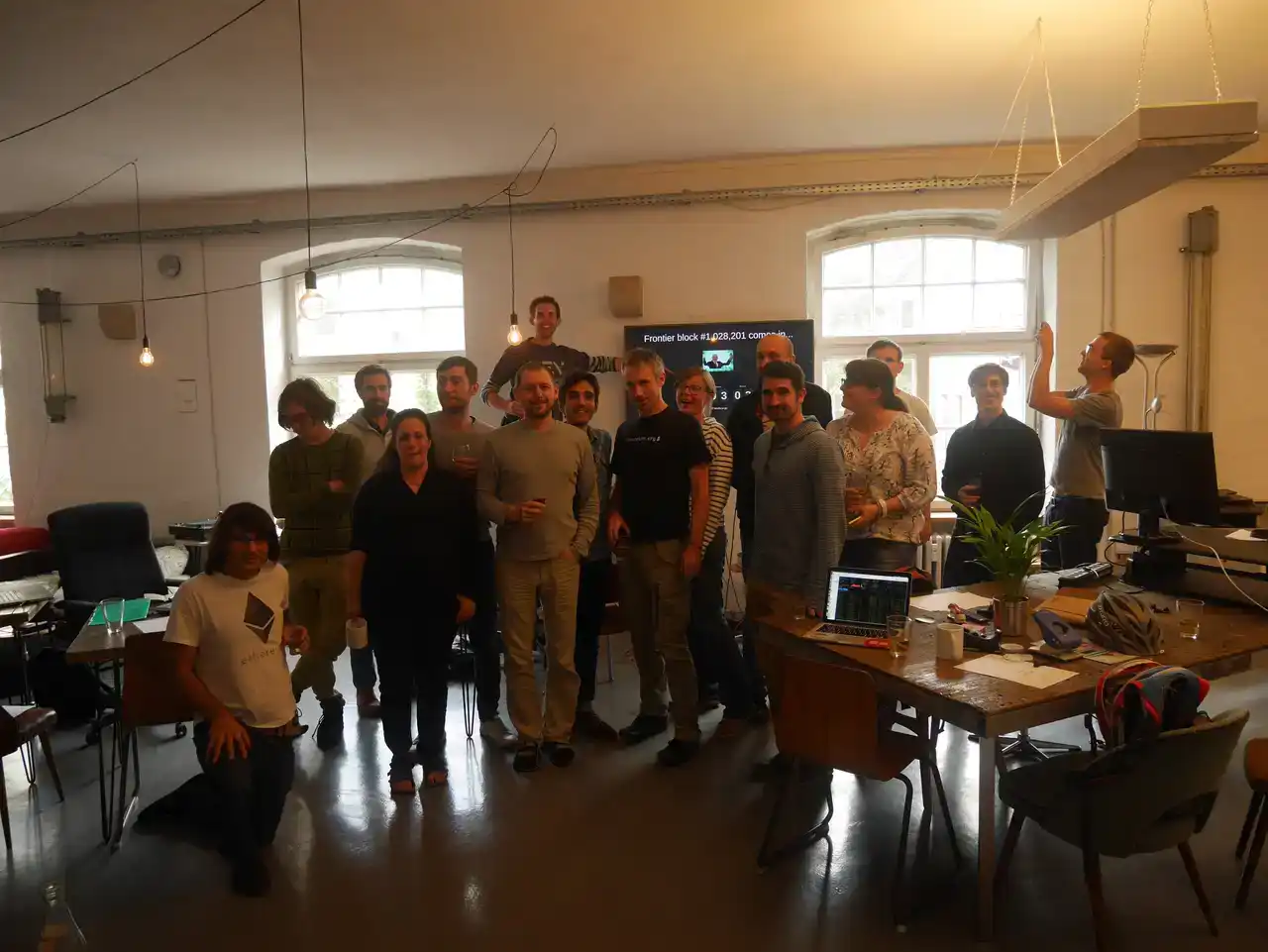
Early members gathered in the Berlin office to witness Ethereum’s automatic activation after block 1,028,201. A historically significant photo captured several core members present, including:
Gustav Simonsson, an early security advisor crucial to Ethereum’s mainnet security. After leaving Ethereum, he joined Dfinity, continuing work in decentralized computing.
Christian Reitwiessner, developer of the Solidity programming language, foundational for running smart contracts on Ethereum.
Within the Solidity team, Liana Husikyan was a key contributor, one of the lead developers of Remix IDE—a tool simplifying smart contract development.
Christoph Jentzsch, founder of Slock.it and co-initiator of The DAO. Though a 2016 hack led to a fork, The DAO remains one of blockchain’s most important experiments, advancing decentralized governance.
Others included Fabian Vogelsteller, author of ERC-20 and ERC-725; Vlad Zamfir, instrumental in Ethereum’s transition from Proof-of-Work (PoW) to Proof-of-Stake; and Jutta Steiner, Ethereum Foundation’s security lead (who later became CEO of Gavin’s Parity Technologies).

A frequently discussed detail in this photo: Vitalik hides in the corner, half his face blocked, while his key technical partner Gavin Wood stands prominently at center—appearing more like a legitimate CEO.
Earlier photos also show Vitalik and Gavin’s close collaboration. Yet no one predicted that this engineering leader and Yellow Paper author would soon depart.
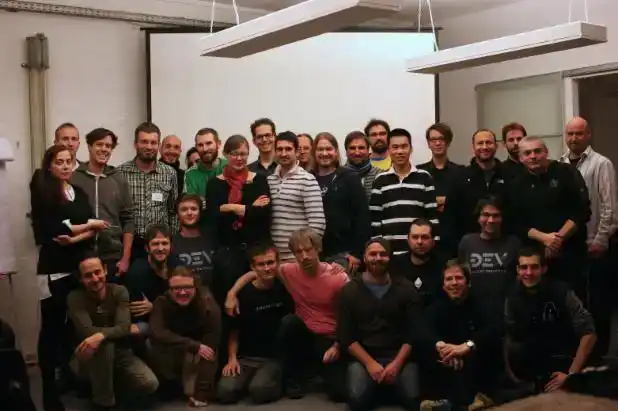
On November 28, 2014, Ethereum held its zeroth Devcon in Berlin. Most members gathered there for the first time—previously communicating only via Skype. In the conference photo, Vitalik and Gavin are seen embracing as usual.
Just three months after mainnet launch, Gavin Wood chose to leave, believing Ethereum needed more centralized engineering management for greater efficiency. Vitalik again said “NO.” This fundamental disagreement prompted Gavin to exit and found his own company—Parity (Ethcore). Parity quickly became a major Ethereum node operator, controlling over 40% of network nodes. Gavin then fully committed to developing Polkadot, which long remained one of Ethereum’s key competitors.
Gavin’s departure directly weakened Ethereum’s engineering capabilities. His leadership and technical expertise were vital in Ethereum’s early development. With his exit, team inefficiencies surfaced—Geth client developers scattered globally, coordination issues arose, and development slowed.
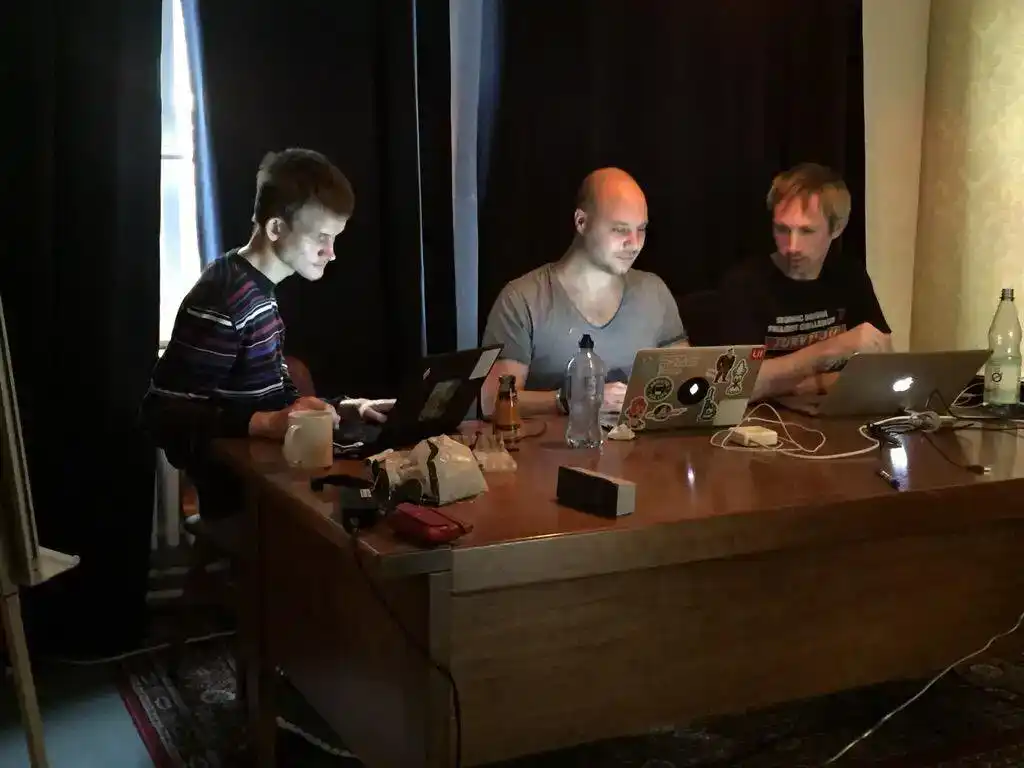
Vitalik, Jeff, Gavin, photo credit: Vitalik
Soon after Gavin’s departure, the remaining two co-founders—Mihai Alisie and Jeffrey Wilcke—also left.
Mihai Alisie, one of Vitalik’s earliest partners and co-founder of Bitcoin Magazine, assisted in establishing Ethereum’s legal framework in Switzerland and served as vice-chairman of the foundation. His departure was amicable, without conflict, but further reduced Ethereum’s core strength.
Jeffrey Wilcke gradually stepped down after The DAO hack triggered Ethereum’s fork, handing over leadership of the Go client Geth to his assistant Péter Szilágyi, shifting focus to game development and family—around March 2018.

Jeffrey Wilcke with his child, image source: network
With these founders gone, Vitalik’s sense of isolation within Ethereum grew. Developers noted that 2015 was a lonely and difficult year for Vitalik—he often spent nights in the Berlin office.
The First-Generation Foundation
Initially, many Ethereum Foundation members were temporary appointments. For example, Kelley Becker and Frithjof Weinert briefly served as COO and CFO, managing daily operations and finances to ensure sufficient funding for Ethereum’s development. But both had short tenures and soon left.
In 2015, as Ethereum scaled hiring, the foundation took on more responsibilities, integrating core developers into its research group.
On April 10, 2015, the Ethereum Foundation established its organizational structure, initiating board elections and gradually formalizing operations. By mid-2015, Ming Chan—an expert in IT and management consulting—was appointed Executive Director, overseeing daily operations, standardizing management, and ensuring technical and community activities complied with legal and regulatory frameworks.
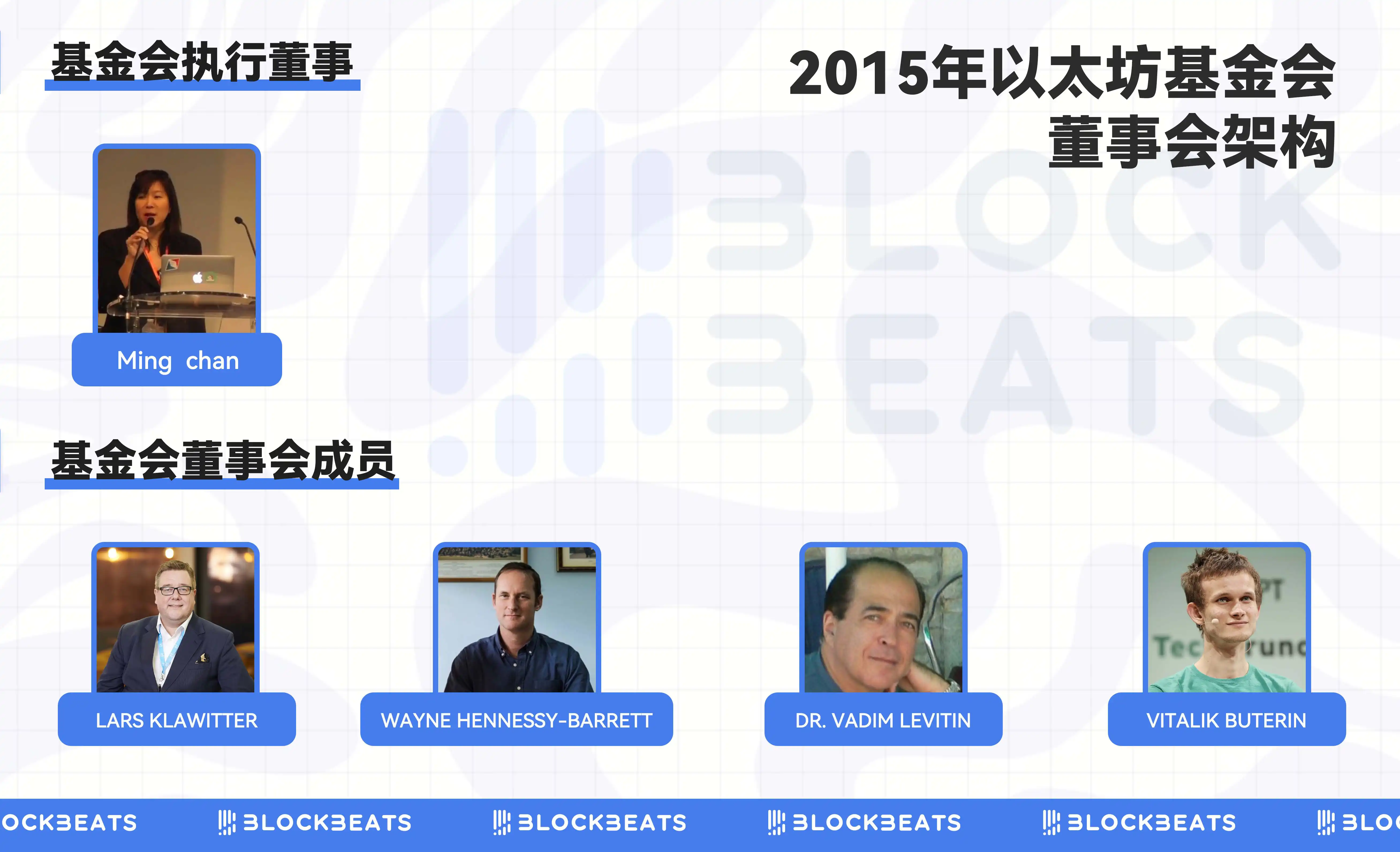
The foundation’s internal structure became clearer. Beyond Vitalik as the central figure in technology and community, Lars Klawitter, Vadim Levitin, and Wayne Hennessy-Barrett joined the board.
Lars Klawitter handled integration of technology and innovation, previously active as an entrepreneur during the internet revolution and serving as Rolls-Royce’s head of innovation. Vadim Levitin, a UN veteran with broad international experience, helped expand the foundation’s global reach. Wayne Hennessy-Barrett brought global perspective with extensive operational experience in African emerging markets.
With these additions, the Ethereum Foundation refined its governance, shifting focus from pure technical development to community coordination and resource allocation.
The foundation also held large ETH reserves, funding various research projects and developer teams to support ecosystem growth.
The Second-Generation Foundation
By 2018, the crypto world had experienced the ICO boom and the 9/4 crash, entering a “regulatory reckoning year.” Bitcoin fell from a high of $19,870 to around $3,000. Binance surged to become the world’s largest exchange. Solana—promising high performance and throughput—was still two years from launch.
When people mentioned Ethereum, two topics dominated: Ethereum 2.0 upgrades, and the Ethereum Foundation selling ETH—again.
The EF’s ETH supply steadily decreased through sales, drawing mostly negative reactions. Still, some EF members argued this reflected intentional decentralization: “EF deliberately reducing its influence is a good thing.”
Indeed, after Aya Miyaguchi succeeded Ming Chan as Executive Director in 2018, the foundation ceased being the central hub for all development, shifting instead to supporting coordination between projects and expanding partnerships with external organizations like ConsenSys.
Under Aya Miyaguchi, EF’s responsibilities became clearer:
1. Host one Devcon or Devconnect annually;
2. Maintain the Geth execution client, but no consensus clients;
3. Provide tens of millions in unrestricted grants annually to the broader community;
4. Host regular calls—e.g., All Core Devs (ACD) led by Tim Beiko, All Devs Consensus (ACDC) by Alex Stokes;
5. Conduct research—still one of the more centralized functions, though parts may spin off;
6. Roadmap planning: Vitalik updates the roadmap, with dozens of tasks developed in parallel by different teams.
Currently, only three leaders are publicly listed on the Ethereum Foundation website: Aya Miyaguchi, Vitalik, and board member Patrick Storchenegger.
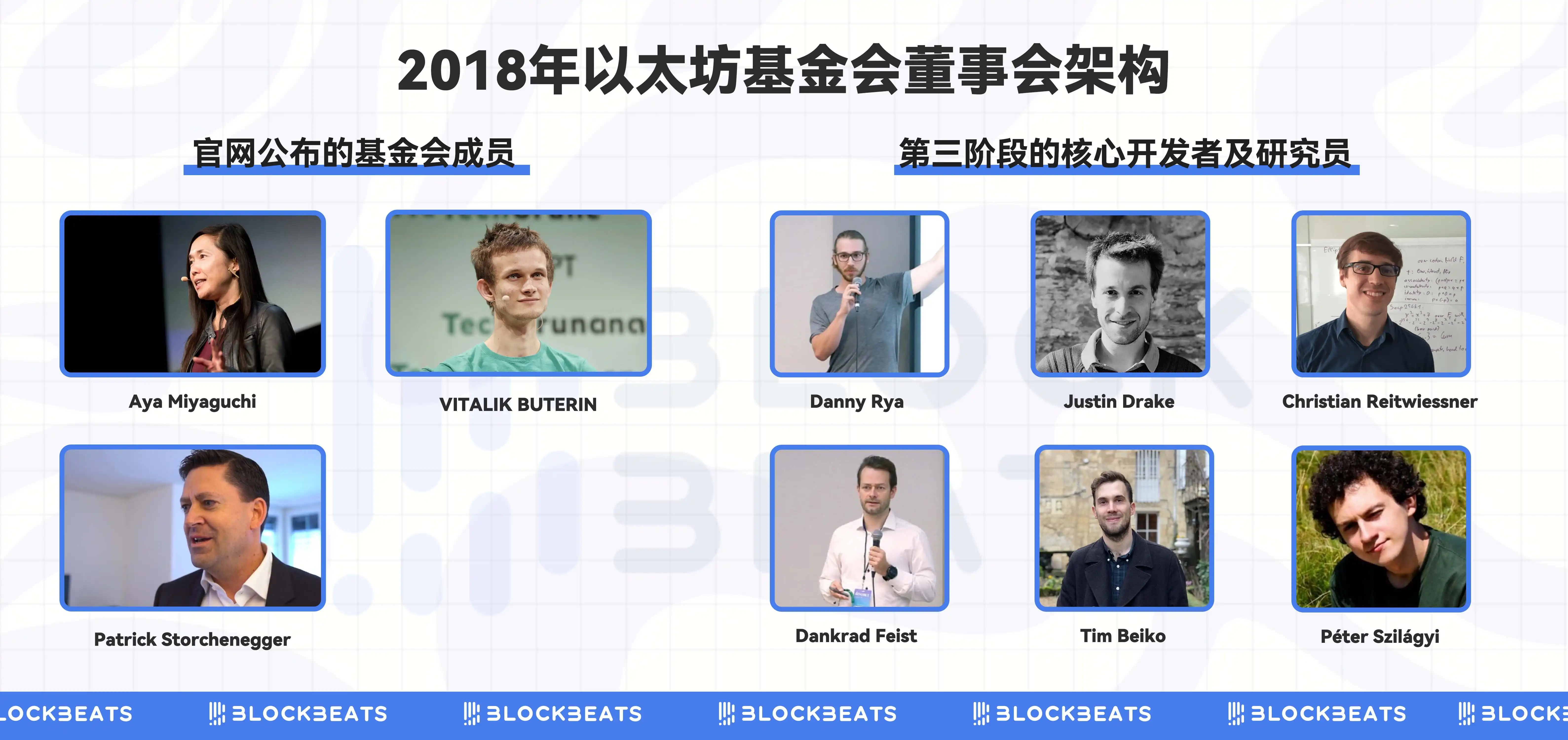
During this period, a new generation of core developers emerged as key figures in Ethereum 2.0 and the broader ecosystem. Key individuals include Danny Ryan, Justin Drake, Tim Beiko, Dankrad Feist, Christian Reitwiessner (creator of Solidity), and Péter Szilágyi. (In my view, no particular order, and not exhaustively listed.)
Danny Ryan, a core member of the Ethereum 2.0 team, hailed as the “Chief Engineer of Ethereum 2.0,” played a vital role in coordinating Eth2 development—especially Beacon Chain launch and the Merge. He was also the first Ethereum Foundation researcher featured in the documentary *Vitalik: An Ethereum Story*.
Since joining the Ethereum Foundation in 2017, Justin Drake has focused on Ethereum’s transition to Proof-of-Stake (PoS), playing a key role in executing the Merge. He’s also a leading voice on Ethereum’s future technical roadmap, frequently educating the public through podcasts and interviews—including Reddit AMAs—earning strong community trust.
Tim Beiko joined the Ethereum Foundation full-time in 2018 and became a core development leader by 2021, organizing ACD calls and serving as a bridge between core developers. As a protocol engineer, he advanced multiple Ethereum Improvement Proposals.
Dankrad Feist, a key EF researcher, focuses on statelessness and data availability. His concept of “Danksharding” shaped Ethereum’s sharding roadmap—so influential that the final scaling solution bears his name. His research on MEV (Maximal Extractable Value) also enhanced Ethereum’s security, though he publicly clashed with Péter Szilágyi, Geth’s current lead, requiring Vitalik to mediate.
With the team stabilized, from 2018 to 2022 Ethereum gained mainstream recognition. In 2019, DeFi platforms like Uniswap, Compound, and SushiSwap offered high yields to liquidity providers, driving rapid TVL growth during “DeFi Summer.” 2021 marked the “Year One of the Metaverse,” as Facebook rebranded to Meta, setting the stage for NFT explosion. 2022 saw the “Lehman Moment” with Luna and FTX collapsing, Solana’s ecosystem hammered, while Ethereum successfully transitioned to PoS and Layer2 thrived—ushering in its breakout era.
Midlife Crisis
Yet, as the moon waxes and wanes, water overflows when full—prosperity inevitably leads to decline. In 2024, Ethereum faced its “midlife crisis,” with stagnant prices.
2024 was also significant—ICO’s 10th anniversary. Apple at age 10 nearly went bankrupt, with a peak market cap of just $20 billion. Microsoft, ten years post-IPO, grew from $670 million to $13 billion. Ethereum’s market cap stood at $321 billion. In terms of decade-long growth, Ethereum outpaced nearly all current tech giants, even once considered capable of surpassing Bitcoin.
Yet financial history shows that when an asset reaches $300–500 billion, it hits a “growth bottleneck.” As the world’s 34th largest asset, ETH’s $321 billion market cap sits squarely in this bottleneck. The “vehicle” is too heavy, the “whales” too dispersed—growth under such scale is extremely difficult, almost fighting gravity itself.
While ETH stagnated, Bitcoin hit new highs, and Solana staged a comeback. No simple explanation captures all the challenges facing the Ethereum Foundation. But it’s clear: ETH’s poor price performance placed Ethereum and its foundation under intense scrutiny over the past two years.
As a decentralized non-profit, managing Ethereum’s internal structure remains difficult. Looking back, from the eight founders splitting due to ideological differences—echoing crypto’s “Traitorous Eight”—to today’s price stagnation, community frustration cycles through periodic anger, flaring up repeatedly. Memes mocking ETH’s price keep evolving. Internal EF tensions persist—researchers clash openly, Vitalik gets criticized routinely.
Besides Vitalik, another person feeling the strain was former EF Executive Director Aya Miyaguchi.
Over the past year, Aya faced widespread backlash across Chinese and English Ethereum communities, becoming a controversial figure.
Solana, Ethereum’s top competitor, staged a comeback. Beyond founder Toly’s relentless promotion of “Solana casino culture memes,” Solana Foundation Chair Lily Liu earned community praise—for proposing PayFi (“using on-chain staking yield to pay for off-chain real-world transactions”), hosting high-quality hackathons, and investing in quality Solana ecosystem projects.
In contrast, many Ethereum community members believe Aya achieved almost nothing during her seven-year tenure.
“Hired for a job she wasn’t qualified for, paid for doing nothing”—traders and KOLs like CoinMamba in the English community expressed deep resentment.
They tried pressuring her to resign: posting “The day Aya leaves is Ethereum’s liberation day,” “ETH will hit new highs within two weeks of Aya’s departure,” “Keep pressuring, she’ll quit.” Some resorted to irrational insults and even death threats.
If you recall Vitalik’s emotionally raw tweets during that period—tagging Milady with abstract phrases, even contemplating leaving Ethereum—this was precisely when he faced immense community pressure.
The Third-Generation Foundation
In March 2025, the Ethereum Foundation finally announced a major leadership change: Executive Director Aya Miyaguchi stepped down from daily management, becoming Foundation Chair. Two new Co-Executive Directors replaced her—Hsiao-Wei Wang and Tomasz Stańczak.
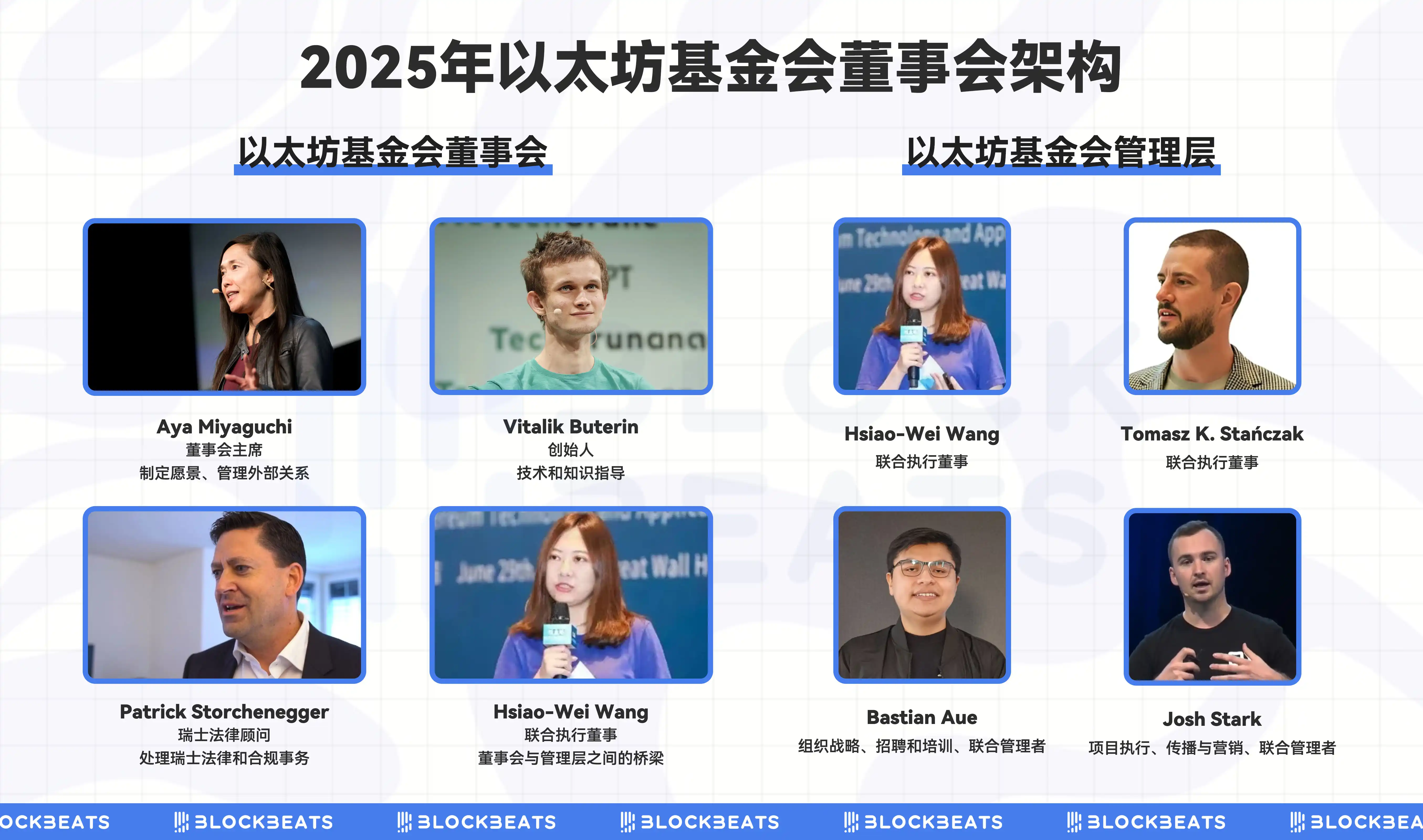
Hsiao-Wei Wang began as a backend engineer, accidentally encountering blockchain in 2016. When Vitalik sought contributors interested in Ethereum research, Hsiao-Wei applied and successfully joined as a core developer.
This blockchain pioneer from Taiwan has dedicated seven years to Ethereum’s core research, making key contributions to sharding and the Beacon Chain. Sharding is critical for solving Ethereum’s scalability, significantly boosting throughput and transaction efficiency. She also long led protocol reviews and proof-of-concept (PoC) development, laying solid technical groundwork for Ethereum 2.0 (Eth2).
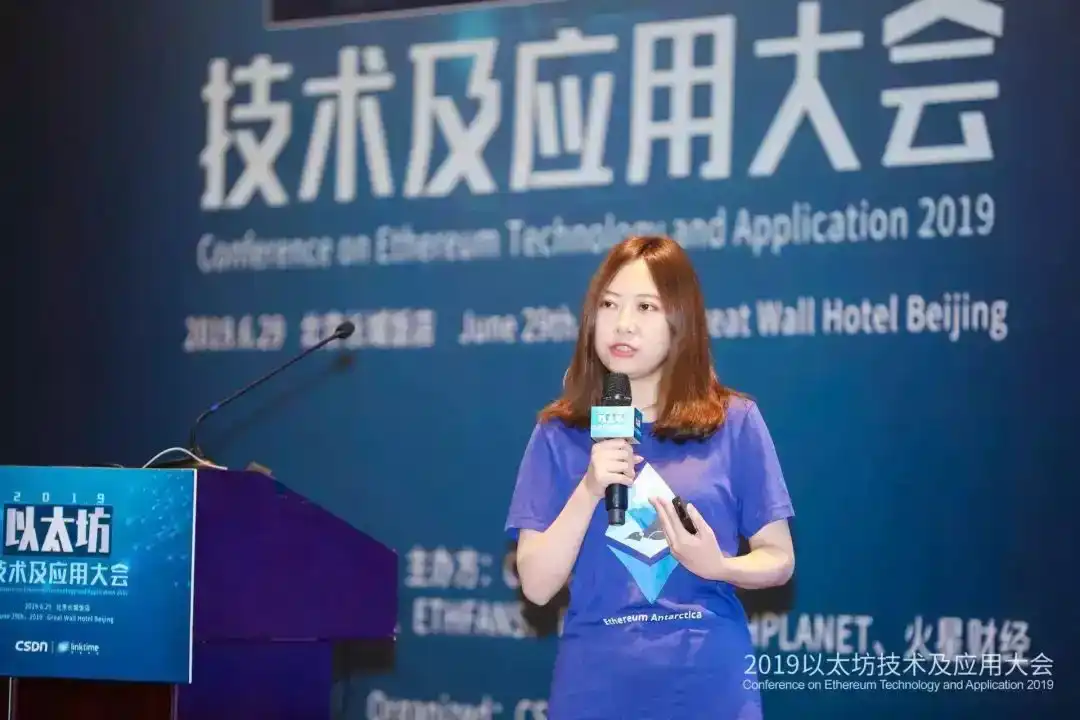
Despite deep technical involvement, Hsiao-Wei expanded beyond code into community building. She frequently represented the EF at tech events, especially in Taiwan, organizing high-quality Ethereum technical exchanges and bridging local developers with the global ecosystem. For instance, at the 2018 Taipei Ethereum Sharding Workshop, she led organization and played a central role in technical discussions.
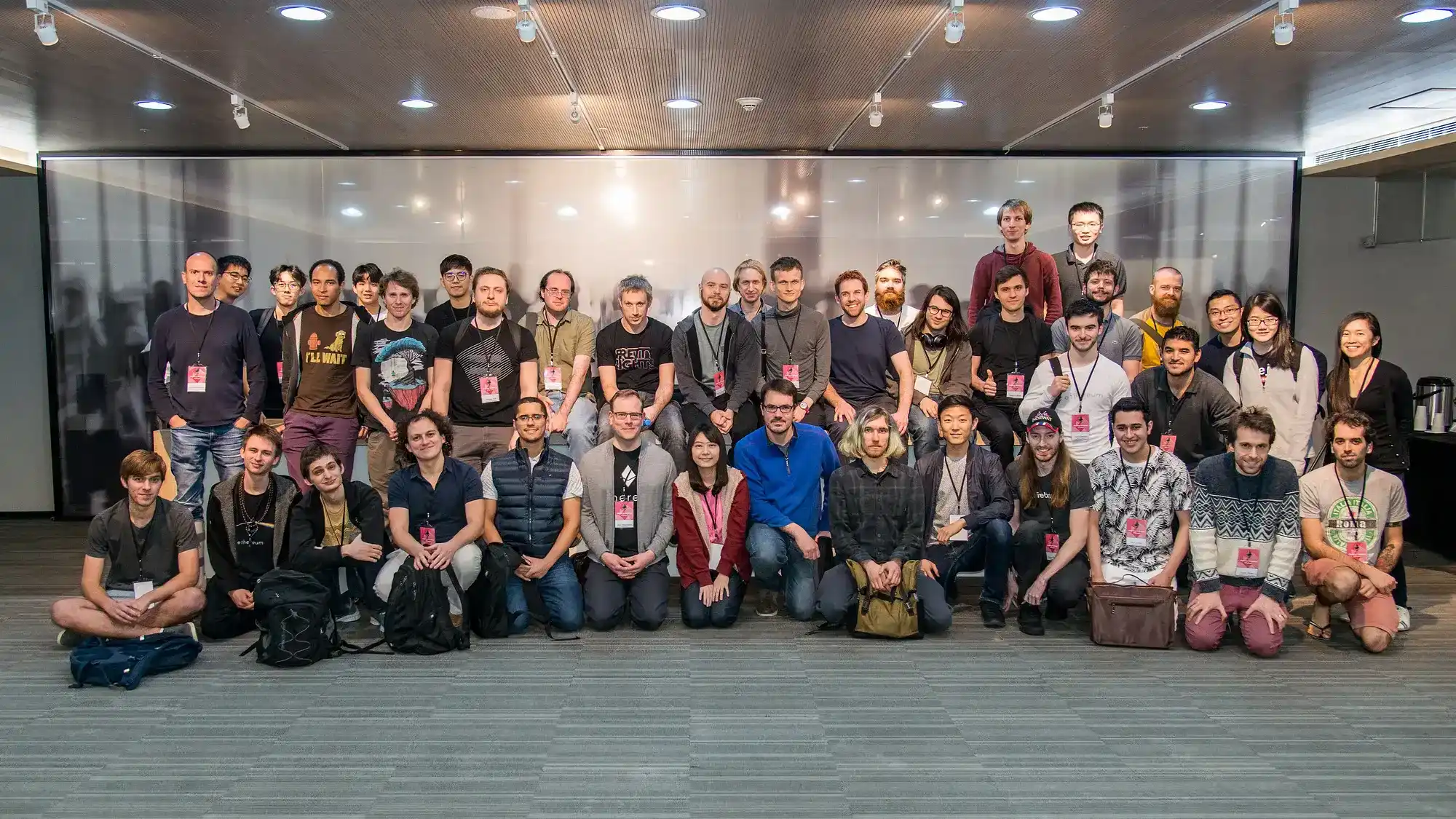
Hsiao-Wei Wang at center during 2018 Taipei Ethereum Sharding Workshop
The other Co-Executive Director, Tomasz Stańczak, founder of Nethermind, is not only a core Ethereum developer but also conducted deep research in MEV (Maximal Extractable Value) and PBS (Proposer-Builder Separation).
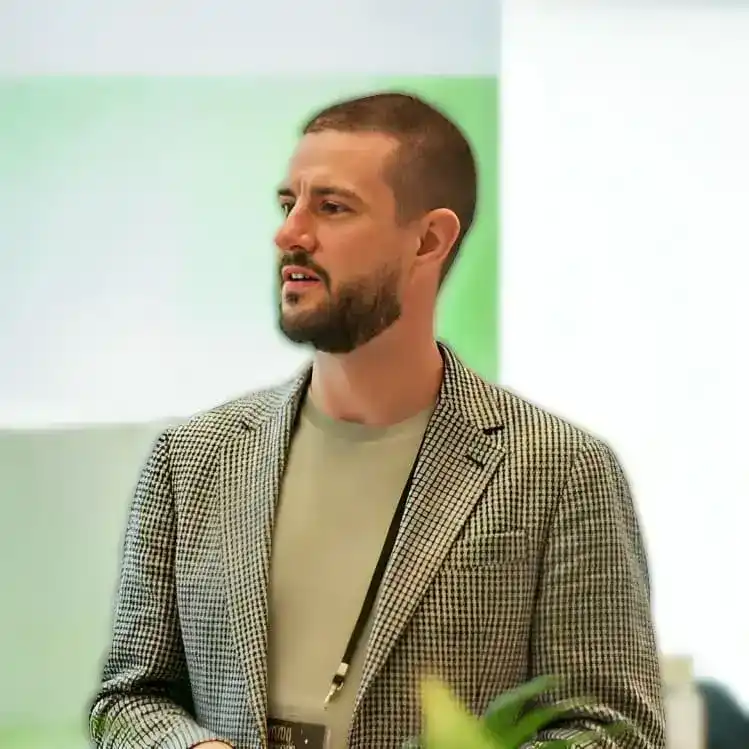
Before blockchain, Tomasz worked as a financial markets engineer with strong technical expertise. He officially joined Ethereum’s core development team in 2017, an early member of FlashBots and board member of Starknet Foundation.
He later founded Nethermind, now one of Ethereum’s most important execution clients. Initially experimental, under Tomasz’s leadership it rapidly evolved into a key Ethereum infrastructure, ranking alongside Geth, Besu, and Erigon as one of the top five execution clients. Compared to Geth’s historical depth, Nethermind attracts developers and institutions with efficient code architecture, flexible customization, and robust enterprise support.
Hsiao-Wei Wang and Tomasz Stańczak were appointed new Co-Executive Directors, and the return of former EF researcher Danny Ryan drew cheers from the community.
As previously noted, Danny Ryan, hailed as the “Chief Engineer of Ethereum 2.0,” played a crucial role in coordinating Eth2 development—especially Beacon Chain launch and the Merge. He was the first EF researcher featured in *Vitalik: An Ethereum Story*. In an informal Ether community vote, Danny was once chosen as the best candidate to serve as EF’s sole leader. On September 13, 2024, he announced an indefinite hiatus from Ethereum development for personal reasons, ending his seven-year journey. In March this year, Danny Ryan returned to the Ethereum ecosystem as co-founder of Etherealize, an institutional marketing and product arm for Ethereum.
The Truth Behind the Rotation
Rumors of leadership rotation had circulated since 2024. After the Hong Kong conference, tales of an “underground garage leadership swap” spread.
On-chain data reveals subtle clues. From December 2024 to April 2025, ETH entered freefall—but the Herfindahl-Hirschman Index (HHI) quietly began rising.
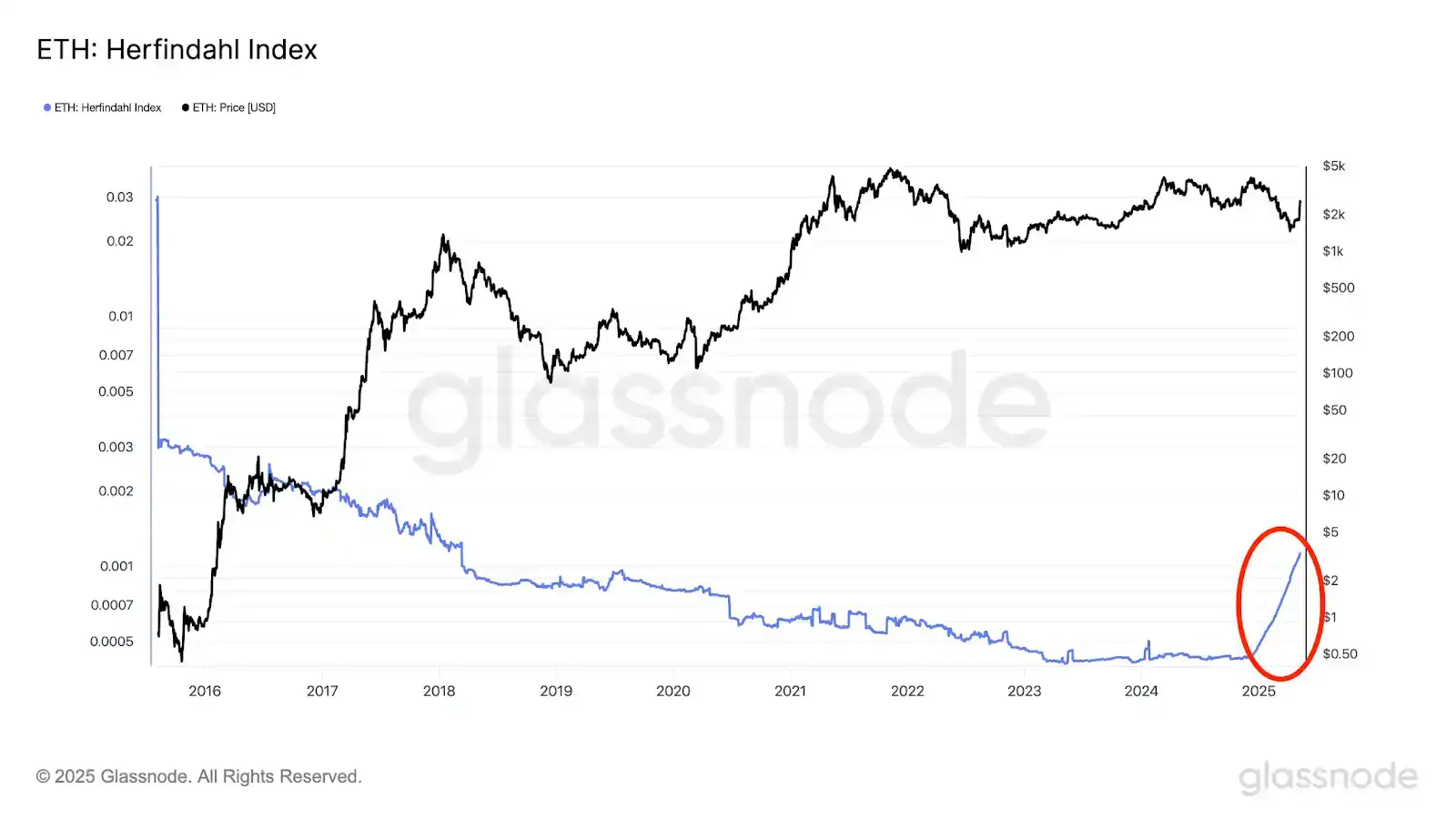
Data source: Glassnode
HHI measures asset concentration. On Ethereum, it reflects token distribution trends. Despite falling prices, HHI rose rapidly—indicating ETH wasn’t being broadly dumped, but rather consolidating from retail hands into fewer large holders and institutional addresses.
Beyond data, a clearer trend emerged: in the new bull run driven by the MicroStrategy-led narrative of crypto strategic reserves, publicly traded companies holding ETH as strategic assets became increasingly common.
In May 2025, SharpLink Gaming ($SBET) announced a $425 million PIPE financing to purchase 176,271 ETH—worth over $460 million at the time.
In June, BitMine Immersion Technologies ($BMNR) announced $250 million PIPE financing to buy ETH, explicitly stating a “transition to ETH infrastructure asset manager.” Following the news, BMNR surged for multiple days, becoming another “ETH概念股” after SBET.
Unlike SBET, BMNR didn’t just “buy and hold” ETH. It targeted ETH staking yields, on-chain cash flows, and DeFi ecosystem participation. This marked the first time a traditional mining firm transformed into a long-ETH player using “ETF-like logic,” signaling a shift from directional bets to structural capture.
Almost simultaneously, BTCS ($BTCS)—without grand announcements of bulk ETH purchases—emphasized innovative financing: a “DeFi + TradFi” hybrid model. It wasn’t just buying ETH, but acquiring stablecoin liquidity anchor assets.
Bit Digital ($BTBT) quietly disclosed purchasing 20,000 ETH, planning to shift from a BTC miner to an ETH staking node operator. In this rotation, some BTC camp players began switching sides.
From SBET firing the first shot, to BMNR, BTCS, BTBT—all U.S.-listed firms and miners—joining in succession, the entire process unfolded in under a month: fast, clear, and orderly.
Notably, SBET—the largest ETH strategic reserve company—has a major individual shareholder: none other than Joseph Lubin, one of Ethereum’s eight co-founders. As mentioned earlier, after leaving Ethereum due to ideological differences, Joseph founded ConsenSys. He holds substantial ETH and, after investing in SharpLink, became its board chair with a 9.9% stake in SBET.
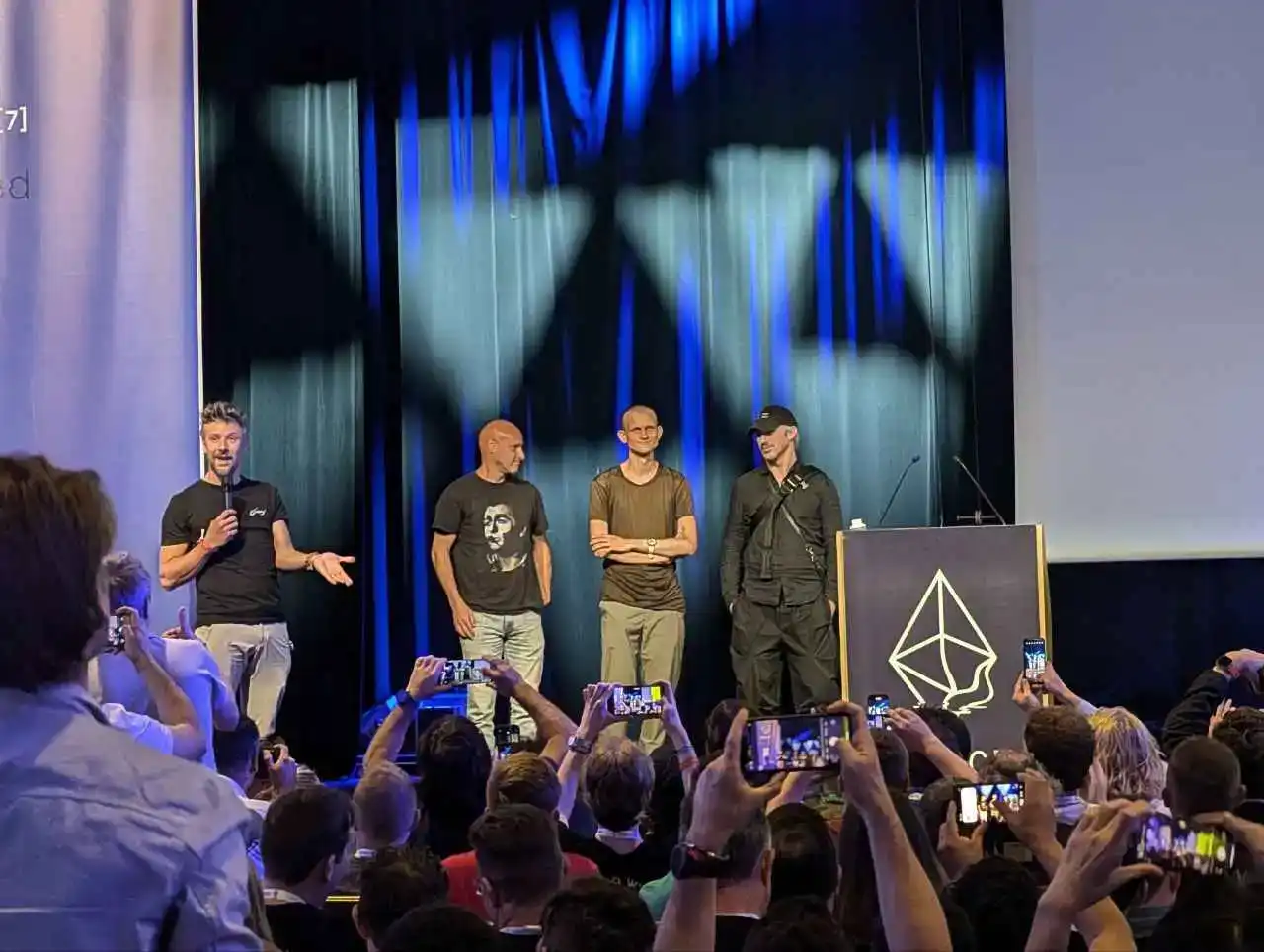
Interestingly, at EthCC7 in Brussels in July 2024, after Vitalik’s speech, three former Ethereum core founders—Vitalik Buterin, Joseph Lubin, and Gavin Wood—shared a historic photo, symbolically closing a chapter of past rifts with dignity and reconciliation.
Ethereum Without Vitalik
In Vitalik’s father’s recollection, when Ethereum was founded, Vitalik had no desire to lead. His mindset was: “Hey, I’ve got a cool idea—let me write it down, maybe some smart, influential people will do something with it.”
But things changed. Many joined the project and told Vitalik: “You should be the one pushing this forward.” So they pushed him into leadership—not naturally, but uncomfortably. It remained one of his greatest challenges.
“Vitalik once perfectly embodied our society’s idealized image of a tech founder—young, idolized, obsessively admired for a blend of innocence and immense power,” as economics professor Nathan Schneider, who interviewed Vitalik multiple times, put it.
But in 2025, Vitalik turned 31.
In Montenegro, working on Zuzalu, he saw people ten years younger leading various projects as organizers or developers. At a 30-person hackathon in Korea, he realized he was now the oldest in the room.
Vitalik fulfilled many programmers’ fantasies of their ideal self—young, legendary. But Vitalik is now a symbol—and a no-longer-young symbol no longer fits that role. He knows this himself.
Ten years ago, he wanted to build something cool, praised as one of the young geniuses changing the world like Zuckerberg. Now, after experiencing shifts in the crypto era, war, survival, and loss, Vitalik has new insights: “I’m now playing a completely different role. It’s time for the next generation to inherit what was once mine.”
“I wonder if Ethereum could survive without Vitalik’s leadership?” A related thread on Ethereum Reddit sparked discussion: “In recent years, Vitalik hasn’t really led Ethereum as people imagined,” “I even heard Vitalik isn’t even the best person to explain Ethereum’s roadmap anymore.”
Marcocastignoli, an EF staff member, shared his view: “Though I’m not one of them, I know clearly that Vitalik is just one member of the EF research team—a group of incredibly brilliant minds—where Vitalik is merely average.”
The aforementioned new core members are rising as central developers in the Ethereum community.
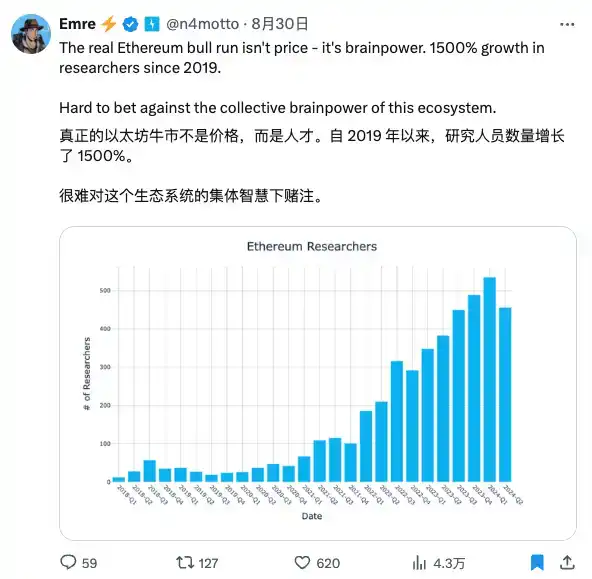
Moreover, according to Electric Capital, there are currently 99 active Ethereum core developers—far ahead of other blockchains like Bitcoin, Cardano, EOS, or Tron. Broadening further, the Ethereum network now hosts over 250,000 developers and researchers—one of the most decentralized blockchain development communities.
The young Vitalik, after being rejected by Blizzard, created a new world through technology—everything seemed born from tech. But after multiple rounds of team reshuffling, he realized his limits. Vitalik’s self-image began to unravel.
Just as he wrote in his 30th birthday reflection: communities, ideologies, “scenes,” nations—or very small companies, families, relationships—are all made by people.
Not by technology. Moreover, Vitalik is no longer the youngest, the smartest, or even the most representative technical researcher mapping Ethereum’s roadmap. His role will continue to fade—eventually, Ethereum will exist without Vitalik.
Perhaps it’s time now to imagine Ethereum without Vitalik.
Author’s note: This article attempts to summarize changes in Ethereum’s core organizational members, but Ethereum’s membership is far richer than what I’ve covered. Condensing everything into one article structure inevitably omits details, so minor inaccuracies may exist. Thank you to everyone who provided information and feedback.
Join TechFlow official community to stay tuned
Telegram:https://t.me/TechFlowDaily
X (Twitter):https://x.com/TechFlowPost
X (Twitter) EN:https://x.com/BlockFlow_News
 BlockBeats