








On-chain Hong Kong, where are the opportunities?
TechFlow Selected TechFlow Selected
On-chain Hong Kong, where are the opportunities?
Hong Kong is both the starting point and the destination.
 Navigating Web3 tides with focused insights
Author: TechFlow
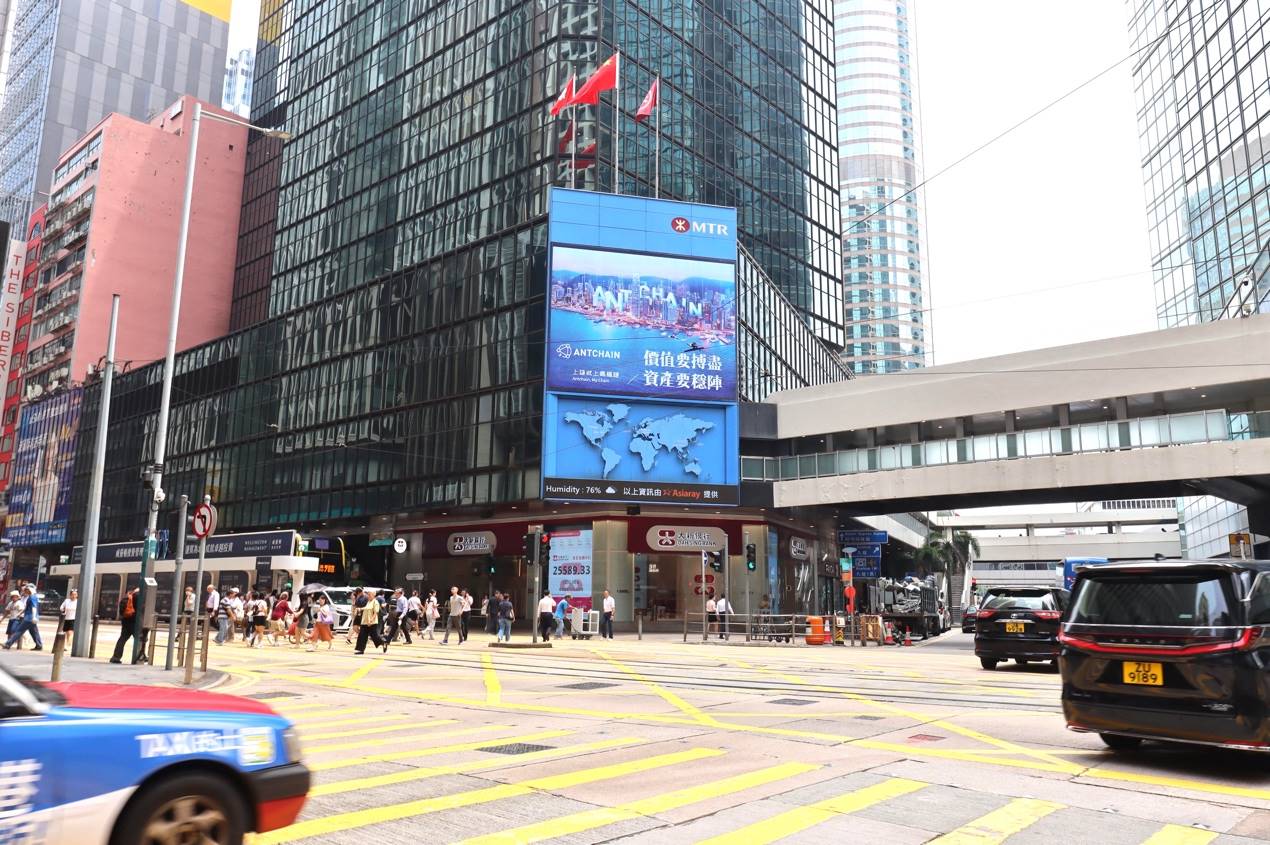
The familiar Hong Kong is back!
Once dubbed a "financial wasteland," Hong Kong has now staged a stunning comeback in just one year.
Hong Kong's stock market is surging, with 43 new listings and HK$106.71 billion raised in the past six months alone, reclaiming the top spot globally for IPO fundraising. Giants like CATL and Hengrui Pharma are flocking to list, while Pop Mart, Mixue Bingcheng, and Laopu Gold are fueling a bullish consumer stock rally.
Alongside the capital markets, a wave of digital assets is also reviving.
In May, Hong Kong passed the Stablecoin Ordinance, establishing a licensing regime for stablecoin issuers, set to take effect on August 1.
In June, the government released its Digital Asset Policy Declaration 2.0, paving the way for stablecoins and real-world assets (RWA). And today, the collaboration between The Hong Kong Polytechnic University and Ant Digital Technologies to establish an AI+Web3 Joint Laboratory adds the latest chapter to this revival.
In Central’s cafes, a once-familiar scene has returned: on one side, investment bankers excitedly discuss opportunities in Hong Kong and U.S. stocks; on the other, entrepreneurs and lawyers passionately debate stablecoins, RWA issuance, and cross-border settlements.
The air fills with financial jargon mingling with coffee aromas, reminiscent of Hong Kong’s golden era of vibrant energy.
In this new “on-chain Hong Kong” era, where do opportunities lie for entrepreneurs?
Digital Asset Policy Declaration 2.0
Following the SAR government’s first policy statement in October 2022, the Hong Kong Digital Asset Development Policy Declaration 2.0 was officially unveiled on June 26, reaffirming Hong Kong’s ambition to become a global hub for digital asset innovation.
Notably, the updated declaration upgrades the term “virtual assets” to “digital assets.” This is more than a semantic shift—it reflects a regulatory vision that extends beyond cryptocurrencies like Bitcoin and Ethereum and stablecoins, to include tokenized forms tightly linked to real-world assets, namely the widely discussed RWAs (real-world assets).
To clearly articulate its policy goals, the Hong Kong SAR government introduced the dynamic English acronym “LEAP,” representing four strategic pillars—Legal & Regulatory optimization, Expanding tokenised products, Advancing use cases & collaboration, and People & Partnership.
On the legal and regulatory front, the Securities and Futures Commission (SFC) will lead efforts to build a unified regulatory framework covering key areas such as digital asset trading platforms, custody services, and stablecoins. Meanwhile, the Financial Services and the Treasury Bureau (FSTB) and the Hong Kong Monetary Authority (HKMA) will drive legal reforms to support the on-chain registration, settlement, and issuance of physical assets such as bonds and gold.
In the area of tokenized products, the government explicitly aims to make tokenized government bonds a “routine practice,” offering stamp duty incentives for tokenized ETFs. It also encourages the tokenization of various real-world assets including precious metals (e.g., gold), non-ferrous metals, and even renewable energy (e.g., solar equipment).
Regarding practical applications, the declaration sets a key milestone: starting August 1, stablecoin issuers can formally apply for licenses. The government also actively encourages pilot programs applying stablecoins in payments and cross-border settlements, and has established a special fund to support blockchain project implementations.
At the “On-chain Hong Kong 2.0” Ecosystem Roundtable, Benny Bian, Vice President of Ant Group and President of Ant Digital Technologies’ Blockchain Business, noted: “I see three keywords in the new policy: digital assets, legal framework, and infrastructure. If our technological infrastructure operates within such a robust compliance framework, and we bring in more assets—including industrial and financial assets—combined with our advanced and leading technology, we can create a new digital asset exchange that attracts top-tier global assets and capital to Hong Kong.”
Carrie Qi, CEO of Guotai Junan International, pointed out that the updated declaration leads globally across three dimensions: regulatory framework, market mechanisms, and tax incentives. She specifically highlighted stablecoins and RWAs as the “dual pillars” of digital assets, reflecting Hong Kong regulators’ foresight and inclusiveness.
Stablecoins and RWA: Where Are the Opportunities?
Li Yuan, a serial entrepreneur from Shenzhen, has recently been shuttling frequently between Shenzhen and Hong Kong.
Previously running a manufacturing company, he now works in the new energy EV charging sector and has begun exploring RWA. After the Hong Kong government released the Policy Declaration 2.0, he quickly analyzed every clause, searching for his own niche opportunity.
Among all the policies, what interests him most is the integration of “stablecoins” and “RWA” (real-world assets).
“Issuing stablecoins is a game for giants, but real-world applications are where ordinary entrepreneurs find their opportunities,” said Li Yuan.
In his view, with stablecoins as the medium and RWA as the carrier, China’s industrial assets—especially green energy and infrastructure sectors currently facing overcapacity—can reach global markets through “going on-chain overseas.” He even describes RWA as “a new wave of Chinese asset globalization,” a new export system powered by blockchain technology and channeled through stablecoins.
This mindset is becoming a growing consensus.
Kenneth Gan, CEO of Value Partners Hong Kong, stated: “Over the next five to ten years, traditional financial assets will move on-chain. RWA will address current market pain points, and Hong Kong will play a leading role in redefining the global flow of assets.”
This policy direction is already clearly articulated in Hong Kong’s official documents, which encourage the tokenization of real-world assets and specifically mention new energy:
“We actively encourage innovative application scenarios, including tokenizing traditional financial products (such as money market funds and other funds) and revenue streams from real-world assets (such as EV charging stations).”
“The government will intensify efforts to expand tokenization solutions…including diverse applications involving precious metals (e.g., gold), non-ferrous metals, and renewable energy (e.g., solar panels).”
Fei Zhi, Vice Chairman of GCL Group, shared firsthand insights in this field. He noted that photovoltaic assets possess characteristics such as legal compliance, clear cash flows, well-defined ownership, and alignment with ESG standards, making them quintessential “on-chain assets.” Through RWA, these green assets can provide solid value backing for stablecoins.
Alan Yeung, CFO of Hong Kong and China Gas, also pointed out that RWA not only enables energy companies to tokenize fixed-income assets and improve liquidity, but when combined with stablecoins’ cross-border settlement capabilities, could expand their global trade footprint.
In the field of new energy RWA, Ant Digital Technologies is leading the industry.
Since August 2024, Ant Digital Technologies has partnered with multiple new energy firms to bring assets such as EV chargers and household photovoltaic systems onto the blockchain, transforming them into tradable RWA assets.
The first project launched in Hong Kong, in collaboration with Longshine Technology, used approximately 9,000 charging stations as underlying assets to secure financing of about RMB 100 million. Later, in December 2024, Ant partnered with GCL New Energy to launch China’s first green photovoltaic RWA project, raising over RMB 200 million. In March 2025, another collaboration with Xunying Group tokenized battery swap cabinets and lithium batteries on-chain, involving funding in the tens of millions of Hong Kong dollars.
Under the HKMA-led Ensemble sandbox initiative, Ant Digital Technologies has connected over 1.5 million energy devices via blockchain + IoT technology, creating the world’s largest on-chain platform for new energy assets.
As power generation assets, energy storage systems, and green financial instruments are gradually tokenized, a cross-border on-chain financial ecosystem is quietly taking shape. In the future, new energy RWA could give rise to credit products, financial derivatives, and carbon asset trading, building a global digital financial system anchored in power assets.
Chinese Assets, On-Chain in Hong Kong
For Li Yuan, Hong Kong is more than a city—it’s a bridge to the world.
Leveraging Hong Kong’s legal system, financial openness, and international environment, he can efficiently connect with global capital and compliant institutions—the ideal gateway for “going global” in the digital asset era.
With the release of the Digital Asset Development Policy Declaration 2.0, Hong Kong is evolving from a local financial center into a global institutional exporter of digital asset rules, creating an Eastern model for stablecoins and RWA.
“We’ve positioned Hong Kong as Ant Digital Technologies’ overseas headquarters—to serve markets in the Middle East and Europe, support Chinese enterprises going global, and ultimately bring capital and trust back to Hong Kong,” said Benny Bian, defining Hong Kong’s strategic role.
In fact, Hong Kong’s accumulation in blockchain infrastructure is no short-term effort.
Since 2016, Hong Kong has promoted blockchain applications in trade finance, payment clearing, and virtual asset regulation, with Cyberport laying the foundation for ecosystem development. By 2020, the government rolled out virtual banking licenses and the Virtual Asset Trading Platform Operating Guidelines, providing a clear regulatory path for digital asset trading. In 2023, the “Digital Hong Kong Dollar” project launched, exploring synergies between central bank digital currencies (CBDC) and tokenized assets.
In 2024, Ant Digital Technologies launched its “Two Chains, One Bridge” RWA platform, advancing the on-chaining and trading of new energy assets in Hong Kong. Longshine Technology, GCL New Energy, and Xunying Group successfully listed their energy assets in Hong Kong, completing cross-border financings.
In June 2025, following the release of the Policy Declaration 2.0, Ant Digital Technologies opened up its Layer 2 network, large model tools, blockchain + IoT architecture, and institutional-grade Web3 wallet. In July, it formed a strategic partnership with The Hong Kong Polytechnic University to build a global hub for technological innovation centered on AI and Web3.
Indeed, Hong Kong has become a pioneering demonstration zone for Chinese new energy assets—enabling “on-chaining, financing, trading, and cross-border circulation.”
For mainland entrepreneurs like Li Yuan, Hong Kong is no longer just a traditional financing conduit, but a bridgehead to globalize their technology and assets. “Chinese assets, on-chain in Hong Kong, going global” may become the new choice for Chinese entrepreneurs.
In this emerging digital economy landscape, Hong Kong is both the starting point and the destination.
Join TechFlow official community to stay tuned
Telegram:https://t.me/TechFlowDaily
X (Twitter):https://x.com/TechFlowPost
X (Twitter) EN:https://x.com/BlockFlow_News
 深潮TechFlow


