Unveiling the underlying logic of South Korea's stablecoin wave
TechFlow Selected TechFlow Selected
Unveiling the underlying logic of South Korea's stablecoin wave
For the first time in South Korean history, retail participation in digital assets has surpassed that of traditional stocks.
 Navigating Web3 tides with focused insights
Author: Thejaswini M A
Translation: Saoirse, Foresight News
On that bizarre night in December 2024, former President Yun Suk-yeol declared martial law, dispatched troops into the National Assembly, and even attempted to initiate military action against North Korea. He likely never imagined that this political suicide act would give rise to one of the world's most radical crypto policy agendas.
Yet that is precisely what happened.
The two-hour failed coup ended in impeachment, creating a power vacuum. Into this void stepped Lee Jae-myung, the so-called "disruptor" and former governor of Gyeonggi Province. With a unified government and clear mandate, the Lee administration introduced the Digital Asset Basic Act within days of taking office and began dismantling an eight-year ban on corporate cryptocurrency use.
Before diving deeper, one thing must be understood about South Korea: it is a technologically advanced economy with widespread public awareness of cryptocurrencies, while simultaneously facing structural economic challenges that traditional monetary policies struggle to resolve. Cryptocurrencies offer both immediate relief for current economic pressures and a foundation for long-term competitive advantage.
Currently, 16 million people in South Korea hold cryptocurrency accounts—surpassing the 14.1 million stock investors in the country. This marks the first time in Korean history that retail participation in digital assets has exceeded that of traditional equities.
Nearly one-third of South Korea’s population participates in cryptocurrency trading, and among adults under 60, this proportion exceeds half. Approximately 20% of government officials have disclosed cryptocurrency holdings totaling around $9.8 million. According to a report by Hana Financial Research Institute, 27% of Koreans aged 20 to 50 own cryptocurrencies, with digital assets accounting for 14% of their financial portfolios.
This reflects years of rising crypto adoption, driven by economic pressure, technological familiarity, and a political system that ultimately chose to embrace rather than resist the change.
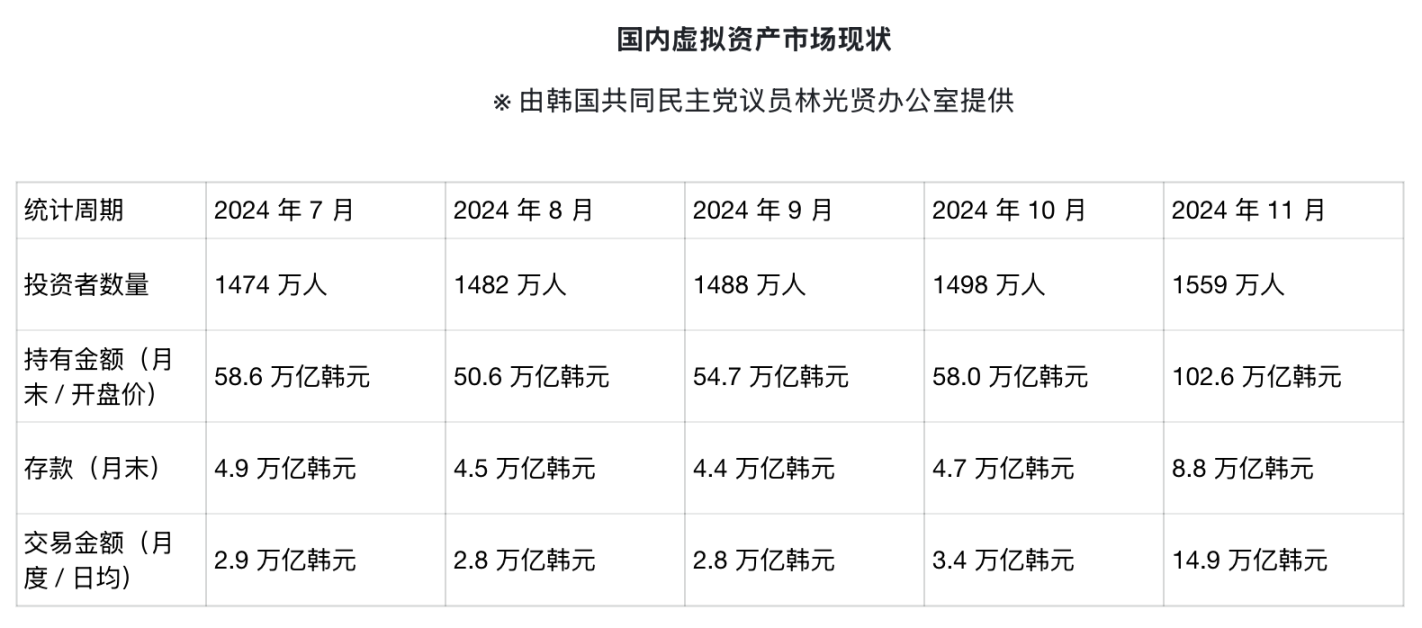
Data source:@yna
Economic Foundations
Korea’s embrace of cryptocurrencies stems from real economic pressures that traditional policy tools have failed to address. The country’s GDP growth forecast for 2025 stands at just 0.8%, a figure typically seen only during major financial crises. In March 2025, youth unemployment rose to 7.5%, the highest level for that month since 2021.
Korea’s national debt-to-GDP ratio is approaching 47%-48%, having increased post-pandemic but now stabilizing. As of end-2024, household debt stood at 90%-94% of GDP—one of the highest ratios globally and the highest among major developed economies and Asian nations. This contrasts sharply with other major economies where government debt typically exceeds household debt. In the U.S., household debt is 69.2% of GDP versus 128% for government debt; in Japan, government debt reaches 248% while household debt is only 65.1%. This inverted debt structure creates unique economic pressures: policy decisions are increasingly driven by personal financial stress rather than sovereign fiscal concerns.
When interest rates rise and economic growth stalls, this debt burden suppresses consumer spending—a problem monetary policy alone cannot solve.
For millions of young Koreans, cryptocurrencies represent, as researcher Eli Ilha Yune put it, “financial desperation.” This is not ideological support for blockchain technology, but a pragmatic response to an economy offering few alternative paths to wealth creation. Traditional investments like stocks yield meager returns, real estate is unaffordable, and the long-term sustainability of the national pension system remains questionable.
This context explains why crypto adoption in Korea differs from other markets. While Western investors often view cryptocurrencies as portfolio diversification tools or speculative bets on technology, Korean investors see them as essential financial infrastructure. Government crypto policy is thus a recognition of widespread existing adoption.
The Lee Jae-myung administration has established a crypto agenda aimed at preventing Korean wealth from flowing overseas through dollar-denominated digital assets. Currently, when Korean investors buy stablecoins, they primarily choose USDT or USDC—effectively channeling capital into financial infrastructure controlled by the United States.
In Q1 2025, South Korean crypto exchanges transferred approximately 56.8 trillion KRW (about $40.6 billion) worth of digital assets overseas, with stablecoins accounting for 26.87 trillion KRW ($19.1 billion)—nearly 47.3% of all outflows.
Interestingly, this capital flight occurred even as the won strengthened against the dollar. In 2025, the won appreciated about 6.5% against the dollar and remained stable at 1,393–1,396 won per dollar as of July. This suggests Korean investors’ preference for dollar stablecoins is not due to weakening domestic currency, but rather the lack of viable won-denominated alternatives and the global dominance of dollar-based crypto infrastructure.
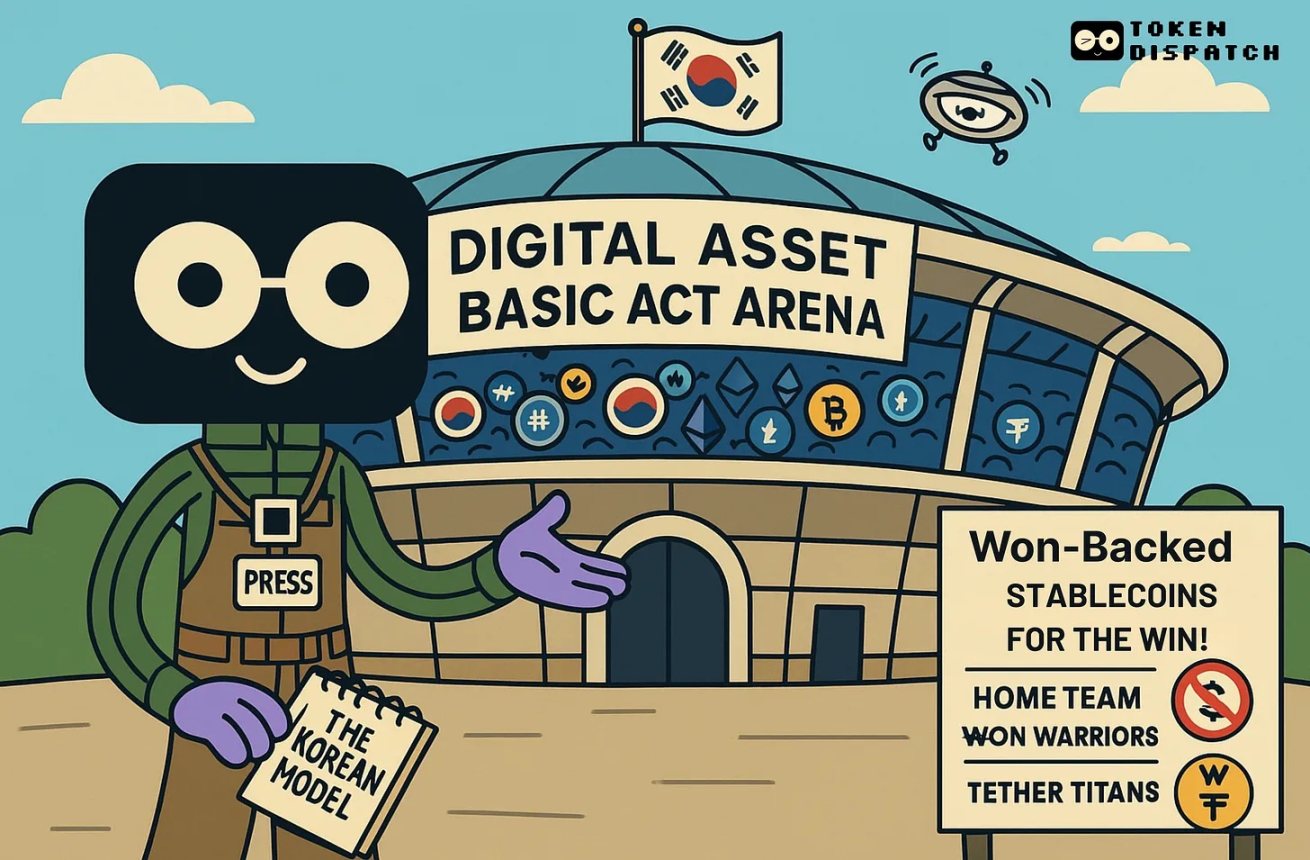
The Digital Asset Basic Act establishes a regulatory framework enabling Korean firms to issue won-pegged stablecoins. The capital requirement is set at 500 million KRW (approximately $370,000), a relatively low threshold designed to encourage domestic competition while maintaining basic standards.
Can this won-stablecoin strategy actually curb capital outflows? If Koreans want to hold dollar assets, they can still convert won into USDC. Therefore, the true goal is not to eliminate demand for foreign stablecoins but to reduce it by offering comparable benefits—programmability, access to decentralized finance, 24/7 trading—without requiring currency conversion. More importantly, it keeps financial infrastructure domestic, directing fees, custody services, and economic activity toward Korean institutions instead of Circle or Tether. This is behavioral nudging, not capital control—making won-denominated options more convenient while bringing financial operations under Korean regulation.
South Korea’s eight major banks have begun collaborating to develop a won-pegged stablecoin, targeting launch by late 2025 or early 2026. The consortium includes KB Kookmin Bank, Shinhan Bank, Woori Bank, NH Bank, Korea Development Bank, Suhyup Bank, K Bank, and IM Bank. Their ambition extends beyond competing with USDT and USDC—they aim to build financial infrastructure capable of keeping Korean economic activity within a domestic ecosystem.
This stablecoin strategy reflects broader concerns about U.S. dollar dominance in digital finance. Currently, 99% of global stablecoins are pegged to the dollar, giving American financial institutions and regulators disproportionate influence over digital asset infrastructure.
The Bank of Korea has expressed concerns about privately issued stablecoins, warning they could “seriously undermine the effectiveness of monetary policy and pose systemic risks.” This disagreement led to the suspension of the central bank digital currency (CBDC) project in June 2025, as officials questioned the necessity of a state-run CBDC if private alternatives could perform similar functions more efficiently.
Institutional Transformation
In 2017, concerned about speculation and money laundering, South Korea imposed restrictions banning corporations, institutions, and financial companies from opening cryptocurrency exchange accounts. Only individuals could trade using verified real-name accounts. Institutional and corporate accounts were prohibited, and banks faced strict compliance obligations. The current government has now initiated a phased rollback of these restrictions.
In the initial phase (mid-2025), non-profit organizations and certain public institutions are now permitted to liquidate cryptocurrencies obtained via donations or seizures, provided they meet stringent compliance requirements such as using verified real-name won-denominated exchange accounts and establishing internal audit committees.
By the end of 2025, the government plans to expand access to exchange accounts through pilot programs to around 3,500 listed companies and professional institutional investors. These accounts must be real-name verified and comply with strict anti-money laundering (AML) and KYC protocols. Financial authorities have announced that listed companies will eventually be allowed direct participation in crypto trading, paving the way for large-scale corporate adoption.
Domestic exchanges have already launched or upgraded “institutional-grade” products, custody solutions, and support services to meet anticipated demand from large enterprises and professional investors.
Currently, traditional financial institutions such as banks, asset managers, and brokers remain excluded from direct crypto trading. This setup ensures that the first wave of institutional crypto activity in Korea will be led by non-financial corporations, potentially giving them a competitive edge when regulatory barriers further loosen.
Political Endorsement
Lee Jae-myung’s crypto agenda enjoys broad political support beyond his own Democratic Party. In recent elections, both major parties pledged to legalize crypto ETFs—a rare moment of bipartisan consensus in Korean politics. Even the Financial Services Commission, previously opposed to discussing crypto ETFs, has now submitted a roadmap aiming to approve spot Bitcoin and spot Ethereum ETFs by the end of 2025.
This political shift reflects the growing electoral significance of crypto. With over 16 million holders—about one-third of the population—digital asset policy has evolved from a niche tech issue into a mainstream political concern.
The government has also taken broader steps to support crypto businesses. The Ministry of SMEs and Startups announced plans to lift restrictions preventing crypto firms from qualifying as venture enterprises, allowing them to access significant tax incentives, including a 50% reduction in corporate income tax for five years and a 75% cut in property acquisition taxes.
Korean investors have responded enthusiastically to these policy developments. After stablecoin trademark filings, bank stocks surged. Kakao Bank’s share price jumped 19.3% the day after filing crypto-related trademarks, while KB Financial Group rose 13.38% following a similar move.
More strikingly, in June 2025, Korean retail investors poured nearly $450 million into shares of Circle Group, making it the most popular overseas stock of the month. Since its listing in June, Circle’s stock has risen over 500%, as Korean investors view it as a bellwether for global stablecoin adoption.
This investment pattern reveals a sophisticated understanding among Korean investors of how domestic stablecoin policies may drive global demand for stablecoin infrastructure. They are positioning themselves in anticipation of Korea’s potential influence on the global digital asset market.
Lee’s crypto strategy faces significant external headwinds. Former U.S. President Donald Trump has threatened retaliatory tariffs as high as 50%, which could severely impact Korea’s export-dependent economy. With exports accounting for 40% of GDP, trade disruptions could trigger a recession—limiting funds available for crypto investment regardless of regulatory progress.
The urgency of timing has turned policy implementation into a race against economic deterioration. Korean authorities are rushing to build crypto infrastructure before potential trade conflicts make the economic environment too hostile for new investment initiatives.
Domestically, the central bank’s opposition to private stablecoins may spark ongoing regulatory tensions. Bank of Korea officials prefer placing stablecoin issuance under banking regulations rather than allowing tech firms to enter monetary infrastructure.
Tax policy also remains unsettled. The planned 20% capital gains tax on annual crypto profits exceeding 2.5 million KRW has been delayed multiple times but is still expected to be implemented. How this tax interacts with new corporate crypto access rules will shape institutional adoption patterns.
South Korea’s crypto policy is being closely watched globally. For other nations facing similar economic pressures and technology adoption trends, it may serve as a reference model. The combination of regulatory clarity, institutional access, and domestic stablecoin infrastructure forms a comprehensive approach to digital asset integration.
If successful, the Korean model could influence policy-making across other Asian economies and provide a template for countries seeking to embrace digital asset innovation while preserving monetary sovereignty.
Join TechFlow official community to stay tuned
Telegram:https://t.me/TechFlowDaily
X (Twitter):https://x.com/TechFlowPost
X (Twitter) EN:https://x.com/BlockFlow_News