Stablecoin-Leveraged Trillion-Dollar Credit Market Constrained by Off-Chain Risk Control
TechFlow Selected TechFlow Selected
Stablecoin-Leveraged Trillion-Dollar Credit Market Constrained by Off-Chain Risk Control
The real difficulty of credit business has nothing to do with on-chain technology.
 Navigating Web3 tides with focused insights
By: Vaidik Mandloi
Compiled by: Luffy, Foresight News
In the 1970s, Bruce Bent and Henry Brown founded the world's first money market fund. The logic behind this business model is extremely simple: regulatory rules introduced during the Great Depression capped U.S. bank savings deposit interest rates at only 4.5%, while U.S. Treasury yields exceeded 9% during the same period, but the minimum entry threshold for individuals to allocate U.S. Treasuries was as high as $10,000. The two conceived the idea to pool small amounts of retail capital, buy U.S. Treasuries in bulk, and then return the yields to investors proportionally. Today, the scale of money market funds has reached approximately $8 trillion.
Stablecoins are replicating the same business logic, except this time the underlying asset targeted is private credit — a market with a scale of $2 trillion and an entry threshold of at least millions of dollars. Yield-bearing stablecoins channel funds to the private credit market by pooling massive amounts of small capital.
In this article, I will delve into how this happened, and how Goldfinch collapsed, resulting in $56 million of depositor funds being trapped in motorcycle loans in Kenya.
How Stablecoins Became Money Market Funds in the Private Credit Sector
In the 1990s, the U.S. banking system provided nearly half of debt financing for enterprises and residents; today this ratio is only 20%. After the 2008 financial crisis, new capital regulatory rules were implemented, significantly increasing the cost for banks to hold leveraged loans on their balance sheets. Institutions completely withdrew from mid-market credit business, and private credit funds stepped in to fill the market gap.
Asset management institutions such as Apollo, Blackstone, and KKR raise funds from pension funds and insurance institutions to lend to enterprises that banks have abandoned serving. These enterprises have scarce financing channels, so institutions can charge high risk premiums.
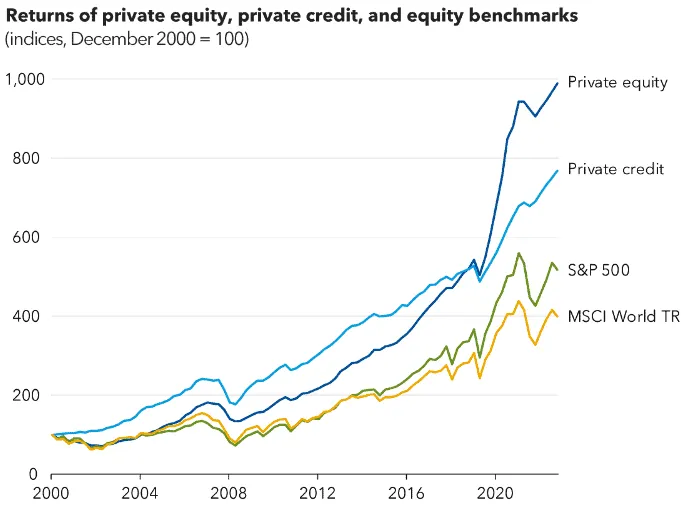
The industry scale has expanded from less than $200 billion in 2008 to over $2 trillion today, with funds almost entirely coming from institutional investors contributing single amounts of over $5 million.
Private credit sets a minimum investment threshold of millions of dollars, primarily because post-loan management costs are extremely high: every claim requires due diligence, debt restructuring, and years of continuous tracking. Managing ten institutional LPs each contributing $50 million is far easier than managing thousands of retail investors each investing $500; scaled operations for retail investors cannot even achieve profitability. In the past decade, only pension funds and insurance institutions have been able to enjoy stable credit returns in the 8%-12% range.
Yield-bearing stablecoins have completely rewritten the industry landscape, just like money market funds opened U.S. Treasury investment channels to ordinary people in the 70s. Underlying risk control and due diligence are still completed by professional institutions like Apollo according to institutional standards, but tokenized bridge funds can absorb deposits of any amount without thresholds, uniformly importing institutional credit strategies without needing to interface with massive numbers of retail investors individually.
Apollo recently launched the tokenized credit fund ACRED, with $109 million already flowing into its diversified credit products. Investors can even deposit ACRED tokens into Morpho as collateral for borrowing, cycling leverage to amplify returns.
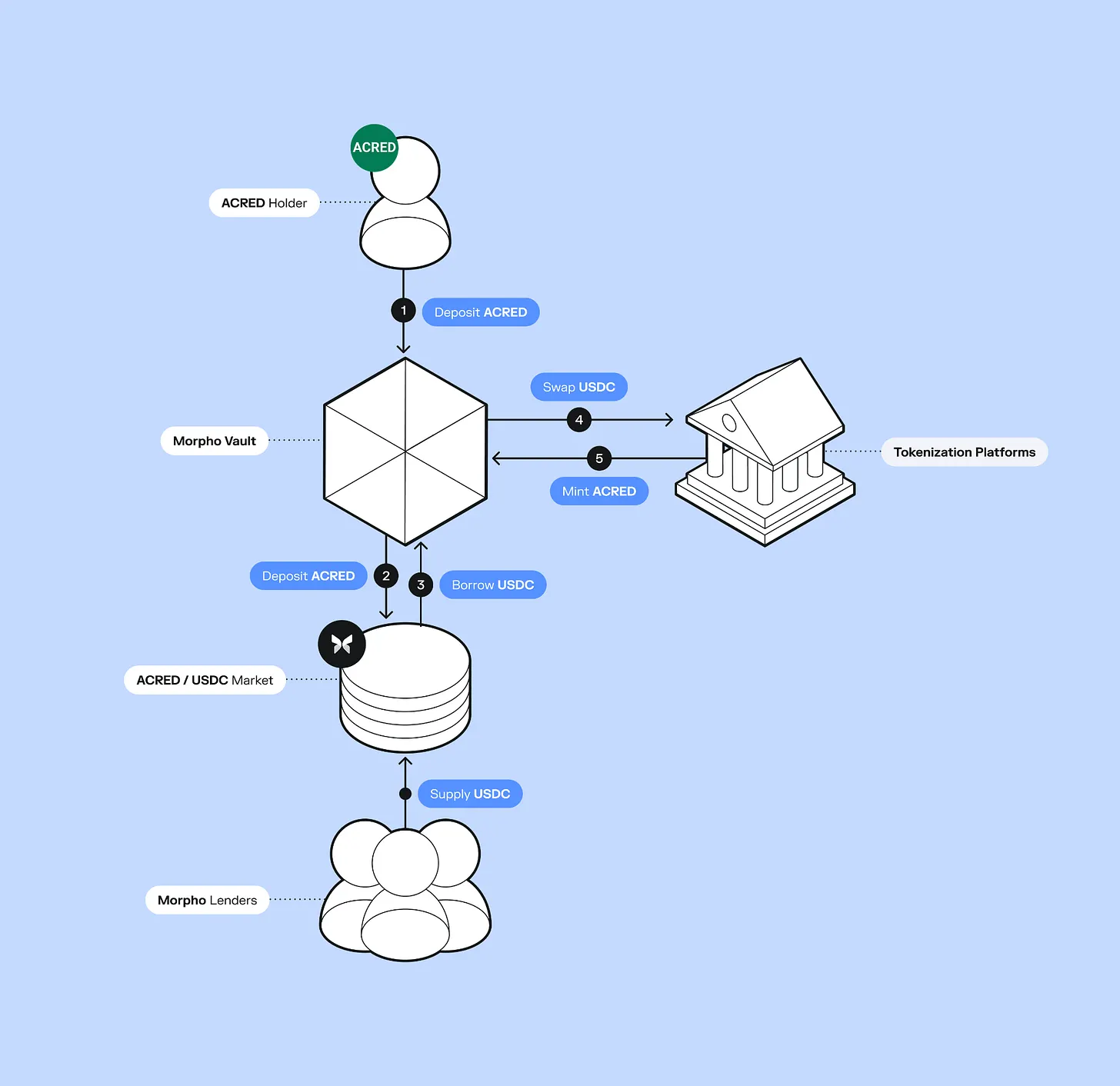
Figure has built a complete on-chain lending infrastructure, with a cumulative lending scale of $21 billion, and has listed on Nasdaq, while also issuing the yield-bearing stablecoin YLDS, with a circulating scale of $376 million. Protocols such as Pyse and Glow have ventured into more niche sectors, tokenizing solar projects, allowing investors to invest in photovoltaic power stations in developing countries with just hundreds of dollars, obtaining annualized returns monthly based on electricity fee repayments.
This does not mean that institutional funds themselves have removed thresholds; directly subscribing to the ACRED master fund still requires $5 million. However, after asset tokenization, tokens can be traded on the secondary market without thresholds, and can be combined DeFi Lego-style, which is a feature traditional fund shares cannot achieve.
Traditional private credit funds have lock-up periods lasting up to several years, with quarterly redemption limits capped at only 5%; on-chain assets can be traded around the clock and combined freely. For institutions like Apollo and Figure, this enables them to access $315 billion in stablecoin funds, which are actively seeking yields. After tokenizing funds, they can directly enter this capital pool, opening new distribution channels without having to build retail infrastructure from scratch.
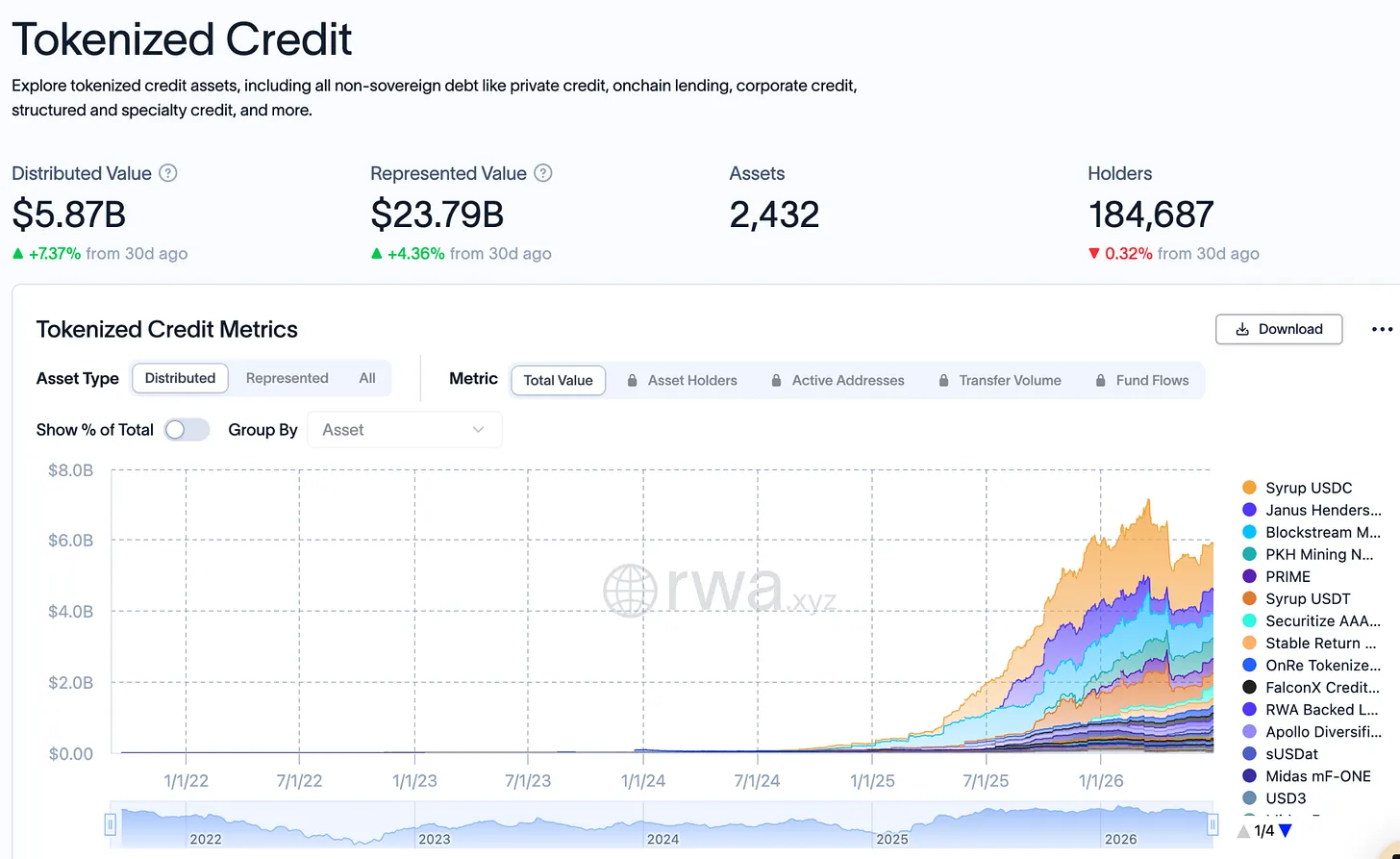
One year ago, the total on-chain private credit scale was only $400 million; today it has reached $5.87 billion, a 15-fold increase in 12 months. Even so, this scale accounts for only 0.3% of the global $2 trillion private credit market. Among new stablecoins issued in Q1 2026, half were yield-bearing stablecoins, meaning most new stablecoin funds are actively chasing real credit returns, no longer pursuing only USD-denominated price pegs.
More critically, every on-chain credit asset can serve as collateral, recycled across various DeFi protocols, ultimately deriving transaction scales far exceeding the principal volume.
Taking ACRED as an example, an investor deposits $10,000 worth of ACRED, mortgages it on Morpho to borrow 7,000 USDC, then buys more ACRED for secondary mortgage. With a principal of $10,000, one can ultimately leverage over $17,000 in credit exposure. In contrast, traditional private credit allows only static holding for five years after a $10,000 investment, with no amplification space. On-chain assets amplify market expansion speed through multi-layer cycling, but risks also transmit synchronously: if any underlying loan defaults, losses will spread layer by layer along the leverage chain.
Asset tokenization does not eliminate the inherent risks of underlying credit. During the phase of continuous capital inflow, new deposits can cover redemption demands, and risks are masked; once capital inflow slows, the contradiction between token yield promises and the underlying loans' real repayment ability will be fully exposed. Investors apply for redemptions centrally, market liquidity dries up, and token prices decouple significantly from the net asset value of underlying assets.
The collapse of Goldfinch is a typical case. The protocol launched in 2021, being the earliest project to move private credit on-chain, and was recently forced to shut down, with $56 million of user funds trapped in offline loan businesses in Kenya and Nigeria.
The Fatal Mistakes Goldfinch Made
In 2021, Goldfinch completed a $25 million financing round led by a16z. At that time, DeFi lending pool annualized returns were only 2%-3%, and the project planned to channel crypto funds to small and micro enterprises in Africa and Southeast Asia. Local traditional banks refused to serve such customer groups, and borrowers were willing to bear high loan interest rates of 15%-25%.
The project design logic seemed simple: users deposit USDC into the fund pool, and smart contracts automatically allocate funds to borrowers within seconds. However, lending to Nairobi motorcycle finance companies requires the team to thoroughly understand the local Kenyan transportation industry, verify enterprise finances offline on-site, and conduct door-to-door collections after overdue payments.
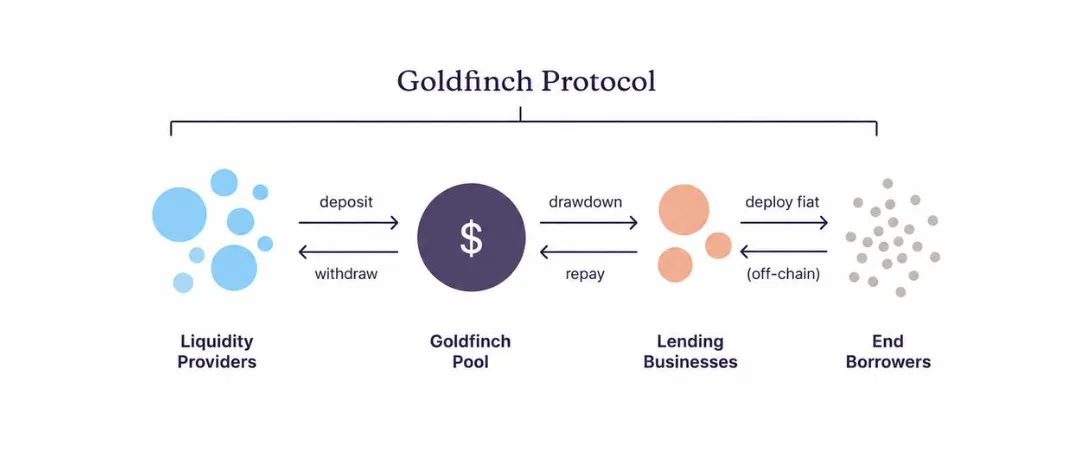
These risk control steps cannot be completed via blockchain at all. After USDC is exchanged for Kenyan Shillings to deploy credit, deposit users cannot track where the funds go, the enterprise's operating status, nor confirm whether loan terms are being fulfilled normally. All core information determining claim quality is stored off-chain, controlled by borrowers located in countries most investors have never set foot in.
This also led to a major misappropriation violation not being discovered until months later: in 2022, local partner institution Tugende Kenya unauthorizedly transferred $1.9 million out of a $5 million credit line to a related entity in Uganda, with nearly 40% of loan funds misappropriated to offshore entities not agreed upon in the contract. During this period, deposit users continued to receive 10%-12% book returns, completely unaware that the underlying funds corresponding to the returns had been transferred in violation.
Traditional private credit institutions, upon discovering such severe contract defaults, would initiate collections and debt restructuring within days; but Goldfinch users could only learn the truth through governance forum posts, able only to initiate governance votes with no legal enforceability, having no right to seize assets or audit remaining claims.
In 2023, Tugende completely defaulted and lost contact. During Goldfinch's operation cycle, a total of 24 fund pools were issued, with a total scale of $113.3 million, and only 13 pools were fully repaid. 8 pools held $53.82 million in unpaid loans, all deviating from original repayment agreements, mostly entering debt restructuring stages, with monthly repayments per pool less than $51,000. At this repayment speed, fully recovering $53.82 million would take 8 to 15 years.
Goldfinch undertook all credit risks such as emerging market currency fluctuations and lack of credit reporting, but did not build the risk control and collection infrastructure that traditional institutions spent decades polishing. For example, local Kenyan banks have offline branches and local regulatory connections, possessing sufficient bargaining power when bad debts occur.
Whereas Goldfinch simply imported global anonymous wallet funds to similar high-risk borrowers, but lacked a complete offline risk control system, significantly widening the information gap between lenders and borrowers; once default occurs, depositors have almost no channels for intervention or disposal.
Putting assets on-chain accounts for only 10% of credit business workload; the remaining 90% of due diligence and collections highly rely on localized resources, with extremely high setup costs. Credit underwriters need to establish a trusted underlying layer for the entire asset sector; every bad debt caused by risk control oversights will raise the threshold for institutional on-chain cooperation and weaken the credibility of the entire sector.
The true difficulty of credit business has nothing to do with on-chain technology. If practitioners in the sector cannot see this clearly, they will ultimately only replicate a second Goldfinch-style collapse.
Join TechFlow official community to stay tuned
Telegram:https://t.me/TechFlowDaily
X (Twitter):https://x.com/TechFlowPost
X (Twitter) EN:https://x.com/BlockFlow_News