









Kidnapping and ransom, deadly murders, serial interconnected cases—the real-life accounts of five cryptocurrency-related cases
TechFlow Selected TechFlow Selected
Kidnapping and ransom, deadly murders, serial interconnected cases—the real-life accounts of five cryptocurrency-related cases
The crypto world is turbulent—there have been at least 34 kidnapping cases in 2025 already.
 Navigating Web3 tides with focused insights
By Jaleel, BlockBeats
It's hard to imagine someone holding a gun to rob your real estate—but if what you own is a string of cryptocurrency that can be transferred instantly and cashed out globally, it becomes a perfect walking ATM for criminals.
According to incomplete statistics from public cases compiled by BlockBeats, around seven "physical-level" crypto-related kidnappings, home invasions, or violent threats occurred in 2022. That number at least doubled in 2023, reaching approximately 15–18 incidents. In 2024, the figure continued to climb, with at least about 20 such cases reported, each involving higher average amounts—ransoms or losses often exceeding one million dollars. By the first half of 2025 (as of June), at least 34 similar incidents had already occurred, surpassing last year’s total and setting a new record high. The vast majority of these cases fall into the classic category of “wrench attacks,” where victims—even those equipped with the most secure cold wallets and cryptographic defenses—are ultimately powerless against a knife, a wrench, or a stun gun.
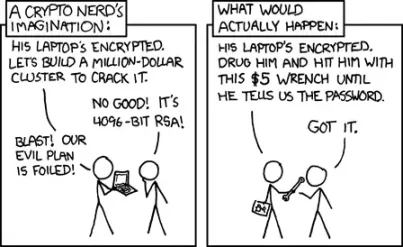
The term "wrench attack" originates from a famous XKCD comic: when sophisticated cryptographic protection meets physical violence, all it takes is a single wrench to force you to hand over your private key.
Typical methods of these wrench attacks include: breaking into homes directly and using weapons to threaten, bind, or torture victims into revealing seed phrases or transferring funds; impersonating police officers, agents, insurance personnel, or Uber drivers to lure targets into enclosed spaces before attacking; setting traps via acquaintances or sexual enticement, then ambushing them in hotels, apartments, or vehicles; and organized transnational criminal gangs operating across regions—such as South Asian groups in Southeast Asia, Russian gangs in Thailand, or Ugandan imposters posing as military or police.
Bali Tragedy: A Deadly Trap in a Tropical Paradise
When it comes to crypto-related kidnappings, most people immediately think of the tragic case of a couple in Bali—an incident that sent shockwaves through both the crypto community and the travel world.
The date was May 1, 2023. At a five-star hotel on Indonesia’s island of Bali, a young Chinese couple, both only 22 years old, were found dead under gruesome circumstances during their vacation.
Based on testimonies from 31 witnesses and forensic examinations, Indonesian police concluded simply and directly: the man first strangled his girlfriend to death, then used a beer bottle to stab himself violently before taking his own life. Police noted the couple had argued over personal issues prior to arriving in Bali, and the man had an injury on his left hand. From law enforcement’s perspective, this was a textbook case of “murder-suicide.”
But one detail turned this case into a sensation within the crypto community: rumors spread that the victims were involved in crypto, and the man may have controlled approximately 200 million RMB worth of cryptocurrency.

Discussions in the crypto community at the time

A crypto trader named "nnn" on WeChat spoke up about the incident, claiming the male victim was his friend—they had chatted just two weeks earlier
Before authorities officially ruled it a murder-suicide, many in the crypto space speculated: someone coveted the money, tried to force him to reveal his wallet keys, resorted to torture to extract passwords, and ended up killing both without recovering the funds.
Yet online sleuths unearthed numerous odd details: Why did they check in separately? Why was the hotel room registered under the woman’s name? Upon entering the room, why did the man repeatedly inspect the adjacent room and hallway—was he afraid someone would sneak in through a secret passage or window? No fingerprints were found on the beer bottle, as if wiped clean by a professional killer after the job. Moreover, photos of the man showed him wearing a small braid—a look carrying a certain “gangster vibe.” Insiders said this appearance and demeanor were common among underworld figures in Southeast Asia or Hong Kong/Taiwan.
These clues fueled a widely circulated version of events: in Southeast Asia, a hub for illegal gambling (“bocai”) and telecom fraud zones, USDT and other cryptocurrencies are frequently used to transfer and “launder” illicit funds. This man, allegedly managing large sums, supposedly took off with money belonging to his criminal boss under the guise of “money laundering.” Several local OTC dealers in Indonesia, after helping convert his USDT to USD, leaked his whereabouts. The boss, upon discovering the theft, put out a bounty to “make an example” of him. Professional hitmen tracked the couple to the hotel and carried out the hit—consistent with typical gang retaliation tactics. Given the boss wasn’t some minor player but possibly backed by Southeast Asian warlords or corrupt officials, and fearing widespread panic among foreign tourists, local authorities allegedly chose to cover it up.
Of course, this remains speculative—not necessarily the truth. But due to the case’s mysterious and brutal nature, it has remained infamous in the crypto world. RIP…
Locals say the incident barely made waves in Bali—the hotel continues business as usual, still thriving today. It remains considered a luxurious resort destination. Yet the sea breeze in Bali has blown past too many crypto-related kidnapping stories—cold and indifferent, far removed from the sunny image of a tropical getaway.
For instance, early in 2023, a rumor swept the crypto world: Yuri Boytsov, a crypto influencer, had been targeted. At the time, he was renting an ocean-view villa in Bali, teaching trading on Telegram by day and enjoying beers by the sea at night. One evening, four men suddenly stormed into his house—one wore a police uniform, while two others were masked white men. Without saying a word, they pinned him down, seized his phone and passport, forced him to unlock his wallet, and transferred 284,000 USD worth of Bitcoin. Indonesian police later caught only one suspect, who counterclaimed that Yuri was a scammer who deserved to be robbed. In the end, no money was recovered, and Yuri quietly moved to another country, disgraced.
There’s an even older case, dating back to late 2021. An Italian couple living in a villa in Seminyak were attacked at 3 a.m. when several men broke in. Dressed entirely in black, wearing gloves and masks, they tied up the husband, held a knife to his neck, sealed his mouth with tape, and demanded his phone password. When uncooperative, they beat and threatened him in various ways. Ultimately, six phones and the associated Bitcoin accounts were completely drained—amounting to roughly $374,000. Later investigations revealed two of the attackers had previously dined and partied at the victims’ home. So far, only two suspects have been captured; the Polish and Russian nationals remain at large.
Father Pays for Son's Crimes: Kidnapping and Theft Within a Family
On a sweltering Sunday afternoon, August 25, 2024, in Danbury, Connecticut—an upscale neighborhood where lawns are perfectly trimmed and outdoor lounge chairs beside pools are freshly wiped clean—violent crime is rare. Most residents live comfortably and securely. For a police officer, encountering a kidnapping might happen only once in a lifetime.
Sushil, a vice president at Morgan Stanley, earns a high salary but isn't extraordinarily wealthy. That day, Sushil and his wife were test-driving their newly purchased Lamborghini around the neighborhood, checking out potential homes. This middle-class family had no idea they were about to experience a terrifying nightmare.
As their car turned a corner, a white Honda suddenly slammed into the rear of their Lamborghini. Sushil instinctively braked and prepared to get out—only for a large white truck to speed forward and block them completely. Within seconds, six masked men in black clothing rushed out from both vehicles. Before they could react, the doors were yanked open and the couple dragged out. Sushil shouted and struggled fiercely—but was met with a baseball bat smashing straight into his head, blood instantly covering half his face.
The couple was thrown into the trunk of the truck, tightly bound with duct tape like mummies—mouths wrapped twice, limbs immobilized, breathing only through narrow nasal gaps. The truck reversed sharply and sped off, just like in the movies. Except this wasn’t fiction—their fear and suffocation were real, the metal cabin violently shaking, with kidnappers occasionally striking them with the bat, each blow piercingly painful.
But the kidnappers didn’t expect an off-duty FBI agent happened to witness everything nearby. He immediately followed the truck and reported its license plate to local police. Within ten minutes, patrol cars intercepted the vehicle. Sensing danger, the driver went on a wild chase—driving the wrong way, running red lights, scraping curbs and sending sparks flying. After about a mile, the vehicle lost control and crashed hard into a roadside barrier. Four kidnappers jumped out and fled toward a bridge and nearby woods—only to be apprehended by police moments later.
The rescued couple emerged battered, legs still taped, faces streaked with blood. Strangely, law enforcement discovered the suspects were aged between 18 and 26, and had actually rented a car in Miami and driven all the way to Connecticut. The drive from Miami to Connecticut spans roughly 2,100 kilometers—over 20 hours nonstop. What could possibly be so valuable about this couple to justify such a long-distance kidnapping operation? Sushil was merely a finance executive—wealthy, yes, but not enough to warrant such extreme measures. If it were purely about money, why not just steal the car?
The truth slowly unraveled afterward. Police examined the suspects’ phones and group chat messages, uncovering a shocking revelation: the real target wasn’t the couple at all—it was their son, Veer Chetal, an 18-year-old recent high school graduate, whose actions led to a $250 million cryptocurrency theft case.

Veer Chetal, photo provided by U.S. Marshals Service in March 2025
Chetal was no ordinary college freshman. While attending Rutgers University in New Jersey during the day, he moonlighted as a major crypto thief.
Last August, Chetal teamed up with friends he met in the Minecraft black market to form a cybercrime ring. Using an old yet effective social engineering tactic, they impersonated Google and Gemini exchange customer support staff, gradually transferring 4,100 Bitcoins from an early Washington-based Bitcoin investor. Valued at $250 million at the time (and $420 million at the time of writing), the heist marked one of the largest individual digital thefts.
After seizing the funds, Chetal and his crew lived extravagantly—spending millions on luxury cars, jewelry, mansions, and nightclub parties. He drove a Lamborghini to class, frequented clubs, rotated supercars regularly, and hosted endless parties.
It was at a Miami nightclub where Chetal, full of youthful arrogance, got into a verbal altercation with one of the future kidnappers—escalating into physical violence. That’s how the kidnapper learned Chetal possessed vast amounts of cryptocurrency. They flew from Florida to Connecticut planning to take his parents hostage and force Chetal to surrender the remaining funds—the very same afternoon his parents’ Lamborghini was rear-ended.
Further investigation revealed Chetal was linked to at least dozens of smaller scams, ranging from tens of thousands to over $2–3 million per incident. Authorities found $500,000 in luxury goods, cash, and $39 million in cryptocurrency at his residence.
According to court documents released this week, Chetal has pleaded guilty and agreed to testify in exchange for a reduced sentence—likely facing around 20 years in prison. Born in India, Chetal came to the U.S. in 2010 at age four under his father’s foreign worker visa, which granted him dependent status. However, due to this criminal case, he now faces possible deportation. His father also lost his job at Morgan Stanley because of the scandal.
That once-symbolic Lamborghini now sits alone in a Connecticut police impound lot.
Hal Finney’s Final Ransom Call
If there’s one person revered as the “white moonlight” of the Bitcoin world, it’s Hal Finney. Even though he denied being Bitcoin’s creator, many believe he was Satoshi Nakamoto.
He was the first person to receive a Bitcoin transaction from Satoshi, one of the earliest to truly understand Bitcoin, and a crucial early contributor who provided both computing power and code. Yet despite this legacy, he couldn’t leave the world peacefully in his final months.

Hal Finney with his wife Fran
It was winter 2014. Hal Finney had been battling ALS for five years—his body largely paralyzed, swallowing itself a dangerous act. Every day, his wife Fran suctioned phlegm, cleaned him, and changed tubes. One morning, while she and a caregiver were bathing Hal, the phone rang. The caller claimed to be from the 911 emergency dispatch center, speaking politely: “Ma’am, is anyone currently being attacked in your home?”
Fran was confused. The dispatcher calmly replied: “Please stay calm. Your house will soon be surrounded by SWAT. You need to cooperate—come outside immediately.” She walked to the door—only to find fully armed SWAT officers surrounding the house, a helicopter circling overhead. Days earlier, a university shooting nearby had heightened police alertness. Seeing her holding a phone, an officer yelled: “Drop the phone! Get onto the lawn!”
She obeyed, leaving Hal helpless in the bathroom, unable to move or breathe properly, along with the caregiver and their son. Soon, SWAT officers carried Hal out onto the freezing lawn. Wind made him shiver uncontrollably; saliva pooled in his throat. Fran feared he’d choke to death—her mind nearly shattered.
All of this was caused by a “swatting” attack—a malicious hoax call designed to trigger a full tactical response. Hackers used spoofed numbers to call 911, falsely reporting: “I just killed someone—I’m going to kill myself now.” Their goal? To terrorize an innocent family with a heavily armed raid.
The person behind the calls had begun blackmailing Hal Finney’s family a month earlier, demanding 1,000 Bitcoins—worth over $400,000 at the time. Though not an astronomical sum for Hal, an early Bitcoin miner, much of his wealth had already been spent on costly ALS treatments.
This wasn’t physical kidnapping, but repeated threatening calls tormented the legendary figure lying on life support. Hal grew weaker daily—losing strength to speak, yet forced to expend whatever little emotional energy he had confronting a coward hiding in the shadows. Years later, Fran recalled tearfully: “This stole his final peace.”
On August 28, 2014, Hal Finney passed away.
Ledger Co-Founder’s Nightmare in the Snow
If Hal Finney’s ordeal is an unforgettable chapter from Bitcoin’s early days, then the kidnapping of Ledger co-founder David Balland stands as the most high-profile abduction of a crypto industry figure in recent years.
In the early hours of January 21, 2025, the winter night in Méreau, a small town in central France, was eerily quiet. Around 2:00 a.m., a van quietly parked outside a white-walled villa with a garden. The occupants inside had no idea their nightmare had just stepped silently through the snow.
The target wasn’t an ordinary resident, but David Balland—a well-known name in the crypto world, if not universally recognized, certainly prominent. He is a co-founder of Ledger, the renowned hardware wallet company and a benchmark in the cold wallet sector.
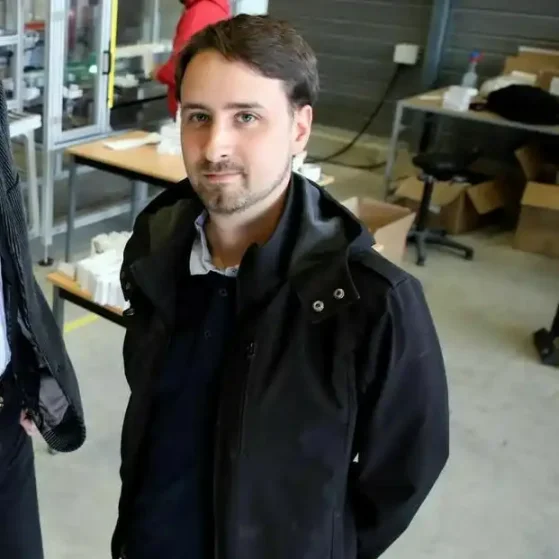
David Balland, co-founder of Ledger
Since Ledger’s founding in 2014, David Balland dedicated himself fully to the company. He served as manager of the Vierzon factory from 2019 to 2021. In 2019, Ledger established a dedicated manufacturing plant in the French town of Vierzon to produce hardware wallets. Today, the company is headquartered in Paris with around 700 employees. In 2023, Ledger successfully raised 100 million euros (approximately $104 million), achieving a valuation of 1.3 billion euros.
Balland retired from Ledger in 2021 and went on to launch two new startups: Le Centre and Ocel—both focused on bringing museums and art into the Web3 + VR space.

David once shared photos of his new home on Twitter
That night, David was at home with his partner. Curtains half-drawn, fire crackling in the hearth—everything seemed normal. Minutes later, masked intruders kicked the door open, guns drawn, dragging both from bed and binding them without hesitation. Cold air rushed in, as David’s mind raced: Would they survive? And what did the kidnappers want?
He was shoved violently into a car and driven to an abandoned warehouse dozens of kilometers away. It was freezing—like a walk-in freezer. Bound tightly with tape, he was tortured with knives to force compliance, pressured to demand ransom payments in cryptocurrency from Ledger’s other founder. The demands were clear: crypto only, no police, no delays—or else.

The warehouse where David was held captive
His partner wasn’t spared either—taken separately to a southern Paris suburb and locked in the back of a van. Cold wind seeped through cracks. Tied up, limbs numb, she could only listen to passing cars, hoping someone would notice.
The criminals were tech-savvy: ransom communications via WhatsApp, SIM cards registered in Southeast Asia, connections routed through multiple VPNs. Ledger dared not delay—sent partial payment initially to buy time for police tracking.
To the kidnappers, it was just money. To French authorities, it was a matter of national pride. 230 gendarmes, including 91 elite special forces, alongside cybersecurity and intelligence units, worked tirelessly—tracing license plates, locating phones, launching nighttime raids. From abduction to rescue, French police resolved the case in under 48 hours.

French police speaking on the case
On the afternoon of January 23, near Paris, two suspicious vans parked roadside were raided. Inside: three men and the bound, pale-faced partner. When police pulled her out, she was nearly hypothermic, unable to cry out. Meanwhile, David was rescued from the warehouse—alive, but traumatized. To pressure Ledger into paying, the kidnappers filmed themselves cutting off one of his fingers and sent the video to company executives—an image so brutal it chilled everyone to the bone.
Ten kidnappers were arrested on the spot: nine men and one woman, ages ranging from early 20s to mid-40s. Most had prior records. The ringleader was a 24-year-old French-Moroccan national. Now facing charges including “organized armed kidnapping,” “extortion with weapons,” and “torture”—in France, punishable by life imprisonment.
After rescue, David was hospitalized. His hand injury requires time to heal. But beyond the lost finger, the most important thing is that he survived.
The “E-Guardian” Who Drugged His Father
The tea was poured by his own son.
May 2021, Bethesda, Maryland—a typical affluent suburban neighborhood, shaded by trees, streets pristine. Any disturbance here draws attention. That night, Liam handed his father a steaming cup of tea—into which he had quietly mixed white powder—and smiled: “It’s good for you. Just a little pick-me-up.”
His father didn’t suspect anything and drank it. Despite his son’s history of drug use, he was still his child—the only son he raised, shared meals with, traded crypto with, fought and reconciled with. But instead of a restful sleep, the tea brought two full days of unconsciousness—and nearly cost him his life.
The powder wasn’t medicine. It was a benzodiazepine sedative—similar to prescription sleeping pills—high doses of which can knock out someone with no tolerance.

Evidence of the tea Liam gave his father, source: case evidence file
That night, after drugging his father, Liam quietly took his phone, bypassed two-factor authentication, and transferred 400,000 USD worth of Bitcoin into his own account—later converting most into Ethereum.
Afterward, he left a note: “I’m not a bad person. I just wanted to help you—and myself. I’ll make sure you have the best retirement.”

This note, written by Liam to his father, became part of the case evidence, source: case evidence file
He assumed his father would wake up soon—but underestimated how vulnerable a non-addict is to such drugs. Two days later, a friend, alarmed by prolonged silence, called police. Officers broke in to find the man collapsed on his bedroom floor—barely breathing, severely dehydrated, organs beginning to fail.
Doctors said another few hours, and he would have died.
Liam came from a comfortable Maryland family. After his parents divorced, he was their only child. A decent tennis player in youth, he founded an online clothing resale business after high school, later becoming his father’s “financial advisor” in crypto.
“You’re too emotional, too attached to this token,” Liam would often advise his father.
His father gave him $100,000 as seed capital. As the portfolio grew, they cashed out part of their holdings in 2018, netting about $350,000 after taxes. But Liam’s drug abuse worsened dramatically—passing out daily, moving from apartment to family home, eventually disappearing.
As his paranoia deepened, so did his obsession with Bitcoin price drops. Fearing his son’s judgment, the father implemented dual controls on their investment accounts.
“Dad, you need to sell it,” Liam recalled telling him. “No, you need to stop using drugs,” his father replied.
Then came the tea. After moving furniture and eating dinner nearby, they returned home. Liam served two “special” cups—one for himself, one for his father.

After pleading guilty, Liam underwent drug treatment and rehabilitation, photo source: Washington Post
Initially charged with attempted murder—given how close his father came to death—further investigation led prosecutors to view it more as a crime committed under addiction-induced delusion, albeit cloaked in a “false sense of goodwill.” He never intended to kill. The case was ultimately prosecuted as first-degree assault. Considering Liam had no prior record, cooperated with treatment, and his family forgave him, the court sentenced him to 125 days in jail plus mandatory drug rehab and 20 years of probation. Any future violence would land him in state prison immediately.
After release, Liam moved into a recovery group home in Rockville, working odd jobs by day, attending AA meetings at night. His father visits sometimes. They occasionally work together repairing his old Subaru. “I’ve apologized to my dad,” Liam said. “But I know words aren’t enough. I need to prove through action that I’m becoming the good son again.”
Maybe one day, father and son will share tea again. But this time, the father will probably smell it first—then sip carefully.
Join TechFlow official community to stay tuned
Telegram:https://t.me/TechFlowDaily
X (Twitter):https://x.com/TechFlowPost
X (Twitter) EN:https://x.com/BlockFlow_News
 BlockBeats









