Trump's Smartphone Venture: Controversy, Reality, and the Political Economy of Traffic Monetization
TechFlow Selected TechFlow Selected
Trump's Smartphone Venture: Controversy, Reality, and the Political Economy of Traffic Monetization
Political Tool or Market Newcomer?
 Navigating Web3 tides with focused insights
By Ethan, Odaily Planet Daily
On June 16, 2025, former U.S. President Donald Trump officially launched his mobile communications brand, Trump Mobile, unveiling its first smartphone, the T1, alongside a配套 "The 47 Plan" service package. Trump boldly proclaimed during the announcement: "Trump Mobile will use phones and services 'made in America,'" emphasizing offerings such as roadside assistance and unlimited messaging. The debut of the T1 phone immediately stirred public controversy.
In fact, this is not Trump's first foray into merchandise sales. Previously, he operated a "Trump Store" on Amazon, selling items including red baseball caps, T-shirts, and coffee mugs—products that performed remarkably well commercially, prompting online jokes that his "main job is selling goods, presidency is secondary." This latest launch of a smartphone appears to be another milestone in his broader "traffic monetization" business ecosystem.
The timing of the T1’s release coincides with the tenth anniversary of Trump’s initial presidential campaign announcement, imbuing it with undeniable political symbolism. This was not merely a product launch, but rather a self-coronation ceremony for a “presidential brand.”
Product Overview and "Patriotic" Marketing
T1 Phone: A "U.S. Version of 8848"?
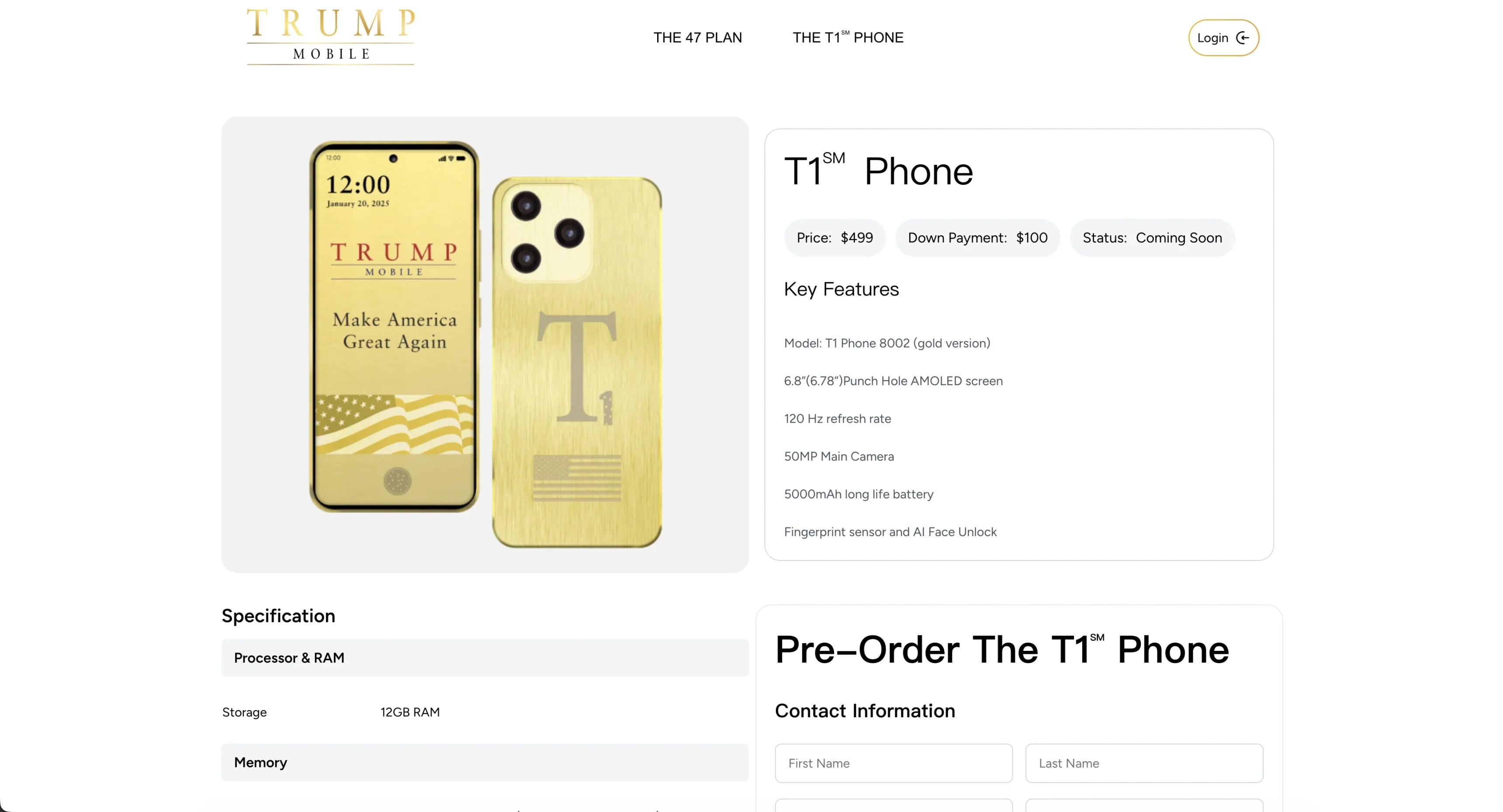
Trump Mobile official website: https://www.trumpmobile.com/t1-phone
The T1 is priced at $499 (approximately RMB 3,580), with an expected market release in September 2025. It features a brushed metal body, engraved with the American flag on the back, and embeds Trump’s campaign slogan "Make America Great Again" within the display interface.
Specifications include a 6.8-inch AMOLED punch-hole display, 120Hz refresh rate, 5000mAh battery, 12GB RAM + 256GB storage, and runs on Android 15. Notably, it retains the rare 3.5mm headphone jack. Overall, its hardware sits at a mid-to-high tier level.
Upon closer inspection, users have pointed out striking similarities between the T1 and Apple’s iPhone 14 Pro series, particularly in camera module layout—the triple-lens arrangement being nearly identical—leading some to mockingly dub it the “political version of 8848,” implying “luxurious exterior, mediocre core.”
"The 47 Plan": Political Symbolism in Pricing
Trump Mobile simultaneously introduced a service plan named "The 47 Plan," priced at $47.45 per month, offering unlimited calls, texts, and high-speed data, along with added benefits like international calling, roadside assistance, and telemedicine services. The name “The 47 Plan” and the monthly fee of $47.45 both carry political connotations: Trump served as the 45th president and currently holds the title of the 47th.
This practice of embedding political meaning through numbers has long been seen in Trump-branded merchandise such as hats and sneakers, forming a signature narrative strategy for his personal brand.
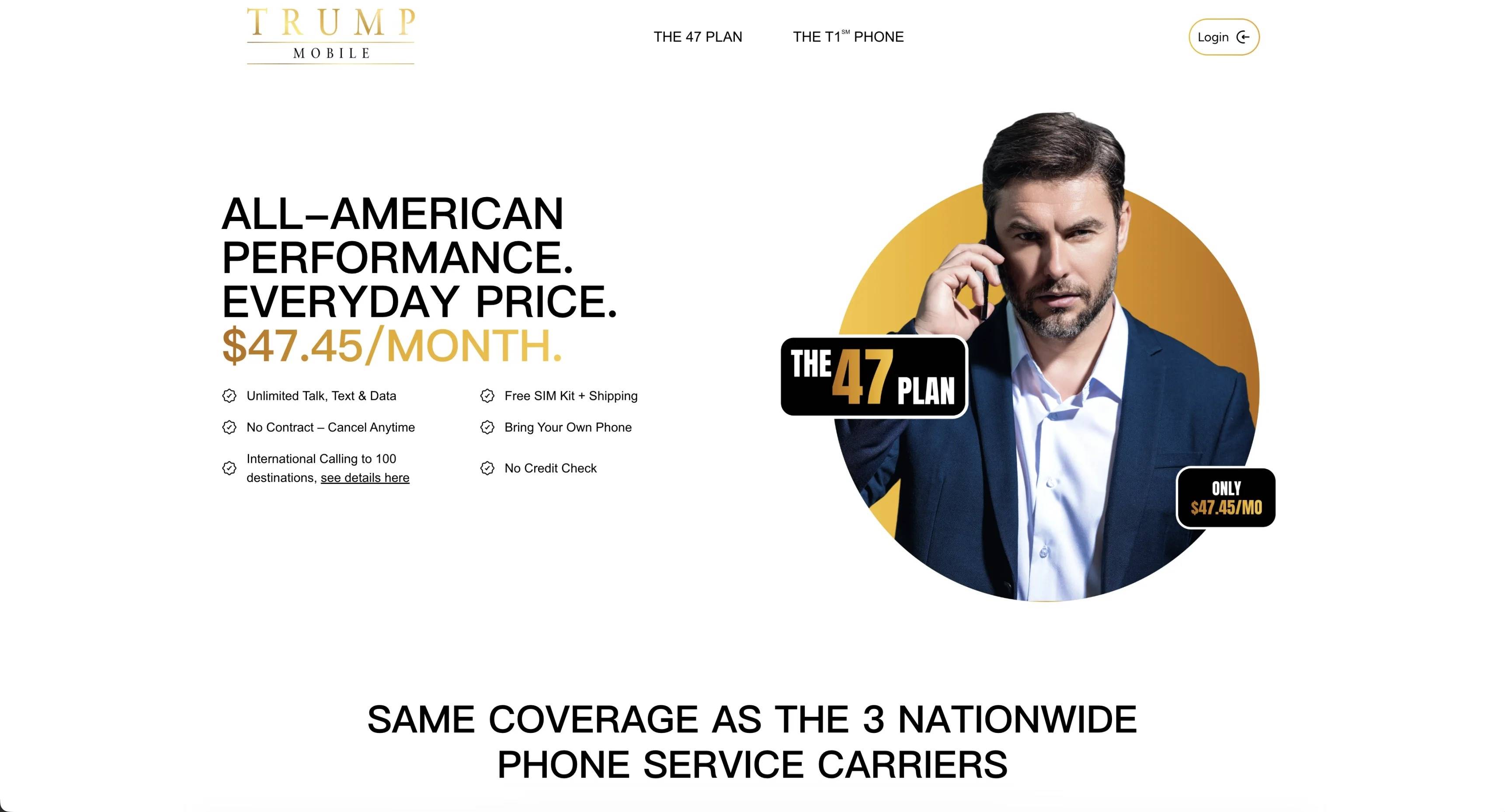
Trump Mobile official website: https://www.trumpmobile.com/
Who Will Buy It?
Trump Mobile primarily targets middle-aged and older conservative voters, veterans, and their families—die-hard supporters within the conservative base. These groups place strong value on the symbolic significance of “Made in America,” traditional values, and national security. Highly aligned with Trump personally, they represent classic examples of emotionally driven brand consumers.
It is foreseeable that Trump Mobile will continue rolling out accessories bearing “loyalty markers,” such as watches, headphones, T-shirts, or “Presidential Certified” limited editions, building a “branded product matrix” to continuously monetize political allegiance.
Controversies: The Truth Behind "Made in America" and Value-for-Money Dilemma
Is "Made in America" Legitimate?
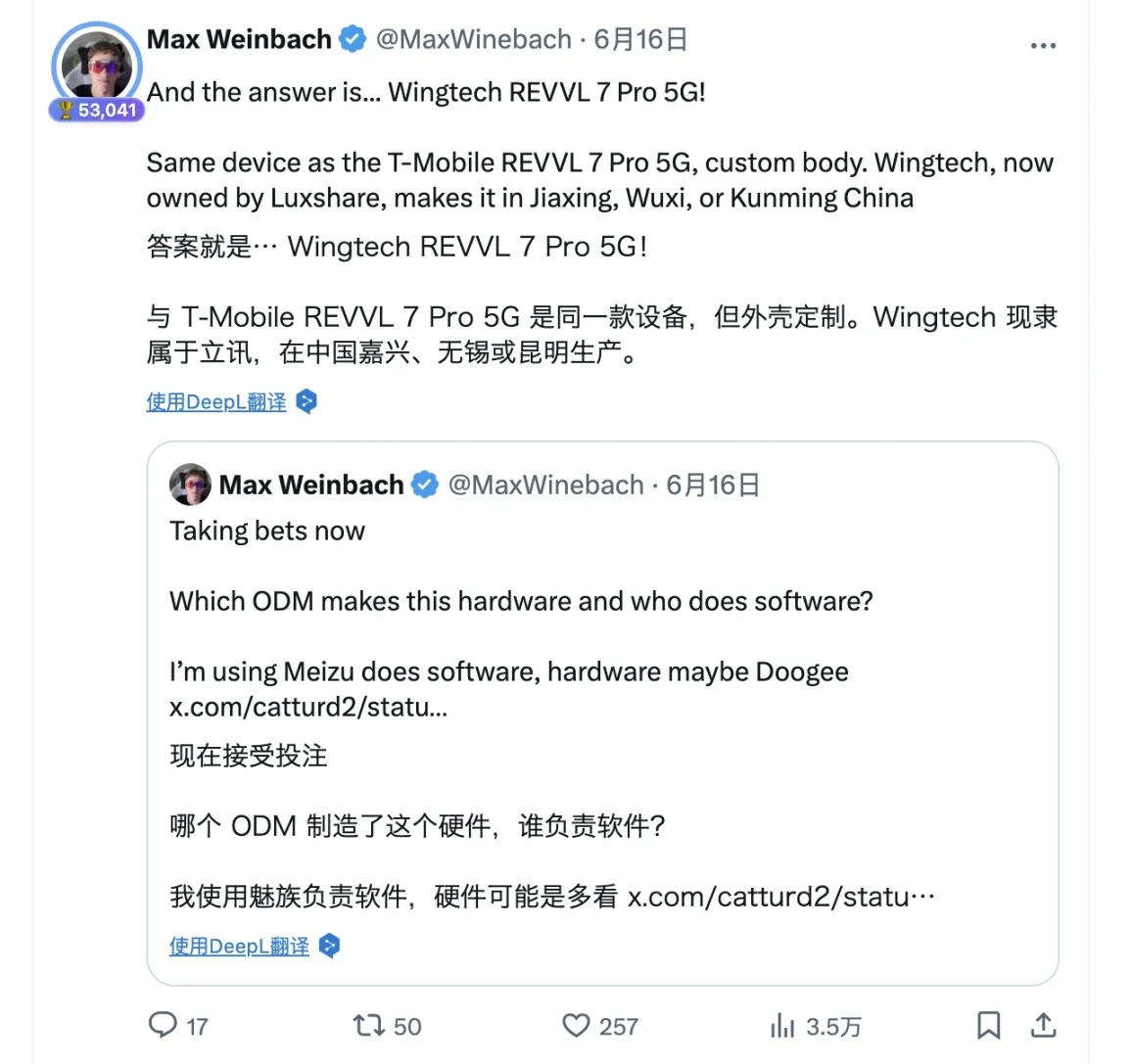
Despite repeated claims by Trump and his son that the T1 is “designed and manufactured in the United States,” these assertions were quickly challenged. Max Weinbach, analyst at Apple Insider, noted that the T1 bears extreme resemblance to T-Mobile’s REVVL 7 Pro, which is produced by Chinese ODM manufacturer Wingtech Technology, likely manufactured in Jiaxing, Wuxi, or Kunming.
Professor Dai Tinglong from Johns Hopkins University Carey Business School stated that most components used in the T1 cannot currently be sourced or produced domestically in the U.S., and that the country lacks the infrastructure for a complete smartphone supply chain. He remarked, “Building the necessary infrastructure to manufacture such a product entirely in the U.S. could take more than five years.”
Furthermore, according to Federal Trade Commission (FTC) guidelines on “Made in USA” labeling, products must undergo “all or virtually all” manufacturing and assembly within the United States—a standard the T1 clearly fails to meet.
Is the Brand Premium Justified?
Priced at $499, the T1 significantly exceeds comparable Android smartphones like the Pixel 7a or Moto Edge, carrying a premium of over $150. More critically, many of its value-added services can be obtained via existing MVNO (Mobile Virtual Network Operators) at much lower costs.
This price gap isn’t paid for performance—it’s paid for brand, belief, and identity. From a pure value-for-money perspective, the pricing appears unreasonable. Yet from the lens of “tribal consumption,” where loyalty drives purchase behavior, the premium may actually reinforce brand devotion. This positioning echoes Apple’s early “Think Different” differentiation strategy, drawing notable parallels.
Where Lies the Boundary Between Politics and Business?
Trump currently serves as U.S. President while also acting as the symbolic owner of Trump Mobile. His family business repeatedly leverages his political status in marketing the phone, sparking widespread debate over the blurring line between governance and commerce.
In 2024, his personal income reached $600 million, derived from golf courses, brand licensing, cryptocurrency ventures, and other channels. DA Davidson analyst Jill Luryea believes the launch of Trump Mobile represents yet another case of “converting political capital into commercial profit.” Prior to this, the company had already released consumer-facing products, starting with the social media platform Truth, followed by cryptocurrencies promoting the president and his wife.
NBC commented that Trump Mobile has become the newest component of the Trump family’s commercial machinery, continuing the model of transforming political influence into retail profitability. In this narrative of “president-as-brand,” the boundary between public office and private gain grows increasingly indistinct.
Deeper Commercial Logic: A Web3 Economic Experiment and Traffic Monetization
The Trump phone is far more than just a communication device—it may serve as the vanguard of a larger “Web3 + political economy” experiment. Crypto investor Mark Cuban posted on X suggesting that the Trump Mobile might come pre-installed with a crypto wallet supporting TRUMP meme coins, the USD1 stablecoin, and family-linked projects like WLFI. He speculated: “This phone could earn fees from wallet transactions and preload any content they wish to sell.”
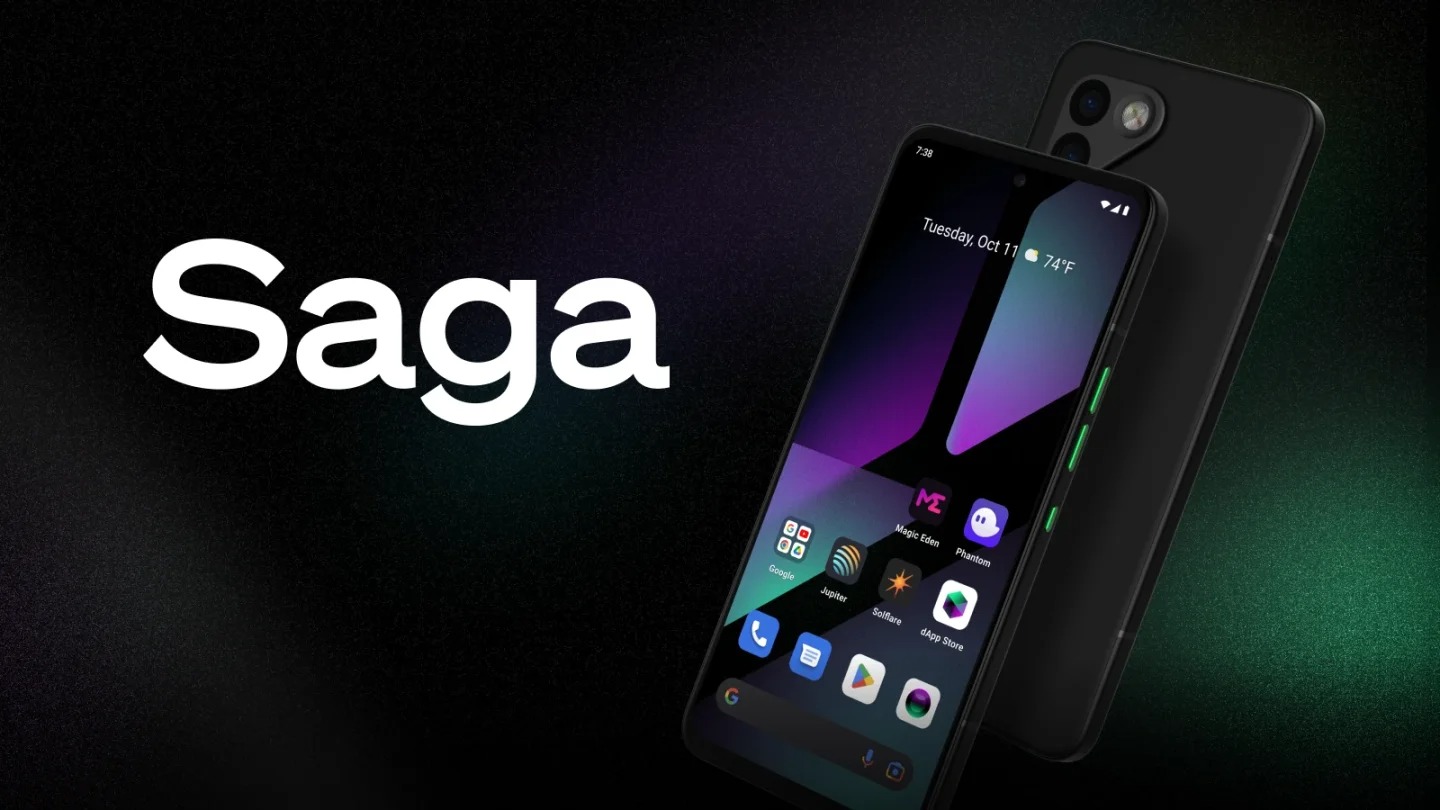
This “hardware-as-wallet,” “phone-as-gateway” approach mirrors the逆袭 success of Solana’s Saga phone. Initially expensive and poorly selling, Saga turned around when it began distributing BONK token airdrops—users soon received rewards worth far more than the device itself, causing demand to surge overnight. If Trump Mobile replicates this model—offering incentives like “buy a phone, get MAGA coins” or “airdrop DJT shares”—the phone would cease to be just a gadget, becoming instead an “identity token” and “entry pass.”
Under such a mechanism, consumers transform into participants, investors, and evangelists, evolving from “Trump fans” into economically vested stakeholders, creating a self-replicating viral traffic structure.
Conclusion: Political Tool or Market Newcomer?
The emergence of Trump Mobile marks the latest chapter in Trump’s commercialization of the “traffic → brand → asset” pathway.
If it remains confined to the realm of “rebranded phone + conservative audience,” it may ultimately prove fleeting.
However, if it advances further integration with Web3 economic models—such as DJT share airdrops or launching MAGA coins as tradable assets—Trump Mobile could potentially build a closed-loop ecosystem uniting politics, commerce, finance, and community.
In this evolution, the smartphone becomes a “mobile identity badge,” political views turn into assets, votes morph into tokens, and consumers are integrated into a new narrative framework of the Trump brand.
This is certainly not intended as an iPhone alternative, but rather as an emissary of an entire value system. How Trump Mobile evolves will depend on whether it truly makes that golden call to a new world.
Join TechFlow official community to stay tuned
Telegram:https://t.me/TechFlowDaily
X (Twitter):https://x.com/TechFlowPost
X (Twitter) EN:https://x.com/BlockFlow_News
 Odaily