Crypto's Overture to Wall Street
TechFlow Selected TechFlow Selected
Crypto's Overture to Wall Street
Welcome to the major identity crisis of cryptocurrency in 2025.
 Navigating Web3 tides with focused insights
Author: Prathik Desai
Translation: Block unicorn
Introduction
Sun Yuchen, founder of TRON, is taking his blockchain empire public through a reverse merger with SRM Entertainment, a Nasdaq-listed toy company.
How did someone whose career began with disrupting traditional finance end up holding an IPO prospectus and queuing at the gates of Wall Street?
Welcome to crypto's major identity crisis of 2025.

Rushing Toward Wall Street
The trend started with Circle. This month, the stablecoin giant surged 168% on its first trading day. Its IPO was oversubscribed 25x—public demand reached 850 million shares, while only 34 million were offered.
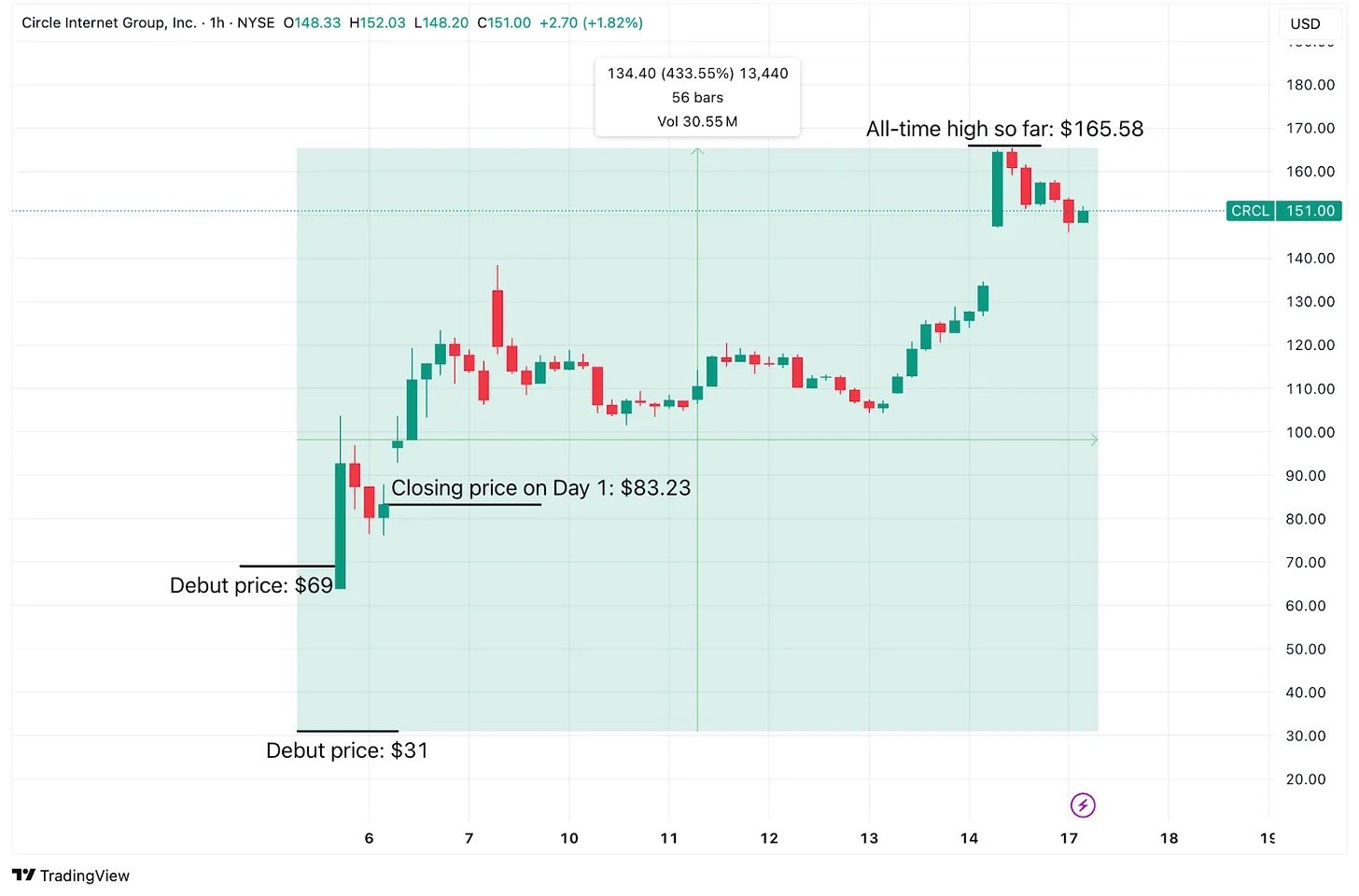
Image source: TradingView
Circle now has a market capitalization exceeding $33 billion—triple the reported $9–11 billion acquisition offer it previously received from Ripple.
Circle’s success not only rewarded early investors but also inspired a wave of crypto-native companies to consider going public and prompted others to revive shelved listing plans.
Three days later, Gemini filed for IPO. Now, TRON has announced its own listing plan.
Circle provided a blueprint proving that traditional markets are willing to pay a premium for regulated crypto exposure, and that mainstream investors crave blockchain innovation packaged in familiar corporate structures.
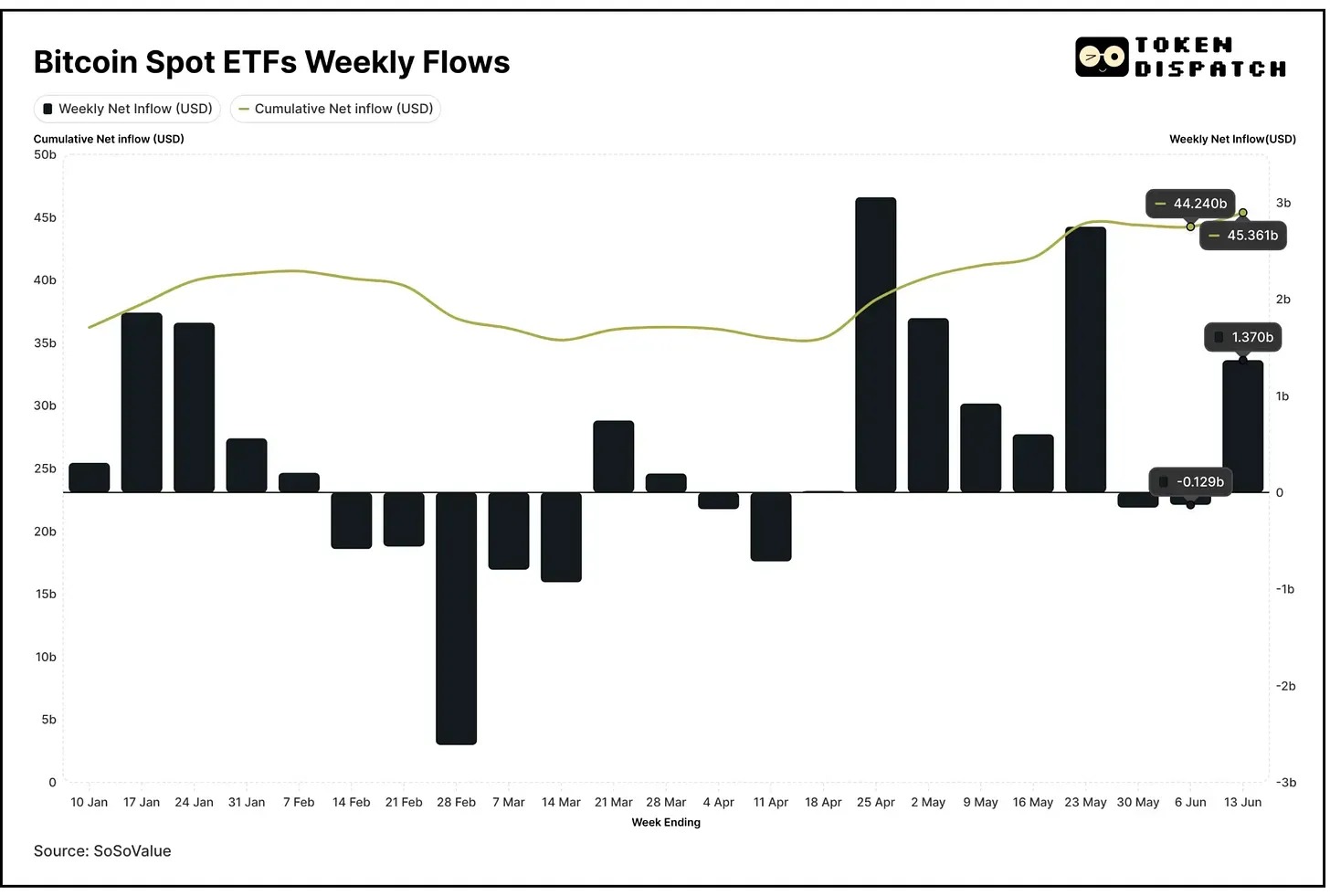
The public has readily embraced crypto products delivered through traditional Wall Street channels. Since January 2024, net inflows into Bitcoin ETFs have exceeded $45 billion.
Strategy (formerly MicroStrategy) trades at multiples above the value of its Bitcoin holdings: a market cap of ~$106 billion versus ~$62 billion in Bitcoin value. Michael Saylor’s bold bet has encouraged more public companies to follow the treasury investment path.
These cases validate a hypothesis: the fastest route to mainstream adoption may not be convincing the world to self-custody wallets and use DeFi protocols. Instead, mass adoption might come through traditional financial infrastructure—delivering crypto via channels people already trust.
Consider the math of adoption. Traditional finance touches billions; global crypto holders number just 560 million.
When ETFs bring Bitcoin into 401(k) plans and pension funds, they achieve in one year what “not your keys, not your coins” advocacy failed to do in ten.
Companies long focused on pure crypto products are now turning to bridging solutions that connect both worlds. Circle leverages stablecoins to build digital payment rails and corporate treasury services. Coinbase has evolved beyond being just an exchange by offering institutional custody and prime brokerage services comparable to traditional banks.
An IPO path offers something the crypto ecosystem lacks: access to public market capital to fund these bridge products. Need to build enterprise-grade custody? Issue stock. Want to acquire a traditional fintech firm? Use shares as currency. Planning to expand into regulated lending or asset management? Public market credibility opens doors that crypto-native credentials alone cannot.
Why Trust Trumps Ideology
Wall Street’s embrace also addresses one of crypto’s thorniest challenges: institutional trust. For years, crypto firms struggled to close the credibility gap that technological innovation alone couldn’t bridge.
When Coinbase went public in 2021, institutions saw it as a bet on an emerging asset class. Today, Coinbase is part of the S&P 500 and manages billions in institutional assets—a symbol of crypto’s integration into the mainstream financial system.
This trust-building mechanism operates through multiple channels.
SEC oversight provides compliance assurances unmatched by purely crypto-native investments. Quarterly earnings calls and audited financial statements deliver transparency far beyond what community governance forums can offer. When pension fund managers can cite S&P ratings and decades of corporate law precedent, crypto ceases to be blind faith—it becomes an asset allocation decision.
This validation flows both ways.
Wall Street’s acceptance of crypto companies lends legitimacy to the entire industry. When BlackRock actively builds crypto infrastructure and Fidelity offers Bitcoin services to millions of retirement accounts, it becomes hard to dismiss blockchain technology as mere speculation.
Beyond philosophical evolution, there’s also practical necessity.
After the FTX collapse in 2023, crypto venture funding plummeted by 65%. When the second-largest exchange turned out to be a house of cards built on customer deposits, investors grew cautious about writing checks.
Traditional VCs, once eager to fund any business plan with the word “blockchain,” quickly dried up. Companies accustomed to raising $50 million in Series A rounds found themselves struggling to get investors to even listen to basic pitches.
Yet public markets remained open.
Institutional investors unwilling to back crypto startups happily buy shares in regulated, SEC-compliant crypto firms with audited financials and clear business models.
This shift in financing has accelerated the strategic pivot toward bridging products.
Our Take
The emerging playbook is clear: build products that solve real problems, prove product-market fit via crypto-native channels, then scale through traditional financial infrastructure.
There may be ideological tension here—but it doesn't have to be problematic.
Companies that navigate this transition will deliver DeFi innovation fused with the reliability of traditional finance. They’ll offer the benefits of decentralization—faster settlement, global accessibility, programmable money—to mainstream users who will never manage private keys or understand gas fees.
The early promise of crypto was to eliminate intermediaries entirely. But most people still want intermediaries—perhaps better ones. Intermediaries faster, cheaper, more transparent, and more global than traditional banks—but still intermediaries.
Crypto companies aiming to build blockchain empires may no longer shy away from compromising ideological purity due to capital needs. Instead, they’re likely focusing on raising public capital to build the infrastructure that brings crypto’s advantages to the next billion users.
From an adoption standpoint, this trust-building mechanism appears to be working: the traditional path is accelerating crypto acceptance faster than purely crypto-native ventures ever could.
In the end, crypto founders who’ve achieved product-market fit shouldn’t hesitate to knock on Wall Street’s door when the time is right. Judging by recent trends, Wall Street seems eager to let them in.
Join TechFlow official community to stay tuned
Telegram:https://t.me/TechFlowDaily
X (Twitter):https://x.com/TechFlowPost
X (Twitter) EN:https://x.com/BlockFlow_News