








In-Depth Conversation with Benchmark Partner: How AI Breaks SaaS's 3322 Rule and Changes the Essence of Creation
TechFlow Selected TechFlow Selected
In-Depth Conversation with Benchmark Partner: How AI Breaks SaaS's 3322 Rule and Changes the Essence of Creation
He believes that the internet was a revolution in "distribution mechanisms," while AI represents a disruption of underlying technologies.
 Navigating Web3 tides with focused insights
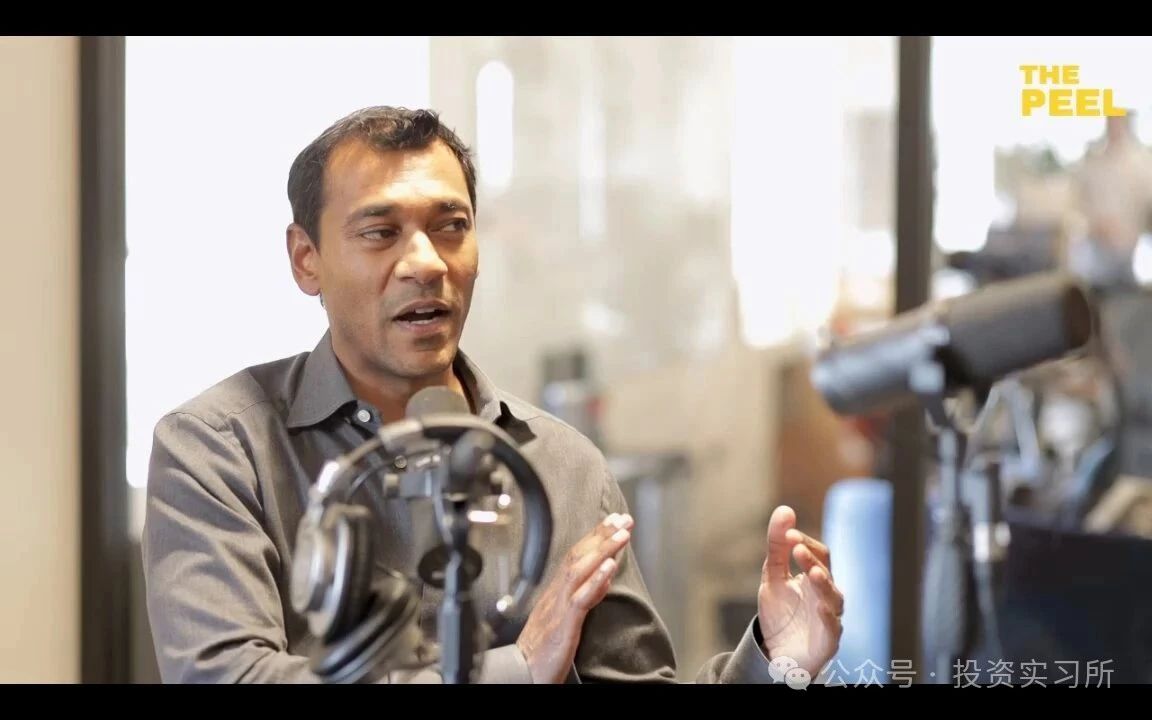
Benchmark partner Eric Vishria recently had an exceptional conversation with Banana Capital partner Turner Novak on his podcast, The Peel—one of the most insightful interviews I’ve come across lately.
In this discussion, Eric Vishria shared his perspectives on entrepreneurship in the AI era, the type of founders Benchmark favors, and insights into the firm’s investment strategy and internal decision-making processes.
These ideas resonate even more strongly when read alongside my previous articles on Benchmark: Valuation Quadrupled in Two Months: How Benchmark Invested in Nearly All the Fastest-Growing AI Apps and Behind Benchmark’s $500 Million Valuation Investment in Manus—and Its Investment Strategy.
A few key points stood out to me. For instance, growth in the AI era has completely broken away from traditional patterns—it is exponential growth that disrupts the classic SaaS 3-3-3-2-2 growth rule.
When evaluating founders, he places high value ontheir storytelling ability, intellectual honesty, and capacity for continuous learning. The founder’s ability to craft a compelling company narrative is critical: “In every scenario, those who are best at continuously refining their narrative ultimately win.” Moreover, the core trait of successful founders is their learning ability: “More than initial experience, I focus on the founder’s learning curve and first-principles thinking.”
The best founders often embody two seemingly contradictory traits: extreme optimism paired with extreme skepticism—they have unwavering belief in their mission and business outlook, yet remain deeply cautious about everything else.
He believes the internet was a revolution in “distribution mechanisms,” while AI represents a foundational technological disruption—more akin to the empowering logic of the “transistor.” The former solved “connection efficiency,” while the latter transforms the “essence of creation.”
Regarding Benchmark’s own investment philosophy, they adhere to the core principle of “seeking epoch-defining companies and backing the most visionary entrepreneurs.” Their flat partnership structure fosters deep trust and ensures all members work collaboratively to support portfolio companies.
He firmly believes that what's truly scarce is not capital, but “extraordinary companies.” As such, Benchmark maintains a lean investment strategy—once invested, everyone rallies behind the company. He describes Benchmark as a “communist collective of capitalists.”
Notably, Eric Vishria led Benchmark’s investments in two Chinese-founded AI startups: Manus and Fireworks. Fireworks is now valued at $4 billion with over $100 million in ARR. See VCs Are Doing Roll-ups—This Chinese AI Startup Is Now Valued at $4 Billion with Over $100M ARR.
Below is my summary and takeaways from the interview. Given its length, some inaccuracies may exist, but overall it offered me tremendous insight:
1. Turner Novak: You once mentioned that for nearly every investment you've made, you almost knew immediately upon meeting the founder that this was someone worth backing. Can you elaborate?
Eric Vishria: I wouldn’t say “immediately certain,” but I do gain confidence very quickly. Some VCs are naturally optimistic—we get excited easily—while others default to skepticism. I fall into the former category: I tend to get enthusiastic early, then refine my judgment through due diligence and feedback from partners. That’s generally how I operate.
Different people respond to excitement differently, but for me, when I meet a founder and rapidly gain new insights—especially if after spending extensive time in a domain, one sentence from them makes me think, “They have a unique perspective”—that moment of sudden “insight” is crucial.
I encounter new startups daily, talk to people, and consume vast amounts of information—but rarely does someone offer a genuinely fresh viewpoint. If someone presents unprecedented insight or interprets the market from a novel angle, that’s a powerful signal for me. Importantly, this usually has nothing to do with metrics—I’ve almost never decided to invest based on a number. What matters is “insight,” such as a distinctive understanding of the market or analytical lens.
Years ago, I worked with a designer from Ido who said something that stuck with me: “Often, the solution isn’t what matters most—it’s correctly defining the problem.” I believe this parallels the concept of “insight” in investing. When everyone views a market or opportunity through the same lens, and someone proposes a new approach that makes you think, “That actually makes sense,” that intellectual spark becomes a pivotal starting point for decision-making. There’s a real element of “insight” in that moment.
The second thing that impresses me deeply is encountering a true “learner” founder. I’ve described it before: some founders walk in and feel like they’re vacuuming knowledge directly from your brain. When you feel that—like someone is downloading everything in your mind into theirs—you start thinking, “If this person absorbs insights like this three times a week for ten years, that’s 1,500 brains’ worth of knowledge. That’s incredible.” You can almost tangibly sense this compounding effect of learning and intellectual leverage.
In fact, this realization led me to conclude: Rather than judging a founder’s initial “maturity” (such as their understanding of company-building), I prioritize their “learning slope”—their speed of learning. If the learning curve is steep enough, they’ll compound past everyone else in no time. Of course, this combination is rare, but when you find someone with both “insight” and “learning ability” who also clicks with you personally, it’s incredibly exciting.
One might ask: “How do you tell if someone is truly a good learner? Anyone can claim to be.” It’s admittedly subjective—a gut feeling. But perhaps look at the questions they ask: When you pose a question, do they grasp the deeper logic behind it? Are they probing for insight? Digging to the root cause? Thinking from first principles? You might sense, “This person reasons from fundamentals.”
Also, are they brave enough to ask “seemingly stupid” questions? Willing to challenge basic assumptions? For example, when you make a statement, do they simply ask, “Why do you say that?” This blend of confidence and humble curiosity is often a strong sign.
Another indicator lies in their “narrative evolution”—how well they articulate the company’s purpose, reason for existence, and path to victory as a coherent story. Interestingly, Benchmark often invests extremely early—I lead many “first institutional round” investments. These ventures often give me an intuitive sense of direct trajectory toward success, even though no one knows for sure. Early-stage investing is inherently risky—some succeed, some don’t—that’s normal.
From my experience, even with great teams and solid markets, external factors can determine outcomes. But what’s special about Silicon Valley is that failure doesn’t define you—it just means “this one didn’t work.” That’s acceptable. When you hear a startup story, you think, “If this succeeds, it could change the world.” That possibility is the magic of early-stage investing.
And the story must be coherent. We’ve seen countless examples where, despite uncertainty, the entire logical framework fits together perfectly. These are always my favorite investments—the best founders, the most promising products and companies, consistently exhibit this quality. You explain it to others: “I’m not sure if it’ll work, but here’s what they’re doing, their core thesis, and the problem they aim to solve.” And afterward, you think, “Hmm, that might be brilliant.”
Take Cerebras, for example—a company focused on AI chips and systems, recently filed for IPO. Despite various controversies along the way, what struck me most was working with founder and CEO Andrew from the beginning. Founded by five people, as a semiconductor company it was capital-intensive and faced major technical hurdles. But here’s the thing: I knew nothing about hardware—I was completely unqualified.
It was March 2016 when Andrew first pitched us. Back then, semiconductors weren’t hot—Nvidia’s market cap was under $30B (now over $1T), Google hadn’t launched TPU, and the AI hardware space was virtually empty. So how did they convince us without any public proof points?
The answer was simple: The first two slides were team introductions. The founding team consisted of serial entrepreneurs in semiconductors and systems—their resumes were “professional grade.” Even before we knew it was a chip company, their background alone signaled deep expertise.
Then came their core argument: “GPUs aren’t actually suitable for deep learning—they’re only 100x better than CPUs.” This was highly provocative at the time—remember, this was pre-Transformer, even before OpenAI existed. They asked: “Why would graphics processors become the solution for AI or deep learning? Maybe they shouldn’t be.”
Then they walked through workload characteristics and their proposed solution. You couldn’t help but think: “This might actually work—and if it does, the value would be immense.” Isn’t that exactly the asymmetric potential that defines venture capital?
2. Turner Novak: Speaking of “narrative,” Benchling’s Saji mentioned he learned the importance of company storytelling from you. Why is narrative so important?
Eric Vishria: I believe being a founder or CEO is fundamentally about “continuously telling a story.” Engineers might scoff at “selling,” seeing it as peddling snake oil. But my use of “narrative” isn’t negative—it means clearly articulating why the company exists, why this team should build it, what the core problem is, where the competitive advantage lies, and how you’ll win.
Whether facing customers, potential employees, partners, or investors, you’re conveying this story—and constantly iterating and refining it. This is one of the CEO’s core responsibilities. Strong narrative ability is essential because when smart people point out flaws—“This logic has gaps”—you realize, “Oh, there’s a real issue—we need to fix it.”
In reality, every company faces challenges—high customer concentration, stalled growth, technical bottlenecks. Some stem from legitimate reasons requiring clear explanation; others expose deeper vulnerabilities needing reflection and action. The litmus test for all of this is the coherence of the company’s narrative. Ultimately, the CEO must lead and refine this story. I’ve seen stark differences between two types of CEOs: those who diligently craft their narrative and those who dismiss it. Invariably, the former go much further.
3. Turner Novak: Do you know why some CEOs are more inclined to refine their narrative while others aren’t? Is there a specific trait that makes you admire a CEO or recognize they need to strengthen this skill?
Eric Vishria: I think it ties somewhat to “ambition.” If someone is deeply ambitious, their story will naturally be grand, and they’ll break down each layer of logic into concrete actions—like peeling an onion.
Take Elon Musk—he’s a master storyteller. “Colonizing Mars” sounds far-fetched, yet he convinced millions. Even more impressive, his vision extends beyond “going to Mars” to “colonizing Mars” and even “making humanity a multi-planetary species”—an ambition scale unmatched by anyone.
But he breaks this massive vision down into tangible steps: We need rockets → rockets must be reusable → develop multiple rocket models → use rockets to launch satellites → build robots for space missions… His narrative unfolds logically at every level, even declaring, “We’re not a car company—we’re a battery company.” The key is he genuinely believes this story, not just sells it to others. That’s the essence of ambition and the power of narrative.
4. Turner Novak: Suppose you meet a founder whose fresh insight excites you, who’s skilled at storytelling, ambitious, and has an impressive team. How do you typically connect with such a founder and secure collaboration? After all, you’ll be working together for years—what does that relationship usually look like?
Eric Vishria: For me, motivations in VC vary. I was a founder myself, so my core drive is “working with founders”—that’s what I love most about this job. Chemistry with the founder is crucial. I spend a lot of time with them. At Benchmark, we often collaborate with founders for over a decade.
When I meet such a founder, I dive deep into what they’re building: Why are they doing this? What motivates them? How will it work in practice? What drives them? What’s their roadmap? What lessons from other companies can I share? The heart of this interaction is maximizing the probability of realizing the founder’s vision—helping turn ambition into reality. If we can slightly increase the odds of success each quarter, compounding takes effect.
5. Turner Novak: Are there specific actions that significantly boost these odds? Like preparing board meetings in advance, for example?
Eric Vishria: There are many nuances, and every company and founder differs. But regardless of whether product-market fit (PMF) has been achieved, the central question is “how to build a sustainable company.” Great companies must be durable and resilient.
Sometimes you meet charismatic founders, but the real question is: Do they truly want to build a company that “outlives them”? At least today or in the future, the company needs collective effort and synergy. Therefore, the founder must be able to build systems around the company—this includes hiring the right people, understanding team strengths, and ensuring complementarity with their own skills. I invest significant energy here.
Interestingly, I listened yesterday to Ben Thompson’s podcast interview. He’s an excellent industry analyst, and from the conversation, you could tell Mark Zuckerberg constantly monitors market dynamics and understands industry trends. This shows great founders not only excel at storytelling and team-building but also maintain acute awareness of the external world, continuously updating their business understanding—this might be one of the key details that boosts success probability.
He learned from past mistakes. To me, the most interesting point he raised was regret over failing to control the mobile platform. This explains certain decisions—why he insists on open-sourcing Llama, why he invests billions in Llama development. One reason: “I never want to face another platform controlled entirely by others, where I have zero influence.”
Clearly, he’s frustrated with Apple, and relations are tense. But once you understand this mindset, it all makes sense—he doesn’t want OpenAI, Anthropic, or others to control core models and become dominant platforms, forcing Meta (Facebook) to depend on them for ads or other functions. Once you see this, everything aligns.
The key is, as companies grow, much of the founder’s job becomes keeping operations running and driving continued progress. Part of that role should involve “looking up” to gain long-term strategic vision, sensing industry shifts—this is one of the founder’s core capabilities. To me, building a company aligns perfectly with this logic.
6. Turner Novak: How do you think this trend will evolve? There’s now a saying (perhaps no longer a joke) that “one person can build a billion-dollar company.” How do you view this shift in your portfolio or observations?
Eric Vishria: I think the journey will be full of unexpected twists. For example, within Benchmark’s portfolio, several companies have fewer than 100 employees and went from zero to over $100 million in annualized revenue within 12 to 18 months. This pace isn’t 2x or 3x faster than traditional SaaS—it’s 5x to 10x. Granted, there are differences: annualized revenue may include experimental income, not always reliable. But setting that aside, whether measured by labor efficiency or growth speed, it’s astonishing—and largely enabled by AI technology.
7. Turner Novak: A few months ago you tweeted that traditional SaaS “growth rules” (e.g., reach $1M revenue, then grow 3x, 3x, 2x, 2x, eventually projecting $100M next year at IPO) have been completely overturned, especially around IPOs. What do you think drives this accelerated growth? Is it surging demand?
Eric Vishria: Right now, the only conclusion we can draw is that customers find these products “magical,” so they’re willing to pay. But how long will this willingness last? Are the products replaceable? Do they have moats? Is the growth sustainable? These remain open questions, varying by company and product. But whenever we see a new product category growing this fast, we must acknowledge: the product must possess some “magic”—it solves real pain points so effectively that users willingly “open their wallets.”
8. Turner Novak: What’s the fastest-growing product you’ve seen? (Assuming it’s okay to discuss.)
Eric Vishria: I think ChatGPT is undoubtedly the fastest-growing product in history. Beyond that, nearly half of our portfolio companies reached over $100 million in revenue from zero within 18 months—that’s “light-speed” growth. Growth models vary: some rely on $20 monthly subscriptions (like tools such as Cursor), others on $5–10 million enterprise contracts. The diversity and flexibility are striking.
9. Turner Novak: If I’m an investor or founder aiming to build a company that lasts 10 years, changes the world, and achieves billions in revenue, how should I assess the “quality of revenue” in my current business?
Eric Vishria: I believe the best founders combine two traits: extreme optimism and extreme skepticism—they have unshakable faith in their mission and prospects, yet remain deeply wary of everything else. This skepticism drives swift action, and they also possess high “intellectual honesty”: no matter how they present externally, deep down they know exactly where the company’s moat and vulnerabilities lie.
Take many fast-growing AI companies today—their moats may still be thin, but they have a “speed moat”: small leads and faster iteration allow them to stay ahead of competitors, and over time, this advantage may evolve into a real barrier.
10. Turner Novak: You mentioned the issue of “limited moats,” which raises the question: in an age where many things can be automated, what truly constitutes a lasting competitive advantage? Does “switching cost,” in the traditional sense, still exist? Suppose there’s a new CRM tool that automatically copies all data via agent automation, clones all Salesforce integrations—users barely face switching costs. Is such a business valuable?
Eric Vishria: Perhaps we can learn from Google Search’s case. Why did Google win early search engine battles?
-
Product superiority: Whether PageRank algorithm, web crawling capability, or result relevance, Google significantly outperformed contemporaries like Yahoo and AltaVista.
-
Performance wins: Extremely fast loading speeds—a decisive edge in that network environment.
-
Clean, distraction-free interface: No clutter of low-quality display ads—pure user experience.
Notably, Google wasn’t profitable when founded in 1998. It didn’t launch AdWords until late 2001. That model wasn’t original (inspired by Bill Gross’s Goto.com), but Google leveraged massive search traffic and superior execution to turn it into a commercial miracle. This shows: building a “magical product” is the starting point, but sustaining leadership is even more critical—and far harder.
Social networks rely on “network effects” for moats. Google eventually created a two-sided “advertiser-user” network effect and strengthened its position by controlling browser entry points, operating systems (Android), and hardware (Chromebook). Comparing Google in 2000 (“a faster, more accurate but unprofitable search engine”) to today’s AI startups, history seems to repeat itself: early, seemingly fragile “product advantages” may become the foundation of decade-long moats.
Looking at today’s AI market, investor expectations for certain companies may seem aggressive, but given the sector’s overall scale and potential value, this optimism isn’t baseless. After all, AI products iterate far faster than traditional software, evolving functionally at an unprecedented pace. Of course, skepticism exists—such as OpenAI’s current negative gross margins. But just as Google’s lack of profitability early on didn’t prevent long-term value creation, the key is: does the product solve real, ongoing needs and establish an irreplaceable position through iteration?
In this uncertain field, nearly every wild vision finds arguments for and against—precisely the allure of venture capital. The market is large enough, changing fast enough, that the ultimate winners may not be today’s “deepest-moat” companies, but those who sustain “irreplaceable product magic” and convert speed advantages into ecosystem barriers.
Matters may have evolved (I haven’t seen their financials, of course), but overall, I’m not too worried. At least for now, most marginal costs are in inference, and inference costs are dropping rapidly. It’s like betting on “Moore’s Law”—and historically, that’s usually a smart bet. So I don’t see gross margin issues as a core concern.
Of course, pricing pressure and commoditization exist, and model development costs continue rising. But as pre-training diminishes in importance and post-training grows, cost increases may plateau. Thus, I believe margin challenges at this stage—especially inference—are not a real issue. If founders are willing to endure short-term pressure, time may become their ally—as the benefits of tech iteration gradually emerge.
11. Turner Novak: Suppose you’re running a company with 12 to 36 months of runway post-funding—how do you assess risk zones? After all, you can’t precisely predict the pace of technological advancement.
Eric Vishria: Clearly, every company differs and strategies must adapt continuously. But if a company has growth momentum or escape velocity, even with cash running low, follow-on funding becomes easier—market supply for AI companies remains ample. Even amid stock volatility, top-tier projects still attract investment. But if a company lacks growth traction and a compelling narrative, risks rise sharply.
12. Turner Novak: Where will AI’s value concentrate over the next decade?
Eric Vishria: Interestingly, looking back at the early internet in the 90s, infrastructure companies (like Cisco, Sun) were the first winners. Nvidia once faced over 90 GPU competitors but emerged through technical moats. Similarly, in AI’s first wave, Nvidia is clearly the biggest winner—Peter Thiel quipped that Nvidia captured 125% of AI profits (since others were still losing money)—and that might be conservative.
But just as infrastructure scaling gave rise to consumer giants (broadband enabling YouTube, 4G fueling Instagram and Snapchat), AI will follow a similar path:
-
Infrastructure layer: Currently dominated by hardware and compute providers like Nvidia, solving the “compute supply” problem.
-
Application layer: As compute costs fall and models improve, a wave of consumer and enterprise applications will emerge. Enterprise tools may deeply integrate AI in verticals (e.g., Glean using LLMs to reinvent internal search); consumer products may dominate via “personalized experiences.”
13. Turner Novak: As an investor, which direction are you currently more inclined to back?
Eric Vishria: Our job makes top-down opportunity mapping difficult—the key is finding founders with deep market insight, understanding of technical boundaries, and the ability to match model capabilities to specific use cases. But AI-era product development logic differs radically from traditional SaaS:
-
SaaS era: Founders started with “customer problems” and used mature technologies like cloud computing to deliver better solutions (e.g., Salesforce disrupting CRM with cloud).
-
AI era: Founders must start with “technical capabilities” and ask, “How can model features be applied to specific domains?” For example, Cursor’s founders deeply understand LLM reasoning limits, enabling precise coding assistance.
This reversal means technical founders may have an edge—they need to be like Cerebras’ Andrew, combining semiconductor expertise with AI compute demands.
In contrast, most legacy SaaS giants remain stuck at superficial upgrades—“adding chatbots or autocomplete”—few truly rearchitect business logic with AI. This stems partly from the paradigm shift, partly from incumbents trying to “protect existing businesses.” Ironically, they should instead bet everything on embracing the new tech.
As one of my partners put it: “With AI, you have two choices—either let it disrupt you twice, or proactively use it to rebuild your business.” It’s not anyone’s fault—it’s the inevitable rhythm of tech evolution. Only teams that break free from “customer-driven” habits and truly grasp AI’s essence will redefine business rules in the next decade.
It’s as if the world has transformed before our eyes. As you said, markets are redefining value, causing traditional companies to slow—new hotspots emerge, attention and resources shift, and old businesses face disruption.
14. Turner Novak: As a founder, how do you understand these tech waves and decide what to embrace? Looking back five years, we’ve seen rises in AI, Web3, etc., but AI is clearly not a fad—it’s a transformative force lasting decades. Was there a moment when you realized, “AI is fundamentally changing business logic”?
Eric Vishria: For me, it’s about observing the pace of tech iteration—model capabilities visibly improve, and more people create practical value with AI. This trend is exhilarating because it suggests AI will permeate biology, materials science, mechanical engineering—becoming a foundational enabler like the transistor.
Take transistors: invented in the 1950s as vacuum tube replacements, this “switch” now lives in every phone, earbud, camera—underpinning the digital world. AI shows similar potential: soon, smart microphones will auto-capture sound, cameras will adjust image quality dynamically by light—all devices embedding AI. This “ubiquity” makes AI the most transformative wave since electricity and the internet.
On personal AI use, I’m a “simple user.” Beyond common tools like ChatGPT and Claude, I especially love voice interaction—it’s a godsend for parents. My 10-year-old son is obsessed with black holes, constantly using AI voice to learn, even having AI compose songs about his favorite TV show or Dad coming home from trips. This instant interaction satisfies curiosity and reveals AI’s infinite potential in education and creativity.
15. Turner Novak: Looking back since entering venture capital in 2014, what’s the biggest change you’ve seen in the industry?
Eric Vishria: The biggest shift is intensified competition and explosive capital supply. Startup funding sizes now dwarf the past—driven by larger markets, tech dividends, and monetary conditions. Yet, the “return ceiling” is also rising—new tech waves like AI are spawning more potential trillion-dollar companies.
Industry-wide, over 70% of the world’s top-10 market-cap companies once took venture capital (e.g., Apple, Tesla, Microsoft); among the top 100, the proportion is likely higher. This confirms VC’s central role in tech commercialization: we’re not just funders, but bridges connecting scientific innovation to commercial reality.
Looking ahead, each generation of VC firms aligns with distinct tech waves: Sequoia rose with semiconductors, Benchmark began in the internet’s early days, a16z emerged in mobile. Now, AI is shaping the next wave—investors who understand tech’s essence and partner with founders to explore “tech-to-use-case” fit will define the next decade’s business landscape.
Just as transistors faded into the background yet power everything, AI will quietly reshape every industry. As VCs, our mission is to stand at the intersection of tech and business, discovering visions that turn the “impossible” into “inevitable,” nurturing them with capital and resources to become tomorrow’s infrastructure.
These VC firms’ rise is tightly linked to their era’s tech wave—they are “new entrants” who seized timing to build influence. Of course, firms like Sequoia, Benchmark, and a16z maintaining lasting impact prove the industry’s “self-renewal” nature. VC is essentially a “hustler’s game”—we’re joked as “high-end headhunters” or “money sellers,” because convincing others to believe in unproven visions is hard. The field is fiercely competitive, yet that’s what keeps it vibrant and innovative.
About Benchmark’s investment stage: outsiders often label us “Series A investors,” but “early stage” is now blurred. When some companies hit $100M revenue within a year of founding, traditional “seed,” “A,” “B” labels lose meaning. For us, the core logic remains “invest as early as possible in the best companies.” What we call “Series A” is often just “when the first board-level partner joins”—this covers about 80% of our deals. The label itself isn’t important.
Facing rapid market shifts, our strategy is “broaden horizons, stay flexible.” Rising valuations and larger check sizes are facts, but we never mechanically follow quantitative rules. The reason is simple: finding an exceptional company is hard enough—once found, ownership size and price become secondary. What’s truly scarce is “extraordinary companies,” not capital.
Benchmark: A Communist Collective of Capitalists
Benchmark’s uniqueness lies in its small core team (typically 4–6 active investors) and fully aligned incentives. We don’t need to scale, so we focus on “high-conviction” bets—purely seeking era-defining companies. In contrast, large firms, burdened by complex hierarchies and diverse career goals, must build rules to prevent errors—but this often causes them to miss true innovation. Writing a check is easy; knowing “which checks to write” is the art.
This reminds me of startup growth: early teams collaborate by trust, no bureaucracy needed; only as they scale do processes emerge. VC is the same—when firms grow large, policies multiply. But Benchmark chooses the opposite: our investment strategy stays minimal—find generational companies capable of billions in revenue. Past, present, future—nothing else.
Some may question the sustainability of this “unstructured” model, but VC’s essence hasn’t changed: bet on the most ambitious founders, back their seemingly crazy visions. Fund size (Benchmark’s latest fund ~$600M) has never been the key to success—after all, in the 90s, who could foresee a “small, elite” firm consistently capturing world-changing companies across internet and AI waves?
In the end, VC’s charm lies in making room for the “exception”—those individuals and firms unbound by rules, daring to bet on the “impossible” at the frontier of tech and business, will ultimately define the next era’s value coordinates.
Compared to massive funds, ours is relatively small. When facing large funds offering “double the capital, triple the favorable terms,” how do we differentiate? First, I inherit Benchmark’s brand and long-standing track record—most current partners benefit from this legacy. Founders generally understand our flexibility isn’t constrained by fund size—this is our unique strength.
To us, the core advantage is a small team’s focus on “deep partnerships.” We make far fewer investments than most firms because we must fully commit to fewer founders, pouring our efforts into helping them succeed. The value? Founders genuinely feel the “partner spirit”—we’re not just investors, but long-term allies fighting alongside them.
Some argue large firms offer vast resources (recruiting, marketing teams) providing “army-style” support. But founders choosing Benchmark often value board members who deeply engage in operations. After all, core capabilities (hiring, engineering, sales) must be built in-house. The VC’s value isn’t direct resource provision, but being an “insightful listener”—deeply familiar with company details, yet able to step back and offer strategic perspective.
For example, when a founder faces a tough 51%-49% decision, generic advice fails. Our value lies in combining deep company knowledge with industry experience to suggest, “Have you considered angle XX?” This interaction is hard to quantify, yet builds irreplaceable trust over time.
Benchmark’s “equal-partner model” is another key differentiator. We have a fully flat structure: capital allocation, decision rights, and economic interests are equally shared—making us a “communist collective of capitalists.” This eliminates internal competition, ensuring everyone fully backs every company. In many firms, “whose deal is this?” silos exist, but here, every company is “ours.”
Investment decisions follow a “high-trust advocacy model.” When a partner champions a deal, they invite others to join discussions (sometimes 2–3 partners attend the first meeting), cross-pollinating perspectives for richer judgment. Final votes happen, but the core is deep dialogue and advocacy—not rigid rules.
Reflecting on my journey: I graduated high school early in Memphis, Tennessee, having completed all math and science courses, then moved to California, studying math and computational science at Stanford. I briefly worked in tech investment banking, then joined LoudCloud (an early cloud company) as an assistant, experiencing its transformation into Opsware (from cloud services to cloud management software). That journey gave me deep insight into the turbulence of tech startups.
In 2010, I founded Rockmail (a social browser), acquired by Yahoo in 2013. That创业 taught me the founder’s challenges and planted the seed for joining Benchmark—Jim Goetz of Sequoia suggested VC to me in 2008, and six years later, that idea took root. Benchmark’s egalitarian culture resonated deeply with me.
My first investment was Confluent (based on open-source Kafka, now public), followed by Amplitude (analytics platform, also public). Transitioning from founder to investor helped me appreciate the “learning mindset”—Amplitude’s Spencer Skates exemplifies first-principles thinking, a trait common among MIT founders.
Comparing the 1990s internet bubble to today’s AI wave, the biggest difference is: the internet revolutionized “distribution mechanisms,” while AI disrupts foundational technology—closer to the “transistor” model of empowerment. The former solved “connection efficiency,” the latter changes the “essence of creation.” Just as transistors were initially overlooked but later embedded in every electronic device, AI will reshape every industry in subtle yet profound ways.
Take our portfolio company Fireworks—they provide developers with a tool integrating multiple models and run an inference cloud platform. The founder previously scaled PyTorch engineering at Facebook, and she and her co-founders left to start Fireworks. Initially planning a PyTorch cloud service, they pivoted as generative AI emerged—raising abstraction to offer various open-source models, custom models, and model runtime services.
Running large models turns out to be hard, and they excel at it. The business scaled rapidly, becoming one of our fastest-growing companies—part of that group of five or six hyper-growth startups.
16. Turner Novak: Maybe a simple question—how do users pay for such services? Is it token-based? I think many pricing models are essentially token-driven. Do you think this will change?
Eric Vishria: Absolutely. I believe all these business models will keep evolving—from paying for compute to tokens, possibly to other forms. The final shape is hard to predict. For many application-layer companies, charging consumers based on “outcomes” may emerge. For example, Sierra in customer service charges per resolved ticket. This model is interesting—it bypasses labor or token payments, linking directly to business results. At the infrastructure layer, pricing may stay lower-level, but it will keep evolving.
Interestingly, if users clearly understand the service’s value and are willing to pay for outcomes, this could accelerate sales cycles—lower risk, better-aligned incentives. Have you heard of cases like AWS container runs causing huge bills? Coinbase once reported a $55M charge from data monitoring—that’s a classic case of runaway resource consumption.
17. Turner Novak: After becoming an investor, how has your perception of the profession changed?
Eric Vishria: I’ve realized it’s a unique and highly challenging job, fundamentally different from being a founder. When I was fundraising as a founder, I thought the hard part was “picking deals”—and I still think that. While I prefer supporting founders and collaborating—that’s what I love—the truth is, “picking” remains the hardest part.
The emotional rollercoaster isn’t as intense as founding—no daily sharp pressures—but there’s a persistent underlying anxiety. But if you love learning, this job is deeply appealing—every meeting is a chance to explore new markets, new tech, understand human nature, full of fascinating chemistry.
18. Turner Novak: Benchling’s Saji mentioned you’re insightful about building management teams and recruiting. If I’m a founder who just raised $20M, with a small team, wanting to hire a sales or engineering leader, how should I start thinking about senior hires and management team building?
Eric Vishria: First, I firmly believe in the importance of team-building and leadership development. What’s scarcest in a company isn’t people who execute tasks, but those who lead them. Step one is clarifying needs—easy to say, hard to do. Take sales: you need to define your target customer, sales model, process, and expected scaling speed.
Also consider company culture and personality—only with clarity can you sketch the ideal candidate profile. Then, engage candidates from diverse backgrounds, thoroughly understand the market, so you can confidently identify “this is the one.”
Prioritize “strength-first” hiring—seek those with unique expertise, not just “no obvious weaknesses.” The latter leads to mediocrity, and mediocrity is fatal for startups. The world doesn’t care about startups existing—survival and growth require willpower, grit, and edge. So hire people with standout strengths.
How to find them? Or avoid mediocrity? I often work with trusted executive recruiters like Andy Price from Artisal—we’ve collaborated on ~20 searches. Recruiters help manage the process and push things forward. Key is setting clear criteria, rigorously evaluating candidates, and conducting thorough reference checks—both formal and informal, calling people personally, digging into specifics, investing time. Recruiters handle much of this, but as a founder, you must participate—recruiters may have incentives to close placements.
19. Turner Novak: I once heard you say: “The best CEOs make all the new mistakes.” What does that mean?
Eric Vishria: It’s about learning. If someone is constantly learning, they won’t repeat the same error—they’ll face new challenges and make new mistakes. That’s actually good—startups are inherently hard, mistakes are inevitable. We shouldn’t fear them. Every fast-growing company may internally seem chaotic, full of issues—because building a company is hard.
The key is distinguishing “problems from scale or rapid growth” from “strategic dead ends.” If you’re in a strategic dead end, you must find a way out. A strategic dead end means, for some reason, the company can’t survive long-term.
20. Turner Novak: You mentioned IPOs earlier—can you share your view on the current IPO landscape?
Eric Vishria: Why are so many companies avoiding IPOs now? We’re in a unique market phase. Many companies that went public in 2021 faced market corrections, slower economic growth—leading to a somewhat stagnant environment. Though CoreWeave and others succeeded, and more plan to list, the overall mood remains cautious.
I believe going public is good—it’s like reaching the major leagues, making the company more mature. Stock volatility may cause shocks, but the world’s largest tech companies are public. Opponents cite burdensome regulations. But large private companies should already audit and operate formally—going public adds minimal finance and legal staff, impact is small.
Others argue public companies focus on short-term results, while private ones can stay long-term oriented. But private companies face capital volatility too, and truly great companies innovate regardless—Tesla, Google, Microsoft, Apple kept launching new ventures post-IPO.
20. Turner Novak: As an early-stage investor, what have you learned from public market investors?
Eric Vishria: A lot—the deepest lesson came from 2021: even great companies can be overvalued. That’s now etched into my mind.
20. Turner Novak: So how do you view valuation?
Eric Vishria: Early-stage and late-stage valuations are entirely different. Early valuation hinges on judgment of potential outcomes and risk-return balance—it’s highly subjective, hard to quantify. Public company valuation uses more metrics and data—still with error ranges, but more objective. Anyway, it’s a fascinating topic.
End!
Join TechFlow official community to stay tuned
Telegram:https://t.me/TechFlowDaily
X (Twitter):https://x.com/TechFlowPost
X (Twitter) EN:https://x.com/BlockFlow_News


