Hong Kong passes stablecoin legislation, tech companies like JD.com poised to launch, RMB stablecoins有望 to be included in the system
TechFlow Selected TechFlow Selected
Hong Kong passes stablecoin legislation, tech companies like JD.com poised to launch, RMB stablecoins有望 to be included in the system
Hong Kong regulators have conducted certain regulatory oversight and testing on the operational plans of three issuers in the stablecoin sandbox.
 Navigating Web3 tides with focused insights
By Weilin, PANews
While the U.S. stablecoin bill advances in the Senate, Hong Kong has become the first to formally pass stablecoin legislation.
On May 21, Hong Kong's Legislative Council passed the Fiat Stablecoin Bill, further establishing a licensing regime for fiat stablecoin issuers in Hong Kong and enhancing the regulatory framework for virtual asset activities in the region to maintain financial stability while promoting financial innovation. The Hong Kong Special Administrative Region government expects the ordinance to take effect within this year.
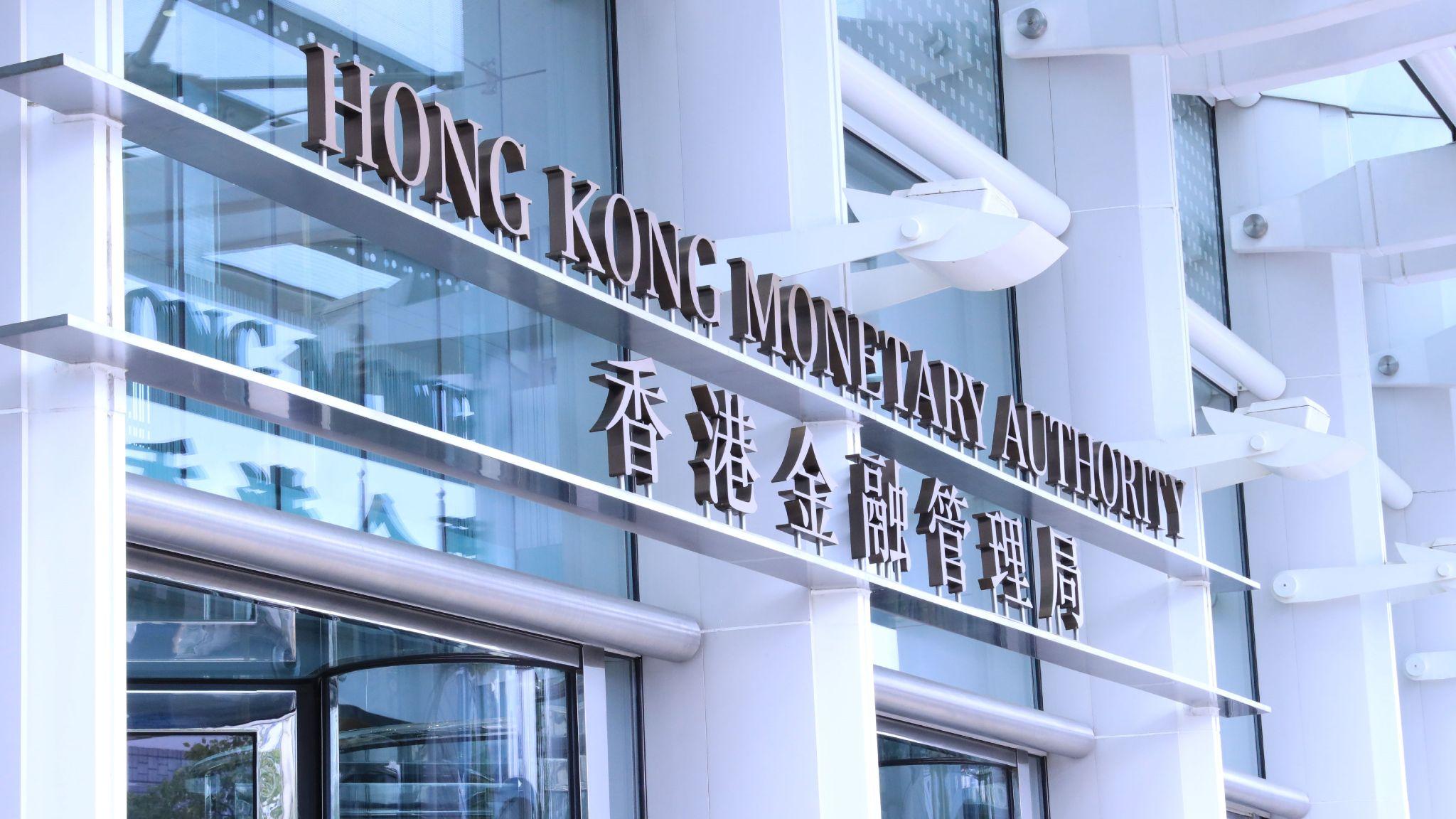
Currently, regulators have already conducted certain supervision and testing on operational plans of three issuers participating in the sandbox. The Chairman of the Fiat Stablecoin Bill Committee, Legislative Councillor Keith Kwan, expressed support for advancing the development of stablecoins pegged to the Hong Kong dollar and the Chinese yuan, reinforcing Hong Kong’s role as a digital bridge connecting mainland China with other countries. He also advocated for flexible licensing by the government and accelerating the approval process.
Three Types of Stablecoin-Related Activities Require Licenses; Reserves Must Be High-Quality, Highly Liquid Assets
The Fiat Stablecoin Bill clearly stipulates that the following three types of activities require a license:
1. Issuing fiat stablecoins in Hong Kong
2. Issuing Hong Kong dollar stablecoins in or outside Hong Kong
3. Actively promoting the issuance of their fiat stablecoins to the Hong Kong public
According to Roundcoin Technology, one of the sandbox participants quoted by Caixin, the draft outlines four key requirements for issuers: First, regarding reserves, licensees must maintain a sound stablecoin mechanism ensuring that reserve assets consist of high-quality, highly liquid assets (such as cash, bank deposits, government bonds, repurchase agreements, reverse repurchase agreements, and money market funds investing in these assets), equal in value at all times to the face value of outstanding fiat stablecoins, and properly segregated and safeguarded.
Second, stablecoin holders must have the right to redeem stablecoins from the issuer at par value, without fees, and redemption requests must be processed within a reasonable timeframe. Third, issuers must meet a series of requirements related to anti-money laundering, risk management, disclosure, auditing, and suitability. Fourth, trading must occur only on licensed virtual asset trading platforms.
The draft specifies that licensees must possess sufficient financial resources and liquid assets, including a minimum share capital of HK$25 million. Licenses do not have fixed expiration dates—meaning they remain valid indefinitely unless revoked, or if the licensee is wound up or deregistered from the Hong Kong Companies Registry.
To protect the public and investors, the draft allows only designated licensed institutions to sell fiat stablecoins in Hong Kong, and only fiat stablecoins issued by licensed entities may be offered to retail investors. Designated institutions permitted to sell stablecoins in Hong Kong include: stablecoin issuers licensed by the Monetary Authority, banks, institutions holding Type 1 licenses (securities dealing) issued by the Securities and Futures Commission, and virtual asset trading platforms licensed in Hong Kong.
To serve as an effective deterrent, the draft sets clear penalties for violations. Unlicensed conduct of regulated stablecoin activities: punishable by a fine of HK$5 million and seven years’ imprisonment. Sale of stablecoins by non-designated licensed institutions: also punishable by a fine of HK$5 million and seven years’ imprisonment.
Three Stablecoin Firms Already in Sandbox; JD’s Stablecoin Poised for Launch
The Hong Kong SAR government released its Policy Statement on the Development of Virtual Assets in Hong Kong back in October 2022, outlining its commitment to improving the virtual asset regulatory framework. In response, the Anti-Money Laundering and Counter-Terrorist Financing Ordinance (Cap. 615) was amended in December 2022 to introduce a licensing regime for virtual asset service providers, ensuring compliance with international anti-money laundering standards and investor protection. Following the implementation of the virtual asset trading platform licensing regime in June 2023, Hong Kong is now striving to further refine its regulatory framework for virtual asset activities, including introducing a licensing regime for fiat stablecoin issuers.
In December 2023, Hong Kong announced plans to establish new legislation to implement the fiat stablecoin issuer licensing regime. Subsequently, a regulatory sandbox approved three institutions for testing on July 18, 2024, the draft text was published in December of the same year, and it was finally passed by the Legislative Council on May 21, 2025.
Currently, the Hong Kong Monetary Authority (HKMA) has launched a stablecoin issuer sandbox to understand the business models of institutions interested in issuing fiat stablecoins in Hong Kong and to communicate regulatory expectations and provide guidance. The first three participants—consortium comprising Standard Chartered Hong Kong, Animoca Brands, and Hong Kong Telecom; JD Blockchain Tech (Hong Kong); and Round Innovation Technology—were admitted into the sandbox on July 18, 2024. Regulators have already conducted some oversight and testing on the operational plans of these sandbox participants.
Notably, JD Technology Group recently posted multiple job openings related to RWA (real-world assets), explicitly requiring product designs to seamlessly integrate with both the JD stablecoin and digital yuan. Additionally, JD Technology is recruiting for an “Overseas Financial Business Development” position focused on driving the implementation of stablecoin services, indicating that with the passage of the bill, JD’s stablecoin may be ready for launch.
Once the fiat stablecoin issuer licensing regime officially takes effect, a six-month transition period will apply to stablecoin issuers already conducting the above three licensed activities in Hong Kong. Entities existing before the law’s enactment will have the first three months after the regime takes effect to apply for a license.
Competing Globally: Potential for RMB-Pegged Stablecoins; Legislator Calls for "Flexible" Licensing
As the Legislative Council conducted its third reading of the Fiat Stablecoin Bill, the U.S. GENIUS Act stablecoin legislation was also progressing. On May 22, the U.S. Senate voted 69 to 31 to proceed with debate on the GENIUS Act, marking the formal start of the amendment discussion phase for this stablecoin regulatory bill. Previously, the motion to end debate passed with 66 votes. This could become the first federal-level stablecoin regulatory framework in the U.S.
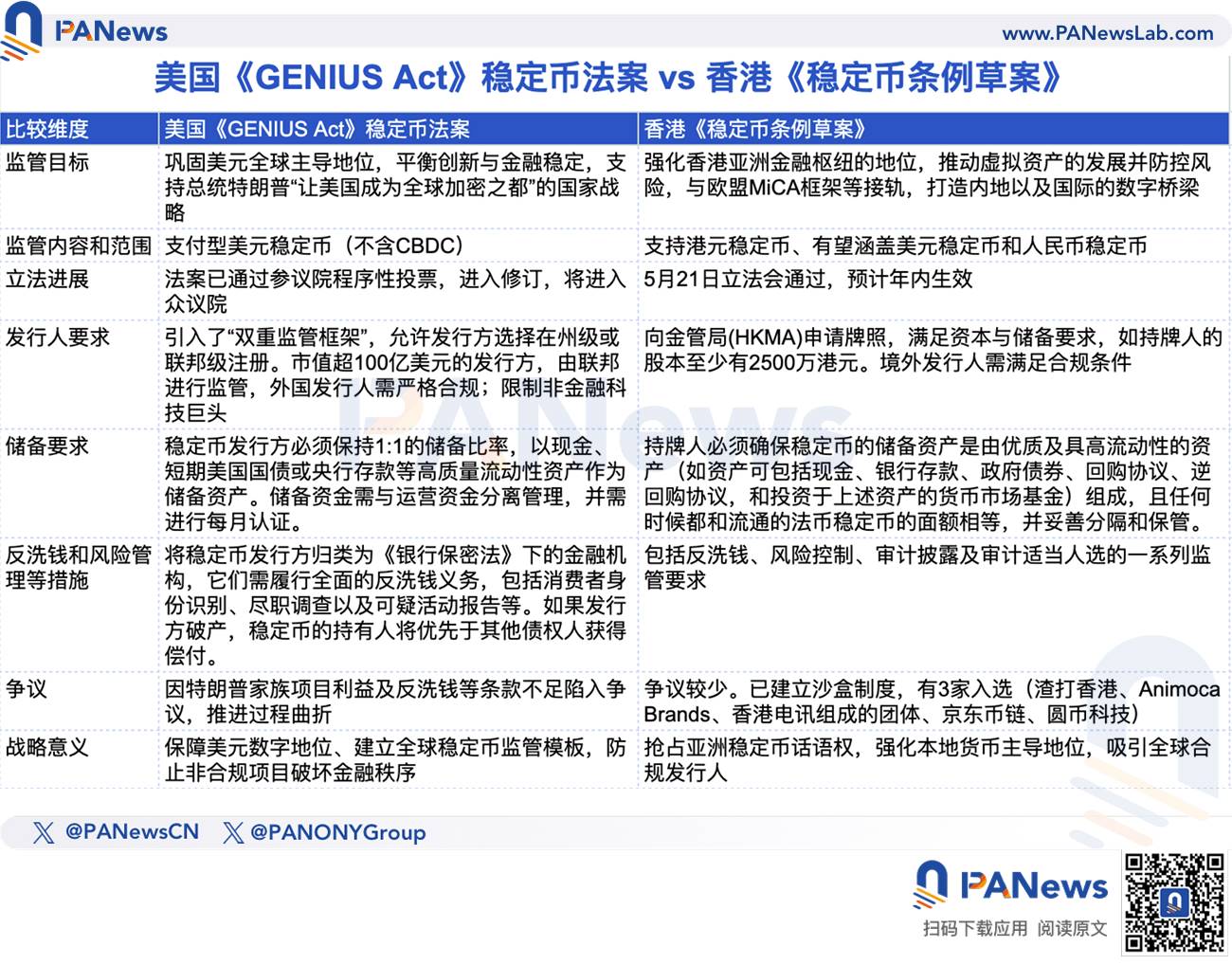
In drafting its stablecoin bill, Hong Kong also referenced existing and pending stablecoin regulations worldwide.
During the legislative session, Legislative Councillor Keith Kwan, chairman of the Fiat Stablecoin Bill Committee, welcomed the government’s clarification that, beyond the Hong Kong dollar and U.S. dollar, the Chinese yuan would also be considered as a potential currency for future legally recognized stablecoins.
"I strongly support including the RMB in Hong Kong’s stablecoin system because we can act as a digital bridge connecting mainland China with other countries. Through RMB-based stablecoins, we can attract more blockchain projects and institutional investors to establish operations in Hong Kong, forming a digital financial ecosystem driven jointly by the Hong Kong dollar and the RMB, further strengthening Hong Kong’s status as a financial hub. It would also accelerate the internationalization of the RMB," he said. "Especially amid global de-dollarization trends, RMB stablecoins could become a viable option for many countries—including our friendly Belt and Road and Middle Eastern partners—for diversified trade, investment, and reserves, helping elevate the RMB’s role in international trade and as a safe-haven asset."
On licensing policy, Councillor Kwan urged the government to maintain an open and flexible approach, allowing more capable and well-resourced institutions to participate competitively. "I hope the government can adopt a flexible mindset toward future licensing, enabling more issuers to compete in Hong Kong—that’s a normal process. Right now globally, two major stablecoins dominate most transactions, but we’ve seen a diverse landscape where competition led to consolidation around those two USD-based coins. So we hope that in Hong Kong, we can allow more entrants, creating a variety of stablecoins with different proportions of Hong Kong dollar and RMB backing."
In his view, as long as issuers demonstrate financial soundness and adequate regulatory capacity, healthy competition could give Hong Kong the opportunity to develop an internationally used stablecoin market in currencies beyond the U.S. dollar—an outcome of great significance and impact for Hong Kong’s financial development.
Councillor Kwan called for swift action by the HKMA to begin the licensing process after the bill’s passage, aiming to attract more interested and qualified potential operators to launch and test stablecoins backed by various currencies and collateral types in Hong Kong. While use cases are important, he urged the government to maintain flexibility in approval requirements and other areas to allow diverse models to be tested in Hong Kong.
With the implementation of regulatory regimes for virtual asset trading platforms and stablecoin issuers, the Hong Kong Monetary Authority stated that the government will continue supporting the development of the virtual asset industry. Upcoming initiatives include launching consultations on over-the-counter virtual asset trading and custody services, along with publishing a second policy statement on virtual asset development.
Join TechFlow official community to stay tuned
Telegram:https://t.me/TechFlowDaily
X (Twitter):https://x.com/TechFlowPost
X (Twitter) EN:https://x.com/BlockFlow_News
 PANews