Virtuals Genesis Data Analysis: Average yield from new project launches is 32x, with oversubscription level strongly correlated to returns
TechFlow Selected TechFlow Selected
Virtuals Genesis Data Analysis: Average yield from new project launches is 32x, with oversubscription level strongly correlated to returns
Just focus on earning points and target high-demand projects.
 Navigating Web3 tides with focused insights
Author: The Smart Ape
Compiled by: TechFlow
It's uncertain how long this trend will last, but the Genesis project from @virtuals_io is undoubtedly one of the most profitable opportunities right now.
They seem to have cracked the code for wealth generation, delivering astonishing returns (x100, x60, etc.) with surprising stability.
Here’s a detailed breakdown of how it works:
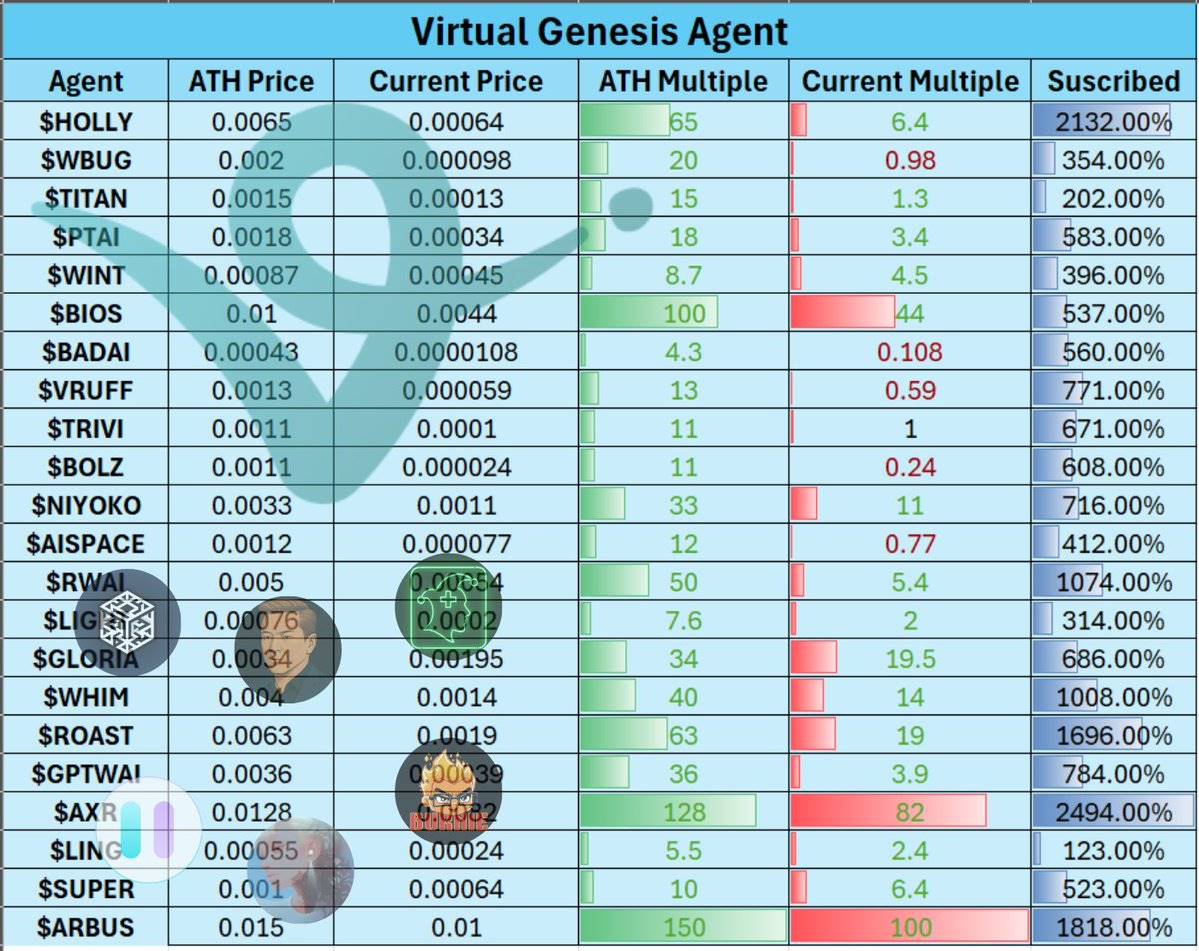
A month ago, Virtuals launched "Genesis Launches," essentially an AI agent launchpad built on $VIRTUAL.
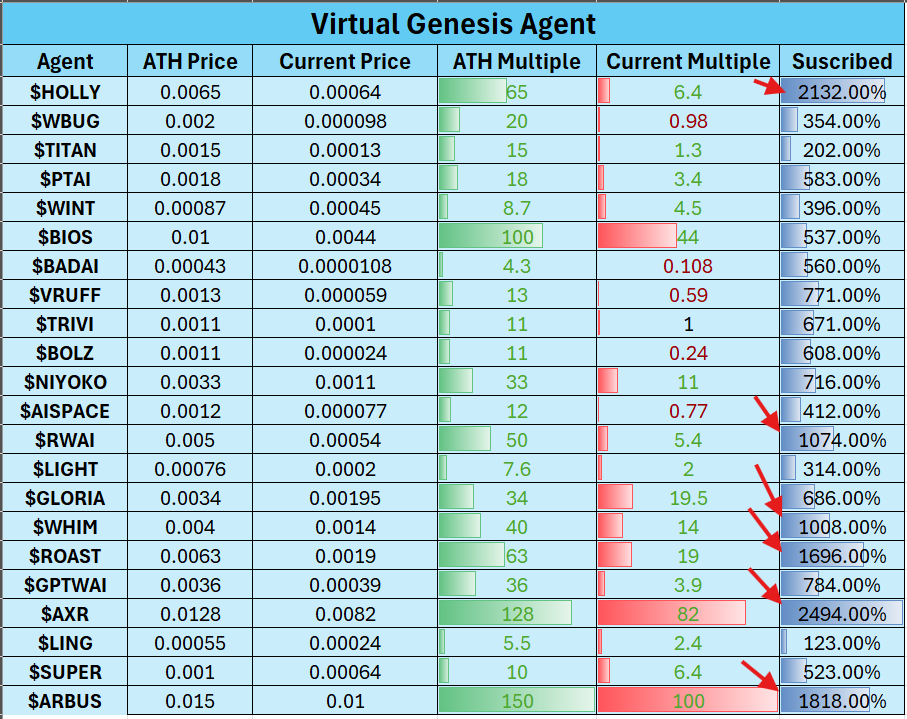
To date, around 24 AI agent projects have launched, nearly all delivering remarkable returns, ranging from x4 to x128, with an average of x32.
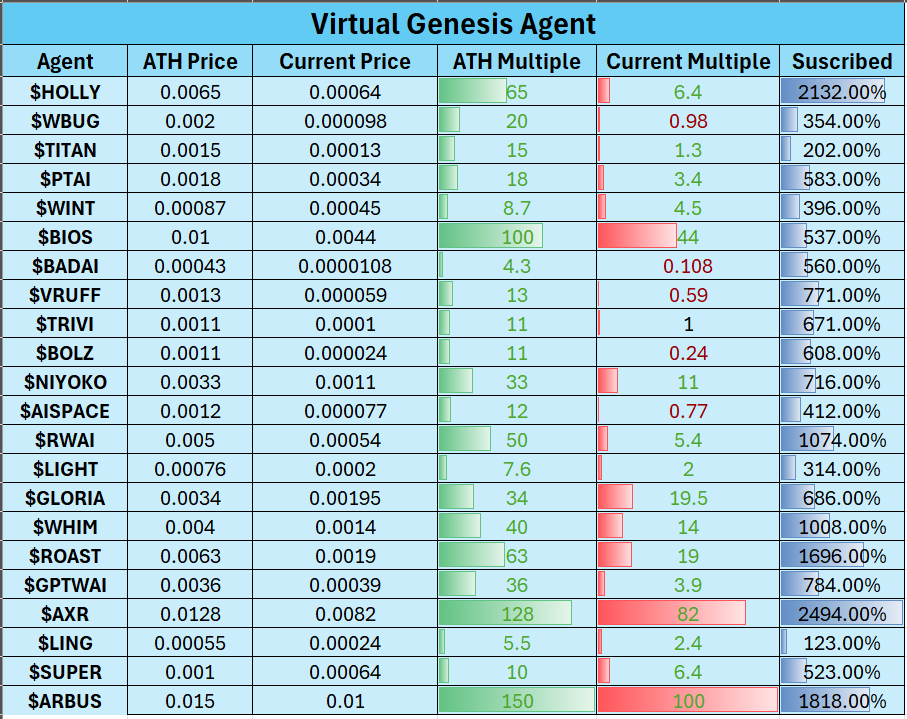
A launch is considered successful if it raises at least 112K $VIRTUAL (the minimum threshold). There is no upper limit—some projects have been oversubscribed by over 2000%.
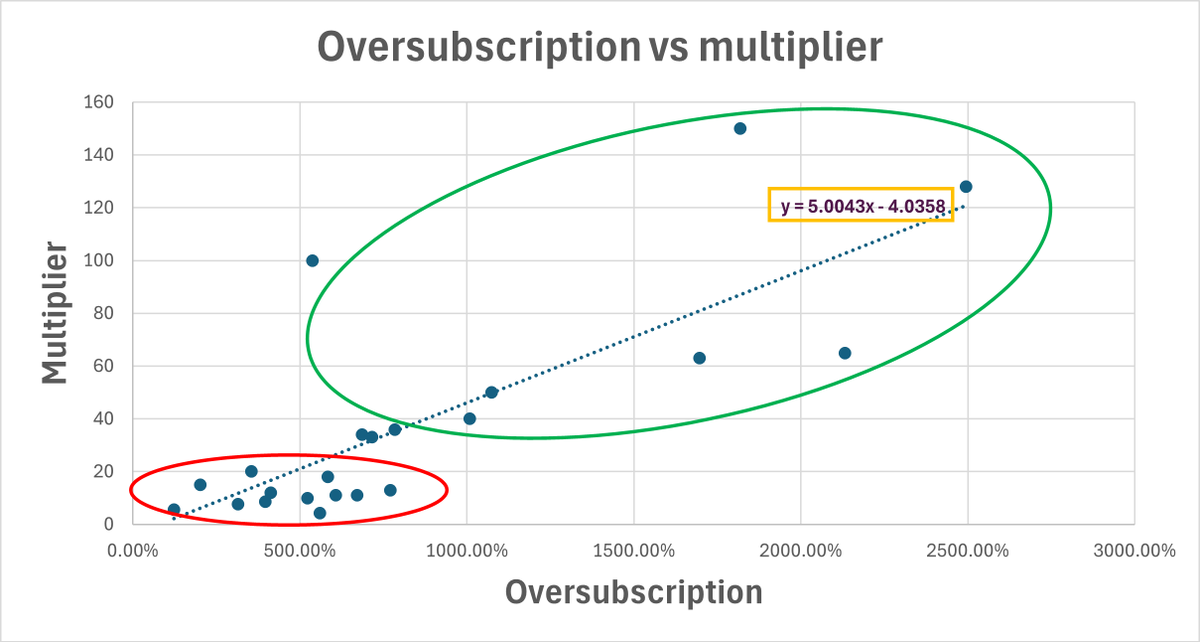
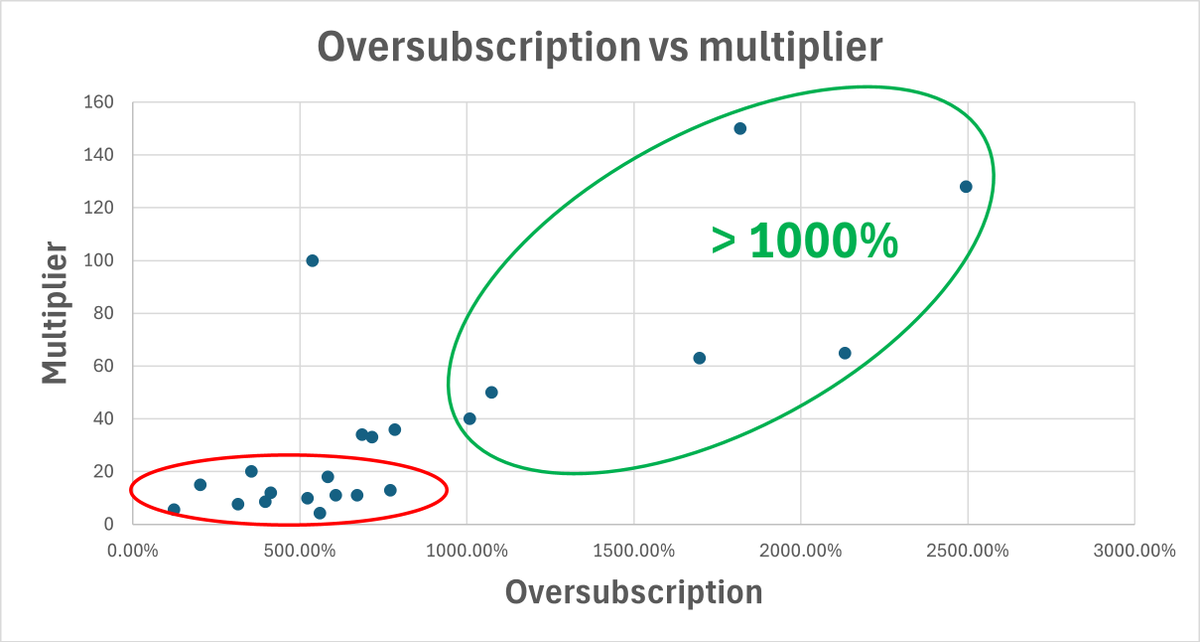
Data shows a strong correlation between oversubscription rate (publicly available) and return multiple.
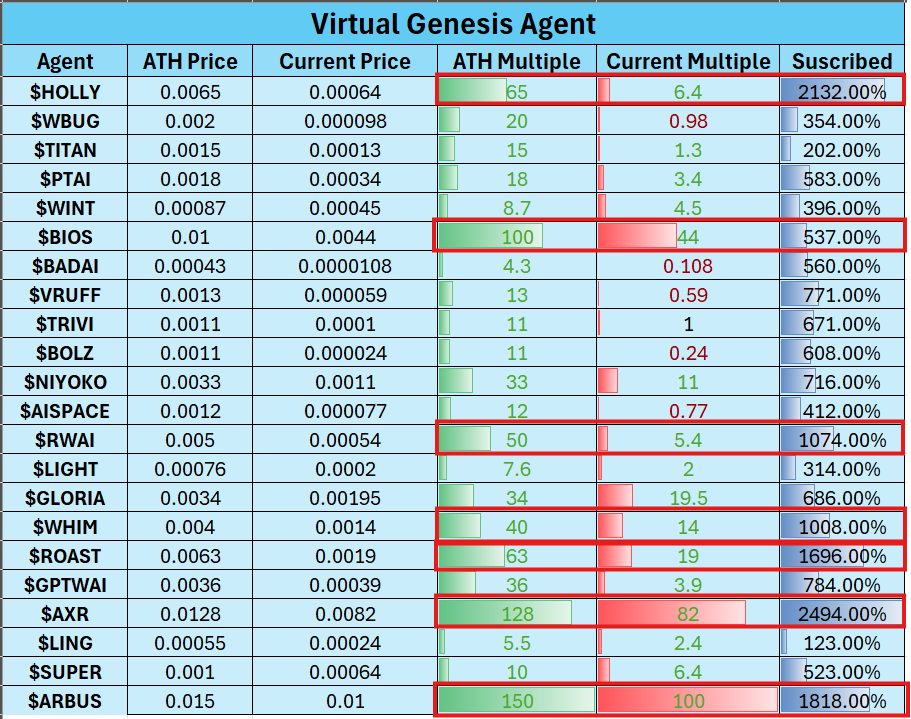
Every project with over 1000% oversubscription has delivered massive returns.
The chart clearly shows an almost linear relationship between subscription rate and return multiple.
The logic is simple: oversubscription of 1000%+ indicates extremely high demand.
Since the supply in the presale is fixed, a high subscription rate means buyers end up receiving fewer tokens.
Many are dissatisfied with their small allocations and may continue buying when the token launches, including those who completely missed the presale.
Even if you max out your allocation, increased participation still dilutes your share.
For example, in the recent $ARBUS presale, I committed my full 566 $VIRTUAL, but only 18 $VIRTUAL were used—the rest was refunded.
If fewer people had participated, I would have received a much larger token allocation.

Downside: more hype = smaller allocation, even if you have a large number of points.
Upside: all tokens are 100% unlocked upon launch.
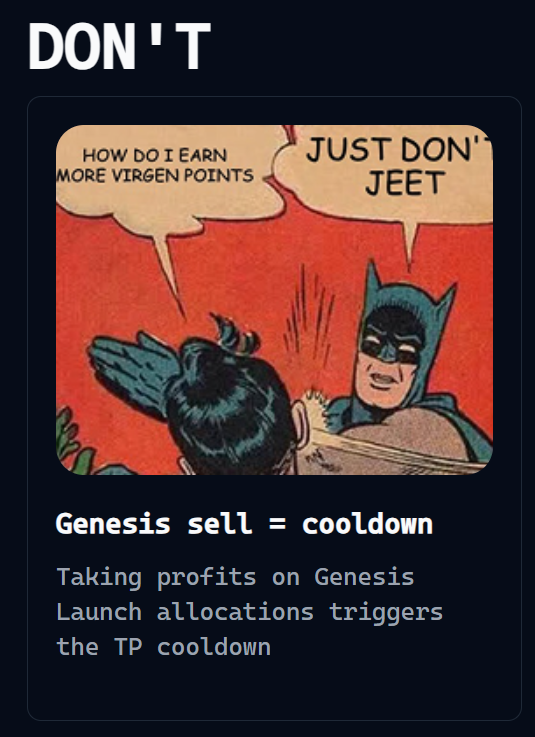
You can sell immediately, but there’s a “catch”:
If you choose to sell and profit, you trigger a 7–10 day cooldown period during which your points are reduced.
The more you earn, the greater the point reduction.
This mechanism effectively reduces selling pressure, which is one reason why some projects surge significantly after launch.
Your points directly impact your ability to profit from Genesis.
More points = larger allocation = higher potential returns.
About 80 million points are distributed daily, and there are multiple ways to earn them.
The smartest strategy is: accumulate points and only participate in presales with over 1000% oversubscription.
This way, your return multiple can reach at least x40+.
After the token launches, sell at the right time to realize substantial profits.
Accept the point reduction after selling, then patiently wait through the cooldown.
Focus on high-demand projects, avoid frequent cooldowns, aim for big wins, and use the downtime to earn more points.
Out of the 24 launched tokens, only 6 had oversubscription exceeding 1000%, about a quarter—roughly one every two weeks.
Who wouldn’t want an x50 or x100 return every few weeks?
During waiting periods, accumulate more points and prepare for the next opportunity.
Of course, this model won’t last forever. As more people learn how to exploit the system, its effectiveness may gradually decline.
But for now, this strategy remains effective and could continue for several more months.
Just focus on earning points and targeting high-demand projects.
Join TechFlow official community to stay tuned
Telegram:https://t.me/TechFlowDaily
X (Twitter):https://x.com/TechFlowPost
X (Twitter) EN:https://x.com/BlockFlow_News
 @the_smart_ape