Dubai 2049 Review: Stablecoins Become Central, Pure Conceptual Innovation No Longer Meets Needs
TechFlow Selected TechFlow Selected
Dubai 2049 Review: Stablecoins Become Central, Pure Conceptual Innovation No Longer Meets Needs
The crypto industry is transitioning from a speculative "frontier era" to a phase centered on infrastructure development and practical use cases.
 Navigating Web3 tides with focused insights
Translation: TechFlow
Key Takeaways:
-
Stablecoins have become core infrastructure. Once driven by narrative, stablecoins now demonstrate clear product-market fit and are establishing themselves as foundational components of the digital economy.
-
AI expectations exceed actual progress. Despite being a major theme at the conference (accounting for 11% of sessions), many attendees noted a growing gap between industry hype and tangible implementation.
-
The industry is entering a structurally mature phase. The crypto sector is transitioning from a speculative "frontier era" to one centered on infrastructure development and real-world use cases. Market demand for proven applications and clear value propositions increasingly surpasses expectations for conceptual innovation.
1. TOKEN2049: A Strategic Barometer for the Web3 Market
Source: Token2049
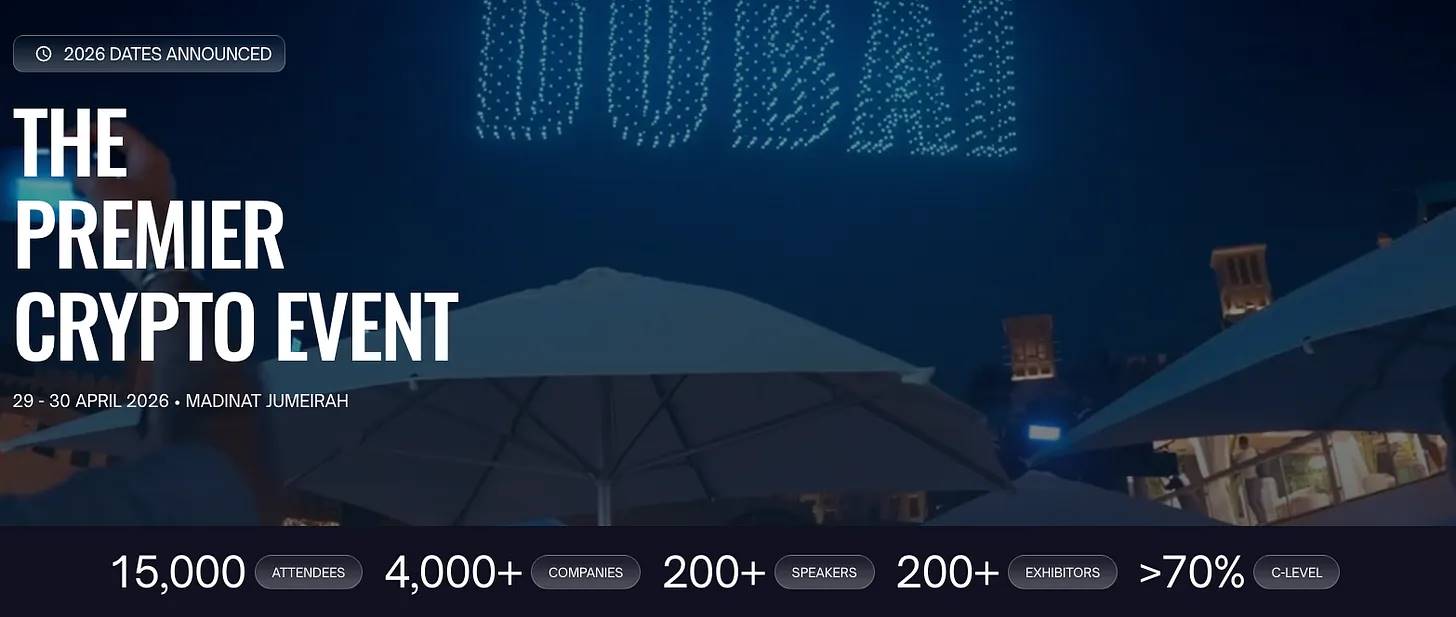
TOKEN2049 Dubai 2025 reaffirmed its status as the premier global crypto industry event, drawing over 15,000 participants from more than 160 countries. The two-day conference featured a high-caliber lineup of speeches and discussions reflecting evolving market dynamics and emerging trends.
As a key industry forum, TOKEN2049 serves as a barometer for the future direction and narrative shifts in the Web3 market. This report provides a systematic review of the main themes from TOKEN2049 Dubai 2025, categorizing core topics and offering in-depth analysis of key announcements, while capturing broader shifts in ecosystem priorities and delivering strategic insights into the industry’s potential trajectory.
2. Emerging Trends: What the Agenda Revealed
Source: TOKEN2049, Tiger Research
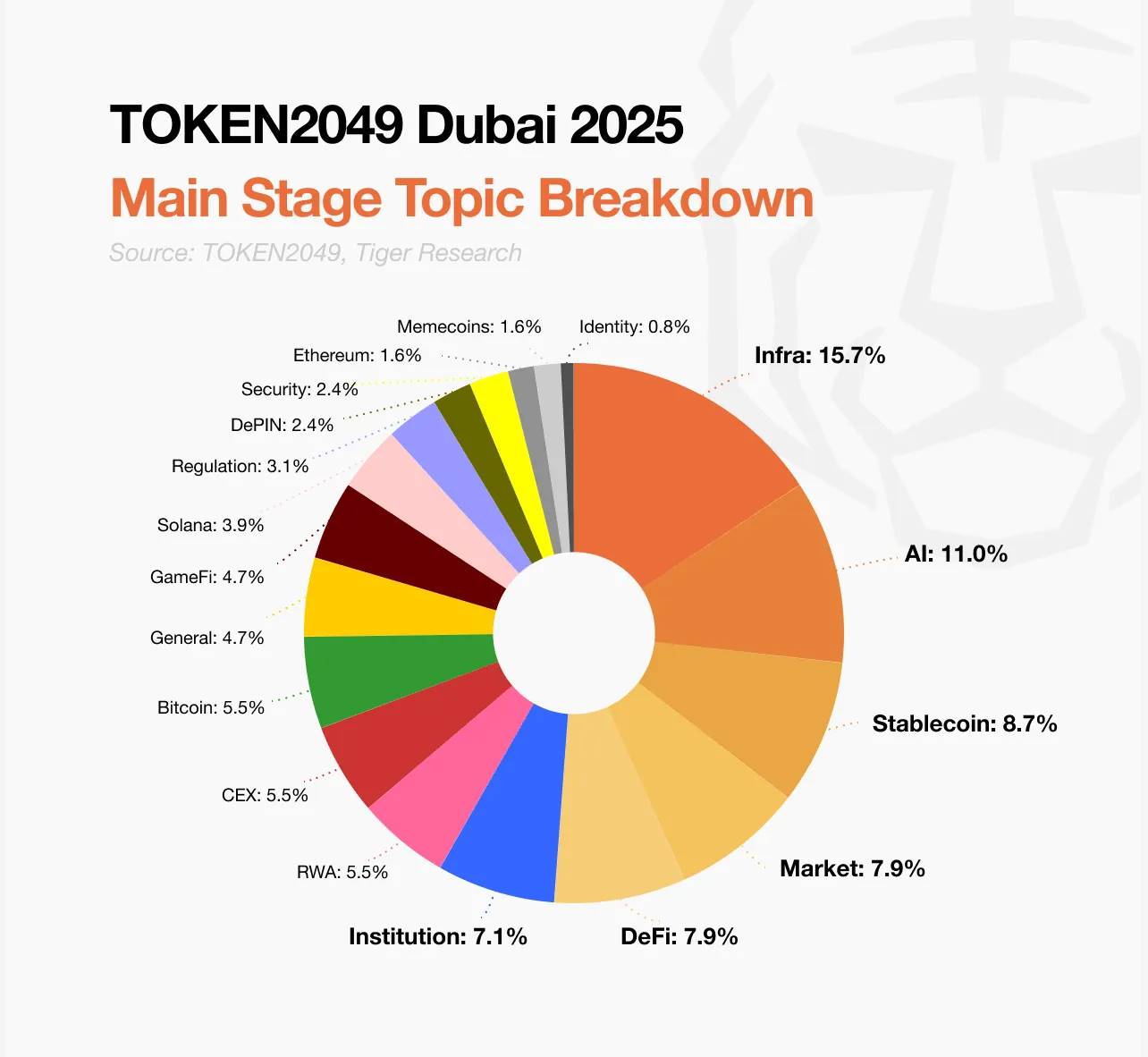
TOKEN2049 Dubai 2025 covered a wide range of blockchain topics, showcasing the evolution of industry priorities. Infrastructure-related themes dominated (15.7%), followed byAI(11%). Although initial enthusiasm around AI agents has cooled slightly, continued efforts toward integrating AI with blockchain indicate this remains a structurally significant theme.
Notably, the combined share of stablecoins (8.7%) and real-world assets (RWA, 5.5%) surpassed that ofAI. This reflects growing market interest in blockchain applications with direct utility. Stablecoins, in particular, are gaining attention due to their practical value in payments and settlements, while RWA is emerging as a leading category for next-generation blockchain applications.
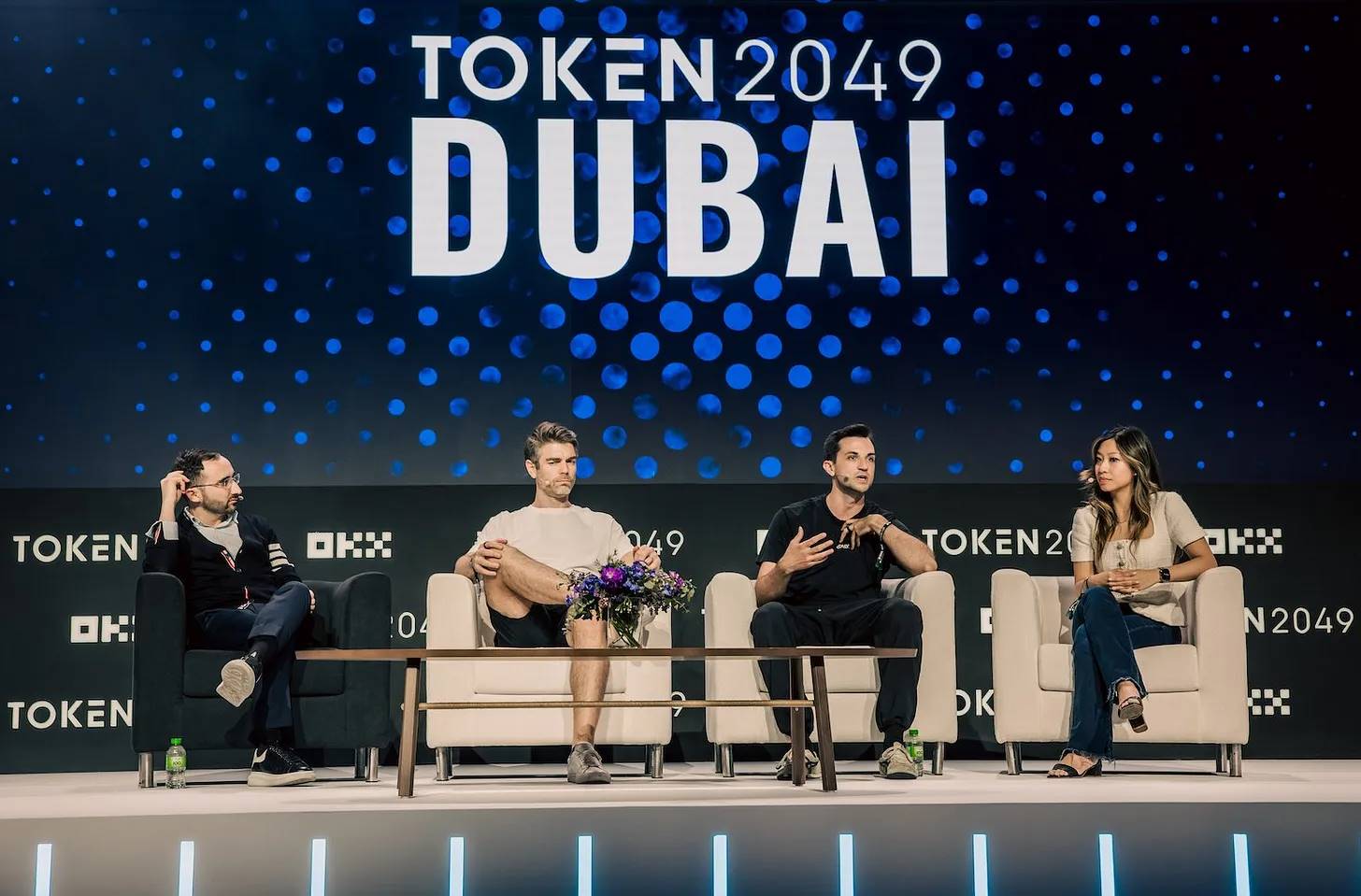
dYdX founder Antonio addresses the hot topic: “Is DeFi eating CeFi? Slowly and then all at once.”
Source: dYdX
This year’sDeFidiscussions reflected a more mature industry perspective compared to previous years. Rather than focusing on replacing traditional finance, the conversation shifted toward how decentralized systems can complement existing institutions. This aligns with the broader industry trend toward regulatory engagement and institutional adoption.
A notable shift was the increasing focus on the Solana ecosystem. Despite suffering major setbacks during the FTX collapse, the Solana ecosystem has successfully rebounded and now commands greater stage presence and technical discussion热度 than Ethereum. This shift in ecosystem dynamics warrants close attention and could mark a turning point in the Layer 1 blockchain landscape.
Overall, the main stage conveyed a more grounded and pragmatic mindset. While attention-grabbing elements like meme coins and celebrity appearances still exist, they were relegated to secondary roles. Core discussions revolved around long-term growth drivers, including regulation, financial convergence, infrastructure development, and artificial intelligence.
3. Deep Shifts Beyond the Spotlight
As in previous years, the most meaningful developments often occurred offstage. Side events and closed-door meetings revealed deeper industry movements, strategic repositioning, and foundational shifts—factors that often influence markets well before they enter public narratives.
3.1 Stablecoins Have Become Infrastructure
Stablecoins have now established themselves as core infrastructure for the digital economy and are seen as a key opportunity within Web3. There is a growing belief that stablecoin transactions will expand beyond on-chain activity into the real economy, potentially forming a multi-trillion-dollar market. This outlook is attracting increasing participation in the stablecoin space.
As this view solidifies, industry focus has shifted from simple integration to control over the payment layer. The goal extends beyond issuance to building end-to-end financial infrastructure. Web3 projects and institutions are accelerating efforts to secure leadership positions within the stablecoin technology stack.
Although still early, this shift is already driving ecosystems like Solana, Tron, and TON to strengthen their positioning as foundational settlement platforms. Their strategies go beyond stablecoin issuance to include wallet development, payment infrastructure, and institutional adoption.
3.2 AI in Crypto: Exciting but Still Experimental
Discussions aroundAIwere generally cautious. Many attendees pointed out a widening gap between market enthusiasm and the current maturity of technological development. In particular, some AI agent projects were criticized for lacking clear use cases, reinforcing perceptions that much of the activity in this space remains speculative.
Despite these concerns, there remains long-term confidence in Web3’s potential role in the AI market. Concepts such as decentralized AI computing and open-source agent frameworks are seen as areas with genuine potential. These are viewed as long-term opportunities rather than short-term trends, expected to gain traction only after the current market noise subsides.
WhileAIcontinues to attract widespread attention, most attendees agreed it should be approached with a long-term perspective. Current focus remains on foundational experimentation, not immediate large-scale deployment.
3.3 Node Sales Surge
A visible trend at the event was the rising prominence of node sales tied to physical devices. By opening node operation—once limited to a select few—to a broader audience, these initiatives are seen as important steps toward greater decentralization and redistribution of participation opportunities.
However, some attendees expressed skepticism about this trend. They questioned whether these sales are merely retail fundraising strategies disguised as ecosystem participation. Criticism focused on inflated reward structures, unclear token models, and a lack of meaningful network activity to support the sales.
Despite these doubts, multiple projects attracted significant capital and attention. However, their long-term viability remains uncertain and will ultimately depend on demonstrated network utility.
3.4 Technology Is No Longer the Only Edge
The gap between technological advancement and market adoption continues to widen. Even technically capable teams acknowledge that sustained research alone is no longer sufficient to capture market interest. Many technically advanced protocols fail to gain user traction, while simple meme coins launched via meme platforms consistently generate strong trading volumes.
In response, industry players are shifting focus from research to execution. Increasing efforts are being directed toward strategic market entry plans, understanding liquidity flows, building exchange relationships, and designing user-friendly token models. While technical excellence remains important, the ability to create meaningful value is constrained without effective distribution strategies.
Market participants are increasingly concerned that short-term returns and immediate utility are taking precedence over long-term innovation. In the current environment, execution capability outweighs potential. The market has evolved into a competitive arena where technology alone cannot ensure survival.
4. Key Announcements
Tether – Launching New Compliant USD Stablecoin Initiative
Tether CEO Paolo Ardoino announced plans to launch a new USD stablecoin compliant with U.S. regulations, distinct from existing USDT, expected to roll out between 2025 and 2026. This initiative reflects Tether’s ongoing engagement with regulators and includes discussions with U.S. lawmakers.
OKX – Launching OKX Pay and Institutional Partnership Program
OKX launched OKX Pay, a self-custody crypto payment app offering zero-fee transfers and wallet recovery via split-key technology. Additionally, OKX disclosed several institutional partnerships, including collaboration with Standard Chartered Bank within Dubai’s VARA regulatory sandbox, and previewed integration plans with Mastercard and Stripe.
Zodia Custody – Expanding into UAE and Strengthening Regulatory Collaboration
Zodia announced the acquisition of Tungsten Custody to establish a regulated business presence in the UAE. Simultaneously, Zodia unveiled a new custody partnership with Bybit and jointly released a custody framework with Abu Dhabi regulators.
Mesh – Retail Crypto Payment Integration
Mesh demonstrated its new integration with Apple Pay, enabling users to pay with cryptocurrency while merchants receive stablecoins. Built on Mesh’s “SmartFunding” solution, this feature is set to launch in Q2 2025, aiming to streamline crypto payments in retail environments.
World Liberty Financial and TRON – $2 Billion Stablecoin Investment
Abu Dhabi’s MGX fund completed a $2 billion investment in Binance using the USD1 stablecoin. Following the transaction, USD1 will be natively integrated into the TRON ecosystem.
MEXC Ventures – Launching Ecosystem Development Fund
MEXC Ventures announced a $300 million fund focused on investing in modular blockchains, ZK-rollups, and self-custody solutions. This move reflects renewed interest in infrastructure investment following the 2022 market downturn.
Lightspark – Bitcoin-Based Payment Infrastructure
Former PayPal executive David Marcus launched Spark, a native protocol built on Bitcoin’s Lightning Network. Designed for high-speed, low-cost payments, the protocol aims to expand Bitcoin’s utility beyond “store of value” use cases.
These announcements closely align with TOKEN2049’s overarching themes. Stablecoins remain central, highlighted by Tether’s compliance initiative and the $2 billion stablecoin investment case. Infrastructure development is another key focus, with notable efforts from OKX, Zodia, and MEXC in scalability, custody, and modular architecture.
Bitcoin’s functional evolution was further emphasized through Lightspark’s Spark protocol, fueling ongoing discussions about Bitcoin’s broader application potential. While AI featured prominently in panel discussions, it remained relatively underrepresented in major announcements. Instead, emphasis remained on practical deployment in payments, compliance, and institutional access—signaling the industry’s continued shift from experimentation to scalable implementation.
5. From Frontier to Urbanization
This year’s conference clearly illustrated the crypto industry’s transformation—from speculative fervor toward utility and infrastructure development. Three key thematic directions emerged:
-
Stablecoins transcend narrative to become infrastructure for the digital economy
Stablecoins are no longer just a concept—they now demonstrate tangible product-market fit and are progressively cementing their role as core infrastructure in the digital economy.
-
AI enthusiasm soars, but market sentiment turns cautious
Despite significant attention at the conference, many attendees noted a widening gap between market excitement and the actual maturity of AI technology development.
-
Dubai strengthens its position as a hub for Web3 regulation and capital
The UAE continues to lead in global Web3 expansion, with Dubai emerging as a key nexus for regulation and capital in this domain.
The event did not introduce entirely new trend waves, but instead reinforced the consolidation of existing narratives, particularly aroundAI, stablecoins, and real-world assets (RWA). Growing institutional involvement and evolving regulatory frameworks signal that the market is entering a new phase of structural transformation.
The era of idealistic experimentation is giving way to an age of pragmatic execution. Just as the shift from frontier economies to urbanized economies was driven by revolutions in transportation and distribution, the Web3 ecosystem is now entering a phase dependent on infrastructure development, system integration, and delivery capability.
While the attention economy remains relevant, the market no longer pays solely for conceptual innovation. Stakeholders now expect practical applications and clear value propositions. This shift marks broader ecosystem maturation, paving the way for more stable, long-term growth—ushering in what can be considered the “urbanization” era of Web3.
Join TechFlow official community to stay tuned
Telegram:https://t.me/TechFlowDaily
X (Twitter):https://x.com/TechFlowPost
X (Twitter) EN:https://x.com/BlockFlow_News
 @tiger_research