








Doodles: From NFT Blue-Chip to Tokenization Experiment, a High-Stakes Bet on a Web3 Entertainment Empire
TechFlow Selected TechFlow Selected
Doodles: From NFT Blue-Chip to Tokenization Experiment, a High-Stakes Bet on a Web3 Entertainment Empire
Facing a downturn in the NFT market, Doodles chose to launch its token DOOD to activate its ecosystem and address liquidity challenges, but this has also sparked controversy over investor exploitation and market risks.
 Navigating Web3 tides with focused insights
Author: Lawrence, Mars Finance
1. A Brief History of Doodles: From "Cartoon Avatars" to the Ambition of a "Web3 Disney"
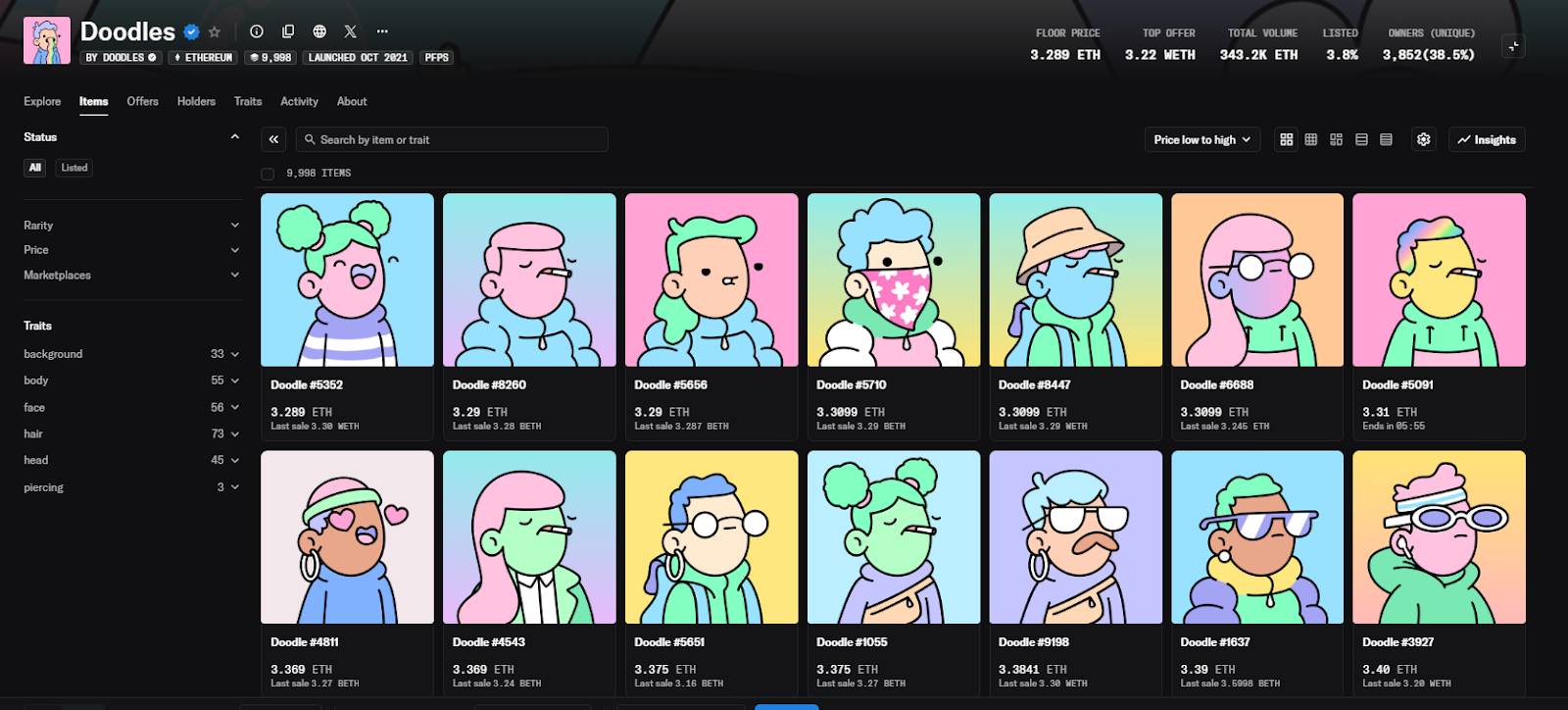
As one of the most iconic blue-chip NFT projects in the Ethereum ecosystem, Doodles' growth story is a textbook case of IP incubation in the Web3 era.
1. The Artistic DNA and Origins of Community Co-Creation (2021–2022)
In October 2021, 10,000 vibrant cartoon avatars created by Canadian illustrator Scott Martin (Burnt Toast) launched on Ethereum. These NFTs, named Doodles, quickly broke into mainstream awareness with their distinctive "childlike doodle" art style, driving floor prices above 5 ETH and securing a place in the "blue-chip club."
The three core founders—Scott Martin, Evan Keast, and Jordan Castro—each played pivotal roles:
-
Scott Martin: The visual visionary responsible for all character designs and world-building
-
Evan & Jordan: Former core members of CryptoKitties, deeply experienced in NFT community operations
Unlike other PFP (Profile Picture) projects, Doodles emphasized the concept of "holders as shareholders" from day one:
-
Established the Doodlebank community treasury, where holders vote on fund allocation
-
Distributed wearable items via mechanisms like Genesis Box, enabling dynamic NFT upgrades
2. Cross-Industry Expansion and Capital Backing (2022–2024)
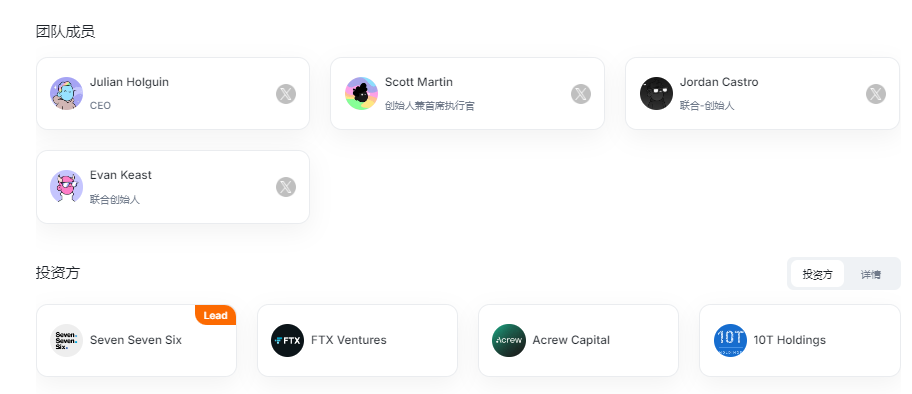
2022 marked a strategic turning point for Doodles:
-
Executive hires: Julian Holguin, former President of Billboard, joined as CEO; music superstar Pharrell Williams became Chief Brand Officer
-
Funding round: Raised $54 million at a $704 million valuation, led by 776 Fund (founded by Reddit co-founder Alexis Ohanian)
-
Ecosystem development:
-
Acquired Golden Wolf, an Emmy-nominated animation studio
-
Launched collaborations with Adidas and McDonald's
-
Developed the Doodles 2 dynamic NFT system, supporting cross-platform character customization
By this stage, Doodles had evolved from a simple NFT project into a "Web3 entertainment group," with its commercial footprint spanning animation, music, gaming, and live events.
3. Transformation Amid Crisis (2025)
In January 2025, founder Scott Martin resumed the role of CEO, announcing a return to a "radically innovative" strategy:
-
Halted over-commercialized collaborations (e.g., McDonald’s coffee partnership)
-
Launched the DreamNet ecosystem, building an AI-powered decentralized content platform
-
This shift reflects the ongoing downturn in the NFT market: Doodles’ trading volume dropped 67% year-on-year in 2024, with floor prices lingering around 3 ETH.
2. Breaking Through with Tokenization: DOOD’s Economic Model and Strategic Logic
Amid a cooling NFT market, Doodles chose tokenization as its breakthrough strategy. On May 9, 2025, its native token DOOD will debut on Solana, with plans to expand to Base L2.
(1) Tokenomics: Reconstructing Interests Under the Community Narrative
According to the whitepaper, DOOD has a total supply of 10 billion tokens, allocated as follows:
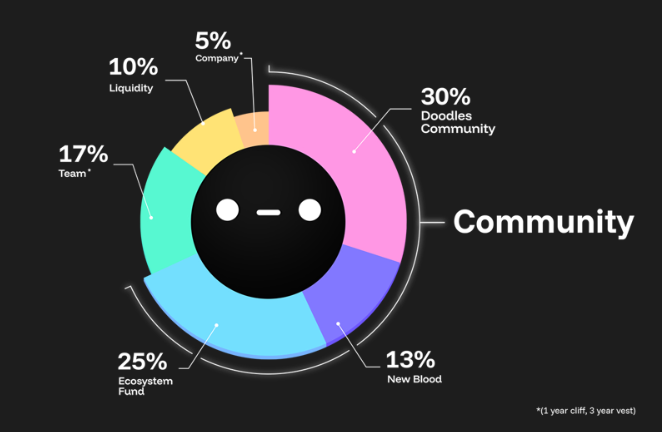
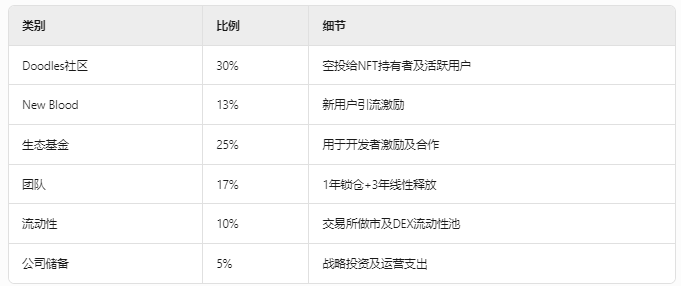
Key design features:
-
Community-first: 68% of tokens go to the community, exceeding similar projects (e.g., Azuki’s 37.5%)
-
Multi-chain compatibility: Launches first on Solana to leverage its high TPS (65,000+ per second) and meme culture, then bridges to Base to access Ethereum’s ecosystem
Potential controversies:
-
Vague definition of "New Blood": The 13% allocation lacks transparent rules, raising risks of internal manipulation
-
Institutional exit pressure: Early investors like 776 Fund have not disclosed exit strategies and may cash out via ecosystem funds
(2) Value Capture: Imagining the Shift from JPGs to "Digital Skins"
DOOD is positioned as the "economic lifeblood" of the Doodles ecosystem, with value capture mechanisms structured across three layers:
1. Governance Rights
-
Proposal voting: Holders participate in decisions about DreamNet content direction
-
Staking rewards: Locked tokens earn dividends from animation IPs, discounts on merchandise, and other benefits
2. Consumption Use Cases
-
DoodlesTV: Pay DOOD to watch exclusive animated shorts
-
Virtual fashion: Purchase wearables on the Stoodio platform
-
In-game purchases: Future item trading within metaverse games
3. Speculative Asset
-
Solana’s MEME culture drives trading activity
-
Cross-chain bridging with Base may create arbitrage opportunities
However, compared to competitors, DOOD’s utility remains weak:
-
Compared to PENGU: Pudgy Penguins generates stable cash flow through physical toys
-
Compared to ANIME: Azuki integrates with anime crowdfunding platforms, offering clear consumption use cases
3. Deconstructing the Motives Behind the Token Launch: Lifeline or Rug Pull?
With NFT trading volumes halved and blue-chip projects struggling to grow, Doodles’ decision to launch a token has sparked polarized reactions.
(1) Strategic Rationale
1. Solving Liquidity Constraints
NFTs’ non-fungible nature leads to poor liquidity. By linking to a token, holders can obtain liquid assets through staking and airdrops, avoiding the need to dump NFTs at discounted prices.
2. Community Activation Experiment
The operation of the DreamNet system relies on token incentives:
-
Creators earn DOOD rewards for uploading content
-
Users earn points for engagement (likes, shares)
-
This "create-to-earn" model attempts to replicate StepN’s success.
3. Capital Exit Needs
Early investors require a token listing to exit. Based on the $54 million raised, DOOD’s FDV (fully diluted valuation) must reach $700 million for VCs to break even—while Doodles’ current NFT market cap stands at only $64.8 million.
(2) Suspicions of a Pump-and-Dump Scheme
1. Token Distribution Risks
Despite a high 68% community allocation, the detailed rules raise concerns:
-
30% community airdrop lacks a defined snapshot time, creating "pre-mine" risks
-
The team-controlled ecosystem fund could be used to manipulate market prices
2. Traps of MEME-ification
Choosing Solana for launch caters fundamentally to MEME speculation. Consider average token lifespans on this chain:
-
80% of projects lose 90% of their value within one month of launch
-
Trading volume is concentrated on CEXs, with little on-chain liquidity
3. Reflexivity Risk for NFTs
A falling token price could trigger a wave of NFT selling, creating a "death spiral." After Azuki’s token launch in 2024, its NFT floor price dropped 58%.
4. Market Outlook: Short Signals and Risk Warnings
According to Marsbit Research Institute’s model projections, DOOD may follow this trajectory:
(1) Short-Term Speculative Window
-
Launch day: Driven by MEME sentiment, FDV might spike to $1.5–2 billion
-
Airdrop sell-off pressure: With 30% allocated to the community, potential weekly sell-offs could reach 3 billion tokens (~$450 million)
(2) Medium-to-Long Term Risks
-
Pressure to deliver: If DreamNet MVP is not launched within six months, the token loses its narrative foundation
-
Multi-chain operational costs: The bridge between Solana and Base could become a target for hackers
(3) Short-Selling Strategy Recommendations
Ideal short signals:
-
FDV exceeds $2.5 billion (equivalent to DOOD price of $0.25)
-
Large transfers detected from team addresses
-
DreamNet release delayed
Risk warnings:
-
High concentration of whale holdings on Solana; beware of short squeezes
-
Exchanges like Binance may impose short-selling restrictions
5. Conclusion: Paradigm Revolution vs. Speculative Bubble for Web3 IPs
Doodles’ tokenization experiment is essentially a gamble on "securitization of digital assets." Its idealistic aspects include:
-
Attempting to share value between creators and consumers through token economics
-
Exploring the transformation of NFTs from collectibles to "digital identity passports"
Yet the harsh realities remain evident:
-
Within the利益 chain formed by VCs, exchanges, and market makers, the community still holds a weak position
-
The maturity of the Web3 entertainment ecosystem is far from sufficient to support a multi-billion dollar valuation
Recommendations for retail investors:
-
Short-term participation: Exploit liquidity premium during initial exchange listings; set stop-loss at -20%
-
Long-term avoidance: Do not hold beyond 3 months unless DreamNet achieves over 50% user retention after launch
-
Ecosystem monitoring: Closely track musical collaborations with Pharrell Williams and animation output progress from Golden Wolf
In the crypto world, "innovation" and "extraction" are often two sides of the same coin. Whether Doodles can break the "peak at launch" curse will be decisively tested in the fall and winter of 2025.
Join TechFlow official community to stay tuned
Telegram:https://t.me/TechFlowDaily
X (Twitter):https://x.com/TechFlowPost
X (Twitter) EN:https://x.com/BlockFlow_News






