Exclusive Interview with Pundi AI Core Contributor: The Technological Leap from Payments to AI, Productivity is the Key to Breaking Through in AI Agents
TechFlow Selected TechFlow Selected
Exclusive Interview with Pundi AI Core Contributor: The Technological Leap from Payments to AI, Productivity is the Key to Breaking Through in AI Agents
The story of Pundi AI is both a reflection of technological evolution and a vivid portrayal of Southeast Asia's exploration of Web3 innovation.
 Navigating Web3 tides with focused insights
Author: Nancy, PANews
Recently, the decentralized AI data layer Pundi AI attracted market attention by completing a rebranding and token swap. At a time when enthusiasm for Web3 AI Agents is gradually cooling, this veteran payment project has demonstrated its determination to transform and break through, as well as its firm belief in the long-term development of AI.
In a recent interview with PANews, Danny, a core contributor at Pundi AI, reflected on his entrepreneurial journey from payments to AI. He shared insights into the team's technical solutions, observations on Southeast Asia’s Web3 industry, and deep reflections on VC models and AI development. From experimenting with QR code payments in Indonesia to now tackling global AI data bottlenecks, the story of Pundi AI is both a microcosm of technological evolution and a vivid portrayal of innovation within Southeast Asia’s Web3 ecosystem.
Starting Up in Indonesia: From QR Code Payments to an AI Data Layer
Between 2016 and 2017, Indonesia was one of the focal points of digital economy growth in Southeast Asia. Internet adoption surged during this period, driven by rapid mobile internet penetration, accelerating infrastructure development, and a rising young consumer base. According to data from the Indonesian Internet Service Providers Association (APJII), internet users in Indonesia exceeded 130 million—more than 50% of the country's population of approximately 256 million.
This environment enabled the Pundi X team to seize a market opportunity by launching QR code payment services in Indonesia. This venture validated the immense potential of Indonesia’s payment market but also revealed a key challenge: a large portion of the population remained unbanked. The convenience and inclusivity of cryptocurrency payments thus became critically important—an experience that planted the seeds for future innovation.
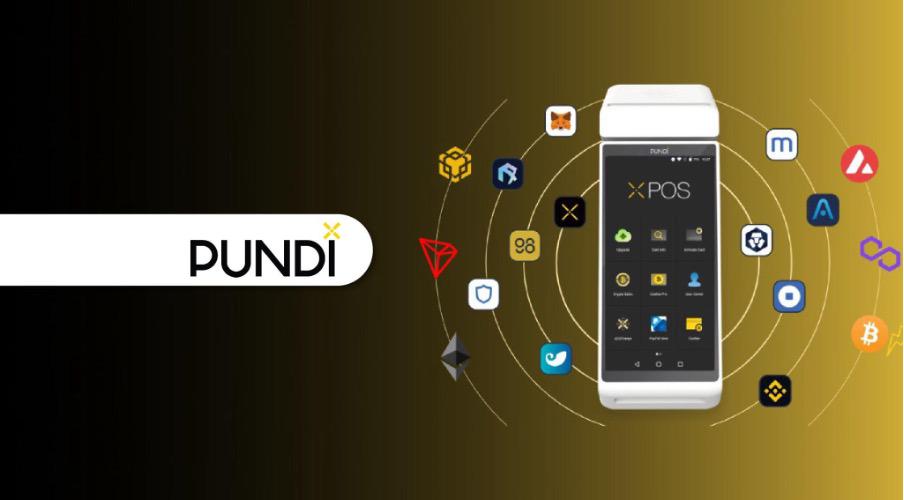
By 2017–2018, amid the blockchain boom, the Pundi X team pivoted decisively, launching the Pundi X project and successfully raising $50 million through an ICO. As a blockchain-driven hardware developer, Pundi X offered point-of-sale (POS) solutions called XPOS, enabling merchants and consumers to conduct transactions directly on supported blockchains. These payment capabilities worked across multiple networks including Bitcoin, Ethereum, BNB Chain, and Polygon, and were adopted in over 30 countries across Asia, Europe, and Latin America—achieving notable progress in market reach and product adoption.
After years of深耕 in crypto payments, Pundi X turned its focus to AI in 2024—a year marked by continuous breakthroughs in AI technology and flourishing industrial applications. "AI is a 'great cause,'" Danny said candidly in the interview. Driven by insights into data challenges in AI, Pundi X began building a decentralized AI data layer aimed at addressing critical industry issues such as data monopolization, inconsistent quality, and privacy protection.
Introducing a Three-Layer Data Quality Filtering System: Dual-Track Web2 and Web3 Operations
While AI continues to reshape industries—from upstream technological advances to downstream real-world applications—the core bottleneck isn't computing power; it's data. The scarcity of high-quality data, barriers created by data monopolies, and unresolved privacy concerns remain key pain points constraining progress.
"For AI startups, freely available data in the market is scarce—not only limited in quantity and slow to update, but also highly variable in quality. Meanwhile, acquiring data from tech giants comes at an extremely high cost. On the other side, data providers often receive minimal compensation, lack copyright protection, and have no right to share in future earnings generated from their contributions," Danny pointed out.
To address these challenges, Pundi AI introduced an innovative three-layer quality filtering system to ensure high standards and reliability of data:
- Layer One – Continuous Peer Review: Through cross-annotation mechanisms, different annotators (e.g., A, B, C, D) independently label samples. For instance, Annotator A labels items 1, 2, 3; B labels 2, 3, 4, and so on. This overlapping process ensures consistency and accuracy.
- Layer Two – AI Agent Automated Review: All annotated samples undergo comprehensive automated review via AI Agents.
- Layer Three – Node-Based Manual Sampling Audit: Human validators at network nodes perform random audits to further enhance data credibility.
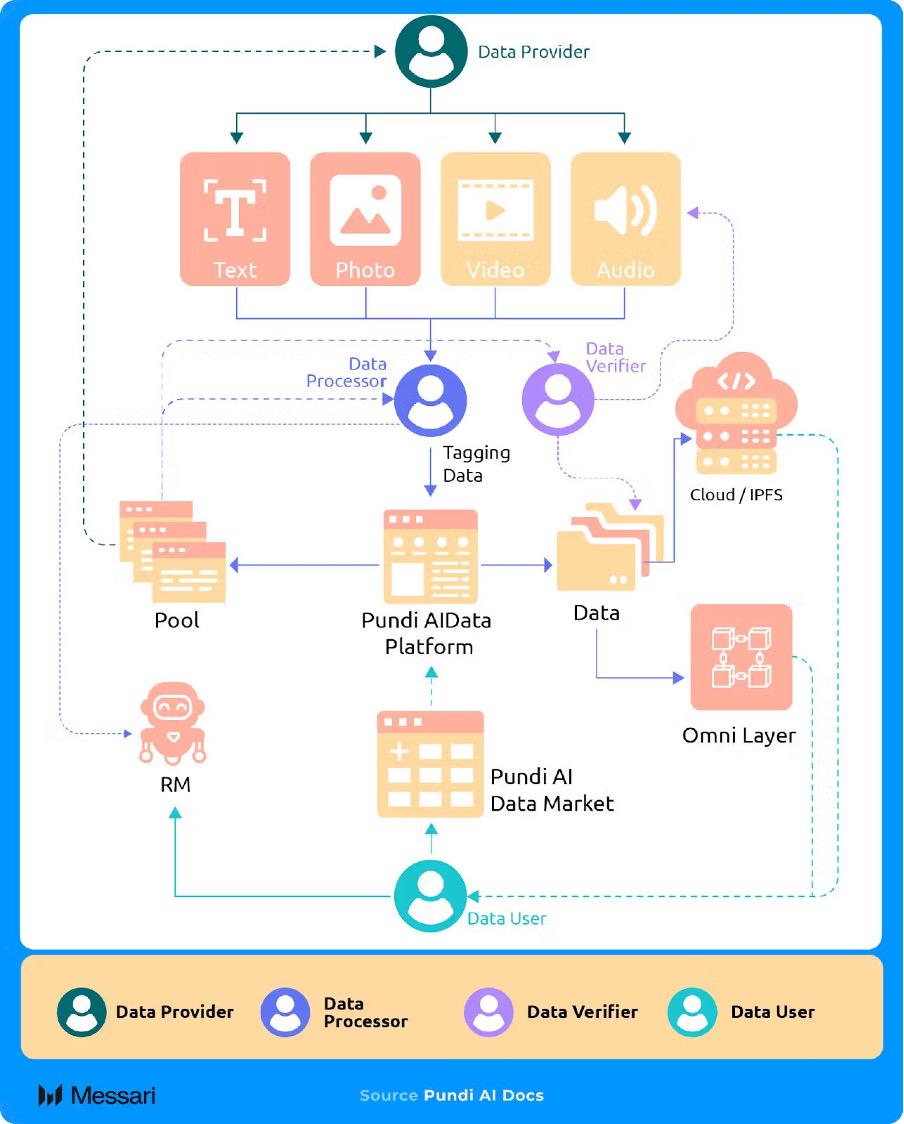
"AI improves production efficiency; blockchain optimizes distribution relationships. Pundi AI leverages blockchain to enable on-chain data ownership verification and fair revenue sharing. Contributors earn proportional rewards whenever a data package is sold. More importantly, if derivative data products are created from the original dataset, contributors continue to share in the resulting revenues," Danny explained. This transparent and traceable mechanism not only safeguards copyright but also allows all contributors to benefit from value appreciation—injecting new vitality into the sustainable growth of the AI ecosystem.
Pundi AI’s business model is uniquely structured—akin to a “data supermarket + AI incubator” hybrid. As Danny described, Pundi AI offers a full suite of products, segmented into Web2 and Web3 operational modes based on target users and delivery methods.
Under the Web2 model, developers post AI data labeling tasks on the platform. Global annotators complete the work according to specifications, pass quality checks, and receive payment. Once finalized, the datasets enter a public marketplace where other developers can purchase and use them. This resembles China’s fan-subtitling communities, using a blockchain-based crowdsourcing system for task distribution and data exchange. However, unlike traditional platforms, contributors retain full copyright over their completed work.
Under the Web3 model, developers can do more than just buy data to train their AI Agents—they can also issue tokens for their AI Agents directly through the Pundi AI platform. After token issuance, they may entrust their tokens to Pundi AI’s AI MM Agent for automated market-making operations on-chain. Additionally, developers can apply to join Pundi AI’s funding voting protocol (similar to Aerodrome’s ve model). If supported by community members, projects gain access to weekly liquidity incentives.
Compared to traditional market makers, Pundi AI’s AI MM Agent system offers several distinct advantages:
- Lower capital costs: Traditional market makers typically acquire tokens either at a discount or through options, both involving high financial and coordination costs. In contrast, AI MM Agent operates automatically, improving efficiency.
- Reduced communication overhead: Conventional market makers require complex negotiations and ongoing coordination. AI MM Agent uses smart contracts and automated trading to minimize human intervention and streamline processes.
- Mitigated moral hazard: Traditional market makers might withdraw services after losses, disrupting liquidity. AI MM Agent ensures consistent provision of market liquidity.
- Memopool-specific trading: Pundi AI is the first system globally dedicated to on-chain mempool (memopool) market making, allowing faster responses to market dynamics.
- Additional funding support: High-potential projects recognized through on-chain voting can receive enhanced liquidity backing.
Danny also revealed Pundi AI’s collaboration with Nvidia. Pundi AI has officially joined the NVIDIA Inception program, which supports startups leveraging cutting-edge technologies to drive industry transformation. Through this partnership, Pundi AI gains access to go-to-market support, hardware discounts, cloud resources, and deep learning training—accelerating product development and deployment. Beyond this, Pundi AI has partnered with projects such as Flock, TGB, Twallet, and Fintax, while actively incubating new initiatives through AI competitions.
A Full Upgrade Unveils a New Narrative: Ideals and Convictions Behind Non-VC Funding
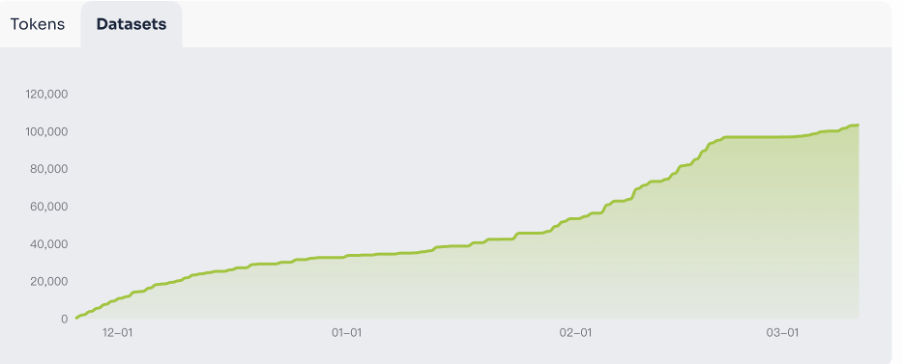
Currently, Pundi AI has announced a comprehensive upgrade through token migration and rebranding. According to its official website, Pundi AI now hosts over 103,000 datasets and serves more than 134,000 users.
"This decision (excluding shell projects) is time-consuming, labor-intensive, and thankless. It means rebuilding brand equity from scratch, reapplying for legal opinions, and facing uncertainty regarding whether exchanges and partners—such as data analytics sites, nodes, browsers, wallets—will support the transition, potentially leading to delays," Danny admitted candidly.
Despite these hurdles, he believes the change carries profound significance. On a branding level, it provides Pundi AI with a fresh narrative, enabling a renewed brand image and clearer market positioning. Technically, the previous token contract could not be upgraded, necessitating a new one. Furthermore, Pundi AI adjusted the token precision to differentiate the new token price clearly from that of Pundi X, avoiding market confusion. Danny also disclosed that the newly launched dual-token model draws inspiration from Aerodrome’s ve(3,3) mechanism: $PUNDIAI is used for trading, payments, and governance; $vePUNDIAI represents long-term holding and voting rights.
Notably, unlike many crypto projects reliant on external funding, Pundi AI has not publicly raised any capital. Danny revealed that since launching the DeFi project Function X in 2019, the Pundi AI team has never accepted outside investment—not even participating in KOL rounds—with all resources fully allocated to the community.
He explained that this choice stems from several considerations: First, the team does not want to be driven by investor demands—such as constant pressure about when to launch tokens or list on exchanges. They aim to stay focused on building what truly matters without succumbing to commercial pressures. Second, there’s perhaps a sense of idealism and resilience characteristic of seasoned builders. Pundi AI firmly believes that if the sole goal is monetization and exit, the path will narrow quickly. But if the mission is to create real value for the industry and users, supporters will naturally gather along the way.
"In our view, fundraising essentially trades past trust and future selling pressure to build present-day products. Regarding VC-backed tokens under current market conditions, our stance is complex yet cautious. The VC model itself isn’t inherently wrong—it has indeed accelerated market and technological evolution. Yet today, the VC model seems to have lost its essence, becoming synonymous with 'to exchange,' turning into coordinated gatherings among stakeholders. That said, there are still VCs genuinely committed to supporting project development," Danny stated bluntly.
Although AI is rapidly permeating various fields, challenges persist—especially in the crypto space, where interest in AI Agents has noticeably cooled recently. Danny attributes this largely to the fact that over the past few months, most AI Agents haven’t genuinely improved production efficiency, instead resembling MEMEs disguised as technology. Pundi AI chooses to leverage its strengths in AI and on-chain transaction technologies to build practical AI Agents that solve real problems.
"We firmly believe the Web3 + AI domain will witness a second, even third wave of development. As AI models grow more powerful and high-quality data accumulates, increasingly superior AI Agents will emerge. In the short term, applications closely tied to trading—such as those enhancing trading efficiency, boosting returns, or strengthening security—are most promising," Danny concluded.
Southeast Asia’s Web3 Landscape Shows Tiered Differentiation—Malaysia Holds Strategic Advantages
In recent years, Southeast Asia’s Web3 ecosystem has flourished. Beyond Pundi AI, major projects like Axie Infinity, Coin98, Virtuals Protocol, and Yield Guild Games originated in the region, drawing global attention to Southeast Asia’s blockchain potential.
According to Danny, the current Web3 landscape in Southeast Asia can be divided into tiers: The first tier includes Vietnam, which has emerged through strong local projects, and Singapore, which has become a regional hub attracting numerous executives and teams. The 1.5 tier is represented by Malaysia—rumored to host branches of several major exchanges. The second tier comprises Indonesia, the Philippines, and Thailand.
Among these nations, Danny highlighted the unique strengths of Malaysian Chinese teams: psychologically resilient and adventurous, quick learners who rapidly master cutting-edge technologies, fluent in both Chinese and English—enabling seamless connections between Chinese-speaking and international ecosystems. Their technical foundation is also solid; between 2020 and 2021, a significant number of engineers from China and Western countries migrated to Malaysia, enriching local teams with expertise. Additionally, Malaysia offers lower development and operational costs, coupled with favorable time zone alignment for global collaboration.
Join TechFlow official community to stay tuned
Telegram:https://t.me/TechFlowDaily
X (Twitter):https://x.com/TechFlowPost
X (Twitter) EN:https://x.com/BlockFlow_News
 PANews