Apple Watch Turns 10: Which "Rings" Still Haven't Closed?
TechFlow Selected TechFlow Selected
Apple Watch Turns 10: Which "Rings" Still Haven't Closed?
The Apple Watch has been very successful, but it has never managed to become the "next iPhone."
 Navigating Web3 tides with focused insights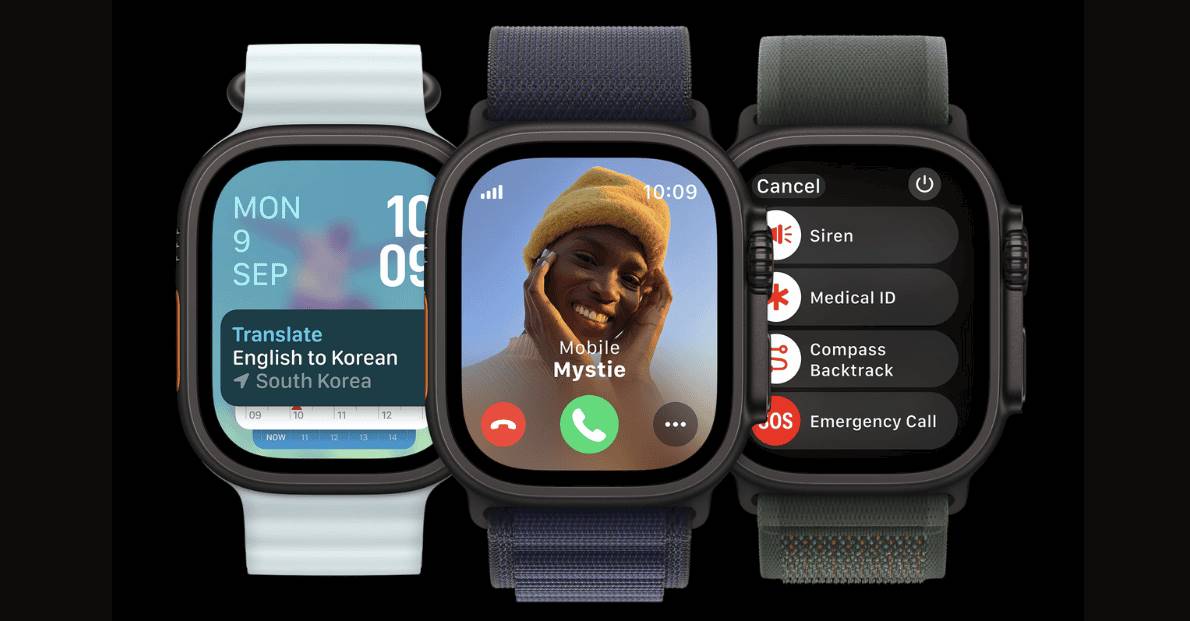
Apple Watch has turned 10.
On April 24, 2015, the first-generation Apple Watch officially went on sale, marking the beginning of a new chapter for Apple in the "post-Jobs era."
Ten years later, Apple Watch has clearly proven its success.
According to market research firm IDC, Apple sells over 40 million Apple Watches annually, generating approximately $20 billion in revenue. It is not only the world's best-selling smart wearable device but also the best-selling "watch" in history.
However, at its inception, Apple Watch carried even greater ambitions.
From users to developers, many once believed that Apple Watch should replicate and surpass the success of the iPhone—becoming "the next big thing."
But now, ten years later, Apple Watch still cannot operate independently from the iPhone. This smartwatch:
Remains just an "accessory."
Beneath this mix of triumph and limitation lies a lesson for the entire consumer electronics and broader tech industry.
01
The Ideal of the "Future Watch"
When Apple unveiled the Apple Watch in the fall of 2014, it was met with immense anticipation. It was the last device Steve Jobs participated in developing before his passing, and the first entirely new product Apple launched after his death.
Its significance was evident in every detail. To maintain strict secrecy, Apple delayed the launch by six months to prevent supply chain leaks—a level of confidentiality reserved only for revolutionary products like the original iPhone.
The launch event took place at the Flint Center, where Jobs had introduced the first Macintosh and the original iMac—locations of deep symbolic importance to Apple. Outside the venue, Apple built a lavish hands-on experience zone. Years later, Apple employees recalled that the exhibit alone cost as much as $25 million.
The Apple Watch wasn't just significant for Apple. Ever since watches became popular consumer goods, visions of the "future watch" have never ceased. These ideas trace back to eras before computers or mobile phones existed. Since the 1930s, science fiction novels and comics have depicted "high-tech watches"—devices capable of making calls, watching TV, sending faxes, or translating alien languages. Later pop culture icons, such as James Bond’s laser-emitting watch or Conan’s anesthesia watch, are all part of this legacy.
This is why, when launching Apple Watch, Apple adopted development strategies similar to those used for the iPhone, aiming to turn it into an "iPhone on your wrist."
In the first-generation Apple Watch, "communication" was one of the top-priority features. Apple developed a dedicated communication system with a physical button to bring up a friend list. Users could not only send text messages and make calls but also share doodles and even their heartbeat. However, these features did not gain widespread adoption and were later downgraded to sub-features within iMessage.
Later, Apple introduced the App Store to watchOS, hoping third-party apps would enrich the user experience. Yet most watchOS apps remain mere extensions of their iPhone counterparts, offering only basic functions like quick replies for WeChat or payment code access via Alipay—nowhere near the completeness of iPhone apps.

The Apple Watch App Store has existed for years but hasn’t achieved iPhone-level success | MacWorld
To this day, watchOS has evolved through 11 major versions, yet no true "breakout" app has emerged. Most users spend the vast majority of their time using Apple’s native apps and built-in features.
Apple also attempted to create a new interaction paradigm—an area where Apple excels. From the Mac’s mouse, iPod’s ClickWheel, to the iPhone’s multi-touch interface, each new Apple product brought a revolutionary way to interact. But on Apple Watch, innovations like the Digital Crown and Force Touch failed to gain significant traction.
Voice interaction followed a similar path. Siri should have played a bigger role on Apple Watch. Yet whether during the voice assistant boom around 2016 or today’s AI revolution driven by large models, Apple Watch has not demonstrated any clear advantage in voice interaction. Over the past year since Apple Intelligence was announced, there has been no indication that Apple Watch will support any AI functionality.
In the end, Apple Watch succeeded primarily as a "sensor." From early motion and heart rate monitoring to later additions like blood oxygen and sleep tracking, Apple has positioned fitness and health as the core identity of the Apple Watch.
In 2022, Apple launched the Apple Watch Ultra, further deepening its focus on the niche outdoor sports market.
This year, on the 10th anniversary of Apple Watch’s release, Apple declared April 24—the original launch date—as "Global Close Your Rings Day," encouraging users to complete daily activity goals through exercise.
On that day, Apple Stores worldwide distributed commemorative physical badges to customers.
02
The Apple Watch That Never Became a "Necessity"
Looking back at Apple Watch’s decade-long journey, it may not have revolutionized life as sci-fi once imagined, nor reached the heights of the iPhone—but it is undeniably successful.
Over ten years, Apple has sold more than 300 million Apple Watches. Alongside AirPods and other home devices, the "Wearables, Home and Accessories" segment generates about $40 billion in annual revenue—more than the iPad and Mac divisions combined. It ranks as Apple’s third-largest business unit, behind only the iPhone and Services.
Analyzing Apple Watch’s success, its key strength lies in the penetration of core functionalities.
Take "Close Your Rings Day" on April 24: the concept has endured for a full decade since Apple Watch’s debut. The goal—stand 12 times a day, exercise for 30 minutes, burn a certain number of calories—seems simple. But when users consistently meet these targets over long periods, the accumulated effect creates powerful positive feedback. Many longtime Apple Watch users have achieved thousands of consecutive days of closed rings, and the resulting increase in physical activity brings tangible health benefits.
Starting around 2020, some U.S. health insurers began giving Apple Watches to policyholders for free, incentivizing healthier lifestyles. This aligned with both customer wellness goals and insurer interests. Follow-up surveys showed that recipients increased their physical activity by roughly 50% after receiving and using an Apple Watch.
Beyond that, features like heart rate and sleep monitoring, Apple Pay transit cards, smart lock keys, and car keys may not be universally adopted, but each has cultivated a loyal user base. While Apple Watch has certainly not become an essential device like the smartphone, it has built a substantial functional ecosystem and retained a large following.
In 2020, according to market research firm Strategy Analytics, Apple Watch sales surpassed the entire Swiss watch industry.

One of Apple Watch’s most central features remains the "Activity Rings" | Unsplash
Beyond overtaking traditional watches, Apple Watch continues to dominate the smart wearable category. Technologically, there isn’t much difference among competing products; many fitness bands offer similar functions at one-tenth the price. Yet Apple Watch remains the top choice—especially for iPhone users.
An often-overlooked factor is that for most people, a watch is not merely a functional tool, but also a symbol of identity, personality, and self-expression—an accessory.
From day one, Apple Watch established a vast product matrix. Initially, Apple even released an 18-karat gold version priced at 120,000 RMB. Over time, Apple introduced aluminum, stainless steel, ceramic, and titanium materials, creating diverse styles. There are dozens of band options across various materials, designs, and colors, suitable for different occasions.
All these cases and bands boast exceptional craftsmanship. Industrial design is a capability Apple has refined over the past two decades, earning broad user recognition. This is a crucial yet frequently overlooked reason behind Apple Watch’s success.
Today, Apple Watch remains Apple’s most "diverse" product line. From the base aluminum model to the Hermès edition, different versions have minimal differences in specs and features, but offer wide-ranging aesthetic combinations and prices spanning from 2,999 to 15,699 yuan.
Yet unlike the iPhone, which rapidly displaced the entire traditional phone industry—relegating Nokia to history—Apple Watch did not spark a radical transformation. The watch as a form factor carries a long and resilient history. Mechanical and quartz watches remain in the market today, and luxury brands like Rolex are even experiencing a revival.
Even within the smartwatch space, Apple Watch does not hold absolute dominance. Brands like Garmin have carved out distinct niches and achieved strong sales.
This is not a winner-takes-all game.
03
Ten Years On: What Comes Next?
As Apple Watch reaches its tenth anniversary, Apple appears to be placing less strategic emphasis on it.
While Apple Watch maintains the same annual release cycle as the iPhone, launching new models each fall, its approach to hardware and software iteration has become relatively conservative. Unlike early iPhones, which delivered at least one major new feature every year and a completely redesigned model every two to three years, Apple Watch updates have grown increasingly incremental.
Apple continues investing in technology to enhance Apple Watch capabilities. Leaks suggest ongoing development in blood pressure and glucose monitoring, with blood pressure detection possibly arriving as early as this year.
However, Apple Watch’s internal development priority has clearly diminished. Not only do its hardware and software updates receive shorter spotlight during events, but Apple is increasingly excluding Apple Watch from key strategic initiatives—particularly Apple Intelligence.
Over the past year, Apple has confirmed that the latest iPhone, iPad, and Mac models will support Apple Intelligence. But due to chip limitations and Apple’s large model architecture, Apple Watch cannot support AI features.
A major trend in current AI hardware development involves lightweight, compact devices that use voice interaction to access cloud-based computing power and deliver AI functionality. Whether this is the right path remains uncertain. But if Apple Watch hopes to make another leap forward in its second decade, it will need some form of "self-revolution."

watchOS 11 adds translation features, but still lacks access to large model capabilities | Apple
For the past three years, due to a lack of meaningful feature upgrades, Apple Watch sales have declined year after year. Financially, the "Wearables, Home and Accessories" segment saw a 5.1% revenue drop in 2024 compared to 2023, and is down 11% from its peak in 2022.
By today’s standards, Apple Watch is almost certainly not destined to become the "next iPhone." But the story is far from over. The iPhone may have achieved its status in under ten years, but the watch belongs to a much longer, century-spanning narrative.
Nearly 200 years ago, the wristwatch was invented—and its evolution continues to this day.
This history will continue to be written by the Apple Watch.
Join TechFlow official community to stay tuned
Telegram:https://t.me/TechFlowDaily
X (Twitter):https://x.com/TechFlowPost
X (Twitter) EN:https://x.com/BlockFlow_News
 极客公园
极客公园