IOSG | Ethereum Foundation's New Era: Dual Leadership and Strategic Transformation
TechFlow Selected TechFlow Selected
IOSG | Ethereum Foundation's New Era: Dual Leadership and Strategic Transformation
This transformation is not merely a personnel reshuffle, but rather a strategic maneuver centered on Ethereum's future direction.
 Navigating Web3 tides with focused insights
Author: Sam @IOSG
In March 2025, the Ethereum Foundation (EF) announced a major leadership shift: Executive Director Aya Miyaguchi stepped down from her executive role and transitioned to Chairperson of the Foundation; Hsiao-Wei Wang and Tomasz Stańczak were appointed as new Co-Executive Directors; and former EF researcher Danny Ryan joined Etherealize.
Facing intense competition, Ethereum is undergoing a pivotal transformation. This change goes beyond mere personnel reshuffling—it reflects a strategic博弈 over Ethereum’s future direction. For years, Aya championed an idealistic vision of building Ethereum as an "infinite garden." However, as market competition intensified and issues such as high gas fees and network congestion became more apparent, the community began questioning her conservative resource allocation and cultural outreach strategies. At one point, extreme criticism and personal attacks against Aya emerged, prompting Vitalik Buterin to publicly call for calm.
Against this backdrop, EF's leadership restructuring aims not only to address external dissatisfaction but also to strike a new balance between idealism and market realities. This article examines the strategic transformation from three angles: changes in EF’s organizational structure, the positioning of Etherealize, and EF’s recent adjustments and future outlook.
Dual Leadership: A New Governance Framework
Aya’s Tenure
Since 2018, Aya Miyaguchi has served as Executive Director of EF. Her tenure coincided with Ethereum’s critical transition from Proof-of-Work to Proof-of-Stake.
Strategically, Aya advocated and implemented what she called the “subtraction philosophy”—a guiding principle urging the Foundation to consciously avoid becoming a centralized power hub, instead distributing opportunities and responsibilities across the broader community. At the same time, EF upheld core values of openness, credible neutrality, and decentralization, refraining from profit-seeking or aggressive marketing tactics.
In terms of internal restructuring, Aya led the creation of several new teams and initiatives. The EF Fellowship program, launched in 2022, supported builders within emerging communities, advancing the vision of reaching the “next billion.” Additionally, novel event formats like Devconnect, introduced since 2021, demonstrated EF’s evolving approach to community engagement and event organization.
EF Structure and Recent Changes
As a non-profit organization, the Ethereum Foundation does not operate under a traditional hierarchical pyramid but has evolved into a “team community.” It supports numerous semi-autonomous teams that function independently in their domains while collaborating organically under shared values.
EF’s organizational framework consists of four main functional areas: Protocol Research & Development (PR&D), Ecosystem Development (EcoDev), Operations (Ops), and Privacy & Scaling Exploration (PSE). These units operate autonomously yet coordinate through cross-functional groups like the “Protocol Guild” and “Protocol Support,” working closely with external communities, research institutions, and developer teams.
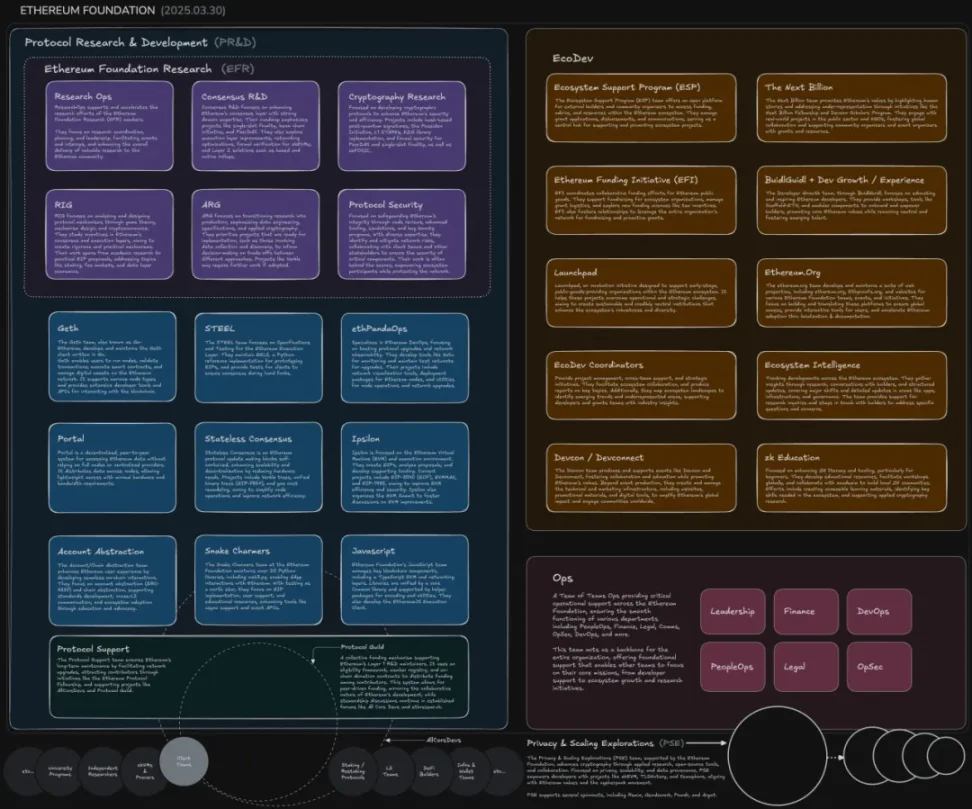
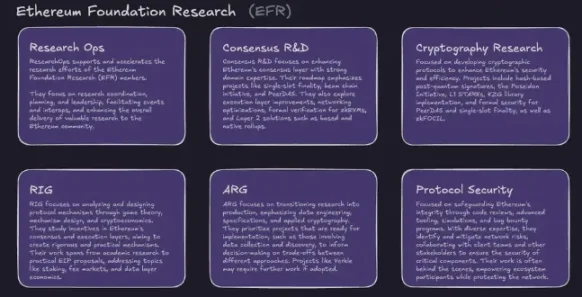
The core protocol research team underwent significant transformation from late 2024 to early 2025. In early 2025, the Ethereum Foundation Research (EFR) team restructured from a single unified group into five specialized units: Applied Research Group (ARG), Consensus R&D, Cryptography, Protocol Security, and Robust Incentives Group (RIG). This split responded to rapid expansion in cryptography and security, requiring more focused expertise to enhance research efficiency and transparency. Longtime researchers Alex Stokes and Barnabé Monnot were named Co-Leads of Research, jointly steering the research agenda.
The PSE team, a key group focused on zero-knowledge proofs and privacy technologies, originated from EF’s internal AppliedZKP team and has now become an independent, interdisciplinary “team community” operating parallel to other semi-autonomous EF teams. Through workshops, summer camps, and testnets (e.g., Alphanet, Testnet), PSE advances Ethereum toward a future emphasizing both privacy and scalability. PSE was formed out of urgent practical needs in privacy and scaling technology—previously, much ZK and MPC research remained academic, so PSE was created to drive technological maturity via application-first approaches, bridging the gap between research and engineering. In 2024, the team underwent a major restructuring, with most original members departing, effectively resulting in a full reboot.
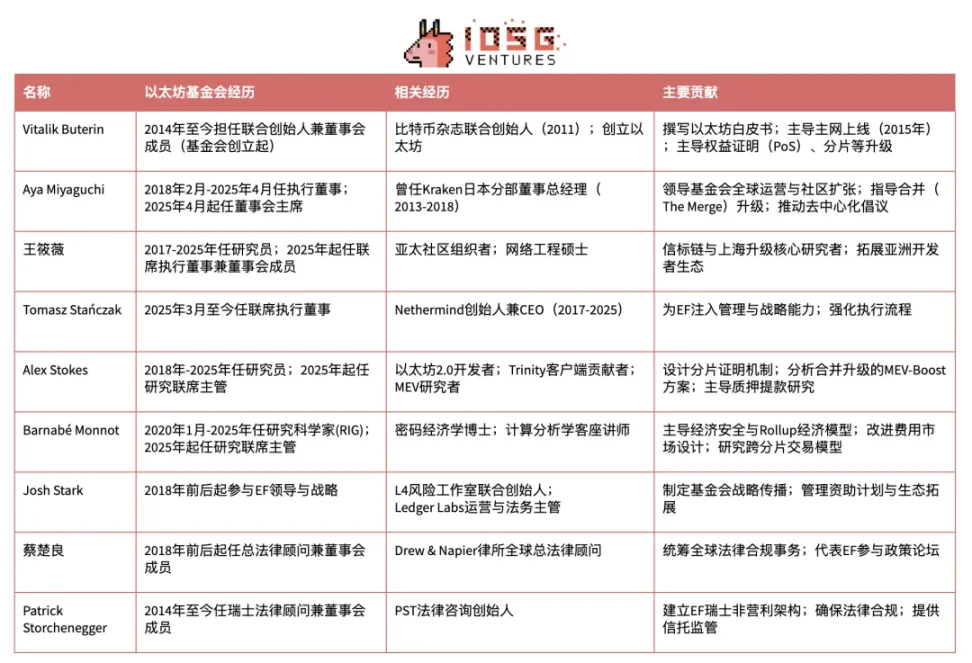
Following the latest leadership changes, EF’s management structure is as follows: Aya transitions to Chairperson, focusing on strategic partnerships and relationship-building while reducing involvement in day-to-day operations; Hsiao-Wei Wang and Tomasz Stańczak serve as Co-Executive Directors, sharing managerial responsibilities in a parallel, collaborative model; in research, Barnabé Monnot and Alex Stokes continue as Co-Leads; Tju Liang Chua remains EF’s General Counsel; Bastian and Josh Stark continue overseeing EF’s management and operations.
The current EF leadership structure is shown below:
Hsiao-Wei Wang and Tomasz: Dual Engines of Tech and Management
This transformation introduces a dual leadership model, appointing two individuals with deep technical expertise and extensive operational experience as Co-Executive Directors:
Hsiao-Wei Wang (Wang Xiao-Wei)
Wang joined EF in 2017 and has served as a core researcher. A graduate of National Chiao Tung University in Taiwan with a background in network engineering, she brings strong technical foundations. She has specialized in sharding and beacon chain technology and played a crucial role in The Merge in 2022. As Executive Director, Wang now leads both R&D strategy and community development efforts. Her appointment is seen as a key turning point for Ethereum to reclaim its spirit of technical innovation and grassroots momentum.

Tomasz Stańczak
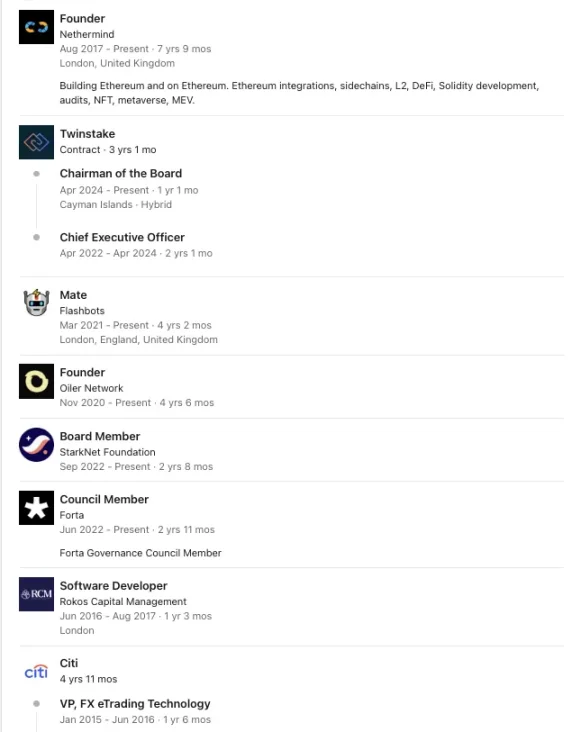
Tomasz is widely recognized for his leadership at Nethermind. After more than seven years, Nethermind now ranks second in the Execution client market after Geth, with approximately 35% market share. Beyond client development, Nethermind has expanded into various products, partnerships, and research, contributing significantly to the Ethereum ecosystem. Tomasz not only led Nethermind to repeated successes in client development but also actively explored cutting-edge topics such as MEV and PBS. His rich experience brings valuable management insight and strategic perspective to EF.
The new structure aims to achieve the following goals:
-
Distribute decision-making responsibility: Each co-director has independent authority, reducing single points of failure and allowing stakeholders to choose preferred points of contact. For example, European institutions or developers can directly engage with Tomasz during his April–July tour, enabling flexible regional coordination and autonomous collaboration rhythms.
-
Complementary strengths in tech and management: Hsiao-Wei’s deep expertise in core innovations like the beacon chain, sharding, and ETH 2.0 complements Tomasz’s proven experience in organizational scaling and operational management, forming a powerful synergy.
Aya Becomes Chair, Vitalik Returns to Research
Meanwhile, former Executive Director Aya Miyaguchi transitions to Chairperson, focusing on external strategic partnerships and relationship management. After seven years leading EF, Aya now concentrates on strategic guidance and external outreach, while daily operations are fully managed by Hsiao-Wei Wang and Tomasz Stańczak.
According to Tomasz, one goal of this leadership transition is to allow Vitalik Buterin to focus more on research and exploration rather than routine coordination or crisis response. Vitalik’s recent writings on RISC-V and zkVMs have opened promising research avenues, and his insights on privacy have helped realign the community around EF’s core values. While Vitalik’s proposals carry significant weight, they are increasingly intended to spark discussion and advance difficult research areas—community review may substantially revise or even reject them.
Community Reaction
Following the announcement, the Ethereum community welcomed and congratulated Hsiao-Wei and Tomasz.
Georgios Konstantopoulos, CTO of Paradigm, said Tomasz had reached a “new level”: intelligent and experienced, adept at technical nuances, and skilled at building and leading large, efficient teams. The community broadly believes Hsiao-Wei’s deep protocol knowledge ensures the Foundation’s technical direction remains in expert hands. Sassal praised the co-leadership model as a “major transformation” that could propel Ethereum into its next phase. Many builders are optimistic that pairing a leader from research with one from engineering and client teams will create better governance balance.
Some community members expressed surprise that Danny Ryan did not take a top leadership role at EF. However, in the same weekend EF announced the new co-directors, Danny Ryan revealed he had joined Etherealize as co-founder. Even critics like Evan Van Ness later acknowledged Vitalik’s judgment, admitting that while they had hoped for Danny to play a larger role in EF, the new co-directors’ solid credentials and experience quelled previous leadership controversies.
Overall, although discussions surrounding Aya’s departure were initially heated, they ultimately converged into constructive consensus. Community members acknowledged Aya’s contributions, with many key figures publicly thanking her; at the same time, there is strong hope for Hsiao-Wei Wang and Tomasz Stańczak, with expectations that the new leadership model will address past shortcomings in communication and technical collaboration.
Ecosystem Restructuring: The Rise of Etherealize
Previously, many in the community expected Danny Ryan to directly assume EF’s executive directorship. Unexpectedly, Danny did not return to EF but instead rejoined the Ethereum ecosystem as co-founder of Etherealize—a move suggesting an alternative path: creating a new EF-like organization to fill gaps, focusing on realizing Ethereum’s true technological and commercial potential.
As Danny Ryan stated: “Rather than just talking about Ethereum’s vision, let’s show how institutions can actually use it.” Guided by this principle, he chose Etherealize—a platform dedicated to Ethereum’s commercial expansion and market outreach.
Core Mission
Etherealize is more than a marketing tool—it is a multidimensional platform with four core missions:
-
Institutional Onboarding & Productization: Just as BlackRock launched its $1 billion on-chain U.S. Treasury product and Franklin Templeton its mutual fund, Etherealize offers institutions “end-to-end support from concept design to on-chain deployment,” significantly reducing trial-and-error costs.
-
Technology-Market Integration: Bridging R&D and BD, rapidly iterating ZK-proofs, privacy modules, and cross-Rollup bridging solutions, then validating and optimizing them in real client environments.
-
Policy Advocacy & Regulatory Engagement: Actively participating in policy roundtables and Senate blockchain hearings, publishing a series of “Plain-Language Regulatory Insights” reports analyzing stablecoin legislation, tokenized securities rules, and market reforms. Its recently launched “Regulatory Sandbox Certification Program” has drawn participation from Switzerland’s FINMA and Singapore’s MAS.
-
Feedback & Transparency: The Etherealize data dashboard tracks key on-chain metrics (L2 TVL, tokenized asset size, settlement latency) and off-chain institutional dynamics (compliance progress, partner growth). Monthly “Institutional Insights” reports convert real-world user pain points into protocol-level optimization requirements.
Dual-Track Architecture
Etherealize has formally split into two legal entities to simultaneously advance market delivery and ecosystem governance.
The for-profit entity, Etherealize Inc. (a Delaware C-corp), focuses on “providing end-to-end tokenization services, Layer2 deployment solutions, and compliance toolchains for banks and asset managers,” aiming to lower entry barriers for traditional financial institutions through standardized infrastructure.
The non-profit Etherealize Foundation focuses on “open R&D, privacy tool development, and policy advocacy—to bridge the real world and Ethereum,” prioritizing Ethereum’s credible neutrality and regulatory compatibility.
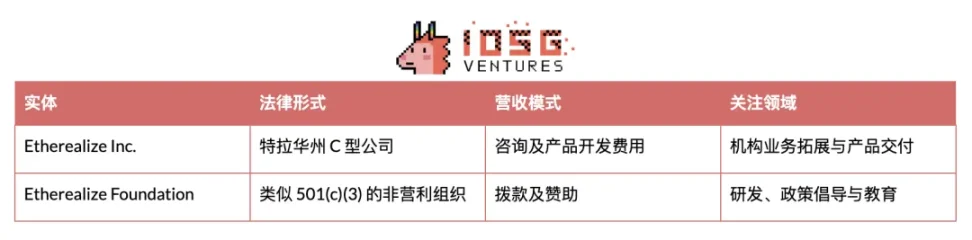
This dual-track model enabled Etherealize to make rapid progress in its first three months: the for-profit arm successfully deployed BlackRock and Franklin Templeton’s on-chain mutual fund projects; the non-profit hosted regulatory roundtables and piloted ZK-based privacy solutions. The synergistic effect of “commercial closure + ecosystem foundation” is accelerating Ethereum’s institutional adoption.
Origins of Etherealize
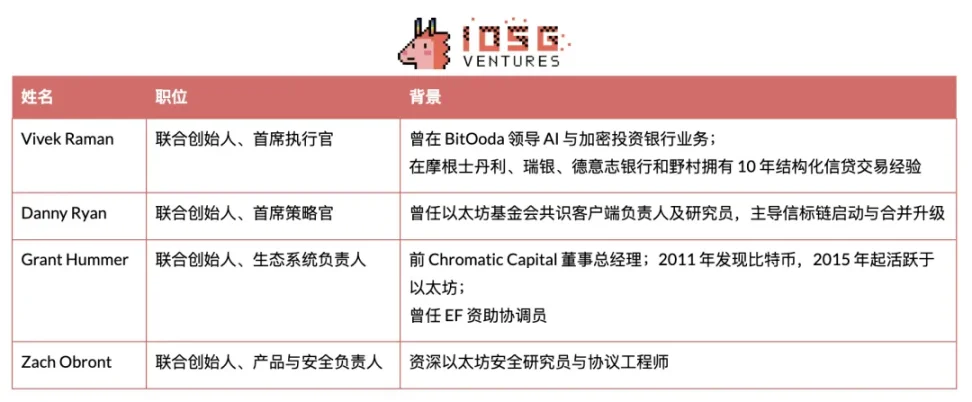
The idea for Etherealize originated on July 23, 2024, when Ethereum ETFs launched. Grant Hummer observed that while the ETF launch signaled Wall Street’s recognition of Ethereum, actual adoption fell far short of expectations. This gap prompted him and investor James Fickle to seek a leader with both Wall Street experience and deep Ethereum knowledge, ultimately identifying Vivek Raman.
After securing funding from Vitalik Buterin and the Ethereum Foundation, the team officially formed in January 2025, quickly expanding from pure business development to full project delivery. Etherealize soon realized that unlocking Wall Street required more than messaging—it needed seamless, tangible tools. To strengthen technical foundations, Vivek brought in his close friend Zach Obront as co-founder. Finally, Danny Ryan joined as Chief Strategy Officer, completing the founding team.
2025 Strategic Roadmap
In interviews with Bankless and DeFi Dad, Danny Ryan shared Etherealize’s near-term plans—the core roadmap for 2025:
-
Q2: Launch institutional-grade SDK with custody integration, compliance checks, and gas fee optimization modules
-
Q3: Pilot enterprise wallets based on Noir ZK compiler
-
Q4: Expand into Asia-Pacific and European markets, customizing regulatory-compliant solutions in partnership with Singapore Digital Hub and Swiss Crypto Valley.
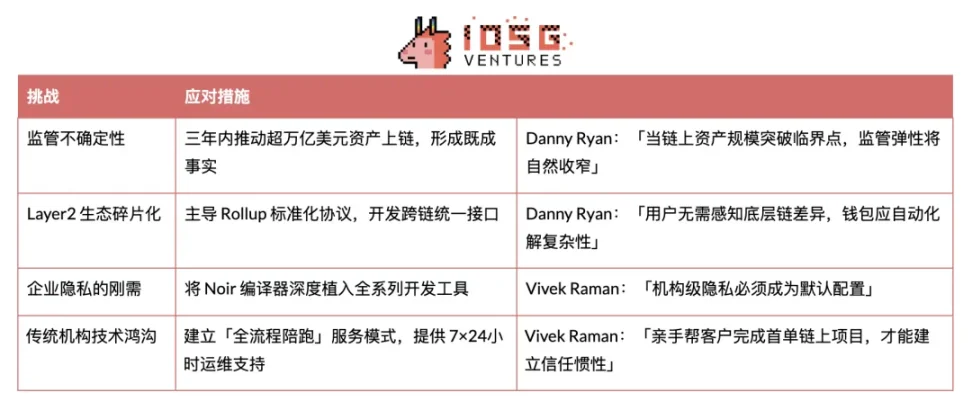
When asked about project challenges and strategies, Danny and Vivek outlined their approach:
Ethereum vs Solana: The Quiet Battle for Institutions
Traditional finance has long focused on Ethereum and its Layer2 ecosystem, which launched earlier and enjoys higher market acceptance compared to Solana. According to RWA.xyz data, Ethereum and its L2s account for over 50% of RWA value.
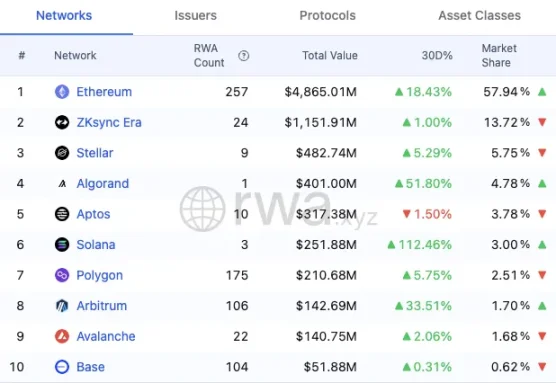
In collaborations with traditional financial institutions, Ethereum’s earlier launch enabled the ecosystem to establish numerous successful cases:
-
Fidelity: Established Fidelity Digital Assets in 2018, offering Bitcoin custody. In 2019, crypto head Tom Jessop expressed strong interest in Ethereum, noting significant investment in the space. Launched spot Ethereum ETF (FETH) in 2024.
-
JPMorgan: Launched Quorum, an open-source enterprise ledger based on Ethereum, in 2016, supporting interbank networks and JPM Coin. In November 2022, completed first cross-currency DeFi trade on Polygon in Project Guardian with Singapore’s central bank.
-
Goldman Sachs: In 2021, co-led underwriting of a €100 million digital bond issued by EIB, using Ethereum smart contracts for tokenizing securities and cash.
-
HSBC: Uses its HSBC Orion platform to support bond issuance, digital gold, and custody via DLT, enabling interoperability between private chains and public chains like Ethereum.
-
UBS: In November 2024, UBS Asset Management launched the first tokenized fund on Ethereum—“UBS USD Money Market Fund Token” (uMINT). In early 2025, UBS demonstrated experimental results on zkSync, using ZK-proofs to enable fractional trading of gold investments and migrating retail gold products to zkSync’s Validium network.
In contrast, Solana has fewer collaborations with traditional financial institutions. Moreover, Solana’s RWA activity is concentrated in stablecoins, with a smaller proportion of non-stablecoin assets compared to Ethereum. Currently, mainstream government bonds and fund projects on Solana remain limited in number and scale, with narrow diversity—large-scale commodity RWAs, private credit, and private equity sectors remain largely unexplored.
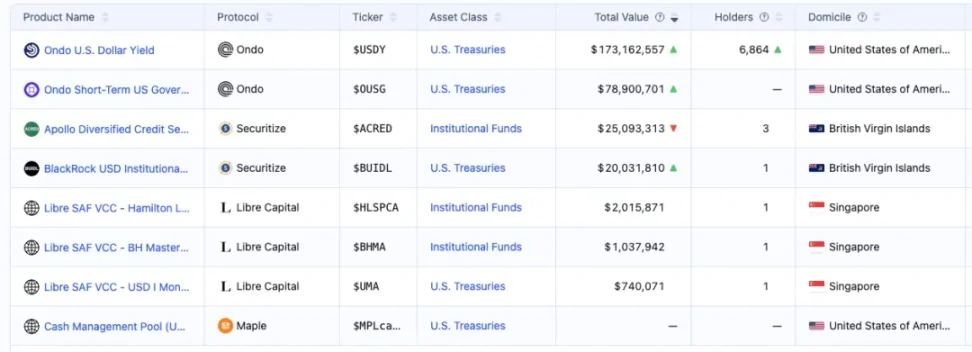
Currently, Ethereum maintains a lead in RWA asset value, with its L2 ecosystem hosting far more RWA assets than any other public chain. Although six Ethereum ETFs have been approved while Solana ETFs remain pending, major players like BlackRock’s BUIDL and Franklin Templeton’s BENJI have recently gone live on Solana, intensifying competition. EF has established clear strategic responses, and the emergence of Etherealize further underscores Ethereum’s proactive stance in pursuing institutional partnerships.
Summary
As _gabrielShapir0 commented: “Etherealize is essentially a second EF—a cultural and strategic分流, making Ethereum more socialized and pluralistic.”
In reality, Etherealize marks a pivotal political moment in Ethereum’s history—one where cultural divergence becomes visible. Hence, Ethereum’s L0 future will place greater emphasis on social decentralization, akin to “client diversity.” The market now sees multiple competing top-level strategic visions, each with different priorities on how to promote ETH and shape its future.
Etherealize’s dual-layer architecture—spanning for-profit and non-profit entities—grants it greater operational flexibility. Both arms work independently yet collaboratively. Another key strength lies in being technology-driven and product-focused, not just reliant on business development. These qualities make Etherealize an efficient, institution-targeted platform uniquely positioned to connect traditional finance with Ethereum.
EF’s Recent Adjustments and Outlook
Despite numerous challenges, Ethereum retains deep advantages that sustain its position in the crypto space—advantages often downplayed by its leadership, allowing negative narratives to overshadow its core strengths. Systematically reviewing these strengths helps build a more objective understanding of Ethereum’s potential.
EF Silviculture Society: External Advisory and Internal Innovation
EF launched the Silviculture Society—an informal think tank of external experts providing cross-domain advice and diverse perspectives. Members from tech, law, academia, and industry participate voluntarily for one-year terms, submitting confidential recommendations directly to EF’s board through dedicated channels, establishing a flexible internal feedback mechanism.
Concerns
-
Potentially superficial cultural experiment with limited impact on decision-making efficiency.
-
Short-term, unpaid participation may fail to attract experts capable of delivering sustained, deep insights, affecting continuity and quality.
-
Unclear how external input translates into internal decisions; transparency and execution of feedback mechanisms remain untested.
Financial Strategy and Budget Management
In financial management, EF adopted a “spend 15% of remaining funds annually” budgeting strategy to ensure long-term sustainability. Public data shows EF’s fiat treasury declined from $1.294 billion in March 2022 to $784 million by October 2024, while ETH holdings dropped only ~11%. Meanwhile, annual spending rose from $48 million in 2021 to $135 million in 2023, reflecting increased investment in ecosystem support, R&D, and personnel.
Concerns
-
EF holds substantial ETH; if ETH prices remain low, despite minimal ETH drawdown, the sharp decline in USD-denominated assets may signal financial vulnerability.
-
The “15% of remaining funds” strategy sounds appealing but lacks clear implementation guidelines. In recent years, the strategy hasn’t been consistently followed, coinciding with rising annual expenditures.
-
Rapidly increasing spending may reflect inefficient resource allocation or rising R&D and grant costs.
-
Detailed expense breakdowns and funding plans remain partially undisclosed, making comprehensive assessment difficult.
-
Despite massive investment, outcomes have fallen short of expectations, indicating misalignment between internal management and market needs.
Engagement with DeFi and Ecosystem Innovation
EF announced it will deploy 50,000 ETH into DeFi projects via a newly established multi-sig wallet, entering the DeFi ecosystem. Meanwhile, tools like EtherStrategy (a cross-chain asset manager) and discussions around new governance models such as the “Second Foundation” indicate EF is exploring diversified innovation to drive ecosystem evolution.
Questions and Criticisms
-
Participating in DeFi and staking ETH may force EF to take sides on sensitive issues like hard forks, potentially compromising its global neutral platform status.
-
Market skepticism exists over whether such moves align with a non-profit’s mission, potentially distorting resource allocation and strategic focus, thereby impacting overall ecosystem stability.
Social Media and Market Outreach
To address past criticism of weak social media presence, EF has significantly increased its activity across platforms. Since January, EF has reactivated official accounts, posting original content and timely updates on internal reforms and strategic moves. Core figures like Vitalik Buterin have enhanced Ethereum’s brand image through profile changes and active engagement, reinforcing the “Ethereum First” narrative in dialogues with traditional finance and policymakers.
Concerns
-
Increased social media activity may amount to superficial PR, failing to resolve deeper issues in governance and tangible outcomes.
-
The real impact of marketing efforts and depth of integration with traditional finance and real-world applications remain uncertain.
EF Grants
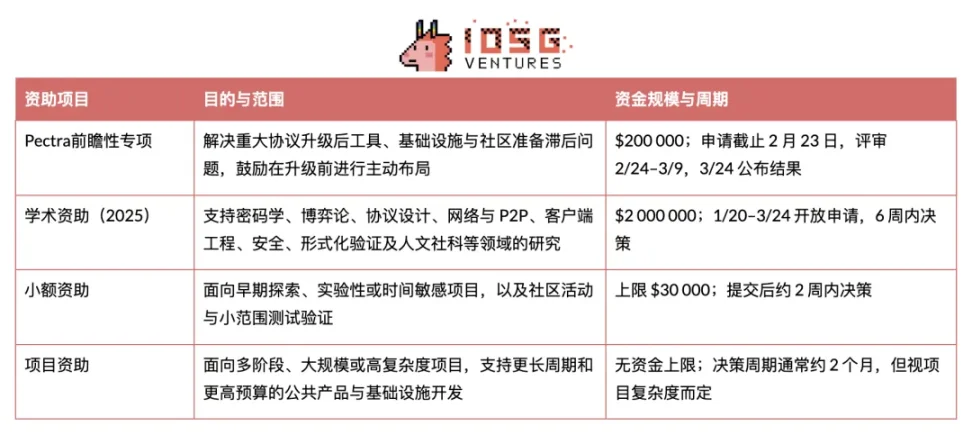
In 2025, EF launched two time-bound, thematic grant programs—Pectra Forward-looking Grants and 2025 Academic Grants—both now closed. Meanwhile, ESP’s micro-grants (≤$30,000, decisions within ~2 weeks) and project grants (no cap, deep collaboration review) remain permanently open.
EF Strategic Outlook
With leadership changes settled, Vitalik can refocus on research. EF has aligned with the community on the next phase: Tomasz’s updated overall roadmap and Vitalik’s proposed privacy roadmap.
The simplified overall roadmap centers on three pillars:
-
Scaling data capacity via blob-based rollups;
-
Increasing L1 throughput through targeted protocol upgrades;
-
Improving user experience by deepening L2 interoperability and focusing on the application layer.
Tomasz emphasized additional priorities:
-
Always mint assets on L1
-
Win the real-world asset (RWA) and stablecoin markets
-
Improve communication and clarify community and user expectations
-
Significantly raise security standards for a trillion-dollar economy
-
Promote goal-driven R&D within the Foundation
At the same time, in his recent post “A maximally simple L1 privacy roadmap” (https://ethereum-magicians.org/t/a-maximally-simple-l1-privacy-roadmap/23459), Vitalik outlined his vision for Ethereum’s privacy roadmap, covering four key forms of privacy: on-chain payment privacy, partial anonymity within app activities, private access to chain data, and network-layer anonymity.
The roadmap includes:
-
Natively integrate privacy tools like Railgun and Privacy Pools into mainstream wallets, default-enabling “shielded balances” and “send from shielded”;
-
Promote “one address per app” design with default-enabled privacy-preserving “self-initiated transactions”;
-
Implement FOCIL and EIP-7701 to simplify censorship-resistant, no-relay, replay-free transactions;
-
Introduce TEE-based RPC privacy solutions in wallets in the short term, gradually transitioning to cryptographically stronger PIR;
-
Enable wallets to connect to multiple RPC nodes (optionally via mixnets) and advance light client support to reduce metadata leakage;
-
Develop ZK-proof aggregation protocols to reduce gas costs for private transactions;
-
Create privacy-aware keystore wallets allowing users to seamlessly upgrade signature schemes or verification logic across L1/L2 while preserving privacy.
Conclusion
The Ethereum ecosystem is undergoing a paradigm shift from within. The introduction of dual leadership enables distributed decision-making and complementary strengths in technology and management, while freeing Vitalik from operational duties to focus on frontier research and long-term vision. EF’s series of changes—including the research team split, new co-leads, a focus on pragmatism and efficiency, and active engagement in DeFi and social media—are positive steps demonstrating its determination to adapt and break through in fierce market competition.
The emergence of Etherealize marks a key milestone in strategic transformation. Due to its structure, positioning, and history, EF is often not the optimal choice for engaging traditional financial institutions, nor does it meet urgent market demands. Etherealize, purpose-built for institutional clients with a clear Wall Street service focus and flexible organization, effectively fills EF’s gaps—supporting EF’s mission without adding to its burden.
Together, EF and Etherealize have brought structural renewal and fresh leadership to Ethereum, better equipping it for an increasingly competitive landscape. The next challenge, however, strikes at the heart of Ethereum’s future: the narrative and positioning of ETH as an asset, ecosystem integration, and improvements in performance and user experience. These fundamental strategic questions go far beyond organizational tweaks or tactical improvements—they will be the ultimate test for the new leadership.
Despite lingering challenges and doubts, these transformations have undeniably opened new paths for Ethereum, marking the dawn of a truly future-oriented era.
Join TechFlow official community to stay tuned
Telegram:https://t.me/TechFlowDaily
X (Twitter):https://x.com/TechFlowPost
X (Twitter) EN:https://x.com/BlockFlow_News
 IOSG Ventures