Can Altcoin ETFs Avoid the Fate of Ethereum ETFs?
TechFlow Selected TechFlow Selected
Can Altcoin ETFs Avoid the Fate of Ethereum ETFs?
The ultimate biggest winners could be small-cap tokens with the greatest growth potential.
 Navigating Web3 tides with focused insights
By: Token Dispatch, Prathik Desai
Translation: Block unicorn

Introduction
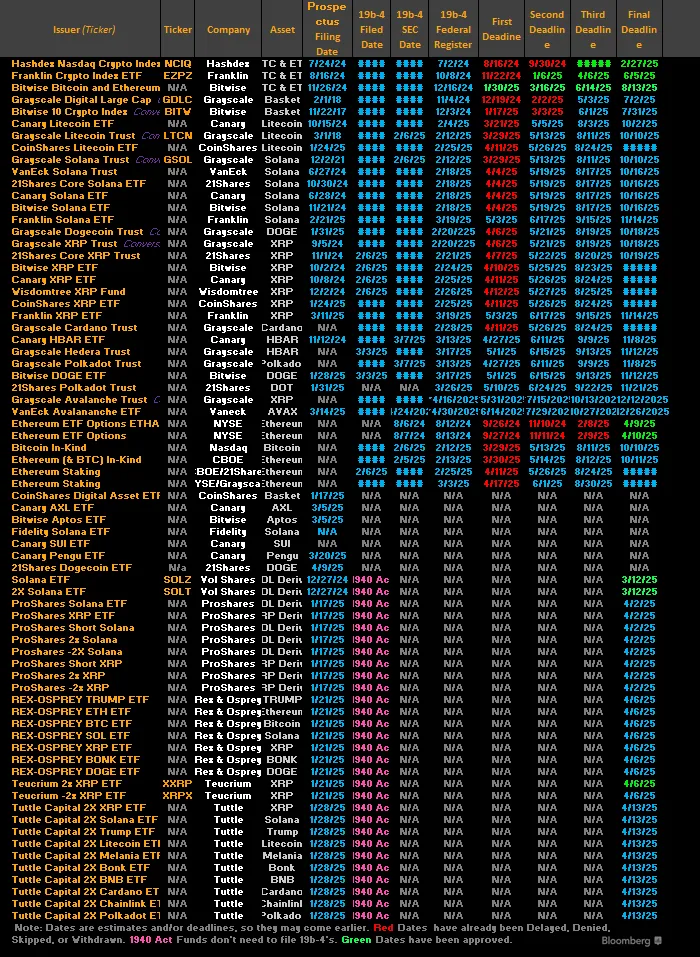
Last week, Paul Atkins was sworn in as the 34th Chair of the U.S. Securities and Exchange Commission (SEC), inheriting the most extensive cryptocurrency-related workload in SEC history: over 70 applications for cryptocurrency exchange-traded funds (ETFs) awaiting review.
Just three days into his tenure, Atkins already faces his first major crypto decisions. He has delayed rulings on multiple ETF proposals until June.
These delays are not surprising. Yet they highlight the daunting task confronting this new, crypto-friendly chair.
Interestingly, amid the surge in altcoin ETF applications, funds tracking Ethereum—the second-largest cryptocurrency—are rapidly losing assets.
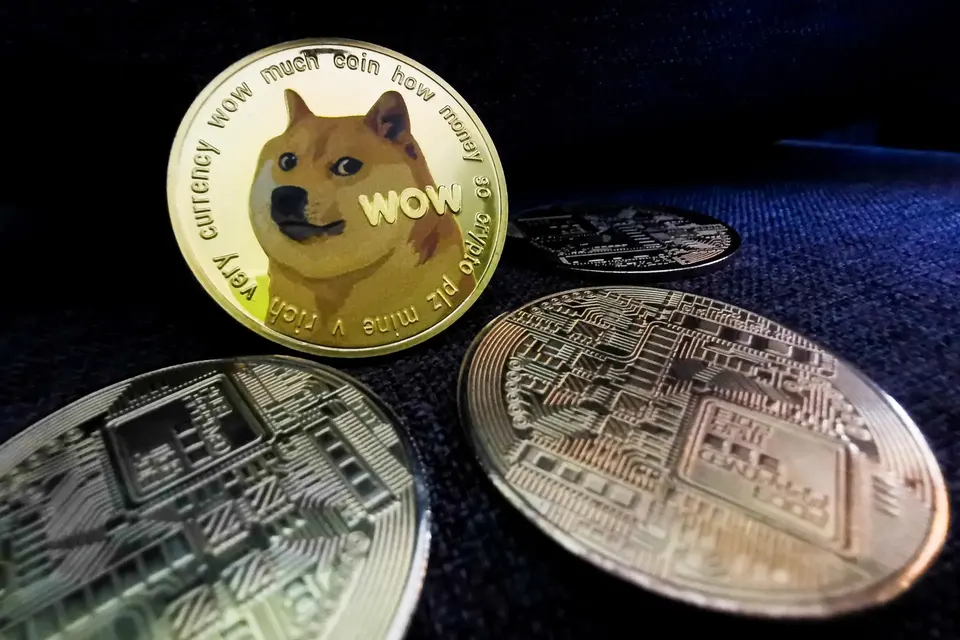
Nonetheless, asset managers continue racing to file ETF applications—for established altcoins like Solana and XRP, and even meme coins such as Dogecoin, Pepe, and even Trump-themed tokens. Atkins’ agenda is undoubtedly packed.
This contrast raises a compelling question: Given Ethereum’s troubling precedent, why are altcoins still rushing to launch ETFs?
A Mountain of ETF Applications
Asset management firms have filed ETF applications for at least 15 cryptocurrencies beyond Bitcoin and Ethereum.
Grayscale alone has applied for funds tracking Solana, Cardano, XRP, Dogecoin, Litecoin, and Avalanche. Bitwise seeks approval for Dogecoin- and Aptos-based ETFs, while Canary Capital has been especially aggressive—filing for Hedera, Pepe, and Sui, and most recently proposing a staking-enabled TRON (TRX) product that generates yield.
First, a fundamental question: Why pursue an ETF?
Eric Balchunas, Bloomberg’s ETF analyst, recently posted: “Tokenizing your cryptocurrency via an ETF is like a band adding their songs to every music streaming service. It doesn’t guarantee listeners, but it puts your music in front of nearly everyone.”
In short, it means better accessibility for investors and broader adoption through traditional financial channels.
The implications extend beyond crypto, touching on political complexities—including those involving former President Donald Trump.
Trump’s Media & Technology Group recently announced plans to invest up to $250 million in crypto-related ETFs.
Ethereum ETF Struggles
The timing of this application wave is particularly puzzling, coinciding with a crisis of investor confidence in Ethereum ETFs.
As of April 18, Ethereum ETFs have seen outflows for seven consecutive weeks, totaling over $1.1 billion. By April 11, total assets under management had plummeted to $5.24 billion—the lowest level since these products launched in July 2024.

This stands in stark contrast to Bitcoin ETFs, which recorded nearly $1 billion in daily inflows on both Thursday and Friday last week despite market volatility, helping push Bitcoin’s price back toward $95,000.
For altcoins eyeing ETF approval, Ethereum’s experience poses a troubling question: If the second-largest cryptocurrency can’t sustain investor interest in an ETF wrapper, what hope do less mature tokens have?
Lessons from Ethereum
Beyond the numbers, Ethereum’s ETF story reveals structural challenges that altcoin issuers must address to avoid a similar fate.
First is the fee structure. Grayscale’s ETHE serves as a prime example: its 2.5% annual fee becomes unsustainable when competitors like BlackRock offer similar exposure at one-tenth the cost.
This fee gap creates a mathematical inevitability—over time, high-fee products will significantly underperform low-fee alternatives tracking the same asset. This matters greatly for long-term investors.
Second is Ethereum’s increasingly complex value proposition. While Bitcoin benefits from a clear “digital gold” narrative, Ethereum’s story spans smart contract platforms, DeFi settlement layers, NFT marketplaces, and income-generating staking—a feature absent in current Ethereum ETFs.
This complexity creates marketing hurdles. When financial advisors can’t explain an investment in one or two sentences, adoption suffers. Bitcoin’s simplicity wins this battle hands down.
Third is the SEC’s cautious stance on staking. By prohibiting Ethereum ETFs from including staking yields, regulators removed a key differentiator. The contrast became especially clear when Canary Capital recently filed for a staking-enabled TRX ETF—indicating some issuers are already working to overcome this limitation.
Why Bet on ETFs Anyway?
Despite Ethereum’s struggles, the rush for altcoin ETFs shows no sign of slowing. This apparent contradiction is driven by powerful forces that outweigh concerns raised by Ethereum’s performance.
The biggest catalyst is the “Atkins Effect.” Paul Atkins’ appointment marks a sharp departure from Gary Gensler’s tenure, widely viewed by the crypto industry as a period of regulatory hostility.
Atkins’ reputation for supporting innovation and favoring market-driven solutions offers issuers something unprecedented: a viable path to approval.
Data supports this optimism.
Bloomberg analysts estimate approval odds for assets like Solana, Litecoin, and XRP range between 75–90%.
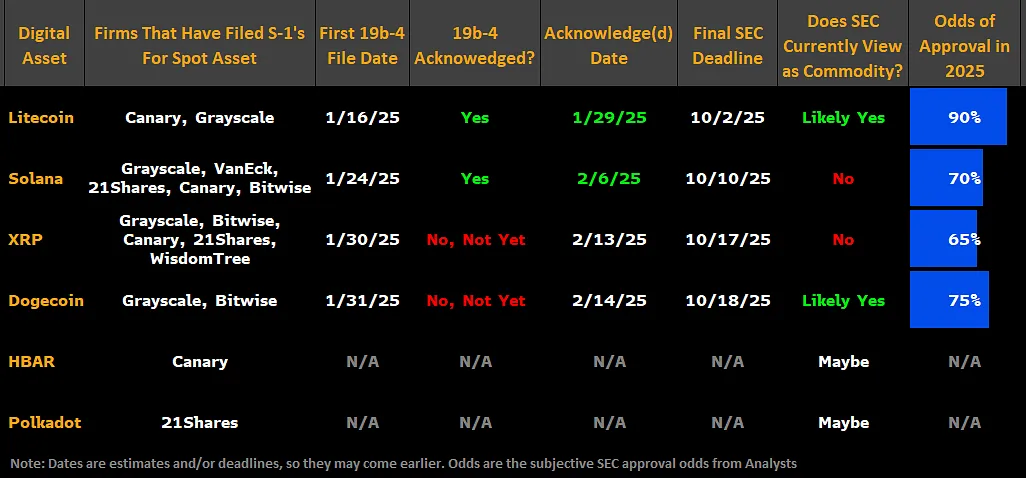
Atkins’ leadership has effectively opened a regulatory window—one that asset managers are rushing to exploit before it potentially closes.
Institutional demand provides another compelling reason. According to a March 2025 report by Coinbase and EY-Parthenon, approximately 83% of institutional investors plan to increase their crypto allocations this year, with many targeting over 5% of AUM.
Each altcoin offers a differentiated value proposition that may resonate more clearly than Ethereum’s multifaceted narrative.
Solana’s ultra-fast transactions and growing DeFi ecosystem tell a compelling efficiency story. XRP’s focus on cross-border payments offers a concrete use case easier to pitch to institutions. Hedera’s enterprise adoption lends it corporate credibility often missing in purely retail-focused cryptos.
The growth potential of smaller-cap cryptos also presents a strong case for ETF issuers.
While Bitcoin and Ethereum offer stability, their trillion-dollar market caps limit upside. Mid-cap altcoins, if adopted broadly, could deliver far more significant returns—appealing to growth-oriented investors who missed early Bitcoin gains.
Potential Market Impact
The most immediate impact will be capital flows. JPMorgan analysts predict a Solana ETF could attract $3–6 billion in its first year, while an XRP ETF might draw $4–8 billion. These inflows could significantly affect token prices and market dynamics.
By comparison, the entire spot Ethereum ETF market currently holds about $5.27 billion in assets. If two or three major altcoin ETFs reach these projections, they could collectively surpass Ethereum ETFs in size within months—triggering a notable market realignment.
However, spreading institutional capital across multiple crypto ETFs carries dilution risks.
Demand could fragment across numerous products, preventing any single altcoin ETF from reaching critical scale—and reducing its appeal within institutional portfolios.
For retail investors, the impact is twofold. On one hand, ETFs offer regulated, secure exposure to crypto without the complexities of self-custody. On the other, the growing premium paid by ETF investors—through management fees and potential tracking error—means their returns may consistently lag behind direct holders of the underlying asset.
If large amounts of altcoins become locked in ETFs, circulating supply could shrink, potentially amplifying volatility in the underlying spot markets.
Our View
The altcoin ETF gold rush, unfolding as Ethereum falters, reveals the power of narrative over performance. There’s a striking irony: investors are rushing in while Ethereum, one of the pioneers, bleeds out. The lesson isn’t to replicate Ethereum ETFs—but to learn from their failures.
Smart issuers are already charting different paths.
Canary Capital’s staking-enabled TRX application is the clearest sign of this strategic shift. By introducing staking yields—precisely what Ethereum ETFs lack—they’re addressing the core structural flaw that drove investors away in recent weeks.
The “Atkins Effect” merely created the opportunity.
The real catalyst is the realization that Ethereum ETFs failed not because they were ETFs, but because they couldn’t replicate native Ethereum. When investors compare ETHE’s 2.5% fee and zero staking yield against simply holding ETH, the math speaks for itself.
Analyst forecasts for altcoin ETFs suggest this isn’t blind optimism. They indicate that altcoins with clearer value propositions can succeed where Ethereum’s complex narrative fell short.
The ultimate winners may be small-cap tokens with the greatest growth runway. Trillion-dollar valuations cap upside for Bitcoin and Ethereum, but well-positioned altcoin ETFs could deliver the multiplicative growth institutional investors seek.
Rather than a cautionary tale, Ethereum ETFs may prove to be sacrificial pioneers—paving the way for a more successful second wave. Today’s failures won’t prove crypto ETFs don’t work; instead, they’ll provide the essential market feedback needed to make the next generation work better.
Join TechFlow official community to stay tuned
Telegram:https://t.me/TechFlowDaily
X (Twitter):https://x.com/TechFlowPost
X (Twitter) EN:https://x.com/BlockFlow_News