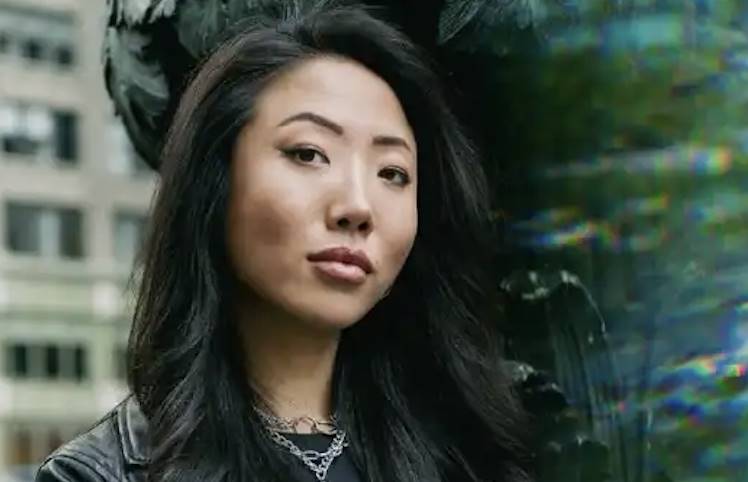
The girl who refused to have a child with Musk
TechFlow Selected TechFlow Selected
The girl who refused to have a child with Musk
From one public controversy to another, the lucky life of unemployed internet personality Tiffany Fong.
 Navigating Web3 tides with focused insights
Text: shushu, TechFlow
Tiffany Fong, a female influencer with 340,000 followers on Twitter, has recently become entangled in an odd rumor. The Wall Street Journal recently reported that Elon Musk had privately messaged Tiffany asking her to have his child—an offer she declined.
From being SBF’s confidante to becoming the subject of Musk's baby rumors, everything about Tiffany Fong appears chaotic and random, yet perfectly aligns with the internal logic of internet narratives: she assumes the role of an outsider who unexpectedly becomes the central figure in every storm. These viral moments were never truly driven by her; she simply keeps getting pulled into them, then under the spotlight of social media, is assigned one label after another.
No team, no official resources, no backing from capital—Tiffany herself can't explain why SBF trusted her or why Musk reached out. She doesn’t understand why she always ends up on the fringes of chaos. She isn’t a player in these games, yet she lives within their shadows.
Rise as a Rights-Protection Blogger
During the 2022 crypto winter, some went bankrupt or to prison, while others built new careers atop the ruins of collapsed projects.
A previously unknown young woman, Tiffany Fong, stepped into the public eye through her exposé on Celsius Network.
She didn’t come from traditional media, nor had she ever worked at financial institutions or newsrooms. She hadn’t even held a regular nine-to-five job. Yet this atypical amateur in finance gradually became the voice for Celsius victims through repeated disclosures—and inadvertently launched her content creation career in the crypto industry.
Born in Las Vegas, Tiffany experienced parental divorce and a turbulent upbringing. She studied communications at the University of Southern California, admitting she chose the major because it was relatively easy, leaving more time for socializing and traveling. After graduation, she backpacked around the world for years, sustaining herself by running several online stores, achieving a degree of financial independence that allowed her to focus full-time on tracking developments in crypto.
In 2011, Tiffany received one Bitcoin as a gift from a relative and never cashed it out. During the 2021 bull market, she deposited over $200,000 worth of Bitcoin, Ethereum, and other crypto assets into Celsius Network—a lending platform promising annual interest rates as high as 18%. But it didn’t last. In June 2022, Celsius abruptly froze withdrawals, and by July, declared bankruptcy, locking all of Tiffany’s digital assets away.
For her, this wasn’t just a financial loss—it coincided with a personal low point. She was going through a breakup. “It was the lowest period of my life,” she recalled. Initially, she simply searched daily for any news about Celsius, trying to make sense of what happened to her funds. Gradually, she began compiling what she found into tweets posted on Twitter and YouTube, hoping to share insights with other victims.
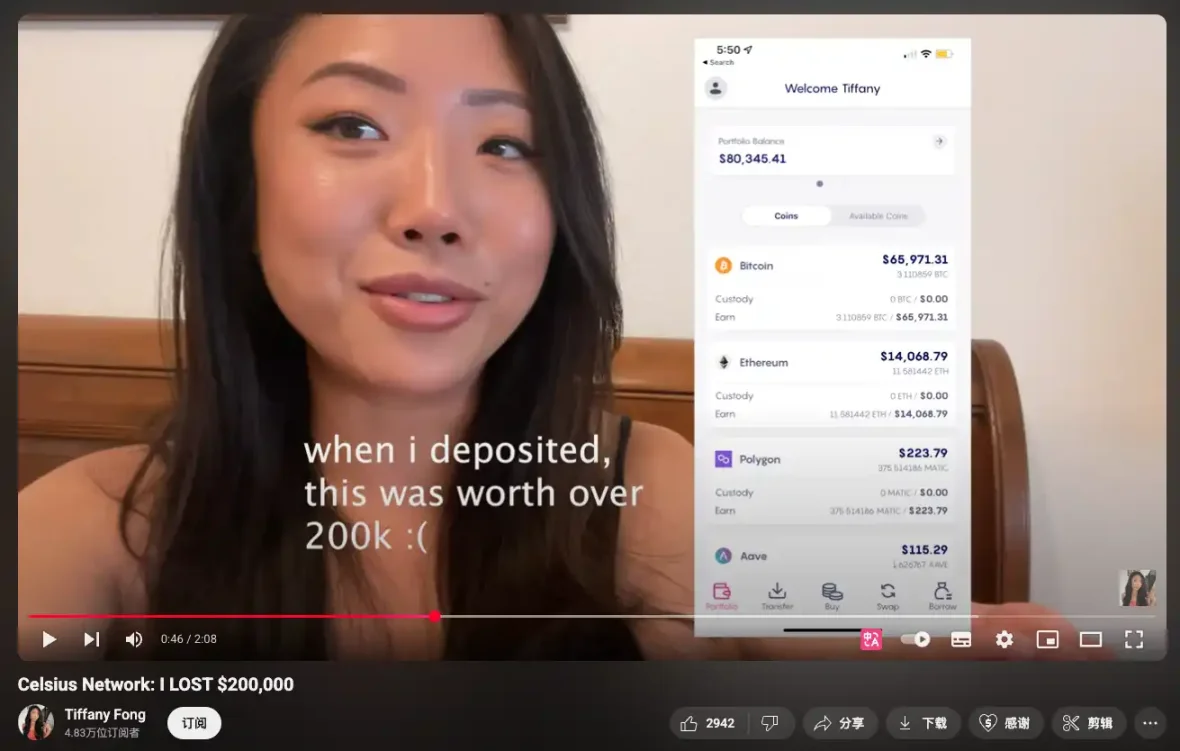
Her posts caught the attention of internal Celsius employees. One anonymously contacted her and provided an audio recording of a company-wide meeting discussing executive plans for restructuring.
Tiffany was initially skeptical but, after verifying that the voice in the recording belonged to then-CEO Alex Mashinsky, realized its significance. She decided to pass the recording to The New York Times, which later published an in-depth report based on it.

This disclosure marked her true breakout moment. As more whistleblowers came forward, she started releasing sensitive information such as executive wallet addresses and potential investor bidding details. She made her stance clear—not politically motivated, nor aiming to be a crusader. She believed that since everyone’s money was trapped inside Celsius, creditors deserved to know what was secretly happening behind the scenes.
What began as a distressed investor seeking answers turned into her becoming a passive hub for维权 information. Without institutional backing, Tiffany carved out a space in the crypto world through consistent updates and revelations. She never intended to become a whistleblower, but the Celsius case undeniably altered the course of her life.
Accidentally Becoming the Person Closest to SBF—Closer Than Any Media Outlet
After Tiffany exposed the Celsius executive meeting, FTX founder Sam Bankman-Fried followed her on Twitter.
It was the first time she realized her name had entered a much larger narrative. At first, she paid little attention—just politely replied “Thanks for following,” and SBF responded, “Your leaks are pretty interesting.” They exchanged a few casual messages before returning to their separate lives. She didn’t press further—until months later, when FTX collapsed, and everything reignited.
On November 11, 2022, FTX announced bankruptcy. That night, Tiffany dug up the old direct message and, thinking “he probably won’t reply anyway,” sent SBF a note asking if he’d be open to an interview. She added a seemingly kind afterthought: “Hope you’re doing okay.”
She never expected him to respond five days later—not only reply, but also provide his phone number, saying, “I’m free for the next hour, let’s talk.”
Tiffany was on a date at a bar in Brooklyn when the message popped up. Her date was also an FTX user who had lost hundreds of thousands of dollars. Upon hearing the news, he urged her: “What are you still doing here? Go home now!” Still slightly tipsy and completely unprepared, she dialed Sam’s number and conducted what would become her first real “interview”—with the man then at the epicenter of global financial headlines.
The call was later uploaded to her YouTube channel. One segment sparked particular controversy: SBF admitted to secretly donating large sums to Republican political campaigns—a statement later included in the Federal Election Commission’s formal complaint against him. But at the time of the interview, Tiffany had no idea how significant that comment would prove.

On November 20, she released a second conversation with SBF—conducted shortly before he appeared at mainstream events like The New York Times’ DealBook Summit. This talk was deeper, more intimate. Tiffany began to realize that SBF seemed to be searching for someone to listen—not a journalist, not a lawyer, but a neutral stranger without agenda.
SBF explicitly said he liked that Tiffany wasn’t from mainstream media—“no editor to answer to,” allowing freer expression. His trust in her stemmed partly from that very lack of institutional affiliation.
But along with access came misunderstanding and labeling. The Daily Mail ran a story titled “Sexy Crypto Influencer’s Midnight Visit to FTX Bad Boy,” dredging up old Instagram photos while ignoring her reporting entirely. Tiffany, unfamiliar with the tabloid logic at the time, felt angry and hurt by the sensationalized, gendered portrayal.
Ten Visits to Palo Alto
After being extradited back to the U.S., SBF was placed under house arrest at his parents’ home in Palo Alto, California. Tiffany assumed their interaction was over—until at 3 a.m. that night, she received a message from SBF: “Hey, I’m finally back online.”
She tentatively asked if she could visit. SBF readily agreed. After the first visit, she moved to San Francisco, renting a short-term apartment and commuting weekly via Uber to meet SBF face-to-face for dozens of conversations.

The sealed residence of SBF’s parents
They didn’t just discuss the case. They talked about SBF’s childhood insecurities, emotional emptiness, loneliness over recent years, and the betrayal of former allies who now testified against him. SBF admitted he had almost no real friends. At that moment, Tiffany became someone he could briefly confide in.
Still, Tiffany remained cautious. She knew SBF wasn’t innocent—he tried to use her to shape public opinion, sometimes hinting, “Maybe leak something.” But she refused to be fully manipulated and avoided publishing too many of his statements during house arrest. Even the Department of Justice contacted her, requesting records of her communications with SBF—making her acutely aware of her unique position in the saga.
“Part friend, part journalist” might best describe their dynamic. From a chance late-night call to multiple complex in-person meetings, Tiffany occupied a rare space—intimate yet detached—within the epic collapse of a crypto empire. She witnessed the downfall of a kingdom, swept into the vortex—not as a mastermind, nor a judge.
Rumor or Existential Crisis?
After SBF was sentenced to prison, Tiffany Fong didn’t ride the wave to fame as many expected. She didn’t sign with a media company or join mainstream financial shows. Instead, she slipped back into near isolation. When the long drama of FTX’s collapse ended, she stood awkwardly at the edge of the theater, unsure where to go next, with no one handing her lines anymore.
She remained active on Twitter, relying on platform earnings as her primary income. “Living off tweets” became her half-joking self-description. She wrote about cryptocurrency, election politics, even conspiracy theories—sparking debates and driving traffic in cycles.
“Every crypto boom needs its drama,” she said on a podcast with a smile, though her tone carried exhaustion. She knew these waves would come and go, while her life seemed destined to rise and fall with them.
Refusing to Be a Breeding Machine for the 'Musk Army'
What thrust Tiffany back into the spotlight was an absurd rumor.
Recently, The Wall Street Journal published an article titled “How Elon Musk Manages His ‘Many’ Children and Their Mothers,” detailing how the world’s richest man juggles dozens of children, manages “harem drama,” runs companies, advises Trump—and recently underwent paternity testing amid disputes with far-right influencer Ashley St. Clair, who claimed to be carrying his child.
The article claimed Musk had sent Tiffany a private message on Twitter asking if she’d be willing to bear his child. It stated that Tiffany declined, preferring to raise children in a more traditional nuclear family setup. However, after she shared Musk’s request with a few friends, Musk reportedly scolded her for lacking discretion and unfollowed her.
Last year, Tiffany and Musk frequently interacted on Twitter, prompting users on Polymarket to create a betting market on whether Tiffany was pregnant with Musk’s child.

On a recent podcast episode, the host brought up the rumor, asking directly if she was pregnant. Sitting upright, Tiffany declared: “I officially announce on this podcast: I am not pregnant.”

To trace how Tiffany and Musk connected, we must return to October 2023—the end of SBF’s trial. As proceedings concluded, SBF’s parents prepared to leave. Tiffany approached them, intending to offer comfort—but SBF’s mother, Barbara Fried, suddenly erupted, yelling at her, accusing her reporting of destroying her son.

Tiffany later tweeted about the incident. Musk commented, sharing a Fox News article and claiming *that* was the piece Barbara Fried meant when blaming the media for ruining her son.
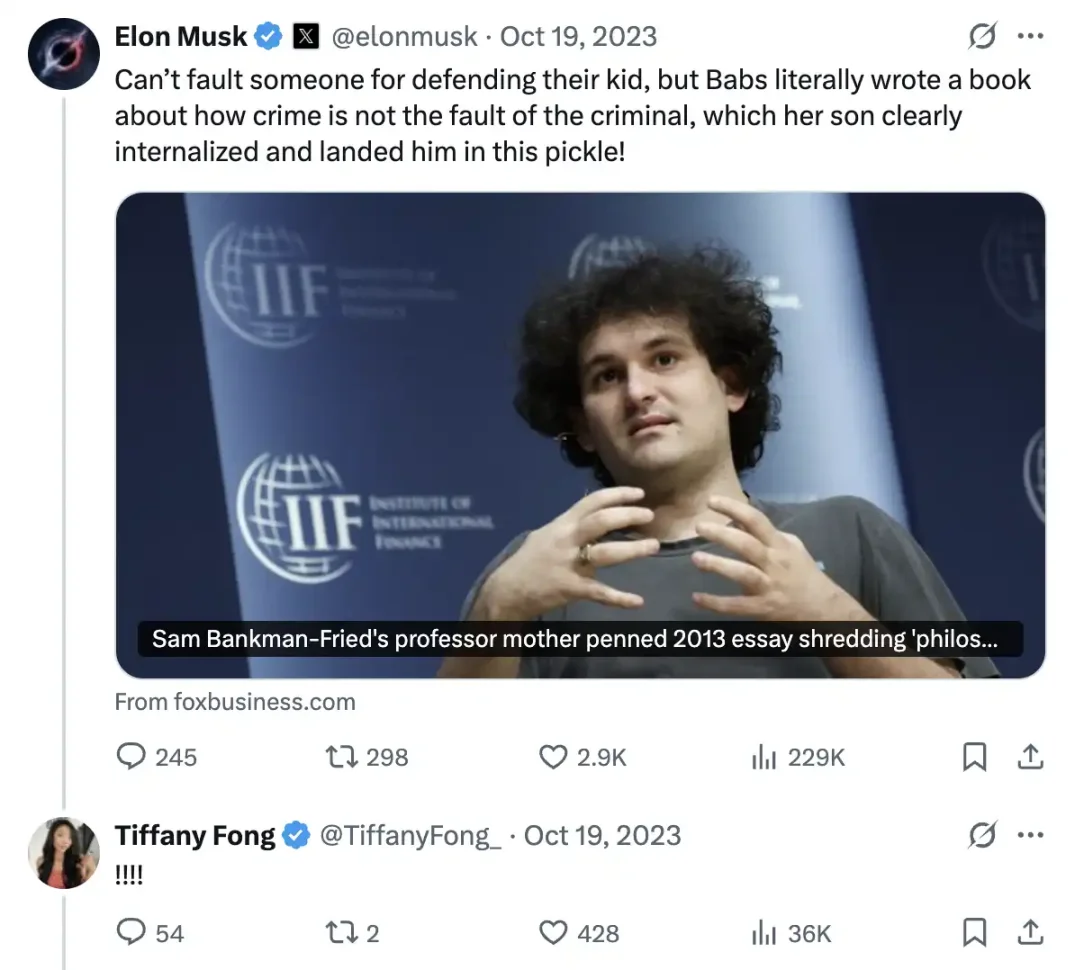
In the following months, Musk regularly appeared in Tiffany’s Twitter comment sections. And with the latest rumor, both found themselves united in criticizing mainstream media.

A Free Agent in Crypto
The last time Tiffany spoke to SBF was during his house arrest at his parents’ home in California. They met ten times inside that house. She still remembers the atmosphere, the way his parents silently closed the door upon seeing her, the heavy silence shaped entirely by scrutiny.
After SBF’s imprisonment, Tiffany’s identity lost its anchor. She was no longer the grassroots whistleblower challenging a Ponzi scheme, nor the sole outsider in SBF’s private world. Her persona became a blurry shadow—neither journalist, nor victim, nor venture insider in crypto. She admitted to experiencing an existential crisis: “Back during the Celsius days, I was driven by anger. During FTX, by curiosity. Now… it’s just tweeting.”
Today, Tiffany still posts daily on Twitter—sometimes images, sometimes commentary on current events, sometimes just dropping a cold meme to stir a reaction. She lives in her old apartment, spends modestly, earns modestly—not poor, but not truly free. She’s rarely cited by mainstream outlets anymore, and hasn’t found a new role to replace the identity forged during the FTX era.
She personally witnessed an empire crumble, and became one of the few unofficial chroniclers of that collapse. Now, dust has settled, journalists have returned to their desks, judges to their benches, and the crypto world continues its endless cycles. And she—someone belonging nowhere—keeps drifting across social media timelines, like a rootless piece of driftwood, hearing her own echoes grow lonelier as the heat fades away.
Join TechFlow official community to stay tuned
Telegram:https://t.me/TechFlowDaily
X (Twitter):https://x.com/TechFlowPost
X (Twitter) EN:https://x.com/BlockFlow_News
 BlockBeats