Interview with BitMEX CEO: Helping Users Become More Mature Traders – What User Philosophy Drives Innovation in Derivatives Products?
TechFlow Selected TechFlow Selected
Interview with BitMEX CEO: Helping Users Become More Mature Traders – What User Philosophy Drives Innovation in Derivatives Products?
From perpetual contract screening mechanisms to user education in high-leverage trading, from AI-driven trading analysis to feature iterations such as copy trading and multi-asset margin, Stephan shared his deep understanding and insights into the crypto derivatives market.
 Navigating Web3 tides with focused insights
Author: Weilin, PANews
As one of the pioneers in the field of crypto derivatives trading, BitMEX has rapidly risen over its 11-year history through aggressive market strategies and technological innovation, once becoming one of the largest crypto derivatives platforms by trading volume globally. However, with increasingly stringent global regulations and intensifying competition in the derivatives market, BitMEX now faces unprecedented challenges.
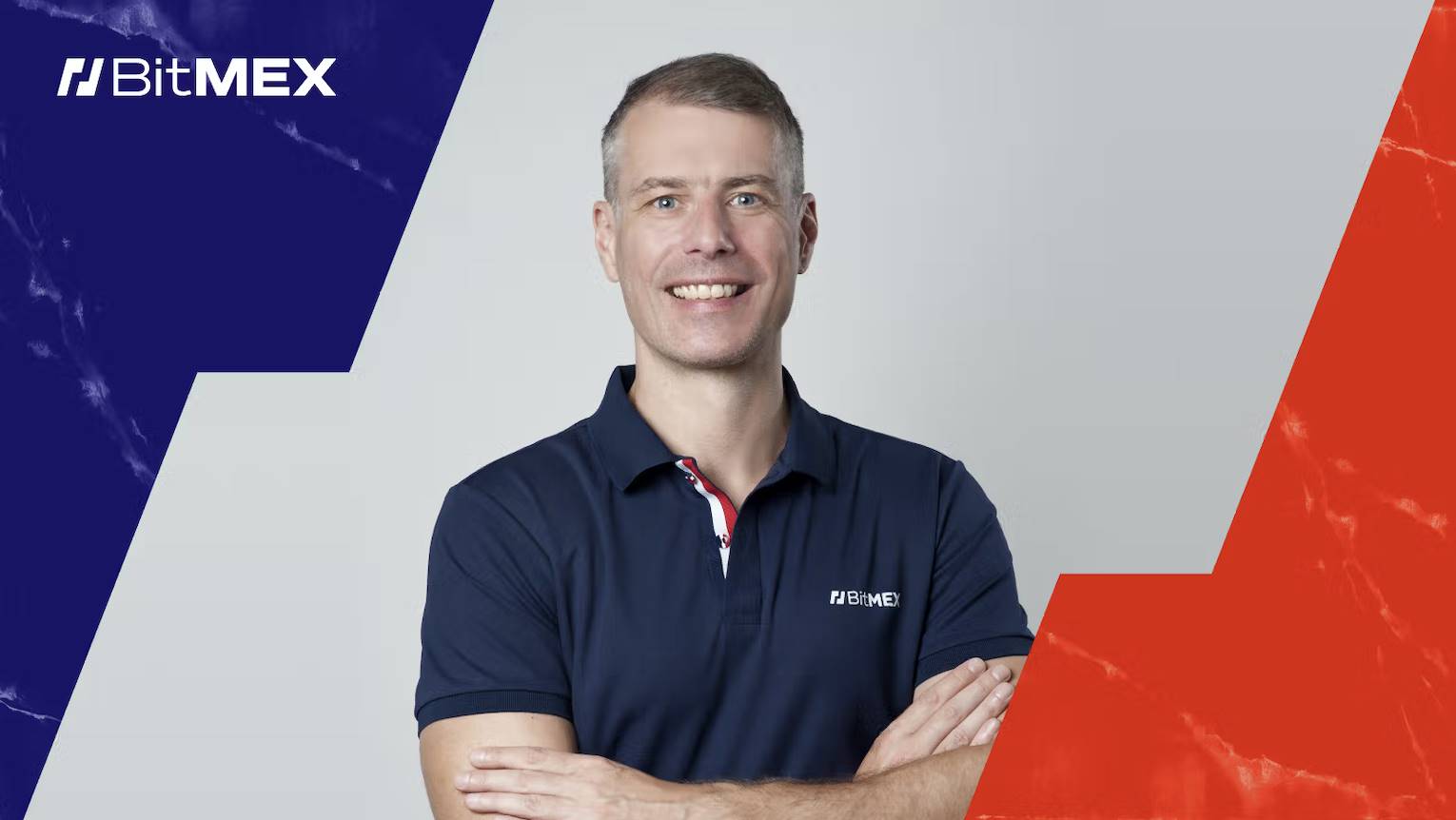
Unlike BitMEX co-founder Arthur Hayes, known for his high-profile persona and sharp market insights, CEO Stephan Lutz was not among the platform's original founders, nor does his early career show direct ties to the crypto industry. Joining BitMEX as CFO in 2021, Stephan took over as CEO during the company’s regulatory crisis in 2022, stepping in from Hayes to lead the team through bull and bear markets alike. He has since driven comprehensive progress across platform development, user education, product innovation, and security enhancements—aiming to build a more neutral, transparent, and secure derivatives trading environment.
In a recent exclusive interview with PANews, Stephan reflected on his journey from Deutsche Börse to BitMEX, offering deep insights into BitMEX’s 2025 product roadmap and strategic priorities. From perpetual contract listing mechanisms to user education around high-leverage trading, from AI-powered trading analytics to copy trading and multi-asset margining upgrades, Stephan shared his profound understanding of the crypto derivatives landscape. He also reaffirmed BitMEX’s strong commitment to Asian markets, believing that the future growth of derivatives will be built upon foundations of greater inclusivity, intelligence, and transparency.
From Deutsche Börse to BitMEX: Bridging Traditional Finance and Crypto
Prior to joining BitMEX in 2021, Stephan’s professional background revealed no obvious links to cryptocurrency. Yet, as he explains, the connection runs deeper than it appears. As early as 2010, he was already exploring distributed ledger technology. “Back then I was working at Deutsche Börse Group, where we were evaluating whether this technology could replace existing securities trading and settlement infrastructure. The answer was no—it wasn’t performant enough, nor did it have sufficient throughput. So I set it aside temporarily,” he recalled.
Nonetheless, in the following years, Stephan participated in financial stability advisory projects with central banks across multiple countries—including Malaysia, Indonesia, and regions in the Middle East. It was during this time that he realized that in Southeast Asia, apart from mature markets like Japan and Singapore, more than two-thirds of the population in many countries still lacked access to banking systems.
“These people are still part of the global supply chain. They were already widely using smartphones, and I began wondering—was there an opportunity here? Isn't this exactly where cryptocurrencies could play a role?” Later, he started buying and lightly trading crypto, though primarily out of research interest in the projects and underlying technologies.
In 2020, Stephan reached a turning point. When BitMEX invited him to join, he described the moment as “like winning the lottery”: “Finally, I could turn what truly interested me into my career.” He joined BitMEX in early 2021 as Chief Financial Officer (CFO), experiencing rapid growth during the 2021 bull market. In 2022, when BitMEX faced allegations from U.S. regulators, Stephan stepped up at the most turbulent moment—taking over as CEO with the trust of the founding team—and led the company through the aftermath of the FTX collapse. In the interview, he admitted this decision wasn’t driven by a desire for titles, but by a sense of responsibility toward the team, mission, and industry.
Breaking the 'Listing Peak' Curse: Inside BitMEX’s Perpetual Contract Listing Strategy
In contrast to many exchanges where new token listings often peak immediately after launch—a phenomenon commonly known as “listing equals top”—BitMEX demonstrated exceptional performance in Q1 2025. According to its Derivatives Report 2025 titled *Top CEX Perpetual Listings: Peak Signal?*, 58.33% of tokens listed as perpetual contracts on BitMEX appreciated in value the day after listing, achieving an average return of 62.55%. Moreover, only 41.7% of these listings hit their all-time highs on the first day, indicating sustained price momentum.
When asked about the reasons behind this trend and the criteria for selecting new contracts, Stephan explained, “We conduct rigorous due diligence before listing any new token as a perpetual contract—we don’t just list every project available. We start assessing them early, focusing on several key factors: First is market interest—is this a token our users genuinely want to trade? This goes beyond mere attention; we look for real trading demand from both potential new users and existing ones. Second is community strength: Does the project already have, or show potential to build, an active and passionate community that can sustain itself beyond two weeks? We also examine the project’s background and narrative, diving deep into the fundamentals. Tokens must meet certain compliance standards before listing, especially if they’re intended for spot markets as well.”
In addition, Stephan revealed that BitMEX evaluates liquidity and price reliability. “We need reliable price data sources. We assess which exchanges contribute to the pricing feed, whether those exchanges are legitimate and regulated, and whether there’s any risk of price manipulation—our goal is to minimize such risks as much as possible.”
It is precisely this holistic evaluation framework that enables BitMEX to maintain strong post-listing performance amid the broader “listing peak” trend.
Q2 Focus: Boosting Liquidity, Launching Copy Trading and Multi-Asset Margin
On BitMEX’s second-quarter (Q2) priorities, Stephan said the platform will continue improving liquidity for altcoins and newly listed tokens, while rolling out a copy trading feature that allows users to mirror the actions of successful traders.
“If you look at altcoins and newly listed tokens, BitMEX still has room to improve liquidity. Compared to last year’s fourth quarter, our liquidity in these categories has at least doubled.”
The second major initiative in Q2 will be launching the copy trading function. “This is a natural evolution from our trading bots launched last year. Trading bots help users automate their own strategies. Copy trading, however, lets you replicate the moves of proven successful traders. We host some of the strongest performers and ‘whales’ in the market—if you want to ‘join their rhythm,’ entering and exiting positions alongside them—you’ll soon be able to use BitMEX’s upcoming copy trading feature.”
Stephan added that the third focus area involves gathering user feedback and optimizing the overall experience. “With a new generation of users entering the crypto space, we aim to preserve core functionality while enhancing usability and clarity to deliver a better user experience. The entire Q2 will revolve around this theme. Finally, we’re finalizing multi-asset margining, meaning users will be able to use a wider range of assets as collateral. This feature will roll out gradually during Q2.”
11 Years Without a Hack: Upholding Three Core Principles
In an increasingly competitive crypto exchange landscape, BitMEX has maintained a perfect record—zero hacker breaches in 11 years. Stephan attributes this to three enduring principles: neutrality, transparency, and security. Since inception, he said, BitMEX has adhered to the ethos of being “true to the spirit of cryptocurrency,” striving to create a fair, peer-to-peer derivatives trading platform. BitMEX operates without proprietary market makers and never bets against its users; its price discovery mechanisms, including funding rates, are entirely neutral.
Transparency is another pillar: BitMEX publishes proof-of-reserves and proof-of-liabilities twice weekly, allowing users to verify their balances independently using open-source tools. All infrastructure documentation is publicly available.
Security, particularly asset security rather than just technical safeguards, remains paramount. User funds are protected using an industry-leading cold wallet custody system. “We completely isolate user assets—they are never mixed with any company-related funds. From day one, BitMEX built its own 100% cold wallet custody system using multisignature (Multisig), not even relying on MPC (multi-party computation) standards. Hot wallets exist solely to enable real-time withdrawals. Until about two years ago, we only offered one daily withdrawal batch because all assets were stored offline. Security protocols are deeply embedded in our daily operations, embodying the principle of ‘trust, but verify.’ This culture permeates every process.”
High Leverage ≠ High Risk: Empowering Individual Traders
BitMEX is renowned for offering perpetual contracts with up to 100x leverage. During periods of extreme market volatility, high-leverage trading often leads to liquidations, especially among inexperienced traders. Does BitMEX have plans to help users better manage these risks? Stephan addressed this directly.
“First, we actually offer up to 250x leverage on certain specific contracts, though not universally accessible. Our stance is that traders should decide their own leverage levels. In reality, 100x leverage itself isn’t what causes liquidation—it’s largely an educational issue. We consistently remind users in our platform documentation and provide extensive educational resources, such as the BitMEX Alpha series and step-by-step guides.”
Stephan emphasized that setting stop-loss and limit orders helps prevent total loss during volatile swings. Users should define entry points, exit levels, and risk parameters. With these basic practices in place, accidental liquidations become far less likely. “Our goal is to help individual traders grow into more mature, disciplined participants.”
Moreover, from another perspective: when one trader gets liquidated, the counterparty—who wins—might face issues too. Since BitMEX is a peer-to-peer platform with no centralized clearing house, it doesn’t cover losses for either side. “That’s exactly why BitMEX established an insurance fund—and ours is the largest in the entire industry. In terms of the ratio between insurance fund size and open interest, we lead the market,” Stephan added.
AI Investment Tools Still Evolving: Products Coming at the Right Time
During the interview, Stephan also discussed the current AI trend. He believes much of the talk around “AI-driven investment decisions” today is hype, lacking substantial practical value. At its core, he sees it as the next evolutionary phase following trading bots and copy trading.
“This path is inevitable—it’s a natural progression. We will introduce such products when the timing is right. But right now, the technology isn’t mature yet. Maybe in a few months, or even a year or two, we’ll see viable solutions,” Stephan revealed.
He further noted that within the next 12 to 18 months, BitMEX plans significant AI integration at the user interface (UI) layer. “Look at foundational models like ChatGPT or DeepSeek—their essence isn’t really about delivering ‘knowledge,’ but enabling ‘translation’ in a broad sense. Today, when you open any exchange’s web trading interface, you’re presented with charts, order panels, news feeds, charting tools, KPIs… You have to interpret and act manually. While not difficult, it still presents a barrier.”
“In the future, AI agents can fully automate this—converting your voice commands into structured trading instructions via API. It could even be programmed to find the best execution price across ten different exchanges. With our more open APIs and flexible connectivity, BitMEX offers capabilities traditional financial firms are unlikely to match.”
Additionally, Stephan announced a new direction: BitMEX plans to launch an AI-driven trading behavior analysis report in Q3. Using AI to analyze user activity, the system will periodically offer personalized recommendations. For example, AI might tell a user: “You frequently traded shortly after news releases last quarter, indicating delayed reactions—consider improving discipline. Your timing is good, but your risk control is weak—either too aggressive or too conservative—missing opportunities for optimal returns.”
Deepening Commitment to Asia: Education and Risk Management Drive Growth
Currently, BitMEX primarily serves Southeast and East Asian markets. The company maintains a long-standing policy of not serving U.S. users and continues to invest actively in Asia.
“This year, BitMEX received a pardon regarding historical matters dating back to 2016–2018. We’re deeply grateful for that resolution, but it won’t alter our current strategic direction,” Stephan explained.
He observed that in the U.S., the crypto sector is increasingly dominated and influenced by traditional financial institutions (TradFi). In contrast, Asian markets continue to foster higher innovation and remain more retail-focused. “BitMEX will continue to deepen its presence in Asia—the commitment is genuine and unwavering.”
Regarding the expansion of the crypto derivatives market, Stephan believes the key lies in areas BitMEX is already advancing—particularly education. While solid foundations exist, there’s still significant room for improvement. Another critical frontier is developing more accessible risk management tools. Looking ahead, he envisions AI assistants that allow users to freely express trading intent, eliminating “instruction translation errors.”
Ultimately, he sees a natural progression: more people first enter the crypto spot market, then transition into derivatives. Many users begin exploring perpetual contracts after gaining experience in spot trading—a trend that will become even more pronounced in the near future. This current bull cycle, he notes, hasn’t been fueled by massive inflows of new users, but rather by increased trading volumes from existing participants and growing institutional involvement. Therefore, he believes the next breakout won’t come three years from now—but much sooner, driven by two converging forces: AI lowering the barriers to entry, and more individuals willing to trade due to improved trust and ease of use.
Join TechFlow official community to stay tuned
Telegram:https://t.me/TechFlowDaily
X (Twitter):https://x.com/TechFlowPost
X (Twitter) EN:https://x.com/BlockFlow_News
 PANews