








DeFi Yield Race: Pendle vs Rising Star Spectra
TechFlow Selected TechFlow Selected
DeFi Yield Race: Pendle vs Rising Star Spectra
Reviewing the development history of the two protocols, interpret their differences and how their growth strategies impact future yields in DeFi.
 Navigating Web3 tides with focused insights
Author: Coinshift, Crypto KOL
Translation: Felix, PANews
The DeFi yield market is growing rapidly—Pendle and Spectra are key players driving this expansion, adopting different approaches.
Pendle had a breakout year in 2024, fueled by integration with staked/re-staked ETH derivatives (LSTs and LRTs), an active community, and strong airdrop momentum. Pendle's TVL surged from $20 million to $4.6 billion.
In June 2024, APWine rebranded as Spectra, focusing on permissionless pool creation and integrating stable, real-yield assets like csUSDL (Coinshift) and USR (Resolv). By early 2025, its TVL grew from $20 million to around $190 million. Though slower than Pendle, it has maintained consistent appeal on Base and other L2s. Spectra is also developing MetaVaults to enhance capital efficiency in the yield market.
This article reviews the development paths of both protocols, analyzes their differences, and examines how their growth strategies may shape the future of DeFi yields.
Note: This article is for informational purposes only and does not constitute financial advice. All data related to token prices, market caps, and protocol TVL are based on public sources such as DeFiLlama.
Spectra vs. Pendle: Development Trajectories
Pendle’s Explosive Growth: First-Mover Advantage
Pendle gained an early lead in yield derivatives by tokenizing future yields into tradable assets. Fueled by the liquid staking boom and early integrations with staked ETH derivatives like wstETH from Lido and ezETH from Renzo, its TVL soared to $5.2 billion by mid-2024.
Key drivers behind Pendle’s growth include:
-
Early support for popular yield-bearing tokens
-
A vePENDLE model that directs emissions toward high-demand pools, encouraging deep liquidity
-
A bribe-driven governance system that incentivizes active participation and enhances token utility
As TVL climbed, so did protocol revenue and user engagement, creating a flywheel effect. Bolstered by narratives around yield innovation and rising fee accumulation, Pendle’s native token rose 20x in 2024.
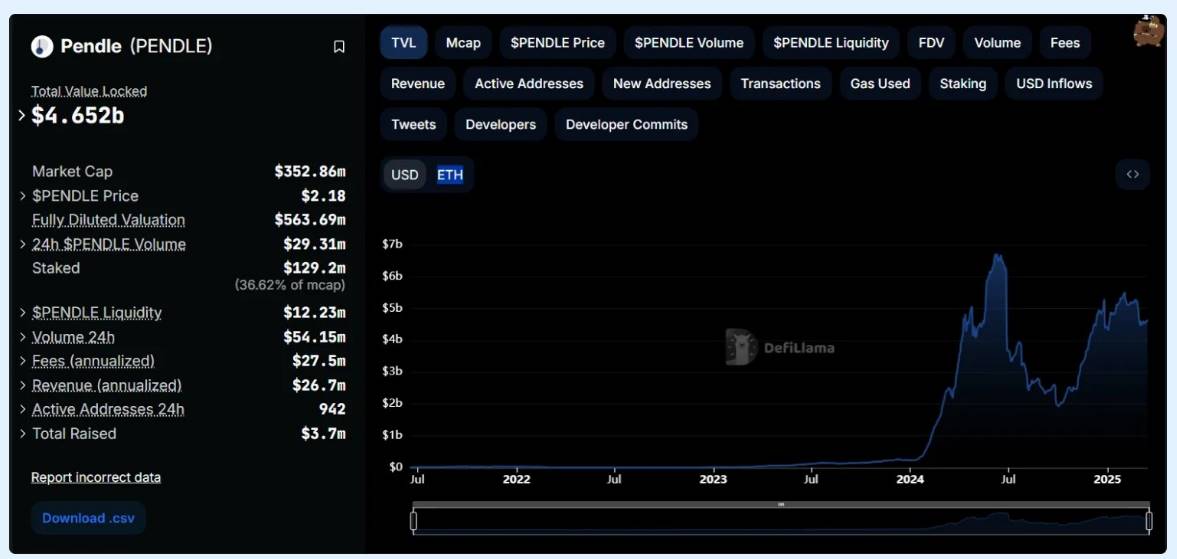
Pendle's TVL Growth
Spectra’s Quiet Relaunch and Breakout Moment
Spectra took a different approach—strategic, phased rollout instead of a flashy launch. After its planned relaunch as a yield market in June 2024, initial adoption was slow. But this changed in December 2024, when Spectra’s TVL jumped from $20 million to over $190 million within weeks.
What triggered this? The rapid rise of USR from Resolv Labs—a stablecoin that sparked a wave of demand for fixed-yield options.
Spectra quickly became the primary platform for deploying USR, especially for users seeking predictable fixed-rate returns. By year-end, USR accounted for over 80% of Spectra’s TVL.
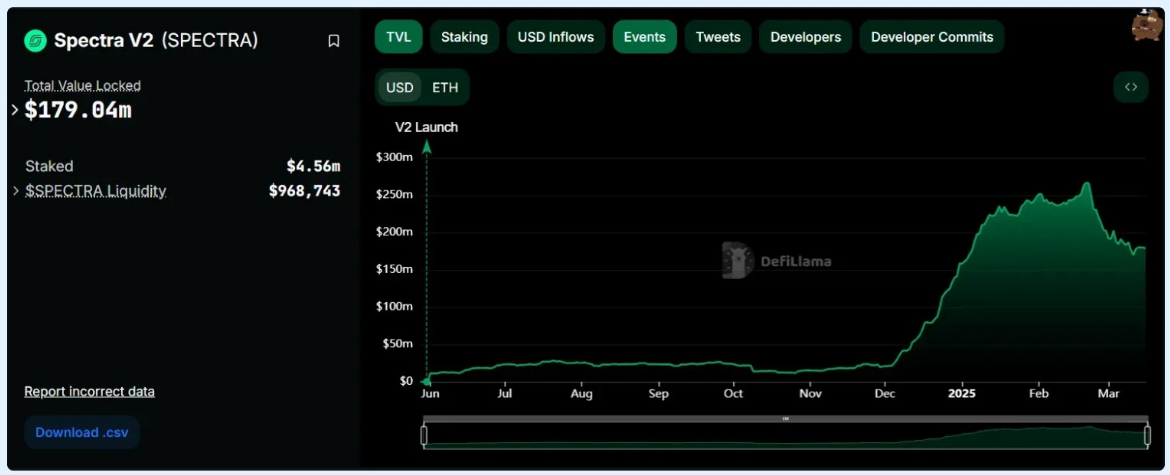
Spectra's TVL Growth
USR and Spectra: A DeFi Flywheel
USR broke out at the end of 2024, with TVL jumping from $36 million to nearly $400 million in under a month. Spectra emerged as the go-to platform for users wanting to lock in USR’s fixed yield.
Several key factors kickstarted the flywheel:
-
Spectra was one of the first platforms to offer fixed yields for USR holders
-
Incentivized pools funded by SPECTRA emissions and Resolv’s yield mechanism quickly attracted liquidity
-
As liquidity flowed in, more users adopted the USR-Spectra strategy, chasing competitive fixed yields and potential airdrops
Resolv’s TVL followed almost the same growth curve as Spectra. Yield farmers, in particular, were drawn to Spectra’s incentives and Resolv’s stablecoin yields.
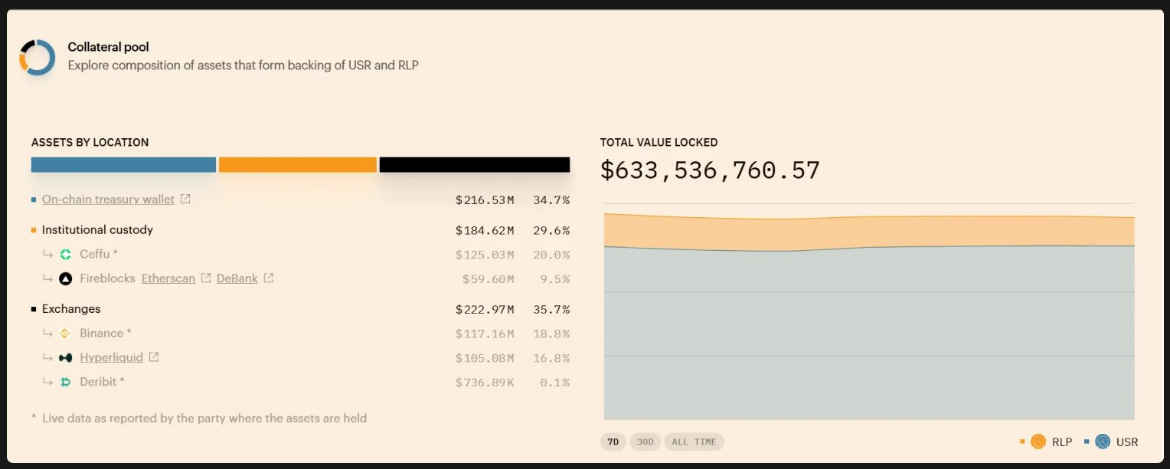
Resolv Lab's TVL Growth Trajectory
This created a self-reinforcing growth cycle. By December 2024, Spectra’s TVL climbed from ~$20–25 million to $143 million, just as the USR pool surpassed $300 million. As one of the first platforms allowing users to deploy USR at fixed yields, most new USR supply flowed directly into its markets.
The effect was clear:
More circulating USR → Higher demand for fixed yields → More TVL into Spectra → Growing user confidence → Repeat.
Spectra’s Discord and social channels quickly reflected this momentum. Some even described it as a “Pendle-like moment,” as Spectra began showing signs of catching up in TVL.
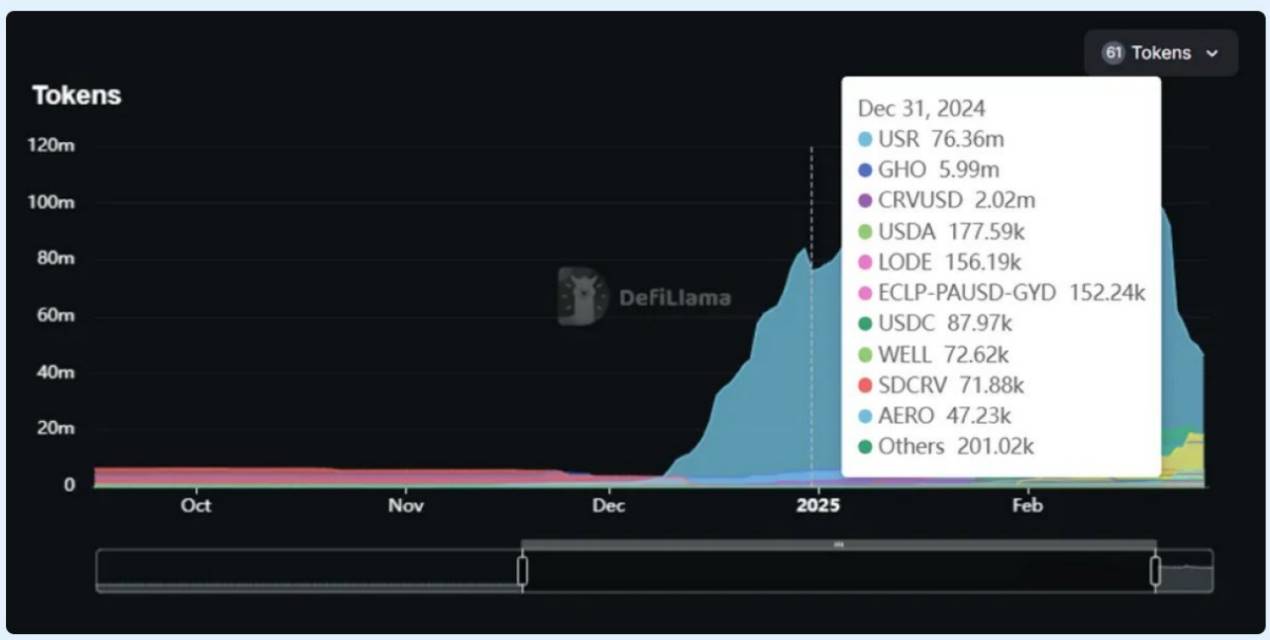
Spectra's pool composition shifts as more yield assets are added
Morpho Loop: Pendle’s Flywheel, Spectra’s Opportunity
One of the strategies behind Pendle’s recent surge in stablecoin TVL is leveraged yield looping—a recursive strategy where users borrow and lend principal tokens (PT) to amplify fixed-yield exposure.
Commonly known as the “Morpho Loop” or stablecoin arbitrage trade, this demonstrates real-world composability in DeFi. Take PT-USR on Pendle as an example—here’s how it works:
(i) Acquire a yield-bearing stablecoin
Users start with base stablecoins like USDC or DAI and convert them into yield-generating tokens like wstUSR.
(ii) Split into PT and YT on Pendle
Users deposit wstUSR into Pendle, generating PT (Principal Token) and YT (Yield Token).
Most strategies involve holding PT, which maintains relatively stable value and matures to full face value. Users can sell YT for immediate yield or use it elsewhere.
(iii) Use PT as collateral on Morpho
Users take their PT (e.g., PT-wstUSR) and supply it as collateral on Morpho.
For instance, the PT-wstUSR/USR market on Morpho allows users to borrow USR against their PT collateral.
(iv) Reinvest borrowed stablecoins
The borrowed USR is converted back to wstUSR, redeposited into Pendle to mint more PT and YT, and the loop repeats.
The result of the Morpho loop is a leveraged fixed-rate position:
Users end up holding more PT than their initial capital would allow, meaning they receive more stablecoins at maturity.
Why does this matter?
The PT-USR loop exemplifies DeFi composability—combining stablecoin issuers, yield protocols, and lending markets into a self-reinforcing flywheel.
The strategy flows as follows:
Mint stablecoin → Split into PT/YT → Use PT as collateral → Borrow → Repeat.
This stablecoin yield strategy has become a key driver of Pendle’s TVL growth, enabling users to scale fixed-yield exposure while putting idle stablecoins to work.
What does this mean for Spectra?
Currently, this loop exists on Pendle, not Spectra. However, Spectra is actively collaborating with Morpho and ecosystem admins to bring Spectra-PT markets to Morpho. Once live, the same strategy could unlock a new growth phase for Spectra—especially given its focus on stablecoin-native yield markets and permissionless pool creation.
In short: Pendle’s flywheel is already spinning. Spectra’s version is still loading—but if replicated, the upside potential could be substantial.
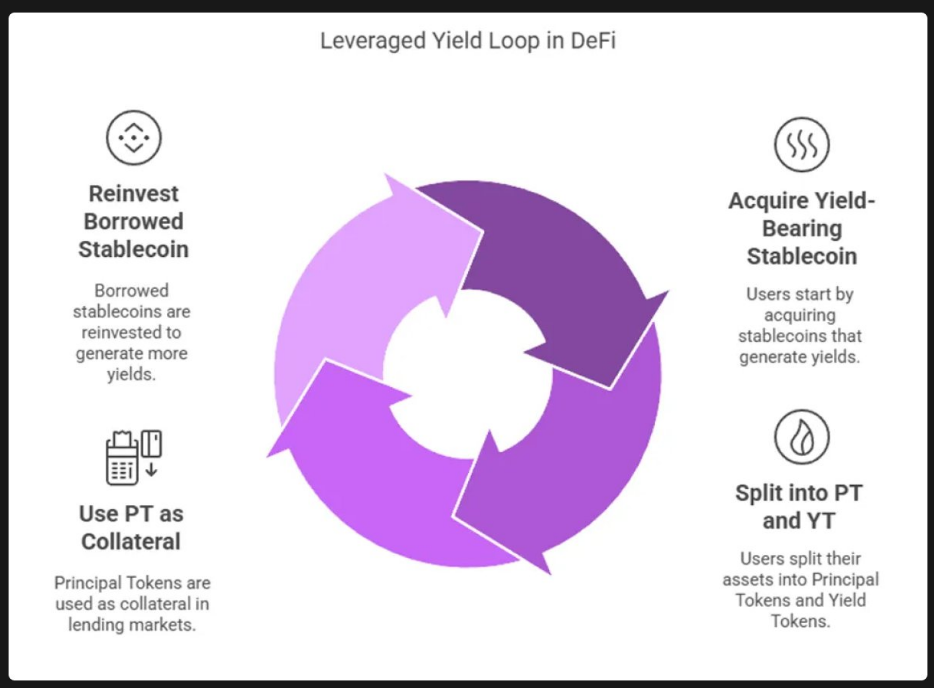
Leveraged yield looping strategy in action
TVL Growth and Token Price Correlation
The cases of Spectra and Pendle illustrate how protocol TVL growth often correlates with token price performance—especially when tokens capture value via fees, emissions, or governance rights.
Pendle
Pendle’s explosive TVL growth in 2024 translated directly into strong token performance:
-
TVL jumped from $230 million to $6.7 billion, capturing significant market share
-
PENDLE rose from around $1 to an all-time high of $6.67—an increase of nearly 590%
This wasn’t just speculation. Pendle’s vePENDLE model introduced fee sharing and governance weight, meaning higher TVL led to more protocol revenue—and greater incentive to lock PENDLE for voting power and bribes.
At its peak, Pendle had $4.6 billion in TVL and a $644 million market cap, resulting in a TVL-to-market-cap ratio of about 14%. This perception of being “undervalued” helped sustain buying pressure. Ultimately, after peaking in April, the token price retreated from ~$7 to the $2–4 range as some TVL declined following the expiration of popular yield pools.
Still, the overall trend holds: as Pendle’s TVL grew, so did demand for its token. Strong fundamentals (TVL, revenue, and token utility) drove narrative and investor attention.
Even in early 2025, when Pendle’s TVL fluctuated between $3.5 billion and $5 billion, the token remained in the several-dollar range, suggesting the market was pricing in future upside—not just current TVL.
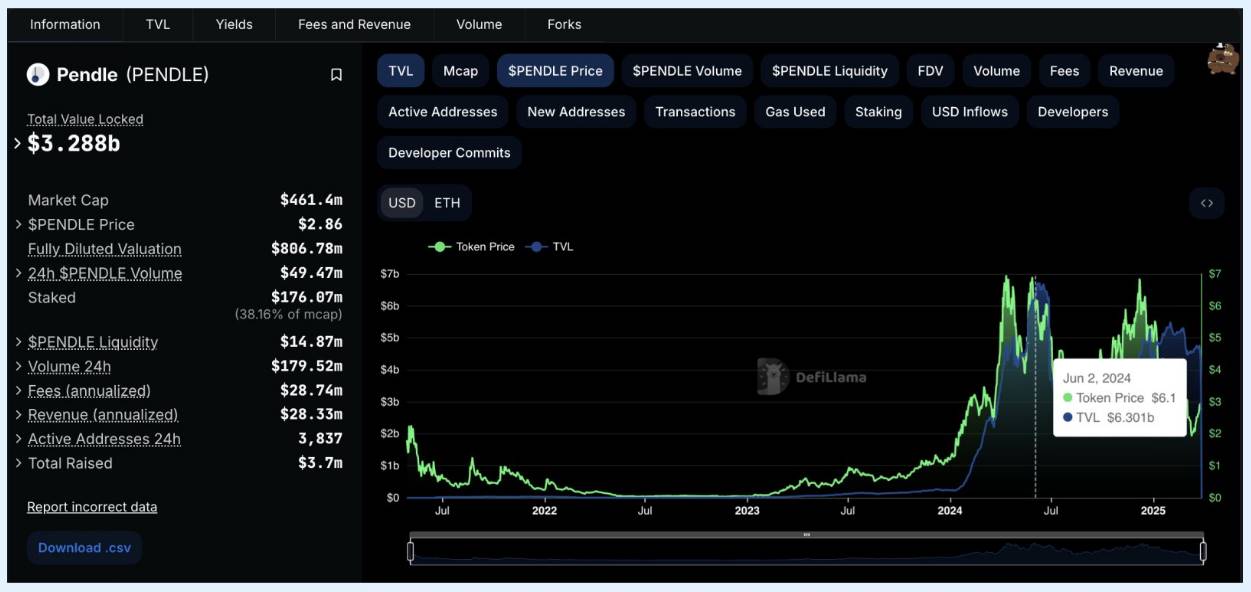
PENDLE Token Price vs. TVL
Spectra
Spectra’s token history is brief, but early data shows a clear correlation between TVL growth and token price movement.
In December 2024 alone, TVL surged from $20 million to $143 million, primarily driven by USR integration and demand for stablecoin yields.
SPECTRA launched at $0.07 in early December and climbed to an all-time high of $0.23 within weeks—a gain of about 310%.
After peaking in early January, SPECTRA’s price began declining, stabilizing around $0.04–0.05 by March, while TVL remained above $150 million. This suggests the initial price surge likely outpaced actual usage and fee generation, prompting market adjustments.
At its peak of $0.236, Spectra’s circulating market cap was ~$80 million—over 50% of its $143 million TVL. Its MC/TVL ratio was far higher than Pendle’s at a similar growth stage. Once this imbalance became apparent, the premium faded.
By March 2025, Spectra’s TVL stood at $190 million, with a $14 million market cap—meaning its market cap was only about 7% of TVL. Compared to Pendle at a similar point in its growth curve, Spectra appears undervalued.
If Spectra continues expanding, activates governance mechanisms like veSPECTRA, and sustains real user adoption, token demand could grow. Assuming strong fee generation and continued adoption, a jump to over $1 billion in TVL could significantly reprice the token.
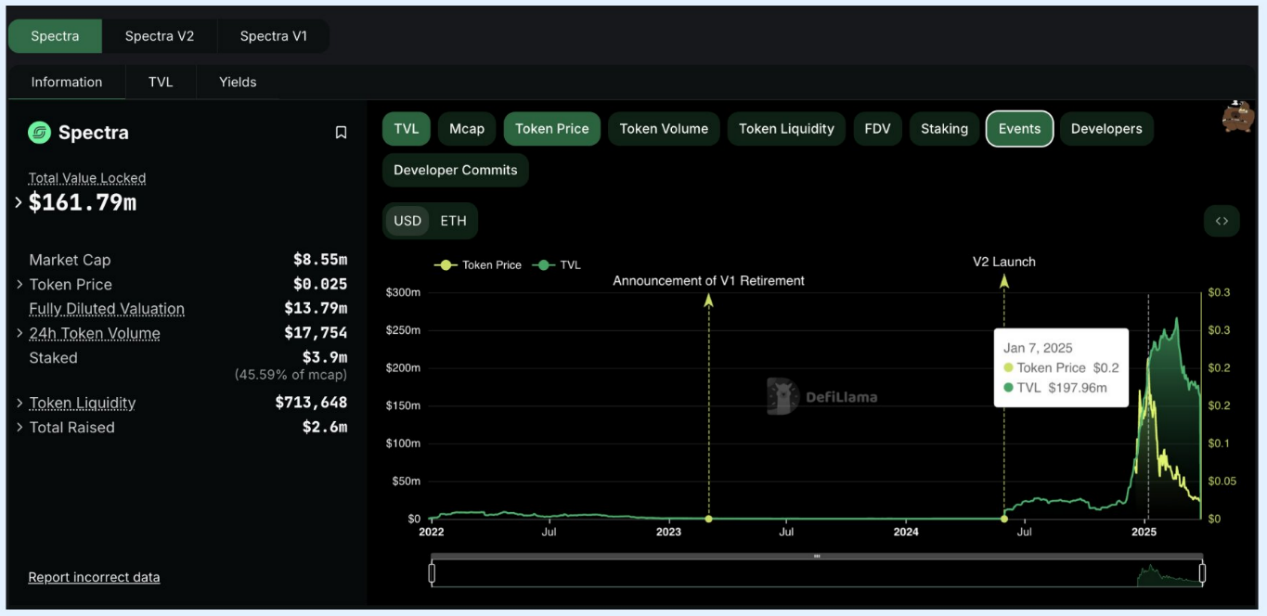
SPECTRA Token Price vs. TVL
Can Spectra Catch Up With Pendle?
Pendle has demonstrated strong market demand for tokenized yield, with billions in liquidity and clear product-market fit. Spectra is building on this foundation—focusing on stablecoin-native strategies, composable lending integration via Morpho, and a permissionless design to encourage broader participation.
As the yield landscape evolves, Spectra’s path appears increasingly solid. If it sustains growth, activates long-term token incentives through veSPECTRA, and continues attracting real users, it stands a strong chance of becoming the next major player in the space.
Join TechFlow official community to stay tuned
Telegram:https://t.me/TechFlowDaily
X (Twitter):https://x.com/TechFlowPost
X (Twitter) EN:https://x.com/BlockFlow_News
 @0xCoinshift






