The decentralized storage project Walrus, which raised $140 million in funding, could become the DeepSeek moment for the SUI ecosystem?
TechFlow Selected TechFlow Selected
The decentralized storage project Walrus, which raised $140 million in funding, could become the DeepSeek moment for the SUI ecosystem?
From Walrus's perspective, it is not only an attempt to reshape the decentralized storage sector with a 100-fold cost reduction, but also Mysten Labs' new strategy to upgrade Sui's performance and optimize its token economics.
 Navigating Web3 tides with focused insights
Author: Frank, PANews
Decentralized storage protocol Walrus recently secured $140 million in funding, led by Standard Crypto with participation from a16z crypto and Electric Capital, marking the largest funding round among recent on-chain projects.
Despite decentralized storage being an established narrative, securing such a significant investment in the current market has sparked industry discussions. From Walrus's perspective, this isn't just about redefining the decentralized storage landscape through a 100x cost reduction—it also represents Mysten Labs' strategic move to enhance Sui’s performance and optimize its token economics.
Walrus Could Reduce Decentralized Storage Costs by 100x
According to official documentation, Walrus is a decentralized storage and data availability protocol designed to provide secure and efficient storage solutions for large files and unstructured data. Developed by Mysten Labs, the team behind Sui, it is built on the Sui blockchain and aims to revolutionize data management in decentralized networks.
Technically, Walrus leverages erasure coding, which splits data into smaller fragments (slivers) distributed across multiple storage nodes. This method ensures data can be recovered even if up to two-thirds of the nodes fail, guaranteeing high availability and reliability.
More importantly, this innovation brings substantial cost efficiencies. By using erasure coding, Walrus reduces its replication factor to just 4–5x, significantly lowering storage costs to levels approaching those of centralized cloud services. In comparison, Filecoin has a replication factor of around 25x, while Arweave ranges from 100x to 1,000x. Based on these figures, Walrus could offer storage at 80–100x lower cost than Filecoin and Arweave. Additionally, due to file segmentation capabilities, Walrus is well-suited for applications requiring massive data volumes, such as AI datasets and media files.
According to estimates by SuperEx, storing 1TB of data annually costs approximately $3,500 on Arweave, between $200 and $1,000 on Filecoin, while Walrus would cost only $50.
As of March 23, the Walrus testnet had stored approximately 80TB of data, with over 13.45 million total addresses. There are currently 109 projects running on the testnet, many of which are native to Walrus. Most are mini-games, and the network has already attracted notable partners such as Tusky, Decrypt Media, and Chainbase.
Sui Ecosystem's "Turbocharger": 1EB Storage Target = 15% SUI Token Burn
However, in today’s market environment, technological innovation alone may not suffice to attract major capital. For Walrus, another key reason for its substantial funding is its origin—Mysten Labs. As the core development team behind the Sui network, Mysten Labs previously raised $336 million before Sui’s launch. Notably, Standard Crypto, a16z crypto, and Electric Capital—all investors in Sui—are also participating in this Walrus round.
In its launch announcement, Walrus stated that the project originated from the need to address storage limitations within the Sui network. Once live, Walrus will offload storage demands from Sui by providing an efficient decentralized storage layer.
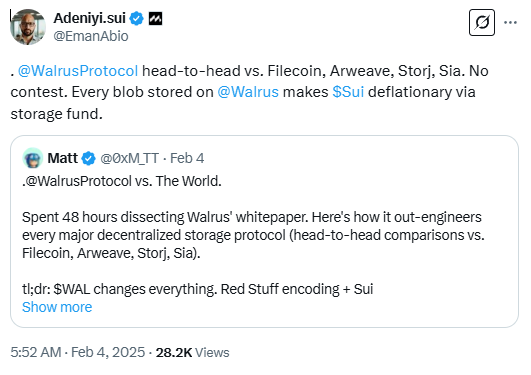
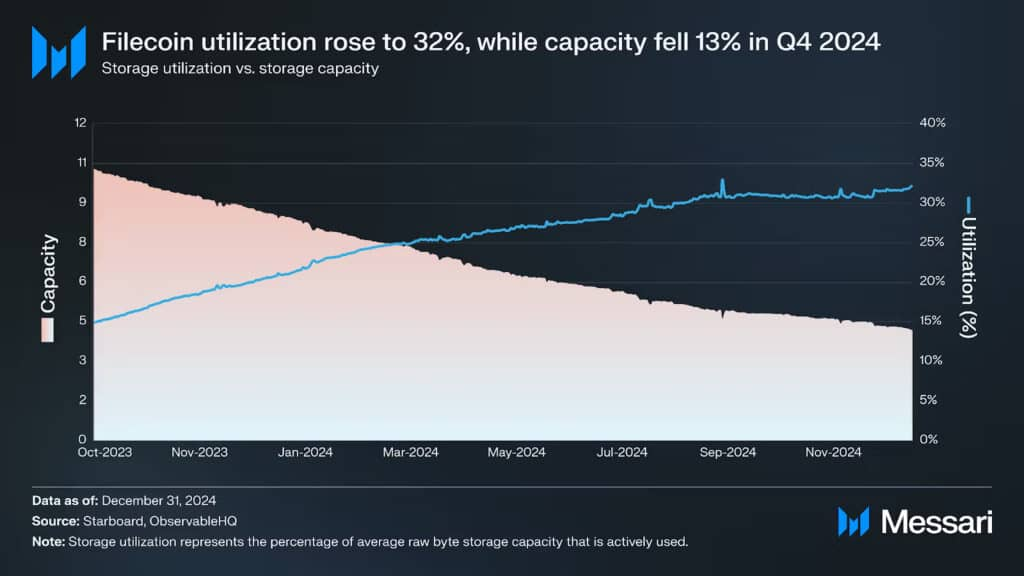
Moreover, according to a report by SuperEx, each blob stored on Walrus requires creating a metadata object on Sui, consuming SUI tokens as gas fees. If Walrus reaches 1 exabyte (EB) of storage usage, it could burn approximately 240 million SUI annually—about 15% of the current circulating supply—significantly impacting Sui’s token economy. For reference, Filecoin’s total storage capacity was about 4.2EB in Q4 2024.
In March, Mysten Labs also announced the acquisition of Parasol, a Web3 gaming infrastructure startup. Combined with Walrus’s performance enhancements, Sui may now accelerate its expansion into AI and gaming sectors.
This major influx of capital serves as a reminder that decentralized storage remains a promising market. A December 2024 report by Codex.Storage suggests that with AI growth and increasing enterprise adoption of hybrid cloud models, the decentralized storage market is poised for further expansion in 2025.
Distributed $80 Million in Airdrops via NFTs
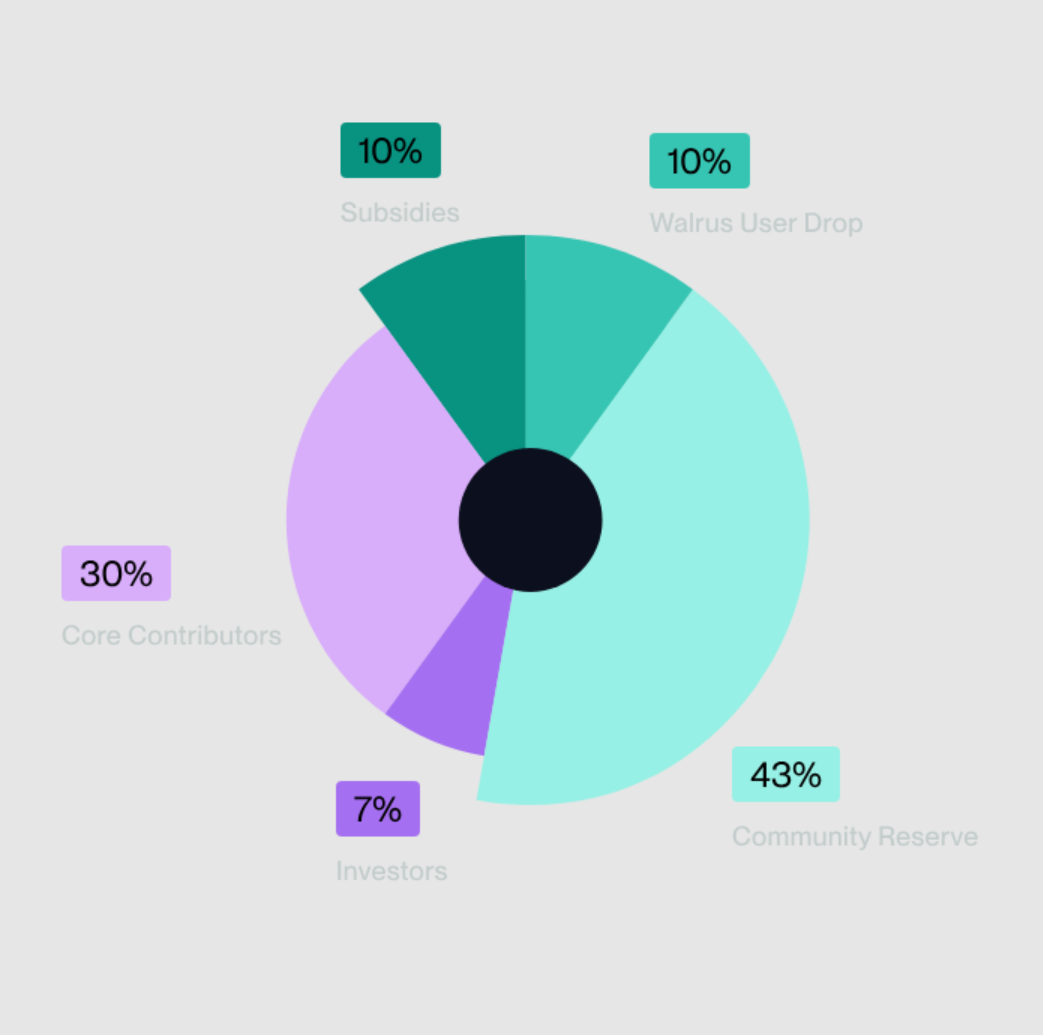
The large funding round has led the market to believe Walrus could become another major airdrop player. WAL is Walrus’s native token, with a maximum supply of 5 billion and an initial circulating supply of 1.25 billion. Official announcements state that over 60% of WAL tokens will be allocated to the community. However, a closer look reveals that early airdrop allocations may not be as large as expected—only 10% of the total supply is designated for user airdrops, with 4% distributed before mainnet launch and 6% after. Additionally, 43% of tokens are reserved for community treasury funds, managed by the Walrus Foundation, to support long-term ecosystem development including grants, developer programs, core research, incentive campaigns, hackathons, and other initiatives. The mainnet is expected to go live on March 27.
Investors received a 7% allocation, with vesting starting 12 months post-mainnet launch. Based on the $140 million raise representing 7% of tokens, the investor cost per WAL is approximately $0.40. This values WAL at around $2 billion, compared to Filecoin’s current fully diluted market cap of roughly $6 billion.
Currently, the pre-mainnet 4% airdrop has already been distributed via NFTs to testnet participants. The remaining 6% will be allocated post-launch through community incentives and ecosystem engagement.
While the Web3 world continues exploring the ultimate form of the storage sector, Walrus has carved a new path with its “erasure coding + low replication factor” technical design. This is more than just a revolution in storage cost—it represents a paradigm shift in Sui’s ecosystem evolution. By transforming storage demand into an economic engine for SUI tokens, Walrus is building a multidimensional value network spanning data storage, on-chain interactions, and AI training.
As Walrus progresses toward its 1EB storage target, this massive system—capable of burning 15% of circulating SUI tokens—could become the strongest catalyst for Sui’s growth. In 2025, amid surging AI data demands, can Walrus’s 100x cost advantage disrupt the multi-billion-dollar cloud storage market? The answer may lie in the storage growth curve following mainnet launch.
Join TechFlow official community to stay tuned
Telegram:https://t.me/TechFlowDaily
X (Twitter):https://x.com/TechFlowPost
X (Twitter) EN:https://x.com/BlockFlow_News
 PANews