Bloomberg: How Wall Street Views Mass Adoption of Cryptocurrency?
TechFlow Selected TechFlow Selected
Bloomberg: How Wall Street Views Mass Adoption of Cryptocurrency?
Wall Street blockchain leaders share the conditions and methods for cryptocurrency adoption in traditional finance.
 Navigating Web3 tides with focused insights
By Anna Irrera, Emily Nicolle
Translation: Luffy, Foresight News
The cryptocurrency and blockchain space is on the brink of major transformation: new regulations in Europe and President Trump’s supportive stance toward crypto are creating favorable conditions for large financial firms to make bold moves.
This means senior leaders in traditional finance are closely evaluating the opportunities and challenges presented by this asset class. We asked top executives one key question:
What single change would most drive widespread adoption of blockchain and digital assets within traditional finance? Why?
Naveen Mallela, Global Co-Head of JPMorgan's Blockchain Platform Kinexys
"Clearer regulation, broad industry collaboration, and strong public-private partnerships will be critical enablers for scaling digital assets in traditional finance. Our business is built on a history of innovation, evolving just like the industries we serve. By working closely with clients, regulators, traditional financial institutions, and emerging fintechs, we can explore and build the future of finance and money."
Mallela co-leads JPMorgan’s blockchain unit Kinexys (formerly Onyx) alongside Tyrone Lobban. Kinexys Digital Payments, part of the platform, is a blockchain-based payment tool processing over $2 billion in payments daily for bank clients.
Caroline Butler, Global Head of Digital Assets at BNY Mellon
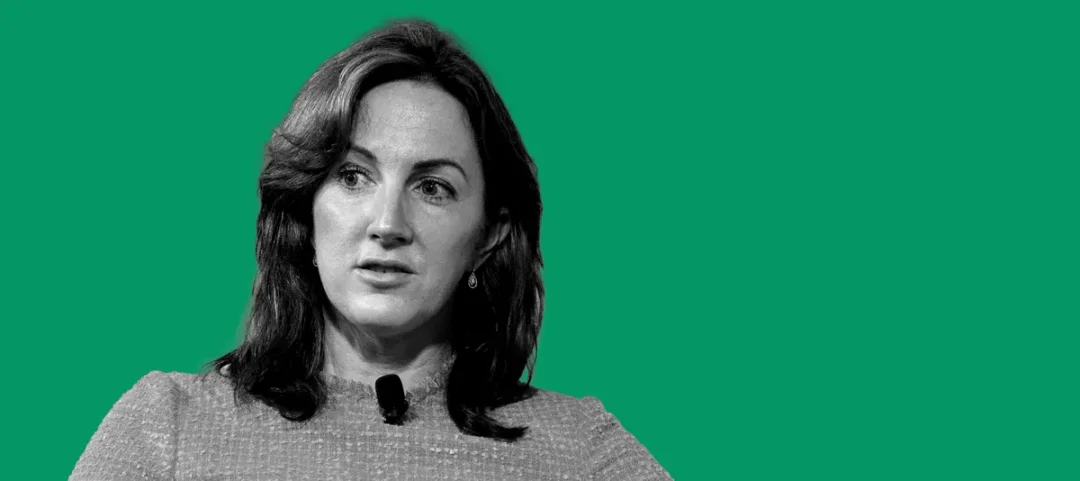
"Blockchain and digital assets are increasingly becoming integral to the global financial landscape, driven by an accelerating shift from proof-of-concept to commercially viable products. Looking ahead, the single most important change that will accelerate adoption of these technologies is the integration of an interoperable, institutional-grade infrastructure connecting the blockchain ecosystem with traditional finance. Over the next 12 to 36 months, we expect an inflection point where digital assets mature and become more deeply embedded in the financial ecosystem—opening up opportunities for collaboration among banks, regulated market participants, global regulators, and policymakers."
Butler leads all commercial and strategic initiatives related to digital assets and tokenization at BNY Mellon, including its digital asset platform. The bank provides custody, administration, and accounting services for most U.S.-listed digital asset exchange-traded products and their issuers. In 2024, it served as custodian, paying agent, and investor in the European Investment Bank’s digital bond issuance and became fund manager and custodian for BlackRock’s tokenized money market fund BUIDL.
Mike O’Reilly, President of Fidelity Digital Assets
"Education—or the lack thereof—is one of the biggest drivers or barriers to crypto adoption. From investors, companies, and regulators alike, digital asset education is essential to building momentum and driving integration across the industry."
Fidelity Digital Assets offers institutional investors trading execution and custody services for Bitcoin, Ethereum, and Litecoin. As a subsidiary of Fidelity Investments, it also supports Fidelity’s retail crypto and wealth management businesses, enabling investors to buy, sell, and custody crypto assets. It holds the underlying tokens for Fidelity’s crypto ETFs, including the Bitcoin Fund (FBTC) and the Ethereum Fund (FETH).
John O’Neill, Head of Digital Assets & Currency Group at HSBC
"HSBC believes secure and reliable forms of digital currencies, such as tokenized deposits, can accelerate digital asset adoption."
O’Neill oversees strategy for digital assets, central bank digital currencies (CBDCs), stablecoins, and cryptocurrencies at HSBC Holdings. He led the development of HSBC Orion, a digital asset platform used to issue several native digital bonds, including HSBC’s HK$1 billion native digital bond issued in 2024.
Robert Mitchnick, Head of Digital Assets at BlackRock
"In terms of activity and adoption, public blockchains clearly outpace private ones. We believe it’s time for banks to shift focus from private to public blockchains. We see this as a catalyst for faster innovation, enabling broader market participation within the digital asset ecosystem—with banks serving as key enablers."
Mitchnick drives BlackRock’s digital asset strategy, which includes two crypto-focused ETFs. The iShares Bitcoin Trust became the fastest ETF in history to surpass $50 billion in assets under management. BlackRock also manages BUIDL, a tokenized money market fund on Ethereum with approximately $1 billion in assets.
Jean-Marc Stenger, CEO of FORGE, a subsidiary of Société Générale
"The regulatory landscape in the U.S. could undergo a sharp shift favorable to digital assets. Republican lawmakers view digital assets as key to America’s future economic leadership. In Europe, MiCA—the Markets in Crypto-Assets Regulation—came into effect on December 30, 2024, opening a window of opportunity to create unified regulatory rules for both primary and secondary crypto markets."
Stenger leads FORGE, Société Générale’s crypto subsidiary focused on providing clients with digital asset issuance and management services. The firm has been active in multiple digital bond issuances, including the European Investment Bank’s €100 million bond in 2021. In 2023, FORGE launched EURCV, the first euro-denominated stablecoin issued by a Tier 1 bank subsidiary.
John Whelan, Managing Director of Digital Assets at Santander Corporate & Investment Banking
"Traditional finance needs clear regulatory permission to use public blockchains, because that’s where real innovation happens. These blockchains are open-source, open-access operating systems for financial services, with operational costs borne by third parties known as validators. That is precisely where their disruptive potential lies."
Whelan joined Santander in 2016 to lead its initiatives in crypto and digital assets, covering projects in digital securities, digital collateral liquidity, and digital cash. He also serves on the boards of the Enterprise Ethereum Alliance and blockchain firm Fnality International Ltd.
Laurence Arnold, Global Head of Innovation, Client Operations, Performance & Reporting at AXA Investment Managers

"We believe the creation of digital currencies with legal tender status represents the most impactful change to accelerate adoption. These currencies can be public or private, but must possess the same characteristics as fiat to enable settlement and reconciliation between counterparties in financial transactions—cash and digital assets alike. This requires a collaborative ecosystem where participants jointly seek solutions, clarify roles and responsibilities, and address issues such as blockchain interoperability and liquidity. AXA Investment Managers’ active participation in the European Central Bank’s work on central bank digital currency is a positive and important step in the right direction."
Arnold leads innovation programs at the investment manager, including blockchain and digital asset initiatives. This includes participating in ECB efforts on CBDC settlement, representing French insurer AXA in a €3 million investment in Slovenia’s digital sovereign bond, and using blockchain technology to allow Assicurazioni Generali to instantly subscribe to shares in AXA Court Terme.
Artem Korenyuk, Head of Digital Assets at Citigroup
"We are encouraged by the growing emphasis in the U.S. on establishing clear regulatory frameworks for digital assets. Clear and consistent rules are vital to fostering innovation, protecting investors, and enabling the safe integration of digital assets into the broader financial ecosystem. We are optimistic that such clarity will be prioritized in the near term, paving the way for a more transparent and resilient digital asset market."
Korenyuk leads Citi’s enterprise digital assets team, which works across all business lines to develop new digital asset services and capabilities. The team collaborated with the bank’s treasury services division to launch Citi Token Services, a tokenized deposit application allowing select corporate clients to make payments using blockchain technology.
Jez Mohideen, CEO of Laser Digital
"The biggest barrier to institutional adoption of digital assets is a lack of industry expertise. Many still conflate cryptocurrency, Web3, digital assets, and tokenization. While interconnected within the same ecosystem, each has distinct value propositions and unique benefits. Targeted education that deepens understanding of the opportunities and advantages offered by blockchain-enabled products and services will empower institutions to engage more effectively—accelerating broader and faster adoption."
Mohideen co-founded Laser Digital in 2022 with former colleague Steve Ashley as Nomura Holdings’ digital asset subsidiary. Laser Digital employs 100 people globally and offers a range of digital asset services, including trading, asset management, and capital solutions. It also makes equity investments in firms such as custody provider Komainu and Crossover Markets.
Julian Sawyer, CEO of Zodia Custody

"Globalized traditional financial systems operate under cross-border governance frameworks such as the Travel Rule. The digital asset industry lacks such a framework, having long focused on jurisdiction-specific regulations rather than global governance. Traditional financial institutions will not enter the digital asset space until they can ensure compliance with existing complex operational requirements. This means global governance—a broader system of standards and structures agreed upon by stakeholders including governments, industry trade groups, and working bodies—will ultimately drive institutional adoption."
Sawyer heads Zodia Custody Ltd, a firm majority-owned by Standard Chartered and backed by SBI Holdings, Emirates NBD, Northern Trust, and National Australia Bank. Its clients include asset managers such as Invesco and ETF issuers 21Shares and Bitwise.
Jorgen Ouaknine, Head of Innovation & Digital Assets Group at Euroclear
"In one word: standardization. Standardization has been the key factor behind the successful scaling of nearly every major technological and financial innovation in history. From the Industrial Revolution to the digital age, common standards have enabled interoperability, improved efficiency, and driven mass adoption. The same applies to the convergence of digital assets and traditional finance."
Ouaknine leads post-trade innovation and digital asset initiatives at the group, including recent efforts to use distributed ledger technology (DLT) to enhance market liquidity—for example in bond issuance—and to make collateral move faster and more efficiently. The group participates in multiple industry-wide blockchain initiatives, such as the Monetary Authority of Singapore’s Project Guardian, and operates a platform for issuing traditional securities via blockchain.
Nadine Chakar, Global Head of Digital Assets at DTCC
"Simply put: we must stop experimenting in silos and start collaborating across the industry to fully unlock the potential of blockchain in financial services. While we’ve clearly demonstrated the merits of the technology, it’s now time to work together to deploy real-world applications of tokenization onto ledgers. Along the way, we must ensure we’re collectively moving toward a shared end goal: building efficient digital market infrastructure and standards. Collaboration is the core ingredient that will help us realize the full potential of digital assets."
Chakar joined DTCC following its 2023 acquisition of blockchain startup Securrency, and has since led efforts to provide blockchain technology and services for post-trade processing of tokenized assets. In 2024, DTCC partnered with WisdomTree to offer real-world assets in tokenized form through the mobile app WisdomTree Prime and launched a sandbox to promote greater industry collaboration in blockchain-based market infrastructure development.
Sandy Kaul, Head of Franklin Templeton’s FIRST Initiative and Digital Assets & Industry Consulting Services

"The most important single change has already begun: U.S. regulators are shifting course, actively supporting the adoption of public blockchains and positioning our company at the forefront of a new capital market era. This shift can remove existing barriers between traditional and crypto ecosystems and create novel solutions to longstanding challenges—including new approaches to digital identity, KYC/AML, and market and collateral liquidity."
Kaul leads Franklin Templeton’s industry consulting team, assessing internal innovation and development. Her work involves gathering expertise in emerging technologies such as AI and blockchain to support strategic initiatives including digital asset infrastructure and the Benji suite of tokenized products.
Hyder Jaffrey, Chief Investment Officer & Head of Strategic Investments at UBS Group
"Clarity on how digital assets should be treated and regulated is key."
Since 2015, Jaffrey has led UBS’s efforts to explore how digital assets and blockchain technology can transform wholesale and institutional financial models. He represents UBS in multiple market initiatives, including digital bond issuances, the Fnality global payment system, digital repos, and digital margin lending.
Join TechFlow official community to stay tuned
Telegram:https://t.me/TechFlowDaily
X (Twitter):https://x.com/TechFlowPost
X (Twitter) EN:https://x.com/BlockFlow_News
 @Bloomberg