Bitcoin officially becomes part of U.S. strategic reserve, albeit a mini version, but the significance is profound
TechFlow Selected TechFlow Selected
Bitcoin officially becomes part of U.S. strategic reserve, albeit a mini version, but the significance is profound
Will the U.S. establishing a Bitcoin reserve usher in a new era of global finance?
 Navigating Web3 tides with focused insights
Author: Lubna Kayyali
Translation: Baihua Blockchain
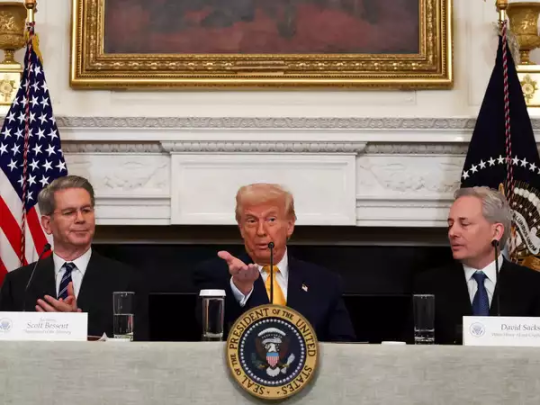
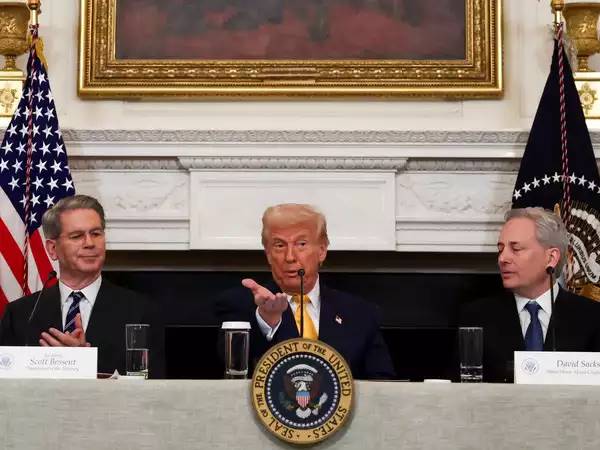
The United States is setting a precedent. According to a post by David Sacks, the White House cryptocurrency advisor, on X, President Trump signed an executive order on March 6 to clearly establish a strategic Bitcoin reserve. However, this order requires only a full inventory of federal government-held Bitcoin and does not involve other Bitcoins in the market (over the years, the U.S. has accumulated 200,000 BTC through various legal cases, currently valued at approximately $17 billion).
This policy has triggered market volatility, with Bitcoin briefly dropping 5% to around $85,000 after the announcement. It has also sparked extensive discussions about its economic value, legal basis, and geopolitical implications.
This article will delve into this development—from the post-WWII gold reserve system to the impact of America’s crypto reserves on global finance, monetary policy, and law.
Historical Background: From Gold to Digital Assets
The concept of national currency reserves dates back many years. After World War II, the 1944 Bretton Woods Agreement established an international monetary system centered on gold, pegging the U.S. dollar to gold at $35 per ounce. At that time, the U.S. controlled about two-thirds of the world's gold reserves, giving the dollar a central role in the global financial system. Under this gold exchange standard, other countries' currencies were anchored to the dollar, which could be directly exchanged for gold. This system provided financial stability and promoted global economic growth over the next two decades.
However, by the late 1960s, persistent balance-of-payments deficits and rising global demand for dollars placed pressure on U.S. gold reserves. In August 1971, President Nixon suspended the convertibility of dollars into gold, formally ending the Bretton Woods system and ushering in a new era of floating fiat currencies. Since then, the dollar has become pure fiat money, backed solely by government credit.
Even after the collapse of Bretton Woods, U.S. gold reserves remain a key asset for the central bank. As of today, the official U.S. gold holdings stand at 8,133 metric tons—the largest in the world—carrying forward the legacy of the Bretton Woods era.
Gold's enduring appeal lies in its inflation-hedging and safe-haven properties. From $35 per ounce in 1944, gold prices have surged to around $1,900 per ounce, reflecting decades of fiat money expansion. Meanwhile, the modern financial system continues to revolve around the dollar, which remains the dominant global reserve currency.
As of mid-2023, the dollar accounts for about 59% of global foreign exchange reserves (down from over 70% in the early 2000s), indicating a gradual diversification of reserve assets.
Today’s major international reserve assets include foreign exchange reserves (primarily dollars, euros, yen), Special Drawing Rights (SDRs) introduced by the IMF in 1969, and gold.
The Rise of Bitcoin and "Digital Gold"
In 2009, Bitcoin emerged as a decentralized digital currency with a fixed supply cap of 21 million coins, widely regarded by many as “digital gold.” Throughout most of the 2010s, cryptocurrencies remained niche investments. But by the 2020s, the total market capitalization of the crypto market had reached several trillion dollars, attracting mainstream institutional interest.
In 2021, El Salvador became the first country to adopt Bitcoin as legal tender; it now holds over 5,700 BTC in its national treasury (El Salvador launched a $360 million Bitcoin treasury monitoring website). Meanwhile, private companies such as MicroStrategy and Tesla added Bitcoin to their balance sheets, and dozens of investment funds launched crypto-related products. As Bitcoin and other digital assets grow in influence, debates have intensified over whether they can play a role in national reserves similar to gold.
U.S. politicians like Senator Cynthia Lummis have proposed establishing a "strategic Bitcoin reserve" to ensure the nation holds a certain amount of Bitcoin. In 2024, she introduced a bill to Congress proposing the purchase of up to 1 million BTC (about 5% of Bitcoin’s total supply) as a strategic asset and hedge. Although the bill did not advance at the time, it laid the conceptual groundwork for the current administration’s recent decision.
Economic and Geopolitical Impacts of U.S. Crypto Reserves
The market reacted swiftly to news of the U.S. plan to build a digital asset reserve. A few days ago, when President Trump announced that Bitcoin, Ethereum, XRP, Solana, and Cardano would be included in the U.S. strategic reserve, the crypto market surged—Bitcoin rose over 11% (to about $94,000), Ethereum climbed 13% (to about $2,516), and the total market cap increased by more than $300 billion within hours. This surge reflects investors’ widespread belief that government endorsement may enhance the credibility and longevity of these digital assets.
Feder1C0 Brokate, an analyst at 21Shares, noted: "This move signals that the U.S. government is actively engaging in the crypto economy." In other words, the U.S. is leveraging its national influence to shape the future direction of the crypto market.
1) Monetary Policy and Fiscal Stability: Opportunities and Challenges
Proponents argue that a crypto asset reserve could strengthen U.S. fiscal resilience. Senator Cynthia Lummis stated that Bitcoin could serve as a hedge against inflation and growing national debt, allowing the government to sell part of its holdings to repay debt when prices rise. Historically, high inflation and fiscal deficits have driven investors toward hard assets like gold, pushing up their prices.
"Strategically holding Bitcoin not only serves as a safe-haven asset but also allows the government to sell at peak prices to reduce debt," economist Will Alden commented. Theoretically, during periods of dollar weakness or global uncertainty, the crypto reserve could appreciate in value, providing a fiscal buffer. Additionally, building such a reserve could free up dollar liquidity for other uses instead of continuing to accumulate foreign exchange or gold. If the crypto market continues to grow, the U.S. might achieve outsized returns.
Opponents warn of significant risks and uncertainties. Cryptocurrencies are highly volatile; large-scale government purchases could raise concerns about the U.S. fiscal position and even fuel expectations of rising inflation, potentially creating a self-fulfilling crisis. Economist Thomas Hendrickson pointed out that if markets interpret the U.S. shift toward Bitcoin as a sign of waning confidence in the dollar, it could undermine global trust in U.S. fiscal stability and the dollar. Moreover, government participation could inflate crypto asset prices, creating bubbles, and taxpayers would bear the losses if the market crashes.
Some critics also question the necessity of a crypto reserve. Norbert Michel, an economist at the Cato Institute, believes the government should focus on more pressing economic issues rather than investing in Bitcoin: "There are more important things to address."
2) Global Financial Competition and U.S. Leadership
The implementation of this policy touches upon the competition for global financial leadership. By establishing a digital asset reserve, the U.S. aims to assert influence in the crypto space and gain a first-mover advantage.
The U.S. choice of open, decentralized digital assets—rather than centrally issued central bank digital currencies—creates a global contrast between "freedom vs. control." James Butterfill of CoinShares observed: "This decision aligns with the 'America First' agenda, showcasing a more nationalist stance in supporting crypto technology."
He also emphasized that including assets like Solana (SOL) and Cardano (ADA)—which resemble tech stocks more than store-of-value assets—in the reserve indicates government support for domestic blockchain innovation. This move could boost the U.S. fintech industry and reinforce the dollar’s dominance in global crypto transactions (most stablecoins are currently denominated in USD).
3) Geopolitical Impact: Global Effects and Power Dynamics
Other nations will closely watch how this policy unfolds. The U.S. action may prompt allies to consider adding digital assets to their national reserves or fiscal portfolios to avoid falling behind in the digitalization of global finance. Furthermore, this trend could push institutions like the International Monetary Fund (IMF) to reassess the role of digital assets in the global reserve system.
For countries heavily reliant on the dollar, the U.S. crypto reserve might be seen as validation of the “digital gold” concept, further mainstreaming Bitcoin. However, large-scale U.S. holdings of digital assets could also raise concerns:
-
Will the U.S. gain excessive influence within decentralized networks?
-
If the government holds 1 million BTC, it would become the largest single holder globally, potentially affecting market liquidity and even dominating governance decisions in certain blockchain protocols.
"If other countries act first, the U.S. could fall behind," analysts at Duane Morris LLP noted in a report. Establishing a crypto reserve and developing a clear regulatory framework may be key to ensuring U.S. leadership in the global crypto economy.
In short, the U.S. crypto reserve is not merely an investment decision but part of a broader financial strategy. It could affect global financial structures, related policies, national fiscal stability, and even the balance of geopolitical power.

Legal and Regulatory Implications: Navigating Uncharted Legal Territory
Establishing a federal cryptocurrency reserve presents new legal challenges amid a rapidly evolving regulatory environment. To date, U.S. laws and regulators lack a unified definition of digital assets—they may be classified as securities, commodities, property, or currency—and a series of court rulings and agency actions are gradually shaping their legal boundaries.
Prior to this, several key court cases, administrative rulings, and regulations provide important reference points for how a crypto reserve might be managed and what potential limitations could exist.
1) Securities Law – SEC v. Ripple (2020–2023)
A landmark case was the U.S. Securities and Exchange Commission (SEC) lawsuit against Ripple Labs, accusing its XRP token of being an unregistered security. In July 2023, Judge Analisa Torres of the U.S. District Court for the Southern District of New York issued two somewhat contradictory rulings:
-
Ripple’s secondary-market sales of XRP do not constitute securities transactions;
-
Ripple’s direct sales of XRP to institutional investors violated securities laws.
This suggests that the same digital asset may carry different legal classifications depending on the transaction context, offering the first judicial precedent on the application of the 1946 Howey Test (used to determine whether an investment contract qualifies as a security) in the digital asset space.
The ruling implies that tokens like XRP, when traded in retail markets, may not fall under SEC regulation, meaning widely circulated assets like Bitcoin and Ethereum may not be deemed securities. This outcome was seen as a victory for the crypto industry, limiting the SEC’s regulatory reach. However, the SEC has appealed parts of the ruling, so legal uncertainty persists.
For the U.S. crypto reserve, this case is significant. If reserve-held digital assets are later classified as securities, the government may face stricter compliance requirements (e.g., securities custody and financial reporting). Therefore, the reserve is expected to prioritize holding Bitcoin and Ethereum (commonly viewed by regulators as commodities), and possibly XRP (based on the Ripple ruling, which suggests it may not be considered a security in public market trading).
2) Securities Law – SEC v. Coinbase (2023–2025)
In June 2023, the SEC sued Coinbase—the largest U.S. centralized exchange (CEX)—alleging it operated as an unregistered securities exchange, broker, and clearing agency, involving multiple digital asset listings.
This case became a classic example of the previous administration’s “enforcement-as-regulation” approach, during which the SEC brought over 100 enforcement actions targeting digital assets (covering CEX operations, token sales, etc.) to regulate the market.
Coinbase not only defended itself in court but also submitted a rulemaking petition to the SEC, effectively demanding that the SEC (and federal appellate courts) clarify:
-
Which digital assets qualify as securities;
-
How the industry can operate legally and compliantly.
By early 2025, however, the regulatory landscape shifted dramatically: under the new pro-crypto administration, the SEC withdrew its lawsuit against Coinbase and terminated investigations into multiple crypto firms. While the dismissal reduced some legal uncertainty for CEXs, core questions remain unresolved—specifically, which digital assets should be classified as securities, requiring new legislation for clarity.
Coinbase and other industry players continue urging Congress to enact clear regulations, as the Howey Test and existing securities frameworks—designed decades ago—are ill-suited for today’s modern crypto markets.
For the U.S. digital asset reserve, the SEC’s withdrawal of the Coinbase lawsuit sends a positive signal:
-
It indicates regulators are unlikely to block the government from holding or trading digital assets on grounds of "unregistered securities";
-
It also suggests a more lenient regulatory environment, potentially lowering legal barriers to custody and management of a national crypto reserve.
In other words, despite lingering securities law uncertainty, the feasibility of government-managed crypto reserves is increasing.
3) Commodity Classification – CFTC and Other Agencies
Another pillar of crypto regulation is commodity law. The U.S. Commodity Futures Trading Commission (CFTC) has long maintained that Bitcoin and other virtual currencies qualify as commodities under the Commodity Exchange Act. Federal courts have upheld this view, granting the CFTC authority to combat fraud and manipulation in crypto markets—including spot markets.
In the 2018 CFTC v. My Big Coin case, a judge ruled that the CFTC could regulate virtual assets as commodities, even though they are intangible. This aligns with the CFTC’s position that decentralized, issuerless assets like Bitcoin and Ethereum resemble digital commodities more than securities.
Additionally, the CFTC has taken enforcement actions against exchanges like BitMEX and Binance for offering crypto derivatives trading without registration, further cementing its regulatory role in the sector.
For the U.S. crypto reserve, if the government holds and trades digital assets, they may fall under commodity regulations rather than securities rules. This typically means lighter regulatory burdens, though anti-fraud and anti-manipulation rules still apply. If the Treasury actively manages the reserve (e.g., selling Bitcoin at strategic times), it must ensure it does not violate market manipulation laws.
Moreover, classifying digital assets as commodities raises jurisdictional questions—which agency should oversee the national crypto reserve? This will require coordination among the Treasury, Federal Reserve, SEC, and CFTC.
Notably, legislative proposals like the Lummis-Gillibrand bill aim to clarify regulatory jurisdiction, potentially placing most digital assets under CFTC oversight while reserving securities classification for select assets.
4) Treasury / OFAC – Tornado Cash Sanctions (2022–2024)
The U.S. Treasury plays a key role in combating illicit financial activity in crypto. In August 2022, the Treasury’s Office of Foreign Assets Control (OFAC) added Tornado Cash—a decentralized crypto mixing protocol—to its sanctions list, blacklisting its smart contract addresses. OFAC accused Tornado Cash of laundering over $7 billion in crypto, including funds stolen by North Korean hackers, and prohibited U.S. persons from transacting with associated addresses.
However, by late 2024, a U.S. federal appeals court overturned the sanctions. The Fifth Circuit Court ruled that OFAC overstepped its authority because Tornado Cash’s open-source smart contracts cannot be considered "property" or legitimate targets under sanctions law. The court emphasized that immutable software code is neither an organization nor an individual, highlighting the tension between traditional legal frameworks and decentralized technologies.
This case has profound implications for government crypto management policies, revealing regulatory dilemmas when confronting decentralized networks. For the U.S. crypto reserve, although Tornado Cash itself won’t be a reserve asset, the case underscores that the government must carefully consider:
-
What exactly constitutes government-controlled digital assets?
-
Can smart contracts (code) be "held" in the same way as traditional assets?
Furthermore, any use of the crypto reserve must comply with sanctions and anti-money laundering (AML) regulations. For instance, the Treasury must establish strict compliance mechanisms to prevent transactions with sanctioned addresses or entities.
The Tornado Cash case ultimately exposed how existing laws lag behind decentralized technological developments, making legislative updates urgent. As Judge Willett noted, this is a matter for Congress to resolve—potentially alongside legislation establishing a national crypto reserve.
5) Executive Actions and Regulatory Frameworks
The regulatory environment for crypto is also shaped by executive actions. In March 2022, President Biden issued Executive Order 14067 ("Ensuring Responsible Development of Digital Assets"), directing federal agencies to study the risks and opportunities of digital assets. The order outlined policy goals including consumer protection, financial stability, countering illicit finance, enhancing U.S. competitiveness, and exploring a central bank digital currency (CBDC).
Though the EO did not create new laws, it prompted a series of reports and recommendations by late 2022, marking federal recognition that digital assets are a permanent part of the financial system. Notably, the EO advanced research into a digital dollar (CBDC).
But by January 2025, President Trump issued a new executive order—"Strengthening American Leadership in Digital Financial Technology"—revoking Biden’s EO and adopting a fundamentally different policy stance: the Trump administration firmly opposes launching a U.S. CBDC, citing threats to personal freedom and privacy.
Instead, the order explicitly supports privately issued U.S. dollar stablecoins and blockchain innovation.
Most importantly, Trump’s order established a working group tasked with developing a crypto regulatory framework and assessing the feasibility of a national digital asset reserve. The group was required to submit a report by mid-2025 (within 180 days) outlining how to implement such a reserve.
But how exactly would a national crypto reserve be implemented? Any plan may rely on existing legal authorities or require new congressional legislation. Possible pathways include:
A. Treasury’s Exchange Stabilization Fund (ESF)
Historically used to hold foreign exchange and gold for currency interventions, the ESF’s mandate could be expanded via congressional approval or broad interpretation to include digital assets.
B. Federal Reserve
The Fed manages U.S. gold and foreign exchange reserves and coordinates with the Treasury. However, the Federal Reserve Act limits the Fed’s asset purchases primarily to government securities. Unless Congress amends the law, it remains questionable whether digital assets can be added to the Fed’s balance sheet.
C. Strategic Collaboration Between Treasury and Federal Reserve
The two entities may need to jointly manage the crypto reserve, similar to their coordination on debt management and foreign exchange reserves.
Additionally, proposals for a "decentralized vault" suggest the Treasury could manage the national crypto reserve, maintaining control over private keys while providing public transparency.
Overall, U.S. crypto regulation remains in flux. Recent industry legal victories (Ripple case, Third Circuit Coinbase petition, Tornado Cash case), along with shifts in executive policy, indicate a move toward a more permissive regulatory environment.
Yet major legal questions remain unresolved: classification of tokens (commodity vs. security), legal authority for government acquisition and custody of digital assets (possibly requiring congressional appropriation or reinterpretation of laws), and mechanisms to prevent misuse or mismanagement.

Comparative Analysis: Crypto Reserves vs. Gold and Fiat Reserves
A U.S. strategic crypto reserve would represent an unprecedented addition to the national asset framework, differing significantly from traditional gold or fiat currency reserves:
1) Supply Mechanisms: Gold, Fiat, and Crypto Compared
Gold: Stable supply, clear ownership
Gold supply depends mainly on mining, growing annually by about 1–2%. Total mined gold is approximately 208,000 metric tons, of which central banks hold about 35,000 tons as financial reserves.
Gold’s physical nature allows governments to store it domestically (e.g., Fort Knox) or in trusted foreign vaults, with clear ownership rights.
Fiat Reserves: Dependent on Central Bank Policies
Fiat reserves (e.g., dollars, euros) are issued by foreign central banks. Holding them means relying on those banks’ monetary policies. For example, holding dollars means trusting the Federal Reserve not to overissue them and cause depreciation.
Fiat currencies can be exchanged via interbank forex markets or diplomatic agreements, unaffected directly by market supply and demand.
Cryptocurrencies: Fixed supply, decentralized operation
Digital assets have entirely different supply mechanisms,不受 central banks or governments: Bitcoin’s total supply is capped at 21 million, released algorithmically over time, not determined by any central authority.
No government or central bank can alter Bitcoin’s issuance rules, making it appealing to those concerned about fiat devaluation.
However, Bitcoin’s decentralization means no government can “control” its network. Even if a country holds large amounts, it cannot change Bitcoin’s monetary rules or functionality.
2) Gold vs. Bitcoin: Differences in Monetary Policy Influence
Bitcoin’s decentralized nature contrasts sharply with the monetary systems of the gold standard era:
Gold Era: The U.S. government could adjust the gold price or suspend convertibility (e.g., the 1971 “Nixon Shock”) to directly influence monetary policy.
Bitcoin Era: Its rules are determined by global network consensus; governments have no unilateral power to modify them, regardless of holdings.
Moreover, the U.S. must compete with other investors in open markets to buy Bitcoin. Large-scale government purchases could drive up prices, putting the government at a disadvantage.

3) Volatility and Risk
Compared to fiat currencies, gold has historically shown greater value stability—rising during inflationary periods but far less volatile than digital assets. Gold’s annual price fluctuations typically range between 10–20%, whereas crypto prices can swing 10–20% in a single day and have experienced extreme bull and bear cycles. For example:
-
Bitcoin surged from ~$10,000 in 2020 to $69,000 by end-2021;
-
Fell to $16,000 by end-2022;
-
Rebounded above $60,000 in 2024.
This volatility exceeds that of most fiat currencies or gold by an order of magnitude. Thus, a crypto reserve would significantly increase volatility on the government’s balance sheet.
Under mark-to-market accounting, quarterly gains or losses could fluctuate wildly, sparking political controversy. No country wants its foreign exchange reserves to experience sharp value swings.
The U.S. gold reserve is massive (worth nearly $500 billion); if the Treasury sold a large portion, it could impact the global gold market. Hence, central banks usually coordinate sales or phase them gradually to avoid market shocks.
Similarly, fiat reserves (e.g., dollars, euros) are held in hundreds of billions, managed cautiously to avoid disrupting forex markets.
In contrast, despite growth, the crypto market remains smaller and more fragmented than traditional forex markets. As of early 2025, the total crypto market cap was about $2.7–3 trillion—roughly a quarter of the global gold market and far smaller than global stock or bond markets.
If the U.S. government launches a large-scale purchase program (tens of billions of dollars), it could significantly inflate crypto prices—in fact, just announcing the plan pushed Bitcoin up over 10%.
This raises “execution risk.” To minimize market disruption, the U.S. might consider:
-
Phased, discreet purchases to secure favorable entry prices;
-
OTC (over-the-counter) deals with large holders to avoid inflating market prices.
Conversely, in a crisis, rapid government liquidation of crypto assets for fiat could trigger a price collapse.
Additionally, there’s the issue of “liquidity under stress”:
For example, in March 2020, when global liquidity dried up, Bitcoin’s price halved within days, while gold and U.S. Treasuries demonstrated their superior liquidity as safe-haven assets.
Although the crypto market has matured since then, its resilience during a true global macro-financial crisis remains unproven.
Thus, while crypto markets are highly liquid under normal conditions (24/7 global trading), their reliability as a reserve asset during financial turmoil remains uncertain.
4) Custody and Security
Storing gold in vaults is costly (involving security, insurance, audits) but operationally straightforward. Holding fiat reserves relies on central or custodial bank ledgers, with almost zero risk of theft. In contrast, holding crypto introduces unique cybersecurity challenges.
Ownership of a crypto reserve depends entirely on control of cryptographic private keys.
Hacking or insider threats could lead to irreversible fund loss—a risk absent in gold and fiat reserves (gold and fiat cannot be digitally hacked or erased en masse unless physically compromised).
Therefore, the U.S. government will need state-of-the-art cold storage solutions, multi-layer key management systems (possibly using multi-signature wallets distributing keys across trusted entities or officials), and potentially custom hardware modules to secure the national crypto reserve.
Precedents are limited: a few small nations and private institutions have attempted large-scale crypto custody; yet the industry has also suffered infamous hacks, such as the 2014 Mt. Gox breach that lost 850,000 BTC.
If the U.S. crypto reserve suffers a custody failure—even a minor hack—it could severely damage market confidence, making this risk non-trivial.
On the other hand, blockchain transparency offers a new accountability mechanism. For example, the U.S. government could follow El Salvador’s model by publicly disclosing the blockchain addresses of its reserve, allowing real-time public verification of national crypto holdings. This level of transparency surpasses gold reserves (which rely on audit reports, while blockchain data is instantly verifiable).
5) Yield Generation
Gold is a "zero-yield" asset unless lent out, generating no interest.
Fiat reserves can earn modest returns by investing in safe bonds or deposits.
Crypto assets offer entirely new yield possibilities.
For example, the U.S. government could earn rewards by staking or lending certain digital assets: holding ETH or ADA allows participation in proof-of-stake (PoS) networks, earning protocol rewards.
But doing so may raise additional legal issues:
-
Does government participation in blockchain validation constitute commercial activity?
-
Could this affect the regulatory classification of the assets?
Moreover, if the government chooses to lend assets for yield, counterparty risk arises. Such activities blur the line between passive reserve assets and actively managed sovereign wealth funds.
Given current regulatory uncertainty, the most prudent approach may be to initially forgo yield generation, treating crypto purely as a reserve asset under a "buy and hold" strategy.
Overall, crypto reserves share gold’s risk-hedging function (their value is independent of other countries’ policies), but come with higher volatility and technical complexity.
Unlike fiat reserves, crypto assets do not represent claims on other economies—this has both advantages and disadvantages:
Advantage: No credit risk (not vulnerable to other central banks’ policies like forex reserves).
Disadvantage: Lack of traditional international cooperation mechanisms (e.g., cannot support allies via currency swaps like forex reserves).
The uniqueness of crypto lies in its decentralized and digital nature—offering censorship resistance (cannot be frozen by foreign issuers) but facing cybersecurity threats (hacking) and uncertain regulatory risks. The U.S. government must carefully weigh these trade-offs.
Conclusion: Stepping Into a New Financial Frontier
The U.S. establishment of a digital asset reserve marks a pivotal moment in financial history—the convergence of traditional reserve assets with the digital age. Supporters believe this move could hedge against inflation, strengthen financial resilience, and serve as a strategic tool to ensure U.S. global leadership in crypto finance. Critics, however, warn that market volatility, legal uncertainty, and potential threats to dollar dominance must not be ignored.
The success of this initiative hinges on precise execution, a clear regulatory framework, and robust cybersecurity measures to avoid pitfalls and ensure long-term viability. How the U.S. manages this transition will serve as a critical reference for other nations and institutions shaping their own crypto asset strategies.
Beyond immediate economic and legal considerations, deeper questions remain:
-
Will this reserve strengthen or weaken the dollar’s global standing?
-
Will its creation spark a global digital asset race, even triggering new financial dynamics?
As digital assets gradually integrate into national reserves, are we witnessing the beginning of a government-level decentralized finance (DeFi) transformation?
As the U.S. explores this new path, the global financial landscape will reshape accordingly. The answers to these questions will shape the future of monetary systems, market evolution, and the distribution of global economic power.
Join TechFlow official community to stay tuned
Telegram:https://t.me/TechFlowDaily
X (Twitter):https://x.com/TechFlowPost
X (Twitter) EN:https://x.com/BlockFlow_News