Only 4,000 eligible addresses—did RedStone's airdrop spark outrage?
TechFlow Selected TechFlow Selected
Only 4,000 eligible addresses—did RedStone's airdrop spark outrage?
Complete hundreds of tasks, rank high in points, no role in DC — no airdrop.
 Navigating Web3 tides with focused insights
By Alex Liu, Foresight News
On the evening of March 5, RedStone launched its airdrop claim portal. Since its pre-market listing on Binance on February 28, RED has hit Binance’s newly introduced daily price limit for three consecutive days. After the cap was lifted, the token briefly surged above $1.4, and is currently trading at $0.87, with a market cap of $34 million and a fully diluted valuation of $860 million.
As Binance's latest Launchpad project, RedStone has drawn significant community attention, especially due to its airdrop campaign. Known for offering low-cost oracle services, the project has maintained an error-free pricing record since launch and received backing from prominent investors such as Coinbase Ventures and Blockchain Capital. However, after the airdrop claim page went live last night, community sentiment quickly turned negative, with some users even labeling it a "scam project." Why?
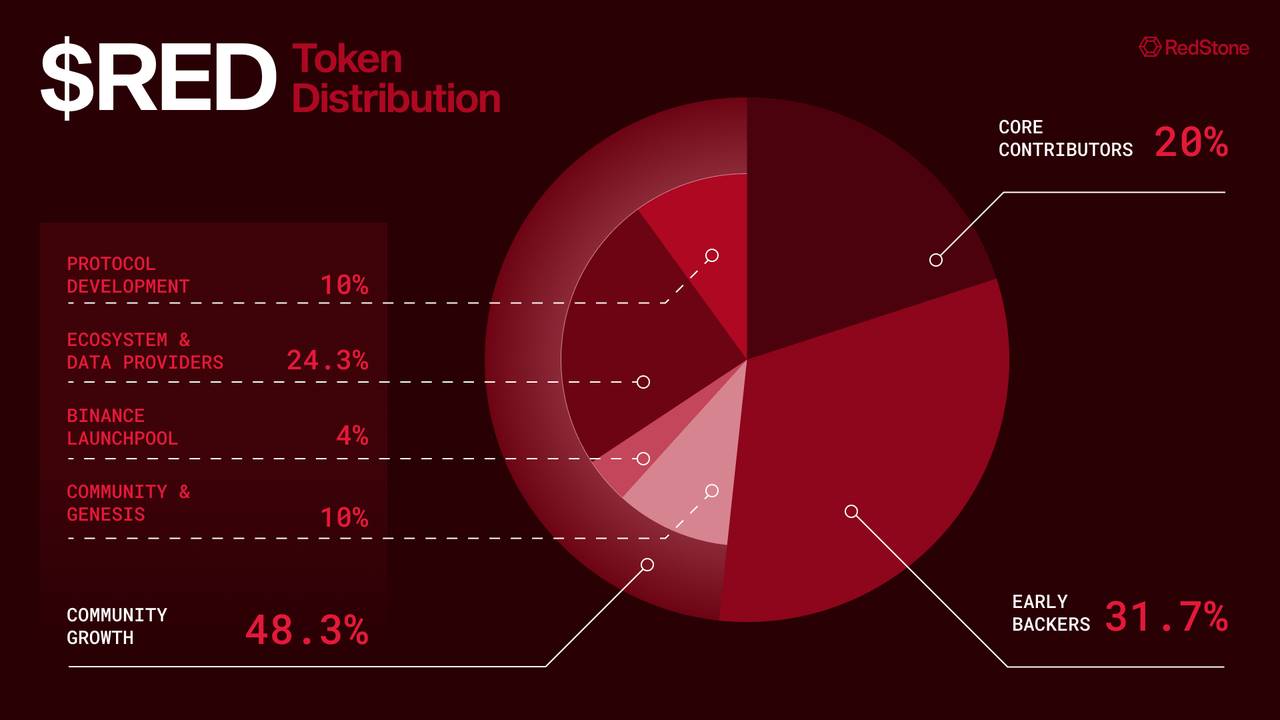
Looking at its tokenomics, a 10% allocation for community airdrops is not particularly low—so that alone doesn’t explain the backlash. On social platforms, users have reported participating in years-long activities (such as mining across S1–S3 seasons, completing hundreds of tasks on Zealy, and taking part in Lunar New Year events), yet still received no airdrop. The answer can be found in RedStone’s official statement.
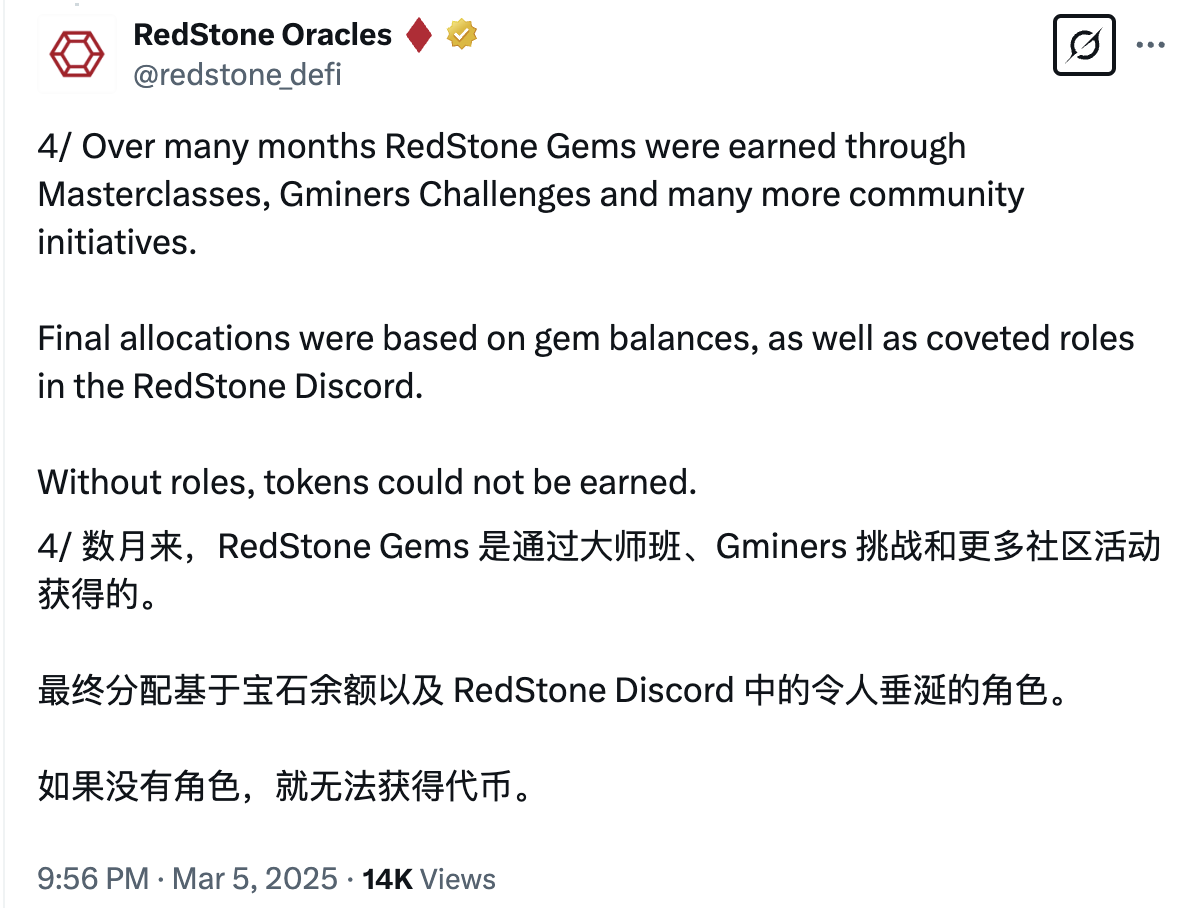
Users without specific roles in the RedStone Discord server are completely ineligible to receive tokens! Eligible roles include Vein Master, Deep Miner, Professor, and IRL (those who attended offline events). Among RedStone’s nearly 230,000 Discord members, fewer than 2% hold any of these qualifying roles!
The issue may not simply be the limited number of tokens distributed—RedStone’s Discord channel has already been forced into “slow mode” due to overwhelming criticism—but rather the stark disconnect between the actual reward mechanism and the project team’s earlier messaging, which left many users feeling their efforts were wasted.
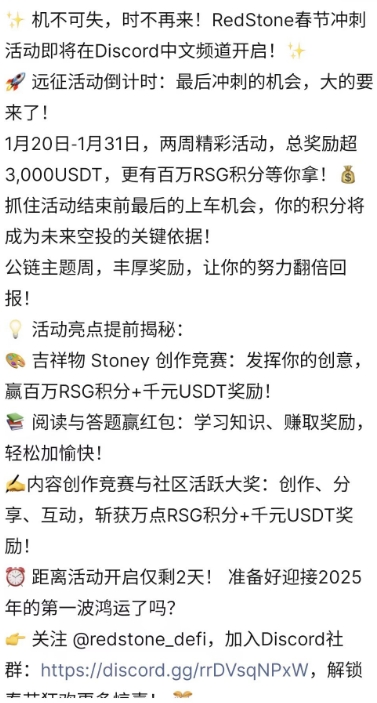
In past promotions, the team explicitly stated: “Your points will be a key basis for future airdrops!” Yet in reality, top holders of RSG points—including those ranked 5th and 7th—were disqualified from receiving RED tokens solely due to lacking the required Discord role. Out of over 170,000 users on the leaderboard, only 2,296 addresses qualified. Across a community of approximately 200,000 members, only around 4,000 ultimately met the criteria, with many receiving just a few hundred tokens. Compared to other major projects, this distribution appears extremely selective.
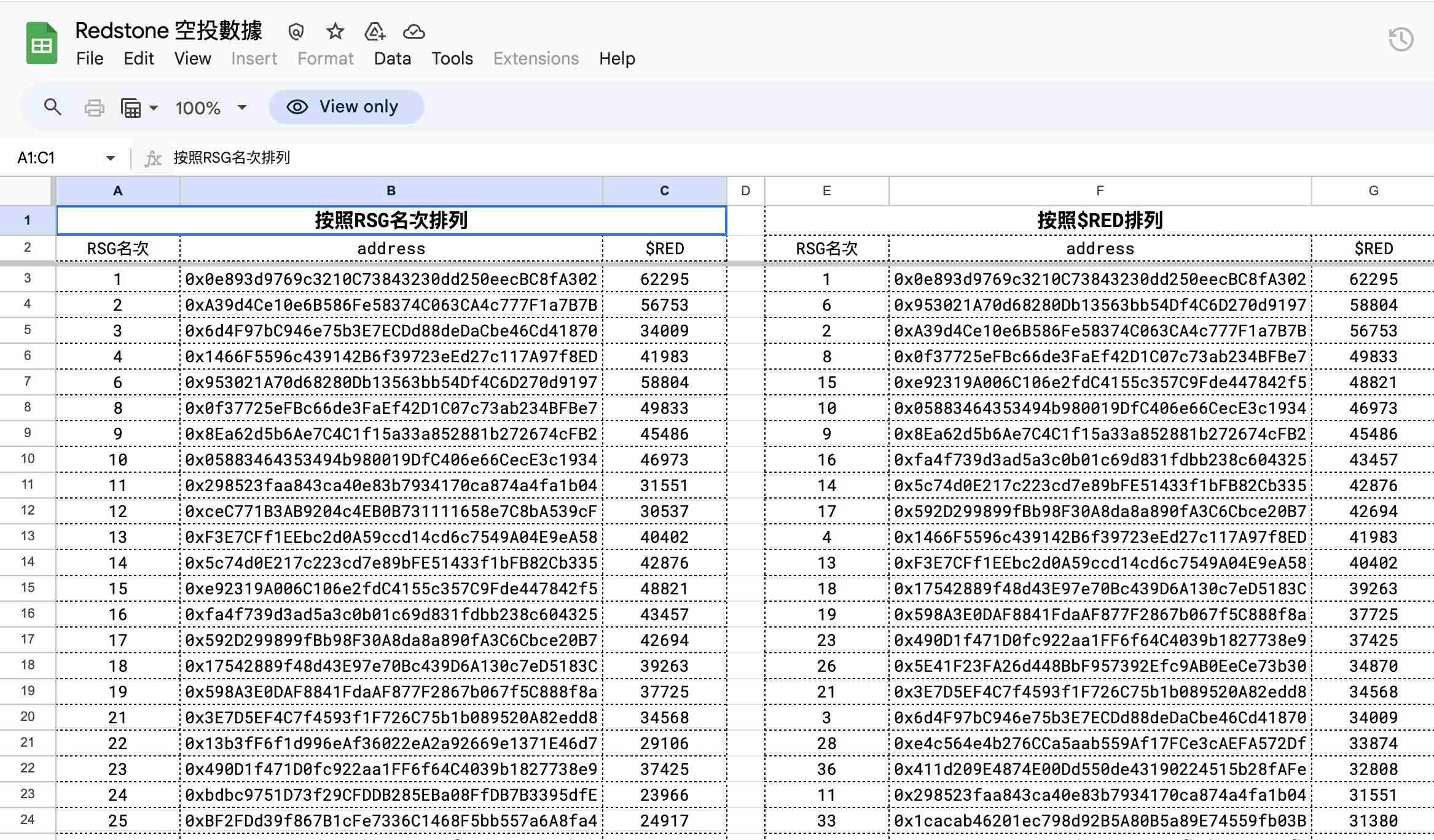
Data source: @OshinoAJ_eth
What truly angered the community is that RedStone’s campaign design relied heavily on manipulative, PUA-style marketing: continuously releasing tasks to drive user engagement, creating the illusion that “hard work guarantees rewards,” while secretly enforcing invisible barriers that excluded the vast majority of dedicated users at the final moment.
This goes against industry norms. Other airdrop programs typically emphasize broad user participation. For example, dYdX’s airdrop saw tens of thousands of eligible participants each receive a meaningful amount of governance tokens. Projects like Optimism implemented clear, fair, and transparent rules designed to reach as many ecosystem users as possible.
In contrast, RedStone’s reliance on exclusive “special roles” appears overly narrow and fails to foster long-term community engagement or trust.
Conclusion
The team may have intended to fine-tune incentives through a more targeted airdrop distribution, ensuring core contributors receive larger shares. But this approach clearly overlooked the time, effort, and expectations of the broader participant base.
In the long run, an airdrop is not just a promotional tool—it’s a critical measure of a project’s governance transparency and ecosystem health. This controversy serves as a wake-up call for the entire industry: only by building fair, open, and reasonable incentive mechanisms can projects truly make users feel valued and drive sustainable ecosystem growth.
Join TechFlow official community to stay tuned
Telegram:https://t.me/TechFlowDaily
X (Twitter):https://x.com/TechFlowPost
X (Twitter) EN:https://x.com/BlockFlow_News
 Foresight News