Strategic Reserves and Power Plays: The Crypto Order in the Trump Era
TechFlow Selected TechFlow Selected
Strategic Reserves and Power Plays: The Crypto Order in the Trump Era
In the next four years, the so-called best projects might only appear in President Trump's tweets.
 Navigating Web3 tides with focused insights
Author: Zeke, Researcher at YBB Capital

Preface
For President Trump, the world is one grand episode of *The Apprentice*. Within less than a month of taking office, numerous individuals—from internal staff to foreign leaders—have already received their "You're fired" dismissal from Trump.
In the remaining four-year season, how should crypto—the key guest—successfully advance? Perhaps we first need to understand this boss.
I. The Market Loves Surprises—but I Must Control the Pace
In Donald Trump’s autobiography *The Art of the Deal*, “controlling the pace” and “creating surprise” form the core pillars of his negotiation philosophy. The interplay of these two strategies not only built his early business empire but also laid the foundation for his later political maneuvers.
● "Controlling the pace": Original quote from the book: "In a deal, you have to set the pace. If you let the other side dictate the timing, you’ve already lost half the battle."
● "Creating surprise": Original quote: "The element of surprise is crucial. When they think you’ve given in, hit them with a new demand—it throws them off balance."

Looking back at Trump’s classic negotiation cases during his business career, his absolute command over timing was evident as early as the 1976 Grand Hyatt New York project. When the city demanded he cover subway renovation costs, he threatened to withdraw from negotiations, creating urgency—announcing a work stoppage just three days before the municipal budget deadline. This forced the New York City Council to urgently pass tax relief, increasing government subsidies from $40 million to $120 million. In the 1983 construction of Trump Tower, he took delay tactics to the extreme: when the project was 90% complete, he suddenly sued the contractor for delays, leveraging their eagerness to receive final payments to slash the total cost by 23%.
The 1985 Atlantic City casino acquisition was the peak demonstration of his “surprise attack” strategy. After eight months of negotiations, just 48 hours before the signing ceremony, Trump demanded the seller—Pritzker Hotel Group—assume $3 billion in debt. This seemingly reckless move was precisely calculated: he knew the seller had already spent $2 million in legal fees, and bankruptcy would trigger mass bank recalls. Ultimately, the seller accepted the terms, allowing Trump to acquire the asset at 40% below market value. This “sunk-cost ransom tactic” later became his signature negotiation style, echoing *The Art of the Deal*: "The best moment to deliver a knockout blow is when your opponent thinks victory is assured." This highly aggressive approach embodies both his celebrated “deal-making doctrine” and his controversial “destructive survivalism.”
Bringing this to the present, on February 28, Zelenskyy and Trump held a globally live-streamed U.S.-Ukraine bilateral meeting at the White House. True to form, Trump opened by swiftly reaching a four-point consensus with Russia just before the talks—one key point being mutual agreement to lay the groundwork for future cooperation on shared geopolitical interests and economic/investment opportunities emerging post-conflict. Second, he presented Ukraine with an astronomical bill: initially demanding $500 billion in repayment, then revising it during the meeting to require Ukraine to channel 50% of future revenues from rare earths, lithium, and graphite into a U.S.-led "reconstruction fund." The live broadcast left global audiences stunned, culminating in Trump ordering Zelenskyy to leave, causing the talks to collapse. Meanwhile, his tariff threats triggered retaliatory measures. Clearly, President Trump did not enjoy a pleasant weekend.
From these examples, we can distill Trump’s deal-making principles more concretely: 1) Set demands far beyond expectations to force acceptance of second-best terms; 2) Use every possible pressure point to maximize gains; 3) Be unpredictable, keeping opponents off-balance; 4) Leverage media amplification to magnify impact.
And from multiple nations’ countermeasures, a simple antidote emerges: refuse to deal, refuse to negotiate.
II. Strategic Reserves
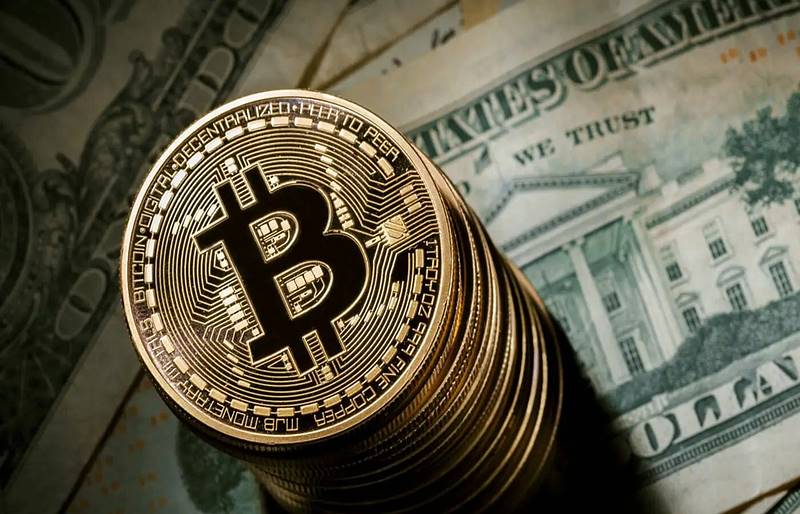
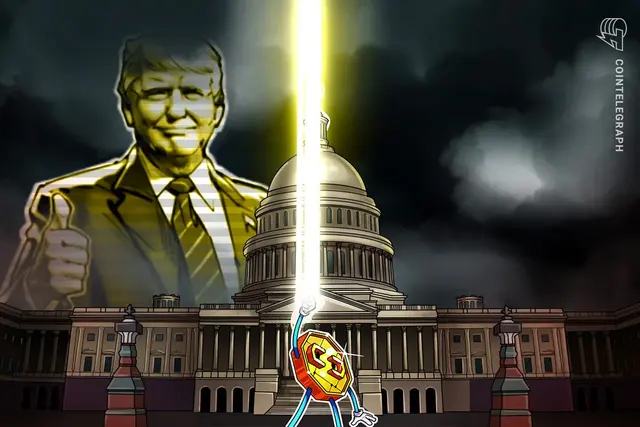
On the Sunday following the U.S.-Ukraine summit, Trump posted two messages on his social platform Truth Social, announcing that XRP, SOL, and ADA would be included in a “crypto strategic reserve,” while BTC and ETH remain core. Markets surged immediately—according to CoinMarketCap, Bitcoin rose 9% to $93,969, Ethereum gained 13% to $2,516, Solana soared 24% to $174.64, Cardano skyrocketed 70% to $1.11, and XRP climbed 34% to $2.93. Yet, the crypto community’s reaction to these apparent bailout tweets differed sharply from previous support. The main catalyst? A suspicious user on Hyperliquid placed multi-million dollar, 50x leveraged long positions on BTC and ETH at an extremely coincidental moment. Analysis suggests the user traded on a DEX specifically to avoid KYC data exposure on centralized exchanges. Numerous conspiracy theories followed—such as the Sunday timing enabling institutions to pump and dump during the workweek, or using multiple channels to treat crypto as an ATM.
Trump’s sudden announcement of a crypto basket aligns perfectly with his usual modus operandi, but his true intent remains opaque. Given his scale of ambition, current speculation may still fall short. Drawing from the earlier “deal-making rules,” I speculate on several possible motives:
1. Despite naming multiple cryptocurrencies, his real goal may be ensuring at least BTC’s inclusion in strategic reserves—securing U.S. dominance and encouraging broader international adoption;
2. As president, Trump wields not just influence but power. He can sustain and amplify market anticipation around “strategic reserves,” much like the ETF hype, thereby steering price movements;
3. Trump needs to expand influence and power for his family’s transition from real estate to crypto, entering the space from every possible angle;
4. The “White House-Approved” label clearly masks a deeper web of interests;
5. There’s currently no clear funding source for acquiring these strategic reserves. Trump may be using舆论 (public opinion) pressure to convert seized crypto assets into reserves—or push for issuing related bonds;
6. Strategic reserves traditionally refer to state-stocked materials, energy, and financial resources accumulated during peacetime. The biggest question about crypto as reserve lies in its lack of intrinsic utility—even if BTC parallels gold. Including alt-L1 tokens lacks justification unless Trump already has plans to drive large-scale adoption of these chains across sectors, making their native tokens—functioning as “oil” to access network resources—legitimate “material reserves.”
III. Destructive Survival

Trump’s decision-making style and personality were profoundly shaped by his father, Fred Trump. Through authoritarian upbringing, Fred framed human relationships as “zero-sum games,” instilling in Trump a combative mindset that turns rivals into enemies. Whether in business confrontations, diplomatic clashes, or his post-2020 election attempt to incite supporters to storm the Capitol, Trump’s core survival code consistently revolves around attack, destruction, and suppression.
Crypto retail investors often cheer “Crypto President forever” due to shared interests, but caution is warranted—we may not actually be on the same team. “America First,” “Family First” will inevitably extend into his crypto vision.
While it’s unclear what countermeasures Trump might take against non-U.S. or non-family projects, he appears to be applying tariff-war logic to ensure blockchain dominance follows “America First” and “Family First” principles:
1. Prioritize U.S. projects for ETF approvals and strategic reserves;
2. Future zero capital gains tax for favored U.S. projects—and conversely, punitive taxes on disfavored ones;
3. Special privileges for family-linked projects, such as regulatory sandboxes or targeted financial injections.
These three trends are already visible. I suspect Trump may even find ways to suppress hash output from non-U.S. mining pools, ensuring each remaining BTC bears a “Made in USA” stamp. Regulatory interfaces could be embedded at the protocol layer, allowing only U.S.-compliant projects to thrive on-chain. Over the next four years, much more will unfold. The Americanization of crypto has irrevocably entered its breakout phase. Caught in this open game, our choices are limited: ally up—or “refuse to deal.”
IV. The Shadow of DOGE
Trump’s friend Elon Musk once propelled Dogecoin—a meme coin originally created to mock Bitcoin—to both market cap and literal “moon” status during the 2021 bull run. Born as an internet joke in 2013 by engineers Billy Markus and Jackson Palmer, Dogecoin mocked the speculative frenzy in crypto. Its code was written in three hours, featured infinite supply, and jokingly called mining “digging holes,” directly subverting Bitcoin’s scarcity narrative.
Yet Musk revived this old meme through social media. Since 2019, styling himself the “Father of Doge,” he ignited market fervor with slogans like “to the moon” and “the people’s currency.” In 2025, SpaceX named a lunar satellite mission DOGE-1—the first space project fully paid for in Dogecoin. This spectacle drove Doge’s 2021 price surge of over 7,000%, briefly surpassing $85 billion in market cap—outvaluing legacy giants like General Motors—and completing its逆袭 from satire to top-ten global crypto asset.
The greatest tragedy in the world is becoming the person you once despised. The crypto world is now reenacting the fate of what it once opposed. Bitcoin, once hailed as a “decentralized weapon against centralization,” has become a new vehicle for American hegemony—capital flows now pivot on the swing of Trump’s tweets, from BTC to Trump, Melania, and now these so-called altcoin strategic reserves. Wherever the baton points, there lies crypto’s future—its vitality extinguished. When rebels become part of the establishment, crypto ultimately cannot escape the narrative loop of “the dragon slayer who becomes the dragon.”
V. The Double-Edged Sword
Setting aside self-interest, Trump is indeed a legend in American political and business history. I believe BTC will ride with him to the moon. But what innovation can exist under heavy-handed intervention and strict regulation? I once raged at alts for failing to fulfill their potential—but now I mourn their misfortune. The battle for attention and power now dominates the chain. As Vitalik responded on X to an Ethereum OG:
Should I feel pleased when I hear crypto Twitter and VC figures declare that “PvP games with over 99% user loss rates, KOL gambler casinos, are the products most aligned with crypto markets,” and claim that “wanting something better is elitist condescension”?
This trend may intensify in the coming years. PvP is merely a microcosm—over the next four years, the “best” projects may only emerge from President Trump’s tweets. The version of crypto Trump champions has always been a double-edged sword. Crypto may eventually split into traditional and Americanized spheres, with past L1 wars replaying at even larger scales. Under Trump’s overwhelming influence and aggressive tactics, this war may be brutal—but crypto’s rebirth must pass through this crucible.
Join TechFlow official community to stay tuned
Telegram:https://t.me/TechFlowDaily
X (Twitter):https://x.com/TechFlowPost
X (Twitter) EN:https://x.com/BlockFlow_News
 @YBBCapital