Trump Administration's Bitcoin Reserves Blueprint: Could It Usher in a New Financial Paradigm?
TechFlow Selected TechFlow Selected
Trump Administration's Bitcoin Reserves Blueprint: Could It Usher in a New Financial Paradigm?
The Trump administration is advancing cryptocurrency-friendly policies, exploring the establishment of a national Bitcoin reserve, and refining the regulatory framework to solidify the United States' leadership in the global crypto economy.
 Navigating Web3 tides with focused insights
Authors: Stefanie Wayco, Matthew Catani
Translation: Baihua Blockchain

1. Policies of the Trump Administration
1) The Trump administration is moving toward crypto-friendly policies
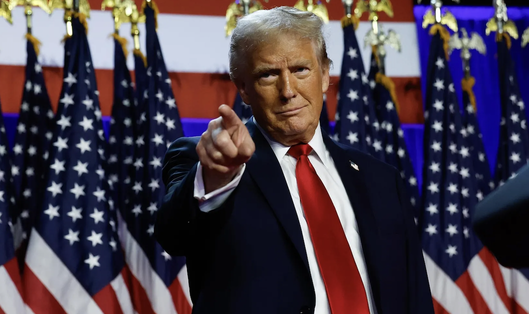
U.S. President Donald Trump is gradually pushing to build a government supportive of cryptocurrencies. A clear signal is his appointment of David Sacks as White House Commissioner for Artificial Intelligence and Cryptocurrency Affairs.
This appointment has sparked widespread speculation: how exactly will the so-called "cryptocurrency affairs commissioner" operate? Will this position hold real policymaking authority? Will it drive clearer regulatory frameworks? Is Sacks merely an advisor without formal government title or power? Could this role lead to a new national-level digital asset reserve mechanism, enabling the government to hold and safeguard digital assets?
2) National Cryptocurrency Reserve: Advancing Regulation and Blockchain Integration
If the U.S. supports establishing an official cryptocurrency reserve, it could bring much-needed policy clarity to the current digital asset landscape—such as clarifying which government agency regulates cryptocurrencies. This would not only help advance the full integration of cryptocurrencies into everyday payments and investments but also promote blockchain technology adoption in major government projects.
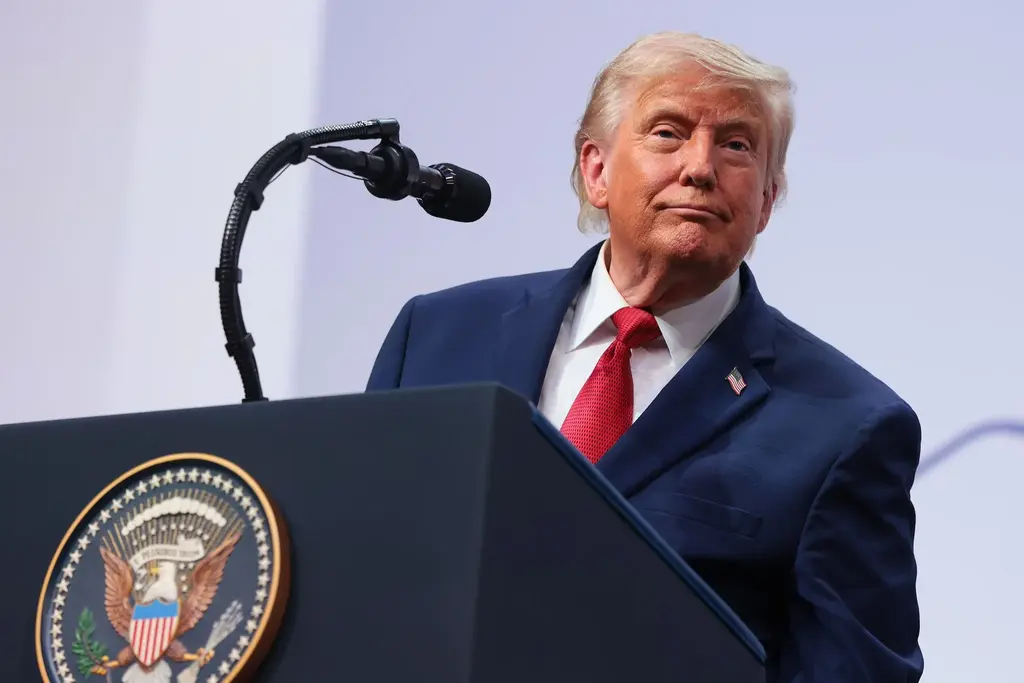
As the most widely recognized digital asset, Bitcoin has long been seen as the industry standard, and Trump has publicly backed calls to establish a strategic Bitcoin reserve.
Under new leadership, the United States has the opportunity to lead a wave of innovative transformation, ushering in a new era centered on digital trust and global acceptance—not limited to Bitcoin alone, but extending across the entire cryptocurrency ecosystem, regardless of whether they are defined as securities or commodities.

2. Digital Asset Diplomacy: How the Federal Reserve Could Leverage Cryptocurrencies
1) The Role of the Federal Reserve
The Federal Reserve, as the central bank of the United States, is responsible for managing monetary policy, controlling inflation, regulating financial institutions, ensuring efficient operation of payment systems, and protecting consumer rights.
A core feature of the Federal Reserve is its political independence, allowing it to focus on long-term economic stability. At the same time, it must closely collaborate with other federal agencies such as the U.S. Treasury, the Securities and Exchange Commission (SEC), and the Federal Deposit Insurance Corporation (FDIC) to ensure comprehensive regulation and financial stability.
For example, the Fed works with the Treasury to manage government debt issuance and bond market liquidity, collaborates with the SEC to maintain financial market stability, and partners with the FDIC to safeguard deposits and uphold the integrity of the banking system.
To achieve these goals, the Federal Reserve employs various policy tools, including adjusting interest rates to influence borrowing costs, conducting open market operations by buying and selling Treasury bonds to manage market liquidity, and setting reserve requirements to ensure banks maintain sufficient funds.
In addition, the Fed oversees key components of the nation's payment and settlement systems, including electronic payment processing and money supply management. Whether the Federal Reserve will further enter the cryptocurrency space and become part of U.S. financial policy remains to be seen.
2) Vision for a Cryptocurrency Reserve
Trump’s proposed cryptocurrency reserve plan—whether aimed at enhancing financial stability, curbing inflation, managing national debt, or fostering innovation—requires strategic coordination, and the Federal Reserve is undoubtedly the most suitable institution to lead this process.
Just as in its traditional asset management role, if the Fed participates in managing a cryptocurrency reserve, it can ensure the initiative aligns with broader fiscal and monetary policy objectives, directly influencing its success or failure.
Moreover, the new administration’s embrace of cryptocurrencies reflects confidence in the Federal Reserve’s ability to effectively manage such a reserve.
A national cryptocurrency reserve could be viewed as a strategic financial instrument akin to traditional reserve assets like gold. Supporters argue that establishing such a reserve could help reduce national debt, unlock additional dollar liquidity, and establish cryptocurrencies as long-term financial assets.
Regardless of whether digital assets are classified as securities, commodities, or currencies, such a reserve mechanism could serve as a stabilizing market force, enhance the credibility and legitimacy of cryptocurrencies, and elevate their status within the financial system.
3. Cryptocurrencies: A New Commodity Class and the "Digital Gold" Standard
1) Historical Context and Standards in the Financial System
Financial standards play a crucial role in economic stability and consumer trust. Historically, the gold standard provided a fixed framework for currency value, anchoring national currencies to a specific quantity of gold.
Under the gold standard, currencies could be exchanged for gold at fixed rates, offering stability and predictability to financial markets and international trade. Central banks maintained fiscal discipline by holding gold reserves and limiting money supply in proportion to their gold holdings.
Today, the U.S. government backs various securities through the “full faith and credit” system—ensuring reliability even without physical backing. This principle means the government unconditionally guarantees its debt obligations, thereby strengthening market confidence in government-issued securities.
For investors, the full faith and credit guarantee makes instruments like U.S. Treasury bonds safer and more reliable, as these debts are supported by the government’s taxing power or ability to print money, providing a stable credit foundation.
From a policy perspective, the full faith and credit system enables governments to efficiently raise funds through debt financing to support critical national initiatives such as infrastructure development and emergency relief programs. It also serves as the bedrock of broader financial system trust, underpinning policies that promote economic growth and resilience.
If cryptocurrencies gain more formal recognition within this framework, they could become a new strategic reserve asset alongside gold and government bonds—even propelling the global financial system into a “digital gold” era.

2) Crypto Proposal: Toward a Clearer Regulatory Framework
Wyoming Senator Cynthia Lummis has long advocated for a national Bitcoin reserve. Her proposal envisions accumulating one million bitcoins over 20 years as an inflation hedge and complementary asset to the U.S. dollar.
The plan includes converting the Federal Reserve’s gold certificates into Bitcoin and establishing a strategic reserve requiring holdings to be maintained for at least two decades.
Any future cryptocurrency regulatory framework must address several key issues:
-
Property rights and ownership protection
-
Secure custody solutions
-
Which agency should regulate cryptocurrencies
-
When and how to apply the 1946 U.S. Supreme Court ruling in SEC v. Howey to determine whether an asset qualifies as a security, and whether certain assets should instead be classified as commodities
Lummis’s proposed Cryptocurrency Regulatory Act aims to resolve these regulatory challenges by clearly distinguishing between securities and commodities, simplifying compliance for crypto firms. The bill also outlines specific funding mechanisms and regulatory structures, proposing to shift oversight of certain digital assets from the Securities and Exchange Commission (SEC) to the Commodity Futures Trading Commission (CFTC).
As the cryptocurrency market rapidly evolves, courts face growing difficulty in determining whether certain digital assets qualify as securities or commodities. Current legal standards remain ambiguous, making it hard for the industry to follow consistent regulations. Therefore, a clearer, more comprehensive regulatory framework is essential.
The Howey Test still applies, but this 1946-era law cannot fully accommodate modern digital assets—something the original court could never have anticipated.
While digital assets themselves are not inherently securities, if the new administration fully embraces the crypto industry and adopts a cryptocurrency reserve, creating a new regulatory framework to clearly define the boundary between securities and commodities may become reality.
Clearer legal standards and regulatory frameworks will allow businesses to better operate cryptocurrency trading platforms, enable institutional investors to participate more easily, let consumers buy, sell, and use digital assets with confidence, and continuously strengthen market trust in cryptocurrencies.
3) The Strategic Petroleum Reserve Model: Lessons for a Cryptocurrency Reserve
The U.S. Department of Energy (DOE) manages the Strategic Petroleum Reserve (SPR), demonstrating how government-held commodity reserves can influence markets and policy.
Although the SPR primarily serves the energy sector and indirectly affects consumers—making it different from the cryptocurrency industry—it can still serve as a foundational model for establishing a cryptocurrency reserve.
Key functions of the Strategic Petroleum Reserve include:
-
Stabilizing oil prices and preventing extreme market volatility
-
Offsetting budget deficits and providing fiscal leverage for the government
-
Enhancing global market influence and securing strategic advantages in international energy negotiations
Similar to the SPR’s role in energy markets and inflation control, a cryptocurrency reserve could impact digital asset markets and potentially become a tool of monetary policy.
In the SPR’s management structure, the DOE handles daily operations, but the President has the authority to order drawdowns, and Congress may authorize sales of SPR crude to fund government spending or respond to emergencies—such as legislatively mandated periodic sales to adjust reserve levels.
Thus, the SPR influences not only financial and monetary policy but also energy markets, commodity prices, and inflation expectations.
Likewise, a cryptocurrency reserve could:
-
Stabilize the crypto market and reduce price volatility
-
Hedge against economic instability and provide financial safe-haven tools
-
Influence global cryptocurrency adoption and strengthen U.S. dominance in the digital asset market
Just as Congress authorizes SPR revenues for government projects, future legislation could similarly define how proceeds from a cryptocurrency reserve are used.
4. Bitcoin Reserve: A New Role for the Federal Reserve
If a national Bitcoin reserve is established, the Federal Reserve (Fed) could play a role in the crypto market similar to that of the SPR in the energy market, while the CFTC (Commodity Futures Trading Commission) could assume a regulatory function akin to the DOE, overseeing the implementation and supervision of the cryptocurrency reserve.
Under this model, the Federal Reserve could:
-
Strategically shape cryptocurrency-related policies
-
Manage and stabilize government-held digital assets
-
Ensure adequate reserve levels to meet fiscal needs and generate returns
-
Protect investor interests and ensure market stability
Additionally, the Fed would retain its core functions, including:
-
Setting interest rates to influence market liquidity
-
Borrowing and fundraising to support government initiatives
-
Using cryptocurrencies as collateral assets to enhance fiscal flexibility
Lummis’s proposed legislation also emphasizes that the U.S. Treasury would play a key role in managing and safeguarding the Bitcoin reserve, mirroring its current collaborative relationship with the Federal Reserve.
1) The Future of a Decentralized Cryptocurrency Vault
To enhance transparency and security, the government might adopt decentralized vault systems as a storage solution for the national cryptocurrency reserve. The Treasury could:
-
Oversee and regulate custodianship of digital assets to ensure the safety of national reserves
-
Establish custody mechanisms compliant with regulatory standards to prevent misuse of assets
-
Ensure public transparency of reserves, aligning with market expectations for trustworthy government asset management
This mechanism would not only resolve ownership and custody concerns but also boost public confidence in cryptocurrencies, advancing societal recognition of a “full faith in crypto” standard.

2) Balancing Efficiency, Innovation, and Development
The vision of a national cryptocurrency reserve represents a transformative ambition for the U.S. economy—one that merges traditional financial principles with emerging digital technologies to modernize the financial system.
However, the evolution of crypto policy marks a significant turning point: a gradual shift from Bitcoin’s original decentralized ideals toward a more regulated, government-led model.
The core challenge lies in balancing the historical ethos of decentralization while ensuring users can efficiently, safely, and innovatively engage with digital assets.
Even as the industry continues to champion decentralization, it has reached a stage where regulation is urgently needed. Faced with ambiguous legal standards and inadequate consumer protections, moderate government oversight and policy guidance have become inevitable. The new administration’s trust and support for cryptocurrencies suggest that a concrete policy framework is imminent.
Rule-making is crucial—only with clear rules can market participants compete fairly.
By embracing cryptocurrencies, the new administration has the potential to shape a future defined by innovation, stability, and global leadership. Whether through federal action, state-level initiatives, or regulatory reform, the United States stands at a crossroads of a new era in digital assets—its strategic vision and adaptability will determine the future landscape of the industry.
3) The Balance of Regulation: Challenges and Opportunities in Policy Advancement
Congressional approval still faces resistance. Some lawmakers express concerns about economic stability and inflation, while ongoing regulatory uncertainty and public skepticism may hinder the implementation of a cryptocurrency reserve.
A key task for the new administration is to strike a balance between efficiency and innovation through appropriate regulation. Only under proper oversight can a national cryptocurrency reserve—and the broader crypto industry—thrive in the United States.
Notably, as other countries accelerate their crypto policy rollouts, the U.S. risks falling behind in global competition if it fails to act proactively.
Establishing a cryptocurrency reserve and introducing supportive regulations could not only solidify America’s leadership in the global crypto economy but also stimulate technological innovation and capital investment.
4) America’s Responsibility: Building Confidence as the Global Crypto Capital
The United States has long led global capital markets through high standards in consumer protection, data security, and financial transaction rules.
If other nations take the lead in digital asset regulation while the U.S. lags, global markets may face greater policy instability. Therefore, the U.S. should clearly demonstrate its trust in cryptocurrencies (“full faith in crypto”) and position itself as the global center of the crypto economy by establishing more robust policies.
Join TechFlow official community to stay tuned
Telegram:https://t.me/TechFlowDaily
X (Twitter):https://x.com/TechFlowPost
X (Twitter) EN:https://x.com/BlockFlow_News
 @DuaneMorrisLLP