








Don't overlook every "!" in the OKX Web3 wallet
TechFlow Selected TechFlow Selected
Don't overlook every "!" in the OKX Web3 wallet
"Safety" is the strongest narrative for weathering bull and bear markets.
 Navigating Web3 tides with focused insights
The crypto industry has reached its current state through technological innovation—from Layer2 to DePIN, from post-quantum cryptography to ZKML, from Homomorphic Encryption 2.0 to Adaptive Consensus Mechanisms. These cutting-edge technologies and concepts are bursting with new vitality. Yet within this code-built encrypted jungle, the security frontier is constantly tested by sophisticated attacks.
In a massive "on-chain battlefield" where "scientists" use MEV bots to manipulate trade slippage at millisecond speeds, where Ponzi scheme smart contracts create inescapable financial traps, phishing websites disguise malicious authorization pop-ups as gateways to freedom, Chinese-localized tools secretly hijack clipboard data, Trojan "bundled malware" steals private information, meme projects execute rug pulls in endless variations, and high-profile project teams delete all social media posts and vanish overnight—"security" stands as the strongest narrative for surviving both bull and bear markets.
From the absurd spectacle of mnemonic phrases exposed in browsers, to urgent warnings shouted in group chats about cryptographic security, we often only pay attention when something goes wrong—but that doesn't mean it's unimportant. In the world of blockchain, you may not believe in bad luck, but you absolutely must wear a "bulletproof vest." Being cautious helps you survive longer. We must recognize: our security DNA needs rapid evolution, and we must choose the right transaction tools—because in a decentralized world, true security depends on a stronger "trust infrastructure." Today, let’s dive into what I see as OKX Web3 Wallet’s security capabilities—including token detection, authorization checks, DApp inspection, private key protection—and how it safeguards our on-chain transactions and assets.
1. Malicious Token Detection
Tokens are among the most common things we interact with, yet we often can’t assess their risks. Common types of malicious tokens include "Pilfering Coins," phishing airdrops, and medium-risk tokens. The first type is “Pi Xiu coins”—tokens that appear normal to buy but cannot be sold easily. Users might face extremely high selling fees (e.g., 95% tax) or discover their addresses have been blacklisted upon attempting withdrawal.
The second type is “garbage airdrops”—worthless tokens sometimes bearing names identical to valuable ones, precisely targeted at select users for phishing. Users may mistakenly believe they’ve received legitimate tokens, only to find insufficient liquidity when trying to swap, realize the token itself is a non-sellable Ponzi scheme, or witness hackers instantly draining the liquidity pool, leaving them holding nothing but air.
When receiving such malicious tokens via OKX Web3 Wallet, I found they are automatically hidden, effectively preventing me from being misled into trading them. Meanwhile, the wallet sets the price of valueless tokens to zero, helping me quickly identify risk and avoid accidental trades. Additionally, if I attempt to trade these tokens through OKX DEX, the system triggers a risk alert and blocks the transaction, further protecting my assets.
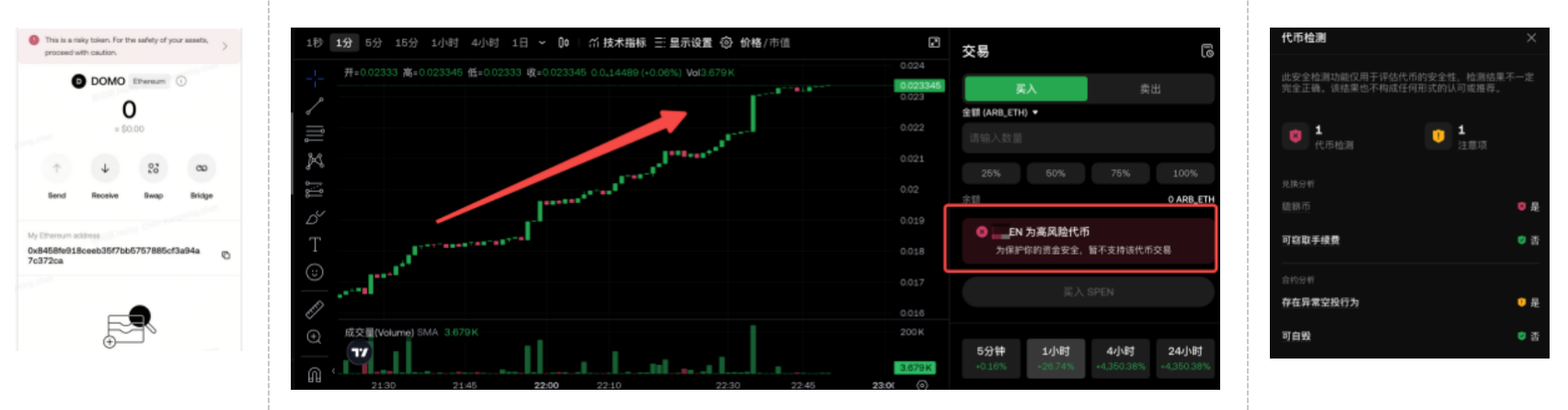 OKX Web3 Risk Token Transaction Protection Diagram
The third category includes medium-risk tokens—low-liquidity tokens, volume-spoofed tokens, and user-blacklisting tokens. Low-liquidity tokens make it difficult to sell after purchase; volume-spoofed tokens inflate trading activity artificially before removing liquidity; user-blacklisting tokens allow only specific wallets to trade, misleading others. For such medium-risk tokens, OKX Web3 Wallet sets their displayed price to zero and issues risk alerts to users.
2. KYS Risk Identification
Besides token trading, one of the most frequent on-chain interactions involves accessing DApps. Typically, connecting a Web3 wallet to a DApp follows these steps: wallet connection, authorization, transaction signing, and confirmation.
We commonly encounter risks during the authorization phase. For example, when trading tokens on a DEX, we authorize the DApp to access certain tokens in our wallet via a signed transaction, allowing it to act on our behalf—so we don’t need to re-authorize every time. The signing process confirms details like amount and price, ensuring each operation aligns with our intent.
OKX Web3 Wallet’s KYS (Know Your Signature) risk identification functions similarly to traditional KYC but focuses more on monitoring and analyzing our transaction behaviors—especially authorizations and signatures—to detect anomalies or malicious activities. Next, I’ll walk you through several critical "authorization risk scenarios" and how OKX Web3 Wallet provides timely "protection" in these moments.
Scenario One: Transferring to a "Blacklisted Address"
Have you ever carelessly copied and pasted an address without double-checking? I once nearly sent funds to an ordinary blacklisted address—but OKX Web3 Wallet popped up a prominent red warning: “This transaction carries risk,” saving me from loss.
However, even more dangerous than regular blacklisted addresses are "blacklisted contracts." These mimic official contracts of popular projects—same name, same icon—making it hard to distinguish real from fake. Unlike simple warnings for blacklisted addresses, OKX Web3 Wallet actively blocks interactions with blacklisted contracts, safeguarding our assets against mistakes.
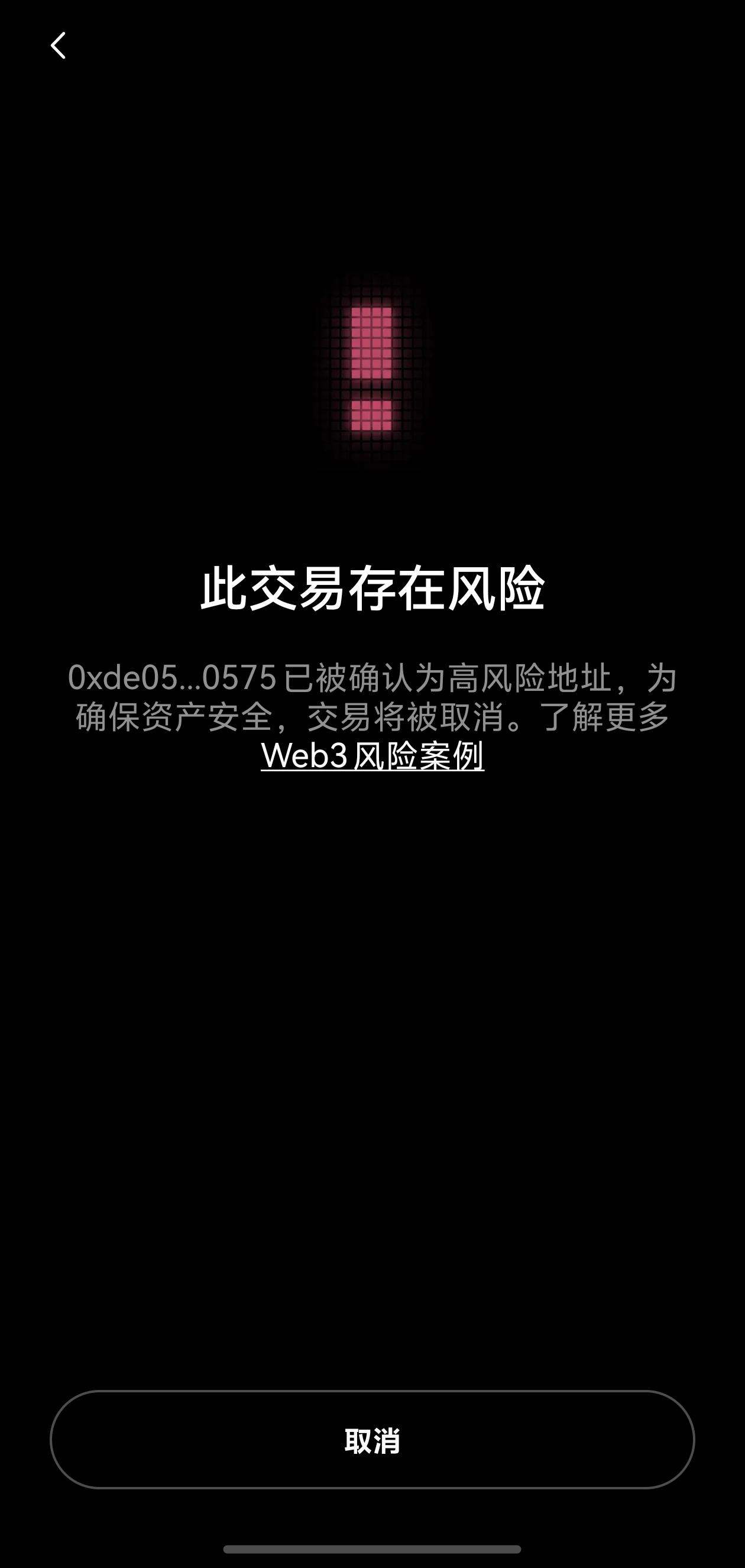
OKX Web3 Wallet Blocking Interaction with Blacklisted Contract
Scenario Two: Incorrectly Authorizing an EOA Account Instead of a DApp Contract
When granting authorization, the intended recipient should be the DApp’s smart contract—not an externally owned account (EOA). Authorizing an EOA means giving control directly to another wallet or person, which could lead to asset theft. When I tried authorizing an EOA, OKX Web3 Wallet immediately issued a warning, urging me to verify the recipient and avoid losses due to misplacing trust.
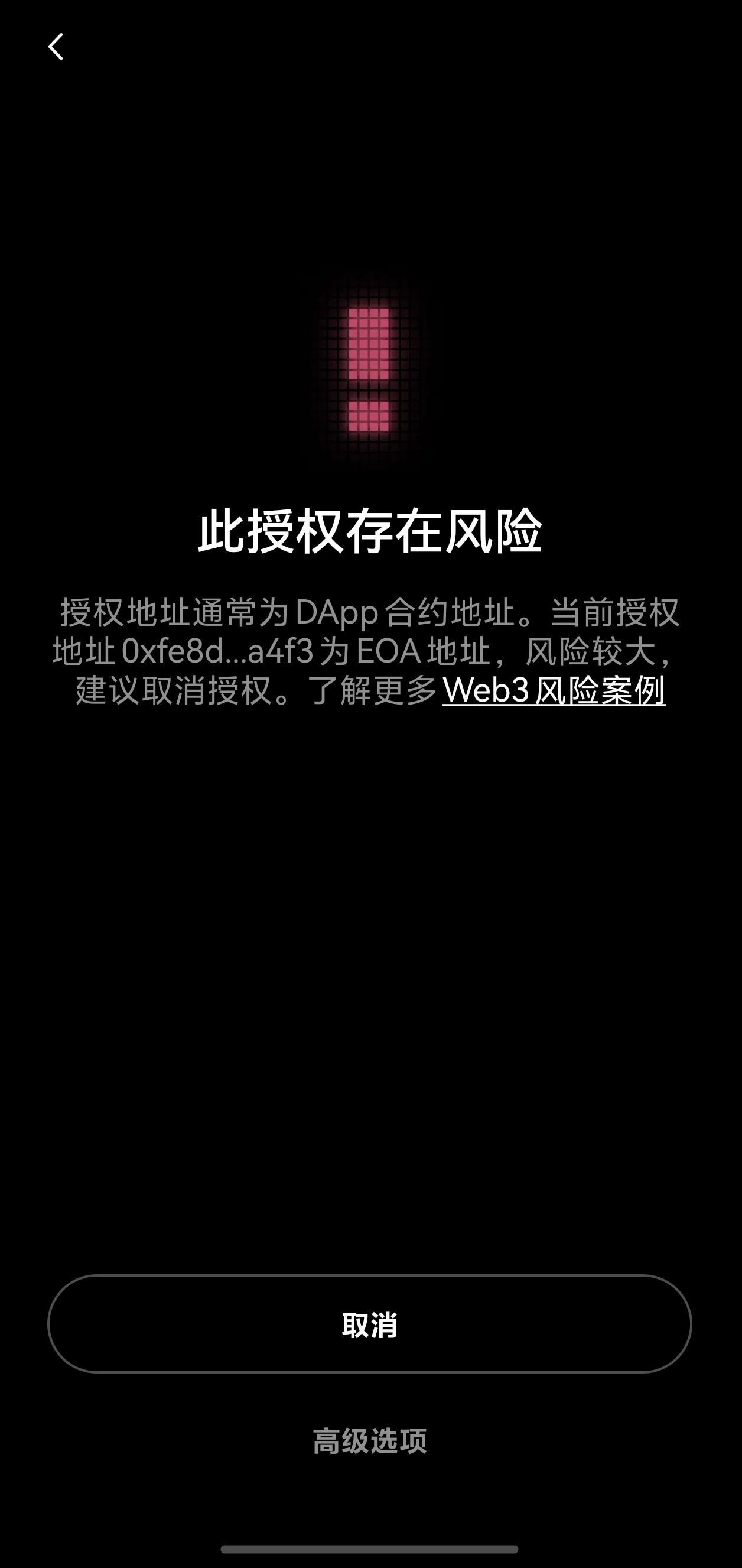
OKX Web3 Wallet EOA Authorization Block
Scenario Three: Sending Funds to a Similar-Looking Address
Scammers often create addresses nearly identical to ones we frequently transact with—for instance, changing 0x1230...321 to 0x1238...32. At a glance, they look the same, and it's easy to fall victim. Fortunately, OKX Web3 Wallet detects address similarity and issues a risk alert when anomalies are detected, helping confirm the correct recipient and prevent accidental transfers to scammers.
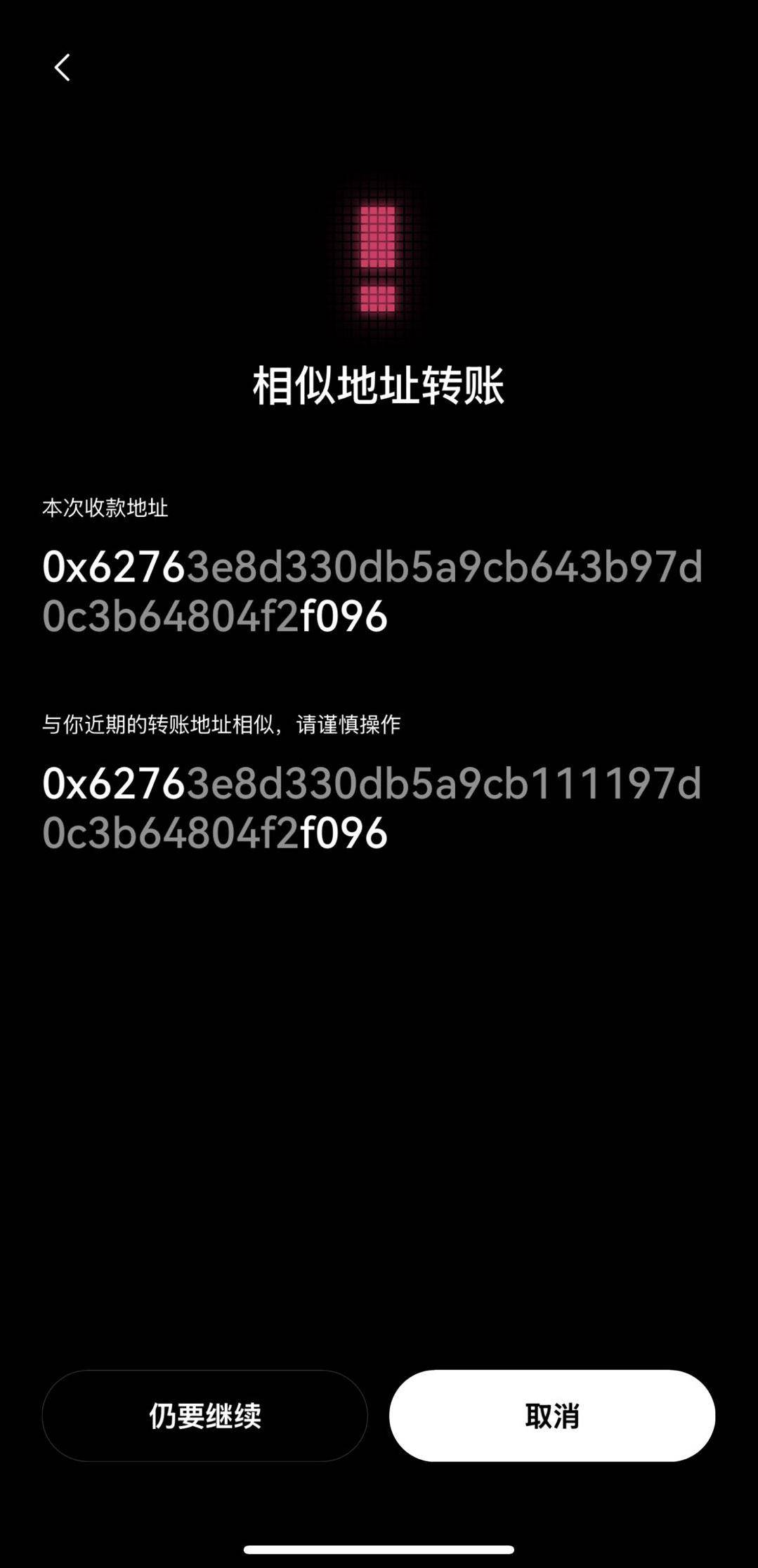
OKX Web3 Wallet Alert for Transfer to Similar Address
Scenario Four: ETHSign Signature Risks
ETHSign is a common method used for Ethereum-based authorizations or transaction confirmations. However, if the signed content is maliciously altered, users might unknowingly approve unsafe transactions, leading to asset loss. To prevent this, OKX Web3 Wallet provides real-time risk alerts during signature operations, helping users detect potential threats in the signed data and ensure operational safety.
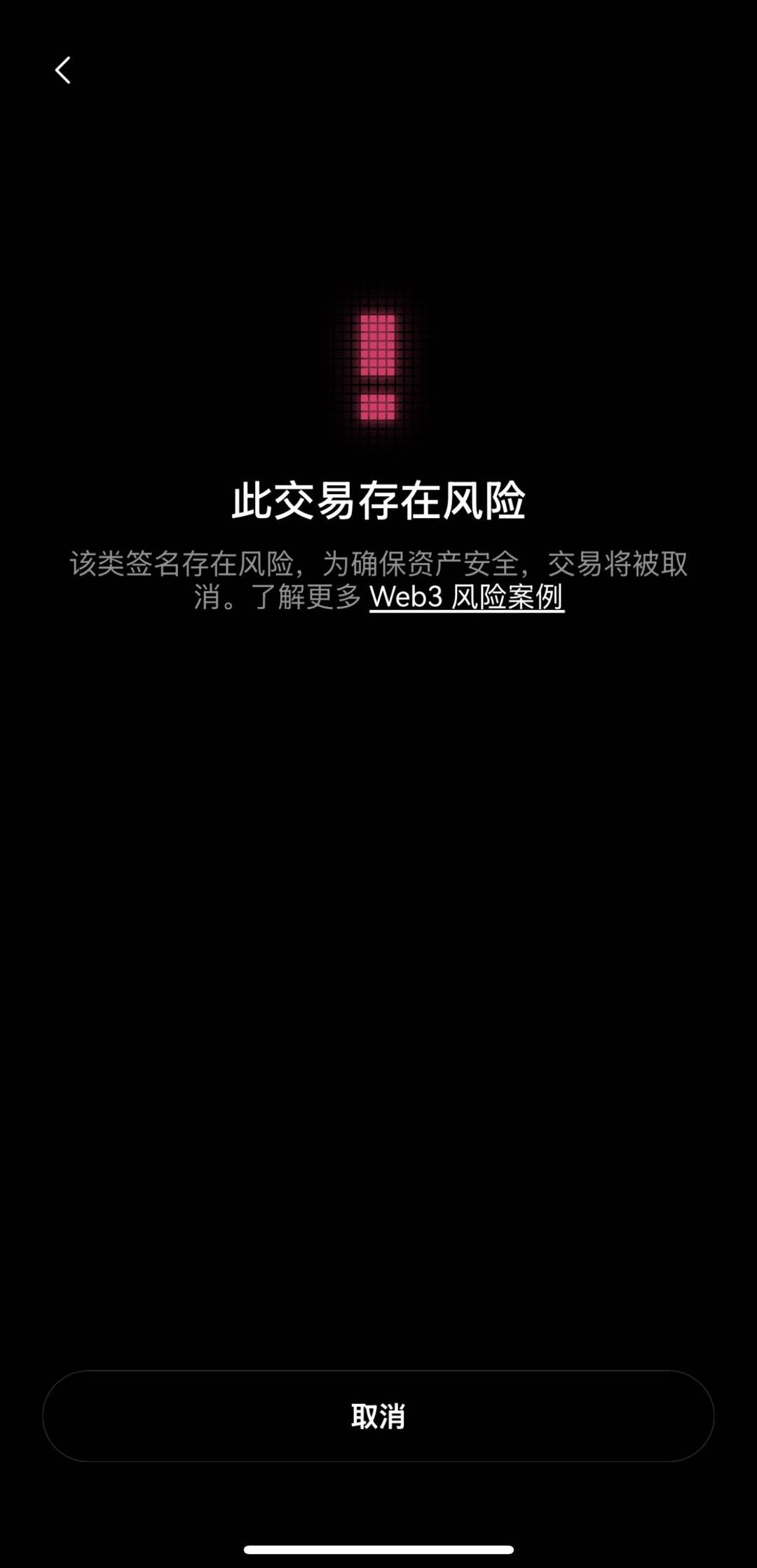
OKX Web3 Wallet ETHSign Signature Risk Warning
Scenario Five: HexData Hijacking on TRON Chain
On the TRON network, malicious actors may alter HexData (the hexadecimal transaction data) to modify transaction behavior, causing unintended actions. OKX Web3 Wallet monitors changes to HexData and issues alerts upon detecting suspicious modifications, protecting transaction security on TRON.
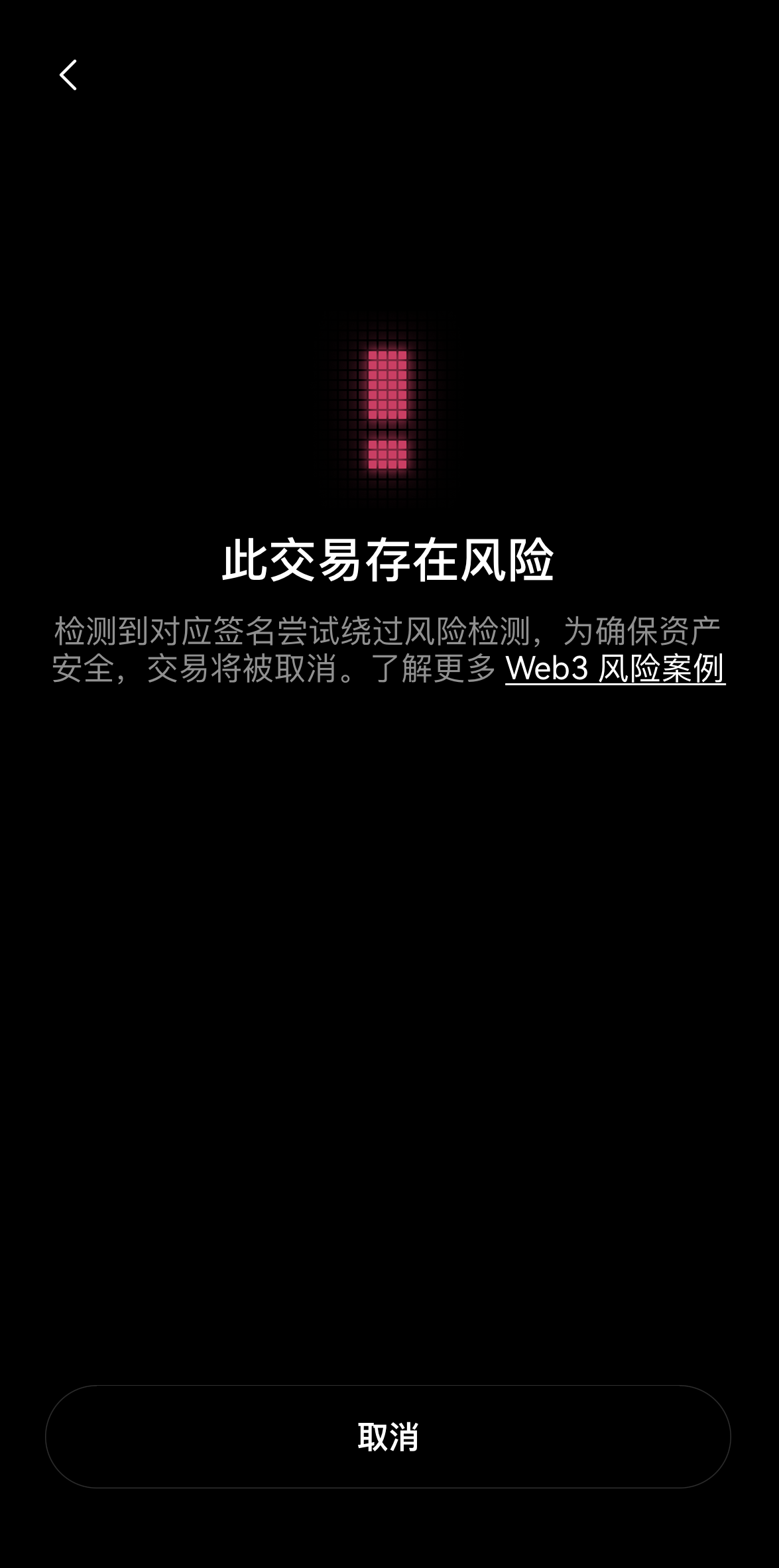
OKX Web3 Wallet Monitoring HexData Modification
Scenario Six: Purchasing "Malicious Tokens"
Let me briefly explain: “malicious tokens” may contain backdoors or traps—such as being unsellable or automatically transferring user assets—leading to fund loss upon purchase. When attempting to buy suspicious tokens, OKX Web3 Wallet displays a warning and offers the option to cancel, helping users avoid falling into token scams.
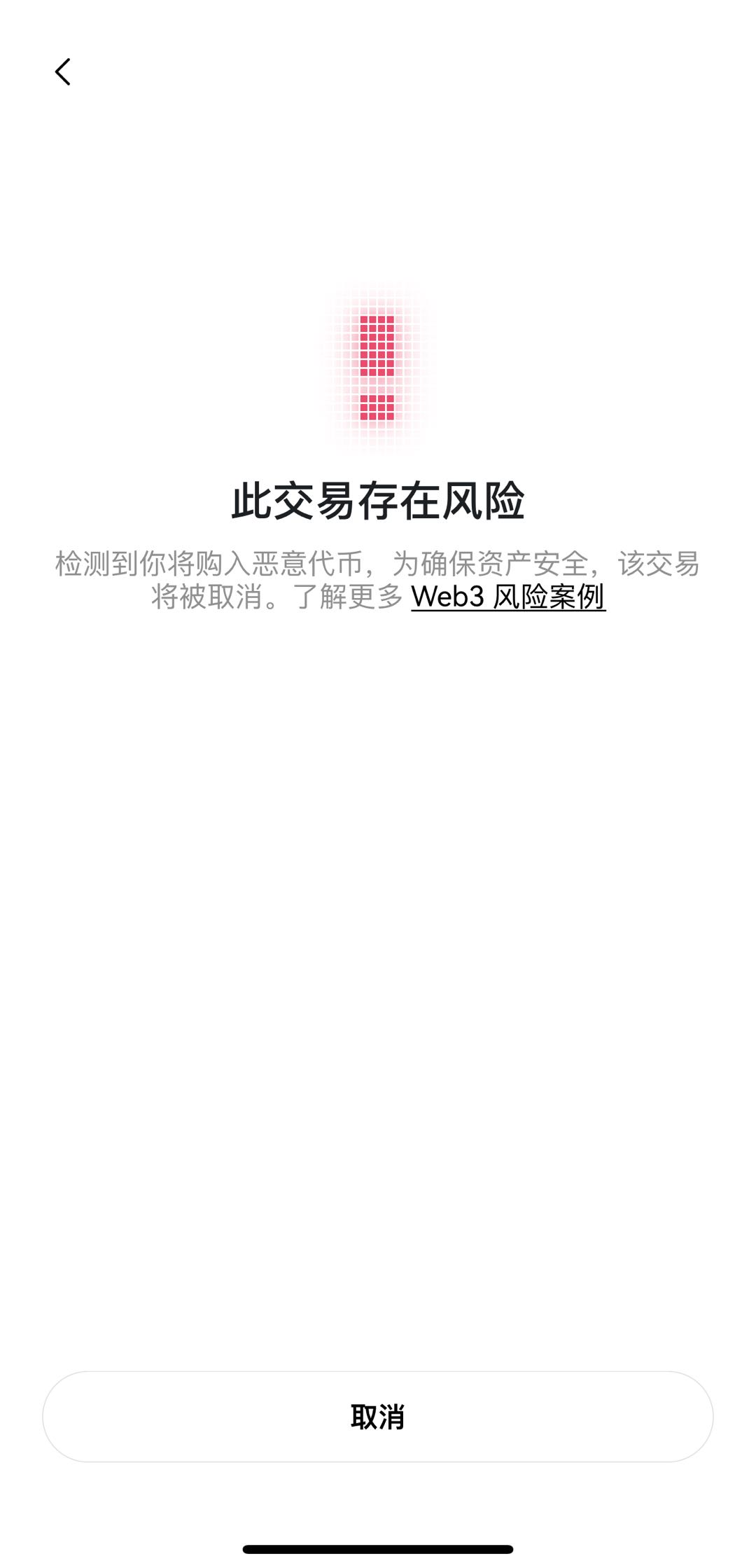
OKX Web3 Wallet Alert for Purchasing Malicious Token Risk
Scenario Seven: Solana Account Owner Change
Meme coin trading on Solana has become extremely popular recently. If your account’s Owner (owner authority) is maliciously changed, you could lose full control and risk asset theft. OKX Web3 Wallet monitors any attempts to change the account owner and issues alerts when risks are detected, ensuring account security.
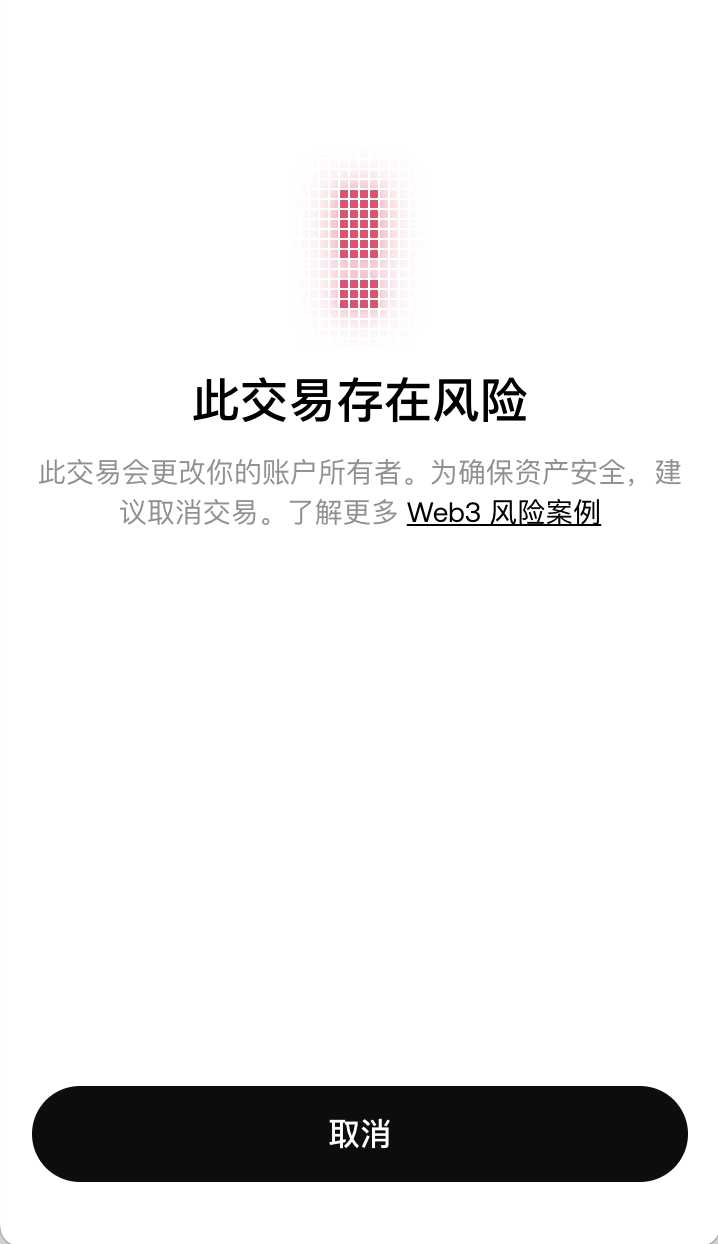
OKX Web3 Monitoring Solana Account Owner Change Risk
Beyond these common authorization risks, OKX Web3 Wallet also protects against other potential threats. For example, it will trigger alerts when “calldata is modified to turn a transfer into an authorization” or when “Permit signature authorizes a non-whitelisted DApp,” reminding users of potential dangers and ensuring every authorization remains secure and under control.
3. Private Key Protection
In addition to malicious token detection and DApp authorization checks, OKX Web3 Wallet implements robust protective features for private keys, backup, and export processes. Remember: security comes first! Most asset theft occurs due to leaked private keys or mnemonics. OKX Web3 Wallet enforces ultra-high standards—screenshots and screen recordings of private keys or mnemonics are completely blocked, eliminating data leakage risks. It also supports segmented copying of private keys, enhancing security at every step. Hackers stand no chance. Currently, only OKX Web3 Wallet offers this functionality. These measures are like installing a "theft-proof door" on your wallet.
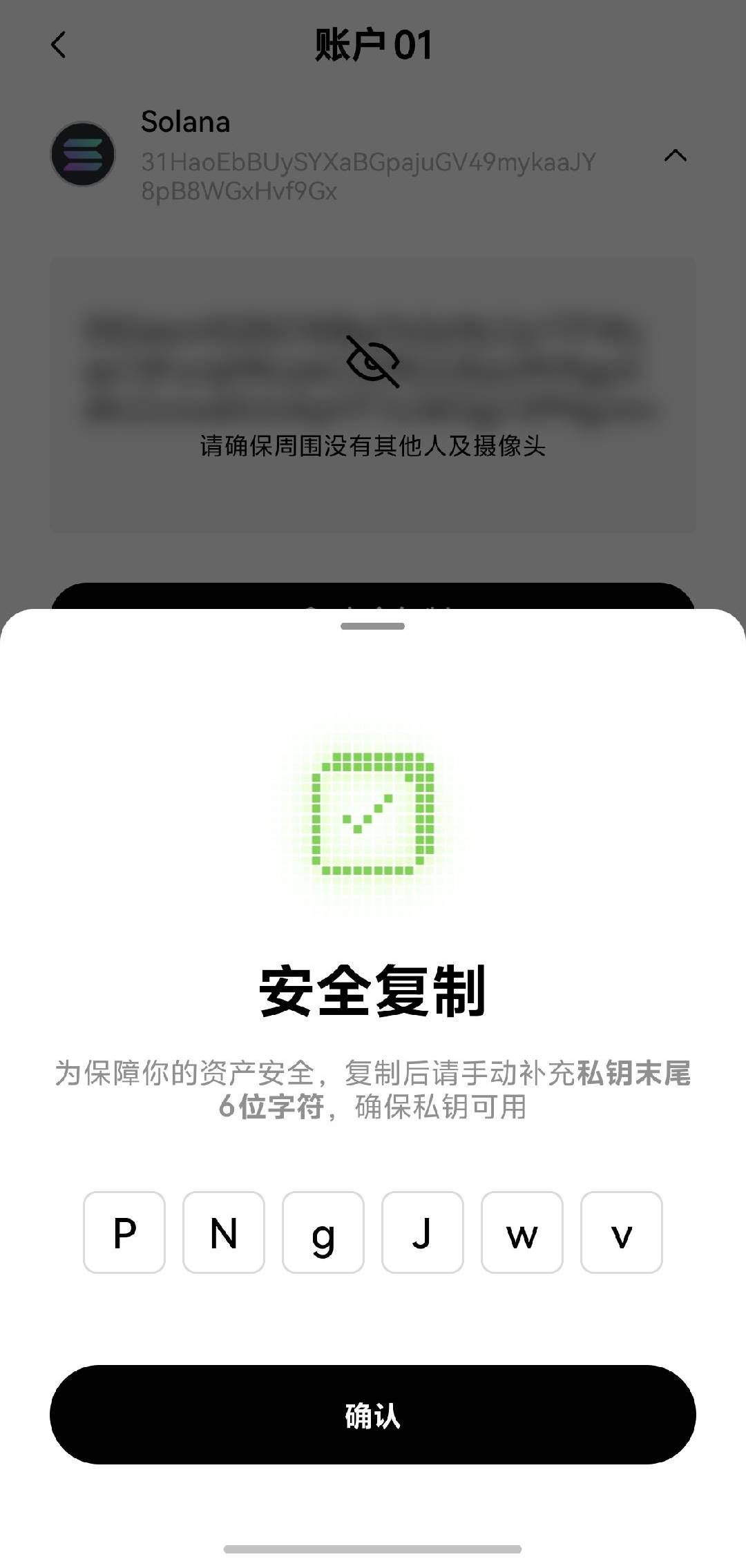
4. Anti-MEV Sandwich Attack Protection
Sandwich attacks are a common form of front-running arbitrage on decentralized exchanges (DEXs). Exploiters take advantage of public visibility of blockchain transactions by inserting their own trades before and after a user’s transaction to profit. Since transactions in the mempool are visible, attackers monitor pending transactions, then place a buy order to artificially inflate the target asset’s price (if the victim is buying) or drive it down (if the victim is selling). The victim executes their trade at the manipulated price—buying high or selling low. Afterward, the attacker sells their position for profit. OKX Wallet integrates multiple MEV protection providers, covering major meme ecosystems, shielding users from sandwich attacks.
5. Choosing the Right Tool for Secure Transactions
In the crypto world, security incidents aren't the scariest thing—the real danger lies in split-second poor decisions. Every time I use OKX Web3 Wallet, I feel it's always one step ahead—blocking my impulsiveness, greed, and negligence just in time, helping me avoid unnecessary risks.
After years navigating the crypto space, I finally understand what "risk management" truly means: it’s not about eliminating all threats, but making those threats visible—helping us choose the right tools and strengthen our security awareness. OKX Web3 Wallet feels like a living "symbiotic armor"—it doesn’t stop me from touching fire, but repairs the burn the instant my skin gets scorched. Isn’t this balance between danger and safety the coolest survival rule in the crypto world?
You must win security before you can win wealth and freedom.
Disclaimer
This article is for informational purposes only. The views expressed herein are solely those of the author and do not represent the positions of OKX. This article does not constitute (i) investment advice or recommendation; (ii) an offer or solicitation to buy, sell, or hold digital assets; or (iii) financial, accounting, legal, or tax advice. We make no guarantees regarding the accuracy, completeness, or usefulness of the information provided. Holding digital assets—including stablecoins and NFTs—involves high risk and may experience significant volatility. You should carefully consider whether trading or holding digital assets is suitable for you based on your financial situation. Please consult your legal/tax/investment professionals regarding your specific circumstances. You are solely responsible for understanding and complying with applicable local laws and regulations.
Join TechFlow official community to stay tuned
Telegram:https://t.me/TechFlowDaily
X (Twitter):https://x.com/TechFlowPost
X (Twitter) EN:https://x.com/BlockFlow_News
 OKX
OKX






