Opinion: Why the Crypto Industry Should Be Wary of Trump
TechFlow Selected TechFlow Selected
Opinion: Why the Crypto Industry Should Be Wary of Trump
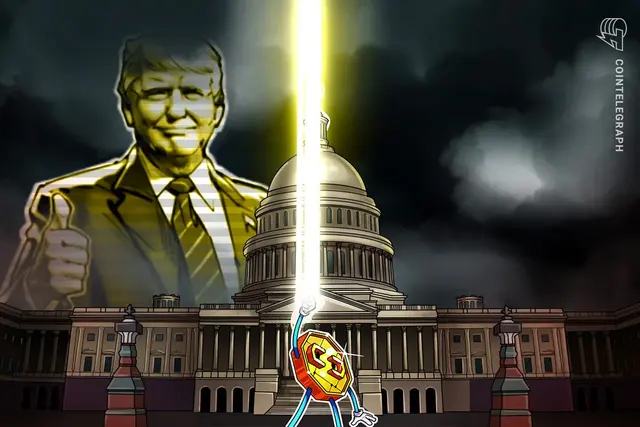
Trump's crypto policy appears to give the industry a green light, but actually harbors hidden traps.
 Navigating Web3 tides with focused insights
By Anderson Sima, Executive Editor, Foresight News
The crypto market is celebrating Trump once again.
But I’m not excited—not because I don’t hold SOL, XRP, or ADA, but because a series of moves by President Trump have left me cautiously concerned for the industry amid the euphoria.
Just before March 2, when the Trump administration announced its push for a cryptocurrency strategic reserve, another globally watched diplomatic incident also deserved attention from the crypto world.
On February 28, U.S. President Trump, Vice President Vance, and visiting Ukrainian President Zelenskyy erupted into a heated public argument in front of the media. This unusually confrontational moment in diplomacy revealed growing resentment within the current U.S. government toward bearing unlimited responsibility for global peace—particularly Trump’s refusal to pay undue costs for other nations, embodying his “America First” doctrine.
Yes, this is both Trump’s campaign slogan and governing philosophy. Understanding this allows us to see what political motivations lie behind his so-called crypto-friendly policies?
“America First” Does Not Equal Financial Inclusion
Trump’s core principle is “America First,” with policy goals consistently centered on consolidating America’s global hegemony and economic interests. While he claims to want the U.S. to become the “global capital of crypto,” the essence of his policy is using state power to implement protectionism, ensuring America maintains its dominant global position.
Then what about the nature of cryptocurrency itself? In terms of products and forms, cryptocurrencies are not fundamentally different from traditional financial instruments—in fact, crypto has already been classified as a commodity and can be traded via ETFs or futures. With so many financial products worldwide, what makes crypto special?
As an industry practitioner, my answer is that the emergence of cryptocurrency was essentially a revolutionary movement for financial inclusion. From a Marxist economic perspective, financial products—as derivatives of capitalism—have always represented elite interests since their inception. They serve as tools for infinite capital expansion, do not serve the proletariat, and inherently favor large capital and power structures.
Bitcoin emerged precisely out of dissatisfaction with and resistance to this system. The design of cryptocurrency and the advent of smart contracts enable all investors to access a new financial system without permission or barriers—a system that was global, permissionless, and transparent from day one. If it were truly about “America First,” blockchain technology would never have been invented by an anonymous individual.
I would be thrilled if the U.S. truly implemented a Bitcoin strategic reserve. But will the next U.S. president four years later continue this policy? Can the market withstand the massive sell pressure at that time? Will Democrats revive the idea of a “crypto crackdown”? Traders often focus only on the present, ignoring long-term implications—but for long-term participants like myself, these questions matter deeply.
Trump Has Opened Pandora’s Box
Beyond the motives behind related policies, the launch of TRUMP and MELANIA meme coins by the Trump couple has not only inflated speculative bubbles in the crypto market but also opened the Pandora’s box of “celebrity token issuance,” triggering a chain reaction.
President Trump pioneered the trend of heads of state issuing tokens, creating a major market sensation. After launch, the TRUMP token surged to nearly $80 billion in market cap before correcting down to around $10 billion, leaving latecomers with heavy losses. Similar cases spread further when his wife MELANIA and Argentina’s president followed suit, forming a vicious cycle of “celebrity → speculation → collapse,” draining market liquidity and damaging the industry’s reputation and healthy development.
Recently, American celebrity Kanye West has also signaled plans to launch his own token, building hype early on social media. Does the market really need so many celebrity memes? The lifecycle of a token has evolved from years to mere hours—greatly increasing difficulty and risk even for professional traders.
In the past, strict SEC regulation stifled industry innovation but simultaneously protected investor assets. Now, under Trump’s personal influence, ultra-fast token launches and minimal regulatory oversight have turned crypto into a haven for “rugging.” That’s why we joke that scam groups from northern Myanmar are shifting operations into cryptocurrency. Trump’s tokenization behavior has “reduced the industry to a tool of political manipulation,” weakening serious external perception of blockchain technology.
Precedent: From Musk to Trump
Trump is not the first celebrity to leverage influence in the crypto market. Tesla CEO Elon Musk was the most powerful shiller in the previous cycle—his announcement of Tesla buying Bitcoin drove prices up, while his later pivot to Dogecoin contributed to Bitcoin’s decline. In this cycle, Trump has become the new king of endorsements.
It's clear that both Trump and Musk—arrogant elites—exhibit unpredictable market behaviors. Particularly President Trump, whose businessman instincts shine through: he embraces crypto when it benefits his political influence, despite having strongly criticized it just years ago.
If the industry becomes overly dependent on endorsements from centralized figures like Trump, we will stray far from the original ideal of “code is law.”
The Crypto Industry Needs a New Independent Narrative
Trump’s crypto policies may appear to greenlight the industry, but they conceal traps. His “America First” logic instrumentalizes crypto technology; celebrity coin launches fuel speculative bubbles; and the tight coupling of policy and markets plunges the industry into cyclical turmoil.
We must clearly recognize: true financial inclusion cannot rely on the “benevolence” of political strongmen, but must return to the foundational, neutral value of technology. Only by upholding a decentralized narrative, continuously advancing technological innovation, and seizing transformative opportunities like AI, can the industry fulfill its revolutionary potential.
Join TechFlow official community to stay tuned
Telegram:https://t.me/TechFlowDaily
X (Twitter):https://x.com/TechFlowPost
X (Twitter) EN:https://x.com/BlockFlow_News
 Foresight News