








Globalization and Compliance First: Backpack's Path to Building a Versatile Financial CEX
TechFlow Selected TechFlow Selected
Globalization and Compliance First: Backpack's Path to Building a Versatile Financial CEX
Backpack's goal is not merely to build a better cryptocurrency institution, but to create an entirely new and more comprehensive financial institution.
 Navigating Web3 tides with focused insights
Author: Logan Jastremski & Diego
Translation: TechFlow
We are undergoing a transformation in finance. On one hand, cryptocurrency technology can now transfer billions of dollars in value in less than a second and at a cost of less than a penny. Yet most consumers remain unfamiliar with these technological advances and have not yet benefited from them, still relying on traditional, slow, and expensive industrial-era financial systems. To transition today's financial system from the industrial age to the internet era, we urgently need a new generation of financial institutions—ones that adopt cutting-edge cryptographic practices to deliver user experiences hundreds of times better than existing systems. So, what changes will this next generation of financial institutions bring?
In short, future financial institutions should allow everyone to freely trade, borrow, earn yield, pay, and manage their assets. Specifically, they should have the following characteristics:
-
Support depositing any type of asset (whether digital or traditional) and automatically generate high-yield returns for users;
-
Enable users to trade any asset efficiently and around the clock, including spot and leveraged trading;
-
Allow instant sending and receiving of value (e.g., stablecoins) without waiting days;
-
Manage all assets through a single account, whether for paying debts or credit spending;
-
Provide publicly verifiable proof of backing, ensuring 1:1 full asset support instead of relying on fractional reserve models;
-
Allow users to withdraw assets (digital or traditional) anytime, without fear of bank runs.
This is exactly the future Backpack aims to build. The core mission of crypto and open finance is not only to democratize finance but also to create a more efficient and transparent financial system for global market participants. This includes leveraging crypto technologies such as smart contracts and stablecoins to offer global users financial products previously concentrated in U.S. capital markets—such as USD savings accounts, stock markets, commodities, and even tokenized real estate and fixed-income products.

Original image from Frictionless Capital, translated by TechFlow
Crypto technology is gradually disrupting the traditional financial system in the same way software transformed the world. Today, the integration between traditional financial products and crypto-native services is accelerating, and exchanges—serving as the key bridge connecting these two parallel systems—are at the forefront of this change. Over time, the boundary between them will blur, eventually giving rise to an entirely new financial system. In this future, "crypto finance" will no longer be a separate concept, just as "internet tech companies" evolved into simply "tech companies," becoming mainstream finance itself. Backpack is striving to become the bridge between traditional and on-chain economies, integrating key products from both systems. By moving capital markets onto internet-era financial rails, settlement times could shrink from T+2 days to just T+200 milliseconds (one-thousandth of a second), enabling real-world assets and financial instruments to trade with unprecedented efficiency in tokenized form. As Blackrock CEO Larry Fink stated at the 2022 New York Times DealBook event: "The next generation of markets and securities will be tokenization." In a future where everything can be tokenized and traded 24/7 on crypto rails, the opportunity to reshape finance has never been clearer. However, it's unrealistic to expect century-old traditional institutions to dismantle their existing platforms and rebuild from scratch using these emerging technologies. In fact, they've had decades to try—and failed.
To meet this new frontier in finance, new institutions must combine leading-edge crypto capabilities with expertise in risk management and legal compliance. From past experience, many successful crypto companies excel at crypto-native products but struggle with global compliance demands. This results in platforms beloved by traders yet lacking in risk management, licensing, and operational maturity. Backpack is integrating these critical elements to build a next-generation financial institution from the ground up. Ultimately, Backpack will be more than just a trading platform—it will become the central hub for managing all assets and the first institution of its kind globally. While the crypto industry has partially recreated functions of traditional finance since its inception, it has yet to integrate these products into a seamless, unified, and fully compliant system. Such integration is precisely the key to overcoming crypto’s limitations and leveraging its unique advantages to replace traditional financial institutions.
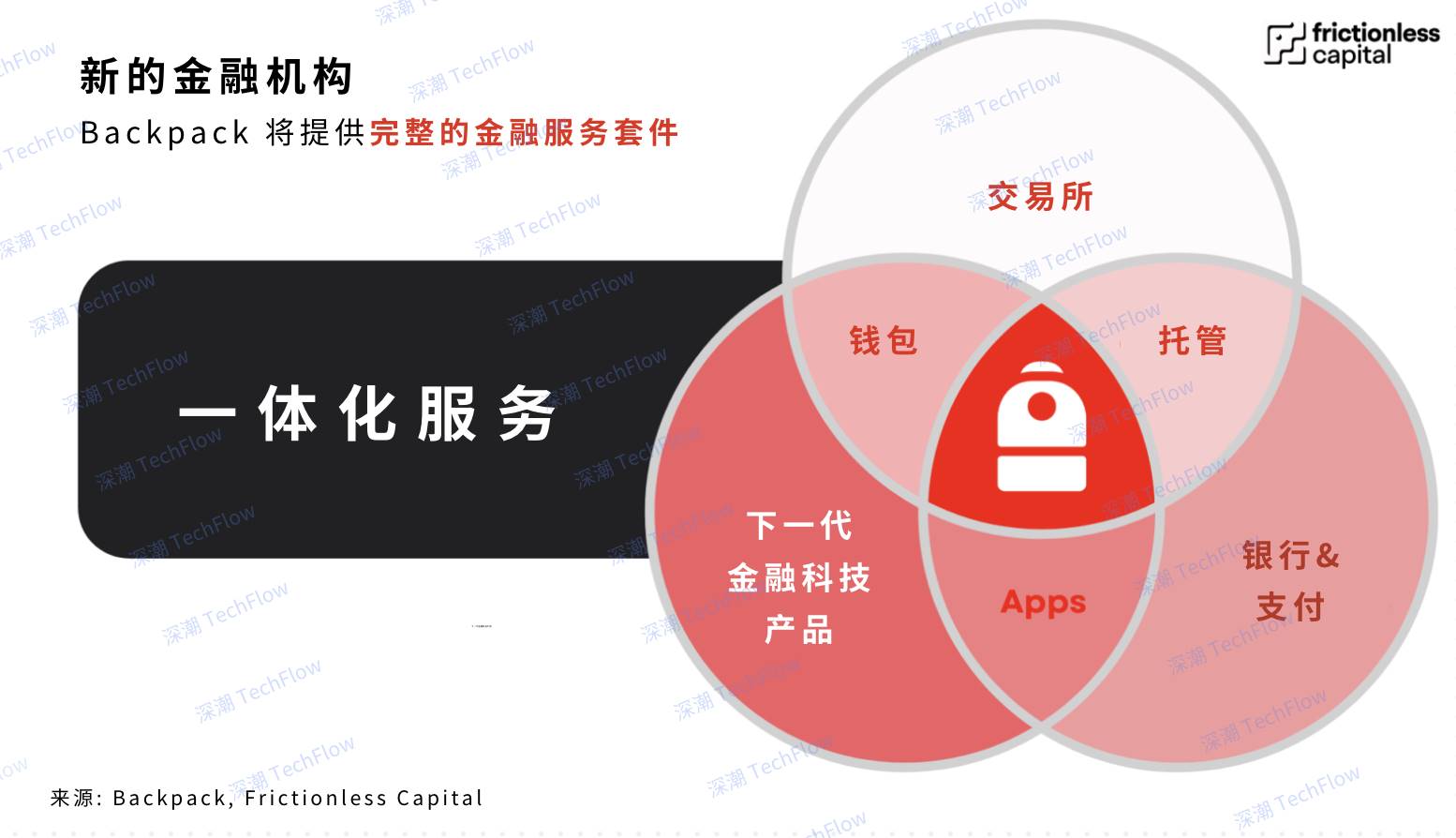
Original image from Frictionless Capital, translated by TechFlow
In the early stages of crypto development, entrepreneurs focused primarily on building standalone "products"—wallets, exchanges, decentralized lending markets. But if we want to bring crypto and open finance innovations to the next billion users, we must recognize that these fragmented "products" are actually just components of a larger application. The whole is far greater than the sum of its parts. Therefore, Backpack is not merely a wallet or exchange, but a fully integrated suite of applications—a "Backpack experience." With Backpack, users download one app to securely hold assets, trade freely, make merchant payments, and seamlessly interact with on-chain applications.
Wallet, Exchange, Bank, or Global FinTech App?
The exchange is the foundational core of Backpack. Through it, users can securely custody assets, trade freely, and enjoy compliant connectivity to fiat (banking) rails. Each industry cycle spawns a new generation of centralized exchanges (CEX), and we believe Backpack has learned crucial lessons from its predecessors and assembled a strong team. Today, Backpack is rapidly advancing toward its goal of becoming an "all-in-one financial app," building a high-performance platform from scratch to overcome past CEX shortcomings and deliver a superior financial experience.
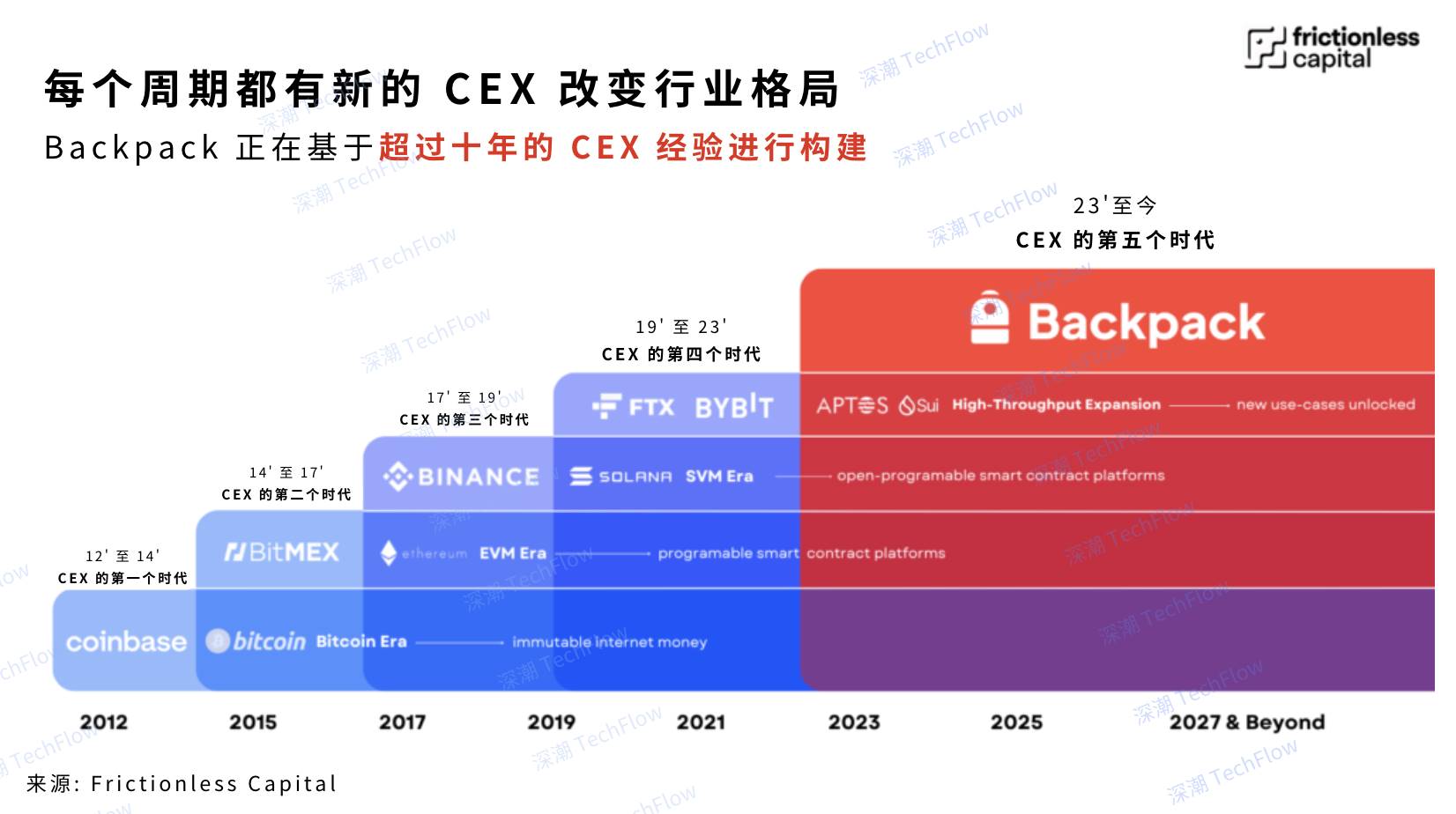
Original image from Frictionless Capital, translated by TechFlow
Beyond core functionality, Backpack further integrates a high-performance native lending money market. Global credit and capital efficiency are vital to financial markets, and Backpack provides this service especially for traders—including institutional clients restricted by counterparty rules from trading on KYC-free on-chain platforms. In Backpack’s native money market, traders can collateralize assets to borrow for trading or withdrawals to other blockchain networks. For users seeking extra yield by lending assets, the process is fully automated and requires only a single exchange account. Compared to the multi-step processes typical of traditional exchanges, this design dramatically improves user experience. Unlike many exchanges treating "yield" as an add-on feature, Backpack deeply integrates lending into the core of its margin system. This means users automatically earn yield on every action within the exchange—USDC deposits, unrealized PnL, lent assets, and spot collateral.
On Backpack, users can borrow any asset and withdraw it to other chains—a function similar to Aave—but Backpack’s system operates across multiple blockchains under a unified margin framework. More importantly, lent assets are also counted as collateral, meaning users continue earning lending yield even while holding positions, or can earn additional returns via neutral strategies like hedged arbitrage. A prime example is Backpack’s leading basis trade strategy, which offers higher yields and more efficient capital utilization compared to other exchanges.
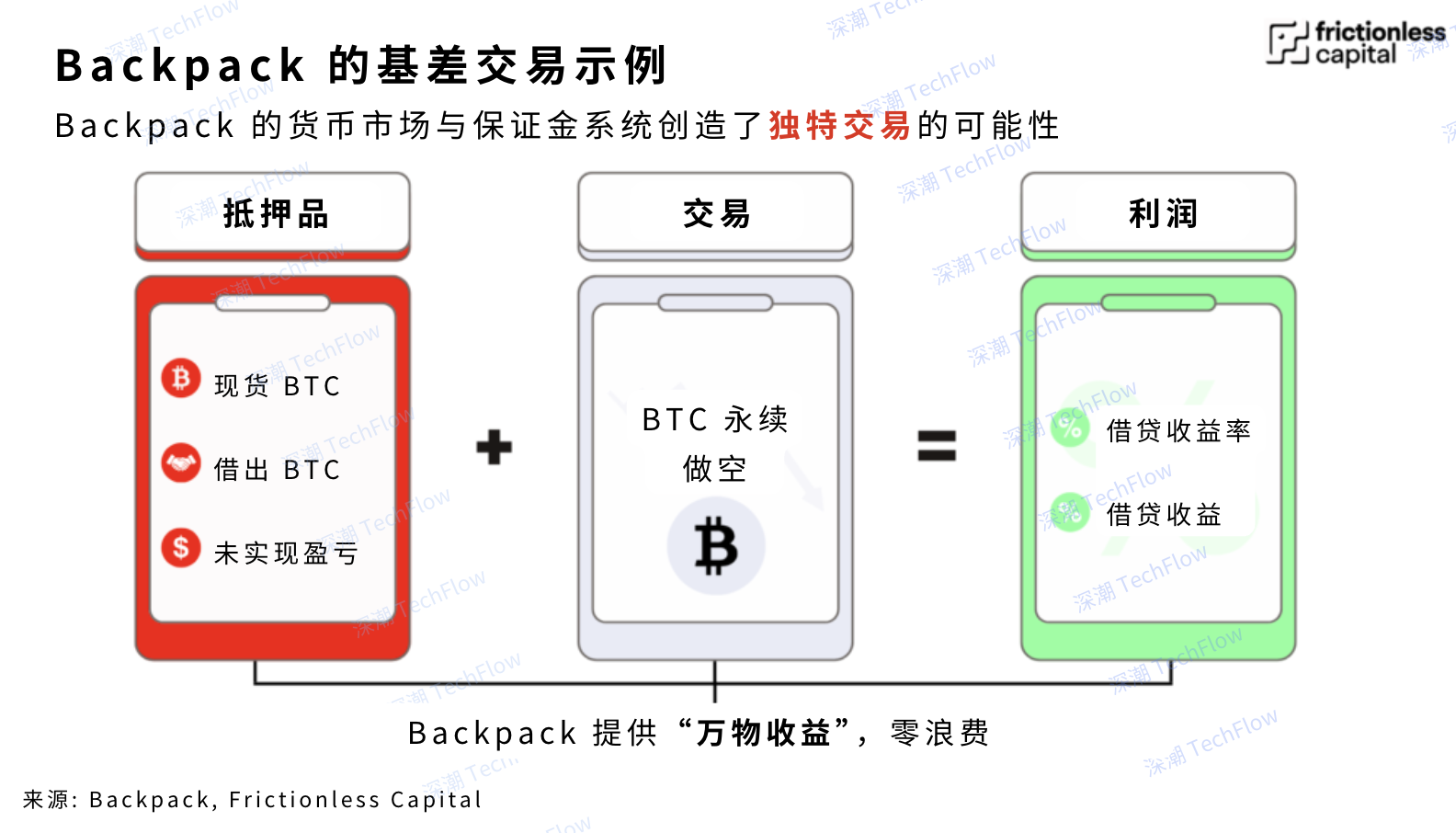
Original image from Frictionless Capital, translated by TechFlow
Backpack offers the industry’s most capital-efficient basis trade.
In crypto, centralized exchanges (CEX) and stablecoins are among the most profitable product categories. Exchanges attract the largest user base and are undoubtedly among the most profitable businesses in the industry. Over the past decade, CEXs have generated approximately $50 billion in profit, primarily from crypto trading, often achieving profit margins above 80%. Daily futures trading volume alone exceeds $100 billion (excluding spot volume). To put this in perspective, that figure is roughly 30 times the combined daily trading volume of Tesla, NVIDIA, Apple, Microsoft, and Amazon.
These trading metrics are expected to grow significantly over the next decade. Although CEXs are core products in crypto, current players have not yet fully met the vast demands of internet-era capital markets—creating a prime opportunity for new entrants to build a comprehensive financial solution.
For millions worldwide, a centralized exchange is not just a digital asset trading platform but effectively a digital bank account. They use it to manage personal finances, store digital dollars, make payments, and even circumvent strict capital controls. Moreover, CEXs serve as critical bridges between traditional finance and the on-chain economy, providing essential fiat-to-crypto "on-ramps" and "off-ramps." This role is vital, given that hundreds of billions of dollars flow through these channels annually.
This article explores key aspects of the CEX space and explains why we believe Backpack stands apart. It differs fundamentally from all existing CEXs and possesses unique potential to capture significant market share while redefining how users manage and interact with digital assets.
The potential to build a new global financial institution in the crypto era is immense. In 2024, during its pre-trading phase, Backpack Exchange achieved $60 billion in paid spot trading volume—equivalent to 44% of Robinhood’s volume during the same period. This performance lays a solid foundation for Backpack’s future market position.
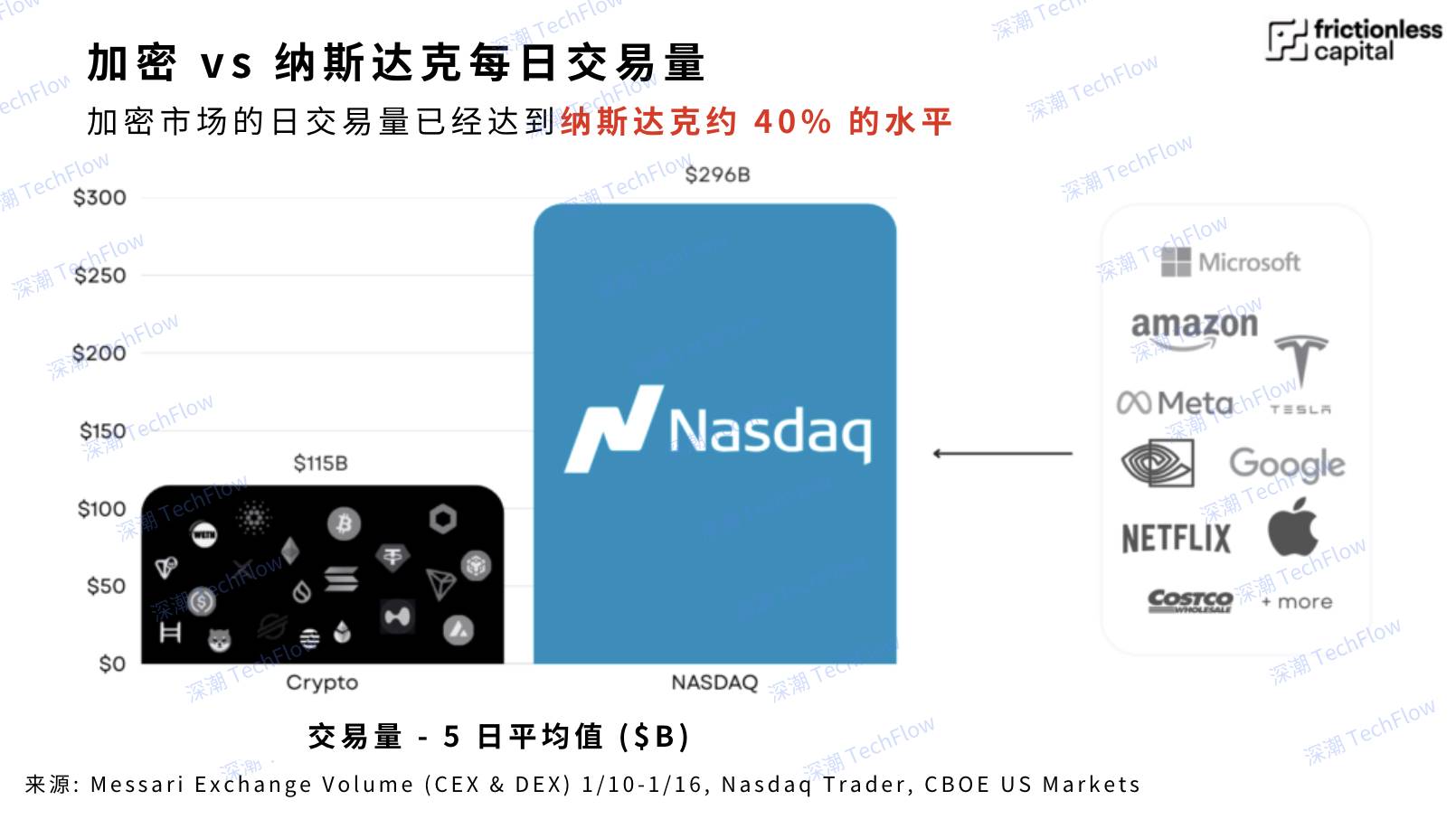
Original image from Frictionless Capital, translated by TechFlow
This demonstrates crypto’s potential to serve global capital markets far beyond region-specific traditional models. Just as internet companies replaced traditional brick-and-mortar businesses, crypto is gradually replacing traditional financial institutions worldwide.
Global Market Access: The Value of Licenses
To attract mainstream retail users, crypto exchanges must offer a complete product suite, including seamless integration with banking systems. Assuming users already own crypto and understand blockchain transactions drastically limits the potential user base. To directly market services and provide easy on/off ramps, centralized exchanges (CEX) must obtain and comply with retail trading licenses in various jurisdictions. These licenses are typically costly and time-consuming to acquire. For instance, FTX spent over $500 million securing licenses to dominate global markets, enabling access to most of the world’s GDP regions. Backpack expects to achieve comparable license coverage by Q2–Q3 2025 at less than 10% of FTX’s cost.
On January 7, 2024, Backpack announced the acquisition of FTX EU for $32.7 million, gaining a strategic advantage in the European market. European users typically contribute 20–30% of global crypto trading volume. When OKX, Binance, and ByBit were still active in Europe, FTX EU’s customer base generated over $200 million in annual revenue. Now that these exchanges have exited Europe, Backpack has a prime opportunity to launch popular products and fill the market gap.
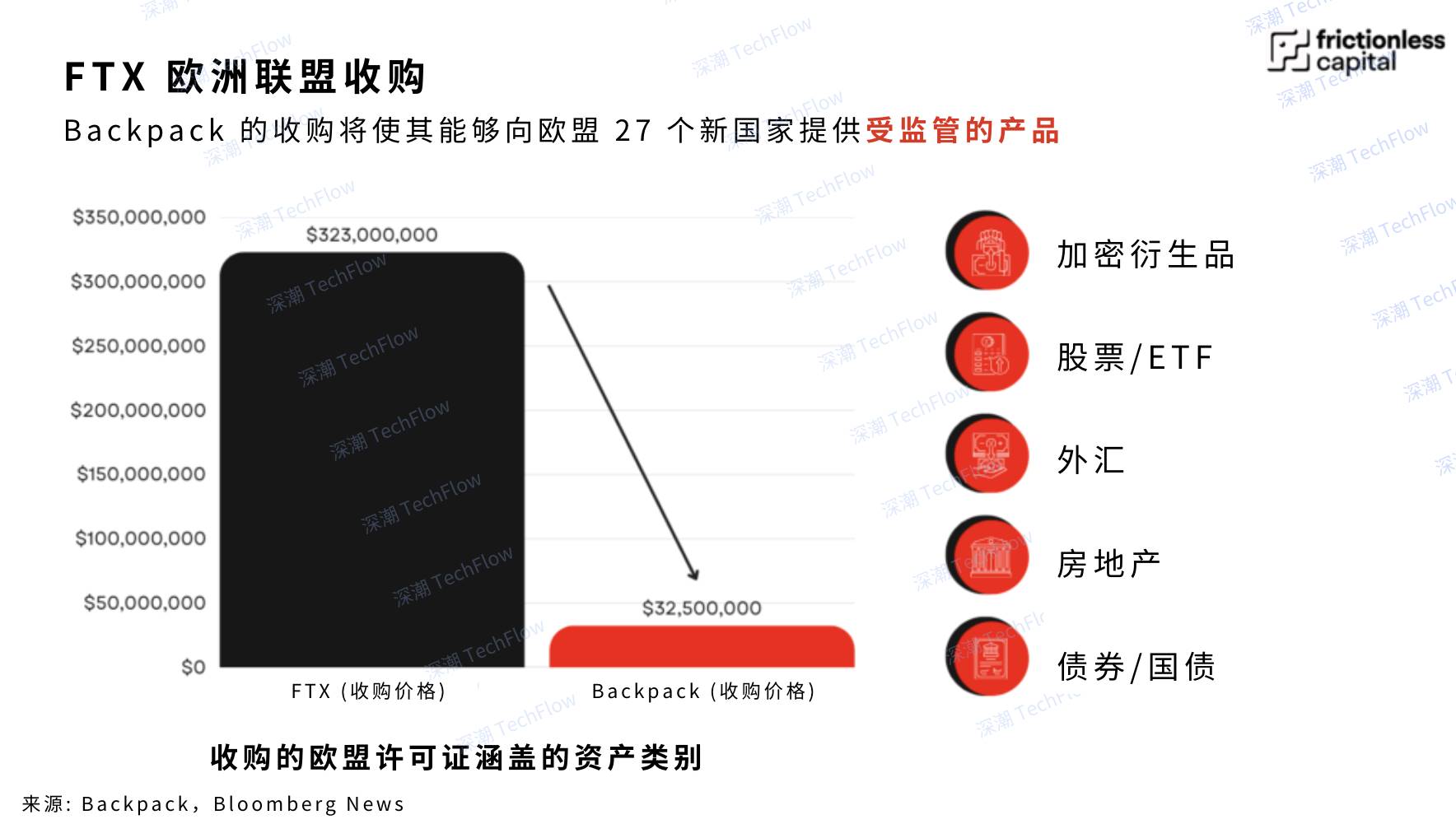
Original image from Frictionless Capital, translated by TechFlow
Transferring FTX EU’s MiFID II license to Backpack provides a significant competitive edge. This license could position Backpack as the leading retail crypto derivatives trading platform across all 27 EU member states. Crypto derivatives currently represent the majority of global crypto trading volume. To improve user experience, Backpack plans to integrate traditional payment systems, enabling SEPA and wire transfers across Europe. Additionally, the MiFID license is equivalent to a traditional banking license, meaning Backpack could eventually expand into stock trading, fixed income, and security tokenization.
The acquisition of FTX EU is just one milestone in Backpack’s global regulatory strategy. In November 2024, Backpack joined Japan’s Virtual and Cryptocurrency Asset Traders Association (JVCEA), a key self-regulatory body for Japanese crypto exchanges. Notably, since Binance joined two years prior, Backpack is the first new exchange admitted—an important step toward obtaining Japan’s crypto trading license. As early as 2023, Backpack became the first crypto exchange to receive a full market license from Dubai’s Virtual Assets Regulatory Authority. The company also holds relevant licenses in Australia, is authorized to conduct crypto-related marketing in the UK, and plans to expand its U.S. operations from the current 12 states to all 50 states in the future.
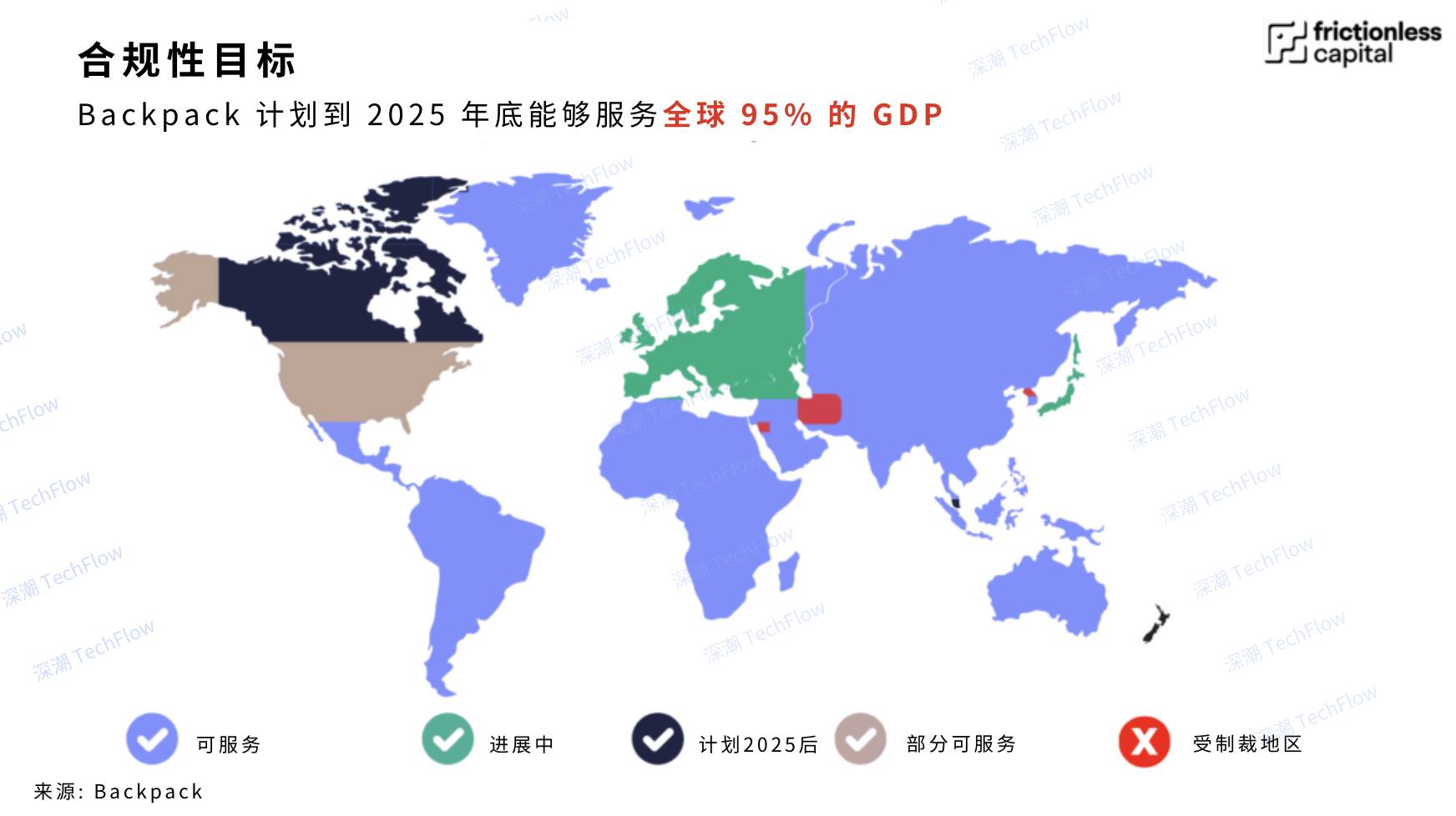
Original image from Frictionless Capital, translated by TechFlow
Backpack is rapidly emerging as a global leader in crypto compliance, surpassing even established players in many areas. Its ability to quickly expand regulatory coverage not only enhances distribution potential but also builds strong competitive moats amid tightening global crypto regulations. By the end of 2025, Backpack is expected to join the small group of exchanges legally serving users in regions representing 95% of global GDP—bringing its products within reach of hundreds of millions of potential users.
Creating a New Product Paradigm
Besides its innovative margin system, the Backpack team has developed a market-leading risk management system. Built on high reliability, robustness, and transparency, it continuously monitors portfolio health in real-time and dynamically adjusts margin and liquidation rules during market volatility to ensure asset safety and smooth trading.
Additionally, Backpack’s account system greatly streamlines deposits. Users can trade futures directly from their deposit accounts without transferring funds between spot and derivatives accounts. This design significantly boosts operational efficiency and is particularly intuitive and convenient for experienced traders, making Backpack a more attractive trading platform.
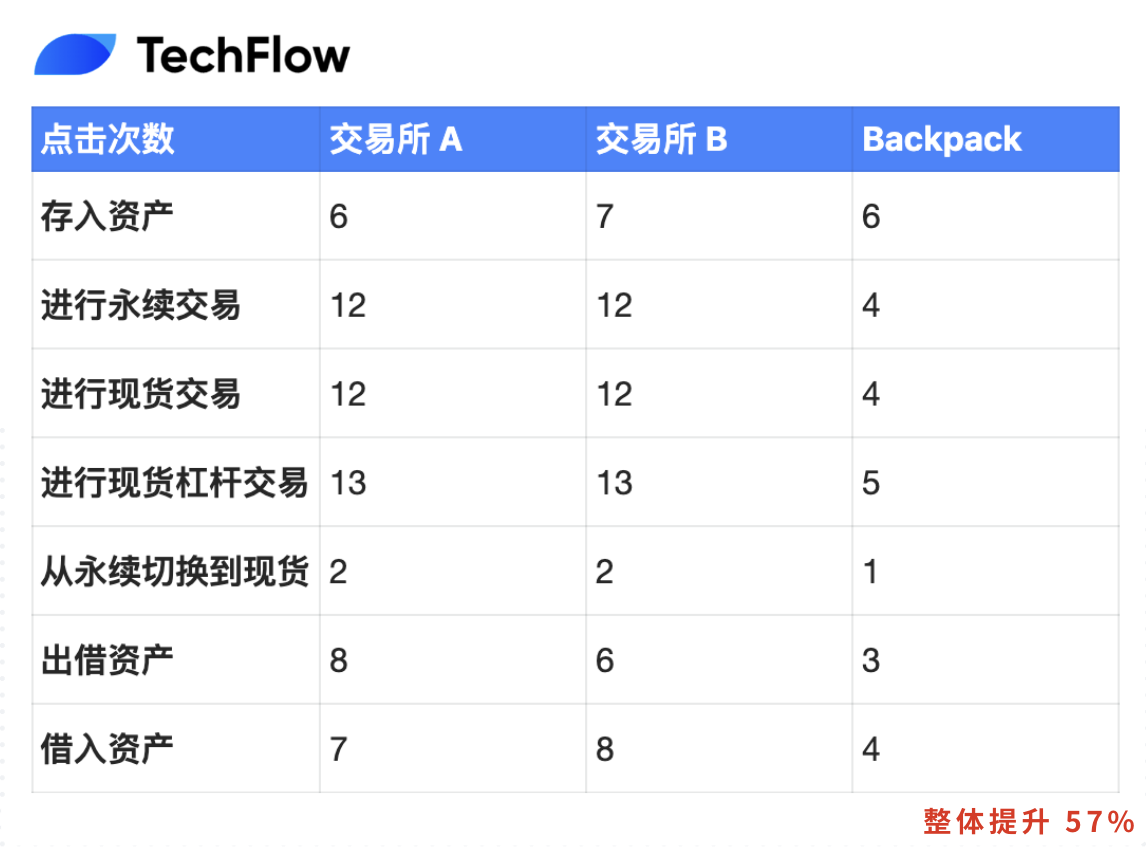
Original image from Frictionless Capital, translated by TechFlow
Leveraging cutting-edge account abstraction and cryptography, Backpack has made significant breakthroughs in custody, launching the most advanced custodial solution available today. Developed in partnership with Squads, the "safe" product allows users to deposit assets into a multisig wallet. This wallet supports self-custody while offering recovery options for lost private keys—solving a major pain point in traditional self-custody.
This wallet system is embedded directly into the Backpack exchange, ensuring users can always withdraw funds regardless of circumstances—eliminating the risk of being locked out of funds. Using a challenge-response mechanism similar to Layer 2 technology, Backpack can regenerate lost private keys after verifying user identity. This means that once users move assets into "safe," they gain both the security and autonomy of self-custody and the convenience of a centralized exchange.
This innovative solution will significantly reduce the billions of dollars in crypto assets lost annually due to poor self-custody practices. In the past, losing private keys (e.g., seed phrases) meant permanent loss of assets. The complexity of key management has long been a major barrier to widespread adoption of digital assets. With "safe," Backpack offers users a new custody option combining security, recoverability, and usability.
Market Context
Since 2021, the landscape of centralized exchanges (CEX) has changed dramatically. The collapse of FTX left a massive void in market share and removed a key product design—"cross-margin priority"—from the market. This event highlighted the urgent need for fully compliant, regulated exchanges with transparent, dynamic risk management and publicly verifiable proof of reserves. It also underscored the importance of self-custody and the necessity for users to withdraw assets at any time, especially during market turmoil or uncertainty.
In this shifting landscape, Backpack is the only new exchange to successfully enter the CEX space recently. It not only integrates these critical features but also holds the necessary regulatory licenses to operate legally in most global regions.
Meanwhile, compliance pressure is reshaping the industry. Major exchanges including Binance, ByBit, and OKX have been forced to exit parts of the European market.
As ByBit CEO Ben Zhou said in September 2024: "All top-tier exchanges will exit the European market, especially derivatives, sparking intense competition." (Weixin interview, September 2024). During this period, decentralized exchanges (DEX) have gained strong momentum. By early 2025, the DEX-to-CEX trading volume ratio surpassed 15% for the first time, reflecting growing demand for decentralized trading.
Another notable trend is increasing resistance from projects against the high listing fees charged by traditional exchanges. These exchanges often require projects to pay 5%-15% of their token supply as listing fees and alter vesting schedules so the exchange can sell tokens before team or core contributors unlock theirs. Additionally, traders increasingly want to buy tokens earlier in their lifecycle, as many perform poorly after listing on tier-1 CEXs—especially low-floating-supply projects with valuations reaching billions of dollars.
As awareness grows about opaque exchanges—particularly those profiting from user trades via internal market makers—transparency in reserves and solvency has become a core industry requirement. Since its founding, Backpack has maintained a fully transparent and compliant operating model, standing out among exchanges.
Bringing It All Together
Backpack is going beyond traditional centralized exchanges (CEX) to become a next-generation financial institution. With global regulatory licenses and innovative product design, Backpack has built a platform where the "whole is greater than the sum of its parts." Currently, only a few exchanges with comparable distribution scale and compliance coverage are valued in the tens of billions of dollars. In the coming months, as the product reaches tens of millions of traders, Backpack’s design philosophy and compliance expertise will become increasingly evident.
Most notably, Backpack’s ambition extends beyond building a better crypto institution—it aims to create an entirely new and more complete financial institution. This vision will have profound implications for the entire industry.
Join TechFlow official community to stay tuned
Telegram:https://t.me/TechFlowDaily
X (Twitter):https://x.com/TechFlowPost
X (Twitter) EN:https://x.com/BlockFlow_News
 @_Frictionless_






