Will programmers earning tens of thousands a month be replaced by AI?
TechFlow Selected TechFlow Selected
Will programmers earning tens of thousands a month be replaced by AI?
From assisting to independently writing code, AI coding has evolved into an engineering-grade "collaborative" coding tool.
 Navigating Web3 tides with focused insights
Image source: Generated by Wujie AI
The AI created by programmers will first replace the programmers themselves.
"Large models now possess coding capabilities equivalent to those of senior programmers (earning tens of thousands per month)," said Ding Yu, head of Alibaba Cloud's Native Application Platform and responsible for Tongyi Lingma, speaking to Light Cone Intelligence.
In fact, AI code tools are not new; they began being applied during the previous wave of artificial intelligence advancements.
However, previously, "AI coding products were merely auxiliary tools. Now they can execute complex projects, perform long-context editing, and independently complete simple coding tasks," Zhang Tao, technical lead of SenseTime's AI coding product family Xiaohuanxiong, told Light Cone Intelligence.
From assistance to independent coding, AI has evolved into an engineering-level "collaborative" coding tool.
As a result, not only are more and more enterprises adopting AI coding tools to reduce costs and improve efficiency in software development, after 2025, AI may even replace mid-level programmers.
Meta founder Zuckerberg recently stated: "By 2025, AI will reach the programming level of mid-level software engineers." Meta plans to begin automating mid-level software engineering work in 2025 and eventually outsource all application programming tasks to AI.
This is not alarmist rhetoric—AI-generated code has already achieved astonishing penetration rates within enterprises.
For example, over 25% of Google’s new code is generated by AI; internal adoption of AI-generated code at iFlytek rose from 30% in October 2023 to 52% by June 2024, with unit test line coverage increasing from 30% to 50%.
The reason why AI coding has become one of the hottest areas for large model applications is that "AI Coding is the most frequent, essential, and certain scenario among large model use cases—a domain validated by PMF (Product-Market Fit)." This is how Ding Yu described it to Light Cone Intelligence.
Because of this, more and more companies are entering the AI coding space, with leading tech firms such as Microsoft, Google, AWS, Alibaba, and Baidu taking the lead. But with so many similar products emerging, homogenized competition intensifies—how can players successfully differentiate themselves? How can true large-scale commercialization be achieved?
From Assistant to Collaborator: AI Becomes Your Real Programmer Colleague
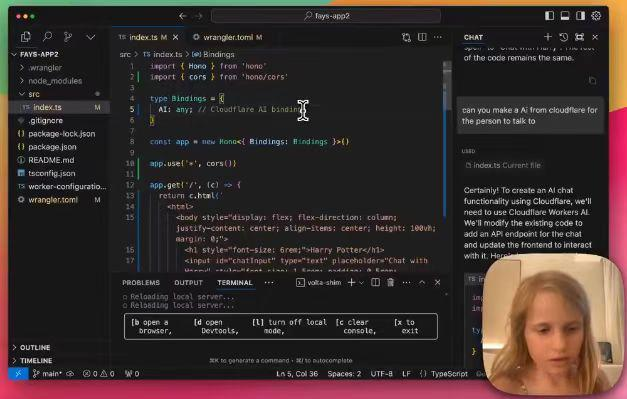
In August 2024, Ricky Robinett, Vice President of prominent U.S. company Cloudflare, shared how his 8-year-old daughter developed a chatbot within 45 minutes, attracting online attention from 1.8 million people.
The AI code editor she used, Cursor, instantly went viral, once again placing the AI coding sector in the industry spotlight.
Globally, according to PitchBook data, around 250 startups have launched AI coding assistants. In China, major internet companies including Alibaba, Baidu, Tencent, and ByteDance, unicorn firms like iFlytek and SenseTime, and even large-model AI startups such as Zhipu AI have all released related products.
The rapid emergence of AI coding products reflects substantial advancements brought about by large models to AI coding tools.
Early AI coding tools mainly performed simple tasks, such as automatically completing code based on programmer comments or providing error hints during coding.
With upgrades in large model capabilities, AI coding tools can solve increasingly complex problems, such as maintaining and upgrading existing projects—"They're already capable of autonomously carrying out certain R&D tasks," said Ding Yu.
For instance, large language models can understand human instructions via natural language and, using project context, automatically complete complex coding tasks—including modifying multiple frontend and backend files simultaneously, executing scripts, writing tests, and deploying code.
"Initially, Tongyi Lingma appeared as a coding assistant, primarily helping programmers by auto-completing code based on context," said Ding Yu. "By the end of 2024, Tongyi Lingma upgraded to version 2.0, transforming into an AI programmer form—a collaborative coding assistant capable of perceiving entire projects, making batch file changes according to task scenarios, achieving a leap in capability."
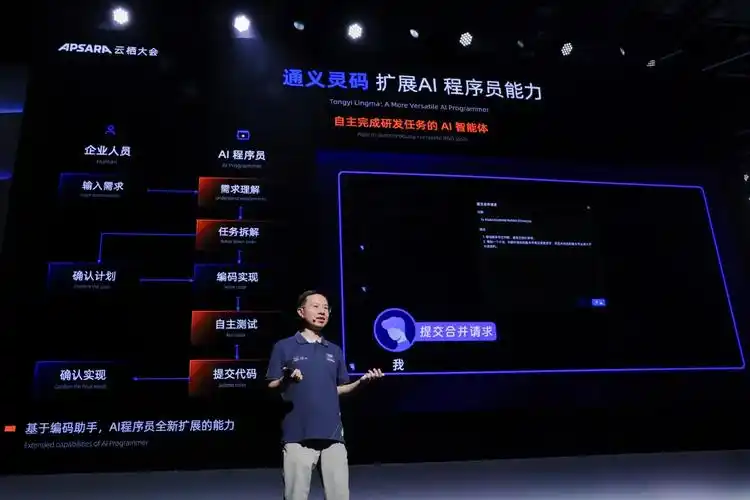
The evolution from AI coding assistant to AI programmer shifts the primary role in code generation—from humans leading with AI assisting, to AI taking the lead while humans mainly monitor and confirm outputs.
"Previously, humans wrote code while AI assisted with simple, predictable, repetitive tasks. Now, through requirement descriptions, AI can understand and help programmers complete moderately difficult coding work," Zhang Tao added.
Additionally, with advances in multimodal large models and deep-reasoning models, AI coding tools continue to enhance their capabilities.
SenseTime's Xiaohuanxiong family product "Office Xiaohuanxiong" supports not only data processing, analysis, and document creation based on large models but also generating data charts and PPT files—an integrated demonstration of multimodal output.
Multimodal input is equally important. "Many tool products struggle to accurately fulfill requirements if interaction relies solely on textual description, since information loss occurs when translating content into text. Meanwhile, current limitations in semantic understanding and hallucination issues in large models restrict the capability boundaries of AI coding tools. Direct visual inputs such as images or videos into large models allow tasks to be completed more efficiently," said Zhang Tao.
Moreover, multimodal large models enable AI coding tools to achieve end-to-end full-stack functions—from text-to-image to code generation.
For website design, for example, designers can create front-end visual mockups via text-to-image generation, then feed them directly into a coding large model to translate visuals into front-end interfaces, followed by automatic back-end code generation based on interface functionality.
"Currently, AI coding can complete complex tasks and eliminate knowledge-skill asymmetry—for example, enabling integrated front-to-back-end generation, breaking down traditional separation between front-end and back-end roles and collaboration modes, greatly improving efficiency," said Ding Yu. "After generation, AI coding can further help programmers automatically generate tests and ultimately return tested, corrected results."
Nonetheless, although AI can now autonomously generate some code, in practice, the generated code often cannot run directly due to numerous bugs.
Chen Rong (a pseudonym), an AI-track PhD student at Zhejiang University, told Light Cone Intelligence: "More complex code usually contains bugs and rarely passes on the first try. Technically speaking, we can view the model as treating coding like a translation task, outputting a sequence of code without fully considering runtime environments."
The underlying reasons are twofold: First, most humans find it difficult to precisely describe actual needs—even experienced programmers often revise code repeatedly during development.
Second, current shortcomings in large models' semantic understanding abilities, including hallucinations, constrain the functional limits of AI coding tools. Therefore, while 'large models can comprehend up to tens of thousands of lines of code within their context window,' the boundary of AI coding capabilities remains hard to define," said Zhang Tao.
Just as human programmers iteratively modify and test code, multiple interactions with AI during code generation can reduce bugs.
Ding Yu explained: "AI coding does not produce final results in one go but involves multi-round iterative interaction with the large model. During joint coding with the model, there's continuous thinking and reasoning exploration. After multiple rounds of interaction yield correct results, AI can autonomously conduct testing, verification, deployment, and complete the full lifecycle of tasks."
Despite existing challenges in current AI coding tools, more and more enterprises are adopting them. These cost-effective, high-performing AI coding tools not only boost programming efficiency but also help enterprises reduce costs and increase productivity.
The "Screw" in Large Projects: AI Boosts Programmer Efficiency by Over 10%
The evolution driven by large models has lowered the barrier to programming.
Currently, AI can independently implement autonomous programming in three main scenarios:
One is small-scale products, such as personal life APP assistants;
Another is content-focused websites with moderate code volume and difficulty, which AI can handle independently;
The third is office tools, such as Excel editing and data aggregation.
In practical terms, these scenarios involve relatively low code volumes, manageable development complexity, and minimal programming expertise requirements.
Indeed, AI coding tools have lowered the threshold for programming, enabling more non-coders to access programming and independently develop certain product features.
Yet, while AI lowers entry barriers, it raises the upper limit of required programming skills—especially in highly complex software and large enterprise-grade system development.
Xiao Xiao (a pseudonym), a programmer in the fintech industry, told Light Cone Intelligence: "For a company's engineering projects, it's still very difficult to hand everything over entirely to AI. Engineering projects involve numerous processes and cross-departmental collaboration, which AI cannot oversee holistically."
Clearly, in enterprises, large models mostly handle tedious, labor-intensive tasks, while global oversight and innovation remain firmly in the hands of human programmers.
"Programmers don't just generate small projects. They deal with production code where the entire project context is extremely complex and code relationships highly intricate, and they have specific quality standards," said Zhang Tao.
This means that for enterprise programmers, AI coding tools remain largely auxiliary—but they indirectly raise the baseline of programming capability, as AI can now handle most simple, repetitive tasks.
"If you ask AI to directly generate 100,000 code files covering all operations of a bank, it definitely can't do it right now," admitted Ding Yu. "In large enterprise projects, AI coding starts with small tasks—finding a specific angle, such as implementing a functional module or identifying security vulnerabilities within millions of lines of code, where AI performs very accurately and quickly."

Additionally, it's well known in the industry that uncertainty in large enterprise systems poses the greatest risk—system bugs could lead to massive resource and financial losses.
Thus, according to Ding Yu: "Human programmers are still needed to manage uncertainties in large-scale software development—such as architecture design and domain modeling—breaking down deterministic components like module development, vulnerability detection, and test case supplementation, then delegating these fixed tasks to AI based on human instructions."
Even as assistants, AI coding tools deliver tangible efficiency gains for developers and enterprises.
Alibaba Cloud, for example, reports that all technical staff currently use Tongyi Lingma, with over 82% monthly active users. Daily AI-generated code accounts for more than 30% of total submitted code. Based on this data, AI boosts developer efficiency by approximately 17.5%, conservatively estimated between 10%–15%.
"That's why whenever I meet enterprise leaders, I emphasize that Tongyi Lingma improves engineering team efficiency by over 10%," said Ding Yu. "So if a company employs 100 engineers using Tongyi Lingma, they gain additional output equivalent to 10 more engineers."
Furthermore, human programmers are specialized—frontend, backend, etc. If a backend engineer needs to take on frontend work, significant training would be required before they could effectively contribute.
But with AI coding tools, programmers can simply query AI to easily learn R&D knowledge across various languages and platforms, rapidly acquiring new skills. "Previously, preliminary research for a project might take two or three weeks; now it can be done in two or three days, enabling employees to grow from 1 to N in capability," said Ding Yu.
Certainly, AI can assist human programmers with more repetitive tasks—like writing test code, which many developers dislike because it lacks creativity yet remains necessary.
AI coding tools can use programmer-written code as prompts to automatically generate unit tests, truly freeing developers to focus on more creative work.
Beyond explicit benefits, enterprises gain hidden value too—AI coding tools help maintain high-quality, long-term stable software systems. They not only complete unit test coverage but also autonomously detect security vulnerabilities and suggest fixes, enhancing quality while shortening delivery cycles.
Interestingly, AI's current coding ability—when augmented with external tools—is gradually surpassing that of mid-level programmers. One feature of the underlying model powering SenseTime’s Xiaohuanxiong is enhanced code interpreter capabilities, allowing the model to perform autonomous debugging and iteration.
"In complex projects, relying solely on large model inference for code generation results in low first-pass success rates—generally under 20%," said Zhang Tao. "However, Office Xiaohuanxiong, leveraging a code interpreter approach, achieves near 80% code pass rate in everyday chart-related tasks."
Differentiation Begins in AI Coding: Success Hinges on Innovation in Specific Scenarios
AI coding is a direction validated by PMF, attracting numerous players and resulting in many homogeneous products.
Currently, numerous Chinese companies—including internet giants, SMEs, and large-model startups—have launched AI coding products, such as Alibaba Cloud’s Tongyi Lingma, Baidu’s Wenxin Kuaima, ByteDance’s Doubao MarsCode, Tencent Cloud AI Code Assistant, and Zhipu AI’s CodeGeeX.
Although there are many AI coding products, their functional differences are minimal. "The market is heavily homogenized—functionality is essentially the same, since all aim to solve similar user problems," said Zhang Tao.
However, with iterative advancements in large model technology, the AI coding field has entered a mid-phase of "differentiation." "Looking at today's AI coding landscape, different implementation approaches are already emerging," said Zhang Tao.
Products like Cursor modify open-source IDEs to enable complete task programming; others like Bolt.new operate as online tools where users describe needs and AI completes web development—but only support frontend technology stacks.
Now it's clear that each product is targeting distinct niche scenarios and building unique advantages—some excel in web development, others in modifying existing projects, some in developing small utilities or low-code tasks.
Ding Yu agrees: "Software development encompasses many scenarios and subfields. Companies can enter from different angles, innovating in niche scenarios or product forms."
Functional specialization among AI coding tools leads to commercial differentiation, with varying business focuses across companies.
For example, SenseTime’s Office Xiaohuanxiong focuses on office productivity tools, pursuing both consumer (C-end) and enterprise (B-end) commercialization simultaneously.
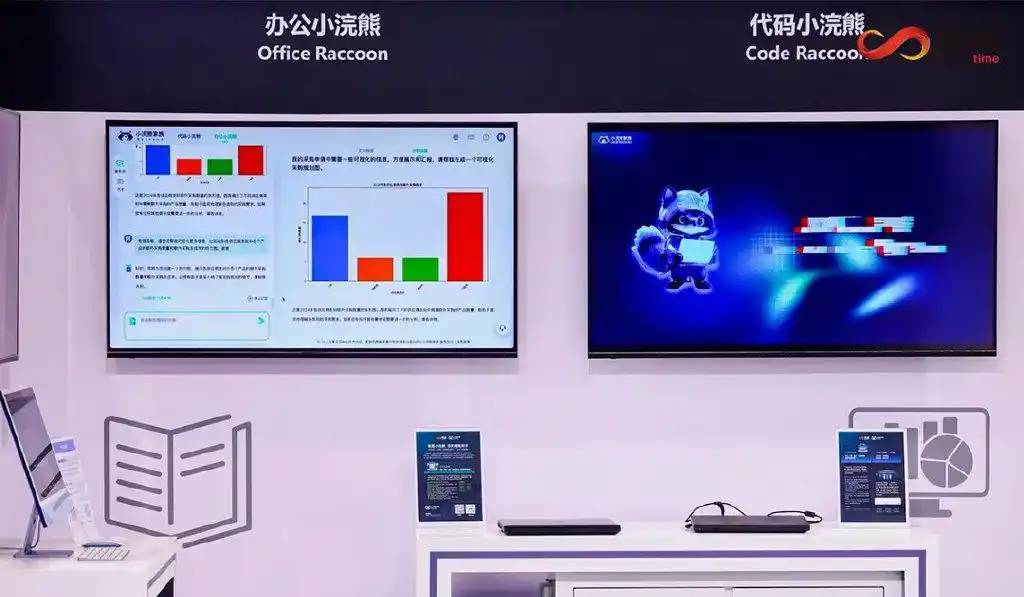
C-end offerings are primarily subscription-based, while B-end solutions emphasize private deployment for enterprises. "We currently have nearly 40 private deployment clients, including large internet firms."
Still, Zhang Tao sees strong potential in the C-end market, where product promotion has exceeded expectations.
From functional scope to commercial strategy, the AI coding sector is already fragmenting—but this isn't the final state of industry evolution.
As large model capabilities continue advancing, the next step will be "autonomous programming," where AI doesn’t just assist developers but independently accepts standalone requirements and completes entire project tasks.
"We will inevitably move toward AI autonomous programming, which could bring a tenfold increase in IT productivity for enterprises and developers," said Ding Yu.
Join TechFlow official community to stay tuned
Telegram:https://t.me/TechFlowDaily
X (Twitter):https://x.com/TechFlowPost
X (Twitter) EN:https://x.com/BlockFlow_News