
Who do you think is dumping ETH?
TechFlow Selected TechFlow Selected
Who do you think is dumping ETH?
There's a traitor among us.
 Navigating Web3 tides with focused insights
Author: Azuma, Odaily Planet Daily
During this cycle, ETH has significantly underperformed compared to the overall market. Some attribute this to "being too heavy to pull," others accuse the Ethereum Foundation (EF) of being "unworthy," and over the recent weekend, Layer2 became the target of community criticism.
On February 9, Andre Cronje (AC), the DeFi god from the previous cycle and now co-founder of Sonic, posted on X, lashing out at Layer2 for profiting handsomely by continuously selling off sequencer revenue, calling them parasites on Ethereum.
Become a Layer2 ➡️ Run a centralized sequencer ➡️ Collect $120 million in fees ➡️ Pay only $10 million back to Ethereum for DA and security ➡️ Then sell off $110 million in profits ➡️ And still claim to be an "Ethereum ally" …… I don't understand how the Ethereum community convinces itself to accept this logic. Layer2 has become the main driver of renewed inflation on Ethereum.
Layer2 Sequencer Revenue
The controversy around Layer2 sequencer revenue is nothing new.
The sequencer plays an indispensable role in Layer2, primarily serving to: 1) collect user transactions and batch them in a specific order; 2) provide immediate transaction confirmation before final settlement on-chain; 3) compress transaction data and submit it to Layer1, reducing gas costs.
In the vision of Layer2 decentralization, decentralizing sequencer operations is an essential step. However, in reality, nearly all Layer2 sequencers are operated by their development teams—a major point of criticism that has persisted for years.
Why have Layer2s been so slow to decentralize their sequencers? While there are technical and operational reasons, another undeniable factor is — in real-world conditions, running a sequencer is an extremely profitable business.
Main sources of direct sequencer revenue include: 1) fee markup from transaction fees; 2) MEV capture; 3) interest from capital held in reserve.
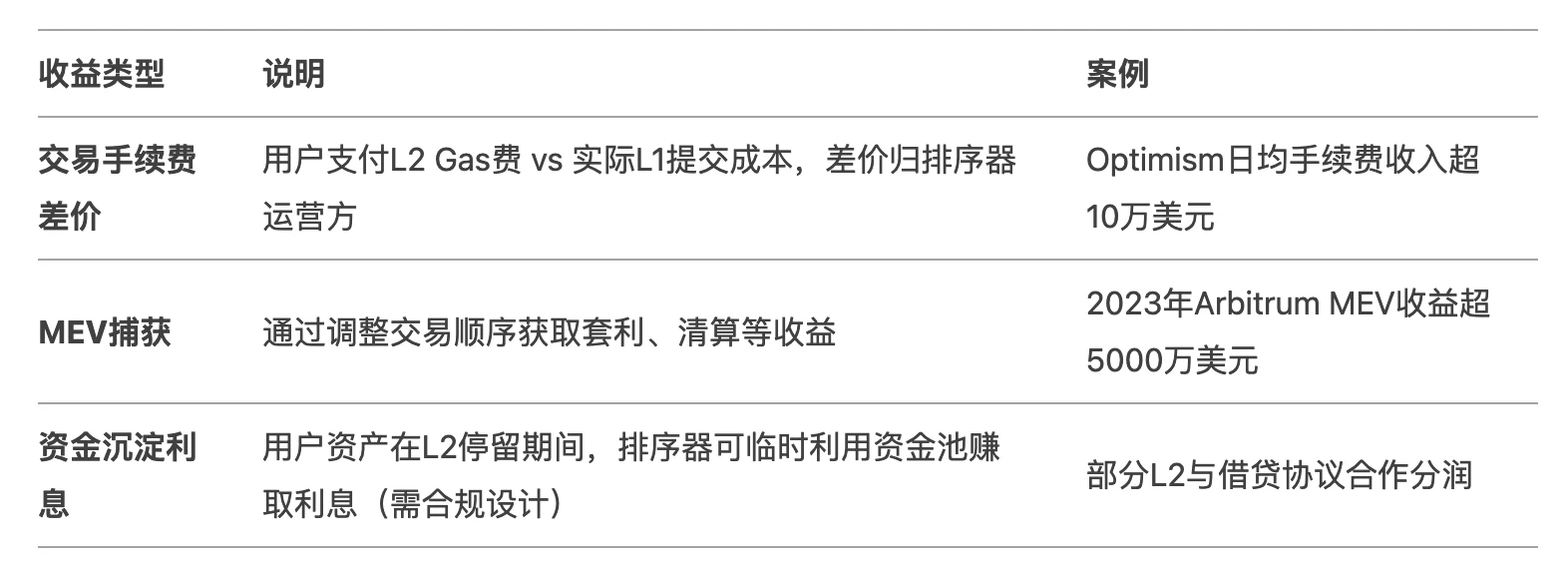
Odaily note: Diagram further explained by DeepSeek.
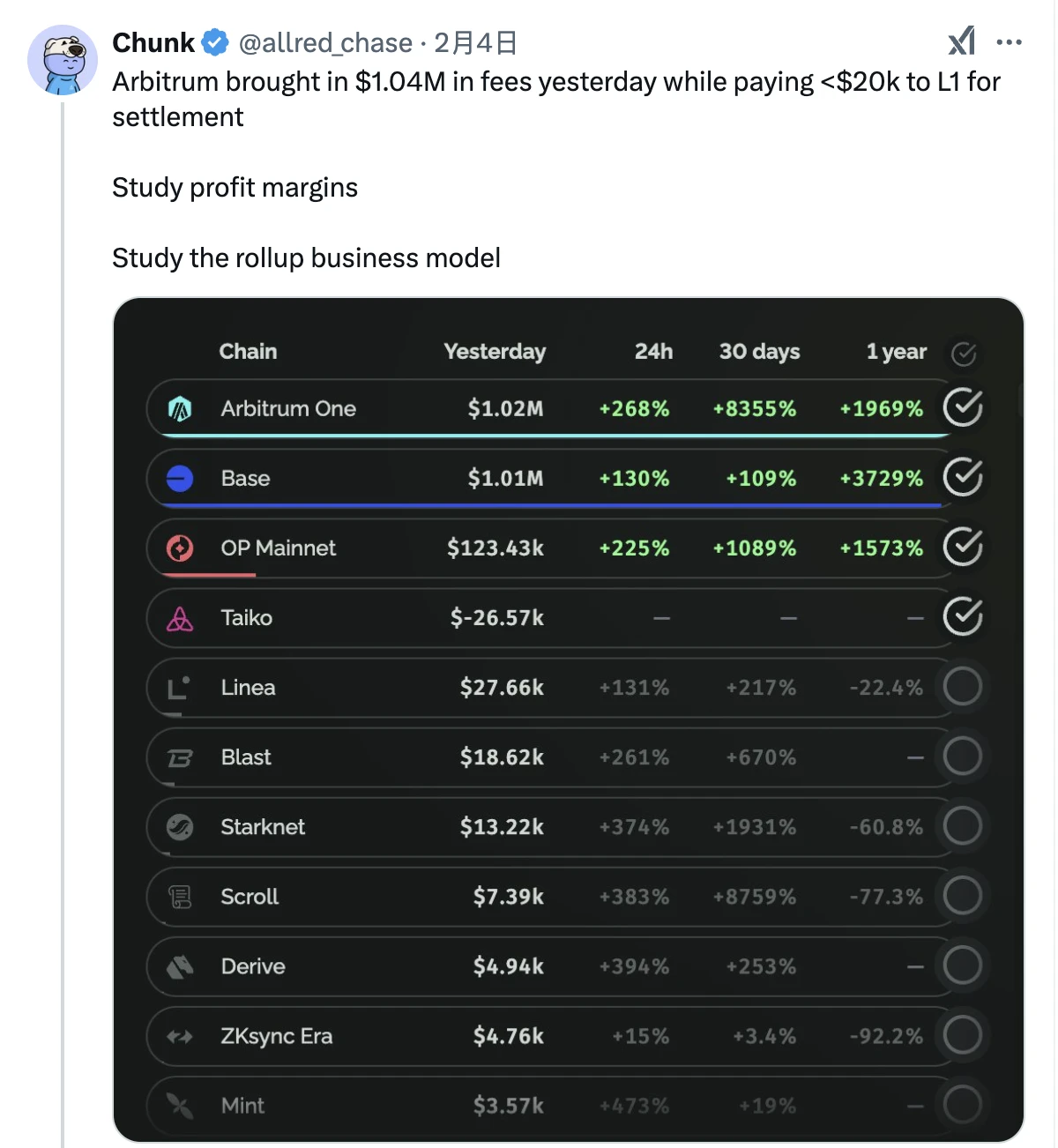
Just how profitable is this business? We can get a rough idea from data on February 4 alone.
On February 4, due to broad market volatility, Arbitrum collected $1.04 million in fees at the Layer2 level while paying less than $20,000 in final settlement costs to Layer1 — meaning the chain earned over a million dollars in profit from fee spreads in just one day.
Targeting Base
As the most active Layer2 network in the Ethereum ecosystem, Base has long been at the center of public discourse. As debates over Layer2 sequencer revenue intensify, the community is now turning its attention toward Base.
Lucidity CIOSantisa fired the first shot on X, accusing Base of transferring all sequencer revenue directly into Coinbase since mainnet launch, raising suspicions that these ETH have already been sold.
Since launch, BASE has consistently transferred sequencer fees into Coinbase. We don’t know if they’ve sold them, but we do know they haven’t deployed this capital on Base or kept it on-chain. Due to lack of further transparency, it’s reasonable to assume they have sold. Their interests are not aligned with Ethereum.
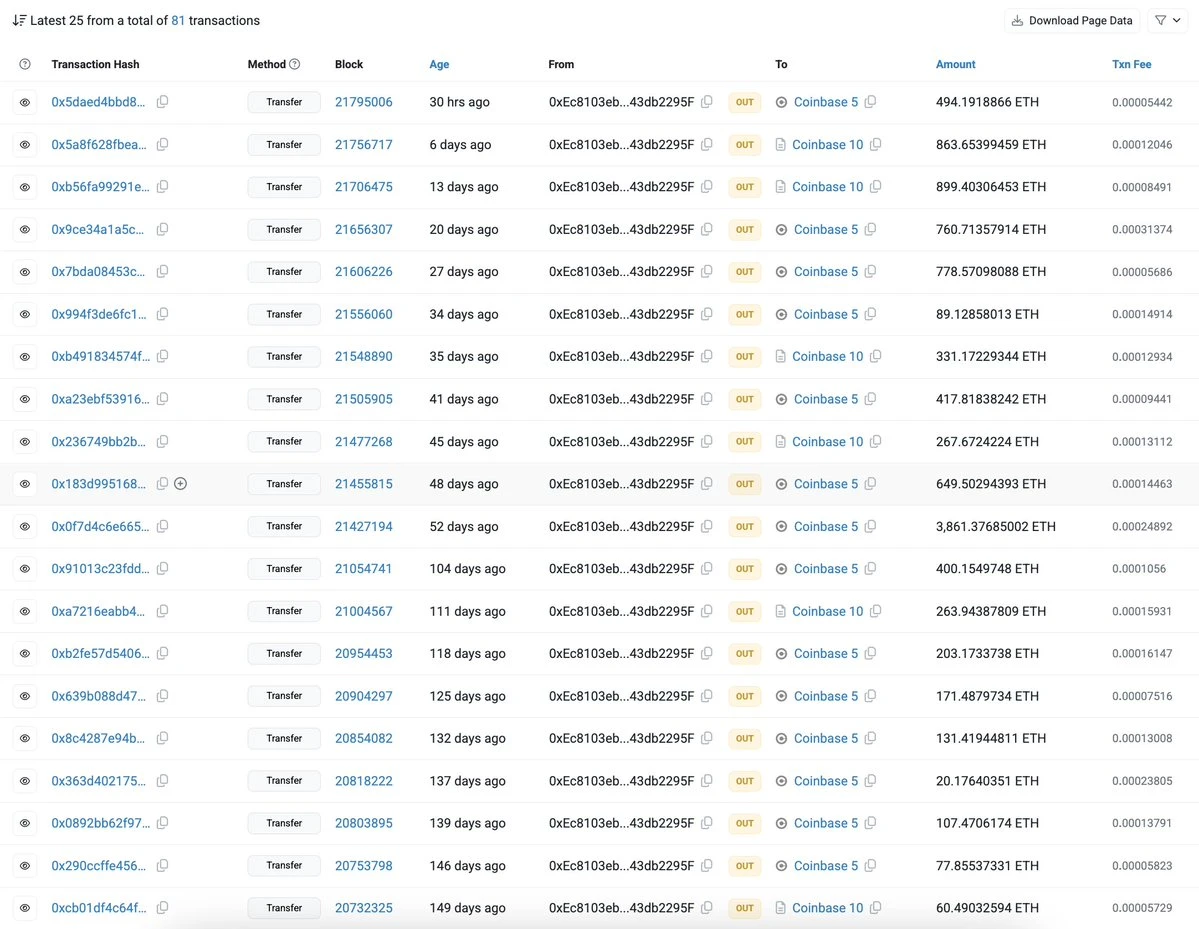
Odaily note: Image shows Base sequencer income address (0xEc8103eb573150cB92f8AF612e0072843db2295F).
Later, Sonic team member The Assistant followed up, analyzing whether Coinbase had already sold these ETH using publicly available financial reports.
The Assistant pointed out that on-chain data is verifiable (see Santisa’s earlier referenced address): Over the past 12 months, Base has earned over $100 million in sequencer revenue, with profit margins exceeding 90%. All these fees have been transferred through the path Base ➡️ Ethereum ➡️ Coinbase into the exchange.
According to Coinbase's public financial reports, as of June 30, 2023 (see page 66 of Q2 2023 report), Coinbase’s balance sheet held approximately $230 million worth of ETH, with ETH priced at $1934, meaning about 118,924 ETH; as of September 30, 2024 (see page 22 of Q3 2024 report), Coinbase held 119,696 ETH on its balance sheet.
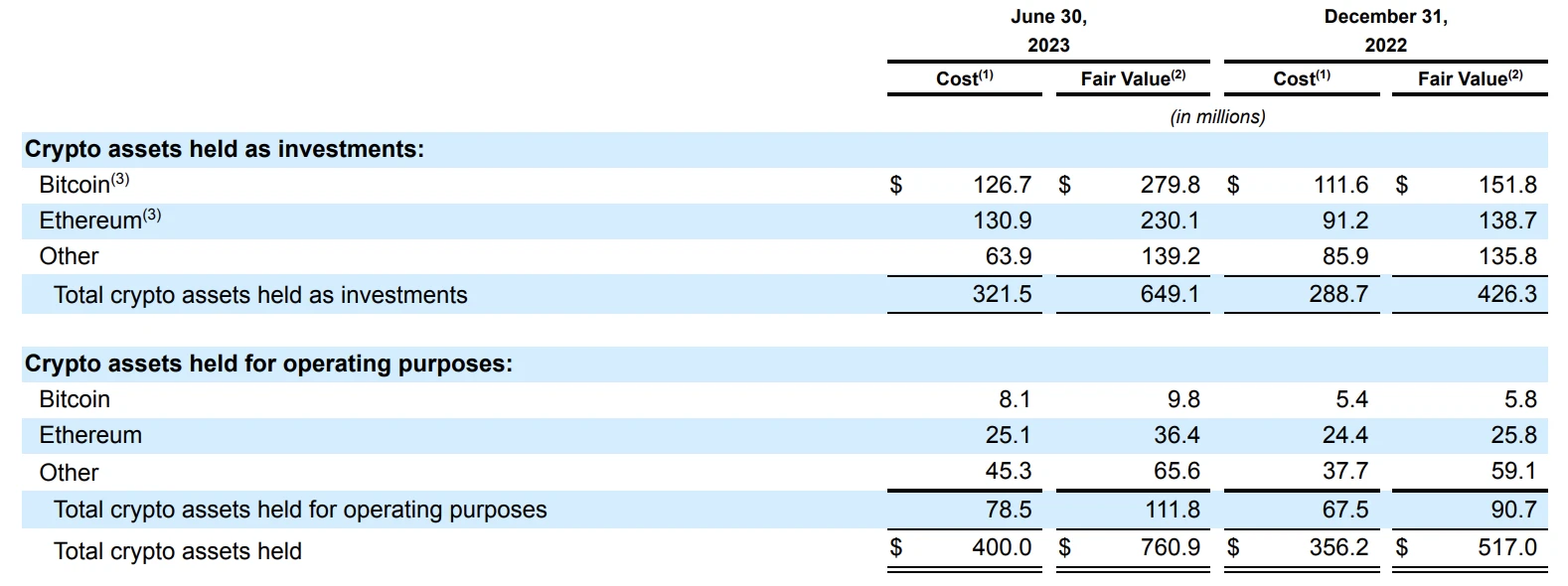

The Assistant concluded by questioning: Since Base launched, Coinbase has added only 772 ETH to its balance sheet—so where did the hundreds of millions in Base sequencer revenue go? There seems to be only one answer……
Some may argue that Base, as a (nominally) independent network, should not have its revenue counted on Coinbase’s balance sheet—but this argument doesn’t hold, as Coinbase has repeatedly highlighted increases in Base revenue in past financial reports.
Building on The Assistant’s findings, AC reposted and escalated his criticism:
The Ethereum community takes pride in their Layer2s, but what Layer2s do every day is move fees from Layer2 to Layer1, then transfer them to Coinbase to sell. This is the leader of the Ethereum ecosystem. Wake up, Ethereum community.
What About Vitalik's Stance?
At the time of writing, Vitalik has not responded to AC or other community members’ accusations. However, in his personal article on January 24 ("Under Heavy Public Pressure, Vitalik Calls on L2: Come Back and Support ETH"), we can roughly infer that Vitalik is already dissatisfied with the current state of Layer2 operations.
In that article, Vitalik mentioned the need to clarify ETH’s economic model to ensure ETH continues to accrue value even in a Layer2-heavy world. At the implementation level, he encouraged Layer2s to contribute a portion of their fees to support ETH—through mechanisms such as burning part of the fees, permanent staking, donating proceeds to Ethereum ecosystem public goods, or other solutions.
A simple translation of that message: Layer2, stop looking so greedy—it’s time to give back some of the pie.
Join TechFlow official community to stay tuned
Telegram:https://t.me/TechFlowDaily
X (Twitter):https://x.com/TechFlowPost
X (Twitter) EN:https://x.com/BlockFlow_News
 Odaily