Musk vs. OpenAI: Old Grudges Remain, New Conflicts Unresolved
TechFlow Selected TechFlow Selected
Musk vs. OpenAI: Old Grudges Remain, New Conflicts Unresolved
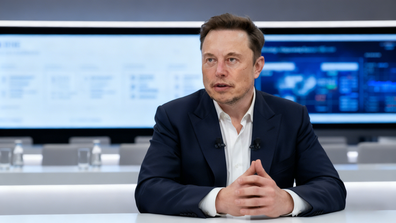
Musk is never afraid of competition; confrontation is in his nature. What he fears is being unable to break through when placed in a passive situation.
 Navigating Web3 tides with focused insights
Author: Zhao Weiwei,Blue Hole Business
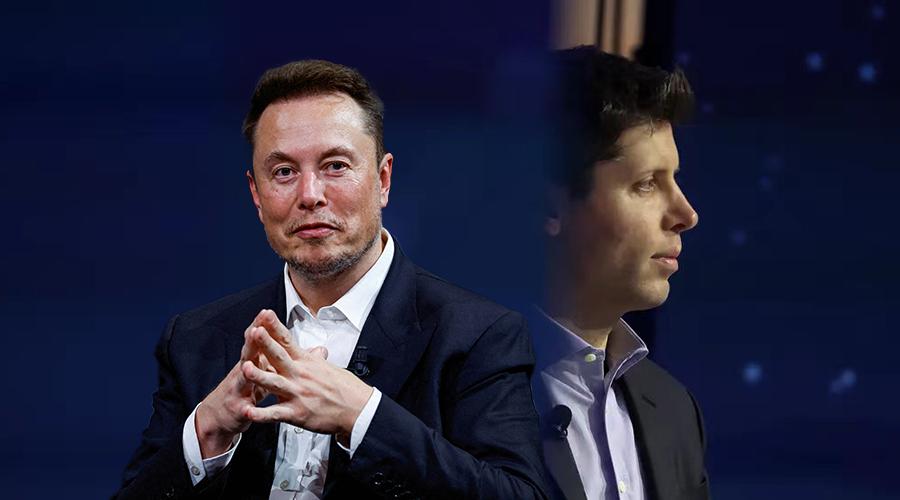
"The collaborative approach to AI by OpenAI and @Sam (Altman) is what I support—it can deliver the best outcomes for humanity," said Reid Hoffman, co-founder of LinkedIn, recently.
This clearly puts him at odds with Musk. Once like Musk, Hoffman was an angel investor in OpenAI and helped launch the nonprofit AI research lab to counter Google's dominance in the field. But later, both Musk and Hoffman left OpenAI to start their own AI companies.
Unlike Hoffman’s affectionate stance toward OpenAI, Musk has completely broken ties with OpenAI.
Starting last year, seeing OpenAI align closely with Microsoft, Musk first publicly called for a six-month pause on developing AI systems more powerful than GPT-4. Then, he founded his own AI company, xAI, launching its first AI model "Grok" in November last year—aimed at “understanding the true nature of the universe”—though still far behind OpenAI.
Not long ago, frustrated and angered, Musk took OpenAI to court, fully aware that OpenAI would fight back fiercely.
Musk formally sued OpenAI, demanding it return to open-source status and prohibiting the company, its CEO Sam Altman, and Microsoft from profiting off AI technology. In response, OpenAI published historical emails on its official blog to refute Musk: creating a for-profit entity was our joint decision; Musk only left OpenAI because his proposal to merge it into Tesla wasn't accepted.
In short: Musk elevated the dispute, accusing OpenAI of betraying its original ideals; OpenAI brought it down to earth—this is just about competitive interests.
Is Musk panicking?
Looking back at the lawsuits Musk has filed over the past decade, it's clear that going to court is just one of his business competition strategies. Musk never fears competition—confrontation is part of his nature. What he fears is being unable to break through when stuck in a passive position.
01 Old Grudges Run Deep
Old friendships often appear fragile when confronted with current business interests and goals.
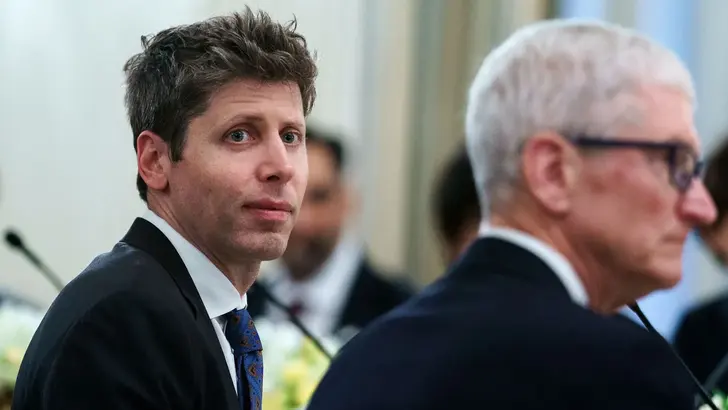
On the day Musk officially sued OpenAI, Sam Altman wrote in an internal memo to OpenAI employees: "The idea that benefiting humanity and entrepreneurship are somehow incompatible is confusing. I miss the old Musk."
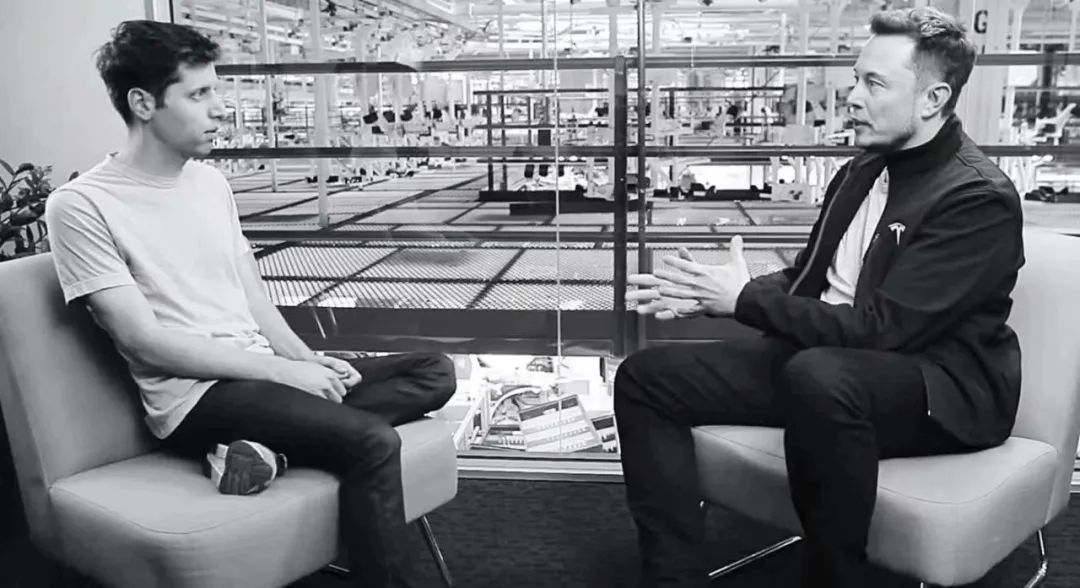
"Personally, this is sad," Musk is 14 years older than Altman, who has always seen Musk as a personal hero—a builder, someone who advances through better technology, someone I hoped would be on our side."
Altman misses the old Musk; Musk likewise misses the old OpenAI.
Musk’s 46-page lawsuit against OpenAI lists numerous alleged violations, including abandoning founding principles for commercial gain. Musk claims OpenAI has become a closed-source subsidiary of Microsoft, one of the world’s largest tech firms. OpenAI’s board members are all chosen by Altman and approved by Microsoft, meaning its goal is no longer to benefit humanity but to maximize Microsoft’s profits.
Judging from the legal demands, Musk wants OpenAI to return to its pre-commercialization mission.
First, he demands OpenAI go open-source, releasing its AI research to the public. Second, he seeks to ban defendants from using OpenAI and its assets for financial gain. Third, he wants GPT-4 and more advanced GPT-Q declared general artificial intelligence (AGI), which should not be used by Microsoft. Additionally, Musk is seeking compensation for his alleged losses.
The lawsuit states that between 2016 and September 2020, Musk donated over $44 million to OpenAI. However, according to evidence released by OpenAI, Musk contributed less than $45 million, while other supporters—including Hoffman—provided over $90 million.
In OpenAI’s rebuttal article, the key reason for Musk’s split with OpenAI is highlighted: control.
In 2017, OpenAI and Musk agreed to establish a for-profit entity as a strategic next step. "Musk wanted majority equity, initial control of the board, and to serve as CEO. During this time, he suspended planned funding. We were saved by Reid Hoffman’s generous contribution, which filled gaps in salaries and operations."
Musk’s suggestion at the time remains unacceptable even today: "In early February 2018, Musk forwarded us an email suggesting OpenAI should treat Tesla as its cash cow, commenting: 'Tesla is the only entity with any chance of competing with Google. Even then, the odds are slim, but at least not zero.'"
In fact, as described in Elon Musk’s biography, after splitting from OpenAI, Musk poached OpenAI’s deep learning and computer vision expert Andrej Karpathy to lead Tesla’s AI program.
"We realized Tesla would become an AI company and compete with OpenAI for talent," said Altman. "Some on our team were angry, but I completely understand what happened." Later, in 2023, Altman struck back: when Karpathy was exhausted from working under Musk, he extended an olive branch and re-hired him.
Thus, unresolved old grudges are central to the renewed conflict between Musk and OpenAI. Past grievances were never settled, and now the accelerating race for AGI has added fresh fuel to the fire.
02 New Battle, No Resolution
Musk’s announced Grok V1.5 chatbot has yet to be released. As early as February 22, he claimed it would launch in early March, two weeks later.
Since its debut in November last year, the Grok chatbot has failed to generate significant industry attention. The AI company behind Grok, xAI, founded in July last year, exists primarily to compete with OpenAI. As Musk puts it, competition keeps companies honest—he supports it.
Grok’s biggest competitive advantage lies in Musk’s ownership of Twitter, giving it access to vast training data from tweets—over 1 trillion posts accumulated over years, plus 500 million new ones daily. This benefit only became apparent after Musk acquired Twitter.
Yet paradoxically, while Musk vocally opposes OpenAI’s commercialization, his own AI model Grok is tightly integrated with Twitter’s monetization strategy. Only Premium+ subscribers to Twitter can use it, requiring a monthly payment of $16.
According to information released by xAI, the 12-member team is entirely male, with prior experience at leading companies or academic institutions such as DeepMind, OpenAI, Google Research, Microsoft Research, and Tesla. They have worked on projects including AlphaStar, AlphaCode, Inception, Minerva, GPT-3.5, and GPT-4.
However, in terms of talent density, xAI still lags behind leaders in the large model industry like OpenAI and Anthropic. The widely recognized first tier of large models currently centers on OpenAI, Google, and Anthropic—founded by former OpenAI members—and Anthropic has received investments from both Amazon and Google. The internet giants have already taken their positions.
More importantly, competition among Silicon Valley’s large model players is accelerating.
Just this February, Google launched its new Gemini 1.5 AI model, quickly followed by open-sourcing the lightweight large model Gemma. These consecutive moves mirror OpenAI’s release of the text-to-video model Sora—both signaling their capabilities in general large models and sending shockwaves through the industry.
In contrast, amid this intense AI wave, Musk is no longer the dominant figure. Elon Musk’s biography once defined him this way: with OpenAI and Google locked in battle, a third gladiator must enter the arena—one focused on AI safety and committed to protecting humanity.
Musk once expressed great confidence, stating in his biography: "Tesla’s real-world AI capabilities are underestimated. Imagine if Tesla and OpenAI had to switch tasks—them building self-driving cars, us building large language model chatbots—who would win? Obviously, us."
Confidence aside, tactics remain separate.
Even the confident Musk cut off OpenAI’s access to Twitter’s data pipeline shortly after ChatGPT launched—showing he never hesitates to restrict competitors as a defensive move. Thus, suing OpenAI can still be seen as another tactic in Musk’s playbook to constrain rivals.
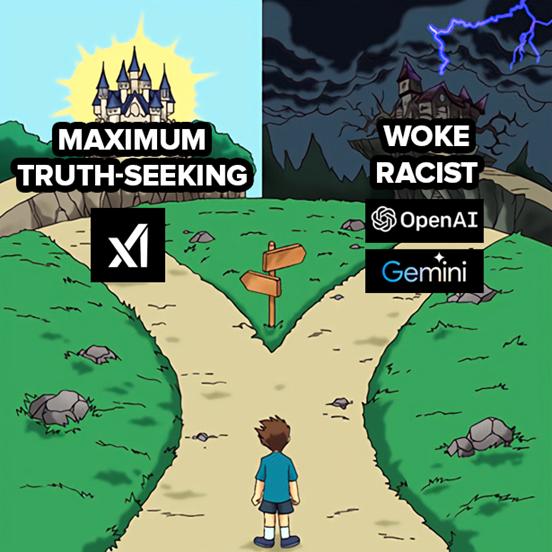
In reality, the Grok chatbot currently falls short of Musk’s grand vision. At its launch, Musk stated xAI’s Grok would be vital for humanity, helping uncover the "greatest truths" and the "essence of the universe," while not missing a chance to disparage rivals, claiming OpenAI and Google’s Gemini would lead humanity astray.
Additionally, reports suggest Musk’s xAI is preparing for a new round of fundraising, aiming to raise $1 billion through equity at a valuation of $15–20 billion.
Musk later denied the report, but it’s undeniable that billions in spending are essential for large models. He continues posting recruitment messages on Twitter for xAI. How xAI will compete with peers like OpenAI remains a persistent challenge.
03 The Lawsuit—A Strategy of Not Wanting to Lose
Musk has always been controversial, and throughout his entrepreneurial and business battles, litigation has frequently served as one of his standard tactics—an indicator of intensifying industry competition. Most fundamentally, it signals that Musk is truly furious.
For example, during Tesla’s early days, he sued renowned car designer Henrik Fisker.
At the time, Musk hired Fisker to design what would become the Model S, but Fisker’s final design did not match Tesla’s expectations. Later, Musk discovered Fisker was simultaneously running an electric vehicle startup and had included Tesla’s product concepts—shared confidentially by Musk—into his new company’s business plan.
Musk could not tolerate this betrayal. Although Tesla ultimately lost the case and was ordered to pay $1.14 million in legal fees, Fisker’s EV company rose rapidly, even capturing a government low-interest loan that might have gone to Tesla. Still, Fisker’s company collapsed in 2013, filing for bankruptcy, and Fisker was forced to resign.
In space competition, Musk’s SpaceX also sued Jeff Bezos’ Blue Origin.
At the time, both Bezos and Musk aimed to build reusable rockets. In 2014, Bezos’ Blue Origin filed a U.S. patent titled "Sea Landing of Space Launch Rockets," detailing methods for landing and recovering rocket stages on sea platforms.
Upon seeing the patent, Musk turned livid and chose legal action: "Sea landings have been discussed for half a century—even featured in fictional movies. To now file a patent on something so long discussed is insane. It’s absurd to patent an idea people have talked about for decades."
The lawsuit intensified the rivalry between Musk and Bezos in rocketry. Ultimately, after being sued by SpaceX, Bezos agreed to withdraw the patent.
During Musk’s 2022 Twitter acquisition saga, threatening litigation was again one of his psychological warfare tactics.
At the time, Musk demanded a lower purchase price, but negotiations stalled. Twitter offered a 4% reduction on the $44 billion price, but Musk insisted on 10%, otherwise refusing to proceed. Throughout the tense negotiation, Twitter’s executives and board held firm, insisting on legal protections against future lawsuits from Musk no matter the outcome.
"We will never grant them legal immunity," Musk said emotionally at the time. "If we hold them accountable, we won’t stop until they’re dead—we won’t let a single one escape."
Musk briefly moved to sue Twitter, claiming its board and management lied about bot accounts. But eventually, his lawyers convinced him that going to court could lead to defeat, and the best path was to complete the deal under the original $44 billion terms. In the end, Musk took over Twitter, achieving his acquisition goal, while Twitter’s former CEO and others were ousted.
Reviewing Musk’s three major legal battles involving Tesla, SpaceX, and Twitter—some won, some lost, some abandoned—the core strategy remains unchanged: in unfavorable competitive situations, use legal means defensively to restrain opponents, increase his own odds, and turn passivity into active offense.
Litigation is merely one path to competitive ends. Even if he loses in court, this public defense of interests aligns with his confrontational character. Now, suing OpenAI further underscores Musk’s determination in the AI race: he cannot afford to lose.
After OpenAI officially responded to Musk’s lawsuit, Musk remained silent on Twitter. The facts and positions of both sides are now clear. The outcome awaits final judgment—a process destined to be as long as the evolution of AGI itself. For now, all eyes remain on how capable xAI’s Grok chatbot truly is.
Join TechFlow official community to stay tuned
Telegram:https://t.me/TechFlowDaily
X (Twitter):https://x.com/TechFlowPost
X (Twitter) EN:https://x.com/BlockFlow_News