The Intersection of Generative AI and Blockchain: Tokenizing Creativity
TechFlow Selected TechFlow Selected
The Intersection of Generative AI and Blockchain: Tokenizing Creativity
Generative AI protocols can enable individuals to become exceptional artists and open career doors previously out of reach.
 Navigating Web3 tides with focused insights
By: Kava Labs
We will continue exploring the convergence of artificial intelligence (AI) and blockchain technology, focusing on generative AI and the role of tokenization. As one of the most innovative yet controversial areas within AI and blockchain, we must refer back to our previous articles on RWA tokenization, natural language processing (NLP) in AI, AI's role in risk mitigation, and cross-chain interoperability to fully understand the broader implications of this technological fusion.
In this article, we will explore the powerful capabilities of generative AI, how it works, and the copyright issues surrounding the tokenization of its outputs. Then, we will turn to the role of blockchain technology and non-fungible tokens (NFTs) as a potential solution to these challenges. We will also examine industries already leveraging NFTs and conclude by discussing the future potential of this dynamic space and the role AI might play.
The Future of Content Creation
Like other areas of AI, generative AI has deep roots in computer science dating back to the 1960s. British artist Harold Cohen achieved early iterations of computer-generated imagery through his AARON project at the University of California, San Diego. However, despite these early attempts at generative AI imaging, it wasn't until the release of ChatGPT3.5 at the end of Q4 2022 that marked the modern AI boom and brought this groundbreaking technology into the hands of the general public.
With the launch of Midjourney, Leonardo.ai, and DALL-E in 2023, the popularity of generative image protocols exploded, bringing generative AI (GenAI) and prompt engineering into the mainstream spotlight alongside large language models (LLMs). Overnight, everyone gained the ability to generate photorealistic images in seconds—work that previously required significant labor and was accessible only to professional artists and photographers.
Since then, generative AI has come a long way, continuously iterating and improving upon earlier versions. Even traditional Web2 companies have started implementing AI-powered image generation and editing tools—for example, Photoshop launched its Generative Fill toolkit in May 2023. We've also seen expansion beyond images into audio, video, and 3D modeling.
So how exactly does generative AI work? Should traditional artists be concerned, and how can blockchain help?
Understanding the Technology
To identify where blockchain might intersect with generative AI, we first need to understand how this technology functions and whether it could be interpreted as plagiarism.
The first step for generative AI is the same as for other AI models — collecting, indexing, and cleaning raw data. Generative AI gathers images, audio samples, videos, or 3D digital models. The model is then trained to recognize objects, textures, colors, and audio patterns.
Once the model breaks down its sample data into their most basic components, it can reconstruct and replicate patterns and dependencies—such as how colors interact and spatial relationships between objects. Similar to how large language models use probabilistic models to predict the next word, sentence, or paragraph, generative AI uses probabilistic models to predict pixel values and their positional relationships, combining them into a single coherent image output.
The final stage of generative AI involves using these outputs within its feedback loop. By iterating and refining the model, increasingly accurate results are produced over time.
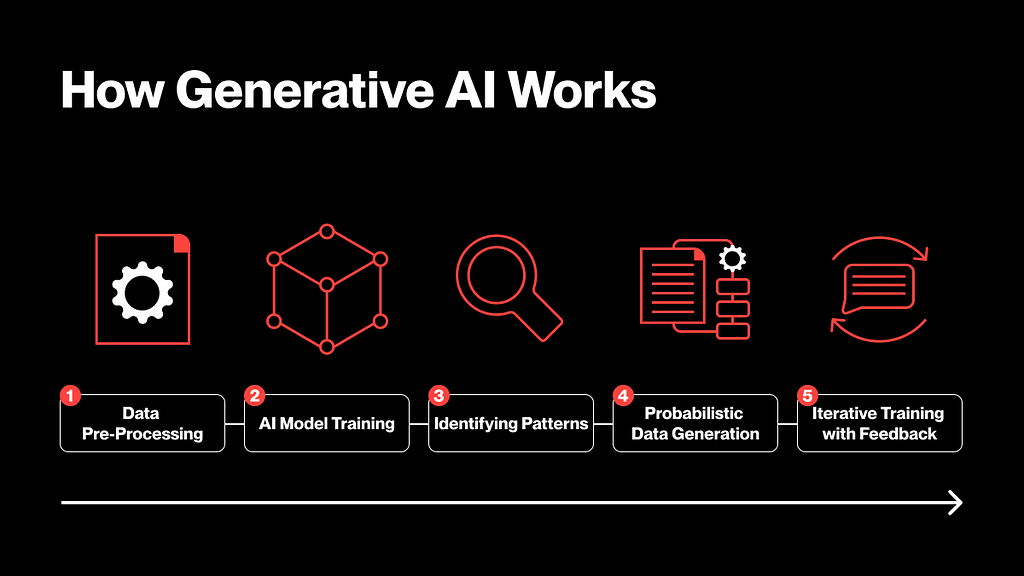
Copyright concerns become blurred because models can be trained on open-source data without directly copying any single original work. They use highly sophisticated predictive models based on billions of data touchpoints, assembling outputs through predictive modeling. One way to think about it is that these models are more akin to a modern singer being influenced or inspired by Michael Jackson or The Beatles, rather than directly covering their songs.
The Rise of NFTs
NFTs first emerged in 2014 when digital artists Jennifer and Kevin McCoy minted Quantum on the Namecoin blockchain. In 2017, NFTs began gaining niche traction with the launch of CryptoKitties, and rose to prominence during the 2021 bull run alongside projects like Bored Ape Yacht Club, CryptoPunks, and independent digital artists such as Beeple.
During the 2021 bull market, NFTs demonstrated the powerful use cases of underlying blockchain technology. Immutable decentralized ledgers solved the long-standing challenge of establishing coherent provenance. With permanent and unchangeable digital certificates of authenticity, industries could easily verify legitimate ownership of products. High-end art databases like Artory excelled at using blockchain to establish provenance for exclusive artworks.
Although NFT popularity has declined since peaking in 2021, their significance remains undiminished. The introduction of dynamic and semi-non-fungible NFT projects via ERC-721 and ERC-1155 token standards created new markets amid the rise of real-world assets (RWAs). Tokenizing physical assets, especially in real estate and automotive sectors, benefits from the ability to establish clear provenance while updating NFTs over time to reflect maintenance and upgrades.
Minting NFTs
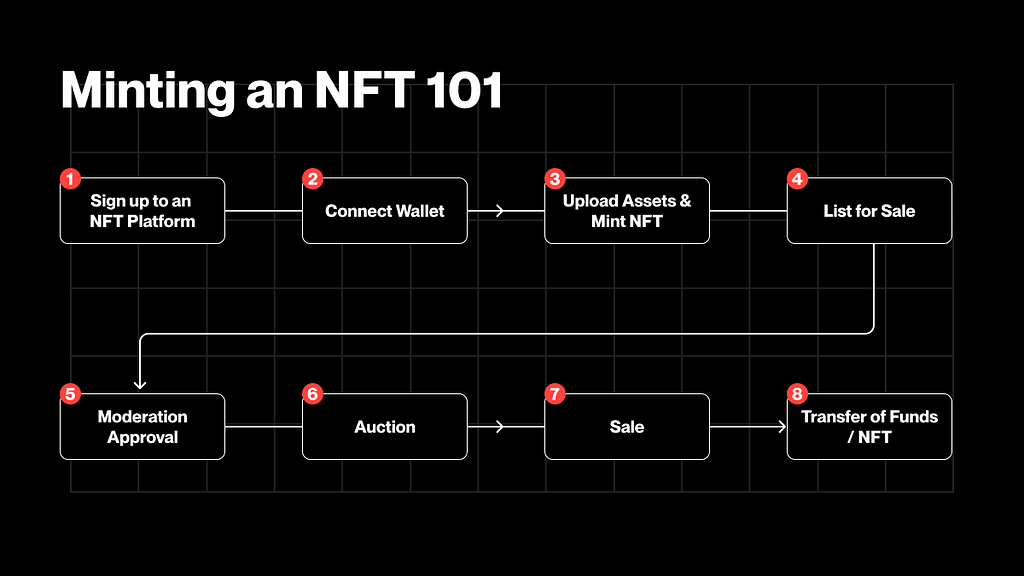
NFTs gained popularity during the 2021 bull run due to the ease of minting NFT collections. For a rapidly growing industry that remained relatively niche and technically gated, the ability to mint NFTs on platforms like OpenSea and Rarible provided millions of users with a simple entry point. Setting up a wallet was arguably more challenging than creating an NFT series itself.
Initial setup involved a straightforward account creation process. Once users connected their wallets to their accounts, they could effortlessly upload and mint a collection within minutes—similar in convenience to uploading images to a cloud provider. The user experience was unparalleled, allowing seamless trading across platforms and exchanges once their images passed review.
Liquidity in Digital Art
The ability to mint NFTs and freely buy and sell digital artworks was a key step in attracting millions of users. While serving as a crash course in cryptocurrency market volatility, it also acted as a dynamic educational tool. Users quickly grasped and began implementing crypto trading—seamlessly transferring assets from NFT platforms to wallets and exchanges, and eventually converting back to fiat currency.
It also enabled many creators to monetize their digital art for the first time, embodying Web3’s core promise of returning financial and creative sovereignty to individuals, rather than third-party gatekeepers.

A New Era of Royalties
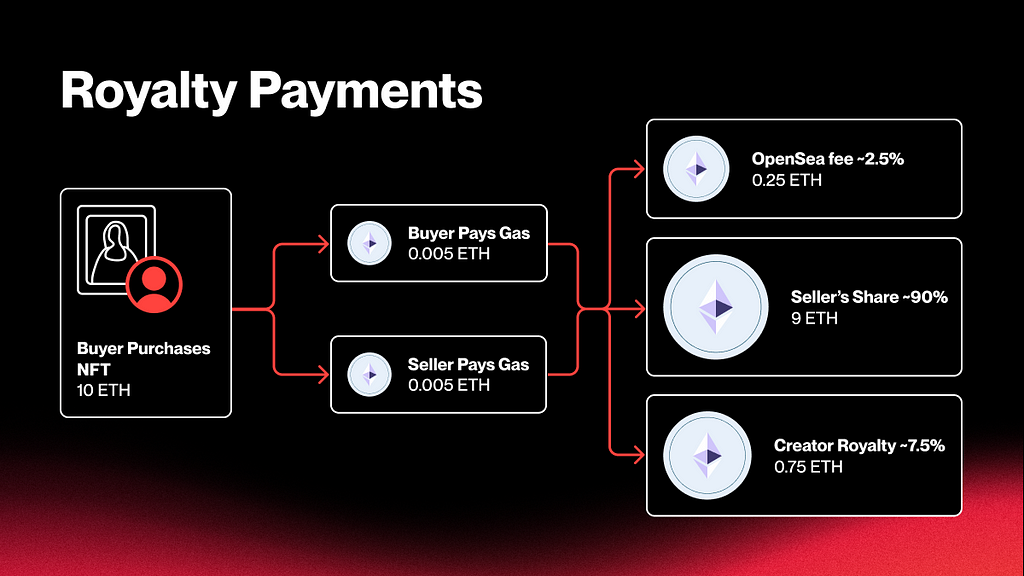
An often-overlooked aspect of NFTs in establishing provenance for digital assets is their ability to automatically pay royalties to original creators. While the concept of Artist Resale Rights (ARR), also known as droit de suite, has existed since France first introduced it in 1920, it remains a relatively new practice in many countries.
Here, NFTs present a unique opportunity. The automated enforcement of royalty payments for every transaction of a specific NFT resolves this issue without requiring cumbersome traditional intermediaries. Curation processes on NFT platforms return this power directly to creators, allowing them to set their desired royalty percentage.
The Future of AI and NFTs
One remarkable aspect of the 2021 NFT surge was that it occurred without the aid of generative AI protocols. At that time, digital artists flourished. Now, however, anyone can create high-production-value artwork as easily as using a chatbot, making the future profitability of this market uncertain. Attention may shift more toward utility and community.
Generative AI empowers individuals to become exceptional artists and unlocks career paths once out of reach. Yet, in the last cycle, artists faced a major issue: their artwork was sold as NFTs without consent. Legal ambiguities still surround the monetization of digital assets created via generative AI. These two factors could clash, particularly if generative AI assets are used to build generational wealth through popular NFT series.
In the previous cycle, theft was exacerbated when NFTs were copied and minted across multiple blockchains. Themes around lack of interoperability and data silos were discussed in prior blog posts. Here, AI can play a critical role. Through enhanced security measures such as early anomaly detection and fraud prevention, AI can serve as a backbone—just as it does in RWA and DeFi. This is essential for establishing cross-chain interoperable security when verifying the provenance of digital assets.
Join TechFlow official community to stay tuned
Telegram:https://t.me/TechFlowDaily
X (Twitter):https://x.com/TechFlowPost
X (Twitter) EN:https://x.com/BlockFlow_News