SEC's Crypto Task Force Launches Website: Announces Top Ten Priorities from Token Issuance to ETFs
TechFlow Selected TechFlow Selected
SEC's Crypto Task Force Launches Website: Announces Top Ten Priorities from Token Issuance to ETFs
The SEC's regulation of crypto assets is undergoing a significant shift, gradually moving from past "enforcement-based oversight" to a balanced approach emphasizing both "guidance and standardization."
 Navigating Web3 tides with focused insights
Translated by: Mary Liu, Bitpush News
New leaders, new initiatives.
Following Gary Gensler's departure, the U.S. Securities and Exchange Commission (SEC) has recently taken a series of notable actions under its new leadership. Today, it officially launched a new webpage for its Crypto Task Force and unveiled ten priority areas—marking a significant shift in the SEC’s approach to crypto regulation, moving from past "enforcement-first" oversight toward a more balanced strategy emphasizing both guidance and regulation.
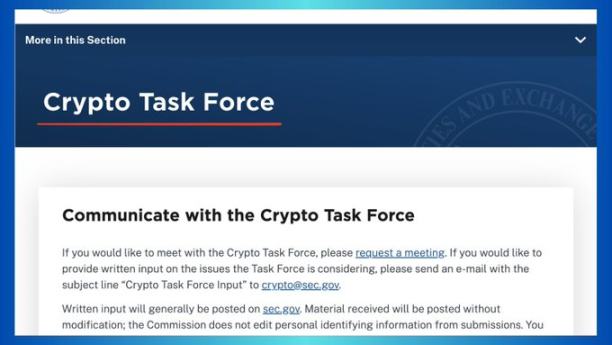
The "priority list," authored by Hester Peirce, SEC Commissioner and head of the Crypto Task Force, covers multiple core issues in the crypto space—from clarifying the securities status of digital assets to exploring cross-border regulatory cooperation. Meanwhile, signals of reduced enforcement pressure offer industry participants more breathing room, indicating the emergence of a more flexible and inclusive regulatory environment. These developments merit close attention from investors, entrepreneurs, and industry observers alike.
Below is the original text, slightly abridged for readability:
The Journey Begins
When I was a child, my family drove every year from Ohio to Maine for vacation. It was a completely different era. There were no cell phones—if the car broke down, we couldn’t call for help; no navigation apps, only paper maps and handwritten directions; no online hotel bookings, so we’d stop wherever we saw a sign and ask if rooms were available. No podcasts or audiobooks, just a crackling radio barely picking up local stations. My brothers and I had no screens in the back seat—we played a “no-tech” game: scanning license plates of passing cars, collecting ones from different states. Today, road trips are vastly different. In most ways, technology has made travel more enjoyable and safer.
The “crypto journey” now beginning with the newly announced Crypto Task Force should also be more enjoyable and safer than the path the SEC has led the industry down over the past decade.
On that earlier journey, the Commission repeatedly refused to use its available regulatory tools while constantly applying enforcement brakes, proceeding along a winding road with no clear destination for anyone. But just as modern technology cannot fully eliminate the risks of road travel, this new journey toward regulatory clarity remains fraught with dangers. Both the Commission and the public must stay vigilant, aware of the risks and opportunities ahead. I’m excited to embark on this journey with a talented group of SEC staff, and we look forward to engaging with an engaged public to help us navigate. With such support, I hope we can reach a better destination than we did during the last crypto journey—one marked not by stumbles but by progress. Before discussing the promises and opportunities of the Task Force, let me first provide some important disclaimers.
First, although I now lead the SEC’s new Crypto Task Force, the views expressed here are my own and do not necessarily reflect those of the SEC or other Commissioners. The Commission’s official positions are always determined through a vote.
Second, it took us a long time to get into this mess, and it will take time to get out. The Commission has engaged with the crypto industry in various forms for over a decade. In 2013, the first Bitcoin exchange-traded product (ETP) application came before us, and that same year we handled a crypto-related fraud case. In 2017, we issued the DAO Report under Section 21(a), applying the Howey Test to crypto for the first time. Since then, we’ve taken numerous enforcement actions, issued some no-action letters, provided certain exemptive relief, mentioned crypto countless times in speeches and statements, met with many crypto entrepreneurs, participated in multiple interagency and international crypto task forces, discussed aspects of crypto in rulemaking proposals, reviewed crypto-related issues in registration statements and other filings, and approved rule changes proposed by self-regulatory organizations (SROs) for listing crypto ETPs. Yet, the Commission’s handling of crypto has consistently suffered from legal imprecision and commercial impracticality. As a result, many cases remain in litigation, many rules are still in proposal stages, and many market participants remain in a state of uncertainty. Untangling these complex issues—including ongoing lawsuits—will take time. It will require institution-wide effort and collaboration with other regulators. Please be patient. The Task Force aims for a good destination, but we must get there in an orderly, practical, and legally defensible manner.
Third, the Task Force seeks to reach a destination where people are free to experiment and build interesting things—not a safe haven for fraudsters. U.S. capital markets are strong, efficient, and effective in part because we have rules designed to protect investors and market integrity, and we enforce them. We do not tolerate scammers, fraudsters, or swindlers. As the Task Force helps shape this regulatory framework, anti-fraud protections will be carefully considered. If the Commission identifies fraudulent activity beyond its jurisdiction, it may refer the matter to another regulator. If no regulator has jurisdiction, the Commission may bring the gap to Congress’s attention.
Fourth, the Task Force is working to help create a regulatory framework that achieves the Commission’s key regulatory goals—including investor protection—while preserving the industry’s ability to offer products and services. This framework will operate within the statutory authority Congress has given the Commission, and we will cooperate with other regulators operating within their own statutory mandates. Current law does not permit us to ignore products within our jurisdiction. Congress has set the parameters, and the Commission will enforce them. Congress has also granted us exemptions, which the Commission may use at its discretion. Where Congress requires the Commission to impose obligations on market participants, SEC rules will not allow you to do whatever you want. Some of these rules will entail costs and compliance burdens that may discomfort some. The Commission will use its enforcement tools when necessary to address noncompliance.
Fifth, Commission staff are actively working through exemption applications, no-action letter requests, and registration statements. However, increased application volume may pose challenges. Applications that comply with technical and legal requirements, include sound legal analysis, and respond thoroughly and promptly to staff inquiries will help conserve Commission resources and accelerate progress toward regulatory clarity. As always, such diligence will help applications move more smoothly through the review process; lack of diligence may cause unnecessary delays. Being first to file does not guarantee being first to approval.
Sixth, the new commitment to a better regulatory environment should not be seen as endorsement of any crypto token or coin. The Commission never endorses any product or service, regardless of whether such tokens fall within our jurisdiction—there is no such thing as an “SEC-approved” seal. Issuing tokens is easy. People are free to buy tokens or products lacking a clear, long-term value proposition, but they shouldn’t be surprised if prices fall one day. In this country, people generally have the right to make their own decisions—but the flip side of this wonderful American freedom is an equally wonderful American expectation: people must make their own choices, rather than expect “government mommy” to tell them what to do or not do, and they shouldn’t expect government bailouts when they make bad decisions.
Now that these somewhat stiff disclaimers are out of the way, let’s discuss what the Task Force is working on with staff across the Commission’s policy divisions. We will collaborate with other federal agencies, state securities regulators, and international counterparts. We invite builders, enthusiasts, and skeptics to engage with us in shaping what final rules should look like, and what interim measures might foster innovation in the meantime. Commission staff have already achieved a milestone—rescinding Staff Accounting Bulletin 121—but much work remains. The following list is neither exhaustive nor ranked by priority or expected completion order.
- Securities Custody Framework: We will work with investment advisers to develop an appropriate regulatory framework enabling them to custody client assets safely, legally, and practically, either directly or through third parties.
- Crypto Lending and Staking: We need clarity on whether crypto lending and staking programs fall under securities laws, and if so, how. We plan to help resolve how such programs can be structured lawfully.
- Crypto Exchange-Traded Products: The Commission has received rule change proposals from SROs seeking to list new types of crypto ETPs. The Task Force will work with staff to issue clear statements on the methodology used to approve or reject such applications. The Task Force will also assist staff and the Commission in considering requests to modify certain features of existing ETPs, including allowing staking and in-kind creation and redemption. However, implementation of these changes may require further progress on custody and other issues.
- Clearing Agencies and Transfer Agents: The Task Force also plans to examine intersections between crypto and rules governing clearing agencies and transfer agents. We will continue collaborating with market participants interested in tokenizing securities or otherwise using blockchain technology to modernize traditional financial markets.
- Cross-Border Sandbox: Many crypto projects have international scope. The Task Force is considering how to facilitate cross-border experimentation on a limited scale and temporary basis, and may explore more permanent, long-term solutions.
This brief overview of how the Task Force envisions the future journey is neither complete nor final, but I hope it sparks your interest. Despite the obstacles standing in the way of a reasonable, clear set of rules, this journey can be exciting and rewarding—if we work together.
Join TechFlow official community to stay tuned
Telegram:https://t.me/TechFlowDaily
X (Twitter):https://x.com/TechFlowPost
X (Twitter) EN:https://x.com/BlockFlow_News
 比推 BitpushNews