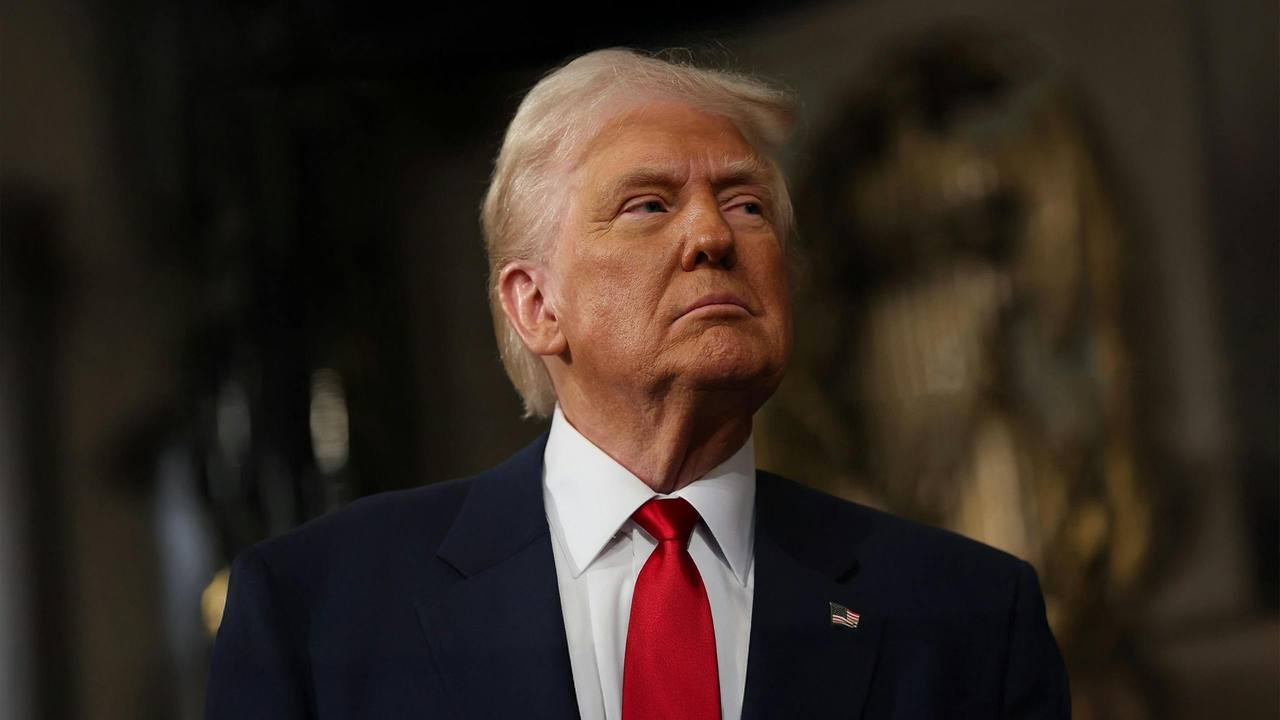
What's in Trump's executive order on crypto?
TechFlow Selected TechFlow Selected
What's in Trump's executive order on crypto?
The executive order established the Presidential Task Force on Digital Asset Markets to strengthen U.S. leadership in the field of digital finance.
 Navigating Web3 tides with focused insights
By BitpushNews
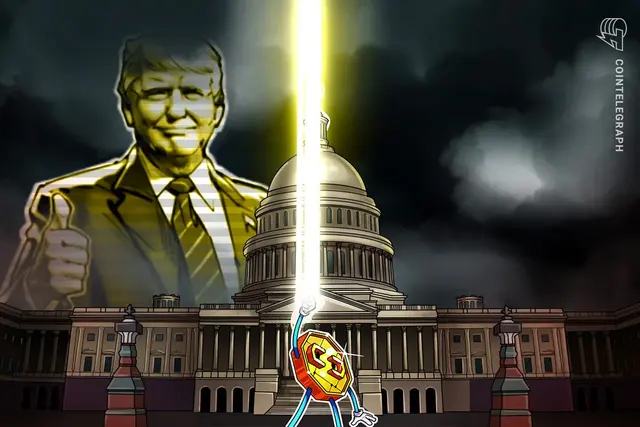
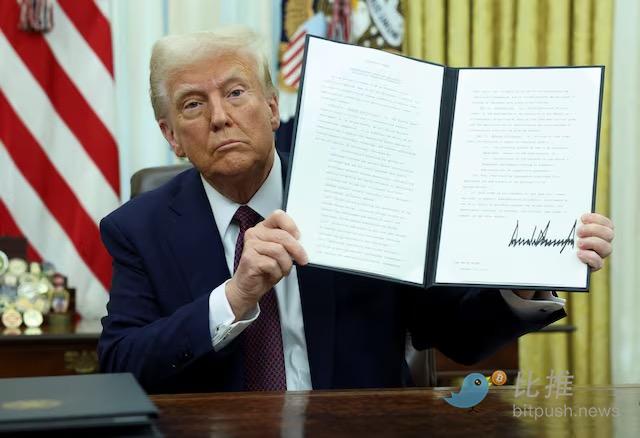
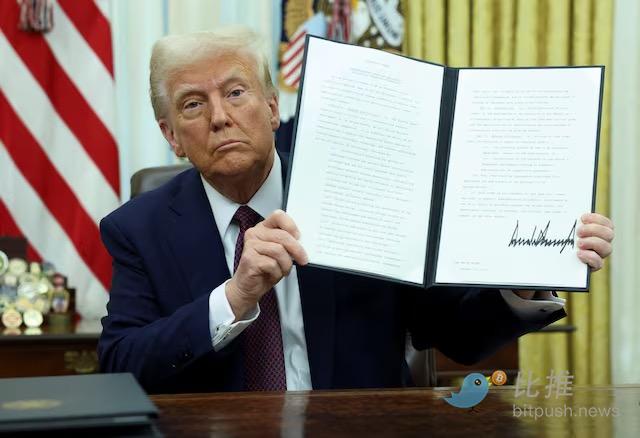
On the afternoon of January 23, 2025, U.S. President Donald Trump signed an executive order on cryptocurrency at the White House, fulfilling his campaign promise to become the "crypto president."
According to Fox News, details of the crypto executive order are as follows:
The executive order establishes the Presidential Task Force on Digital Asset Markets to strengthen U.S. leadership in digital finance.
The task force is charged with developing a federal regulatory framework for digital assets—including stablecoins—and evaluating the creation of a strategic national digital asset reserve.
The task force will be chaired by David Sacks, the White House AI and Crypto Czar, and include members such as the Secretary of the Treasury, the Chair of the Securities and Exchange Commission, and other heads of relevant departments and agencies.
The White House AI and Crypto Czar will recruit top experts in digital assets and digital markets to ensure that the task force benefits from expert guidance outside the federal government.
The executive order directs all relevant departments and agencies to identify and recommend to the task force any regulations or agency actions affecting the digital asset sector that should be repealed or modified.
The executive order prohibits all federal agencies from taking any action to create, issue, or promote a central bank digital currency (CBDC).
The executive order revokes the previous administration’s executive order on digital assets and the Treasury Department’s Framework for International Engagement on Digital Assets, which were seen as stifling innovation and undermining American economic freedom and global leadership in digital finance.
Bitpush Note:
Presidential executive orders are a key tool through which U.S. presidents exercise executive power and shape domestic and foreign policy. However, the authority of executive orders is limited and subject to checks by the Constitution, Congress, and the courts.
Executive orders are not laws: While executive orders carry legal force, they rank below statutes passed by Congress.
Executive orders have limited duration: A subsequent president may modify or rescind an executive order issued by a predecessor.
Executive orders can spark controversy: Because they often address complex political and social issues, executive orders frequently generate debate and opposition.
Join TechFlow official community to stay tuned
Telegram:https://t.me/TechFlowDaily
X (Twitter):https://x.com/TechFlowPost
X (Twitter) EN:https://x.com/BlockFlow_News
 比推 BitpushNews