On the Eve of Taking Office: A Deep Dive into the Changes Made by the Trump Administration in the Crypto Sector
TechFlow Selected TechFlow Selected
On the Eve of Taking Office: A Deep Dive into the Changes Made by the Trump Administration in the Crypto Sector
Speculating on U.S. politics and cryptocurrency development from the perspective of the "Trump cryptocurrency economic framework."
 Navigating Web3 tides with focused insights
Author: LoongDao
Preface
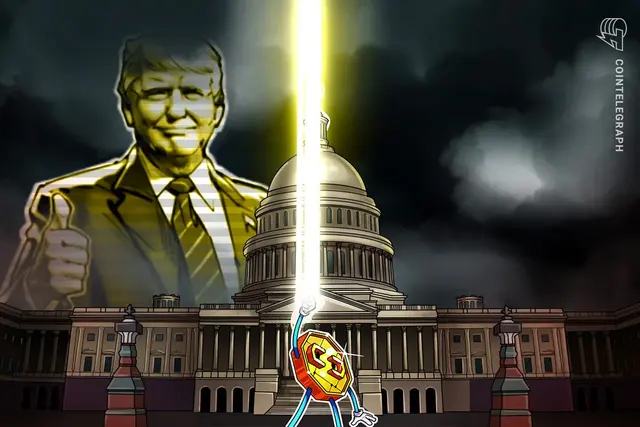
Recently, a draft executive order on "supporting cryptocurrency," allegedly prepared by Trump's team, was accidentally leaked, quickly stirring significant market turbulence. The draft proposes incorporating cryptocurrencies into U.S. strategic reserves in the future and prioritizing crypto projects founded in the United States and backed by American institutions—such as XRP, SOL, and USDC. Upon release of this news, both XRP and SOL saw sharp short-term gains, sparking widespread market discussion.
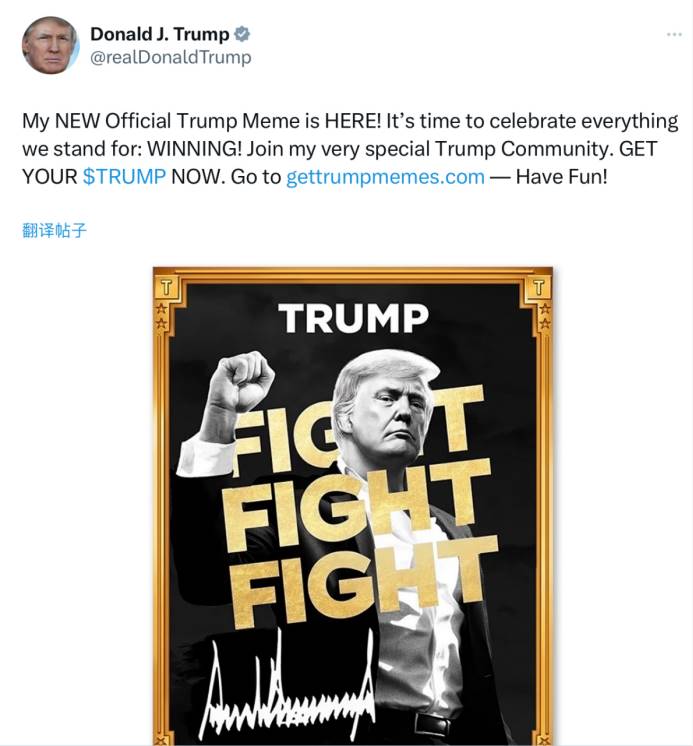
Notably, shortly after the leak of this executive order draft, Trump himself announced the launch of a token named "TRUMP" on Twitter, promoting a "very special Trump community" to celebrate "victories" symbolizing what we stand for. The market’s interpretation of Trump personally entering the "token issuance" arena has been intense: some view it as a signal of deeper integration between politics and the crypto space, while others question whether it could trigger broader regulatory controversies.
Reviewing Trump's repeated public support for cryptocurrency during his election campaign, his proposed "Ten New Cryptocurrency Policies" became a major factor attracting enthusiastic backing from the crypto community. Since winning the election, Trump has gradually fulfilled these promises—for instance, appointing Elon Musk as head of the “DOGE” Department of Government Efficiency, naming David Sacks as White House Crypto Lead, and selecting Paul Atkins as the new SEC chair. These personnel moves send a strong message: the Trump 2.0 administration is highly likely to fully embrace cryptocurrency at the policy level.
So, what exactly do the "Ten New Cryptocurrency Policies" entail? How do they align with Trump’s new appointments? And what impact might they have on the cryptocurrency ecosystem in the U.S. and globally? This article begins with an analysis of the current U.S. economic situation, exploring why Trump, under pressure from trade deficits and national debt crises, has chosen cryptocurrency as a breakthrough point. It also examines potential investment opportunities hidden within this wave of cryptocurrency globalization, offering readers a more comprehensive perspective on the so-called "Trump Cryptocurrency Economic Framework."
(The following content is based on currently available public information and constitutes speculation and analysis regarding U.S. politics and cryptocurrency developments around 2025—not established facts.)
1. Trade Deficit + National Debt Crisis
1.1 Revisiting the "Reagan Cycle"
Source: MacroMicro.com
To understand Trump 2.0’s favor toward cryptocurrency, one must first revisit long-standing structural issues in the U.S. economy—trade deficits and the national debt crisis.
After World War II, leveraging its status as a victorious power and strong economic foundation, the United States deployed the "Marshall Plan" to inject large amounts of dollars (then tied to gold under the Bretton Woods system) into European countries, helping war-ravaged economies rebuild while solidifying alliances. However, as Europe recovered, nations grew reluctant to accept fixed exchange rates and began exchanging their dollar holdings for more stable gold, leading to continuous depletion of U.S. gold reserves. Ultimately, in the 1970s, the dollar was completely decoupled from gold.
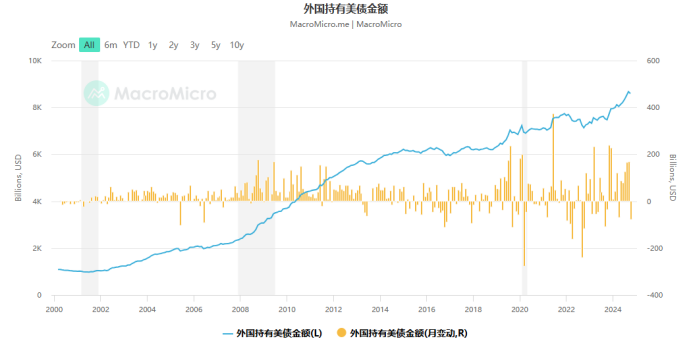
During the Reagan era (1980s), to reinforce dollar hegemony, the U.S. adopted policies of "deep tax cuts, increased defense spending, and high interest rates," establishing a global dollar recycling mechanism commonly known as the "Reagan Cycle":
1. High interest rates attract global capital inflows into the U.S., where investors purchase U.S. Treasury bonds and other dollar-denominated assets for higher returns;
2. Massive capital inflows cause the dollar to appreciate, making U.S. imports cheaper;
3. Rising export prices erode competitiveness, continuously widening the trade deficit;
4. Trade partners then recycle earned dollars back into the U.S. through purchases of Treasuries, supporting U.S. fiscal deficits and consumption.

Source: HUATAI SECURITIES RESEARCH
This cycle cemented the dollar’s dominant international position but also sowed the seeds of ever-growing trade deficits and mounting government debt risks.
Source: Department of the Treasury
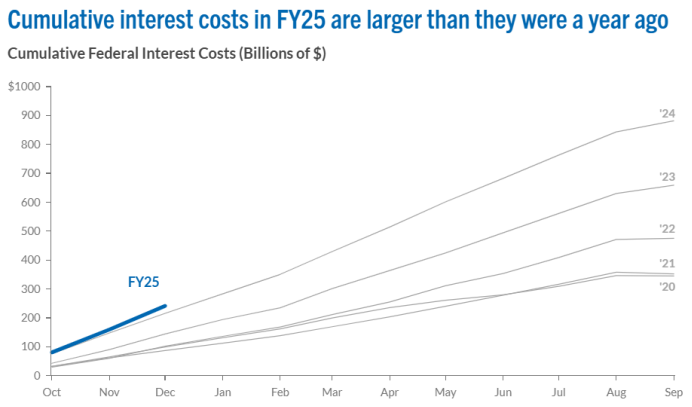
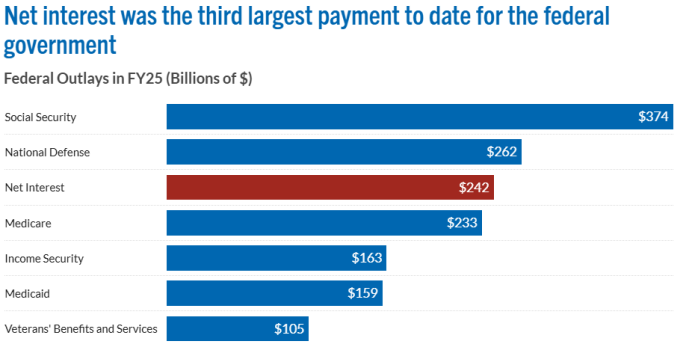
This cycle persisted for nearly 50 years. Rapid accumulation of federal debt, coupled with rising interest rates (compared to the past decade or so), has driven up borrowing costs for the federal government. In fact, by December 2024, interest payments on national debt had surpassed previous levels. Interest expenses have become the third-largest category of federal spending, exceeding expenditures on Medicare, income security, Medicaid, and veterans’ benefits and services.
Source: Department of the Treasury
1.2 China: America’s Largest Source of Trade Deficit
Source: MacroMicro.com
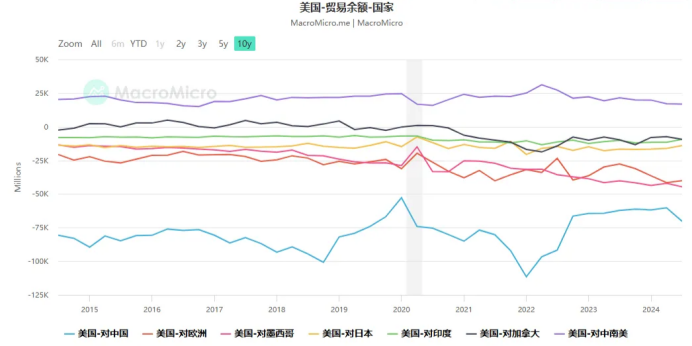
According to annual data from the U.S. Department of Commerce, China remains the largest source of the U.S. trade deficit and thus one of the largest foreign creditors to the United States. After 2018, Trump launched a trade war against China aiming to reduce the deficit through tariffs, yet overall, the U.S. continues to run a substantial trade deficit. For the 2025 Trump administration, reducing the trade deficit remains a top priority.
1.3 Trump’s “Two-Pronged Approach” and “Alternative Path”
The Trump administration’s strategy to reduce the trade deficit centers on two main approaches:
1. Cost-cutting: raising tariffs to reduce imports
2. Revenue expansion: boosting exports
However, tariff wars often provoke retaliatory measures from other countries, potentially backfiring. As such, Trump 2.0 will continue using incentives like corporate tax reductions to attract manufacturing and service industries back to U.S. soil. Yet tax relief alone isn’t sufficient—new tools are needed to ensure that re-shored production can be smoothly exported abroad.
This time, Trump has turned to cryptocurrency.
2. The “Ten New Cryptocurrency Policies”: From Dismantling to Building
From the economic policies of Trump 2.0, one can clearly see continuity with the “Reagan model”—using either a dollar substitute or an external dollar-circulation tool to strengthen America’s global financial standing. The difference lies in the instrument: whereas Reagan relied primarily on U.S. Treasuries, Trump seeks to pioneer a new global economic cycle by aggressively promoting cryptocurrency.
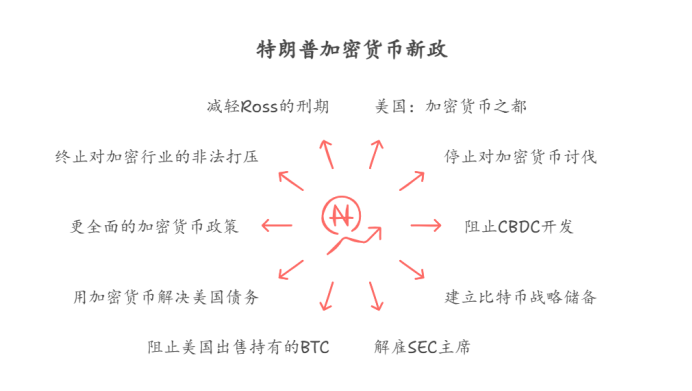
Reviewing the “Ten New Cryptocurrency Policies,” they can be summarized along three core themes: “Dismantle, Develop, Build.”
2.1 Dismantle
1. End the “crackdown” on cryptocurrency
Within one hour of taking office, Trump would fire former SEC Chair Gary Gensler and appoint a more lenient regulator, halting frequent enforcement actions against crypto firms and creating a friendlier regulatory environment for blockchain enterprises.
2. Cease illegal suppression of the U.S. crypto industry
Ceasing illegal suppression implies Trump may repeal SAB 121, the SEC’s 2022 accounting bulletin requiring institutions holding crypto assets to record them as liabilities with corresponding asset entries. In practice, this rule effectively amounted to “banning banks from custodizing crypto,” as traditional banking systems struggle to comply with its valuation and disclosure requirements.
Repealing SAB 121 would allow traditional U.S. financial institutions to legitimately offer cryptocurrency custody services, providing users with more convenient alternatives than hardware or multi-sig wallets, thereby bridging the gap between traditional finance and crypto.
3. Halt development of central bank digital currency (CBDC)
Trump has repeatedly stated he will not allow the government to issue a CBDC, arguing it would grant excessive financial control to the state and infringe on personal privacy. Instead, he emphasizes protecting individuals’ rights to self-custody digital assets, adhering to principles of “decentralization” and “freedom.”
4. Reduce the sentence of Silk Road founder Ross Ulbricht
Trump may “pardon” or significantly reduce Ross Ulbricht’s sentence—a symbolic political gesture reflecting renewed alignment with cryptocurrency’s original “libertarian” values. This could also create more legal space for private use of crypto at the regulatory level.
2.2 Develop
1. Establish a Bitcoin Strategic Reserve
The Trump administration favors converting currently held Bitcoin (including assets seized by law enforcement) into a national strategic reserve, further institutionalizing Bitcoin’s status as “digital gold.” Over the past decade, Bitcoin has increasingly been viewed by institutions and investors as an inflation-hedging, risk-resistant asset. If a global powerhouse like the U.S. formally adopts BTC as a reserve asset, allies and rivals alike may follow suit.
2. Prevent government sale of Bitcoin
In line with establishing a strategic reserve, Trump aims to stop the U.S. government from selling its Bitcoin holdings on the open market, reinforcing official endorsement. This would undoubtedly serve as a key driver pushing Bitcoin prices upward.
3. Use cryptocurrency to address debt issues
The U.S. government may incorporate confiscated Bitcoin or other crypto assets into fiscal operations to help pay part of the national debt interest, alleviating pressure from mounting debt. In 2024, federal interest payments exceeded $880 billion (3.1% of GDP). If digital assets like Bitcoin were integrated into fiscal mechanisms, cryptocurrency could enter the realm of national fiscal tools.
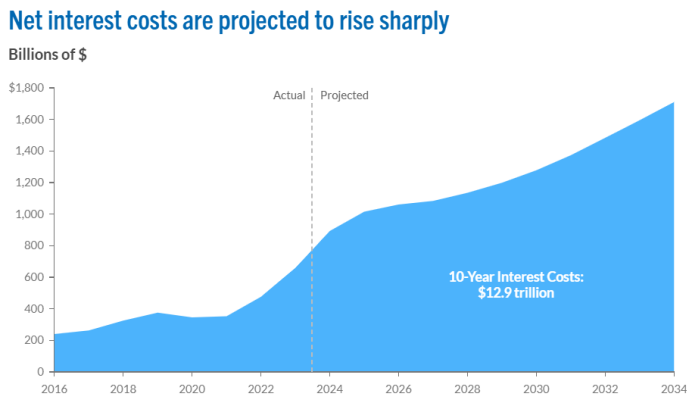
Sources: Congressional Budget Office and Office of Management and Budget
3.3 Build
1. Transform the U.S. into a Bitcoin mining superpower
By lowering energy costs and offering tax incentives, attract mining companies to set up operations in the U.S., increasing American control over global BTC hash rate.
2. Advance the “21st Century Financial Innovation and Technology Act”
This legislation may clarify the regulatory boundaries between the SEC and CFTC over cryptocurrencies, strengthening disclosure requirements. If Trump leans toward classifying most cryptocurrencies as “commodities” under CFTC jurisdiction rather than “securities” under the SEC, it would facilitate easier token launches by U.S.-based firms. Once purchased overseas, such tokens would count as U.S. “export revenue,” helping narrow the trade deficit.
3. Accelerate the construction of a stablecoin system
The Trump administration plans to allow compliant stablecoin issuers direct access to the Federal Reserve payment system, enabling faster settlements and lower transaction costs, further enhancing the dollar’s transactional dominance worldwide.
3. On the Eve of Inauguration: Trump Launches a Token on Twitter
On January 17, 2025, Trump announced the launch of a cryptocurrency called $TRUMP on his social media platform. The token’s price surged over 240x within 24 hours, with fully diluted market cap skyrocketing from zero to $45 billion. Trump’s company, CIC Digital LLC, holds 80% of the token supply, implying a personal net worth increase of tens of billions of dollars. As previously noted, the U.S. faces challenges from trade deficits and national debt—so America needs to “earn money independently.” Trump’s token launch provides a reference for Wall Street institutions and global financiers alike, as Web3’s efficient on-chain fundraising begins challenging traditional Web2 financing models. Given the characteristics of the Trump 2.0 administration, $TRUMP might eventually be used in government fiscal planning or even as a buffer for Treasury interest costs.
Sources: X
4. From Twitter to the White House: Building Dual Engines of Crypto and Technology
Beyond the “Ten New Policies,” Trump’s personnel appointments also send strong signals:
4.1 Establishing D.O.G.E. (Department of Government Efficiency)
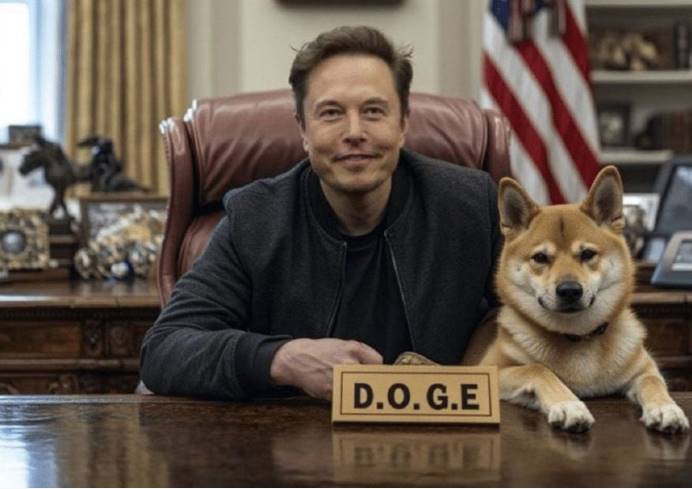
On November 12, 2024, Trump announced the formation of the “Department of Government Efficiency” (D.O.G.E.), co-led by tech magnate Elon Musk and young politician Vivek Ramaswamy, aimed at reducing bureaucracy, streamlining regulations, and cutting wasteful spending. Musk’s well-known affinity for Dogecoin (DOGE) fuels widespread speculation that DOGE may receive special support.
4.2 Appointing David Sacks as White House AI and Crypto Lead
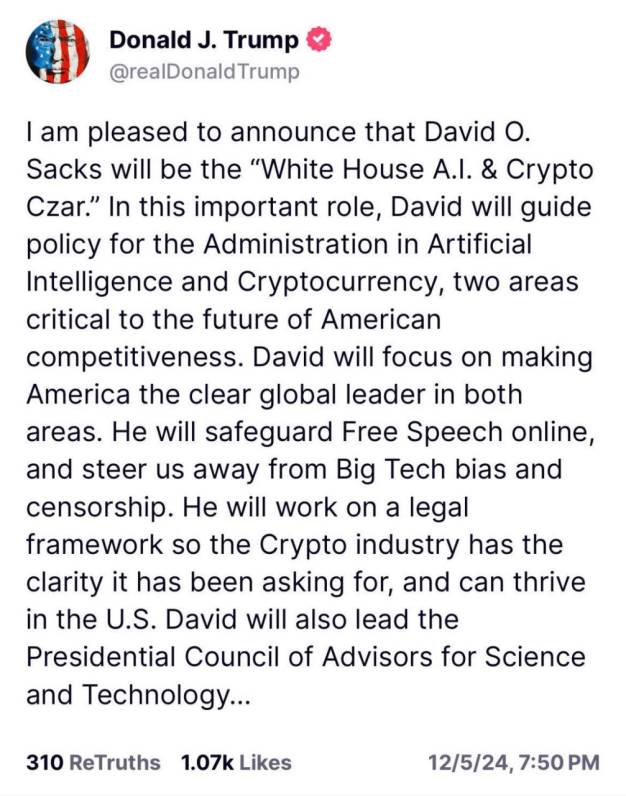
Sources: X
On December 5, 2024, Trump made a major announcement via social media: PayPal’s former COO, David Sacks, would lead AI and cryptocurrency affairs at the White House. A long-time supporter of Solana and investor in crypto fund Multicoin Capital, Sacks also shares close ties with Musk from their PayPal days. This appointment signals growing attention to the convergence of blockchain and AI industries.
4.3 Paul Atkins Appointed SEC Chair
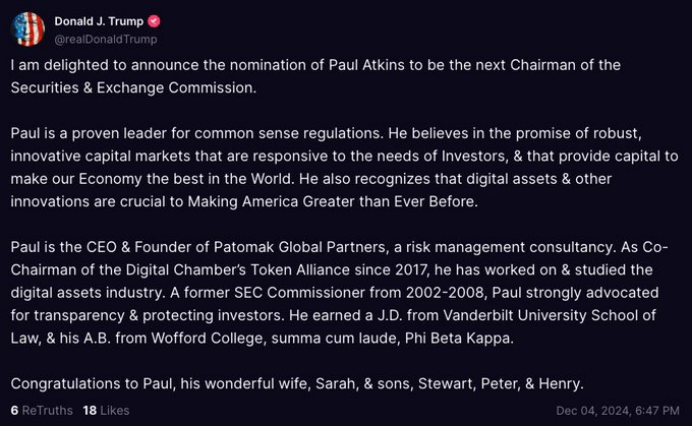
Sources: X
On December 5, 2024, Trump officially nominated Paul Atkins, former SEC commissioner, to serve as SEC chair. Atkins holds a relatively open stance toward digital assets and has consistently advocated for balancing market transparency with investor protection. His arrival is certain to further advance the compliance and institutionalization of cryptocurrency.
5. Integrating Technology and Cryptocurrency: Boosting U.S. Exports
These appointments reveal Trump 2.0’s emphasis on integrating “blockchain + AI,” which directly supports the macroeconomic goal of expanding exports (“revenue expansion”).
Currently, AI companies like OpenAI face high operating costs and unclear profit models. In 2024, OpenAI generated $4 billion in revenue, mainly from monthly ChatGPT subscriptions, but still incurred a $5 billion loss. While subscription income is substantial, it remains insufficient to cover massive R&D and cloud computing expenses.
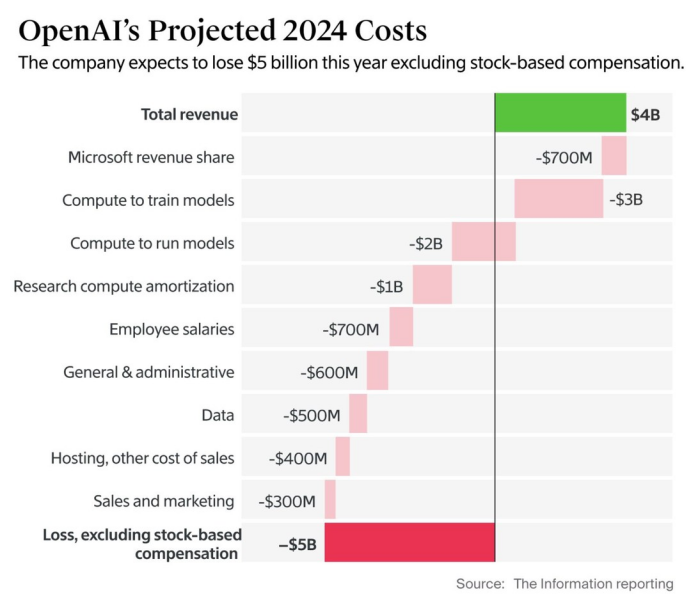
If cryptocurrency is integrated into their business model—for example:
1. Suppose OpenAI issues its own token, requiring users to purchase it to access AI services like ChatGPT;
2. Global users must exchange USD or other fiat currencies for the token to use these services;
Once widely adopted, every global token buyer effectively pays “foreign exchange” for U.S. digital service exports, bypassing many tariff and regulatory barriers, enabling the U.S. to establish a new form of digital product export.
6. Global Unrestricted Trading of Crypto Assets: An Alternative Breakthrough Amid De-globalization
In an era of rising de-globalization sentiment, many countries (such as China and India) impose strict foreign exchange controls, posing significant obstacles to traditional international trade. Cryptocurrencies, by contrast, enable seamless cross-border circulation without relying on traditional systems like SWIFT or bank-based restrictions. This inherent advantage of “decentralized finance” opens new global trading channels for the Trump 2.0 administration. With sufficient policy backing, the U.S.’s first-mover advantage in cryptocurrency could expand even further.
7. Investment Opportunities and Risk Warnings
7.1 Investment Opportunities
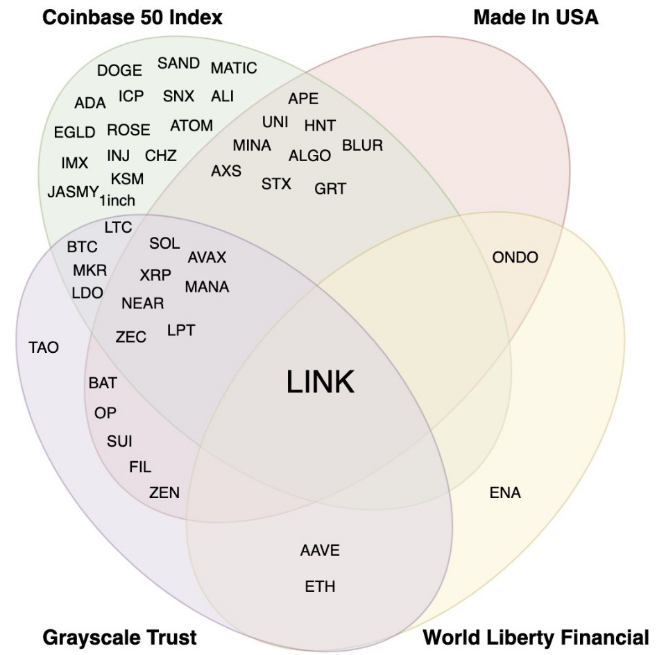
1. Prioritize projects led by U.S. teams or companies
The Trump administration clearly favors supporting “Made-in-America” blockchain projects such as XRP, SOL, and USDC. Projects that form partnerships with the White House, corporations, or financial institutions may gain advantages in regulation, compliance, and banking custody.
2. Watch tokens on Trump’s “whitelist” (e.g., WLFI)
DeFi projects backed by the Trump family, such as World Liberty Financial (WLFI) and its token list, represent promising sectors. However, note that such projects carry “policy bias” risks—if political winds shift, they may face compliance challenges.
3. Focus on endorsements from major compliant institutions
In a more favorable U.S. regulatory climate, traditional financial giants or compliant platforms like Coinbase, Grayscale, and BlackRock remain key indicators. Crypto projects backed by these entities tend to be more stable.
4. Don’t overlook MEME culture
Trump and Musk actively promote “community libertarianism” on social media, aligning closely with the ethos of MEME coins like Dogecoin (DOGE). As the leader among MEME coins, DOGE holds strong upside potential during any policy or social media-driven market event.
7.2 Risk Warnings
Regulatory changes: Despite Trump’s leadership, internal U.S. institutions—including Congress, the Treasury, the Federal Reserve, and the judiciary—represent diverse interest groups whose competing agendas could hinder smooth policy implementation.
Market volatility: The cryptocurrency market has always been highly volatile; any sudden event (black swan or macro-policy shift) can trigger sharp price declines.
8. Conclusion
Under dual pressures of national debt and trade deficits, the U.S. urgently needs to expand outward-facing revenue streams. Trump 2.0’s cryptocurrency “leapfrog” strategy represents both a novel fusion of finance and technology and potentially another powerful tool in global financial competition.
Yet, any grand vision faces real-world constraints: internal political struggles in the U.S., entrenched interests of traditional financial institutions, international skepticism toward American dominance, and the inherent high risks and regulatory complexities of the crypto market—all add immense uncertainty to this so-called “crypto revolution.” Regardless of the final outcome, the most important thing is to remain rational, closely monitor regulatory and informational developments, and make wiser investment decisions amid this complex landscape of intertwined opportunities and risks.
Disclaimer: Readers are strictly advised to comply with local laws and regulations. This article does not constitute any investment advice.
Join TechFlow official community to stay tuned
Telegram:https://t.me/TechFlowDaily
X (Twitter):https://x.com/TechFlowPost
X (Twitter) EN:https://x.com/BlockFlow_News