Crypto Lawyers' Joint Open Letter to Trump: How to Make America the Cryptocurrency Capital of the World?
TechFlow Selected TechFlow Selected
Crypto Lawyers' Joint Open Letter to Trump: How to Make America the Cryptocurrency Capital of the World?
Members of the Cryptocurrency Legal Bar Association outlined practical ways for the new Trump administration to create an optimal environment for cryptocurrency development.
 Navigating Web3 tides with focused insights
Source: CoinDesk
Translation: Baishui, Jinse Finance
Foreword
More than 20 lawyers working in the cryptocurrency industry have written an open letter outlining how the incoming Trump administration can create a legal environment conducive to crypto innovation. Exclusively published by CoinDesk, the letter covers regulation of the SEC and CFTC, potential legislation governing stablecoins and DeFi, as well as tax reductions and streamlined procedures.
Full text of the letter:
Dear President-elect Trump:
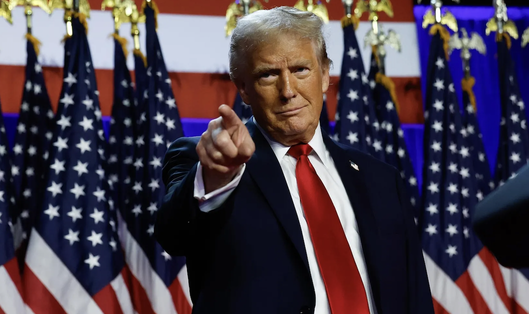
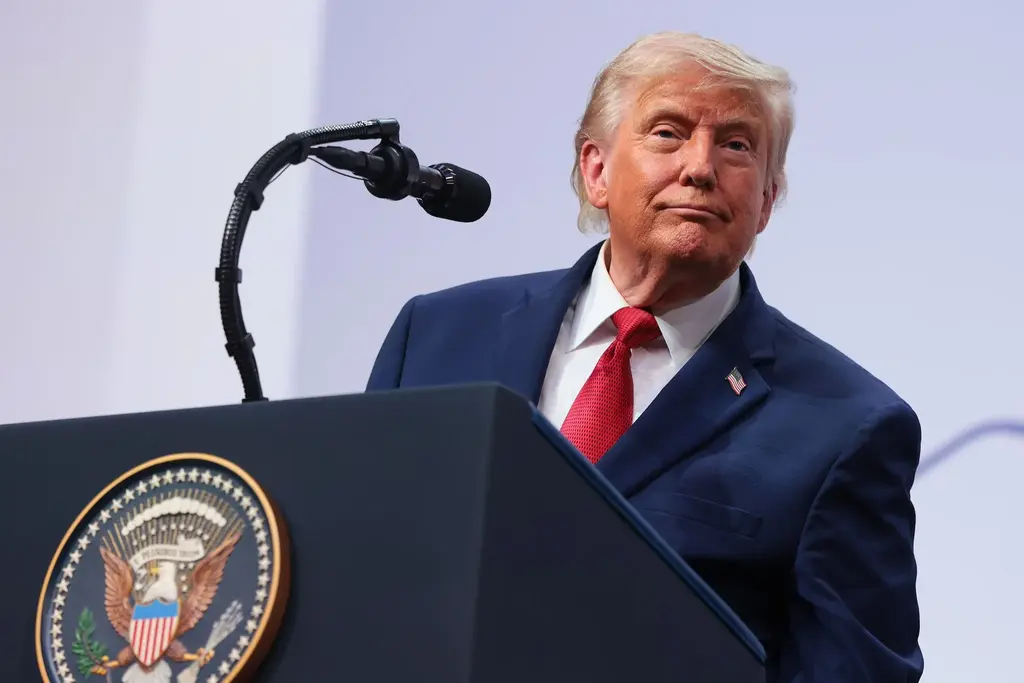
Last year, you delivered a keynote speech at the Bitcoin Conference in Nashville, pledging that if re-elected, you would make America the world's cryptocurrency capital. As you return to the White House this Monday, we write to you as practicing members of the Association of Cryptocurrency Lawyers, offering regulatory policy recommendations to help you achieve this goal.
America, like cryptocurrency, is founded on individual liberty and is naturally positioned to lead global development. Unfortunately, U.S. regulators have thus far refused to apply existing laws to digital assets and the blockchains behind them (and even declined to explain why), creating an adverse business climate that has forced many entrepreneurs and developers overseas.
To unleash American ingenuity and redress regulatory neglect toward the blockchain industry, we recommend your administration pursue forward-looking policies in three areas: supporting U.S. companies; advancing core cryptographic values such as privacy, disintermediation, and decentralization; and fostering a favorable domestic business environment.
Supporting U.S. Enterprises
The cryptocurrency industry has already produced a range of mature and emerging use cases—including digital gold, stablecoins, permissionless payments, decentralized finance (DeFi), real-world assets, decentralized physical infrastructure networks (DePIN), and more. Many of these are being responsibly advanced in the United States by firms such as Coinbase, Circle, and Consensys, as well as developers contributing to open-source, decentralized crypto infrastructure. To continue competing with international counterparts, these actors require clear rules and appropriate regulatory guidance.
General Rules
Token issuance and secondary market trading—the lifeblood of the crypto economy—are constrained by overlapping and confusing jurisdictional boundaries between the U.S. Securities and Exchange Commission (SEC) and the Commodity Futures Trading Commission (CFTC). Market structure legislation should clearly delineate the primary regulator for each asset class and specify when an asset enters or exits regulatory oversight.
Congress should avoid the SEC’s overly broad application of U.S. securities laws. Tokens driven by open-source software and consensus mechanisms, which minimize reliance on centralized participants, are not securities—because no legal relationship as defined by securities law exists between token holders and any putative "issuer." Similarly, crypto assets such as art NFTs (which are merely digital artworks) and non-investment activities like staking or lending bitcoin fall outside the scope of securities regulation.
Congress should be bold. This means not being bound by prior legislative efforts such as FIT21, which were shaped by earlier political climates and produced unintended consequences. It also means learning from international regulatory experiences—such as the EU’s MiCA framework—while avoiding their pitfalls, charting a uniquely confident and independent path forward for the United States.
Specific Sectors
Beyond advocating general principles, your administration should urge Congress and relevant agencies to address issues in specific domains due to their strategic importance to both the crypto industry and the nation.
Stablecoins. With a current market cap exceeding $200 billion, stablecoins are the lifeblood of the digital asset ecosystem. As frameworks like the Stablecoin Transparency Act gain traction and recognition from national regulators, comprehensive legislation is needed to govern their issuance and management—ensuring they are transparently backed and do not threaten financial stability. Beyond consumer benefits, regulatory support for stablecoins advances national interests. Like Eurodollars, dollar-denominated stablecoins reinforce the U.S. dollar’s status as the global reserve currency and increase demand for U.S. Treasuries held by issuers.
TradFi Integration. The unprecedented success of Bitcoin and Ethereum ETFs signals that crypto is beginning to integrate with traditional finance. Regulatory policy should ensure safe and orderly integration, giving consumers access to trusted custodial services. This requires revising or repealing biased SEC accounting rules (such as SAB 121) and custody regulations. But it shouldn’t stop there. Pro-innovation policies in this domain should also promote the tokenization of traditional financial assets—such as stocks, bonds, or real estate—into blockchain-based tokens. The resulting benefits, including increased liquidity, fractional ownership, and faster settlement, will strengthen U.S. capital markets and ensure they remain the most advanced and innovative in the world.
DeFi. Decentralized finance has the potential to modernize the global financial system and deliver value to everyday Americans by eliminating costly financial intermediaries. You should not allow entrenched interests and fearmongering to prevent the U.S. from becoming the world leader in DeFi. In this context, regulation targeting centralized actors such as exchanges and issuers must be crafted carefully to avoid inadvertently capturing and crippling the still-nascent DeFi ecosystem.
Promoting Innovation Through Commitment to Crypto Values
To foster cryptocurrency innovation, regulatory policy must respect core crypto values: privacy, disintermediation, and decentralization. This commitment yields two key regulatory principles. First, where traditional analogues exist, regulation should not impose heavier burdens on crypto. Second, where no traditional analogue exists, regulation should evolve accordingly.
When Crypto Should Be Treated Equally to Traditional Assets and Instruments
The first principle applies to products such as self-custody wallets, which enable users to hold and manage their own private keys. Because these tools are functionally equivalent to physical wallets used for personal asset management, they should not be treated differently—for purposes of regulatory oversight or surveillance—as financial intermediaries. Just as you don’t need to complete KYC to deposit cash into a physical wallet, storing tokens in a digital wallet should be no different.
Similar logic applies to taxation of block rewards. Americans who mine or validate blockchain transactions are creating new property, much like farmers growing crops in a field. Yet the IRS currently taxes their income upon receipt. This discriminatory treatment should be eliminated.
When Crypto Should Be Treated Differently
The second principle demands that regulators resist fitting crypto participants and activities into legacy frameworks incompatible with crypto’s nature. Doing so undermines the crypto ecosystem, drives the industry overseas, and erodes the rule of law.
Unfortunately, this is precisely the path many U.S. regulators have chosen.
The IRS has begun treating crypto front-ends as “brokers” despite lacking statutory authority. The Department of Justice has started prosecuting non-custodial wallet developers under unlicensed money transmission laws, despite longstanding policy to the contrary. The Treasury Department has sanctioned the privacy-enhancing mixer Tornado Cash’s smart contracts—even though they are neither foreign persons nor property, but simply code. (An appeals court later overturned this sanction.)
Without diminishing the importance of government interests—such as tax evasion, money laundering, and national security—we believe the government’s approach in each case is misguided from an innovation policy standpoint. We encourage your administration to reverse these practices.
We urge regulators not to regulate digital assets and blockchain enterprises as they would traditional companies, but instead to collaborate with this new technological paradigm and our industry. For example, if government monitoring (KYC) in decentralized environments is deemed necessary in certain contexts, regulators could leverage cross-protocol, portable, blockchain-based credentials—allowing users to retain control over their data (a Web3 advantage)—while remaining compatible with frictionless blockchain ecosystems. Likewise, they could harness the programmability of tokens and smart contracts to exclude sanctioned parties from the crypto economy.
Attracting Top Talent Through a Favorable Business Environment
To become the destination of choice for top crypto talent, the U.S. must cultivate a supportive business environment. Your administration can begin this process on day one.
End de-banking of crypto companies. Your administration should direct the Federal Deposit Insurance Corporation (FDIC) and all other agencies involved in Operation Chokepoint 2.0 to immediately cease irresponsible actions aimed at de-banking the crypto industry.
Improve SEC rulemaking and enforcement. You should instruct your SEC Chair to thoroughly reform the agency’s approach to crypto. Over the past four years, the SEC has exceeded its authority by pursuing legitimate industry leaders like Coinbase and Consensys, regulating individual developers and users (through exchange redefinition rulemaking), and taking enforcement actions against wallet providers. It is now time for the SEC to correct these harmful practices, engage constructively with the crypto industry, and focus its efforts on preventing fraud rather than suppressing financial speculation—which is beneficial for innovation.
Eliminate punitive tax rules. Your administration should eliminate punitive tax rules that push entrepreneurs and developers overseas, while leaving well-intentioned taxpayers uncertain about how to calculate their tax liabilities. Low-hanging improvements include allowing current expensing for software development; deferring taxes on validator rewards and airdrops; creating a safe harbor for de minimis transactions (e.g., below $5,000); offering mark-to-market election options for crypto investors; and repealing IRS reporting requirements that treat websites as brokers. Congress should also repeal the amendment to Section 6050I, which imposes burdensome—and potentially unconstitutional—reporting obligations on crypto transactions exceeding $10,000.
Reduce unnecessary red tape. Aligned with the mission of the Department of Government Efficiency (D.O.G.E.), we urge your office to work with Congress and federal agencies to reduce unnecessary regulatory burdens constraining crypto and fintech. This includes simplifying or eliminating registration and reporting requirements for digital asset offerings that meet certain conditions, including providing necessary investor disclosures. Congress should also consider enacting legislation to establish a uniform federal money transmission licensing framework, bringing clarity and efficiency to the broader fintech ecosystem.
In implementing these forward-looking policies, we encourage your administration to consult with industry leaders and remain sensitive to the transnational nature of the digital asset ecosystem. (We view your formation of a cryptocurrency council as a positive step in this direction.) We also recommend using tools such as regulatory sandboxes to mitigate the risk of unintended regulatory consequences.
Now is the ideal time for America to assert its position as a global regulatory leader. By ensuring this happens, your administration will contribute to the nation’s future economic prosperity and support a technology rooted in America’s deeply held values of liberty and freedom. You should seize this moment.
Sincerely,
Ivo Entchev, Olta Andoni, Stephen Rutenberg, Donna Redel
Additional signatories from the Association of Cryptocurrency Lawyers: Mike Bacina, Joe Carlasare, Eli Cohen, Mike Frisch, Jason Gottlieb, Eric Hess, Katherine Kirkpatrick, Dan McAvoy, John McCarthy, Margaret Rosenfeld, Gabriel Shapiro, Ben Snipes, Noah Spaulding, Andrea Tinianow, Jenny Vatrenko, Collin Woodward, and Rafael Yakobi.
Join TechFlow official community to stay tuned
Telegram:https://t.me/TechFlowDaily
X (Twitter):https://x.com/TechFlowPost
X (Twitter) EN:https://x.com/BlockFlow_News
 CoinDesk