"Don't like it? You can short it," but CEX has become an exit liquidity
TechFlow Selected TechFlow Selected
"Don't like it? You can short it," but CEX has become an exit liquidity
Shorting Yongzan.
 Navigating Web3 tides with focused insights
Author: Shaofaye123, Foresight News
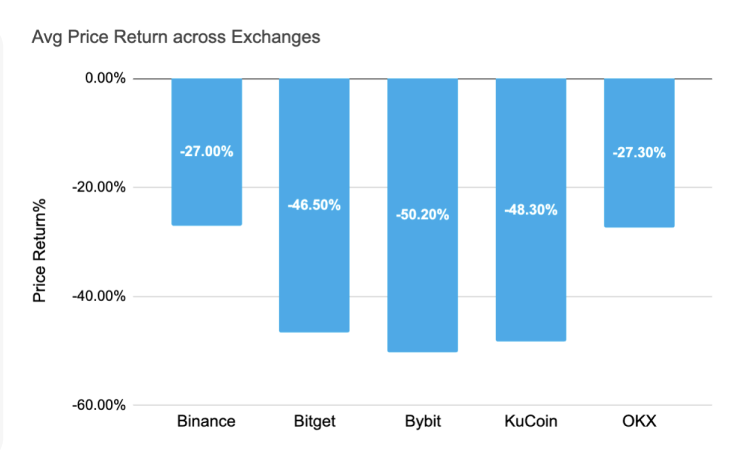
Centralized exchanges (CEXs) underperformed in 2024, mocked as on-chain exit liquidity. According to a research report released by Animoca Digital Research, the average returns of major exchanges were negative across the first three quarters.
Entering 2025, will listing on centralized exchanges remain a death sentence for new tokens? Can shorting them really guarantee perpetual profits? This article reviews the January 2025 listings across major exchanges.
Overview of Exchange Listings in January
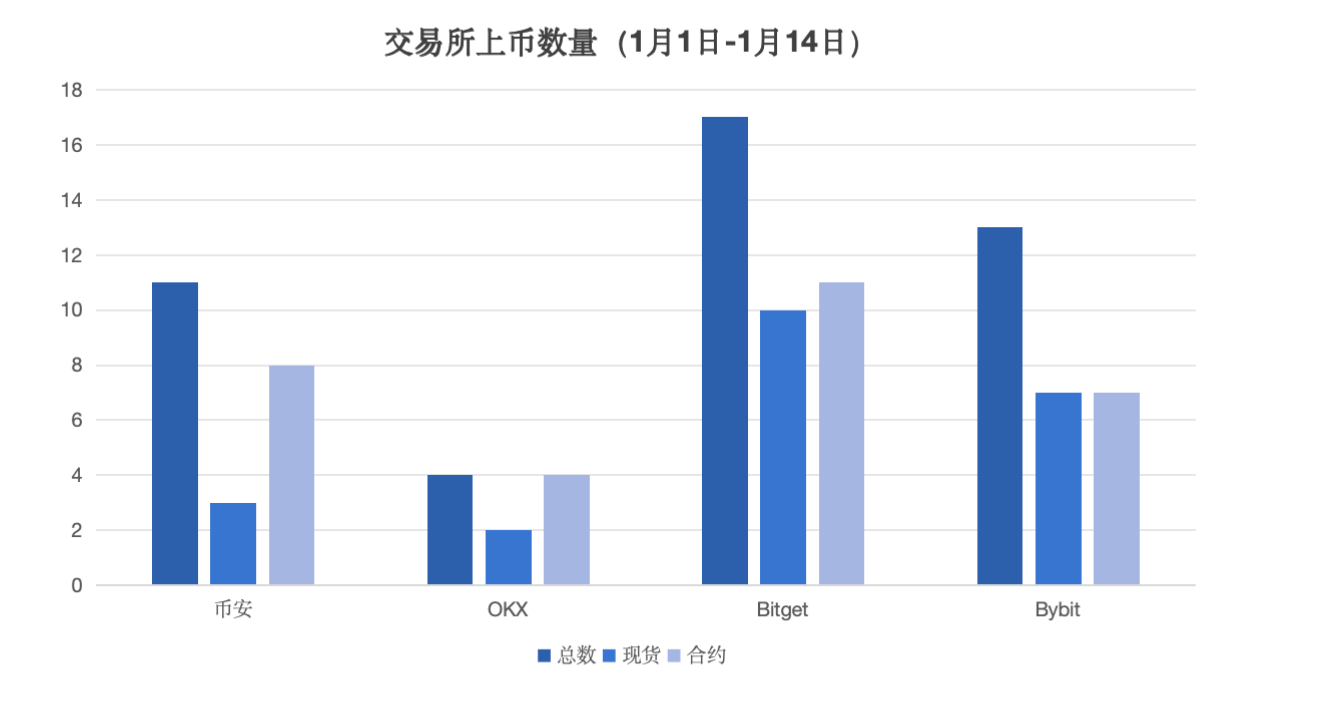
Exchanges began aggressively listing new tokens at the start of this year. Data shows that OKX adopted the most conservative approach, listing only four tokens. In contrast, Bitget pursued a more aggressive strategy, launching 17 tokens so far this year—the highest among peers—with the largest proportion listed as spot pairs. Binance and Bybit listed 11 and 13 tokens respectively, with Binance having the lowest proportion of spot listings.
Performance of Newly Listed Tokens
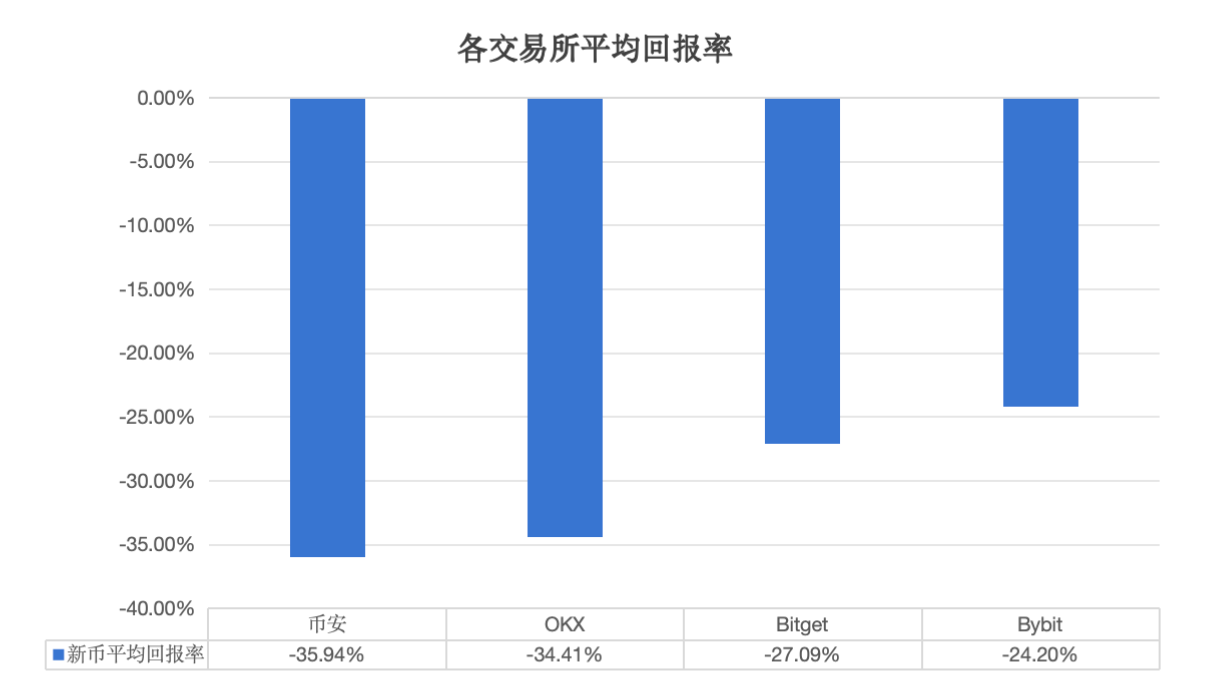
Year-to-date, the average return across all exchanges remains negative, with Binance suffering the steepest decline—down approximately 10 percentage points to an average return of -36%. The other exchanges showed relatively similar results; Bitget, despite listing the most tokens, saw an average decline of around -27%.
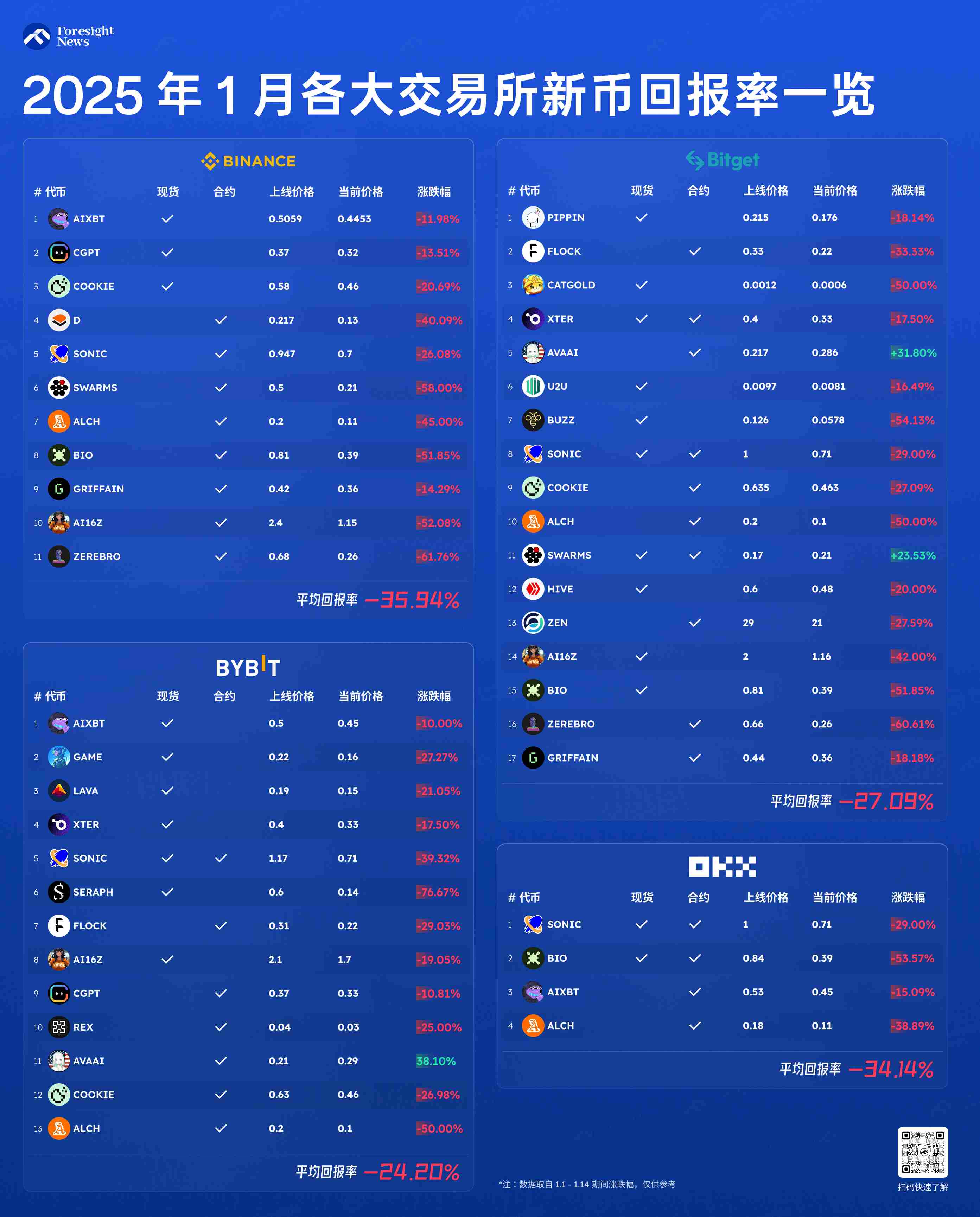
The table above includes all tokens listed since January by the four major exchanges (both spot and futures). To avoid skew from price spikes, the higher of the day's opening or closing price was used for calculations. Based on this data, all newly listed tokens on Binance delivered negative returns—without exception. Bitget had two projects buck the downtrend with gains, while Bybit achieved one token with positive returns; all others failed. Even OKX’s mere four listings declined in value.
Additionally, most January listings remained concentrated in AI agent projects. After repeated community criticism for predominantly listing VC-backed tokens, Binance significantly reduced such listings in January. Of its 11 new tokens, 9 were related to AI agents, accounting for 81% of total listings. However, Binance’s average listing time lags behind other exchanges by about one month, and is far behind on-chain momentum development. By the time tokens are listed, market caps have often already surged, leading to poor post-listing performance. For example, AI16Z dropped over 10% within five minutes of its Binance listing announcement. Moreover, projects listed on Binance tend to have high market caps upon launch—rarely below $100 million—which contributes to weak price momentum and limited upside potential. In contrast, among the few tokens that rose after listing on Bitget, SWARMS and AVAAI both launched with market caps below $100 million, demonstrating increasing reward potential for small-cap tokens.
He Yi once said in the community, "If you don’t like it, just short it." Today, shorting Binance’s newly listed tokens appears to be a surefire way to make money. And not just Binance—other exchanges have also performed poorly. If one had shorted each new token immediately after listing, drawdowns would rarely occur; instead, most tokens continued falling, often halving or worse. The notion that “listing on Binance means price goes up” is now obsolete. "Soul-pouring soup master"—a sarcastic nickname reflecting consecutive post-listing crashes—has become the community’s perception of Binance’s new listings.
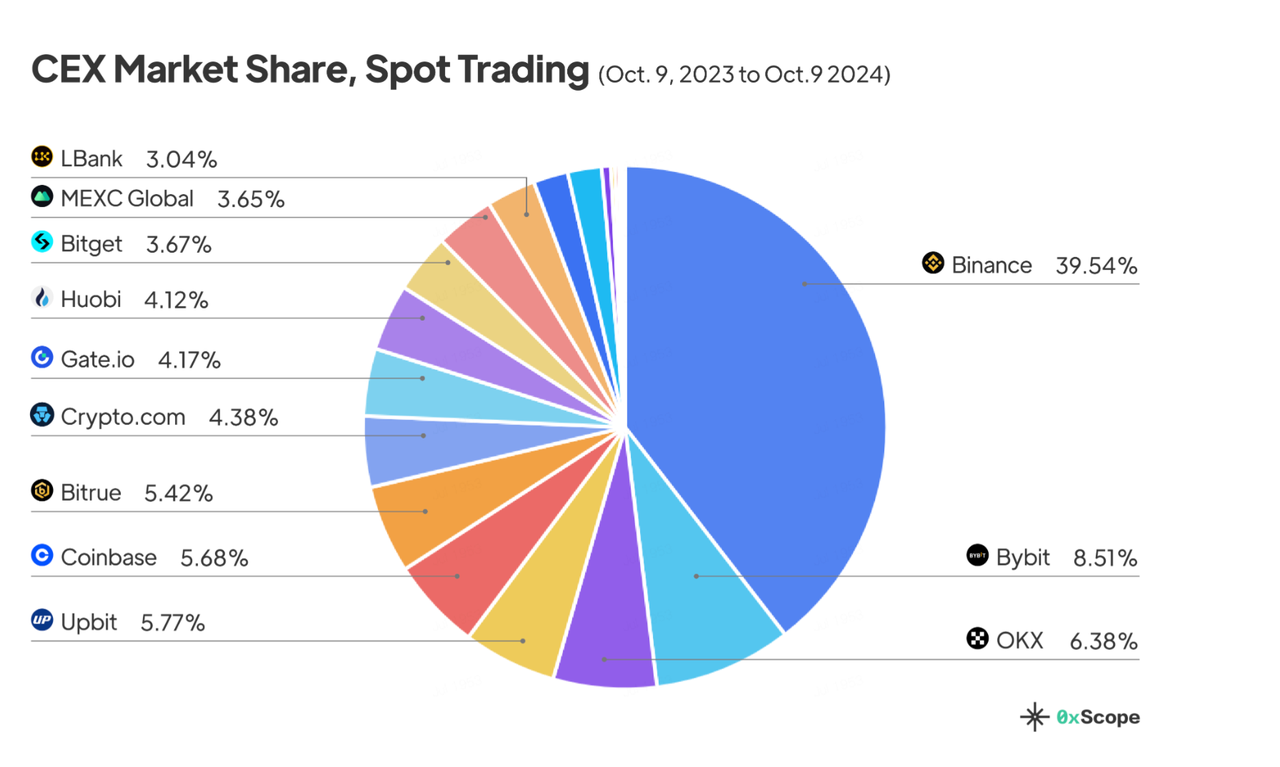
According to 0xScope’s recent “2024 CEX Market Report,” Binance’s share of the spot market declined year-on-year from 50.9% to 42.5%.
The Battle for Liquidity
For years, centralized exchanges have dominated liquidity thanks to mature infrastructure, deep markets, and efficient matching engines. But as on-chain infrastructure improves, CEXs are increasingly becoming exit liquidity, and their listing effect continues to weaken. First came Pump.fun, leveraging its unique pricing curve to enable rapid meme coin issuance; then platforms like Hyperliquid attracted massive attention through large-scale airdrops. As a result, centralized exchanges are steadily losing market share. On-chain DEXs are eroding CEXs’ traditional advantages at an accelerating pace.
With continuous improvements in on-chain user experience and ongoing DeFi innovations, more users and capital are migrating to on-chain platforms. The transparency, decentralization, and user ownership of funds inherent in the on-chain ecosystem will further accelerate this shift. That said, CEXs won’t disappear from the stage. Thanks to strengths in compliance, ease of trading, and user accessibility, centralized exchanges will continue to play key roles in user education, introducing new assets, and facilitating institutional inflows.
In the future, the boundary between CEX and DEX may gradually blur. Ultimately, the battle for liquidity will evolve from a contest over users and capital into a competition focused on enhancing user experience and driving industry progress.
This liquidity battle will drive greater innovation and advancement—ultimately benefiting the crypto industry as a whole.
Join TechFlow official community to stay tuned
Telegram:https://t.me/TechFlowDaily
X (Twitter):https://x.com/TechFlowPost
X (Twitter) EN:https://x.com/BlockFlow_News
 Foresight News