Investment Analysis: BitMine’s 5% Ethereum Ambition and “Moonshot” Bet
TechFlow Selected TechFlow Selected
Investment Analysis: BitMine’s 5% Ethereum Ambition and “Moonshot” Bet
In-depth analysis of BitMine’s strategy, financial condition, various valuation scenarios, and potential risks.
 Navigating Web3 tides with focused insights
By: ConvexDispatch
Translated by: AididiaoJP, Foresight News
Introduction
This is not a conservative investment—it’s a convex investment (an asymmetric structure with a defined downside and unlimited upside).
If you believe Ethereum’s price has peaked, that it will forever remain a niche player in global finance, or that blockchain adoption has largely stalled, then the story of BitMine Immersion Technologies (NYSE: BMNR) holds little relevance for you. But if you think Ethereum could rise tenfold over the next decade—and that its eventual emergence as a foundational financial network, with value far exceeding its current level, is not mere fantasy—then a more critical question arises:
Which investment vehicles are structurally best positioned to benefit from such an outcome?
My answer is BitMine.
In less than a year, BitMine has transformed from an obscure cryptocurrency miner into what I consider the “Berkshire Hathaway of blockchain”—a company that places its balance sheet first, compounding value through scale, patience, and bold capital allocation. Berkshire relies on equities and insurance float; BitMine relies on Ethereum ownership, staking yields, and long-dated options tied to Ethereum’s monetary base.
We emphasize Ethereum—not as a trading instrument, but as infrastructure. It is the dominant execution and settlement layer for onchain finance, asset tokenization, stablecoins, and smart contract activity. If Ethereum’s role in the global financial system continues expanding, then owning it, owning it at scale, and possessing sufficient patience become decisive advantages. BitMine is explicitly optimizing itself for precisely these variables.
As of today, BitMine controls over 4.16 million ETH—the largest publicly disclosed Ethereum holding globally—while also holding nearly $1 billion in cash. At current prices, the company holds approximately $13–14 billion in assets, yet its market capitalization equals or slightly trails that asset value. Put simply, buying BMNR stock today is akin to purchasing ETH at near-spot prices—with staking yield, management’s capital allocation acumen, and strategic optionality thrown in for free.
This isn’t a bet on next quarter’s earnings. It’s a bet on who will dominate the balance sheet, who will have the patience, and who will execute effectively in a world where Ethereum increasingly resembles financial infrastructure. The following article dissects BitMine’s strategy, financial position, valuation scenarios, and potential risks. Please treat it as a long-term, asymmetric investment thesis—not a short-term trading signal.
An Audacious Vision: Owning 5% of Ethereum
BitMine Chairman Tom Lee (@funstrat) calls it the “5% alchemy”—owning 5% of Ethereum’s total supply. As of January 11, 2026, BitMine held 4,167,768 ETH—roughly 3.45% of the circulating supply (~120.7 million ETH). In just six months of execution, BitMine achieved nearly 70% of its target. This massive reserve makes BMNR the undisputed global leader among publicly traded Ethereum holders. To put it plainly: BitMine’s current ETH holdings exceed those of most top-tier DeFi protocols, surpass major institutional holders like the Ethereum Foundation, and dwarf other public companies holding crypto. The only larger corporate crypto treasury is MicroStrategy’s Bitcoin reserve (~672,000 BTC)—but in the Ethereum arena, BitMine stands alone as the whale. Reaching the full 5% target (~6+ million ETH) remains the ultimate goal, and management shows no signs of slowing down—in recent weeks, they’ve simultaneously increased cash reserves while continuing to acquire tens of thousands of ETH at a time. This sense of scale evokes Berkshire’s massive positions in Coca-Cola or Apple—except here, the asset is digital. BitMine’s highly confident wager is that Ethereum *is* the future financial network—and owning a large share confers immense strategic and economic benefits.
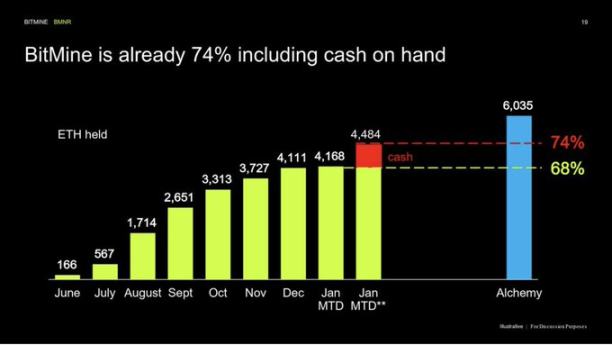
Crucially, BitMine’s ETH accumulation strategy prioritizes value per share—not just headline totals. The company issues new shares only when doing so adds value—i.e., when it can raise capital at a price above the current net asset value (NAV) per share—and uses the proceeds exclusively to buy more ETH. This approach allows BitMine to grow its ETH reserves without diluting existing shareholders’ proportional stake in those reserves. For example, in September 2025, BitMine raised $365 million by selling shares at $70 each—a 14% premium to the prevailing market price. Management immediately deployed the proceeds to purchase ETH, increasing both total ETH and ETH per share. Tom Lee explained: “Selling shares at $70… versus our closing price of $61.29 represents meaningful accretion… because the capital raised is used almost entirely to buy ETH.” It’s analogous to Berkshire issuing stock only during high-value acquisitions—BitMine uses its equity to “acquire” more ETH, but only when doing so makes existing shareholders richer. The result: rapid NAV growth alongside preserved—or even enhanced—NAV per share. Since mid-2025, when BitMine pivoted to this Ethereum-centric strategy, its crypto NAV per share has surged—demonstrating the effectiveness of its non-dilutive growth model.
Financial Pillars: Massive Crypto Reserves and a Robust Balance Sheet
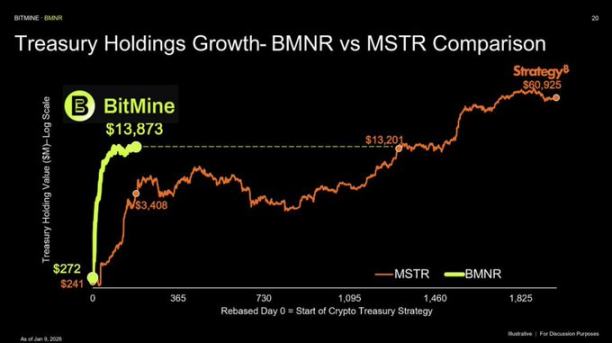
Like Berkshire, BitMine’s balance sheet is central to its identity. The company’s entire philosophy revolves around growing its asset pool. According to the latest data (as of January 11, 2026), BitMine’s total assets (crypto + cash + equity investments) stand at $14 billion, broken down as follows:
- Ethereum (ETH): 4.168 million, valued at ~$3,119 per ETH in the announcement ($13 billion total). This is the core reserve, constituting the overwhelming majority of BitMine’s NAV.
- Bitcoin (BTC): 193 BTC—small in quantity (~$17 million at $90,000/BTC).
- Cash and equivalents: $988 million in cash, providing flexibility to buy during market downturns or fund operations without selling ETH. Despite heavy ETH purchases, BitMine’s cash balance rose by $73 million in the first week of 2026—suggesting additional financing or realized gains.
- “Moonshot” investments: ~$23 million invested in Eightco Holdings (NASDAQ: ORBS), a small strategic stake. (More on this later—BitMine recently made a much larger “moonshot” bet on MrBeast’s company.)
- Liabilities are minimal—BitMine funds growth via equity issuance, avoiding high leverage. Thus, book value (shareholders’ equity) approximates the $14 billion in assets. Notably, BMNR’s market cap (share price × shares outstanding) remains slightly below its asset value—meaning the stock trades at a discount to its underlying holdings. At the recent closing price of ~$30.87 (January 15, 2026), BMNR’s market cap sits at ~$13.3–13.8 billion—about 5% below its ~$14 billion NAV. This 0.95x price-to-book ratio mirrors early Berkshire, whose stock frequently traded below its growing book value until the market eventually caught up. Just weeks ago, BMNR traded at a 0.8x P/B (a 20% discount), with share prices around $25–28 and ~$12 billion in ETH. As BMNR’s share price climbed past $30, the gap narrowed—but the market still hasn’t fully recognized the value embedded in BitMine’s assets. In other words, investors buying BMNR today are acquiring ETH (and other assets) for $0.95 on the dollar—reminiscent of Buffett’s famed “cigar butt” investing (where asset value exceeds market price). BitMine’s management frequently highlights this undervaluation, and insider and institutional support confirms it: the shareholder roster includes prominent forward-looking investors (ARK Invest’s Cathie Wood, Founders Fund, Bill Miller III, Pantera, Galaxy Digital, and Fundstrat’s Tom Lee himself)—all backing BitMine’s 5% ETH target.
One more point worth noting: BitMine is already GAAP profitable—unlike many crypto firms still burning cash. In FY2025, BitMine reported net income of $328.2 million ($13.39 EPS). This occurred despite minimal revenue ($6–7 million from legacy mining and services), with profits driven primarily by crypto appreciation, financial discipline, and one-time items (e.g., fair-value adjustments). BitMine even announced a symbolic annual dividend of $0.01 per share at year-end 2025—the first major crypto company to do so. Though nominal, the dividend signals management’s confidence in future cash flow. With nearly $1 billion in cash and substantial crypto assets, BitMine’s balance sheet resembles a fortress—capable of weathering crypto volatility. It has no near-term need to sell ETH for operations, enabling it to hold through cycles—a critical advantage. Indeed, BitMine’s corporate creed is never to proactively sell ETH; instead, it generates returns via lending, staking, or deploying ETH productively (much like Berkshire uses insurance float—or “other people’s money”—to invest without selling core assets).
From Passive to Productive: Ethereum Staking and Revenue Streams
A common critique of companies holding large crypto reserves is that these assets sit passively—like digital gold in cold wallets. BitMine aims to prove otherwise, transforming its ETH into egg-laying geese. Starting Q1 2026, the company launched MAVAN (Made-in-America Validator Network), its proprietary Ethereum staking platform. Simply put, BitMine will stake a significant portion—likely most—of its ETH to validate Ethereum transactions and earn staking rewards. This step converts BitMine’s treasury into a revenue-generating asset—akin to Berkshire deploying cash into bonds or cash-flowing businesses.
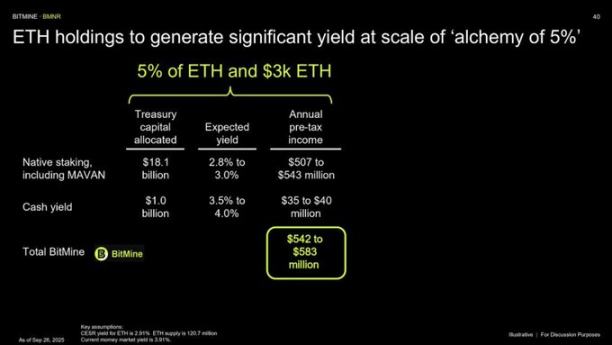
Progress has been remarkable. As of January 11, 2026, BitMine had staked 1,256,083 ETH (~30% of its ETH holdings, valued at ~$3.9 billion). This staked amount surged by ~596,000 ETH in the prior week—indicating rapid deployment into staking contracts. Current network staking yields (blended Ethereum APR) sit at ~2.81% annually. At this rate, BitMine’s staked ETH generates ~$110 million in new ETH per year. But BitMine’s plan is to eventually stake nearly all of its ETH. Once its ~4.17 million ETH are fully staked (expected within months as MAVAN scales), the company projects annual staking income exceeding $374 million—over $1 million per day. Tom Lee stated at the January 15 shareholder meeting that, at current ETH prices, the company expects pre-tax annual income exceeding $400 million from its ~$13 billion ETH reserve. Effectively, BitMine is evolving into a decentralized bank—earning interest on its digital deposits. Critically, these rewards compound the treasury: BitMine won’t convert them to fiat; it can retain the newly earned ETH, further increasing its holdings. This mirrors Berkshire’s use of insurance float to invest, then reinvesting proceeds to grow the float—a virtuous compounding loop.
Beyond direct staking, BitMine hints at exploring other protocol-level revenue opportunities (e.g., DeFi lending, liquidity provision), though staking remains the lowest-hanging fruit. MAVAN’s launch in early 2026 is pivotal. By building a world-class validator network domestically, BitMine seeks maximum security, compliance, and efficiency for its own asset staking—and potentially for fee-based services to third parties. This could elevate BitMine from passive participant to leader in Ethereum’s consensus infrastructure—akin to prime dealers in traditional finance. If successful, BMNR would evolve from a pure holding company into a hybrid asset manager and yield generator, boasting substantial recurring revenue. Analysts note this could support future dividends or share buybacks—management has even suggested returning a portion of staking income to shareholders once the growth phase concludes. Regardless, the shift from idle ETH to staked ETH is transformative: BitMine will soon generate meaningful cash flow (in ETH) to boost returns. This enhances valuation metrics—investors can now assess BMNR not just on NAV, but on income (e.g., P/E ratios). Earning $374–400 million annually on a $13 billion ETH base implies a ~2.8–3% annualized yield; if ETH appreciates (as BitMine expects), USD-denominated returns rise proportionally (since staking yields are typically a percentage of staked asset value). BitMine likes to say its $400 million annual staking income exceeds dividends from an equivalent $13 billion equity portfolio—further reinforcing the index-fund or holding-company analogy, except its benchmark is Ethereum.
Strategic Moonshot Initiatives: Beyond ETH, Expanding the Blockchain Footprint
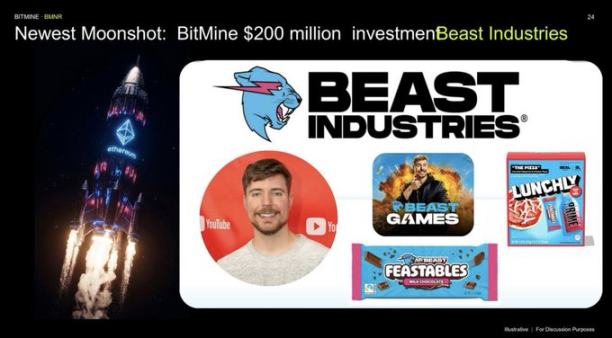
While Ethereum remains BitMine’s core focus, the company doesn’t merely lock coins in vaults. Management clearly embraces strategic investments (“moonshots”)—leveraging BitMine’s crypto expertise and community influence to pursue outsized returns. This mirrors Berkshire’s acquisition of high-growth businesses to complement core assets. The latest—and largest—example unfolded this week: BitMine announced a $200 million investment in Beast Industries, the parent company of YouTube megastar MrBeast. Announced January 15, 2026, and expected to close January 19, BitMine acquired a significant (though non-controlling) stake in this private company, which operates YouTube content, consumer brands (Feastables snacks), and upcoming financial services. Why would an Ethereum treasury invest in a YouTuber? Tom Lee’s explanation centers on connecting with finance and Gen Z. @MrBeast commands over 450 million subscribers and 500 million young fans across platforms. BitMine sees this as an entry point into the next generation’s attention economy—pre-building a distribution channel for any future blockchain products or educational content it may launch. In the announcement, Lee called MrBeast “the leading content creator of our generation… with unparalleled reach and engagement among Gen Z and Alpha,” adding that BitMine’s values align with Beast Industries’ innovative spirit. Additionally, Beast Industries has signaled plans for MrBeast Financial Services (potentially including a crypto exchange). So, if MrBeast launches crypto applications or tokenized experiences, BitMine’s investment enables synergy—acting both as investor and backend Ethereum liquidity provider.

From a financial perspective, BitMine clearly believes this $200 million could yield exponential returns. Tom Lee is candid: he thinks a 10x return is easily achievable. A 10x outcome would make this stake worth $2 billion—a highly material gain relative to BitMine’s current scale. Of course, this is speculative and years away from validation—but it underscores BitMine’s willingness to venture beyond pure crypto into high-growth domains (media, consumer) that amplify its core mission. Like Berkshire’s investments in Geico or Apple—unrelated to its textile or insurance roots but highly profitable and complementary—BitMine’s earlier smaller moonshot in Eightco/ORBS (a blockchain and retail tech firm) illustrates this pattern. These moonshots deploy a small fraction of BitMine’s treasury to leveraged innovation (failure preserves the core ETH reserve). Success adds upside and diversification—making BitMine more than just an ETH holding vehicle.
To be clear, BitMine’s primary capital deployment remains ETH purchases; management explicitly states such equity investments will be rare and opportunistic. The MrBeast deal, for instance, was carefully considered for its potential to expand BitMine’s influence. This also reflects BitMine’s growing clout: being invited to co-invest in MrBeast alongside top VCs signals BitMine is viewed as a credible long-term partner—not just a crypto eccentric. This may open doors to blockchain media, gaming, or Web3 consumer sectors—where a massive ETH treasury offers distinct advantages (e.g., liquidity for content tokenization or fostering a creator economy on Ethereum). In short, while ETH acquisition remains BitMine’s bedrock, its Berkshire-style capital allocation means it will seize opportunities to acquire stakes in the next big thing—provided they meet its margin-of-safety criteria. These moonshots add another layer of growth potential atop ETH appreciation and staking income.
Reframing the MrBeast Deal: Less Speculation, More Strategic Marketing Investment
If the $200 million MrBeast investment gives you pause, consider reframing it: view BitMine’s investment not as a speculative bet, but as a multi-year global marketing and distribution agreement. Suddenly, it seems not only reasonable—but potentially brilliant.
BitMine currently earns ~$300–350 million annually from staking, with expectations to reach ~$500 million yearly upon achieving its 5% ETH target (within this year). It holds ~$1 billion in cash, zero debt, and negligible operating expenses. Under these conditions, deploying $200 million for a multi-year marketing initiative is hardly aggressive—it’s conservative, capital-efficient, and exceptionally intelligent.
Today’s BitMine:
- Annual staking income: ~$300–350 million
- Post-5% ETH target (this year): ~$500 million annual income
- 75% toward 5% ETH target completed
- Minimal staff
- No traditional sales or marketing budget
What would a typical public company’s marketing budget be?
- Most allocate 5–10% of revenue to sales and marketing
- Growth-stage companies often spend higher percentages
Applying this to BitMine:
- Current annual marketing budget: $15–35 million
- Post-5% ETH target: $25–50 million
- Over 4–6 years: ~$100–250 million
This aligns with the $200 million figure.
Compare how other companies operate:
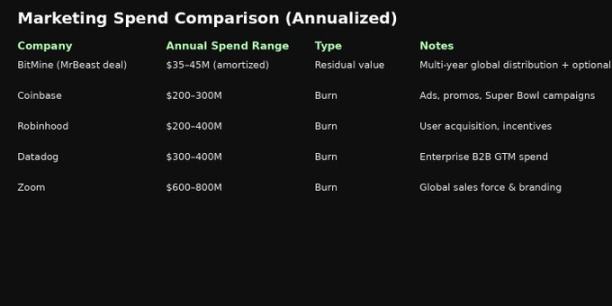
- Coinbase: Spends $200–300+ million annually on marketing—including $50–300 million for a single Super Bowl ad. Money burns away with no residual value.
- Robinhood: Spends hundreds of millions to acquire users—leaving no ownership stake in channels.
- Enterprise SaaS firms: Datalog, Zoom, Shopify routinely spend $200 million–$1+ billion annually on market entry—advertising, sales teams, events, sponsorships. Stop spending, and impact vanishes. No one calls this reckless—they deem it essential.
Now contrast the MrBeast deal. This isn’t buying billboard space, impressions, or one-off ads. It delivers:
- Multi-year access to Earth’s largest attention machine
- Compounding cultural influence
- Education and storytelling—not just promotion
- Critically: shared participation in future upside—not pure burn
If you personally dislike MrBeast, that’s fine. That’s never the point.
The point is BitMine needs to:
- Promote Ethereum
- Promote staking, tokenization, digital ownership
- Reach mainstream, non-institutional audiences
As shareholders, we naturally want broader Ethereum adoption. We want more people discussing it. We want BitMine’s ecosystem understood beyond Crypto Twitter.
Zoom out further. BitMine already has moonshot investments in:
- Worldcoin / ORB identity technology
- Tokenization infrastructure
- Layer 2 / DeFi integration
Imagine even a small fraction of MrBeast’s audience engaging with these concepts:
- Ethereum as infrastructure
- Onchain identity
- Tokenized ownership
- Digital capital rails
This isn’t hype. It’s asymmetric distribution.
The true brilliance lies in Tom Lee not wasting $200 million on ephemeral ads like others—but converting it into:
- Capital allocation
- Long-term access rights
- Future optionality
- Residual value
Whether you like MrBeast is irrelevant. From a capital efficiency standpoint, this move is clean, rational, and difficult for others to replicate.
High Liquidity and Investor Attention
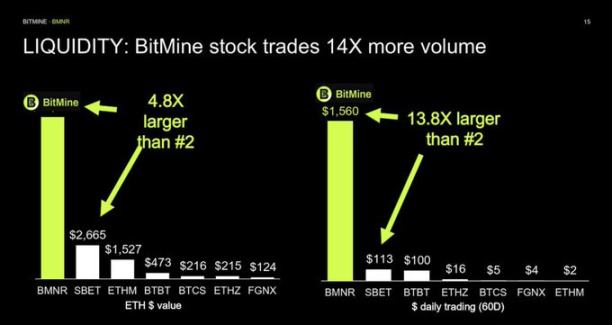
Despite its relatively brief existence in this form, BMNR has attracted massive trading volume—ranking among the most liquid mid-cap stocks in the U.S. BitMine’s stock now averages over $1.3 billion in daily trading volume (5-day average). In early January 2026, it ranked #67 in U.S. daily dollar volume—exceeding many S&P 500 constituents. This liquidity is a double-edged sword: it signals high investor participation and low slippage for institutional positioning, yet also exposes the stock to volatile sentiment-driven swings. Indeed, BMNR’s price history has been turbulent: surging over 600% in H2 2025 (from single digits to >$150), then sharply retreating amid crypto market corrections and dilution concerns. Even after an 80% peak-to-trough decline, BMNR gained ~248% for 2025—outperforming both Bitcoin and Ethereum. Such volatility demands strong nerves—like early Berkshire, whose high-growth phase saw similar price gyrations. BMNR is sensitive both to broad crypto market movements and to market understanding of its unique model.
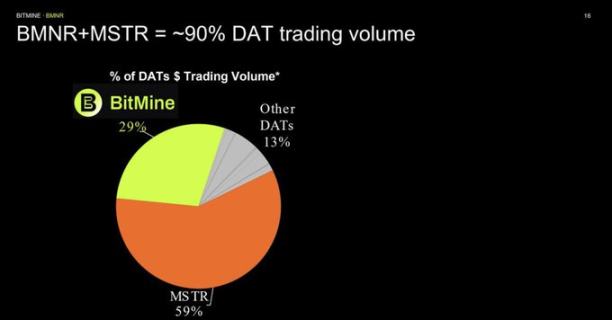
Notably, BMNR’s liquidity and unique risk profile have driven rising institutional ownership. The presence of well-known investors (ARK Invest, hedge funds, crypto VCs) bolsters credibility. Moreover, BitMine’s management prioritizes investor communication—mirroring Buffett’s Omaha shareholder meetings. The January 15, 2026, annual meeting at Las Vegas’ Wynn Resort drew high attendance and live streaming. Tom Lee and team outlined future plans and answered shareholder questions transparently. These efforts cultivated an enthusiastic shareholder base—BitMine followers actively discuss strategy on forums and X (Twitter), while the company regularly publishes Chairman’s Letters explaining its vision (e.g., Tom Lee’s call for shareholder approval to increase authorized shares to enable future ETH purchases). This shareholder-friendly communication—reminiscent of Berkshire’s candid annual letters and Q&As—builds long-term trust.
Valuation Scenarios: How Big Can BitMine Grow?
Ethereum Assumptions (Note: This is not investment advice)
This deep dive does not analyze Ethereum’s investment thesis—that merits its own article. But one core assumption must be explicit: Investing in BitMine only makes sense if you’re bullish on Ethereum. If you reject Ethereum’s long-term value and adoption, BitMine is irrelevant.
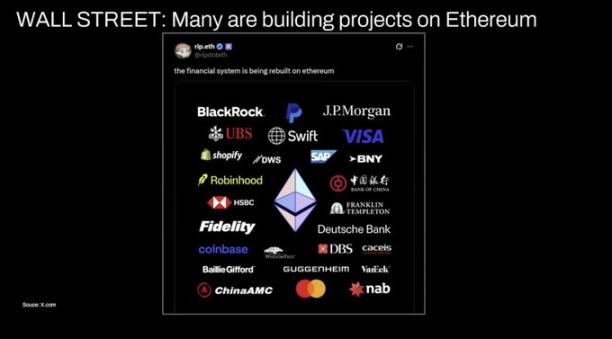
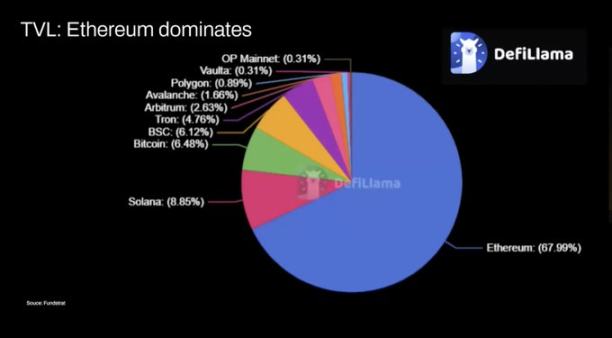
The rationale is simple. Ethereum remains the most widely used, economically dense blockchain—dominating smart contract activity, DeFi TVL, institutional experimentation, and real-world financial use cases. Whether payments, asset tokenization, stablecoins, or financial infrastructure, Ethereum sits at the center of actual application deployment.
Multiple future scenarios exist where Ethereum’s role expands further. Rather than detailing them, the valuations below serve as stress tests under different ETH price assumptions. These are not predictions—merely conditional outcomes. If ETH appreciates significantly, BitMine’s returns amplify accordingly. If ETH stagnates or fails, the case for investing in it weakens substantially.
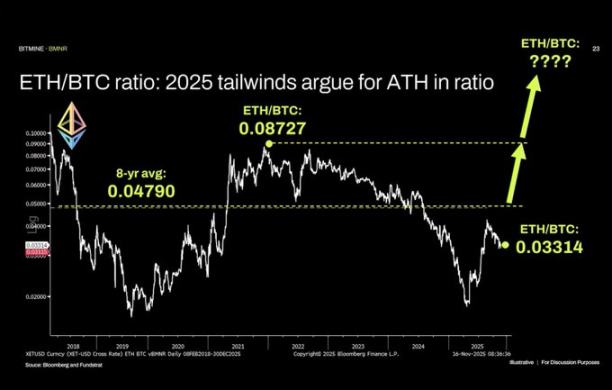
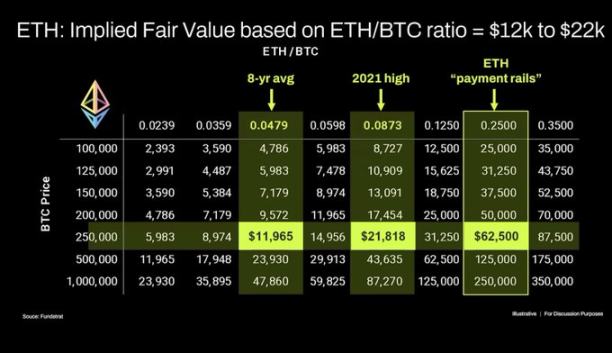
With this context, the BMNR valuation discussion below should be viewed as contingent on ETH price outcomes—not as an independent recommendation for BMNR.
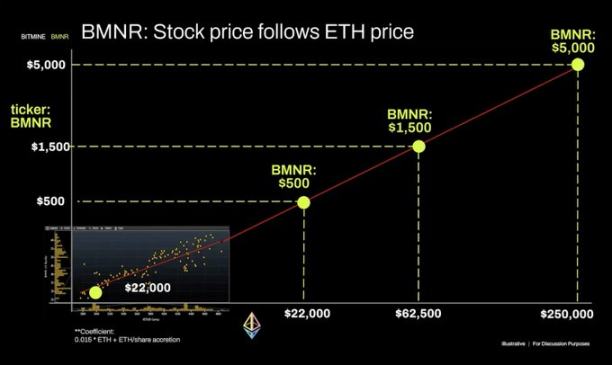
Ultimately, investing in BMNR hinges on your view of Ethereum and judgment of BitMine’s execution. Based on its current assets and strategy, we can outline several long-term price targets (purely hypothetical, not company guidance) to gauge its potential if goals are achieved:
Base Case—Steady Growth: ETH reaches $5,000 (a ~50% increase from ~$3,310), and BitMine achieves its 5% target (~6 million ETH). ETH holdings alone would be worth ~$30 billion. Adding other assets and staking accruals, NAV could reach ~$32 billion. If the market finally values BMNR at NAV (1x P/B), its market cap hits $32 billion. Accounting for new share issuance required to acquire 6 million ETH, assume ~500 million shares outstanding (current authorized limit), yielding ~$64/share—roughly doubling from ~$30 today. This reflects modest ETH appreciation and target achievement.
Bull Case—Return to Prior Highs: ETH reclaims its prior ~$22,000 all-time high (a 6–7x increase from current levels). If ETH truly becomes Wall Street’s settlement layer—as BitMine forecasts—this is plausible during a 2027–2028 macro bull run. Assuming 6 million ETH at $22,000, ETH alone is worth $132 billion. Adding other assets, NAV approaches ~$134 billion. Even accounting for further dilution (e.g., 600 million shares), NAV per share reaches ~$223. With a success premium (e.g., 2x P/B), the share price hits ~$446—call it $500. In this scenario, BMNR could rise 15–20x. This isn’t absurd: $22,000 ETH implies an ETH network value of ~$2.5 trillion—about one-third of Bitcoin’s market cap at a 6–7x increase—deemed possible by some analysts in supercycles.
Super Bull Case—5+ Year Horizon: ETH climbs to $62,500 (~20x current price) or even $250,000/ETH (signifying Ethereum as global finance’s bedrock). These numbers sound extreme—but BitMine’s long-term optimism is unvarnished. Tom Lee frequently describes the 2020s as crypto’s unprecedented growth era. At $62,500 ETH, BitMine’s 5% stake nears $500 billion—making BMNR one of the world’s largest companies. Even with dilution, the share price could reach four figures. Simple math: $62,500 × 6 million = $37.5 billion; with 800 million shares, NAV/share ~$468—plus a 3x P/B premium yields ~$1,400–1,500. At $250,000/ETH (a “moonshot” scenario where Ethereum underpins global commerce), the 5% stake represents ~$1.5 trillion in assets—potentially pushing BMNR’s share price into the thousands (paralleling Berkshire’s decades-long ascent). These are idealized outcomes—but they illustrate the asymmetric upside if BitMine’s core thesis (exponential ETH value growth) proves correct. BMNR provides leveraged exposure: not only does ETH’s USD value surge, but BitMine likely continues fundraising to acquire more ETH—amplifying NAV impact.
Grounded in reality, ETH sits at ~$2,000 and BMNR at ~$28—reflecting a young, early-stage company. BitMine’s internal models (and supportive analysts) suggest, based on execution and modest ETH appreciation, the stock could double or triple (some analysts project 12-month targets of $90–100), while ultra-bullish outcomes could be life-changing. Naturally, these large numbers require time, flawless execution, and numerous favorable developments. Yet they explain why some view BMNR as a generational opportunity—to invest in an early-stage crypto Berkshire that, if successful, could evolve into a financial titan of the new era.
Risks and Challenges
No thorough analysis omits risks. BitMine’s strong hand faces significant challenges:
ETH Price Volatility: The elephant in the room—BMNR’s fate is tightly coupled to ETH’s market price. Another prolonged crypto bear market—or an ETH price collapse—would directly impair BitMine’s NAV, likely inflicting severe stock price damage. Recent evidence: Despite positive news at its shareholder meeting, BMNR fell ~5% on January 15, 2026 (to $30.87), dragged down by broader crypto weakness. In late 2025, as ETH retreated from ~$4,800 to ~$3,100, BMNR plunged from its peak. BitMine philosophically avoids hedging this risk—embracing volatility and even raising capital to buy the dip. While this may magnify long-term gains, investors must withstand potential sharp drawdowns (50%+ declines have occurred and could recur). Fundamentally, BMNR is leveraged ETH—during downturns, sentiment and dilution fears may cause it to fall harder than ETH itself.
Dilution and Share Issuance: BitMine’s growth model relies on equity financing to buy ETH—meaning share count has exploded—from ~2.5 million shares in mid-2024 to over 425 million by end-2025. The company recently requested shareholder approval to increase authorized shares to 50 billion—securing runway for future funding. While management pledges to issue shares only above NAV, the risk remains that adverse markets force financing at NAV or below—diluting NAV per share and harming existing holders. Merely the prospect of massive authorized shares may suppress the stock price (fears of share oversupply). This dynamic starkly contrasts Berkshire (which rarely issued shares post-Buffett). To achieve its 5% ETH target, BitMine may need continued issuances—if markets reject the stock or prices trade below NAV (preventing accretive financing), accumulation stalls. The recent push for increased authorized shares underscores how vital sustained shareholder support is—if confidence erodes and votes block new issuances, BitMine faces a funding bottleneck.
Regulatory and Custodial Risk: BitMine sometimes operates in regulatory gray zones—holding and staking large crypto amounts. As its systemic importance grows, regulatory scrutiny may intensify. Adverse regulations—targeting crypto custody, corporate crypto holdings, or staking rewards (e.g., classifying staking services as securities)—could impact BitMine. Custodial risk also looms: BitMine uses third-party custodians and operates its own validators—hacking, slashing events (for staked ETH), or technical failures could cause losses. Management emphasizes security and partners with reputable firms—but the adage holds: “Not your keys, not your coins.” Shareholders must trust BitMine’s custody arrangements as foolproof.
Execution Risk: BitMine is attempting something unprecedented—no public company has moved so rapidly to acquire such a large share of a crypto network. Scaling operations—from treasury management to building MAVAN’s staking infrastructure—is challenging. Large-scale staking rollout may encounter growing pains, technical hurdles, or partner issues. Additionally, ventures like Beast Industries represent new managerial tests—executing side investments well (avoiding overpayment, poor oversight) will be crucial. Relative to its asset size, BitMine is a lean team; as complexity grows, operational capabilities must strengthen.
Market Sentiment and Liquidity Risk: BMNR’s high trading volume cuts both ways. It may attract short-term traders, speculators, or short sellers. A sentiment shift (e.g., ETH declines or a proposal fails) could trigger excessive selling. Conversely, as a hot stock, it may overshoot and correct violently. Investors must brace for fundamentals-agnostic volatility—driven purely by popularity and high beta. The recent ~5% single-day drop post-shareholder meeting—despite largely positive news—illustrates this: attributed to “sell-the-news” trading or macro sentiment. Unlike Berkshire’s steady ascent, BMNR holders may endure a bumpier ride.
ETH Network Concentration: If BitMine truly holds 5% of ETH, it becomes a massive node in the Ethereum ecosystem—raising decentralization concerns (though 5% poses no security threat, it’s nontrivial). BitMine must act as a responsible network participant. In extreme cases, if Ethereum abandons proof-of-stake or undergoes major consensus changes, BitMine’s staking business suffers. Low-probability, but worth noting given BitMine’s all-in bet on a single asset.
In summary, BitMine carries real risk—it’s an aggressive, concentrated wager. Yet for investors like me who believe in Ethereum’s long-term value, BitMine offers a unique tool—leveraging savvy management and strategic moves—to amplify that bet. Like early Berkshire navigating insurance market swings and skepticism about its conglomerate model, BitMine will face headwinds. The true test is consistent execution—raising capital at opportune times to buy ETH, growing ETH per share, and now generating staking income—regardless of short-term noise. If achieved, returns could be substantial. But if a crypto winter returns—or management missteps—BMNR could underperform badly or dilute shareholders.
Addressing the Obvious Question: Why BitMine Instead of Direct ETH?
At this point, the natural question arises:
Why not just buy ETH directly? Why go through BitMine Immersion Technologies’ stock?
My logic is straightforward:
If my username didn’t tip you off, I operate as “Convex” for a reason. I favor optionality, convexity, and exceptional management teams. This framework guides my capital allocation across asset classes.
Below is my comparative analysis of BitMine versus ETH.
So long as I can buy BitMine near its balance sheet value—effectively acquiring its existing ETH at near-spot prices—BitMine becomes a clean ETH substitute.
At this point, ETH vs. BitMine ceases to be a meaningful choice. If BitMine trades near NAV, either path delivers identical economic exposure to Ethereum.
Now comes the second—and more important—question.
Beyond ETH exposure, what else do I gain?
The answer is optionality and convexity. Buying ETH outright gives me one thing: ETH’s price movement.
Buying BitMine—at roughly the same entry cost—gives me:
- ETH exposure +
- No balance-sheet leverage
- No forced-sale risk
- A highly capable, aligned management team
- Active capital allocation
- Staking yield
- Strategic moonshot investments
- And nonlinear upside relative to ETH
That’s convexity.
Buying near NAV introduces no additional downside risk relative to ETH.
But it *does* introduce additional upside potential.
This upside may not fully materialize—but structurally, it exists.
In my framework, this is akin to receiving a free call option—whose underlying is:
- Ethereum becoming global financial infrastructure
- Scaling the staking economy
- Widespread adoption of tokenization
- Easy onboarding for consumers and institutions
- Management’s ability to seize opportunities over time
This is why I consistently invoke Berkshire.
Like Berkshire:
- You own the underlying assets
- You pay no leverage costs
- You benefit from long-term, intelligent capital allocation
- You gain exposure to investment opportunities you’d struggle to replicate independently
How does this simplify my crypto investing?
For me, there’s a practical consideration.
After buying BitMine, I feel no need to:
- Chase altcoins
- Rotate between speculative narratives
- Guess which protocol or token will outperform next cycle
I’m effectively outsourcing this optionality to a team that:
- Has superior information
- Better access
- Greater scale
- Alignment with shareholders
This frees my attention—I no longer need to constantly monitor emerging crypto risks.
Position Sizing and Discipline
Currently, BitMine comprises ~10% of my portfolio.
This isn’t arbitrary.
I adhere to a hard rule: no single position exceeds 10%, regardless of conviction.
If ETH weakens and BitMine falls, will I add? Possibly—especially via rebalancing.
Conclusion
In a short time, BitMine has crafted a compelling narrative—blending crypto ETF, yield-generating bank, and venture fund attributes. Holding over $14 billion in assets and betting everything on Ethereum, BMNR lets you invest directly in the #2 cryptocurrency—but adds leverage via its accumulation and staking strategy. We’ve seen BitMine reach critical mass by January 2026 (3.45% of ETH), poised to generate meaningful staking income. Its stock trades slightly below asset value—if you believe ETH’s downside is limited and the market will ultimately recognize BMNR’s worth (as Berkshire’s stock eventually surpassed book value during its growth phase), this offers a margin of safety.
Is BitMine truly the “Berkshire of blockchain”? The analogy isn’t perfect—no crypto firm can fully replicate Warren Buffett’s insurance float and decades of compounding stock selection. But parallels are strong: BitMine emphasizes intrinsic value (ETH reserves), long-term growth, opportunistic financing (akin to Buffett’s insurance capital), and side investments in promising ventures (Beast Industries, etc.). Tom Lee, as BitMine’s visionary capital allocator, invites comparisons to a modern crypto-era Buffett—though his public persona and crypto-market hype make him more flamboyant. If Ethereum truly becomes the next internet of value, owning a large chunk may prove as transformative as owning early internet infrastructure stocks. BitMine is positioning for exactly this possibility.
For investors, BMNR is a high-conviction, high-volatility play. Within a portfolio, it serves as a leveraged ETH position—with some downside protection (given its current discount to NAV) and upside catalysts (management’s value creation and other bets). Position sizing and risk awareness are essential. But as of January 2026, BitMine’s story is one of execution—and so far, it’s going well: NAV is rising, ETH per share is climbing, and new catalysts (staking income, share authorization for further buys, MrBeast collaboration) are underway. The next 12–24 months are critical—to see if BitMine can grow without diluting shareholders and begin converting massive assets into tangible returns.
Finally, BitMine Immersion presents a rare case: traditional investment principles fused with cutting-edge digital assets. It bets that disciplined financial engineering can tame crypto’s chaos. If BitMine succeeds, future shareholders may look back and declare it the Berkshire Hathaway of the blockchain era—transforming a once-misunderstood asset (ETH, akin to Berkshire’s early textile mills or insurance float) into an empire. If it fails, the experiment will still teach us much about how corporate finance and decentralized finance interact. For now, BitMine absolutely warrants attention—or, for the adventurous, may serve as a turbocharger for the Ethereum wave. As always: do your own research, assess your risk tolerance—but keep BMNR on your radar, as it’s making history at the intersection of crypto and Wall Street.
Join TechFlow official community to stay tuned
Telegram:https://t.me/TechFlowDaily
X (Twitter):https://x.com/TechFlowPost
X (Twitter) EN:https://x.com/BlockFlow_News
 @ConvexDispatch