








When will cryptocurrency crash dramatically?
TechFlow Selected TechFlow Selected
When will cryptocurrency crash dramatically?
Trump is set to迎来 a wave of speculation frenzy.
 Navigating Web3 tides with focused insights
By Annie Lowrey
Translated by Block Unicorn
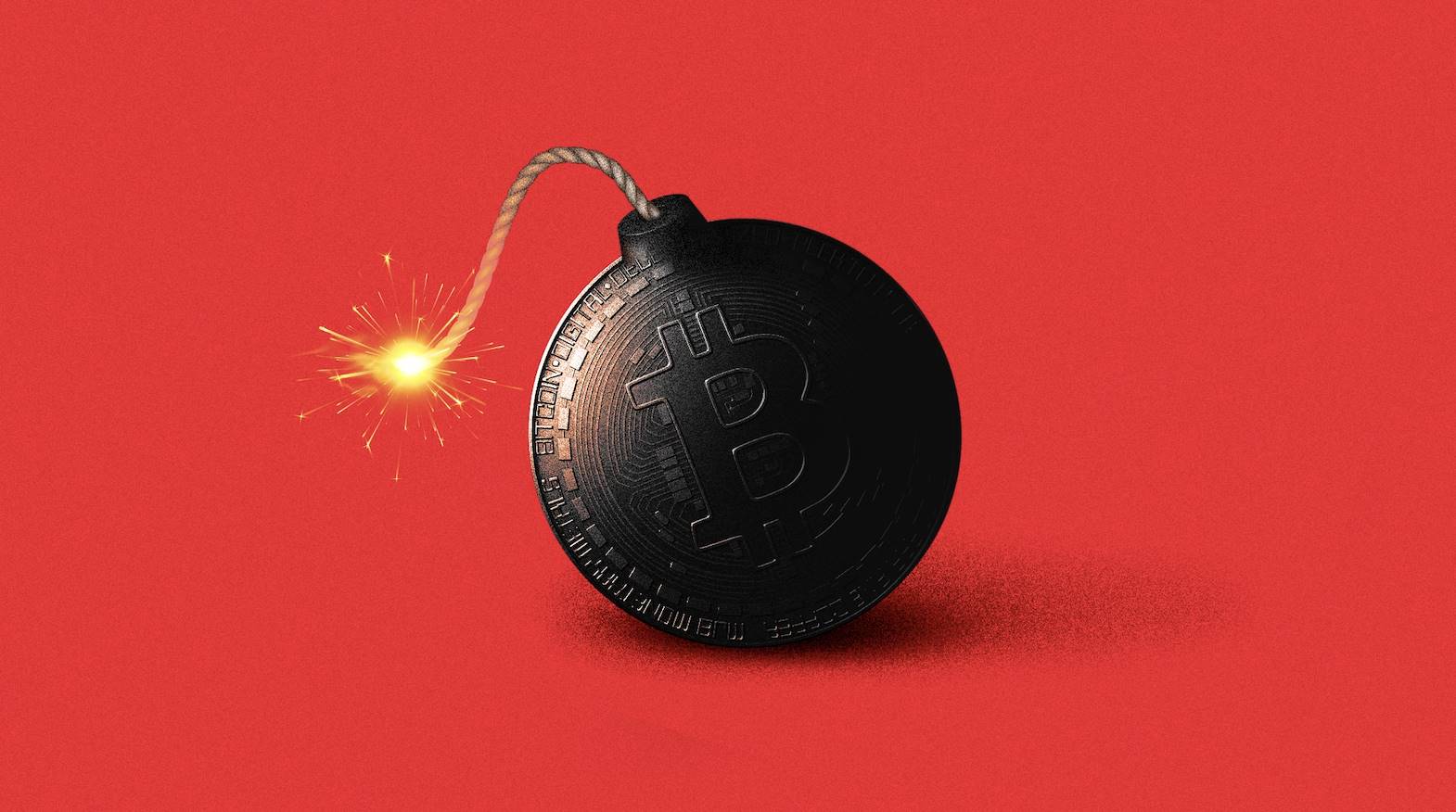
Dennis Kelleher, president of the nonprofit Better Markets, told me: "The countdown to the next catastrophic crash has already begun."
Over the past few weeks, I've heard variations of this sentiment from economists, traders, congressional staff, and government officials. The incoming Trump administration has promised to support pro-crypto regulations and possibly loosen strict constraints on Wall Street institutions.
They argue this will usher in an unprecedented era of American prosperity, maintaining the U.S.'s position as the global leader in capital markets and the core of the global investment ecosystem. "My vision is for America to dominate the future," Donald Trump said at a Bitcoin conference in July. "I'm making plans to ensure that America becomes the global capital of cryptocurrency and the world's Bitcoin superpower."
Financial experts expect a different outcome. First, a boom—perhaps a massive one—with Bitcoin, Ethereum, and other cryptocurrencies soaring in price; financial firms raking in profits; and American investors basking in newly acquired wealth. Then, a bust—perhaps a massive one—with companies collapsing, governments called upon to stabilize markets, and millions of Americans facing foreclosure and bankruptcy.
I've spent over a decade writing about Bitcoin and reporting on the last financial crisis and its long-lasting aftermath, so I have some understanding of what could drive such booms and busts. Cryptographic assets tend to be extremely volatile—far more so than real estate, commodities, stocks, or bonds. With Washington's encouragement, more Americans will invest in crypto. As money floods in, prices rise. And when prices fall, individuals and institutions will suffer severe losses—an inevitability.
The experts I spoke with didn't dispute this view. But they told me that if things unfold this way, the U.S. and the world should consider themselves lucky. The danger isn't just that pro-crypto regulation may expose millions of Americans to scams and market volatility. The real danger lies in how it could increase leverage across the entire financial system. It would deepen opacity, making it harder for investors to assess and price risks in financial products. And all of this would happen while the Trump administration slashes regulatory oversight and weakens regulators.
Cryptocurrencies will become more mainstream, and traditional financial markets will increasingly resemble crypto markets—more chaotic, more opaque, more unpredictable—and potentially trigger consequences worth trillions of dollars that could linger for years.
"I worry the next three or four years will look pretty good," Eswar Prasad, a Cornell University economist and former IMF official, told me. "The real challenge comes afterward, when we’ll have to clean up the speculative mess created by this administration’s policies."
"Washington has waged an unprecedented war against cryptocurrency and Bitcoin," Trump told crypto entrepreneurs this summer. "They’ve targeted your banks. They cut off your financial services… They stopped ordinary Americans from transferring money to your exchanges. They smeared you as criminals." He added, "I’ve been through the same thing because I said the election was rigged."
Trump is right that cryptocurrency exists in a separate, parallel financial universe. Many crypto companies either cannot or choose not to comply with U.S. financial regulations, making it difficult for average investors to access their services. (Binance, the world’s largest cryptocurrency exchange, won’t even disclose which jurisdiction it’s registered in, instead directing U.S. customers to a domestic subsidiary.) Firms like Morgan Stanley and Wells Fargo typically offer few crypto products and rarely invest in cryptocurrencies or related businesses. It's not that banks don’t want to participate—it's that regulations prevent them, and regulators have explicitly warned them not to.
This limits the amount of capital flowing into crypto. But it’s also prudent: it prevents company failures and wild price swings from destabilizing the traditional financial system. Kelleher pointed out that crypto lost $2 trillion of its $3 trillion market value in 2022. "If any other asset suffered such a massive financial collapse, contagion would be inevitable. But it didn’t happen—because you had a parallel system with almost no interconnection."
Upcoming regulations will tightly integrate these two systems. True, no one knows exactly which laws Congress will pass or that Trump will sign. But the Financial Innovation and Technology for the 21st Century Act (FIT21) offers a clear blueprint. Stalled in the Senate after passing the House last year, FIT21 is the centerpiece of a well-funded lobbying campaign by crypto advocates—including $170 million spent during the 2024 election cycle. The bill amounts to a full industry wishlist.
FIT21 would designate the Commodity Futures Trading Commission (CFTC), rather than the Securities and Exchange Commission (SEC), as the primary regulator for most crypto assets and firms. It would require the CFTC to collect far less information about crypto product structures and trading than securities firms currently provide to the SEC.
Beyond lax rules, financial experts also anticipate weak enforcement. The CFTC primarily regulates financial products used by corporations for hedging and traded among professional traders—not those marketed to individual investors. Its budget is roughly one-fifth of the SEC’s, and it has only one-seventh the staff. Overall, Washington is expected to ease restrictions, allowing traditional banks to hold crypto on their balance sheets and enabling crypto firms to plug into America’s financial infrastructure.
According to Prasad, this would be crypto’s "dream" regulatory environment.
Trump and his family are personally invested in crypto. The president-elect has floated the idea of creating a "strategic" Bitcoin reserve to counter foreign influence. (In practice, this means using billions in taxpayer funds to acquire speculative assets with no strategic value.) How many people will buy crypto simply because Trump does? How many young investors will pour money into Bitcoin because Eric Trump claims its price will soar to $1 million, or because the commerce secretary declares it the future?
No measures under consideration by Congress or the White House will reduce crypto’s inherent risks. Crypto investors will remain vulnerable to hacking, ransomware, and theft. Research firm Chainalysis documented $24.2 billion in illicit transactions in 2023 alone. If the U.S. government invests in crypto, countries like Iran and North Korea will have far greater incentives to manipulate the market. Imagine China launching a 51% attack on the Bitcoin blockchain, taking control of every transaction. That scenario is a security nightmare.
No measures being considered by Congress or the White House will reduce the inherent risks of cryptocurrency. Crypto investors will still be vulnerable to hacking, ransomware, and theft. Research firm Chainalysis documented $24.2 billion in illicit transactions in 2023 alone. If the U.S. government invests in cryptocurrency, the incentive for countries like Iran and North Korea to interfere in the market will multiply dramatically. Imagine a country launching a 51% attack on the Bitcoin blockchain, seizing control of every transaction. That would be a security nightmare.
Americans will also face more scams and fraud. The SEC has taken enforcement actions against dozens of Ponzi schemes, charlatans, and fraudulent operations—including the $32 billion fake exchange FTX and various shady token companies. No one expects the CFTC to have the capacity or authority to do the same. Moreover, FIT21 leaves numerous loopholes open for all kinds of predatory profit-seeking behavior. Crypto firms could legally operate exchanges, trade assets for themselves, and execute customer orders—all despite glaring conflicts of interest.
Simple volatility remains the biggest risk for retail investors. Prasad emphasizes that cryptocurrencies, tokens, and coins are "purely speculative." "The only thing supporting their value is investor sentiment." At least gold has industrial uses. Or, if you bet on tulip bulbs, you might end up with a flower.
But in the world of crypto, you might get nothing—and could even lose everything. Many crypto traders borrow money to speculate. When leveraged traders lose money, their lenders—often the exchanges themselves—demand collateral. To meet these demands, investors might have to liquidate their 401(k) accounts. They might be forced to sell Bitcoin during a market downturn. If they can’t raise cash, the firms holding their accounts may seize or liquidate their assets.
A report released last month by the Office of Financial Research, a government think tank, made clear how dangerous this could be: some low-income households "are using crypto gains to secure new mortgages." When crypto prices fall, these families’ homes will be at risk.
Many individual investors appear unaware of these dangers. The Federal Deposit Insurance Corporation (FDIC) has had to remind the public that crypto assets are not protected by its insurance. The Financial Stability Oversight Council (FSOC) has also raised concerns that people don’t realize crypto firms aren’t regulated like banks. But if Trump himself is investing, how serious can it really be?
Yet regulators and economists are less concerned about the damage this new era might inflict on individual households. Their main fear is that chaos in the crypto market could spill over into the traditional financial system—triggering a credit crunch and forcing government intervention, just as in 2008.
Wall Street once saw crypto as fool’s gold—but now sees it as a gold mine. Ray Dalio of Bridgewater Associates called crypto a "bubble" a decade ago; today he calls it "an extraordinary invention." Larry Fink of BlackRock once labeled Bitcoin an "index of money laundering"; now he views it as a "legitimate financial instrument"—and his firm has started offering it to clients, albeit indirectly.
In early 2024, the SEC began allowing fund managers to sell certain crypto investments. BlackRock launched a Bitcoin ETF in November; a public pension fund has already invested retirees’ hard-earned savings in it. Barclays, Citigroup, JPMorgan Chase, and Goldman Sachs are all involved in crypto trading. Billions in traditional financial capital are flowing into decentralized financial markets—and more will follow as regulations loosen.
Is there a problem? Only if Wall Street firms accurately assess the risks of these high-risk assets. If they don’t, everything could go wrong.
Even seemingly solid instruments carry grave dangers. Take stablecoins—crypto assets pegged to the dollar: one stablecoin equals one dollar, making them a medium of exchange unlike Bitcoin or Ethereum. Stablecoin issuers typically maintain the peg by holding ultra-safe assets—like cash and Treasuries—equal in value to each coin issued.
At least that’s the theory. In spring 2022, the widely used stablecoin TerraUSD collapsed, dropping to just 23 cents. The company relied on algorithms to maintain the peg; once too many users withdrew funds, the stablecoin lost its anchor. Tether, the most traded crypto asset globally, claims its supply is fully backed by secure deposits. But in 2021, U.S. authorities found this wasn’t true. The Treasury Department is now considering sanctions against Tether’s parent company for allegedly serving as a conduit for "North Korea’s nuclear weapons program, Mexican drug cartels, Russian arms dealers, Middle Eastern terrorist organizations, and fentanyl producers in China," according to the Wall Street Journal. ("The suggestion that Tether somehow assists criminals or evades sanctions is outrageous," the company responded.)
If Tether or another major stablecoin fails, financial chaos could rapidly spill beyond the crypto market. Panicked investors would rush to sell, triggering a "self-fulfilling bank run," as three scholars described in modeling such a scenario. Stablecoin issuers would dump Treasuries and other safe assets to meet redemptions, causing prices of those assets to fall—and affecting thousands of non-crypto firms. These economists estimated in late 2021 that Tether faced a 2.5% chance of a run—a far cry from stability!
Other disasters are easy to imagine: bank failures, exchange collapses, massive Ponzi schemes imploding. Yet the greatest risk of crypto has less to do with crypto itself.
If Congress passes FIT21 or a similar law, it would create a new asset class called "digital commodities"—essentially any financial asset managed on a decentralized blockchain. Digital commodities would fall outside SEC oversight, and so would "decentralized finance" companies. Under FIT21, any company or individual could self-certify a financial product as a digital commodity, giving the SEC just 60 days to object.
The loophole is big enough for an investment bank to drive through.
Wall Street is already talking about "tokenization"—placing assets onto programmable digital ledgers. The stated rationale is capital efficiency: tokenization could make capital flows smoother. Another reason is regulatory arbitrage: blockchain-based investments would escape SEC jurisdiction, facing fewer disclosure, reporting, accounting, tax, consumer protection, anti-money-laundering, and capital requirements. Risk would accumulate in the system; the government would have little ability to rein in corporate behavior.
Gary Gensler, the outgoing SEC chair and crypto industry’s top adversary, believes crypto regulation could ultimately undermine the "broader $100 trillion capital market." "It could encourage non-compliant entities to shop around for their preferred regulatory regime," he warned.
We’ve seen this movie before, not long ago. In 2000, near the end of his presidency, Bill Clinton signed the Commodity Futures Modernization Act. The law imposed strict limits on exchange-traded derivatives but left over-the-counter (OTC) derivatives unregulated. Wall Street then created trillions of dollars in financial products—many backed by mortgage income streams—and traded them OTC. These products bundled subprime loans with prime ones, obscuring the true risk of certain instruments. Then came rising interest rates, stagnant wage growth, and climbing unemployment. Mortgage defaults surged, home prices fell—first in the Sun Belt, then nationwide. Investors panicked. No one knew what was inside those credit default swaps and mortgage-backed securities. No one could determine the value of anything. Uncertainty, opacity, leverage, and mispricing fueled the global financial crisis, culminating in the Great Recession.
Today’s crypto market is poised to become the next derivatives market. If Congress and the Trump administration do nothing—if they keep the SEC as the main crypto regulator and require crypto firms to follow existing rules—then the chaos will remain contained. There’s no reasonable argument why digital assets should be treated differently from securities. By a simple standard the government has used for over a century, nearly all crypto assets qualify as securities. Yet Washington is creating loopholes instead of crafting laws.
As crypto supporters like to say: "HODL." Jamie Dimon of JPMorgan said last year at a conference in Peru: "A lot of bankers—they’re dancing in the streets." Maybe they should. Bankers never end up taking the fall.
Join TechFlow official community to stay tuned
Telegram:https://t.me/TechFlowDaily
X (Twitter):https://x.com/TechFlowPost
X (Twitter) EN:https://x.com/BlockFlow_News
 @TheAtlantic


