








Crypto Trader Economic Calendar - Week 2, 2025
TechFlow Selected TechFlow Selected
Crypto Trader Economic Calendar - Week 2, 2025
The focus remains on how macroeconomic changes affect digital asset price trends in a volatile environment.
 Navigating Web3 tides with focused insights
Brief Overview
-
Key Events: The week ahead will see several important data releases, including U.S. nonfarm payrolls, Eurozone inflation, and the Fed meeting minutes—each critical to crypto market sentiment.
-
Central Bank Movements: Inflation and labor market data will directly influence policy decisions by the European Central Bank and the Federal Reserve, potentially triggering sharp volatility in crypto prices.
-
Global Perspective: Geopolitical risks, regulatory shifts, and energy price fluctuations add complexity to markets. Elon Musk’s X-Money initiative and China's GDP growth outlook are particularly worth watching.
As Week 2 of 2025 begins, a series of key economic indicators are set for release. These metrics will not only impact global financial markets but also carry significant weight for the fast-evolving cryptocurrency sector. From inflation trends to the latest labor market dynamics, these figures offer crucial insights into market direction, liquidity shifts, and central bank policies.
Why Is Week 2 Critical for Crypto Traders?
At the start of the new year, market attention remains sharply focused on inflation, employment data, and central bank decisions. For crypto traders, the key question is how macroeconomic developments will influence digital asset prices amid ongoing volatility.
Review of Week 1
Week 1 of 2025 provided early signals about global economic trends:
-
China: The official manufacturing PMI edged down to 50.1 according to the National Bureau of Statistics, indicating that despite continued policy support, the economic recovery still faces challenges.
-
Germany: A slight rise in unemployment highlights pressures facing Europe’s largest economy.
-
United States: The ISM Manufacturing PMI rose to 49.3, suggesting that after several months of weakness, the U.S. manufacturing sector may be stabilizing.
These figures have set a tone of cautious optimism for the start of the year. Traders are closely monitoring upcoming data releases and policy developments to refine their investment strategies.
Table of Contents
-
Economic Data Calendar: January 6–10
-
Macroeconomic Drivers: Inflation, Consumer Behavior, and Labor Market Resilience
-
Central Bank Policies and Their Impact on Crypto Markets
-
U.S. Nonfarm Payrolls
-
Eurozone Inflation Rate
-
Fed Meeting Minutes
-
U.S. ISM Services PMI
-
Monitor Key Economic Indicators
-
Adapt Flexibly to Shifting Market Sentiment
-
Smartly Manage Volatility Risks
Global Risks and Opportunities
-
Geopolitical Risks: How They Influence Markets
-
The X-Money Plan and Bitcoin’s Future
-
Regulatory Developments and the Rise of CBDCs (Central Bank Digital Currencies)
-
Impact of Energy Price Fluctuations on Crypto Mining
Highlights This Week
This week features multiple high-impact economic data releases that could significantly affect market trajectories. For crypto traders, understanding these trends in advance is essential for effective strategy planning.
Economic Data Calendar: January 6–10
Below are key data points to watch this week and their potential market implications:
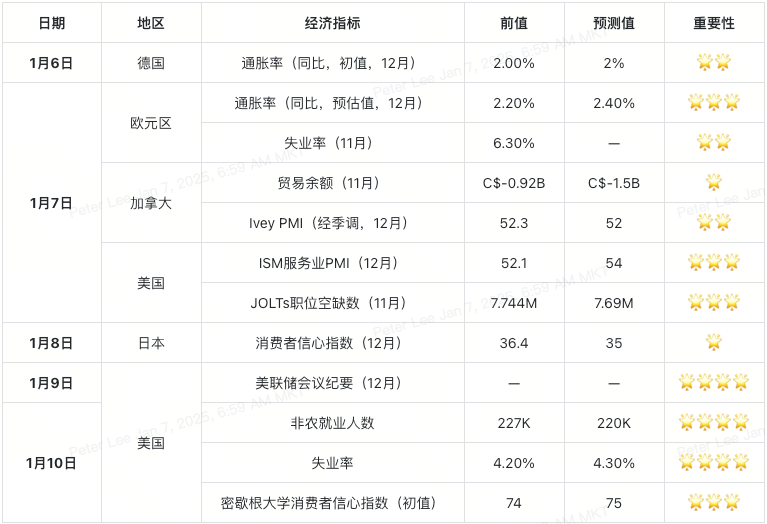
Macroeconomic Drivers
Inflation: The Key to Central Bank Decisions
-
Europe: Inflation data from Germany and the Eurozone will provide vital clues about the ECB’s future monetary policy. Persistently high inflation could prompt further tightening measures, affecting risk appetite across markets—including crypto.
-
United States: Producer Price Index (PPI) and core inflation readings will shape expectations for the Fed’s next move. Slowing inflation may encourage greater investment in risk assets like cryptocurrencies.
Consumer Spending and Confidence
-
United States: The ISM Services PMI and University of Michigan Consumer Sentiment Index are key gauges of economic resilience and spending power. Strong results suggest sustained stability but may reduce the likelihood of Fed rate cuts. For crypto markets, this presents both opportunity and pressure.
Labor Market Dynamics
-
The nonfarm payrolls report released on Friday will be a global focal point. If the data falls short of expectations, it may signal a cooling labor market, increasing the odds of a dovish shift by the Fed—potentially bullish for crypto markets.
Central Bank Signals
-
Federal Reserve Meeting Minutes (Thursday): The minutes will reveal details of internal discussions during the December meeting. Traders will look for hints on interest rate cuts or policy pivots. Dovish language could boost crypto markets; hawkish commentary might dampen investor enthusiasm.
-
European Central Bank: Ongoing inflationary pressures in the Eurozone remain a major challenge for market confidence. Signs of further tightening could impact euro-denominated stablecoins and related crypto trading activity.
In-Depth Analysis of Key Data
U.S. Nonfarm Payrolls (Friday, January 10)
-
Why It Matters: As a core indicator of U.S. economic health, nonfarm payrolls directly influence market sentiment. Strong numbers typically strengthen the dollar and weigh on risk assets—including cryptocurrencies. Conversely, weaker-than-expected data may fuel speculation of Fed easing, benefiting crypto markets.
-
Forecast: 220,000 new jobs (previous: 227,000).
-
Potential Impact: Data exceeding forecasts could trigger a short-term market pullback, while lower-than-expected figures may spark a crypto price rebound—especially if investors anticipate a more accommodative Fed stance.
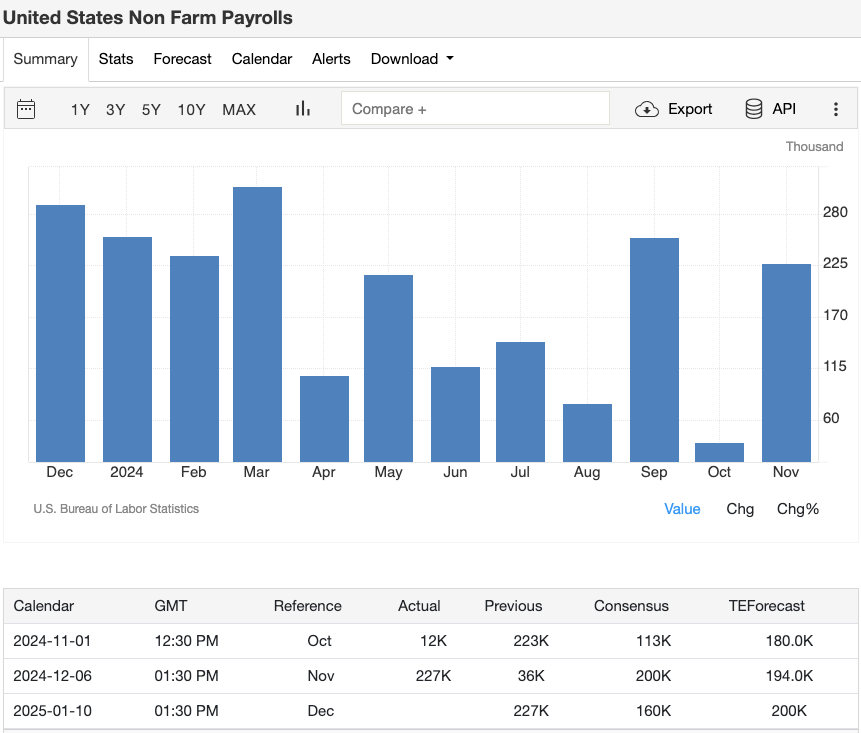
Image Credit: Trading Economics
Eurozone Inflation Rate (Tuesday, January 7)
-
Why It Matters: Inflation data is a cornerstone of ECB policy decisions. High inflation suggests prolonged tightening, while a slowdown raises hopes for a dovish pivot.
-
Forecast: +2.4% YoY (previous: +2.2%).
-
Potential Impact: Higher-than-expected readings could make investors more cautious toward risk assets—including euro-based stablecoins and crypto. Lower inflation may boost risk appetite and benefit crypto markets.
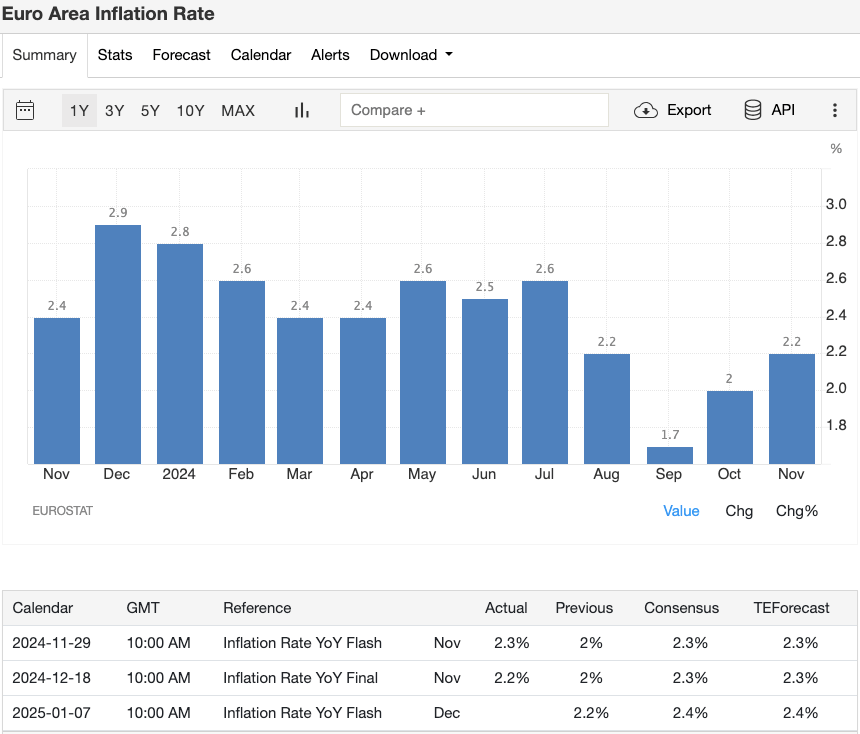
Image Credit: Trading Economics
Federal Reserve Meeting Minutes (Thursday, January 9)
-
Why It Matters: The minutes offer insight into the Fed’s December deliberations and serve as a window into 2025 monetary policy direction.
-
Potential Impact: Dovish signals could heighten expectations for rate cuts, lifting crypto market sentiment. Hawkish tones, however, may increase caution among investors and suppress risk asset valuations.
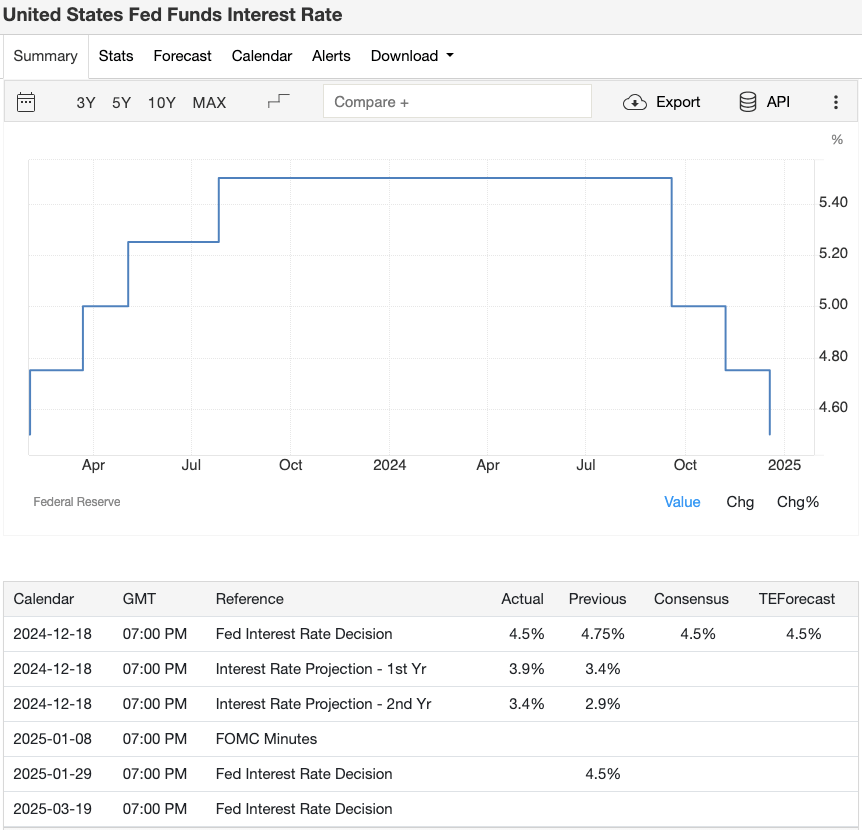
Image Credit: Trading Economics
U.S. ISM Services PMI (Tuesday, January 7)
-
Why It Matters: This index reflects the overall health of the U.S. services sector and is a key measure of economic resilience.
-
Forecast: 54.0 (previous: 52.1).
-
Potential Impact: Strong data may reinforce confidence in the U.S. economy but could reduce the chance of Fed rate cuts, creating headwinds for crypto. Weaker-than-expected results may stimulate risk appetite and support crypto prices.
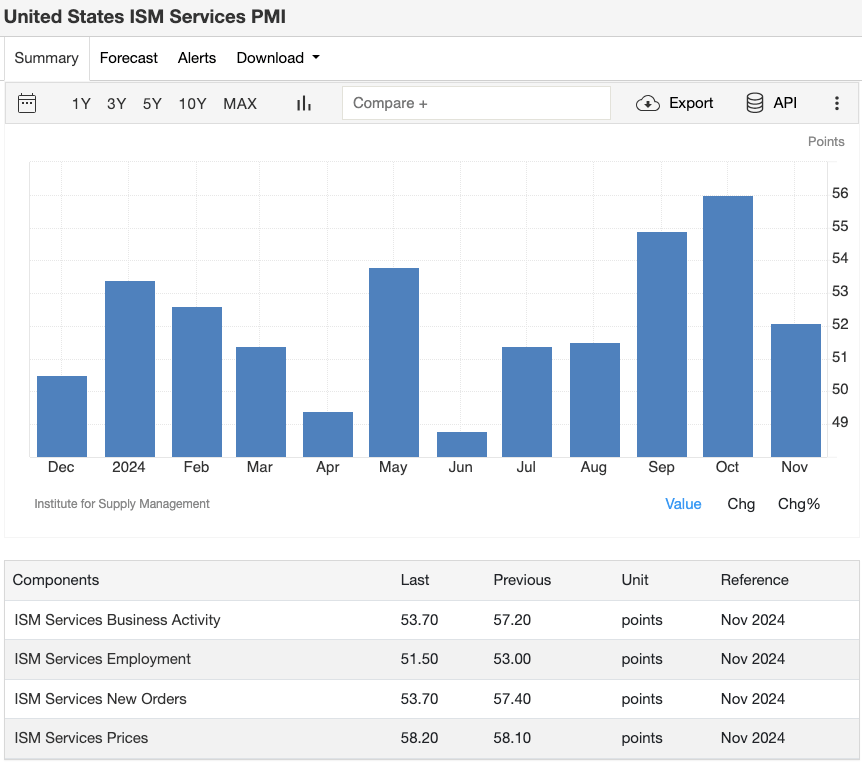
Image Credit: Trading Economics
Trader Strategy Guide
Monitor Key Economic Data Closely
-
This week’s U.S. nonfarm payrolls and ISM Services PMI are top priorities. These indicators reveal labor market strength and broader economic vitality, directly influencing crypto price movements.
-
Don’t overlook Eurozone inflation data—it could sway ECB policy direction and indirectly affect euro-linked crypto assets and stablecoin trading volumes.
Adapt to Shifting Market Sentiment
-
With the Fed meeting minutes and Eurozone data releases, market sentiment may shift rapidly. Hawkish signals could pressure risk assets, while dovish cues may lift crypto prices.
-
Stay alert and adjust your strategy promptly in response to changes driven by policy expectations or data surprises.
Manage Volatility Wisely
-
High-impact events such as nonfarm payrolls and Fed minutes often amplify market volatility. Around these times, consider using stop-loss orders or hedging strategies to protect positions and limit exposure.
-
Ensure sufficient liquidity before and after major data releases so you can adapt quickly during periods of sharp price swings.
Global Risks and Opportunities
Geopolitical Risks and Market Impacts
Geopolitical tensions remain a significant underlying risk for crypto markets.
-
United States: With Trump taking office, market expectations suggest a friendlier stance toward cryptocurrencies, potentially accelerating mainstream adoption.
-
China: In contrast, China bans private ownership of Bitcoin, focusing instead on promoting its digital yuan. This divergent policy path adds uncertainty and volatility to global markets.
-
Global Hotspots: Escalating conflicts in Ukraine and the Middle East continue to inject risk into markets. While Bitcoin is sometimes seen as a safe-haven asset, its correlation with traditional financial markets is weakening this perception.

Image Credit: CSO Online
X-Money Initiative and Bitcoin Outlook
Elon Musk’s X-Money plan has the potential to disrupt the payments landscape.
-
Transforming Payments: Reports indicate X-Money will deeply integrate cryptocurrency functionality, potentially revolutionizing traditional payment systems.
-
Opportunity for Bitcoin: As Bitcoin approaches the $100,000 mark, market hopes are rising that Musk’s initiative could attract more institutional participation and accelerate global Bitcoin adoption.

Image Credit: Tekedia
Regulation and CBDC Development
The global regulatory environment for cryptocurrencies is evolving rapidly:
-
United Kingdom: The Financial Conduct Authority (FCA) plans to introduce stricter crypto regulations by 2026, which could have long-term market implications.
-
Morocco: Drafting new crypto legislation and exploring the launch of its own central bank digital currency (CBDC).
-
Bank of England: The decision on a digital pound remains pending, potentially shaping the competitive dynamics between CBDCs and existing cryptocurrencies.

Image Credit: Bitcoinist
Energy Prices and Crypto Mining Costs
Energy price fluctuations directly affect Bitcoin mining operations:
-
High Costs Suppress Output: Sustained high energy prices may force miners to scale back production, impacting network hash rate and Bitcoin supply.
-
Low Costs Drive Expansion: Falling energy prices could enable miners to expand operations, increasing Bitcoin supply in the market.
-
Environmental Pressure: Growing global focus on sustainability is increasing scrutiny on mining practices. Musk’s emphasis on energy efficiency within the X-Money plan could profoundly influence future mining models.
Energy prices not only affect miners but also shape investor expectations around Bitcoin, adding another variable to market direction.
Image Credit: Dreamstime
Outlook for Week 3 and Beyond
Upcoming Data and Trends
Week 3 will bring additional high-impact economic data, including consumer confidence, inflation, and GDP growth. U.S. retail sales data will also be released, offering key insights into consumer behavior.
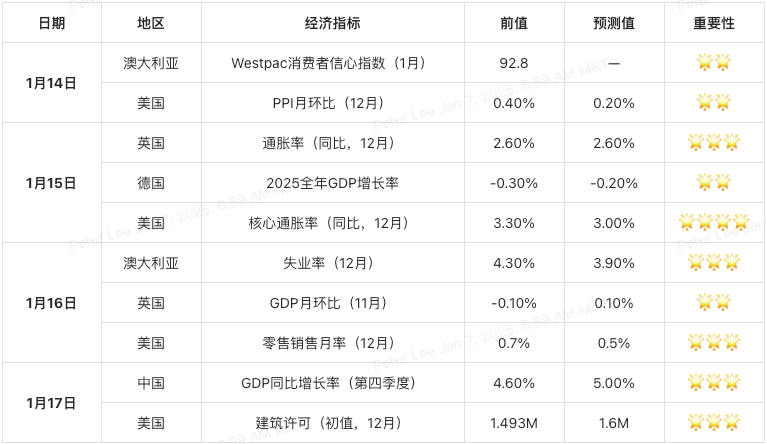
Key Indicators to Watch (January 13–17)
China GDP Growth
-
Why It Matters: Third-quarter Chinese GDP grew 4.6%, highlighting dual challenges from property markets and domestic demand. The Q4 forecast of 5.0% will show whether stimulus policies are gaining traction. Strong data could boost global market confidence and drive capital inflows into Asia-linked crypto assets.
U.S. Core Inflation Rate
-
Why It Matters: Core inflation stood at 3.3% in November, signaling persistent price pressures. The December forecast of 3.0% will directly influence expectations for Fed policy. A reading below forecast could push risk assets—including cryptocurrencies—higher.
U.S. Retail Sales Data
-
Why It Matters: December retail sales data is expected mid-week, reflecting holiday spending trends and providing insight into economic resilience. Strong figures may confirm economic strength but could also delay Fed rate cuts, leading to mixed reactions in crypto markets.
Join TechFlow official community to stay tuned
Telegram:https://t.me/TechFlowDaily
X (Twitter):https://x.com/TechFlowPost
X (Twitter) EN:https://x.com/BlockFlow_News
 @XTexchange









