
Crypto industry innovation slows—what ambitious projects exist beyond AI Agents?
TechFlow Selected TechFlow Selected
Crypto industry innovation slows—what ambitious projects exist beyond AI Agents?
This cycle might be the last major bubble opportunity capable of generating substantive innovation.
 Navigating Web3 tides with focused insights
Author: Ignas
Translation: Yuliya, PANews

On the surface, cryptocurrency appears to be thriving: after years of rejection, spot ETFs have finally launched, with Bitcoin (BTC) and Ethereum (ETH) ETFs setting new records for capital inflows. Trump’s victory has brought crypto closer to mainstream status in the United States, while crypto lobbying groups have successfully pushed out Gary Gensler and other skeptics. Today, crypto is an accepted industry, and Bitcoin may even be considered a national reserve asset by some countries.
While price outlooks are optimistic, most of the gains are driven by external macro factors. Meanwhile, the internal engine of innovation within the crypto industry is gradually slowing down. As industries mature, innovation naturally decelerates—but prices can still rise even as innovation slows.
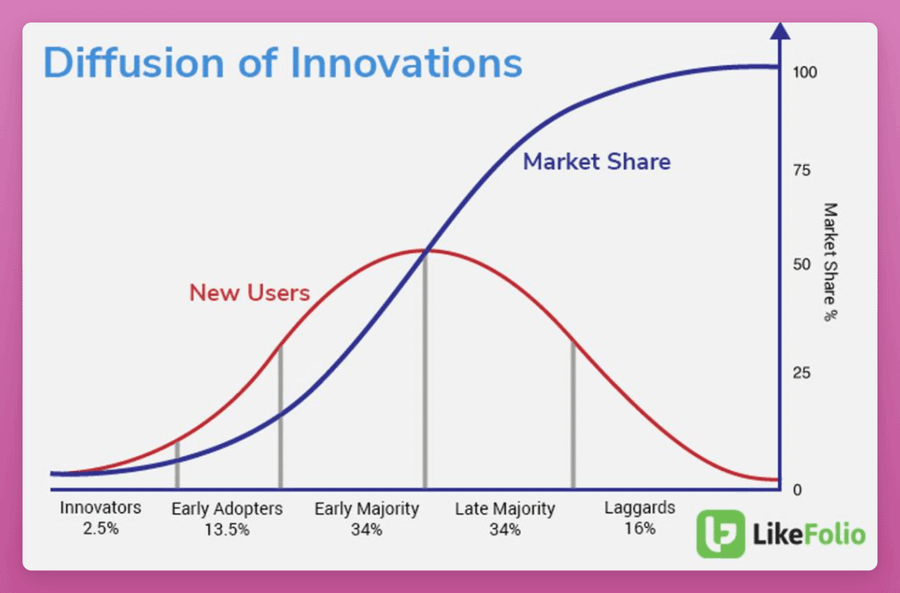
However, slowing innovation isn't the root problem—it's a symptom. The real issue lies in diminished ambition and increasing risk aversion. Once driven by radical ideas aiming to change the world, the entire industry now seems content pursuing regulatory approval and institutional adoption.

This point is echoed by Vitalik Buterin in his 2023 blog post "Reclaiming Cyberpunk Ethereum": “We’re not just building isolated tools and games, but aiming to construct a more free and open society and economy where technology, social structures, and economic systems integrate together.”
Think about it: what innovations define this cycle? One major trend is AI x Crypto. But AI represents external innovation; without it, this cycle might look very different—perhaps continuing to focus solely on meme coin trading.
The sole purpose of meme coins is quick wealth accumulation, not changing the world. Once wealthy, participants no longer seem troubled by problems in the outside world. Notably, declarations like “[Project name] is the most egalitarian thing we’ve ever seen. It’s ambitious—if successful, it could truly reshape societal structures”—are now rarely heard. In contrast, the previous cycle did witness several radical innovations:
• Decentralized Finance (DeFi)
• Non-Fungible Tokens (NFTs)
• DeFi yield farms
• Play-to-Earn (P2E) games (e.g., Axie Infinity)
• The Metaverse
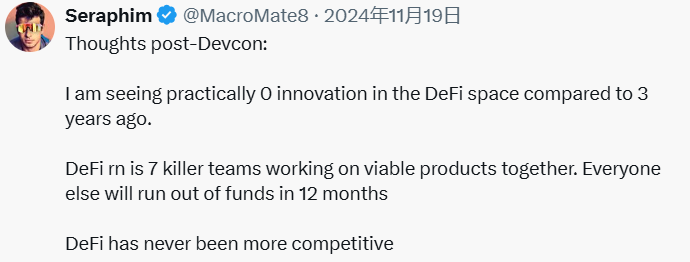
The 2020–2021 cycle was also the peak of tokenomics innovation, featuring concepts such as Ampleforth’s rebasing tokens, veTokenomics, (3,3) dynamics, liquidity mining, SNX used as collateral for sUSD, and various algorithmic stablecoins.
Yet today, most crypto projects—and their backing venture capital firms—favor simple, proven economic models to reduce risk, especially since they typically only get one chance at a token generation event (TGE). $EIGEN’s Intersubjective Token is a rare exception to this lack of innovation.
In comparison, the 2017 ICO boom is often seen as the peak of ambition in the crypto space, when numerous projects attempted to decentralize everything. Most failed due to excessive ambition, with only a few surviving—and even those had to scale back their visions.
Such wild ideas are now too risky to fund in today’s more risk-averse crypto environment. Yet these radical concepts once attracted people who dreamed of changing the world.

B. Hobart and T. Huber, in their book *Prosperity: The End of Boom and Bust*, argue that transformative progress usually comes from small groups with unified visions, well-funded but lacking strict accountability. They suggest that while financial bubbles are often viewed negatively, history shows many critical breakthroughs were actually driven by them.
Although the era of low accountability may be ending, regulation brings greater risk aversion. This cycle might be the last real opportunity for a major bubble to generate substantial innovation. The AI x Crypto bubble may at least produce one or two killer applications.
The Most Ambitious Crypto Projects Today
Still, there are many ambitious crypto projects being built today, including:
• Ethena: Merging DeFi, CeFi, and Traditional Finance (TradFi)
• Chainlink: Bridging blockchain smart contracts with real-world data
• Pudgy Penguins: Leading Web3 IP brand expanding into Web2
• WorldCoin: Onboarding every person onto the blockchain, potentially enabling AI-funded UBI
• Liquity/RAI: The last decentralized stablecoin
• Arweave/Filecoin: Permanent storage and censorship resistance
• Farcaster/Lens: Reimagining social media
• Polymarket: A source of truth in a world of misinformation
• Bio Protocol (DeSci): Revolutionizing science through incentive redesign
• Bitcoin: Revolutionary money, digital gold
Projects like WorldCoin’s eye-scanning Orb and Liquity v2 with its $BOLD stablecoin may appear radical—but that’s exactly the kind of risk ambitious protocols are willing to take. These projects embody the most egalitarian ideals, full of ambition, capable of reshaping societal structures if successful.
Ethereum’s Dilemma
Ethereum appears absent from this list of innovative projects. Perhaps this assessment is harsh, but Vitalik’s vision of a “cyberpunk Ethereum” is barely felt on social platforms today.
Upcoming forks (upgrades) bring only minor changes for average users. Ethereum has abandoned sharding and native layer-1 scaling, and recently has done little more than slightly increase block gas limits.
It seems Ethereum has outsourced both transaction execution and ambition to Layer 2 networks (L2s). Its future direction remains unclear.

In contrast, Solana takes a more aggressive stance, continuing to push forward with its integrated blockchain model, refusing compromise.
Still, Ethereum’s future scalability solutions may ultimately prove its modular approach correct. Here’s hoping Ethereum becomes great again—and that bold new ideas reemerge.
Humanity Needs Boundaries
The world, particularly the West, seems stuck in stagnation. Stagnant wages, repetitive music, new iPhones that no longer feel novel, and endless movie remakes—all reflect a growing fear of innovation, as novelty increasingly implies greater risk. In some ways, we’re actually regressing. For example, due to the retirement of Concorde, flights from London to New York now take longer than they did in the 1970s.
Yet crypto remains one of the fastest-moving and most innovative industries globally—second perhaps only to AI.
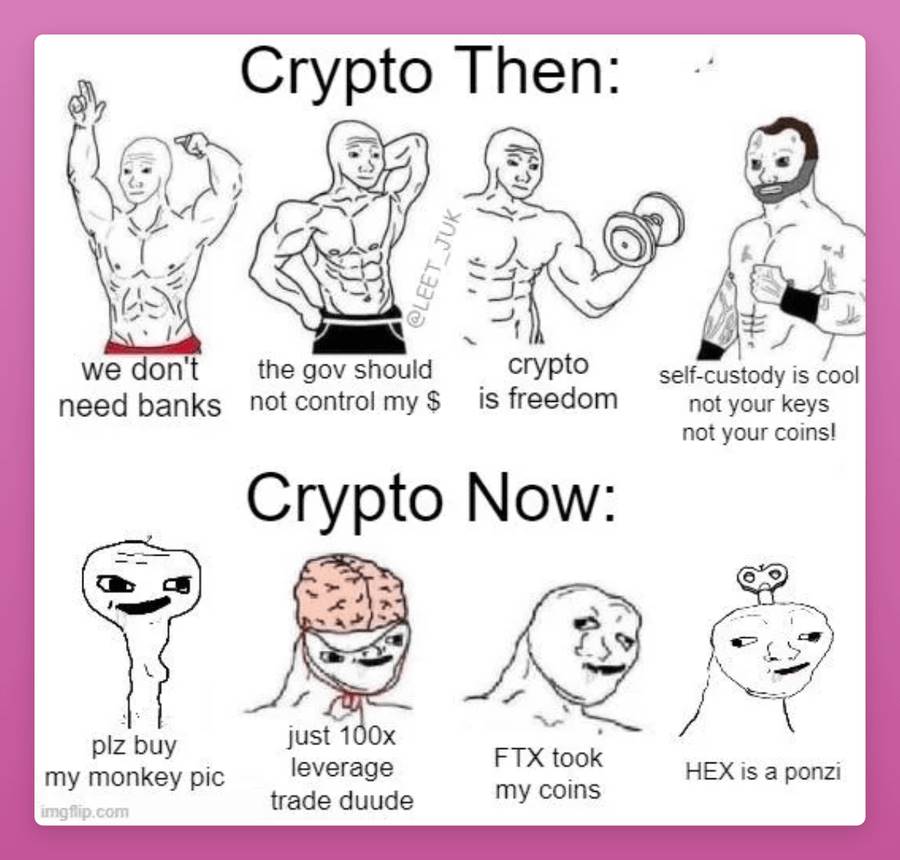
Nonetheless, the pace and ambition of innovation within the industry have clearly declined. Partly due to maturation, but more deeply because many technical limitations are now passively accepted rather than challenged. For instance:
It’s now acceptable that DeFi and DAOs aren’t fully decentralized. Instead of striving for decentralization, DeFi is redefined as on-chain finance—problem solved.
Ethereum’s inability to scale at Layer 1 and stagnant tokenomics innovation are similarly tolerated.
In today’s market, $LQTY’s low market cap compared to $ENA suggests decentralized stablecoins are no longer truly needed—higher yields matter more.
Perhaps each passing cycle slowly erodes the ambition to push boundaries, leading the crypto industry toward mediocrity. After all, if token prices keep rising, why take risks?
Join TechFlow official community to stay tuned
Telegram:https://t.me/TechFlowDaily
X (Twitter):https://x.com/TechFlowPost
X (Twitter) EN:https://x.com/BlockFlow_News
 Ignas | DeFi Research