2024 Bitcoin Year-End Review: Price Rises 131%, Underperforming Last Year, TVL Surges 21x to Over $6.7 Billion
TechFlow Selected TechFlow Selected
2024 Bitcoin Year-End Review: Price Rises 131%, Underperforming Last Year, TVL Surges 21x to Over $6.7 Billion
The three keywords—"ETF approval," "halving," and "U.S. election"—drove Bitcoin's market movements throughout the year. Behind this overarching narrative, what specific developments in Bitcoin’s trading markets, on-chain fundamentals, and application layers are worth paying attention to?
 Navigating Web3 tides with focused insights
Text: Carol, PANews
In 2024, Bitcoin surged past the $100,000 mark during an upward trend, establishing a new milestone in the development of digital assets. Three key factors—“ETF approval,” “halving,” and “U.S. presidential election”—drove Bitcoin’s market movements throughout the year. Behind this broad picture, what specific changes occurred in Bitcoin's trading markets, on-chain fundamentals, and application layers? And how might these shifts influence its trajectory in 2025?
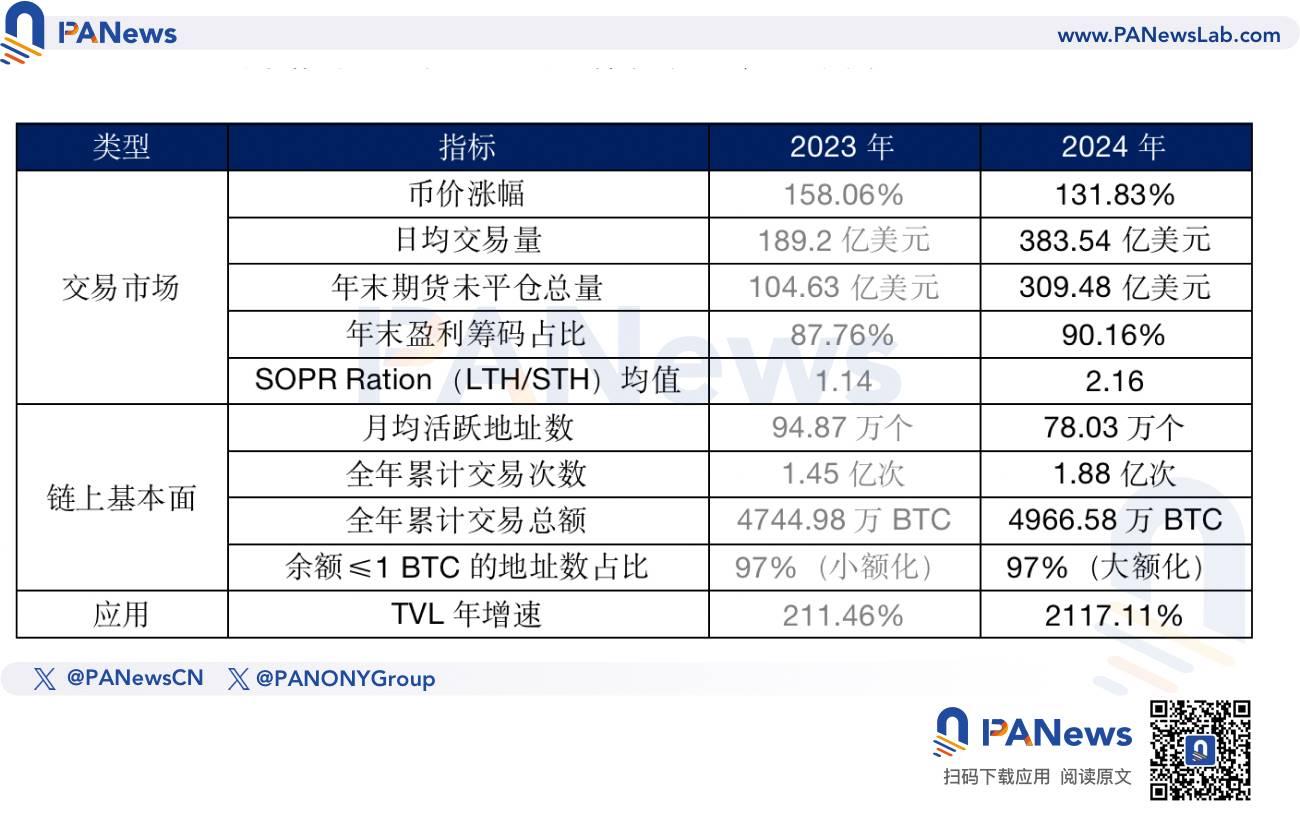
PANews’ data column PAData offers a multidimensional analysis of Bitcoin’s evolution in 2024. In summary:
Trading Market:
-
Bitcoin’s annual price gain reached 131.83%, trailing last year’s 158.06%.
-
The primary driver behind Bitcoin’s price increase this year was a gradually friendlier and looser regulatory environment, rather than solely supply scarcity from the halving event.
-
Long-term holders achieved better profitability this year and tended to reduce risk exposure earlier as markets approached overheating.
-
The trading market saw both rising prices and volumes. The average daily trading volume for the year was approximately $38.35 billion, up 102.72% year-on-year. Year-end open interest totaled about $30.95 billion, increasing 195.79% compared to the previous year.
-
Total holdings in Bitcoin ETFs reached 1.12 million BTC, surging 80.87% over the year.
On-Chain Fundamentals:
-
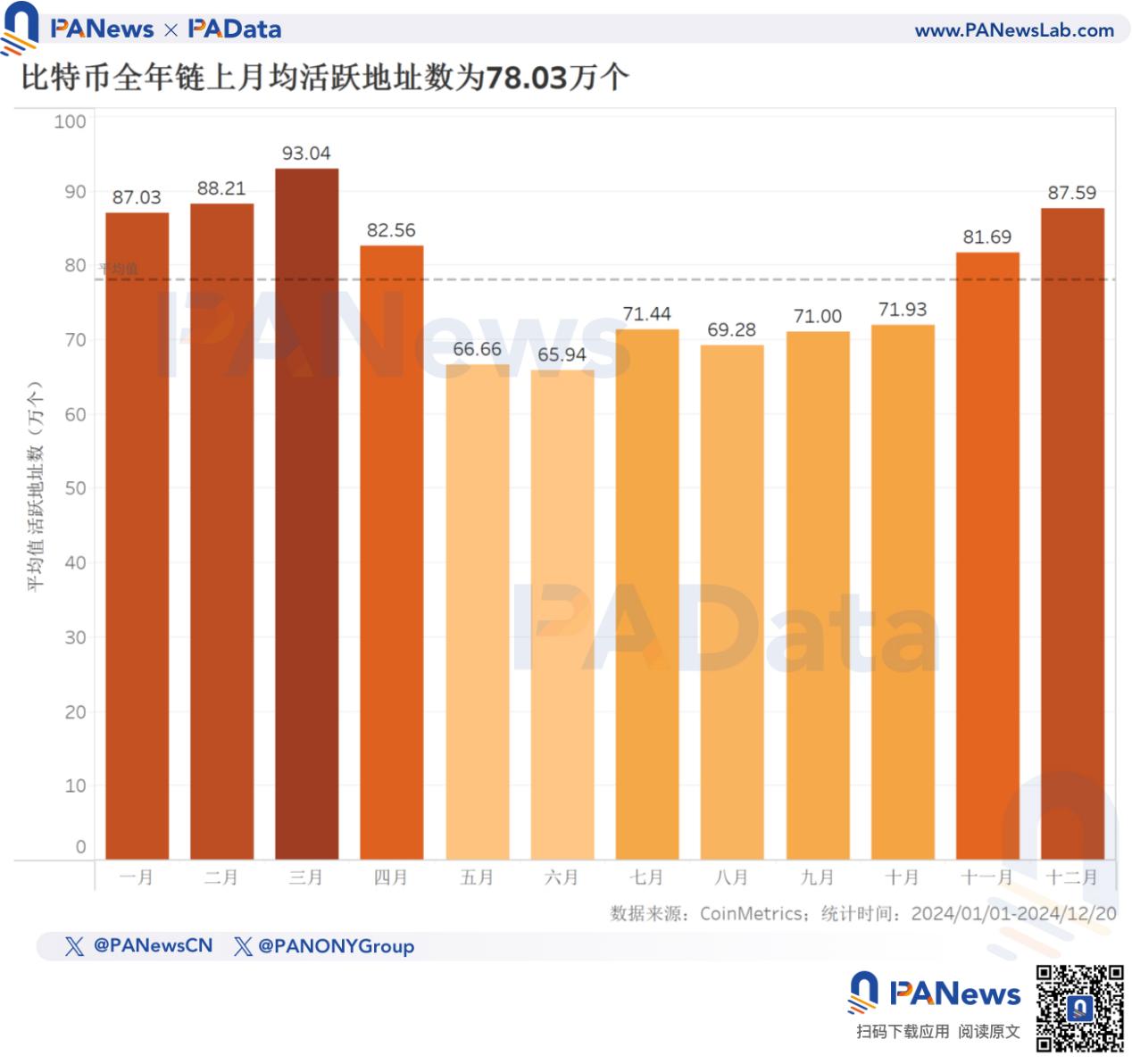
Average monthly active addresses on Bitcoin’s network were around 780,300 this year, down 17.75% from last year. This suggests that with a clear uptrend, long-term holding strategies dominated, possibly indicating a shift toward institutional-led, low-liquidity growth phases.
-
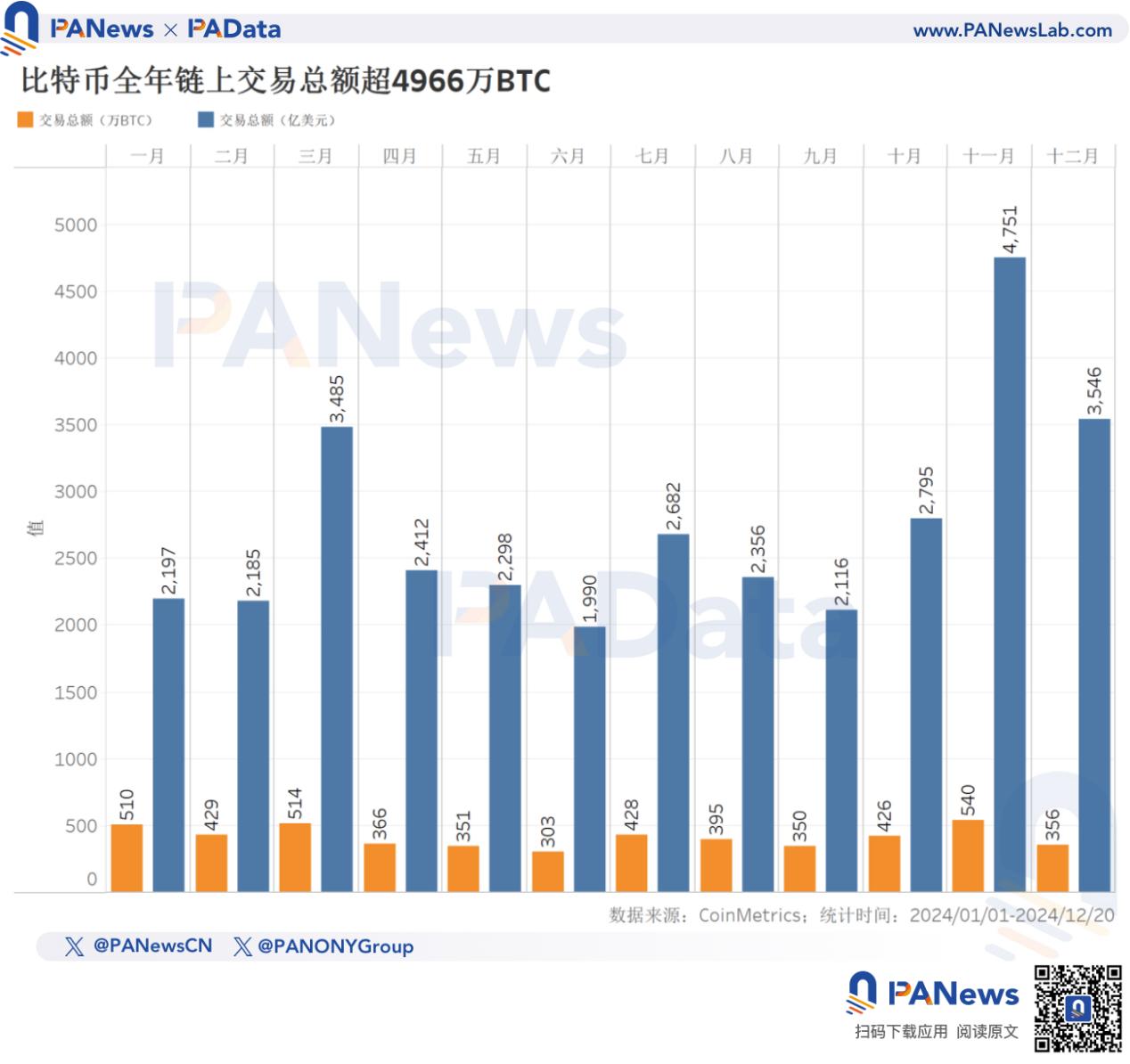
Cumulative on-chain transaction value amounted to roughly 49.67 million BTC (equivalent to $3.28 trillion). Transaction volume in BTC terms rose slightly by 4.67% year-on-year.
-
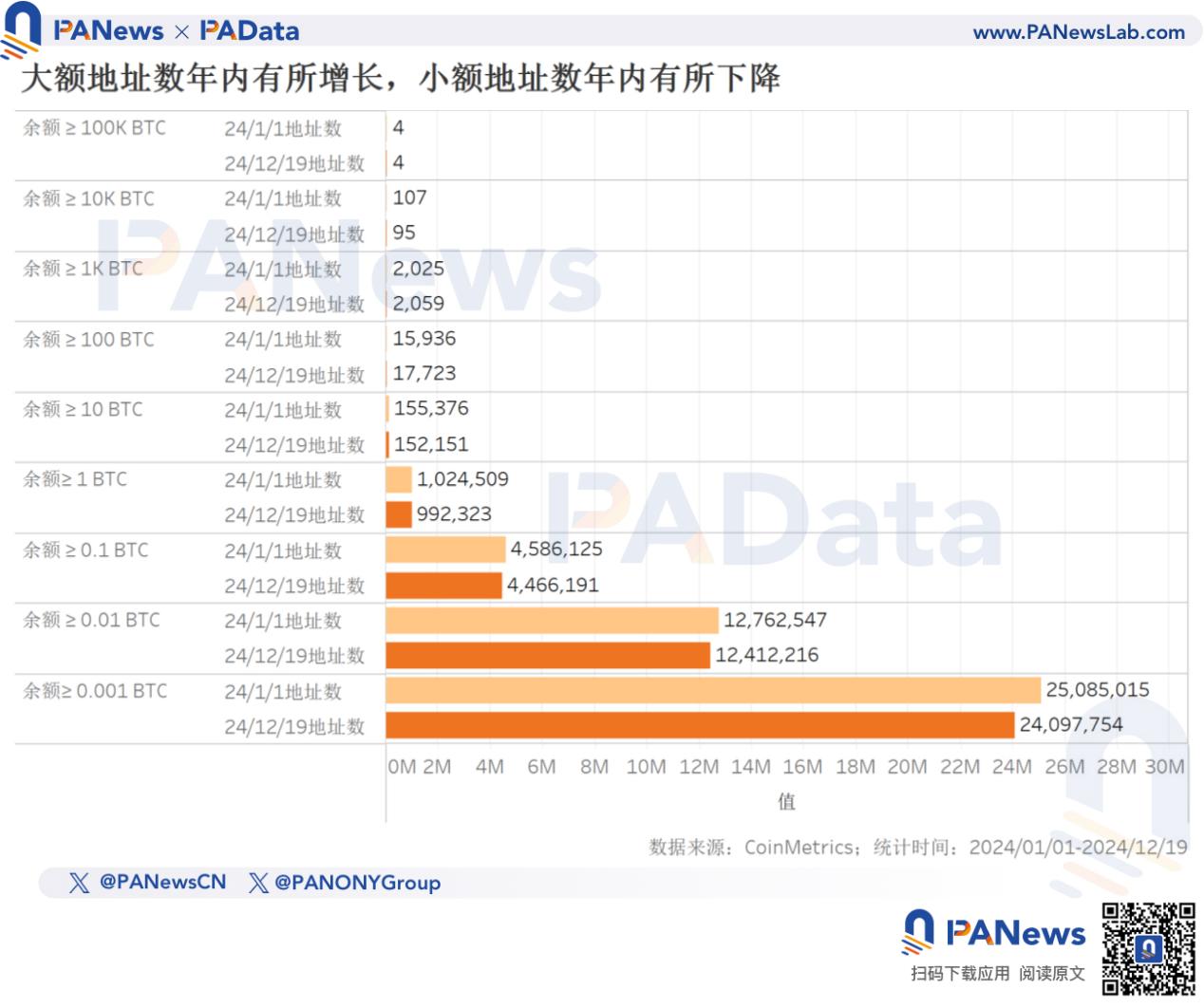
The number of addresses holding between 100 and 1,000 BTC increased by 11.21%, signaling a reversal of recent years' trend toward smaller balances—indicating a shift toward larger holdings this year.
Application Layer:
-
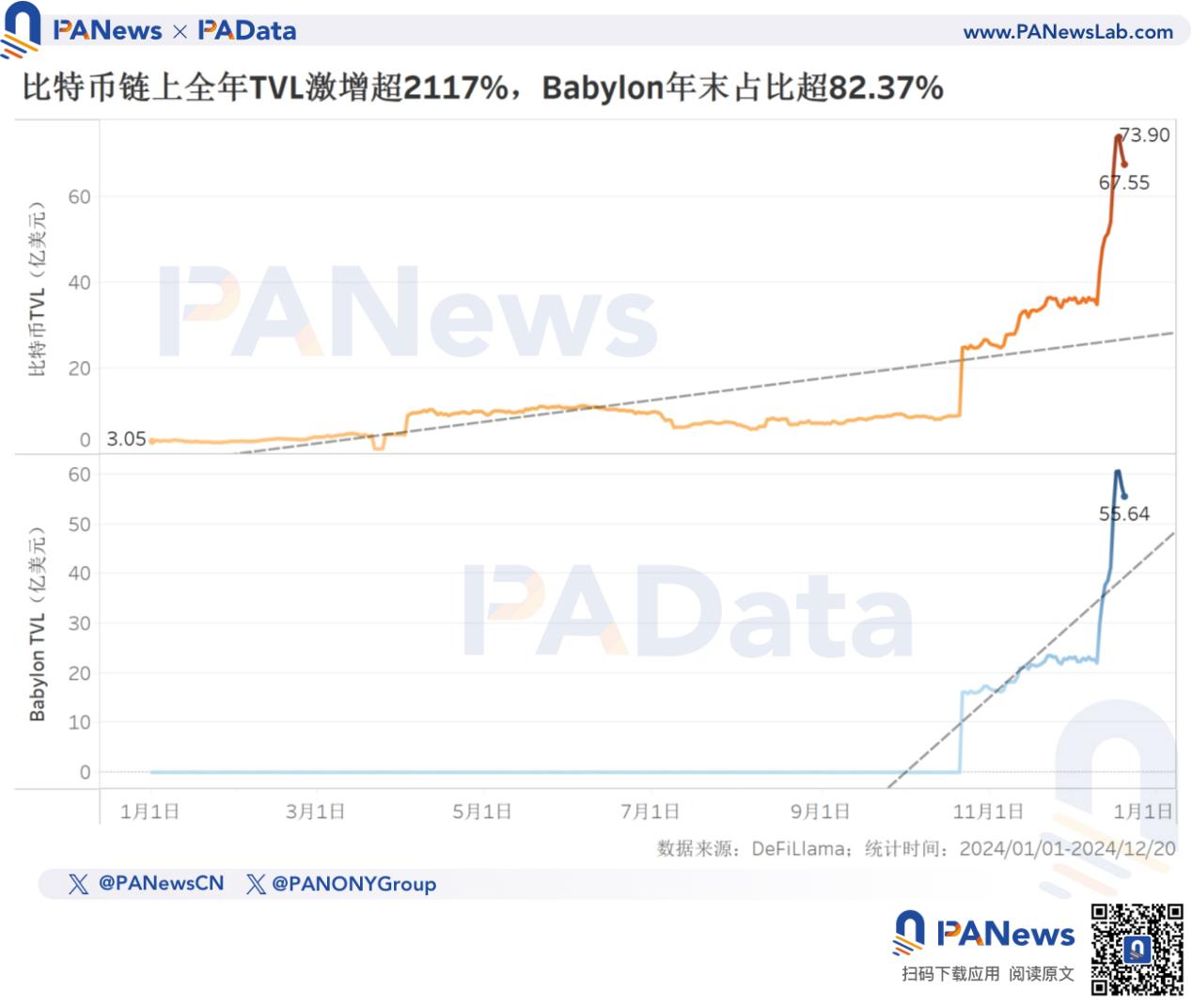
Year-end TVL (Total Value Locked) on Bitcoin reached approximately $6.755 billion, soaring 2117.11% annually, with Babylon accounting for 82.37% of the total.
-
Staking has replaced payments (via the Lightning Network) as Bitcoin’s dominant application.
Outlook for Next Year:
-
Hawkish rate cuts under ongoing quantitative tightening (QT) have tightened both short- and long-term liquidity, posing a major headwind to further Bitcoin price gains next year.
-
This year’s rally was fueled by expectations of favorable post-election regulatory conditions. If regulations continue to ease in 2025, it could support continued price appreciation.
-
BTCFi may continue to develop, but for applications to become a core pricing driver for Bitcoin, sustained scale expansion is required—an unlikely achievement in the near term.
Trading Market: Over 131% Annual Gain, ETF Holdings Exceed 1.12 Million BTC
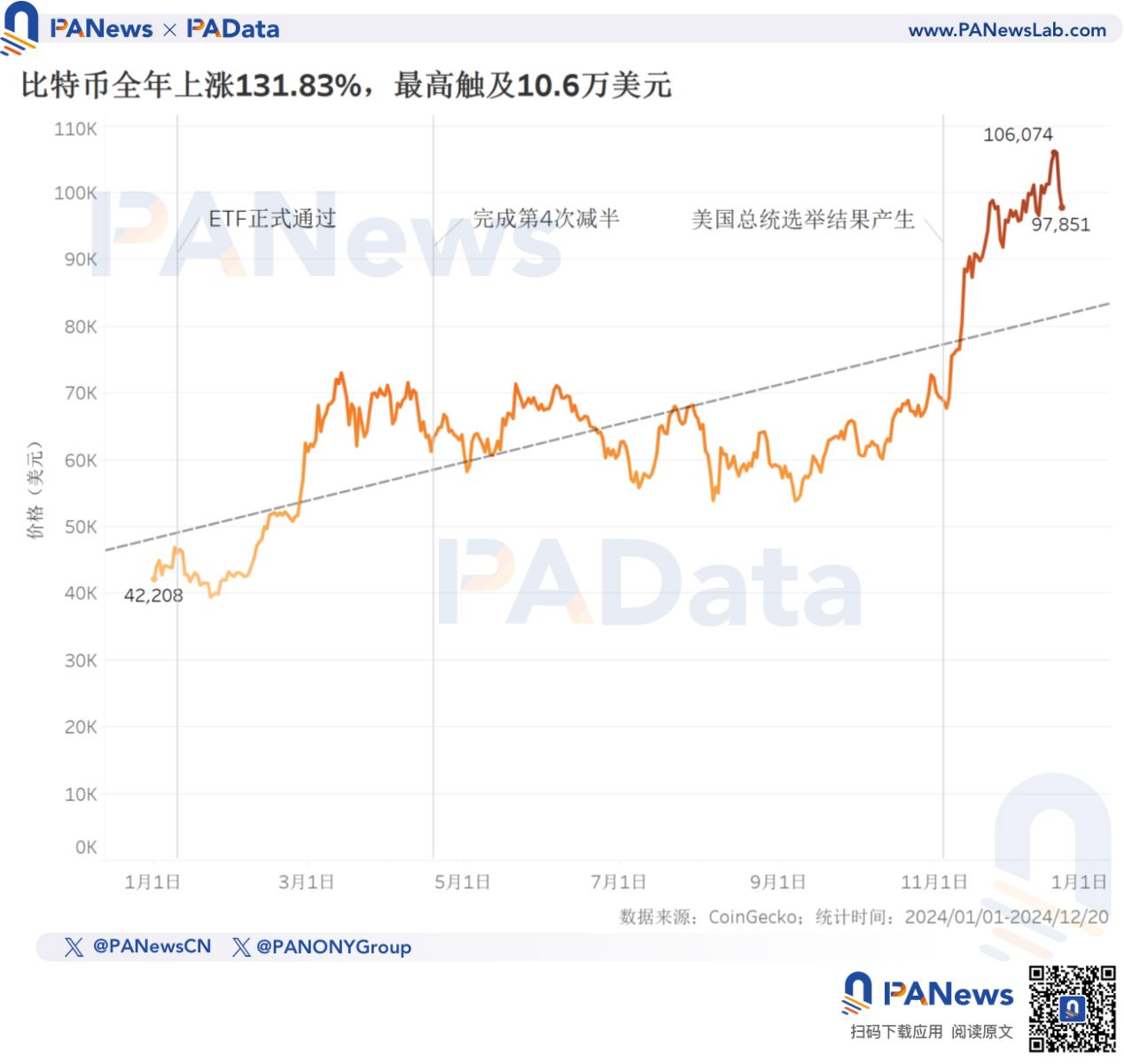
In 2024, Bitcoin’s price climbed from $42,208 at the beginning of the year to $97,851 by year-end (as of December 20), marking a 131.83% annual gain. On December 17, it decisively broke through the $100,000 threshold, reaching a record high of $106,074—a peak gain of about 151.31%. Although prices pulled back slightly toward year-end, they remained at historically elevated levels.
In broad terms, Bitcoin experienced three distinct phases this year: “rallying → consolidating → rallying again,” closely aligning with three pivotal events: “ETF approval,” “the fourth halving,” and “the U.S. presidential election.” Overall, this year’s price surge cannot be attributed solely—or even primarily—to supply scarcity caused by the halving. Rather, the main drivers were increasingly favorable regulatory developments, including ETF approvals and the outcome of the U.S. election, which signaled a more accommodating regulatory stance. These shifts attracted significant institutional capital, injecting liquidity into the market and fueling further price increases.
According to Glassnode data, profitable positions accounted for 90.16% of all coins by year-end (as of December 20), near historical highs. In terms of profit-taking behavior, the LTH-SOPR/STH-SOPR ratio (Spent Output Profit Ratio comparing long-term vs. short-term holders) rose from 1.55 at the start of the year to 2.11 by year-end, averaging 2.16 over the full period. Notably, since late November, this ratio exceeded 3 multiple times, peaking above 4. A ratio greater than 1 indicates that long-term holders are realizing higher profits than short-term ones, with higher values reflecting stronger outperformance.
Overall, long-term holders enjoyed superior profitability this year, especially as the year progressed. Moreover, analyzing price trends reveals that peaks in long-term holder profitability preceded price tops—suggesting that long-term investors tend to de-risk earlier when markets approach overheated conditions.
This year’s Bitcoin market witnessed concurrent increases in price and trading volume.
Data shows that average daily trading volume reached approximately $38.35 billion, with single-day volume exceeding $190.4 billion at its peak. Trading activity surged notably after November, with average daily volumes of $7.49 billion in November and $9.65 billion in December—far surpassing the earlier monthly average of around $3.08 billion.
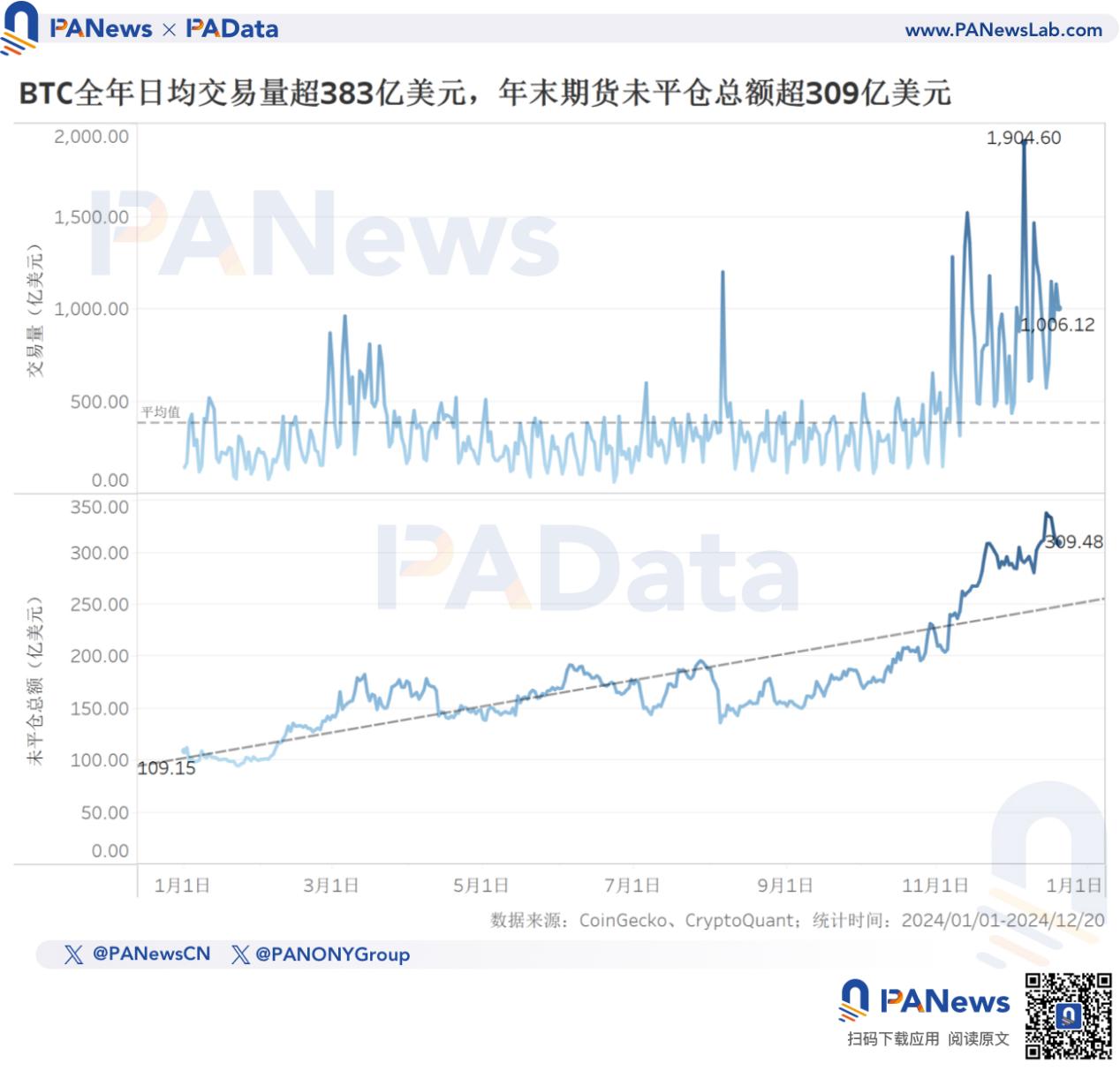
Futures markets were equally vibrant. Open interest expanded from $10.92 billion at the start of the year to $30.95 billion by year-end, a robust 183.53% increase.
As one of the key catalysts behind Bitcoin’s price rise, ETF holdings remained under close scrutiny throughout the year. Total holdings across all Bitcoin ETFs grew from 619,500 BTC at inception to 1.12 million BTC by year-end—an impressive 80.87% increase. Periods of fastest growth aligned closely with rapid price surges, particularly between February and March and again after November.
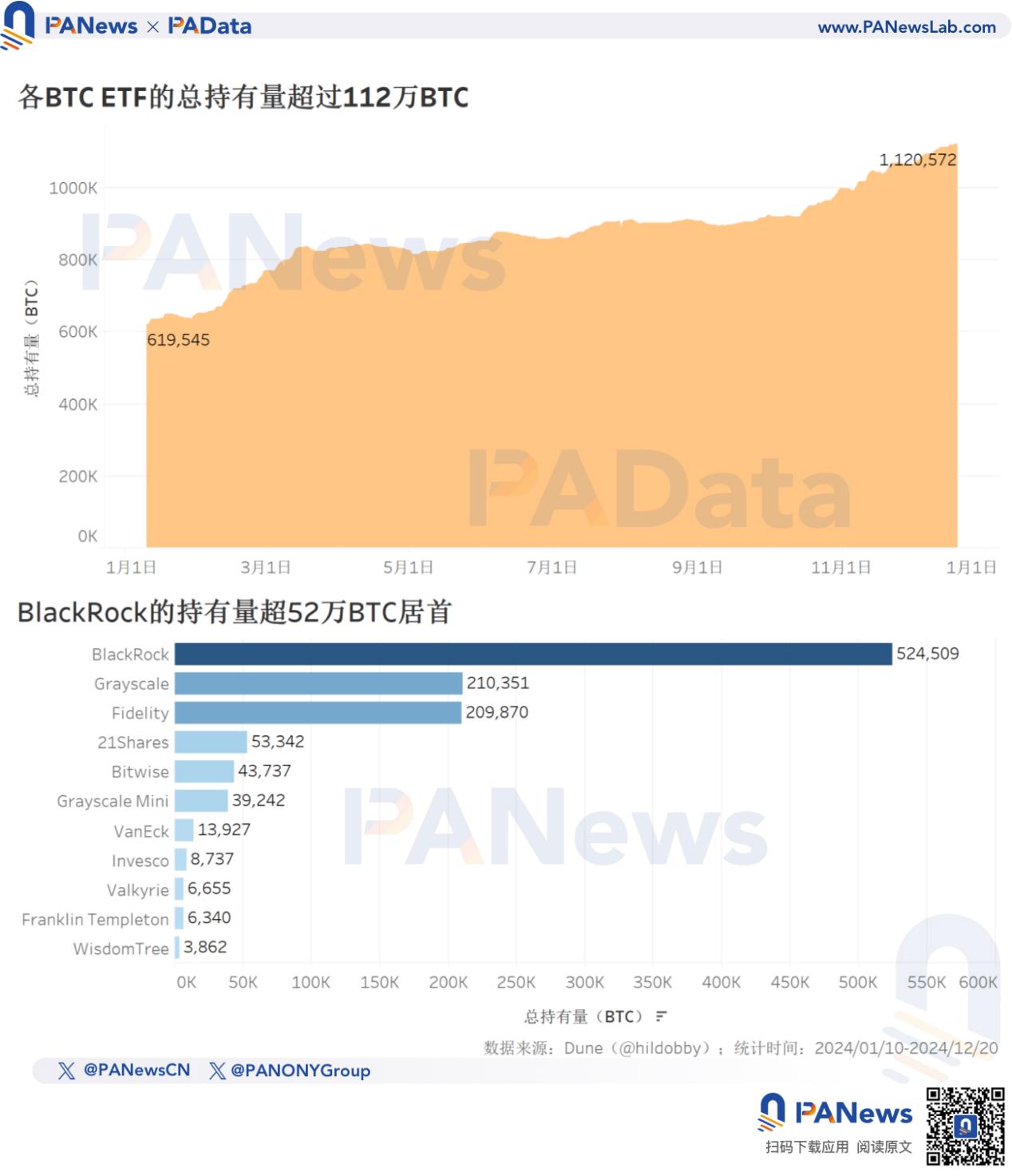
Currently, BlackRock leads with 524,500 BTC—the largest among all ETFs. Grayscale and Fidelity follow with 210,300 BTC and 209,900 BTC respectively. Other ETFs hold relatively smaller amounts, mostly below 50,000 BTC.
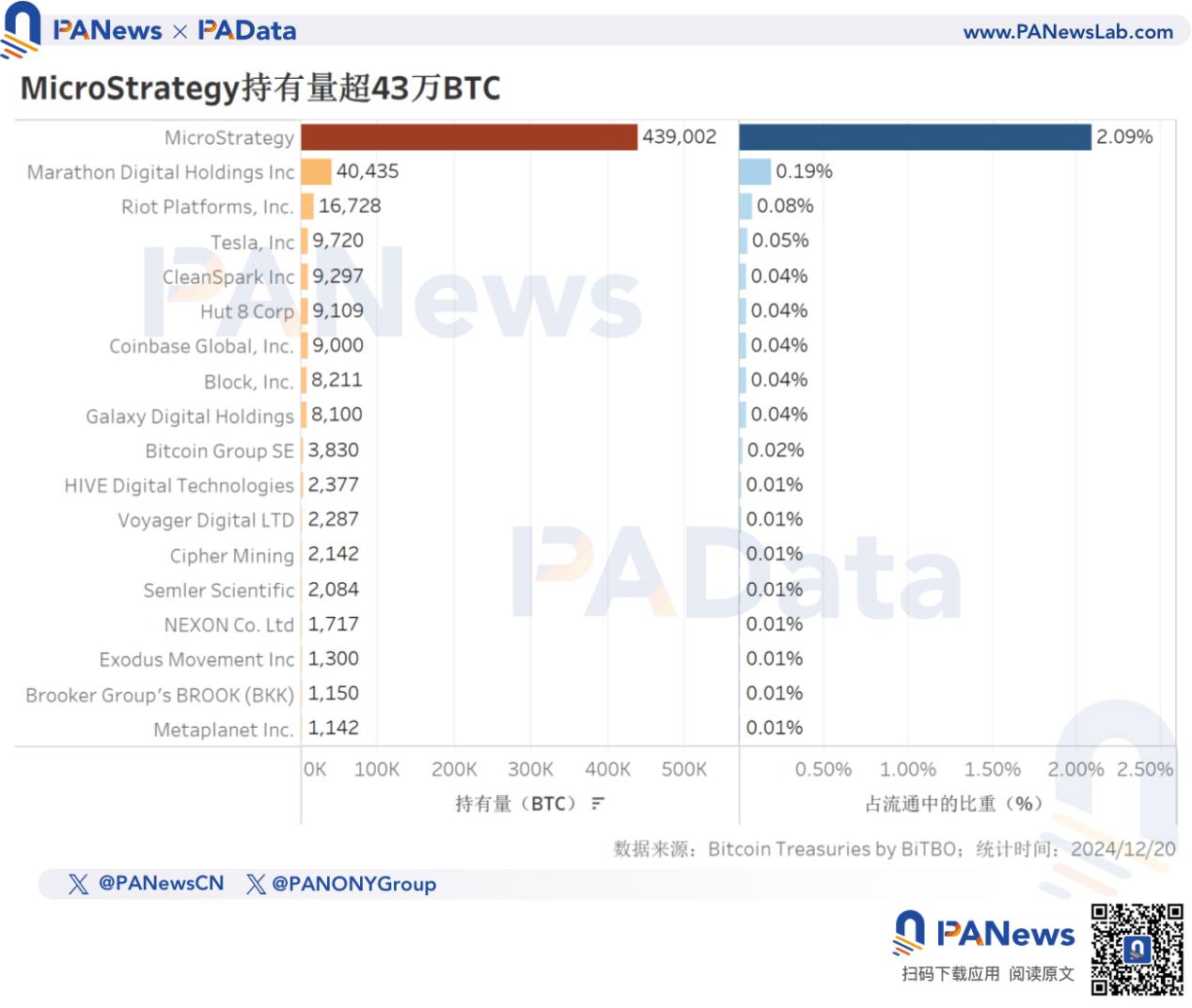
Beyond ETFs, an increasing number of public companies emerged as major buyers, potentially unlocking new demand channels. Among them, MicroStrategy holds the largest position at 439,000 BTC—surpassing many individual ETFs. Leading North American Bitcoin miners Marathon Digital Holdings and Riot Platforms also accumulated substantial holdings, exceeding 40,000 BTC and 10,000 BTC respectively.
On-Chain Fundamentals: Declining Active Addresses, Rising Large-Holding Addresses, Transaction Volume Reaches 49.67 Million BTC
Average monthly active addresses on Bitcoin’s network stood at approximately 780,300 this year, down 17.75% from 948,700 last year—a significant decline. Monthly averages surpassed 800,000 only during January–April and November–December, while remaining below 720,000 between May and October.
While broadly consistent with price trends, the drop in average monthly active addresses—even amid record-high prices—suggests a structural shift. With a clear bullish trend, long-term holding strategies appear dominant, potentially signaling a transition from retail-driven, high-frequency trading to institution-led, lower-liquidity growth phases.
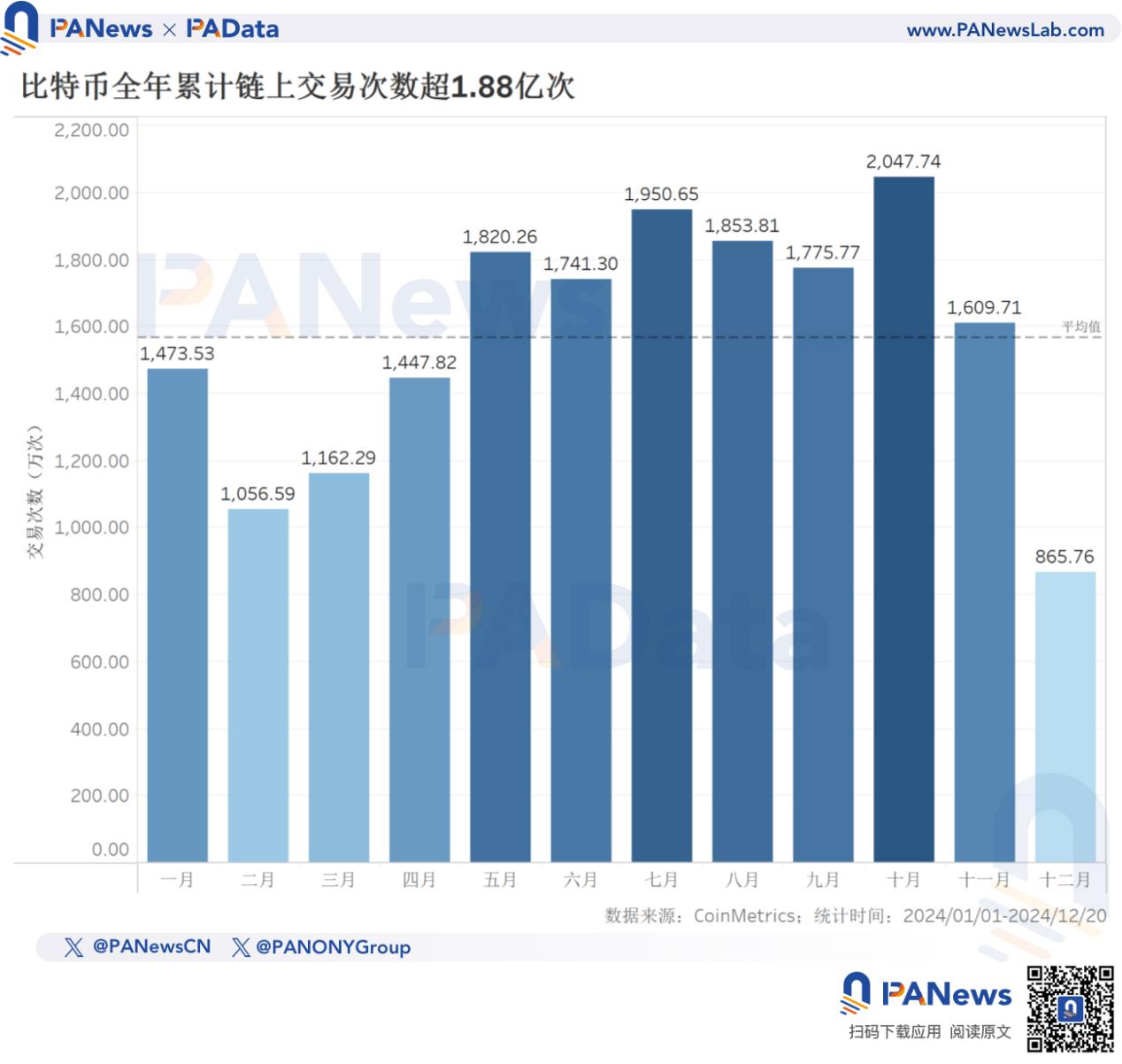
Total on-chain transactions exceeded 188 million this year, up 29.66% year-on-year—the second consecutive annual increase. Monthly average transactions reached 15.67 million, with October recording the highest at 20.48 million. Notably, transaction counts were higher during price consolidation periods, likely influenced by short-term arbitrage, address consolidation, or contract liquidations.
Cumulative on-chain transaction value totaled approximately 49.67 million BTC ($3.28 trillion). Measured in BTC, transaction volume edged up 4.67% year-on-year. Monthly average transaction value was about 4.14 million BTC (~$27.35 billion).
Overall, the divergent trends between transaction count and value延续ed last year’s pattern: while transaction frequency increased compared to pre-2022 levels, transaction value declined. This is largely due to ecosystem expansions under high-price conditions, such as the explosion of use cases like Ordinals last year.
Regarding address balance distribution, addresses holding between 0.001–0.01 BTC, 0.01–0.1 BTC, and 0.1–1 BTC remain the most numerous, collectively representing 97.24% of all addresses. However, all three ranges saw declines this year—by 3.94%, 2.74%, and 2.62% respectively. Only addresses holding 100–1,000 BTC and 1,000–10,000 BTC increased, by 11.21% and 1.68% respectively. This marks a reversal of recent years’ trend toward fragmentation into smaller holdings, instead pointing to a re-concentration into larger wallets—likely linked to wallet consolidation and institutional accumulation.
Application Layer: From Inscriptions to BTCFi, TVL Soars 2117% Annually
This year, Bitcoin’s application focus shifted from inscriptions to BTCFi, evolving from asset issuance to asset utility. According to DeFiLlama, Bitcoin DeFi’s TVL skyrocketed from $305 million at the start of the year to $6.755 billion by year-end—an astonishing 2117.11% increase. At its peak, TVL briefly exceeded $7.3 billion. Bitcoin now ranks fourth in blockchain TVL, behind only Ethereum, Solana, and Tron.
By protocol type, the dominant project on Bitcoin has shifted from Lightning Network in payments to Babylon in staking. As of December 20, Babylon’s TVL reached $5.564 billion, accounting for 82.37% of the total. Per Dune data (@pyor_xyz), as of December 23, Babylon had over 140,000 unique addresses, with a 100% weekly growth rate in staking addresses over the past seven days.
Babylon’s rapid growth catalyzed a wave of staking and restaking protocols. Beyond Babylon, there are now ten additional protocols on Bitcoin: Lombard, SolvBTC LSTs, exSat Credit Staking, Chakra, Lorenzo, uniBTC Restaked, alloBTC, pSTAKE BTC, b14g, and LISA BTC LST. These staking-focused protocols could generate network effects, further expanding Bitcoin’s application landscape.
Outlook for 2025
Bitcoin experienced strong gains in 2024. Looking ahead to 2025, it may enter a consolidation phase early in the year before being shaped by macroeconomic conditions, regulatory developments, and industry innovation—with volatility bringing both risks and opportunities.
From a macroeconomic perspective, the Federal Reserve turned hawkish on rate cuts by year-end. More importantly, the backdrop of quantitative tightening (QT) remains unchanged, meaning long-term liquidity will stay constrained as inflation control remains a priority, while short-term liquidity growth may slow. Thus, sustaining upward momentum in 2025 will face notable headwinds.
However, Bitcoin’s price this year demonstrated heightened sensitivity to regulatory shifts. The U.S. presidential election outcome directly triggered the breakout above $100,000. Should regulatory policies become significantly more accommodative in 2025, it could provide fresh tailwinds for further price appreciation.
From an industry standpoint, the rapid emergence of BTCFi has ushered Bitcoin into a new era of asset utility. Staking and related protocols may create network effects that enhance Bitcoin’s value proposition. If Bitcoin’s price becomes heavily influenced by application usage, it would represent a fundamentally new narrative—distinct from supply scarcity or “digital gold” narratives. However, this requires massive scale in real-world adoption, which remains challenging to achieve in the short term.
Join TechFlow official community to stay tuned
Telegram:https://t.me/TechFlowDaily
X (Twitter):https://x.com/TechFlowPost
X (Twitter) EN:https://x.com/BlockFlow_News
 PANews