WOO X Research|Stablecoins: A Snapshot of New Regulatory Developments
TechFlow Selected TechFlow Selected
WOO X Research|Stablecoins: A Snapshot of New Regulatory Developments
This article provides a brief summary of current regulatory developments.
 Navigating Web3 tides with focused insights
In recent years, the rapid development of stablecoins has drawn attention from regulators around the world. As a type of cryptocurrency pegged to fiat currencies or other assets, stablecoins offer price stability and have been widely adopted in areas such as cross-border payments and DeFi. Particularly in this current cycle, RWA (Real World Assets) has performed impressively, attracting participants ranging from traditional financial institutions (such as BlackRock) to Web3-native organizations (such as Sky, formerly MakerDAO). Increasing numbers of investors are now focusing on this sector, gradually forming an upward-trending pattern amid market volatility.
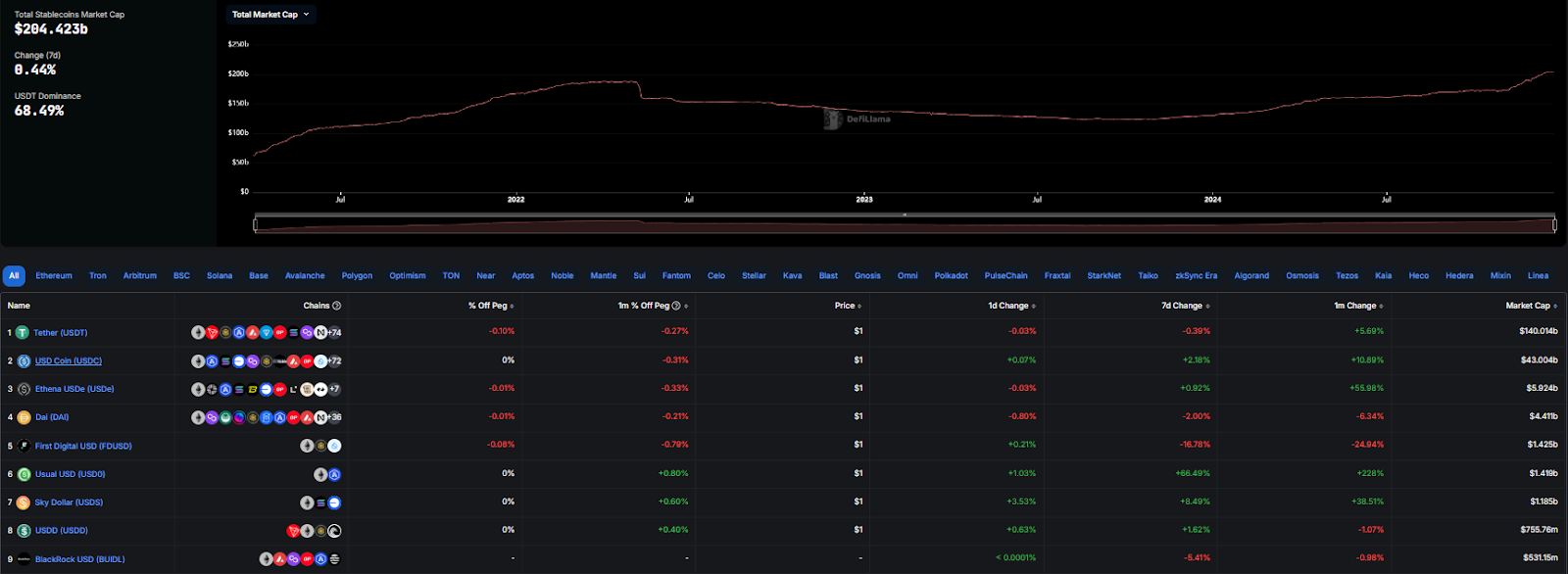
Image source:
https://defillama.com/stablecoins
"Without rules, nothing can be accomplished." In response, governments and international organizations have begun introducing policies to regulate stablecoins. This article provides a brief summary of current regulatory developments.
United States (North America)
The United States is one of the primary markets for stablecoin development, with a relatively complex regulatory landscape. The U.S. regulatory framework for stablecoins involves multiple agencies, including the Department of the Treasury, the Securities and Exchange Commission (SEC), and the Commodity Futures Trading Commission (CFTC).
The SEC may consider certain stablecoins to have securities characteristics, requiring compliance with relevant provisions of the Securities Act. The Office of the Comptroller of the Currency (OCC), under the Treasury Department, previously proposed allowing national banks and federal savings associations to provide services to stablecoin issuers, provided they meet anti-money laundering and compliance requirements. Recently, the U.S. Congress has been discussing legislative proposals such as the Stablecoin Transparency Act, aiming to establish a unified regulatory framework for stablecoins. After Donald Trump—often referred to as the "crypto president"—won the election, although no concrete policy has yet been introduced, the overall outlook for crypto regulation appears more favorable.
European Union (Europe)
The EU’s stablecoin regulation primarily relies on the Markets in Crypto-Assets Regulation (MiCA).
MiCA classifies stablecoins into Asset-Referenced Tokens (ARTs) and Electronic Money Tokens (EMTs). EMTs are tokens pegged to a single fiat currency, such as the euro or U.S. dollar. ARTs refer to tokens linked to a basket of assets, such as fiat currencies, commodities, or cryptocurrencies. MiCA sets out distinct regulatory requirements for each category. Entities issuing stablecoins must obtain authorization from an EU member state and comply with requirements regarding capital reserves, transparency disclosures, and more.
Hong Kong (Asia)
On July 17, 2024, the Hong Kong Monetary Authority (HKMA) and the Financial Services and the Treasury Bureau jointly released a consultation conclusion outlining the key components of an upcoming stablecoin regulatory regime. Under this system, companies wishing to issue or promote fiat-referenced stablecoins to the Hong Kong public will need to obtain a license from the HKMA. The regulatory requirements cover reserve asset management, corporate governance, risk controls, information disclosure, and anti-money laundering and counter-terrorism financing measures.
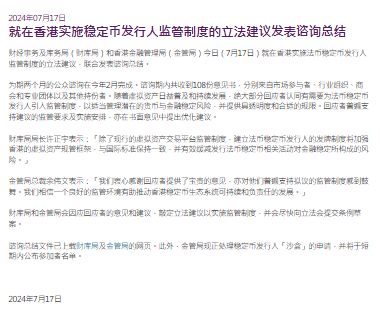
Image source link:
https://www.hkma.gov.hk/gb_chi/news-and-media/press-releases/2024/07/20240717-3/?utm_source=chatgpt.com
In addition, the HKMA launched a "sandbox" program for stablecoin issuers to engage with industry stakeholders on proposed regulatory requirements. The first group of participants was announced on July 18, 2024, including JD Blockchain Technology (Hong Kong) Co., Limited, Orbital Innovations Technology Limited, and a consortium formed by Standard Chartered Bank (Hong Kong) Limited, Animoca Brands Limited, and Hong Kong Telecom Limited.
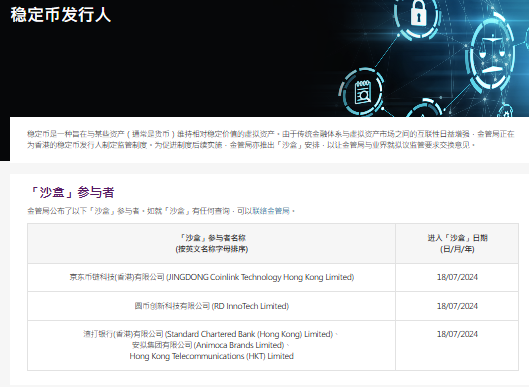
Image source link:
https://www.hkma.gov.hk/gb_chi/key-functions/international-financial-centre/stablecoin-issuers/?utm_source=chatgpt.com
Most recently, on December 6, 2024, the government published the draft Stablecoin Bill in the Gazette, aiming to introduce a regulatory regime for fiat-referenced stablecoin issuers in Hong Kong and further improve the oversight framework for virtual asset activities.
Singapore (Asia)
Under Singapore's Payment Services Act, stablecoins are considered digital payment tokens, and their issuance and circulation require approval from the Monetary Authority of Singapore (MAS). MAS offers a regulatory sandbox for startups to test business models related to stablecoins.
Japan (Asia)
In June 2022, Japan amended its Payment Services Act (PSA), establishing a regulatory framework for the issuance and trading of stablecoins. According to the revised PSA, stablecoins fully backed by fiat currency are defined as "Electronic Payment Instruments" (EPIs), which can be used to pay for goods and services. Specific requirements apply to issuers: only three types of institutions—banks, fund transfer service providers, and trust companies—are permitted to issue stablecoins. Institutions seeking to conduct stablecoin-related businesses must first register as Electronic Payment Instrument Service Providers (EPISPs) to obtain the necessary licenses.
Brazil (South America)
Roberto Campos Neto, Governor of Brazil's Central Bank (BCB), stated in October 2024 that the central bank plans to regulate stablecoins and asset tokenization in 2025. In November 2024, the BCB proposed a regulatory measure suggesting a ban on users withdrawing stablecoins from centralized exchanges to self-custodied wallets. However, in December, the Deputy Head of the BCB’s Financial System indicated that the central bank might lift the ban if critical issues such as transaction transparency are adequately addressed.
Conclusion
Additionally, Russia and other BRICS nations are also considering using cryptocurrencies as settlement tools for cross-border financing. Overall, whether through setting up regulatory sandboxes for crypto firms or categorizing stablecoins based on their distinct characteristics, more and more stablecoin regulations are expected to emerge globally. Cross-border payments appear poised to become one of the most widespread applications for stablecoins.
Join TechFlow official community to stay tuned
Telegram:https://t.me/TechFlowDaily
X (Twitter):https://x.com/TechFlowPost
X (Twitter) EN:https://x.com/BlockFlow_News
 @WOOXResearch