What is Base Chain's stablecoin ANZ?
TechFlow Selected TechFlow Selected
What is Base Chain's stablecoin ANZ?
From Breakdown to 4x Surge: Is ANZ an Alpha Opportunity?
 Navigating Web3 tides with focused insights
By Shaofaye123, Foresight News
The stablecoin sector remains a focal point of attention. Usual surged from 0.25 U to 0.8 U pre-market, the Trump family's crypto project World Liberty chose to invest in ENA, and Binance backed Solana-chain stablecoin infrastructure Perena. Meanwhile, Base chain stablecoins have remained lukewarm. This article takes you through ANZ—from post-launch slump to quadrupling in value. Is it a new alpha opportunity or just another flash-in-the-pan project?
Starting with FJO’s Wealth Effect
In mid-November, as the broader market rebounded, on-chain liquidity began spilling over, prompting capital to seek out new speculative targets. The overflow effect from the on-chain launchpad Fjord was particularly evident, especially in hot sectors such as AI Agents—projects launched here offered extremely high odds, with some surging up to 33x. Projects frequently sell out within minutes, with one scientist even buying out an entire allocation. As wealth effects from platform launches spilled over, open staking and potential airdrop incentives also drove the platform token FJO from 0.5 U to 1 U.
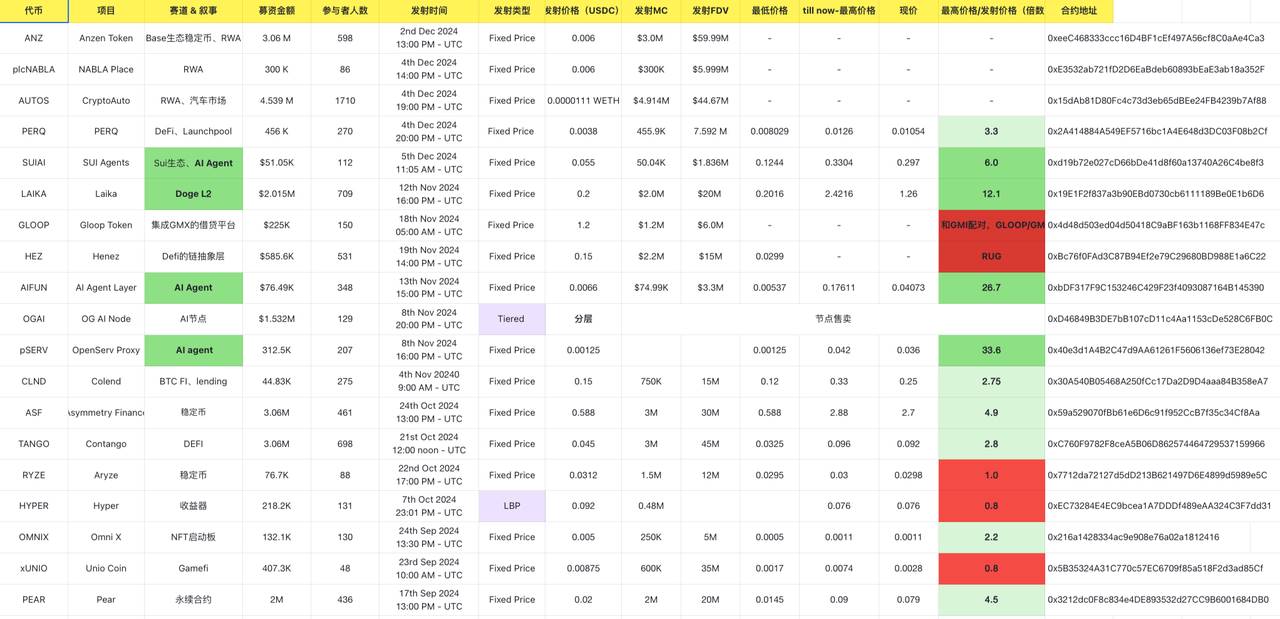
As a long-standing speculative hotspot, the stablecoin sector drew significant attention when Fjord launched Anzen—a Base chain USDz stablecoin project—on December 2. The token sold out instantly upon listing. However, it suffered an immediate post-launch dump, halving from 0.01 U to 0.005 U. Another rug pull—or an alpha gem?
Anzen Finance Background
Anzen is the issuer of USDz, operating in the RWA sector. Currently deployed across four chains, USDz plans to expand to additional platforms including Movement, Berachain, Plume, Mantra, Monad, and Initia by 2025. Holders of USDz can earn sustainable RWA yields—similar to projects like Usual—with underlying returns sourced from U.S. Treasury yields. Users stake USDz to receive sUSDz, enabling DeFi participants to earn sustainable returns and diversify their portfolios. It currently offers an annual yield of 14.8%.
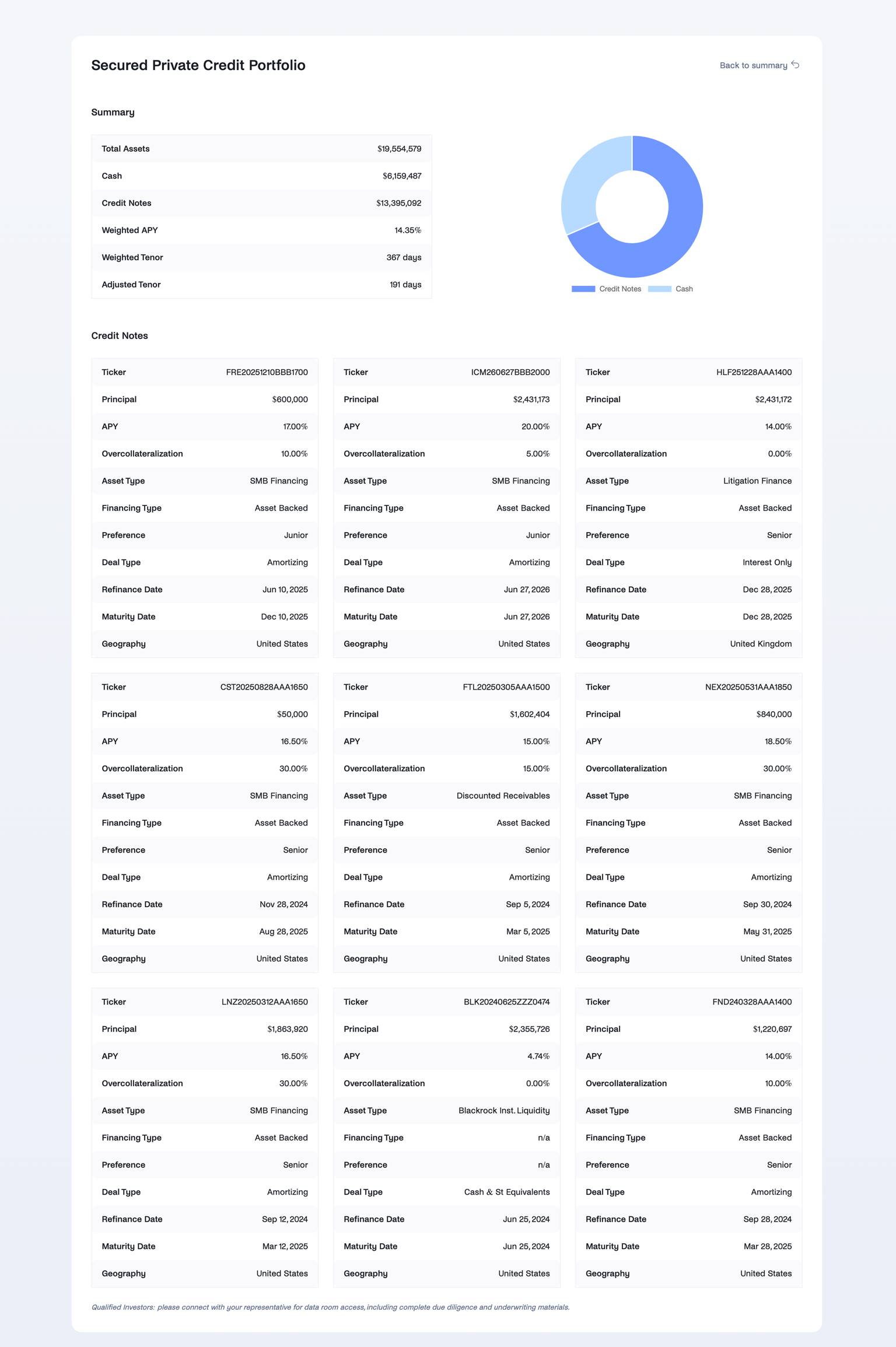
Anzen's Secured Private Credit Portfolio
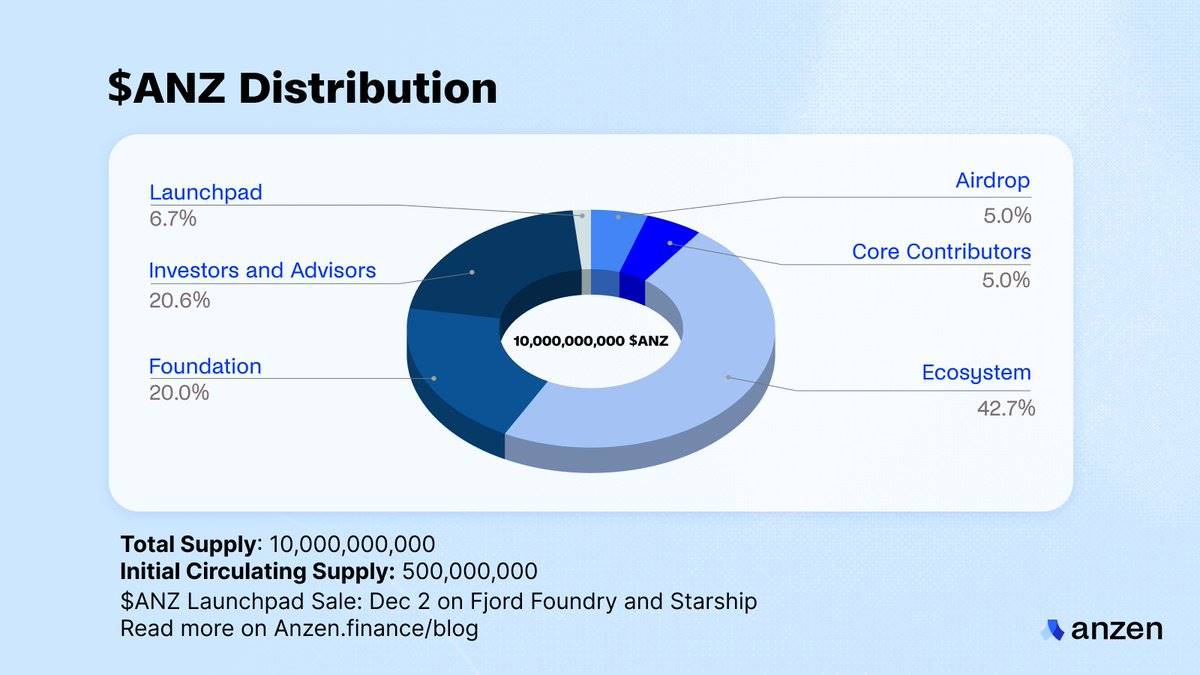
ANZ employs a ve model and will be used to govern and develop the Anzen protocol and ecosystem, including liquidity incentives, ANZ holder benefits, base rewards, protocol fee sharing, and voting pool incentives. The public sale of ANZ launched on December 2 via the FJO Launchpad at a fixed price of 0.006 U. The total token supply is 10,000,000,000, with 6.7% allocated to the launchpad, 5% to community airdrops, and 2.7% to ecosystem rewards. Currently, its circulating supply stands at approximately 11.6%.
Overall Strength
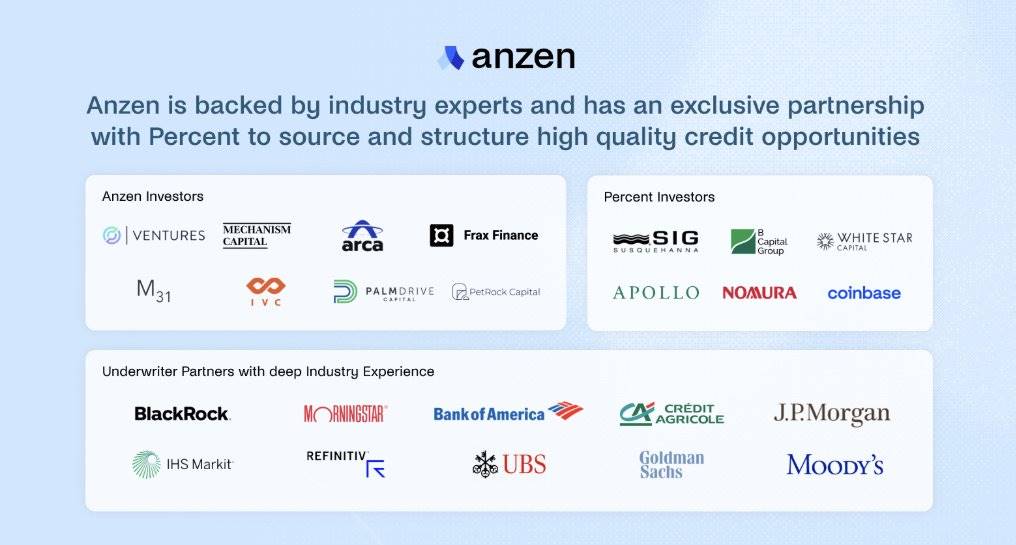
According to The Block, Anzen Finance has secured $4 million in seed funding to support the development of its RWA-backed stablecoin. Participants in this round include Mechanism Capital, Circle Ventures, Frax, Arca, Infinity Ventures, Cherubic Ventures, Palm Drive Capital, M31 Capital, and Kraynos Capital.
The Anzen Finance team is from Taiwan and consists of a credit investment group with over ten years of joint lending experience. Since 2018, the team has been researching mechanisms for tokenizing credit assets. Its underwriting and custody partner is Percent, which has facilitated $1.6 billion in transactions over the past seven years, offering an APY of 16% with a default rate of 2%.
ANZ appears to have no shortage of partnership resources and maintains close ties with major KOLs and NFT communities. The project is active in communities such as Doodles and PudgyPenguins. Demonstrating savvy marketing, on December 16, the project even changed its profile picture to a chubby penguin.
Additionally, based on observation, small but consistent inflows have steadily added liquidity to ANZ pools since launch, with smart money continuously accumulating. The ANZ token price has already risen 4x from its lows.
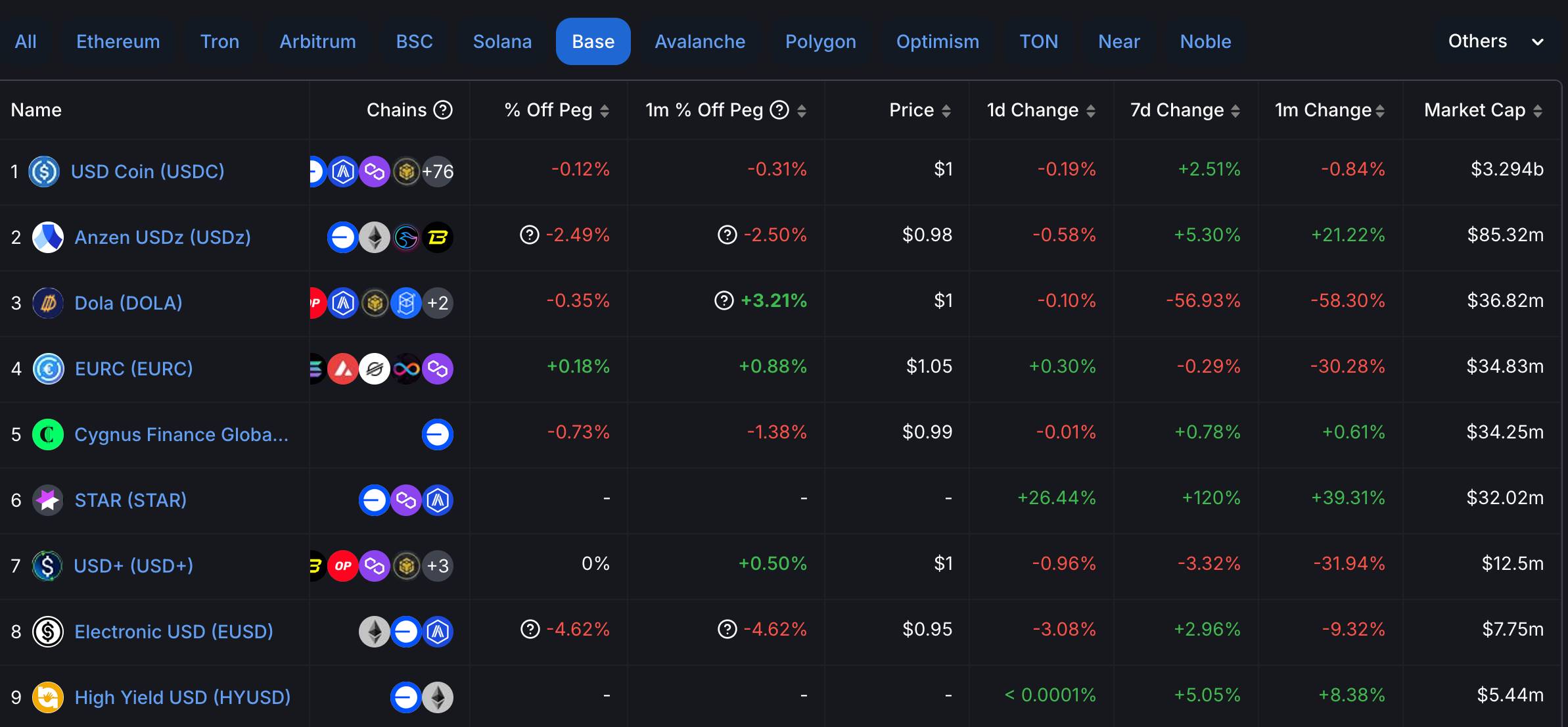
The total TVL of the stablecoin sector has grown from $130 billion at the start of the year to $203 billion. With Trump's return to power and accelerating regulatory clarity, the stablecoin space still holds significant growth potential. Currently, USDC dominates the Base chain (TVL of $330 million), while DOLA, the third-largest stablecoin on Base, has historically experienced multiple de-peg events exceeding 2%. Since its release, USDz has surpassed DOLA to become the second-largest stablecoin on Base. However, both its TVL ($90 million) and ANZ’s current market cap ($20 million) remain relatively low, indicating high participation risk.
Join TechFlow official community to stay tuned
Telegram:https://t.me/TechFlowDaily
X (Twitter):https://x.com/TechFlowPost
X (Twitter) EN:https://x.com/BlockFlow_News
 Foresight News