Perhaps "evil" and "justice" are a pair of synonyms: Remembering Bitcoin's breakthrough past $100,000
TechFlow Selected TechFlow Selected
Perhaps "evil" and "justice" are a pair of synonyms: Remembering Bitcoin's breakthrough past $100,000
a.k.a. What Can Save You, Our Shared Bitcoin
 Navigating Web3 tides with focused insights
By Tia, Techub News
“a.k.a. How Do We Save You, Our Shared Bitcoin”
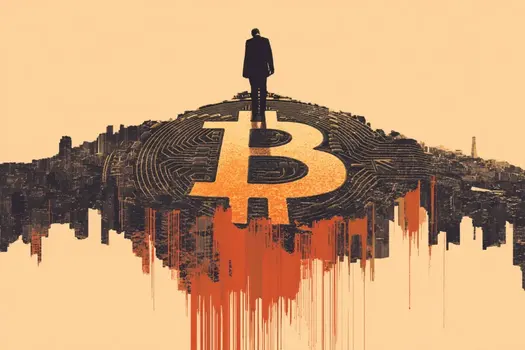
From the standpoint of monetary attributes, Bitcoin indeed falls short of fulfilling the role. But it's undeniable that crypto aims to achieve some form of disruption—and disruption is never easy. Sometimes, it requires harnessing every available force, regardless of whether that force is good or bad. Since the U.S. SEC approved spot Bitcoin ETFs, Bitcoin has gradually become a toy for Wall Street capital and politicians—far removed from its original mission of becoming a "decentralized currency."
Yet from another perspective, the media frenzy triggered by Bitcoin breaking $100,000 has successfully brought crypto and decentralization into mainstream public consciousness.
Behind Bitcoin’s rise above $100,000 lies not only the power of decentralized communities but also the intertwined interests of many other groups—including the very Wall Street capital forces that decentralization once sought to disrupt. It's hard to say who is truly leveraging whom.
From a crypto standpoint, this marks a successful marketing moment for “decentralization,” powered by capital. But from the viewpoint of capital or politicians, the narrative may be entirely different.
Crypto remains immature. Yet the innovative ideas it introduces—such as decentralization, sovereignty, and privacy protection—are issues society can no longer ignore.
Leveraging external forces, or more bluntly, serving the “evil,” has become a defining characteristic of the crypto industry—one that traces back to Bitcoin itself, the pioneer.
Bitcoin’s idealistic vision of decentralization was built upon a primitive token incentive model. Its earliest mainstream use cases emerged through black markets and illicit activities. This pattern continued with the infamous ICO era, and persists today in memes.
“Good” and “Evil” Might Be Synonyms
The crypto industry is fascinating: it attracts idealists who genuinely want to change the world, alongside pure opportunists seeking to profit from scams. What’s even more interesting is how these so-called “bad actors,” through their misdeeds, have inadvertently fueled the industry’s growth and expansion.
Even memecoins—widely criticized for thriving on greed and exploiting flaws in current socioeconomic systems—represent a form of “financial nihilism,” even an expression of “anger” and “rebellion.”
There’s always a voice within the industry calling for purification—advocating for development through orthodox means. But orthodoxy cannot ignore the underlying laws of how the world operates. Human greed, desire, and dissatisfaction—these so-called “evil” traits—are part of natural selection, the very drivers pushing humanity and society forward.
They are intertwined with survival itself.
Sometimes, defeating evil requires becoming more ruthless than evil itself. But then again, what exactly *is* evil? And which kind of evil is truly worse? After witnessing scandals like the Lolita Island affair involving seemingly respectable figures, blatant “evil” might actually appear more honest than disguised righteousness?

An even more important question arises: how should we understand “evil”?
Or perhaps, instead of seeking purity, we should focus on coexistence, parallel operation, and balance as the true engines of progress.
This is precisely what crypto aims to achieve:
“to build a reliable distributed system on top of unreliable infrastructure”
Within this framework, “evil” and “good” may never have been opposites—they might just be synonyms, dependent on each other, shaping one another.

Perhaps crypto can serve as a container where “evil” and “good” walk hand in hand.
Does Logic Even Exist?
Many developments cannot be easily explained by logic—especially when things deemed unthinkable by the public become reality.
But what truly counts as absurd or irrational? What qualifies as logical?
Are things that appear logical actually logical? Are things perceived as absurd really nonsensical? And what unseen forces drive these seemingly illogical events forward?
For example, some find it ridiculous to treat tokens as money. Yet from a taxation perspective, viewing blockchains as nations and tokens as currencies isn’t baseless—it touches on the fundamental question of why fiat becomes universally accepted. Some scholars argue that fiat achieves widespread circulation precisely because governments demand taxes in that currency.
And are things that seem logical actually still valid? Does that logic hold under current conditions? Must money necessarily possess all three properties—Store of Value (SoV), Unit of Account (UoA), and Medium of Exchange (MoE)? Must accounting always rely on a stable currency? What does SoV really mean? Will future stores of value even take the form of currency?
Or must crypto always be decentralized…?
Have we overlooked something far more important??
I don’t know. But I believe we shouldn’t fixate solely on TPS, UX, DX, composability, or even decentralization. This is why I appreciate Cosmos, and why I admire Anoma. Underlying Cosmos is the idea of Sovereignty; Anoma starts with reimagining collaboration mechanisms—and thus introduces “intent,” the fulcrum of human cooperation.
Still, I believe overly direct approaches rarely solve deep problems. Being too focused can cause us to miss the “gifts” the universe sends us—gifts often wrapped in forms we initially fail to understand, like memecoins, requiring us to embrace them without prejudice.
Yes, I’m saying we need to feel “evil”—because within it may lie the key to unlocking the puzzle.
Is Accuracy Important? Yes. But Compared to Other Things, Maybe Not That Much
Sometimes, these inexplicable phenomena are called “art,” “intuition,” or “impulse”—often conflicting with rationality, and if mishandled, dismissed as “foolishness.”
But they represent a stronger, internal energy born from within.
Humans are products of reason and logic, standing atop the food chain thanks to thinking, rationality, and logic. But let’s not forget the primal impulses that sustain us—the very forces behind life’s most meaningful moments. They are precious. Cherish them.
In many ways, the spirit of Bitcoin or cryptocurrency embodies powerful primal impulses—and carries great controversy. Yet controversy implies there’s also much that’s affirmed. There may be scams cloaked in idealism, but you have to admit: the初心 and vision were sincere and well-intentioned. For any emerging force striving to disrupt against overwhelming resistance, you must seize every possible ally.
When the straight path is blocked, you have no choice but to “walk crookedly on the righteous road.”
Is accuracy important? Yes. But compared to other things, maybe not that much.
When tools and resources lag behind other forces, how do you catch up? The only option is to ignore rules and never hit the brakes. Ride the wind, grow through mistakes, and constantly correct your course.
Some see only the negatives—but recognize this: it’s power. Your job is to harness it.
I view crypto’s development as a brakeless monster, devouring all forces in its path.
Yet this monster always has an anchor—an aspiration.
It’s hard to define this vision precisely, but you know it exists. It serves as the rudder guiding crypto forward through mud, chaos, and thick fog—steering direction even when clarity is lost.
Sometimes, you don’t need to understand existing rules. Just push forward what feels right.
How Do We Save You, Bitcoin, the Beacon of Hope Carrying Crypto’s Dreams?
Bitcoin fulfilled its mission the moment it broke $100,000. Though it remains the启蒙 and faith of the entire crypto space, now it seems to possess little beyond scarcity. With poorly distributed holdings, it risks ultimately becoming just another plaything.
If Bitcoin eventually becomes nothing more than a capital toy—like stocks—then from a crypto perspective, it holds no real significance.
At first, I thought we needed a new, fairer token/NFT—or any new form—to honor Satoshi, to honor Bitcoin.
But then I realized: Bitcoin will always be Bitcoin. No token can replace it. What we truly need is a “Save Bitcoin” initiative.
The启蒙 must not be forgotten, nor reduced to a toy. No token carries more symbolic weight than Bitcoin. And symbolism is never meaningless—it matters deeply.
What Does This Have to Do With All of Us?
We’ve been trapped too long in powerless systems, forgetting that we are the most solid foundation of this society.
The masses are often labeled a “herd of sheep”—seen only as gullible or capable of generating negative outcomes. But within every member of this so-called herd lies a personal moral compass. Don’t let reality and rules drown out your inner sense of justice. Don’t let yourself truly become part of the herd.
What kind of world do you want to live in? Every individual’s desire matters. Because these individual wishes form the bedrock of collective power. By protecting this foundation, even if others ride the wave, the ultimate beneficiary will still be our shared vision.
Finally, may we create miracles.
May we all find the courage to face our true selves. May we grow stronger and more resilient. May every living being discover those moments that light up their lives. May all beings attain autonomy.
Join TechFlow official community to stay tuned
Telegram:https://t.me/TechFlowDaily
X (Twitter):https://x.com/TechFlowPost
X (Twitter) EN:https://x.com/BlockFlow_News
 @News_Techub