Bitcoin Breaks $100,000—The Crypto Market Is About to Change
TechFlow Selected TechFlow Selected
Bitcoin Breaks $100,000—The Crypto Market Is About to Change
$100,000 for BTC is just the beginning.
 Navigating Web3 tides with focused insights
Text: Tuoluo Finance
Bitcoin has finally broken through $100,000.
After two weeks of correction and consolidation, Bitcoin surged back today, rising sharply from $98,000 to surpass the $100,000 mark—officially embarking on a new era of six-digit pricing. At the time of writing, Bitcoin is trading at $102,649, up over 6.29% in the past 24 hours. Ethereum is also performing strongly, climbing above $3,900 to reach $3,917.42, with a 24-hour gain of 5.77%.
With this psychological milestone breached, market volatility has intensified. According to Coinglass data, 213,167 traders were liquidated within the last 24 hours, with total liquidation volume reaching $677.43 million—$369 million in long positions and $308 million in short positions.
On the news front, the nomination of a new SEC chair has further boosted market sentiment. According to Jinshi News, U.S. President-elect Donald Trump announced on Wednesday that he has formally nominated Paul Atkins to serve as Chair of the U.S. Securities and Exchange Commission (SEC).
Compared to the hardline stance of former chair Gary Gensler, Atkins is notably more favorable toward cryptocurrency. A graduate of Wofford College, Atkins began his career at the New York law firm Davis Polk & Wardwell before officially joining the SEC in 1990, where he became known for opposing excessive fines against companies violating securities laws.
During his tenure, Atkins focused on balancing innovation with investor protection and helped the SEC chair craft several key regulations. In digital assets, he has served as co-chair of the Token Alliance—an industry association supporting blockchain and digital assets—since 2017. He has repeatedly defended the crypto industry, arguing that the SEC’s aggressive enforcement has hindered the development of U.S. crypto innovation and calling for reduced regulatory burdens. More significantly, Paul Atkins is also an official advisor to the RSR token.
Clearly, this nominee brings extensive experience in regulatory framework building and already has direct involvement with tokens, indicating a highly positive and inclusive attitude toward digital assets. His appointment could pave the way for a clearer, more supportive regulatory environment. In announcing the nomination, Trump praised Atkins, stating, "Paul Atkins believes that robust, innovative capital markets can meet investors’ needs and provide the funding that makes our economy the best in the world. He also recognizes that digital assets and other innovations are essential to making America strong."
Just yesterday, speculation about whether Paul Atkins would be appointed caused market confusion—rushing token trades and spreading false information—sending Bitcoin on a wild rollercoaster ride. Currently, Atkins has only been nominated; final confirmation will require Senate approval, and his own willingness will ultimately determine who occupies this crucial regulatory role.
But beyond the identity of the next SEC chair, what matters most to the market is the visible arrival of a new crypto era—the initial emergence of the regulatory framework promised by Trump. This development provides a critical boost both sentimentally and substantively.
Looking back at Bitcoin itself, it has been 16 years since Laszlo Hanyecz famously spent 10,000 BTC on two pizzas in 2010, establishing Bitcoin’s first real-world price benchmark—now surpassed as Bitcoin enters the six-figure range.
As that now-legendary pizza fades into history, Bitcoin—once mocked by mainstream circles as a “Ponzi scheme” or objectively labeled a “financial experiment”—has become one of the most successful investment vehicles in history, achieving unimaginable growth. Based on the pizza transaction, BTC has appreciated by 40 million times. Just in 2024 alone, Bitcoin has risen 135%. Currently, the total market value of all circulating Bitcoin exceeds $2 trillion—surpassing the combined valuations of Mastercard, Walmart, and JPMorgan Chase. On Companies Marketcap’s global asset rankings, Bitcoin now ranks seventh by market capitalization, ahead of silver.
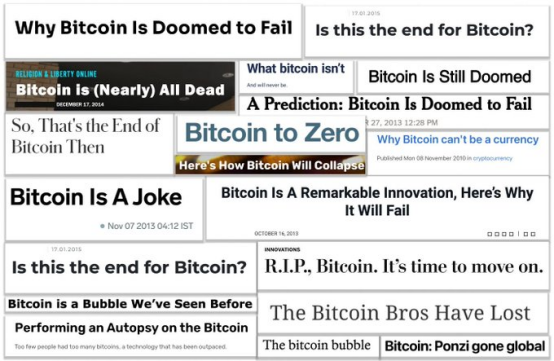
This social experiment has undoubtedly succeeded. While surpassing sovereign currencies may still be premature, this marks a comprehensive grassroots victory for decentralized money—a triumph achieved collectively by geeks and ordinary participants. Over the past 16 years, Bitcoin has gradually shed its associations with money laundering and fraud, evolving from “digital gold” toward becoming a potential supranational currency. As the core of the crypto universe, it has given rise to a newer, more autonomous, faster, and transparent financial system, accelerating Web3’s transformation of traditional financial infrastructure.
From an asset perspective, the implications of $10,000 Bitcoin versus $100,000 Bitcoin are vastly different. At $10,000, Bitcoin could still be dismissed as a niche obsession or dreamer’s fantasy. But at $100,000, the mainstream world can no longer ignore it. A new era for digital assets is quietly unfolding.
Great assets are often bought when they fall—but with Bitcoin, the dominant trend is buying as prices rise, because rising prices are what ultimately validate it as a superior asset. When Bitcoin broke $10,000, Grayscale entered the market. When it surpassed $50,000, MicroStrategy followed. At $60,000, institutions like BlackRock, Fidelity, and Franklin Templeton rushed in. Now, breaking $100,000 highlights Bitcoin’s emerging role as a potential reserve currency—possibly even adopted by nations.
Yesterday, Putin spoke at an investment forum in Moscow, advocating for Bitcoin as a global reserve asset instead of the U.S. dollar, emphasizing that “no one can ban Bitcoin.”
It is foreseeable that the next steps for Bitcoin will revolve around corporate adoption, institutional entry, and national reserves—user adoption is inevitable.
In numbers, crypto user penetration remains astonishingly low. According to a16z estimates, there are currently between 30 million and 60 million monthly active cryptocurrency users worldwide. Yet these tens of millions have built a $3 trillion crypto empire. With 5.4 billion internet users globally, the potential is self-evident.
Currently, due to concerns over monetary sovereignty and financial stability, most developed economies impose strict restrictions on cryptocurrency purchases. Only inflation-stricken developing nations have widely adopted Bitcoin as an alternative currency. If the U.S. includes Bitcoin in its national reserves—if 1 million BTC enter Congress—the global imagination around Bitcoin could truly be unleashed.
Bitcoin’s current market cap is still less than one-seventh of gold’s $15 trillion valuation. Yet the miracle of 16 years of growth makes this target feel closer than ever. $100,000 may just be the beginning.
Even Federal Reserve Chair Jerome Powell recently stated that Bitcoin is not a competitor to the U.S. dollar but rather a rival to gold. He noted it is not yet widely used for payments, remains highly volatile, and clarified that central bank officials are personally prohibited from holding it due to their positions.
In terms of development trajectory, every small step for Bitcoin represents a giant leap for crypto. Mainstream acceptance is not merely symbolic; it allows those once hiding in the shadows to step forward proudly as value investors. Altcoins, too, are opening new pathways.
Currently, 16 new crypto ETFs have officially submitted applications to the SEC. Grayscale and Bitwise have proposed broad-based cryptocurrency indexes, while firms including VanEck, 21Shares, Canary, and WisdomTree are targeting altcoin ETFs, with Solana, XRP, Litecoin, and HBAR now positioned as eligible assets. January 25 will mark the first major review window for these filings.
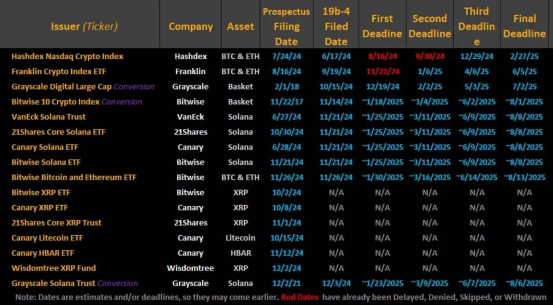
Regardless of approval outcomes, thanks possibly to the incoming SEC chair and institutional support, the long-awaited altseason has finally arrived—emerging through repeated cycles of skepticism and validation.
Market performance reflects a reversal of the usual crypto rule of “chasing new, ignoring old.” This bull run has seen investors return to legacy projects. With Ethereum breaking $3,800, SOL and BNB hitting new highs, and TRON shattering its seven-year high since January 2018 with a single-day surge of 69%, momentum is building.
Even so-called “zombie coins” highlighted by Forbes as large-cap dormant assets have suddenly revived. XRP surged from $0.5 on November 5 to $2.7, peaking at $2.8, gaining nearly 500% month-to-date and 53.7% over the past week. ALGO and XLM rose fourfold in 30 days, while long-dormant ADA and EOS gained over 200% in the same period.
Rising prices have elevated market sentiment to a crescendo, accelerating crypto’s mainstream integration and expanding recognition of its value—all rooted in Bitcoin’s success.
That said, Bitcoin still has limitations.
Although born amid monetary crises and now considered by some nations as potential legal tender, Bitcoin remains far from functioning fully as a stable unit of account or medium of exchange. The label “digital gold” reinforces its role more as an inflation hedge than a stable transactional currency.
The decentralized ethos of crypto is also inevitably challenged. Mainstream adoption brings side effects—increasing dollarization of crypto assets. For example, the total net assets of 11 U.S. spot Bitcoin ETFs amount to $108.23 billion, representing 5.54% of Bitcoin’s market cap. By country, the United States holds over 210,000 BTC, making it one of the world’s largest Bitcoin holders.
Under these conditions, the U.S. wields unmatched influence in the crypto space. Wall Street institutions have effectively replaced retail investors as custodians and controllers of value. Core assets are increasingly distant from ordinary people—an inevitable trend.
Luckily, the fruits of private ambition continue to spread. The imaginative economy represented by cryptocurrency continues to accelerate. Opportunities for young people to change their fate through asymmetric gains remain alive. The hope for freedom intertwined with dreams of sudden wealth shines brightly in today’s highly specialized and class-rigid society, attracting countless Gen Z newcomers.
All of this was made possible by countless crypto practitioners. Today, many shared stories of past extravagant purchases—computers bought for 245 BTC, headphones for 67 BTC, hamburgers for 30 BTC. Amid the jokes about “the most expensive purchases in history,” everyone understands: without the relentless efforts of these pioneers, the crypto world might never have survived to this day.
A new sky for crypto assets is approaching quickly. And in this collective victory for the crypto community, every participant deserves the rewards of time for their perseverance.
Join TechFlow official community to stay tuned
Telegram:https://t.me/TechFlowDaily
X (Twitter):https://x.com/TechFlowPost
X (Twitter) EN:https://x.com/BlockFlow_News