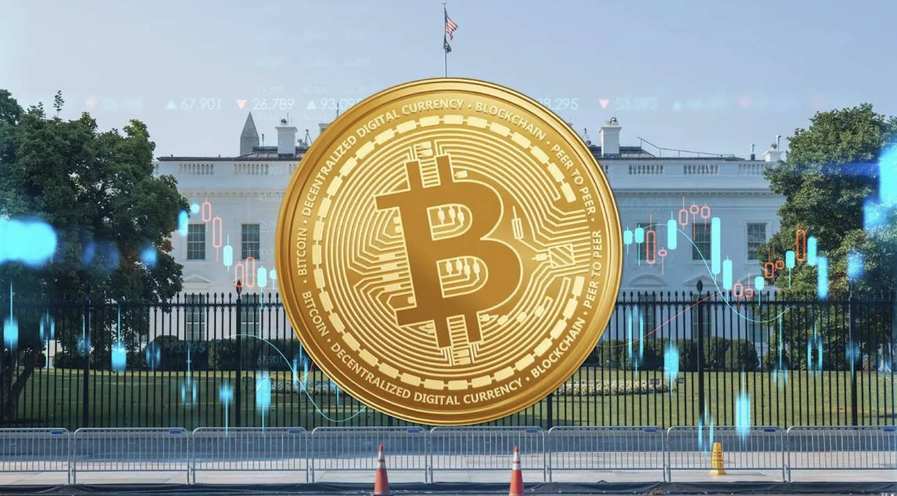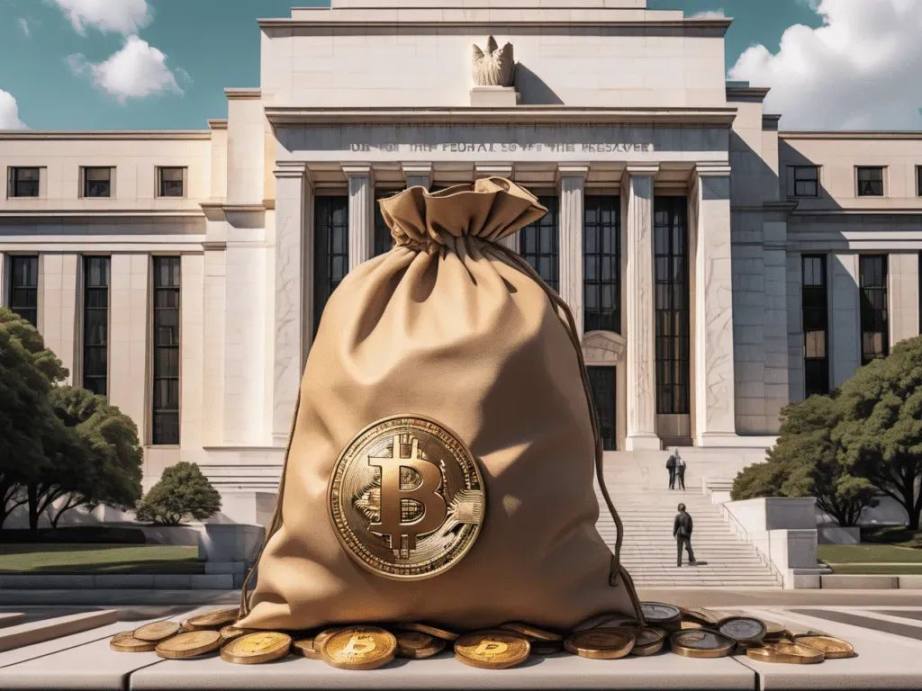
Will the controversial "establishing a BTC national reserve" turn from idea into reality?
TechFlow Selected TechFlow Selected
Will the controversial "establishing a BTC national reserve" turn from idea into reality?
Identity or returns? Centralization or decentralization?
 Navigating Web3 tides with focused insights
Author: imToken
Since 2024, digital assets such as BTC have gradually entered the mainstream spotlight, becoming significant topics in institutional investment and cultural discourse. With the listing and issuance of Bitcoin spot ETFs in U.S. securities markets, institutional and corporate holdings of BTC have rapidly increased, further reinforcing BTC's role as "digital gold."
Supporters widely believe that BTC can serve as a powerful inflation hedge, comparable to gold in its hedging capability. Over time, BTC is expected to appreciate significantly, with more financial institutions accepting it as a store of value.
In the 2024 U.S. presidential election, Republican candidate Donald Trump publicly expressed support for the crypto industry and proposed the idea of establishing a "BTC National Strategic Reserve," pushing BTC into the center of public attention and igniting optimism about the future within the crypto market.
Now that the general phase of the U.S. presidential election has concluded, can Trump’s highly inspirational plan to “establish a BTC national reserve” turn from vision into reality?
Reviewing the Proposal
Cynthia Lummis, a Republican senator from Wyoming, is a prominent advocate for advancing digital asset development and a vocal critic of the U.S. Securities and Exchange Commission’s (SEC) strict enforcement policies toward the crypto industry. In July 2024, Lummis proposed a bill related to BTC assets, whose core elements include:
-
Establishing a decentralized network of BTC storage facilities (commonly referred to as BTC vaults) managed by the U.S. Department of the Treasury.
-
The U.S. government would acquire up to 200,000 BTC annually over the next five years, resulting in a total government BTC reserve of 1 million BTC—approximately 5% of BTC’s total supply.
-
The U.S. government would hold these BTC assets for at least 20 years, using them exclusively for repaying national debt. Within the first two years after implementation, no more than 10% of these BTC could be sold.
-
Reassess the valuation of Gold Certificates held by the Federal Reserve System, adjusting their recorded value to reflect actual market prices to enhance asset values and generate funding for BTC acquisitions.
In retrospect, Senator Lummis’s BTC bill appears closely aligned with Trump’s advocated “BTC National Reserve” initiative. After Trump won the general election, Lummis publicly expressed her excitement on social media platforms.
Current Progress
On October 25, 2024, Pennsylvania passed the “Bitcoin Bill of Rights” (Pennsylvania House Bill 2481) by a vote of 176 in favor and 26 opposed, marking a new milestone in digital asset regulation.
The core provisions of the “Bitcoin Bill of Rights” include: individuals and businesses have the right to self-custody digital assets, operate blockchain nodes, and conduct transactions without restrictive municipal regulations.
The bill was introduced by Republican Congressman Mike Cabell and received bipartisan support, reflecting growing recognition across party lines of blockchain technology’s transformative potential. However, according to Forbes, all 26 opposing votes came from Democratic representatives. Despite this, notable Democratic figures supported the bill’s passage, emphasizing its potential to stimulate economic growth and improve financial inclusion.
Following the passage of the “Bitcoin Bill of Rights,” Republican Congressman Mike Cabell joined fellow Republican Aaron Kaufer to file a legislative proposal for the “Bitcoin Strategic Reserve Act” (Pennsylvania House Bill 2664) on November 14, 2024. A key provision of this bill would allow Pennsylvania’s Treasurer to allocate up to 10% of the state’s general fund, emergency fund, and state investment funds toward purchasing BTC and exchange-traded products tied to digital assets—echoing Trump’s call for a national BTC reserve.
According to Decrypt, if passed, Pennsylvania’s potential BTC purchases under this bill could amount to as much as $970 million.

△ Image source: Trump Digital Trading Card #10004
Possible Future Developments
Beyond his campaign-stage advocacy for a BTC national reserve, Trump’s team has publicly announced additional pro-crypto policies following his electoral victory:
🔹 Establishing a dedicated White House position responsible for digital asset policy. Bloomberg reported that Trump intends to appoint a “Crypto Czar.” While details regarding the budget, staffing, and regulatory authority of this role remain unclear, given its placement within the federal government, the position is likely to focus primarily on political coordination rather than direct policymaking, serving more as a liaison between federal regulators and external stakeholders.
🔹 Trump supporters and entrepreneurs Elon Musk and Vivek Ramaswamy will jointly lead a newly formed “Department of Government Efficiency” (DOGE)—sharing its name with a digital asset promoted by Elon Musk, though not an official federal agency. This department aims to provide external advice and guidance to drive large-scale structural reforms and pioneer unprecedented approaches to governmental innovation.
Although the “Department of Government Efficiency” does not directly involve reforming the crypto industry, news of its creation—announced on November 12, 2024—triggered a sharp rise in the market capitalization of the DOGE cryptocurrency. By November 23, 2024, DOGE’s market cap reached a recent peak, increasing approximately 56% compared to the day before the announcement.
Beyond politics, Trump-affiliated enterprises have also made active moves in the crypto market since the election victory:
🔹 According to the Financial Times, Trump Media & Technology Group (TMTG) is considering acquiring Bakkt, a digital asset trading platform launched by Intercontinental Exchange (ICE), the parent company of the New York Stock Exchange.
Bakkt has close ties to Trump’s political network. Its first CEO was Kelly Loeffler, who later became a U.S. Senator and is married to ICE CEO Jeffrey Sprecher—the same individual who served as co-chair of Trump’s inaugural committee.
🔹 On November 18, 2024, Trump Media & Technology Group filed a trademark application with the U.S. Patent and Trademark Office for “TruthFi.” As reported by media citing the filing documents, the trademark covers services related to digital wallets and payment solutions. Many industry observers interpret this as a signal that Trump’s business group may be preparing to formally enter the digital asset transaction services sector.

Criticisms and Challenges
On November 28, 2024, BTC’s market price surged to an intraday high of $99,660, approaching the $100,000 mark and setting a new recent historical record. Since Trump’s general election victory on November 5, 2024, BTC’s market capitalization has risen over 40%.
Despite strong market sentiment and widespread anticipation that a Trump administration will be more crypto-friendly than the Biden administration—potentially implementing more favorable regulatory measures and elevating the status of digital assets—some cautious financial scholars and industry experts have voiced criticism and skepticism. They generally agree that while the concept of a BTC national reserve is innovative, it is unlikely to become reality in the near term. Key concerns include:
-
Limited asset stability of BTC: To date, BTC has not demonstrated the level of stability required of a reserve asset. If governments actively engage in large-scale acquisition of digital assets under their own names, prices may be temporarily inflated, but this could easily distort market dynamics.
-
Inconsistent with the U.S. government’s historically cautious stance toward the crypto industry. Implementing a BTC reserve program implies the possibility of allocating treasury funds to purchase BTC. Such actions contradict the current cautious posture of the U.S. government toward cryptocurrencies and shift public funds from relatively stable investments into volatile digital assets, thereby introducing unnecessary fiscal risks.
-
Requires massive shifts in regulatory policy. For a BTC reserve plan to operate sustainably over the long term, not only must there be profound changes in regulation, but industry participants must also shift their attitudes toward holding decentralized assets—from aggressive speculation to conservative, long-term holding. Achieving such a transformation is neither quick nor easy.
-
Investing in volatile assets is generally avoided during periods of high fiscal deficits. According to data released by the U.S. Department of the Treasury, in fiscal year 2024 (October 1, 2023 – September 30, 2024), U.S. government expenditures totaled $6.75 trillion, while revenues were only $4.92 trillion, resulting in a fiscal deficit of $1.83 trillion. Total government debt reached $36.035 trillion, both setting new historical highs.
-
Trump’s suggestion during campaign interviews—thatU.S. foreign debt might someday be repaid via crypto checks or BTC—is unlikely to gain universal acceptance among creditors unless BTC achieves extreme price stability or is pegged to another stable-value asset. After all, which creditor would willingly accept repayment in an asset prone to sharp volatility and perceived security risks? Moreover, sovereign debt relies fundamentally on national credit backing. Accepting BTC as repayment would effectively grant BTC national credit endorsement. Meanwhile, BTC is inherently a finite-supply asset; as more creditors accept BTC for debt settlement, BTC itself would trend toward greater centralization in value—a scenario ultimately enabling centralized governments to manipulate BTC’s real-world value, which differs fundamentally from a country merely recognizing BTC as legal tender.
-
Institutional-grade storage solutions may still contain critical vulnerabilities and cannot fully eliminate the risk of cyberattacks. Additionally, environmental concerns surrounding energy consumption from BTC mining remain a contentious issue. Expanding a BTC reserve program could intensify these controversies.
Join TechFlow official community to stay tuned
Telegram:https://t.me/TechFlowDaily
X (Twitter):https://x.com/TechFlowPost
X (Twitter) EN:https://x.com/BlockFlow_News
 @imTokenOfficial